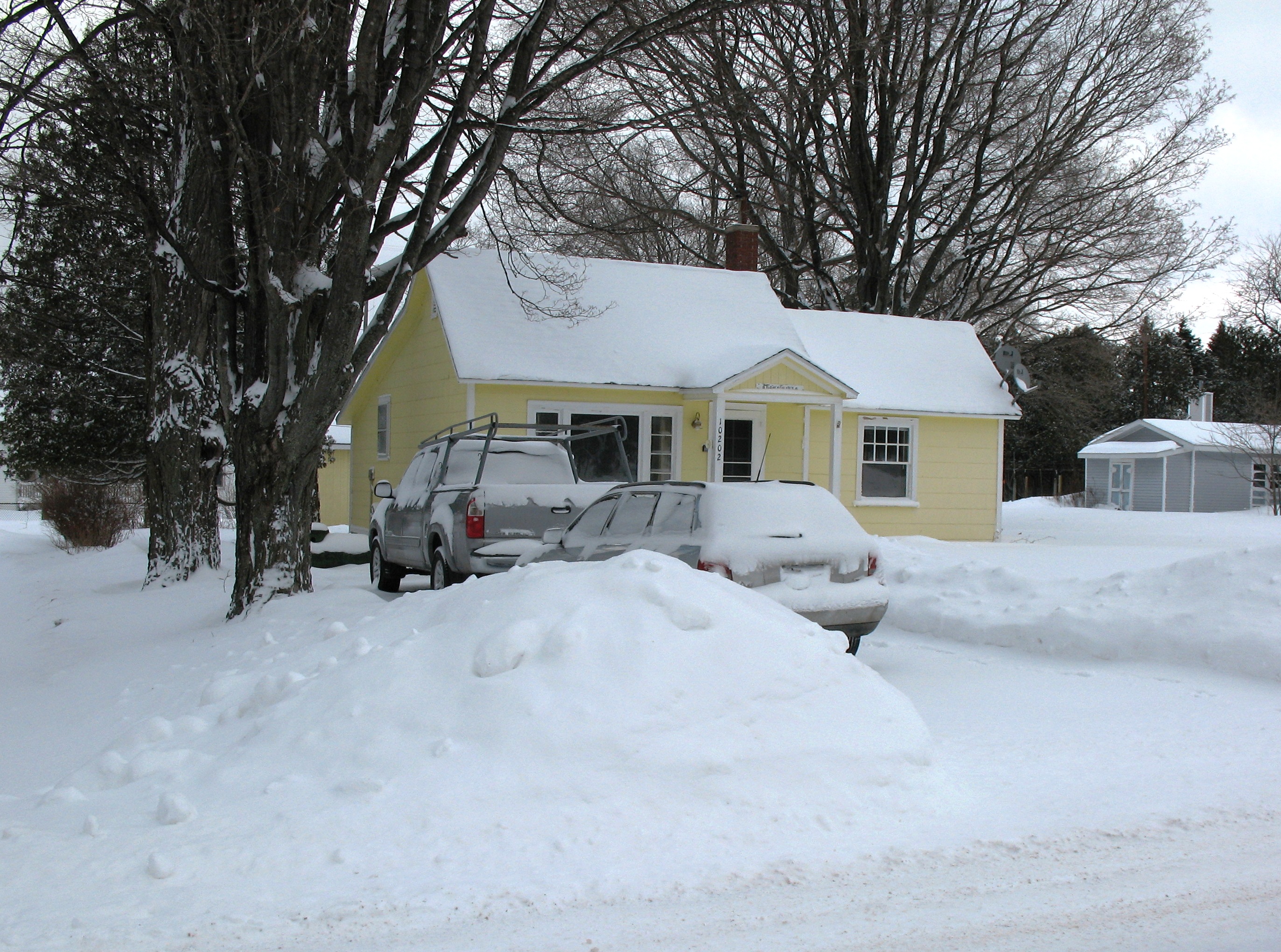
Archives for category: country living

Punxsutawney Prognostication

A.V. Walters

Phamous Phil

Phamous Phil

–Everyone is waiting for Spring. The signs are here: the days are growing longer; the cats are shedding, and my mother’s seed catalogs have arrived. So, there you have it—what are we waiting for? Of course we’re still seeing sub-zero temperatures and we’re ass deep in snow. And, that has a way of slowing things down.

Most everyone has a method for predicting the arrival of Spring. The cruel, (or totally depressed,) promise us that we’ll be able to break ground by, oh, August, at the latest. My mother assured me that come March 1st, things were going to warm up, immediately. (She’s on the edge of her seat, to garden.) Then, there’s that damn groundhog thing (which predicts nothing, except a really good film.) At the library, (where we rented Groundhog Day) someone said it would be a late Spring—based solely on the excessive number of berries on this past season’s mountain ash trees. My nephew hinted that our purchase of snowshoes would spell the demise of winter.

The human brain is an awesome, pattern-recognizing machine. Patterns suggest predictability. They streamline the critical-thinking process with the utility of fact-based assumptions. To be effective, this cerebral shorthand requires repetition. Of course, it’s a fair guess that Spring will come. Until this winter, most of us believed that there was a certain regularity in the calendar. “Record-breaking” is novel and all, but it’s not helpful when forecasting. My mother originally based her balmy projections on something my brother-in-law said. She’s since recanted—as she learned that he based it on the Farmer’s Almanac!

My Rick, is a man of science. Beyond mild amusement, he has little interest in hare-brained, prediction theories. He believes in climate change because it is borne out by observable facts, over the last few decades, and further supported by climate models developed from the collected data. (Now, there’s a mouthful.) We both have the National Weather Service site bookmarked on our computers. He regularly peruses the various science sites. Since it is his first true winter, he has little on which to base prediction. Moreover, as this year is notably abnormal, he questions any prognostication. Rick waits… patiently.

Perhaps that’s the real difference. Some of us are more impatient than others. I’m eager to start gardening and building. Besides, my experience of Spring is more than just reaching the equinox. Spring is a cluster of things—birds returning, the budding of certain plants and trees, and the smell of damp earth. So, I keep an ear open for the more creative projections.  My mum says that all the malefic planets are going retrograde this week and the beneficial planets are coming direct. (Another mouthful!) That’s got to be a good sign, eh, Rick?

Winter Freedom

A.V. Walters—

Winter Freedom!

Winter Freedom!

Yesterday, we tried out our new snowshoes. I remember snowshoes from my youth. They were cumbersome affairs, long and wide with bindings that seemed to wrap around endlessly. They were not as sleek and fast as cross-country skis, but they were useful, nonetheless. Snowshoes gave you hands-free mobility. They were good for steep terrain, working outdoors, and for traipsing through the woods. Ever clumsy, in snowshoes I found the grip to enjoy a sturdy form of winter transport. Sure-footedness aside, I’m in no shape to try those up-slopes on skis, and some of our favorite hikes are on steep slopes, as they wind their way through the wooded dunes.

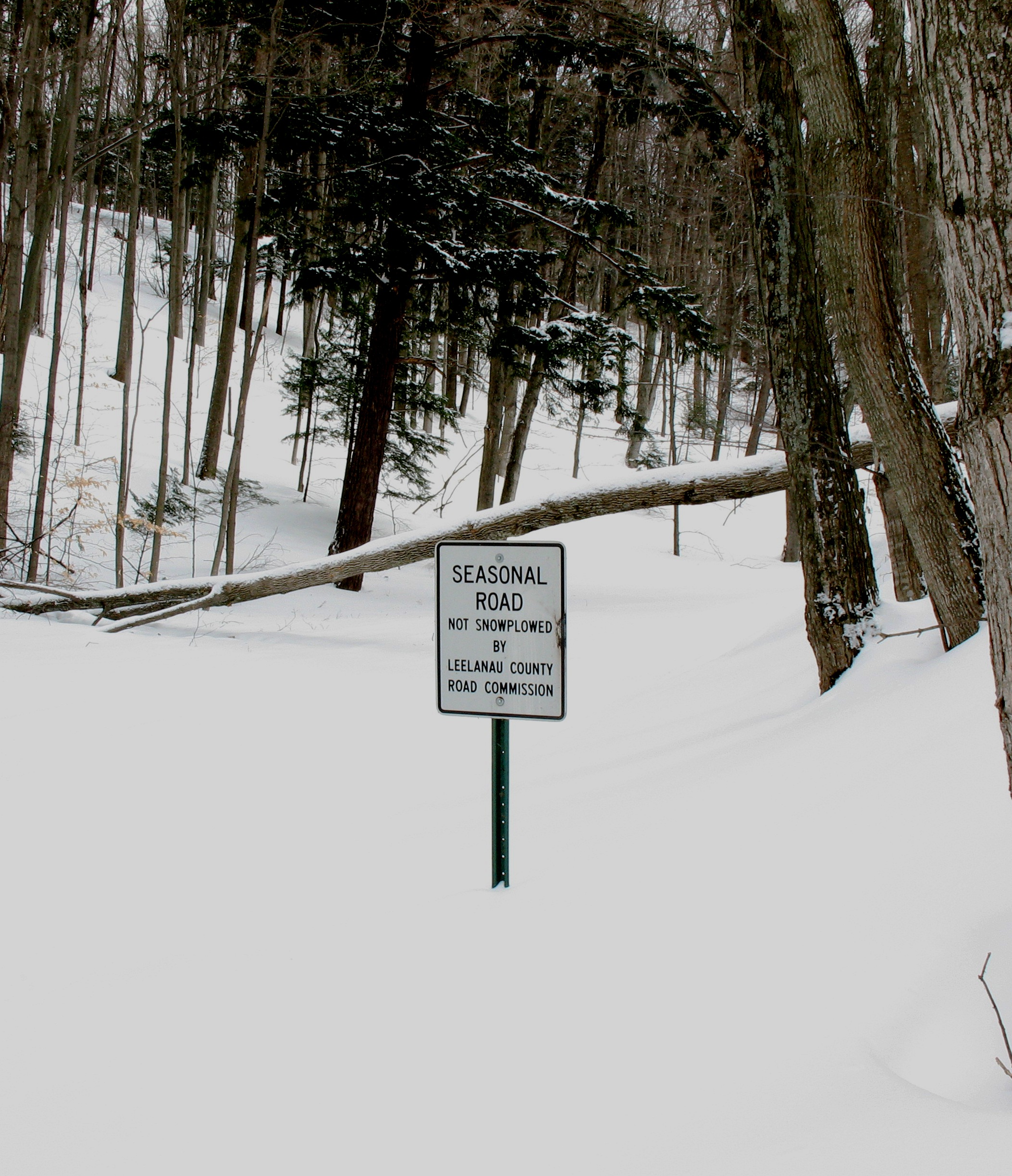
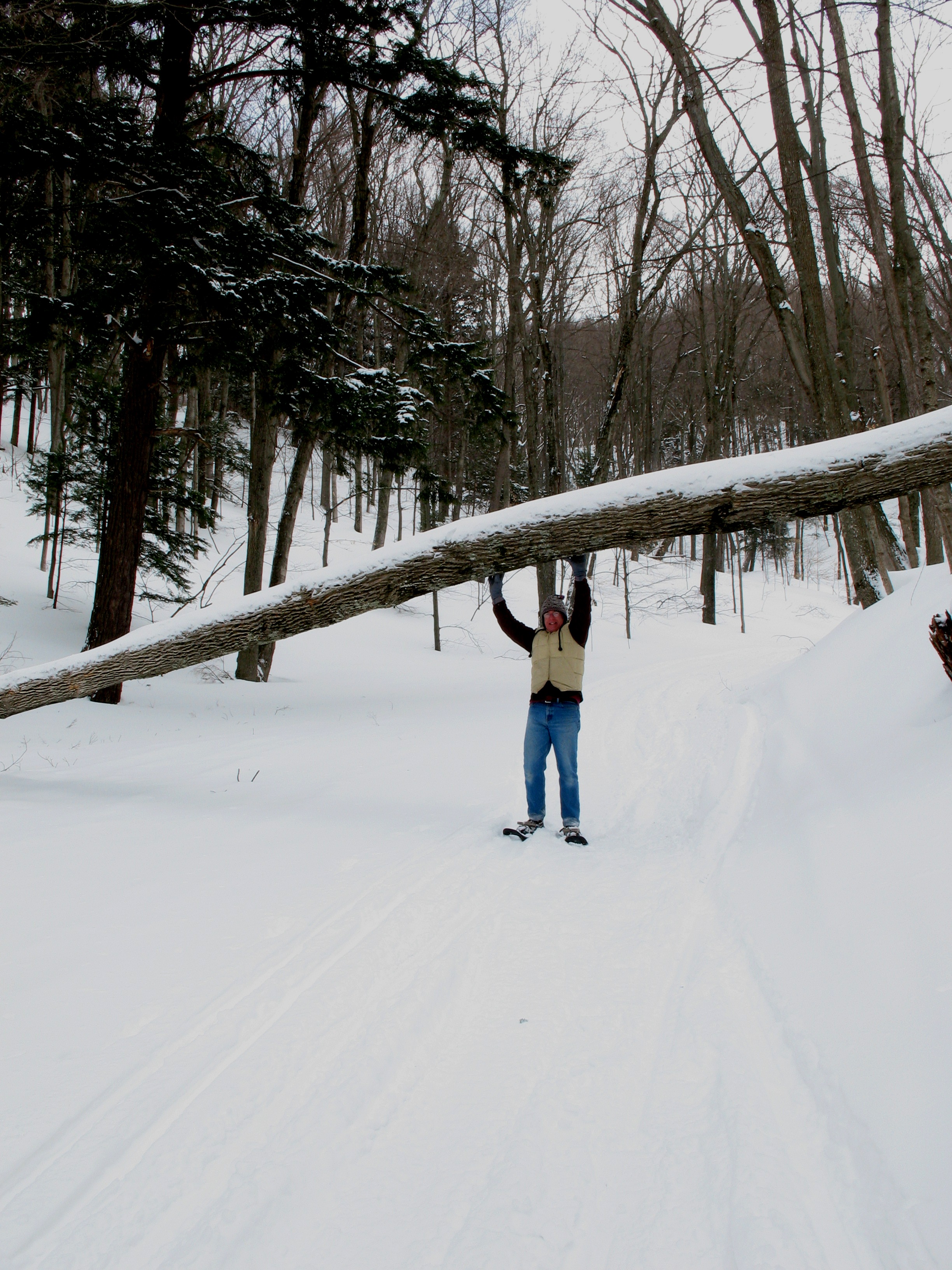
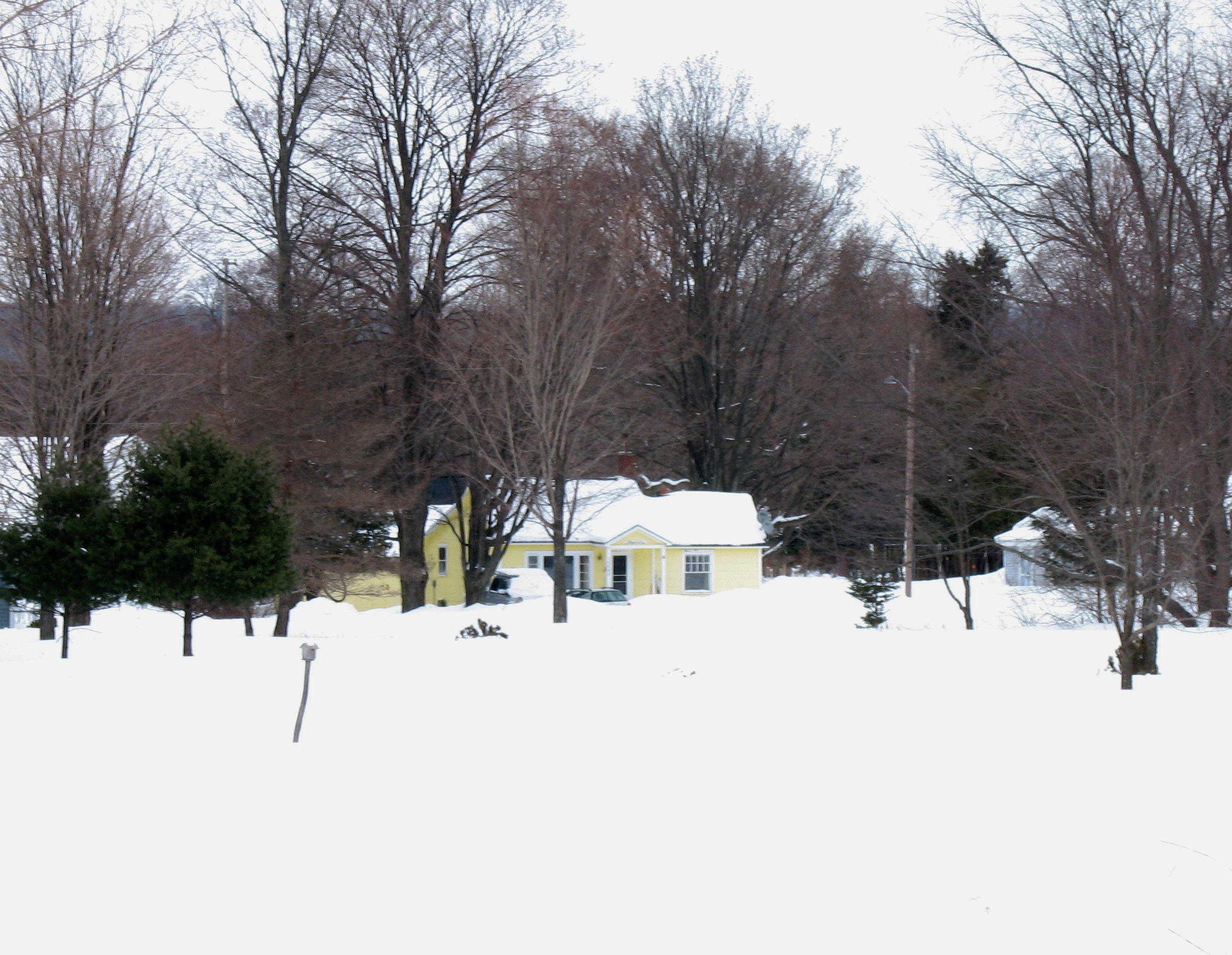
Last week's winds obstructed the road

Last week’s winds obstructed the road

That inspired our snowshoe venture. But, buying snowshoes is a confusing endeavor. I did my research online, and then went searching for bargains. I tried craigslist, but every time I spied a set of worthy snowshoes, they’d be gone before I got there. Either that, or they were hundreds of miles away. So, I went to my trusty retail back-up, Ebay.

I wasn’t interested in the authenticity of the wood-and-gut appendages of my past. Today, there are newer, sleeker, lighter snowshoes. There are aluminum frames with synthetic webbing or the lighter, smaller, solid-deck models. I opted for the latter, and picked a mid-priced model. Then, I hovered over my eBay auctions like a vulture over fresh kill. (It’s amazing how high-up I can be, and still smell a deal.)  Later, my nephew quizzed me on my selection. He was all for the super-expensive ones, but I explained what I’d purchased, and why. When he, the-expert-on-all-things-outdoors, acknowledged the wisdom of my selection, I knew I’d done alright. Finally, they arrived.

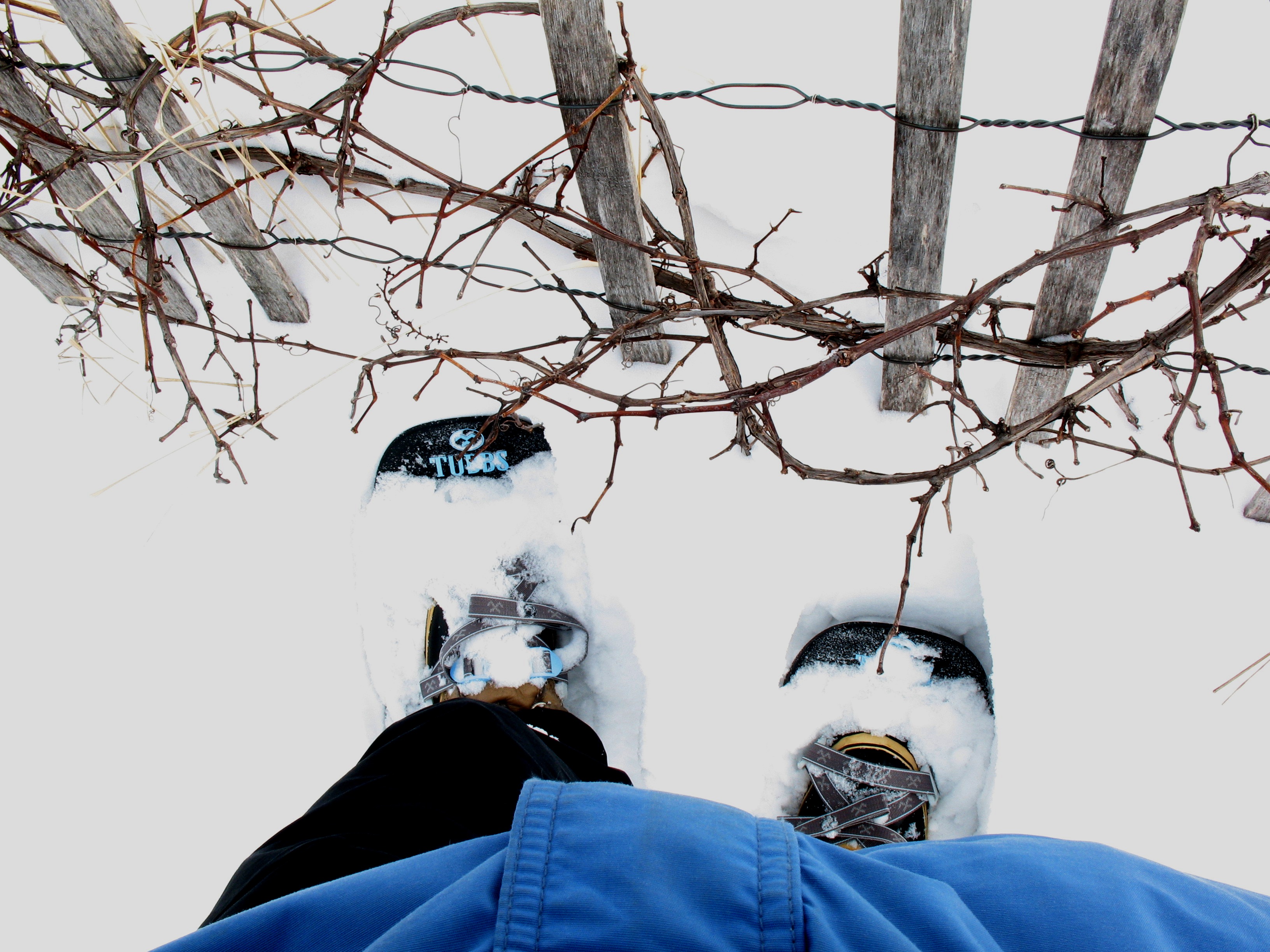
We’d opted not to get poles. We see our hiking comrades out poling their way through the snow, and assume there must be something to it. But, from my perspective, the whole point of snowshoes was that they were hands-free. So, we slipped into the easy, cinch-up bindings, and headed out into the yard to check them out. They’re easy! It’s a breeze!! Without another thought, we launched off on our favorite route, up to the Empire Bluffs.

Hands-free, with snowshoes!

Hands-free, with snowshoes!

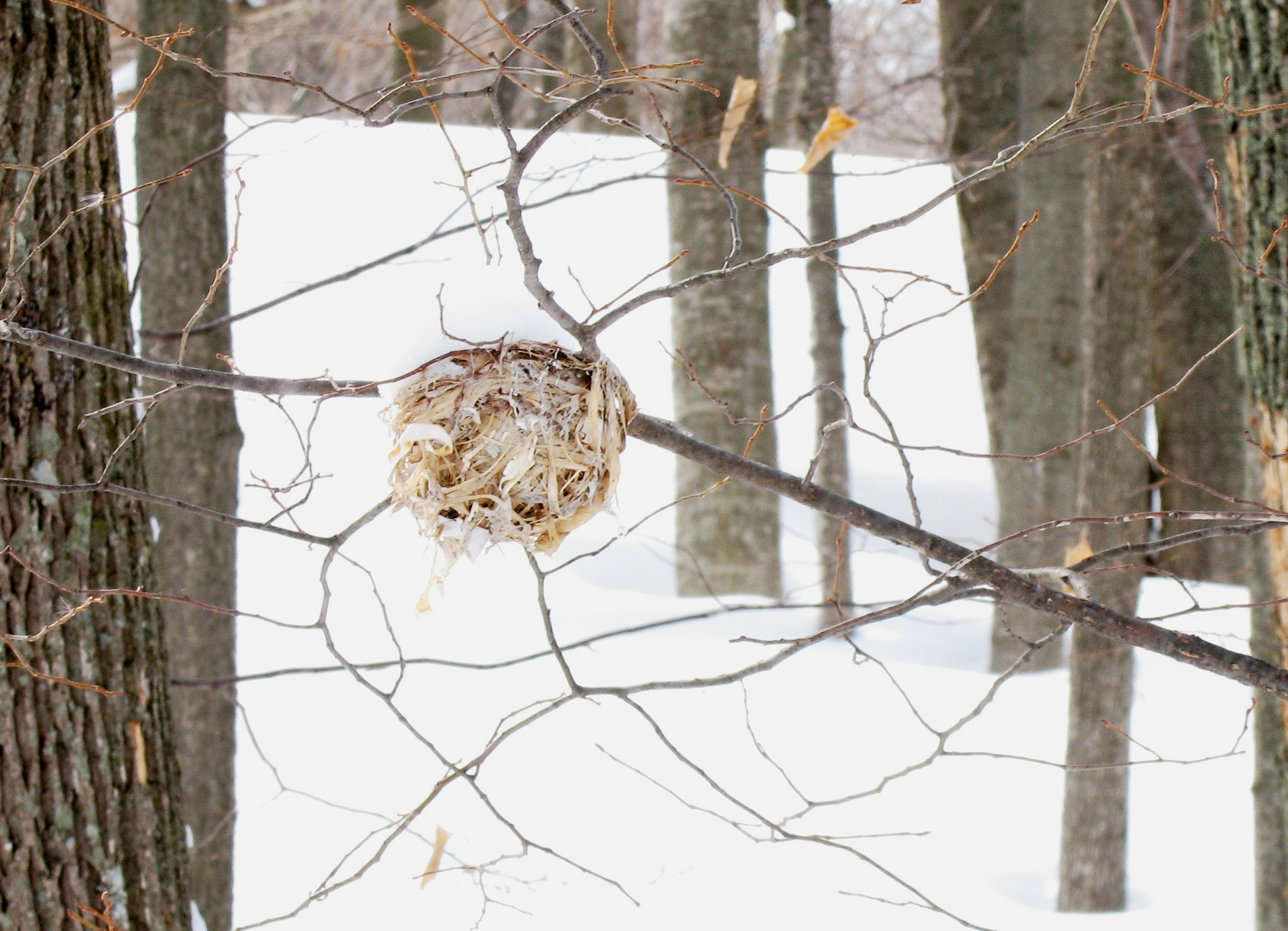
The best thing is that modern snowshoes have incredible traction. They have teeth that dig into the icy snow, and rim cleats, too. I never felt so sure-footed. They let you head off into deep virgin snow, without so much as a second thought. In our regular winter boots we didn’t dare step off the trail, or we’d be ass-deep in snow. I saw a bird’s nest, off the trail, and headed out to take a look. These snowshoes give unfettered access. You can wander off to see whatever beckons. (And then follow your own monster-tracks back to the trail. No Hansel and Gretel “lost-in-the-woods” issues.)

New vistas, off trail

New vistas, off trail

There is a lovely rhythm to the snowshoes’ scrunch and slap of progress.

We figure that our standard, hike to the bluff (including the road up to the trailhead) runs about 3 to 3.5 miles. The outgoing leg is a pretty steep climb, at times, but the snowshoes tackled that like a champ. We probably put in some extra distance, because of the regular temptation to take off into previously inaccessible areas. We worked a little harder, too, because tramping through fresh powder was a novel option, even if we stuck to the general area of the trail. Still, they are comfortable and, for winter gear, relatively light and sleek. I didn’t fall once! (As compared to my luck on skis, where a major component of the exercise is the getting-back-up.)

They do use a whole new set of muscles, though. We felt it later that night—walking around on rubber legs. And, we slept like logs. We’re fine today—and some of that is the point of it anyway. We’d recommend it to anyone who’d like a back-stage pass into the beauty and quiet of the winter woods.

Cabin Fever Paranoia

A.V. Walters

Police Blotter

Police Blotter

For most of the locals, this winter is a little long in the tooth. They’re tired of it, and getting a little crabby. It’s showing in the local paper. At last report, the snow total was 228 inches, just three shy of breaking the county record, to date. Since then, we’ve probably had at least three inches. That means that this year will be a record double header—in both temperature and snowfall.

You’d think everyone would be excited. Where’s their pride in being here, and witnessing this little bit of weather history? Noooooo, people are ready for Spring and are tired of all this. The headlines are revealing: “COLDEST, SNOWIEST—Winter to Break Records; Man and Wildlife Cope.” The deer and wild turkeys are suffering with the cold and deep drifts. The wildlife guys, at the DNR, have suspended the rules against harboring ducks and waterfowl. They need open water on our rivers and inland lakes so they can take off, and it’s not easy to find. People are finding, and rescuing downed ducks. So, if officials catch you harboring a duck, they won’t prosecute. They’re even giving out information on where you can find open water to release them.

Even the snow plow drivers, are weary. “It’s starting to wear on all of us… It’s always fun in the fall, to start plowing, but by now, it’s not fun anymore.” (According to their supervisor.)

A week or so back, a couple warmer days and fierce winds broke up the ice on the Lake Michigan. Suddenly the lake, which had reached over 80% ice coverage, was once again a wild and thrashing deep blue. It was impressive. I mentioned it to the guy in the local grocery store. He nodded, acknowledging the really awesome power of a Great Lake.

“Plus,” I continued with some enthusiasm, “With the Lake open again, you know what that means?”

He just looked puzzled.

“We’ll get more lake-effect snow.”

He just groaned and put his face in his hands.

We’re in another cold snap, now—you know, Polar Vortex, the sequel. We hiked up to the bluffs to see the lake. It’s starting to fill in again—frozen out almost to the visible horizon. They say it’s back up to 50 %– in just days. And, it’s snowing. The paper says that, with all this snow, there are concerns about Spring flooding.

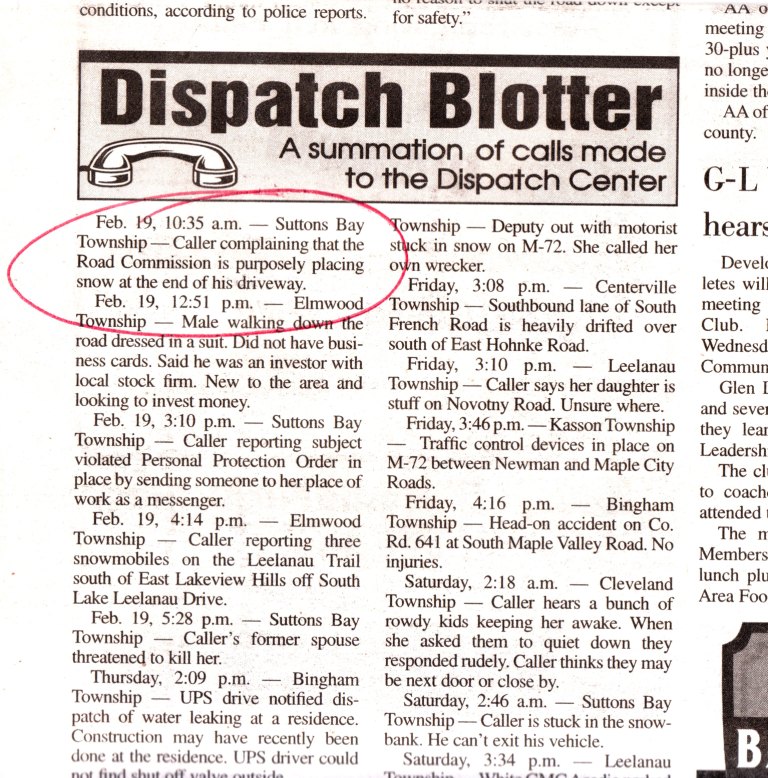
We love the local paper. It covers all the small town stuff, high school sports, ice-fishing events, bowling, that kind of stuff. Rick loves the police Dispatch Blotter. This week though, the police blotter showed that winter is taking its toll. A paranoid caller complained. “…the Road Commission [snowplow] is purposely placing snow at the end of his driveway.” (Rick had a good laugh, at that one.)

Pipeline Postscripts

A.V. Walters

mid feb

I lived in California for thirty-five years. Rick lived there all his life. It is in our blood to be water-thrifty. Conservation is a lifestyle issue—not to flush every time, short showers, dozens of little tricks learned over time to save water. That is not the culture in Michigan. Doing dishes, my brother doesn’t think twice of letting the water run, while a conversation or other task takes him away from the sink. Watching, I squirm. Here people have lawns, and they water them, with sprinklers.

With our uber-winter this year, many have had their pipes freeze. There are four communities in Upper Michigan where the entire towns are at risk of freezing pipes. (Our water temperature at the tap is 36 degrees.) In L’Anse, Michigan, the townsfolk are being advised to let their faucets run—constantly, to keep the mains from freezing solid. Some developments were built with plastic supply lines. Plastic won’t conduct electricity. If your plastic lines freeze you’re in trouble. The advice there is to cross your fingers and move out until Spring. (You’re crossing your fingers in hopes that the pipes themselves won’t burst, leaving you with an even worse mess when the thaw comes.) The utility wonks in L’Anse are telling people not to shovel the snow away from over their water lines. (Too late for us, eh?) It’s often a surprise to people from milder climates that a good layer of snow actually insulates from the more extreme cold.

Now that the welders have zapped our lines clear, we’ve been told to leave the tap running, all the time, until Spring. Our water-miser ways may have even contributed to the freeze in the first place. We’re struggling with what feels to Californians like water waste. My natural inclination is to shut off the tap—always. Now we can’t and I’m having trouble with that adjustment. You can hear the water run. You wake up at night, foggy-brained, thinking that you need to get up—someone has left the tap running.

I’m trying to adjust my attitude for the duration. Think of it as a water feature, I tell myself, you know, like a fountain. That’s the ticket. Don’t folks use water sounds for relaxation? I try to reconcile my discomfort with rationalization. After all, this water comes from Lake Michigan. I’m just recycling it—through the house septic, through the sandy soils of Empire and then back to the Lake. In the meantime, as a renter, I’m glad I don’t pay the water bill.


Training Cats

A. V. Walters

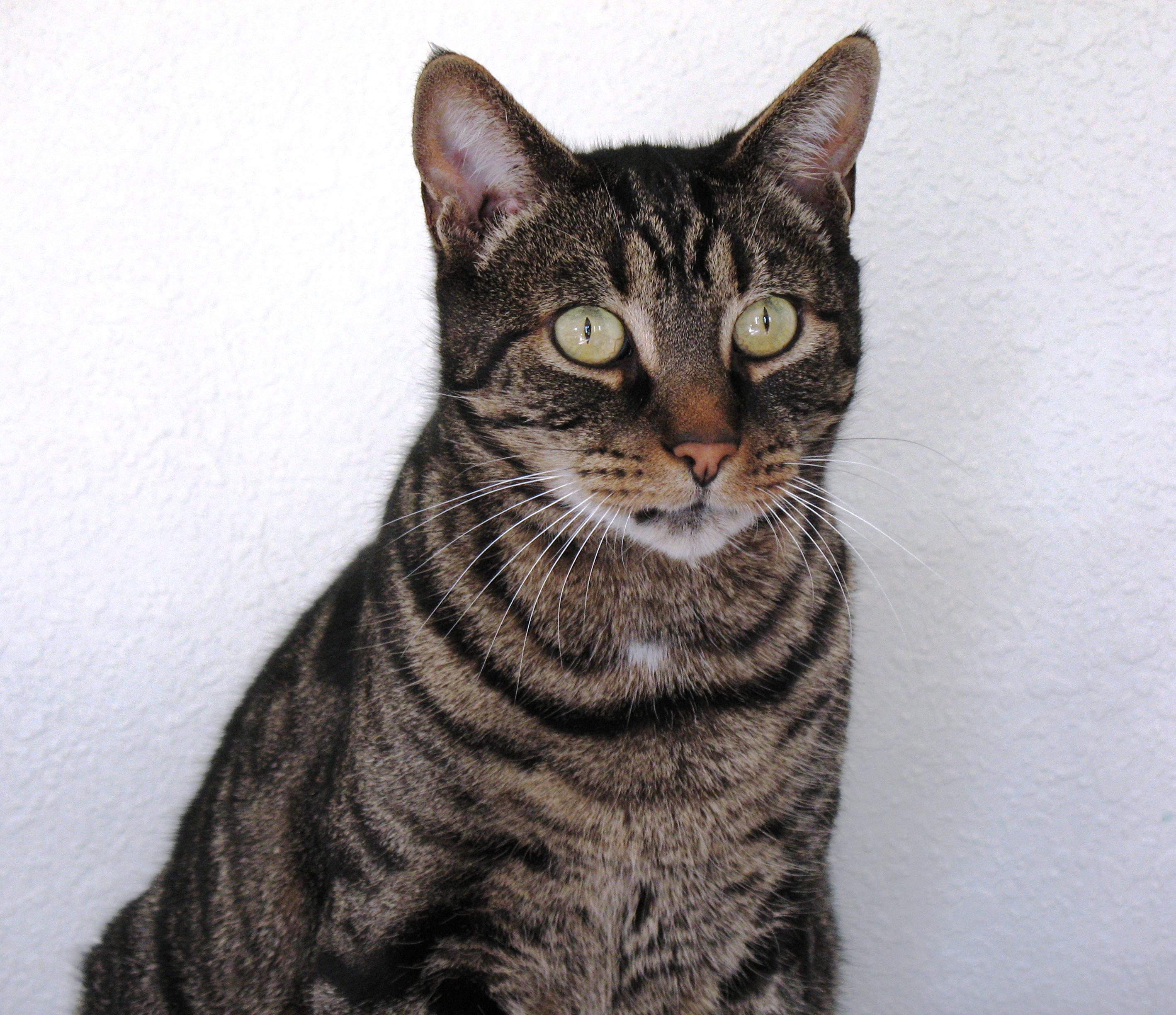
Who, me?

Who, me?

I’ve always had well-behaved cats. I train them as kittens. That’s right, trained cats. I’m from a large family where good behavior wasn’t optional. With kittens, I use a squirt gun to enforce the House Rules. It’s about boundaries. Some places are okay for cats and some are verboten.

Bob came to us as an adult stray. He is a genial cat, not bright but friendly. In fact, he is clueless. As a kid, I had a school teacher who, when confronted with less-than-perfect indoor etiquette, would demand, “Where were you raised, in a barn?!” In fact, it was a slur on the agricultural kids—the farmers and the French-Canadians. But I try to remember it as a cautionary guideline, with Bob. After all, he’s a twice-abandoned farm cat. And, as a matter of fact, he was raised in a barn.

When he first arrived on my door-step, Bob had no boundaries. He felt fully entitled to get up on the kitchen counters or the table, and help himself to whatever goodies were there. Well, something had to be done about that! I used a spray bottle and Bob learned. What he learned was that he could not go on the counters if somebody was around! Bob learned to be a sneak. So, we redoubled our efforts. To reduce temptation, we made a concerted effort not to leave anything out. Butter went into a covered dish. The dishes were mostly washed after a meal. Meat scraps went into the freezer (not the garbage) for disposal later. And we watched, like hawks, to catch him in the act. That was the tough part, because, as a sneak, Bob was good at quietly committing his mischief. The only notice we got was the thump of his feet hitting the floor, after his forays. He had a well-practiced innocent look. “Who me?” (Though, there were clear Bob prints on the countertop.)

For the most part, he’s well-trained, now, though there are the occasional lapses. The most egregious of his sins is his propensity to lick the cream-cheese frosting off of the carrot cake. After icing the cake, it needs to sit out for a bit to set up. Bob did it again, last night. Rick came in to a freshly iced, and licked, cake. We’ll need to be more diligent about putting the cake away—or covering it. And, well, it’s back to training… We can’t have cats mixing with cakes.

I’m glad that we’ve had such success with him. Most people think you cannot train a cat.

Dry-Run–

A.V. Walters–

We’re learning. It turns out that this little rental has taught us many valuable things about living with season. We’ve learned that ice dams are common in older homes (and inexcusable in new ones.) We’ve learned that it’s really important that one’s water supply lines be buried deep enough. It’s the coldest, snowiest year in decades; so, it is a good test for us. We’re holding up, and we’re learning.

Oh, we have no water.

Even back in sunny California, there would be cold snaps from time to time and many people would have their pipes freeze up. I remember, when I first moved there, I was aghast that many (especially older) homes ran their pipes on the outside! When I lived in Oakland, our water supply line entered the house on the front—above grade! In the winter, I wrapped that pipe—first with foam pipe insulation, and then with towels and plastic. We never had our pipes freeze. Here, water supply lines are buried deep (hopefully below the frost-line– about 48 inches, around here.) Sometimes, it’s not deep enough.

Did I mention we have no water?

If it’s any comfort, it’s not just us. A couple of other properties in the village have come up dry. There’s a whole triage routine to this, first you root around under the house to see whether the pipes under the house are frozen solid. You check the meter (if it’s running wildly, you have a burst pipe—if it’s not running at all (even with open faucets) you likely have a frozen pipe. This little cottage has heat tape on the pipes. We learned that after the water stopped, when Rick was running his diagnostics. Once you’ve identified that the problem isn’t under you, you need to find out what it is. If it’s in the Village water main—they need to fix it. If it’s in the line between the main and the meter—you need to fix it. This is where it’s good to be renting. The standard solution (after you call the landlord) is to call in a welding company who will essentially use jumper-cables to melt the ice in the line. Not many companies will do this kind of work—they say the liability is too high. Huh? Wow, that’s not the kind of response you want to hear…

So, we’re still waiting for water.

Today is day three. We’re carrying water, by bucket, from the neighbors. We’re starting to look a little scruffy and the dishes are piling up in the sink. The company that still does this kind of work is in high demand right now. Take a number.

And, there’s some small-town humor in it. I went to the Village office to start the “who’s side of the line” investigation. Our friendly clerk took down the information. When I gave my name, she looked up, “Oh, you’re the one that got married last week.” It was a statement, not a question. They run all the vital statistics info in the local paper. I have a distinctive first name.

“Yup, that’s me.” Yup, that’s us. Geezer newlyweds. Later, the village crew came down to investigate the problem. You just know that they’d all been told. Later, a neighbor from down the block dropped by to assure us that we could come get water at his house. Small towns talk. It’s not a bad thing. People in town see the construction cones. They read the paper. They hear that some folks got married, and some are froze-up. It’s about community.

Our future building plans keep adjusting. We are now serious about adequate insulation and ventilation in the roof, in order to fend-off ice dams. And now, you know we will bury our water lines—deep. This little cottage has been our dry-run for winter living. We just didn’t know how dry.


Postscript:

Finally, they came to free up our lines. That freed me up to run to the store for dinner groceries. At the checkout, the clerk (who lives around the corner from us) nodded, “I hear your pipes are froze up.”

I smiled, “Not anymore, the guy’s there now, fixing it.”

“Runs down the driveway, does it?”

“Yeah.”

He nodded knowingly, “You folks keep a tidy driveway, could be part of the problem.”

“What’s that?”

“You know, you could leave some snow in the driveway—for more insulation.”

I howled. “I’ll tell him.”

So it’s a small town. They talk, they notice. They hear about troubles and they have opinions.


Somewhere to Put It–

A.V. Walters–

“No, you have to start a lot wider than that. Over by the trailer is your line.”

I looked at him like he was crazy. “Dad, it’s a driveway, not a runway.”

“Just do it. In February, you’ll thank me.”

It’s still snowing here, and that brings back my father’s voice. When I was a teenager, we moved north to snow country. For my dad, the move took him home to the routines of his youth. We had a steep learning curve to adapt to the Keweenaw snows. He was doing the teaching, and we were doing the shoveling. There are two basic frameworks for how to approach snow control—pick a line of demarcation and stick to it, or clear wide in preparation for a winter of snow. My dad adhered to the old ways, taking a seasonal perspective on snow removal.

We felt silly; at our house we started the season clearing the snow five to ten times the width of the actual driveway. The neighbors scooped their driveway only 10-feet wide. Ours looked like a parking lot. We used the traditional Yooper snow scoop, pushing the day’s snow far from the driveway, into the woods. We thought our Dad was nuts. We scooped and shoveled anytime there were 2, or more, inches of snow. Needless to say, we shoveled—a lot.

By February, it was clear that there was a method to his madness. It snowed and snowed and snowed. And, we shoveled and shoveled and shoveled. Our neighbors were still maintaining their 10-foot driveway, but the accumulated piles on either side were so high that they had to throw the snow up, and over the banks they’d created. Then, they actually had to climb up on top to re-shovel the piles back even further. And, they had no visibility entering or leaving their driveway. Having pushed our early snow way to the sides, we were still shoveling, but we had plenty of space to put the accumulated snow. Our banks were manageable, and our driveway clear. My dad didn’t even say, “I told you so.” He just crossed his arms and nodded.

This week, in the local paper, the headline read, “We’re Number Two, Thankfully.” Snowfall to date, here in Leelanau County, is second in the state only to my old haunts up in Keweenaw County. Nobody with a shovel wants to be Number One. (Ask my mum and my sister, back home.) Many, these days, avoid the whole issue by using snow-blowers (or by scurrying, tail-between-the-legs, to Florida.) We still shovel. Rick does almost all of the heavy lifting here, and he started early season snow removal with a wide open swath of driveway. (How did a California boy know such a thing?) Though we didn’t expect this year’s record snows (and, admittedly, our banks are higher than my Dad would’ve liked) we still have a wide, clear area in our driveway.

It’ll be interesting how our two counties fare over the rest of the winter. Keweenaw’s lake, Superior, is 93 % frozen, considered “frozen over” for all practical purposes. That means that back home they won’t be seeing any more “Lake Effect” snow. Our lake, Michigan, is only just over half frozen, so, we should still be seeing Lake Effect snow, for some time. Who knows, we may yet be Number One!

I help some with the shoveling, and I like it. Nothing brings back my father’s voice like a smug and heavy snowfall in February.

Laundry

A.V. Walters

Today is one of those mundane days when you have to take care of the basics. Little else is more humbling, in modern life, than a trip to the Laundromat. When we first found our little winter safe-haven, it was advertised as having “laundry hookups.” We shrugged; we’d just buy a stackable unit and take it with us when we left.

Then, we made the trip to see our little honeymoon cottage. With just one glance at the laundry closet, we knew there was a problem. First, it was too small to hold conventional American laundry machines. Closer inspection revealed that, sure enough, there were water hook-ups, but there wasn’t a drain line, or venting for a dryer. Clearly, despite the listing language, nobody had ever done laundry in this cottage. When we mentioned this to the landlord, he hemmed and hawed. I can’t blame him; it is a vacation rental, after all. Who wants to pay the utilities so folks can go home with clean laundry? He said it hadn’t come up—vacationers and all. They used the Laundromat here in the village. We signed the papers and moved in, anyway.

It turns out that the local facilities are geared to the summer rental cycle. In English, that means there are no laundry facilities in town during the winter. We Googled it. There are no ‘winter’ Laundromats in the county, at all, except one on the bay-side of the county—about as far as one can get from us—maybe thirty miles. So, we can go to Traverse City, the next county east of us (a mere twenty-two miles), or we can go into the county south of us, a fourteen mile drive. Laundry has turned into a bigger deal than we could have imagined.

Generally, we head south. It’s shorter and the Laundromat there is cleaner, friendlier and fully staffed. There’s a bit of a snow squall out, today, and the run to my favored facility was hairy. I nearly spun out once, that, and the poor visibility had me creeping along at grandpa speeds. When I finally arrived, the attendant met me at the door. Sundays have short hours and I had just missed “last call,” the latest that they’ll permit you to start a load.

I’m stubborn. Having gone to the trouble of loading everything up and heading out into the snow, I wasn’t about to go back home without clean clothes and linens. Especially the linens. You see, most of our things are in storage and we have only one set of sheets. If I gave up for the day, I’d have to haul the dirty clothes back inside, pull out the sheets, make up the bed again with dirty sheets, only to have to strip them again tomorrow on a renewed laundry quest. So, I set off for Traverse City.

Surely, I figured, there must be a shortcut to eliminate the northern dogleg, before heading east. But if there is, I couldn’t find it. Peering through the snow, I took unfamiliar roads that seemed to head in the right direction. Soon, the road I was on got narrower and narrower (and the snow got deeper and deeper) to a dead end. I had to backtrack. After a couple of turns in near white-out conditions, I was lost. So, I headed north, knowing that it would ultimately have to take me to Empire—and then I could head east. Sigh.

Here, in the Traverse City Laundromat, the last dryer load is lofting in grand circles. My quarters are depleted. Soon I can fold, and head home into the snowy night. Like I said, these little household management details will keep you humble.


The Other Side of Winter II

A.V. Walters

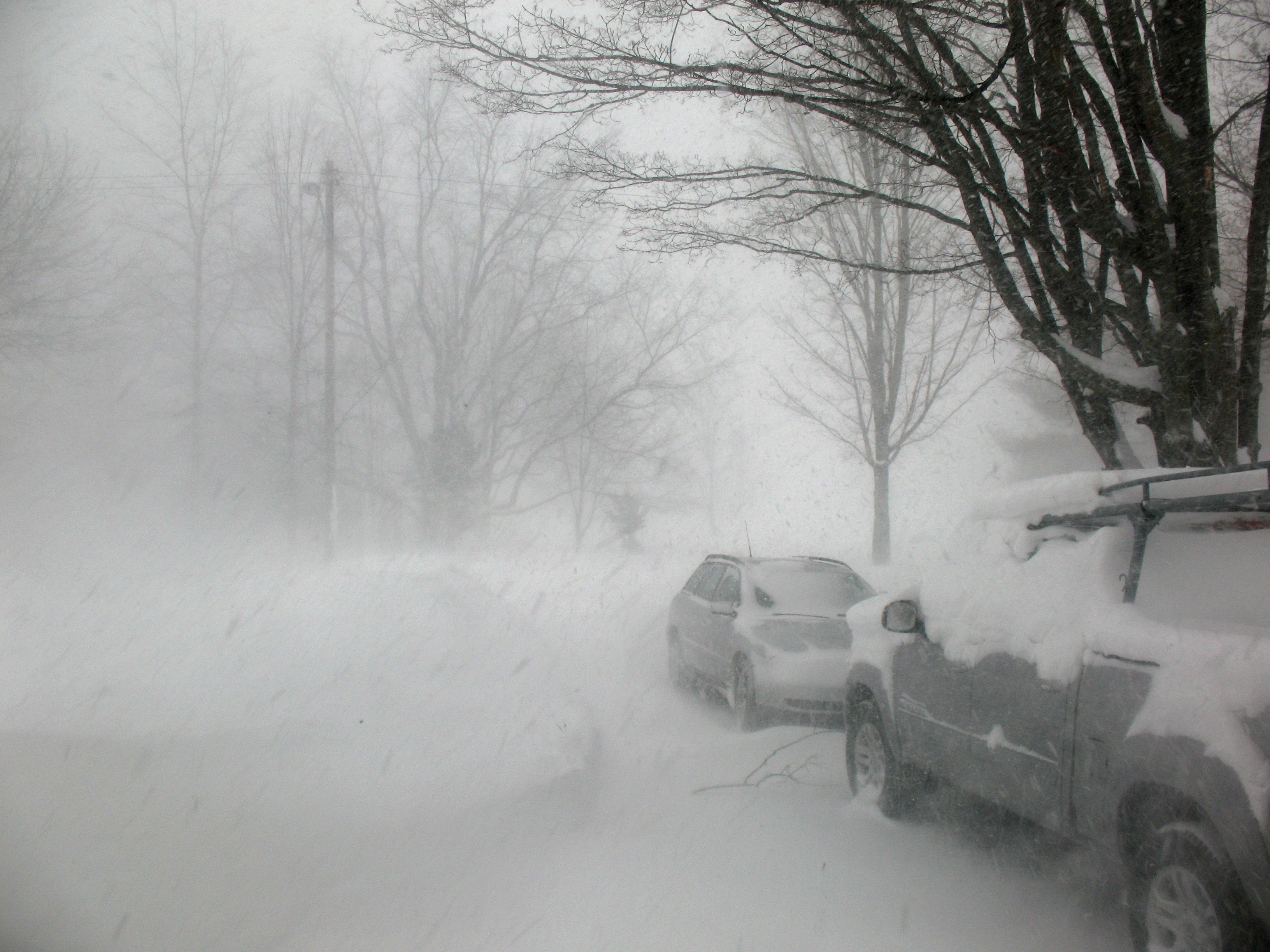
Too windy even to bury the car!

Too windy even to bury the car!

It’s blowing and cold out there. It is snowing, but the wind is so strong, that it’s tough to tell what’s new snow, and what’s just being whipped around and redistributed. The usual storm pattern swoops across from the west or northwest. We look out and the snow is horizontal. We’ve noted from the national weather maps that in the center of the county, near where we’ll be living come spring, there’s a pocket of particularly heavy snow accumulation. One look at the winds today tells the story. All the snow from here ends up there. I see a Kubota in our future.

Without appreciable new snowfall (indeed some areas now have less than before) the driveway has drifted over and needs another shoveling. Rick has taken the laboring oar on snow removal. He maintains a beautiful driveway and paths through the yard. He’s learning to sculpt them so that the wind helps keep them clear, though in some places, drift, it will. I’d love to brag about his efforts, but since much of my family lives far north of here (and with really heavy snow) they’d just scoff. My niece reported on her facebook page the other day that she and her children are tobogganing off their roof. We just can’t compete with that.

Still, some things are universal. No matter where you are, everyone complains that, shovel as they may, they just hate it when the plow comes and negates their hours of work, filling in their driveways with road accumulations. Rick bemoans that it isn’t just more snow, plow snow is heavier and crustier. If you let it sit it will turn to a driveway-blocking wall of lumpy ice. It’s not an observation; it’s a conviction.

This past week our local weekly paper did a feature article on ‘the snow plow drivers of Leelanau County.’ It’s appropriate. Those guys (and they seem to be all guys) are doing a hell of a job keeping the roads clear in this record-breaking year. Now, in mid-January, our to-date snow-fall total is 152 inches, which exceeds the usual seasonal total. Only two weeks ago the paper quoted a local meteorologist as saying that we’d hit our 150 and then it would stop. Think again. Anyway, I had to laugh when the veteran snow plow driver stated that his pet peeve was when homeowners would push their snow into his road. (Apparently it makes for a rough ride.)

The War of the Worlds–

 A.V. Walters–

We’ve had a couple of gorgeous days, low to mid-thirties (F), warm by winter standards, some sun and wind. It’s given us some lovely hikes, before the nippy temps return tomorrow. Some predict a return of the Polar Vortex, others, just a resumption of seasonally, cooler temperatures.

Last week, NPR did a piece on the up-side of the recent Polar Vortex. It turns out that the Emerald Ash Borer—the imported critter that is devastating our Ash forests—cannot survive in the super-frigid temperatures spun off by that Northern phenomenon. Indeed, a number of the pests on the move, may be stopped (or slowed in their tracks) by a return to the type of winters we knew as kids. And, the models for climate change (essentially more weather extremes) may well mean repeated episodes of the Polar Vortex. We can complain about the cold, but if it means hope for the ash trees, fewer ticks, or other invasive critters, I’m all for it.

The science is out of Minnesota, where they found that temperatures in the -30F range, kills the larvae of the Emerald Ash Borer. Because of Lake effect, we don’t get those uber-low temperatures, but I can only hope that repeated cold episodes will weaken the larvae and that fewer of them will survive the winter. What can I say, I’m an optimist.

The Ash Borers were introduced by humans. The ticks are moving north with climate change. And, interestingly, the incidence of the super-cold Polar Vortex appears to be the result of (or at least related to) the destabilization of the jet stream, caused by, you guessed it, human-induced climate change! It reminds me of the Orson Welles radio play—where the invading monsters were ultimately undone by the rich, bacterial biodiversity of the Earth. We have become invaders of our own planet—and at least in this small regard, maybe the general disease of climate change is acting as the cure for some of the specific symptoms. Lucky? I guess that’s a debatable question. I’ll keep my fingers crossed.

Musings from the Polar Vortex–

A.V. Walters–

Just enough snow.

Just enough snow.

Now there’s a new phrase for you, eh? The only vortex part of it is the rushing-in from the void of all the misinformation about weather, generally, and climate change, specifically. Oh, how the reality-based wonks among us rue the day that somebody started calling it “global warming.” It so distorts the opportunity to study the facts, and create meaningful policy, (or dialogue) in an atmosphere of an anti-science witch-hunt.

Now, the cold snap has subsided, leaving us in the more normal seasonal range of temperatures in the 20s. This weekend they’re predicting a warming trend—one that will bring us sunshine and above-freezing, nighttime temperatures. You’d think we’d be happy about that. In fact, it creates just another set of problems.

First, there’s the leaking roof. In winter’s cold, it’s not a problem. But when things warm up, the leaking roof, in combination with ice dams (damns?) makes this little rental an interesting place. (Buckets and mopping up.) The landlord knows, but it was a bad roofing job and now there’s nothing he can do until spring. At the same time, he plans on putting in new windows—which will be a big improvement, though we’ll be long gone, by then.

That kind of freeze/thaw cycle also creates treacherous roads. The thaw provides the fodder, in the freeze period, for black ice and other hazards of navigation—both pedestrian and vehicular. It means we’ll be strapping on yet another layer of winter gear (spikes) onto our boots. I used to think that these were for old folks. However, my mom swears by them and she insisted that they become part of our new, winter wardrobe. I’m a regular Yeti fashion-plate. At least it’s safe.

And, finally, I don’t want our snow to melt. I’m just about to get cross-country skis. I like look of winter. I love roads with a nice, thick, white, base. (I’m not a fancier of salt or the dirty slush it brings.) So my fingers are crossed that the snow stays through the warming spell.

There are northern things that will take some adjustment. The winter tap water is frigid. My California roots say, “Don’t waste water—use it cold and straight from the tap.” My fingers say, “Skip the frostbite, run it ‘til warm.” The water is so cold that it hurts your teeth to drink it. Northern living takes longer to get anything done, whether it’s the time suiting-up, or shoveling-out, life has to be a little more… intentional. And, the butter is too damn hard to spread on toast. (I can hear my sisters, “Turn up the heat, goofball. Good Lord,” shaking their heads, “They live like a couple of Eskimos.”) This might be solved when we have our own place, and it has insulation. For now, unless I’m baking, the kitchen is chilly. Otherwise, our winter redoubt suits me fine, for now. If only someone could convince the cats.


The Other Side of Winter

A.V. Walters

I get comments, (mostly by email) from friends and family when I post a blog. They’re usually supportive but, occasionally, they’re smart-assed. There was a range of comments on my last post. Apparently everyone wants to know–how are these two transplants doing with winter? It makes me wonder if bets have been placed. One friend thanked me for posting a positive perspective on the season. This is, after all, one of the most intense winters in decades (which is why everyone is so curious as to how Rick and I will handle it. Of course, to us, it’s all new.) My sister set me straight.

I guess my warm and fuzzy “snow dusting” blogs are pissing her off. She lives waaay up north, and they’ve had so much snow, that they’re running out of places to put the stuff. My mom reports that the snow banks are between 10 and 12 feet high. My mom is delighted; but she’s not doing the plowing. For many, they have to get up early to deal with the snow before they go put in a full day at work. For my sister, Kelly, lately that’s been three or four hours of extra work each day, hand shoveling out her entry and the path to her chicken coop. Today she was especially heroic—she snow-shoed over to my mother’s satellite dish, to clear it, so my mom could get reception. (Poor mum, last night she missed Downton Abbey!) Kelly’s husband also puts in several hours each day with the plow—besides their home and store, he keeps a number of other families clear.

Kelly is not alone in her frustration. She runs the town’s general store, so she hears about it from everyone. Over the weekend a colorful, but not particularly volatile local came into the store, stomping the snow from his boots and railing, “I’ve had it. Snow just isn’t fun anymore! I’d suck someone’s cock if the bastard would just blow out my driveway!” He hand-shovels, and has run out of places to put the snow. Now, he’s loading it into a wheelbarrow, then carting it across the highway, where he shovels it again, mostly up over the existing banks and into the woods. He hopes the Road Commission doesn’t notice that some of it strays onto the highway. (You’re not supposed to shovel your snow into the roadway, though the plows feel free to fill your driveway with road snow.) Keweenaw County checked in earlier this week at 167 inches for the season, and that was before the most recent foot, or so. I guess this all helps to keep the northerners fit.

So here I am, singing the praises of the beauty of winter. Add to that, I work from home—I don’t need to shovel out everyday—and Rick has taken up most of that duty, in any event. My family and I talk, everyday. Discussions about the weather are sometimes charged. There’s a fierce one-upsmanship to even the most casual comparisons. My mother called first thing this morning, and demanded to know, “What’s your temperature?!” (“Oh, hi mom. It’s 9.”) “Yeah, well it’s minus 7, here. Visibility is so low, I can’t see the mountain!” Really, it’s much milder here; I can’t compete.

Yesterday, my brother called to warn me about “wind chill.” (We’ve actually had a Wind Chill Warning.) We’re in a cold snap—it’ll put us in the single digits and negatives for the better part of the week. Really, though I’ve been in California for thirty-five years, I didn’t slip into a coma. I do remember wind chill. It seems that everywhere, but here, it is really snowing. My brother (a few hours south of us) has seen 14 inches in the last two days. My mother (well north of us) has seen even more. Us? A dusting, maybe five inches over the past four days, barely enough to shovel every day. Today, we are seeing the beginnings of the “big storm”. We check the radar by keeping an eye on the weather websites.

Critters here are challenged, too. It’s tough when, everyday, you have to dig deeper for your food supply. The last two nights, rabbits have come to clean up what’s left of the birdseed we threw out for our jays, juncos and chickadees. We get squirrels, too, and that makes me nervous. The squirrels can get into the engine compartment of your car. Sometimes they’ll even eat the insulation on the wiring. I mentioned it to Rick, who noticed that the squirrels seemed particularly interested in hanging out under and around his truck. (He went out to check the engine compartment—just to make sure there weren’t any rodent condos going in. Believe me; you don’t want to tangle with squirrel HOAs!)

Inside, (though I don’t think it’s any gotten any colder) the cat has taken to snuggling up all day on the electric baseboard heater. It hasn’t the charm of a good woodstove, that’s for sure. It’s a little pathetic, but we all do what we can.

Our local papers are full of weather reports and snow records, too. Our year-end snow count topped 100 inches. The local Meteorologist promised that the colder temperatures would slow the snow. Also, he points out, if the Lake freezes over, it will lessen the “Lake Effect” snow. If the Lake freezes over? Look at a map. See how big Lake Michigan is? They don’t call it a Great Lake for nothing. When a Great Lake hits 90% ice cover, it’s said to have “frozen over.” (Normal winters usually see a 50% cover.) How often does a freeze over happen? Well, in the last 110 years, only four times (1904, 1976-1978.) His report is otherwise scientifically problematic, saying (and I quote), “Northern Michigan only gets 140 to 150 inches of snow each year. We’ve already had 100 inches, so that leaves January, February and March to get an additional 50 inches.” What? So, if we reach our statistical norm, someone’s going to turn off the snow?

We’re lucky. Nestled next to the lake like this, we get the snow, but not so much of the cold. Inland areas can get bitterly cold. And, we have great winter gear. My oldest sister abandoned the state a couple of years ago, saying she never wanted to be cold again. When we decided to move east, she gave us all her winter gear—coats, hats, scarves and mittens by the bin-full. (We’ve got so much down, we’re up!) We have no excuse for being cold, or for staying in. In fact, as soon as I finish this, Rick and I are headed off for a walk. We thought we’d go take a look and see what the Lake is doing.

Winterizing

(from November 1, 2013)

I haven’t done this since I was in college, renting cheap housing and doing everything I could to make it habitable for the cold months. We didn’t move in time to get building underway, so we’re hanging close so we can get a jump on spring, when it comes. We’re in a “vacation” rental—read “summer.” It’s a very cute, little cottage, in a charming, little village on the shores of Lake Michigan. It’s a beautiful destination location for summer tourists. We’ll see how it fares for a Michigan winter. The landlord says that it’s insulated. We’ll see about that, too. What is clear is that it has single-pane windows.

Some of the windows have storms, that is, storm-windows, and they’ll help. Growing up, I remember the semi-annual ritual—spring and fall—washing the windows and taking down the storms to put up screens, followed six months later with more window-washing and taking down the screens to put up the storms. It marked the seasons and was the 1960’s version of energy efficient.

But these storms leak like sieves and even with them, in the cool evenings, the glass radiates cold and drafts. Closing the curtains helps, but with winter coming, we’re resorting to the old college trick of covering the windows with heat-shrink plastic. In the 1970s, especially after the oil shocks of 1973, everyone started to install dual-pane windows. Even today, upgrading windows and installing weather-stripping is one of your best bets for saving on heating costs.

Like most people, I grew up with single pane windows. They fogged over whenever anyone showered, or when my mother made dinner. I remember waking to elaborate, frosty patterns on the windows—lacy fractal beauties that would melt as soon as the sun hit.

Nostalgia is a wonderful thing. It is not energy efficient, though, and so we’re battening down the hatches for the winter, ahead. Right now, it’s windows and doors first—later we can consider more drastic measures, if needed. If we can figure out the wind patterns, we can build snow-walls to slow drifting over the driveway and front entry. If memory serves, I expect we’ll do a fair measure of shoveling. It’s one way to get fit (and stay warm.) If the weather is brutally cold, we can always try “banking”—piling snow around the house for a wind-break and extra insulation. I remember that being helpful in my college days.

Maybe we’ll need these things… or, maybe I’m just scaring Rick. He was born and raised in the Los Angeles area and this relocation, (even from Northern California) is an exercise in bravery, for him. Bravery or foolhardiness! When they heard his plans, friends all raised their eyebrows, “Michigan? Well… it gets pretty cold there. And, it snows, ya know.”  He’d nod. He’s heard it all. Back in Two Rock, they’re probably still harvesting the tomatoes and squash, that’s if they remember the garden. Here, it’s in the thirties.

Like I said, we shall see. We’ve been here three days.

Update: It’s winter, now. It’s that time of year when instead of reporting the likelihood of snow as a percentage, they report what percentage of the day it will snow. Rick has sealed us up as tight as possible and we bought our first snow shovel. We’re looking for used, cross-country skis and snow-shoes. For the most part, we have great winter gear and we’re trying to use these short days and long nights for creative ventures. There is that long standing, winter temptation though… hibernation.

We Are Not Alone

A.V. Walters–

Over Thanksgiving, about 8 inches of snow fell in Western Michigan. If, up to then, we’d had any doubts about winter, or where we’d moved, that white blanket made it clear where we were. This isn’t Two Rock, anymore, Toto.

The snow was lovely; we’ve walked in it every day, here around town and in the trails along the dunes. I was reminded how snow records comings and goings. Here in our cozy cottage, we could remain oblivious to what’s going on outside. We see deer in the field, across the way, but we’re otherwise not privy to the wild world.

Not so with the snow. Whether you see them or not, the critters leave their marks. Just in this little yard of ours, we see deer tracks, many different birds, a zillion squirrels, big rabbits, little rabbits, a raccoon in the back alley and something we can’t recognize—it appears to be feline (with bigger feet than our cats.) We don’t actually see these things in the yard, (except the squirrels) but they are here, their trails are clear evidence of their comings and goings. There are a lot of deer. We see them often in the field and even on our “town walks.” The yards here in the village are peppered with well-stomped deer trails—everywhere where there aren’t dogs. A garden could never make it here without a substantial fence. We have to remember that, when we finally settle and start planting.

One of the funniest things is that people have yard décor here, including fake deer. Go figure. Stepping out to take out the trash in the evening you’re likely to bump into the real thing—so, what’s with the statues? I note that one of our neighbors has deer statues, (well, they’re actually flat, metal deer) and it is in the direct path of many deer tracks. Do the deer feel compelled to check it out, or is it just coincidentally placed where the deer go? In Two Rock we didn’t have fake cows or sheep (but, I shiver to recall, Elmer did have a fake deer.) The whole garden statuary thing is lost on me. Lighthouses, ship anchors, wagonwheels, windmills, gnomes (lake freighters!)—I just don’t get it. Instead I look out to the field and count the real critters.

Yesterday we took the bluffs trail. It pleases me that the trails are heavily used, even in winter. There’s still snow in the woods, so we can count the tracks of hikers, dogs and snow-shoers. The trail is a bit treacherous—a brief thaw glazed over the compacted hikers’ tracks and re-froze it all into a slick, lumpy ice-field. We neglected to wear our spikes, so we found ourselves walking in the deeper snow on the edges. It’s a workout, picking your way on the safe untrodden and crunchy parts, but it’s better than landing on your ass. It gives depth to the word, trudge—with its combined onomatopoeia and connotation of hard going.

I looked back at the trail and laughed to see that other hikers were also sidestepping the beaten path—our tracks mixed with theirs on the edges, making for a very wide trail—the equivalent of eight hikers, abreast. It looks as though we came through together—a crowd of belligerent nature lovers—when in reality we rarely see one another. We only know that other hardy souls are out in the woods, because of their tracks.