Archives for category: fences

We’ve never had three cats before. We didn’t plan on it. I’ve always taken my lead on cats from the Crosby, Stills, Nash & Young song, “Our House.” (“with two cats in the yard….”) Two cats makes perfect sense, especially if you get them together, as kittens. They keep each other company and they romp, tussle and roll.

2024 was another tough year. My Mum passed away in the Spring. A week later, a neighbor dog killed one of our cats, Milt. We mourned. Our other cat, Ollie, mourned. There was nothing we could do for him. After a few weeks he seemed to recover some—at least he resumed eating, and he even reveled in attention and grooming. I cannot say that we’d recovered, but it was good to see Ollie being more of himself. We were resigned to being a single cat household.

Then, three weeks after Milt was killed, Ollie disappeared. We assumed it was the standard Spring “got caught in someone’s shed” deal, and that he’d be home in a week.  And then he wasn’t. We talked to the neighbors. Where we live is pretty rural—there aren’t a lot of neighbors. We did the usual missing cat things—walked the roads, checked with animal control. It’s an unfortunate part of country living—lots of things can take out a cat. Dogs, coyotes, owls and raptors can all turn your fluffball into dinner. After a month I was despondent. At two months, my sister gave me ‘the talk.’

If you love cats in the country, you either have to keep them in, or you have to be prepared for losses. It just comes with the territory. We don’t want to keep them in. We spend a lot of time outside, in the garden, in the woods. Our cats have always followed us. They are indoor and outdoor companions.” Cats,” my sister said, “Are a renewable resource.”

At just over two months I started checking the ads for rescue kittens. I resolved not to get hung up on looks—that all cats need homes and I’d take the first set of brothers I could find. And so we got Maki and Red. Maki looks shockingly like Milt. He’s a long-bodied, short legged, medium hair tabby—clearly some Maine Coon in him—tufted ears, neck ruff, thick racoon-like tail. His littermate, Red, is the complete opposite. He’s a long-legged, short necked, short-haired, ginger tabby, with a long, narrow striped tail. 

When they arrived, Maki was much smaller, the runt of the litter. They came infested with fleas and ear mites. We’re old hands at cat care, we started combing and treating the ears. We held off a month on their first vet visit, to get them cleaned up a bit, and stabilize them. At this stage they were strictly indoor kitties. I have a nine pound rule. Kittens do not go outside unsupervised until they’re bigger than the average appetizer. We draw the line at nine pounds.

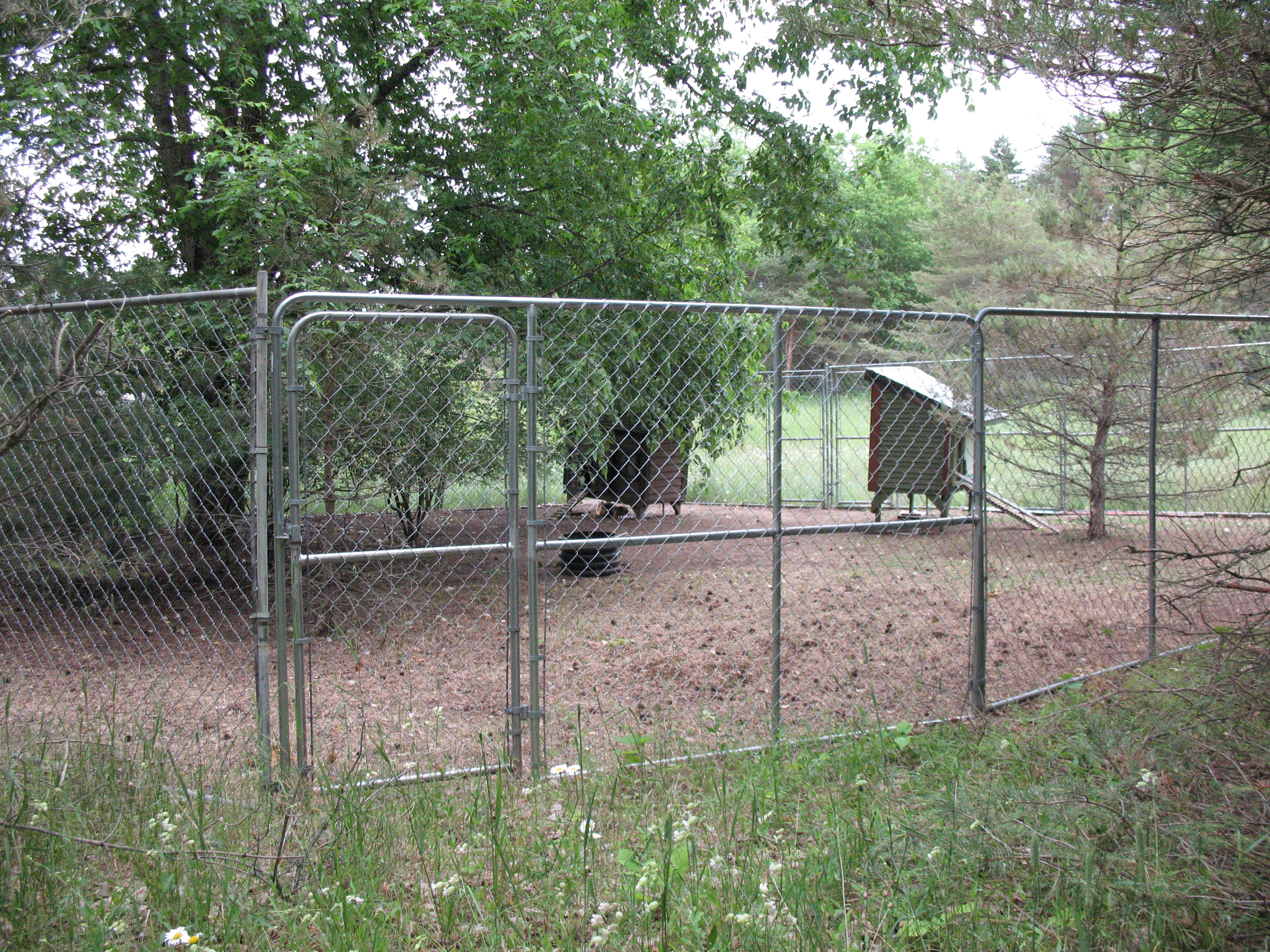
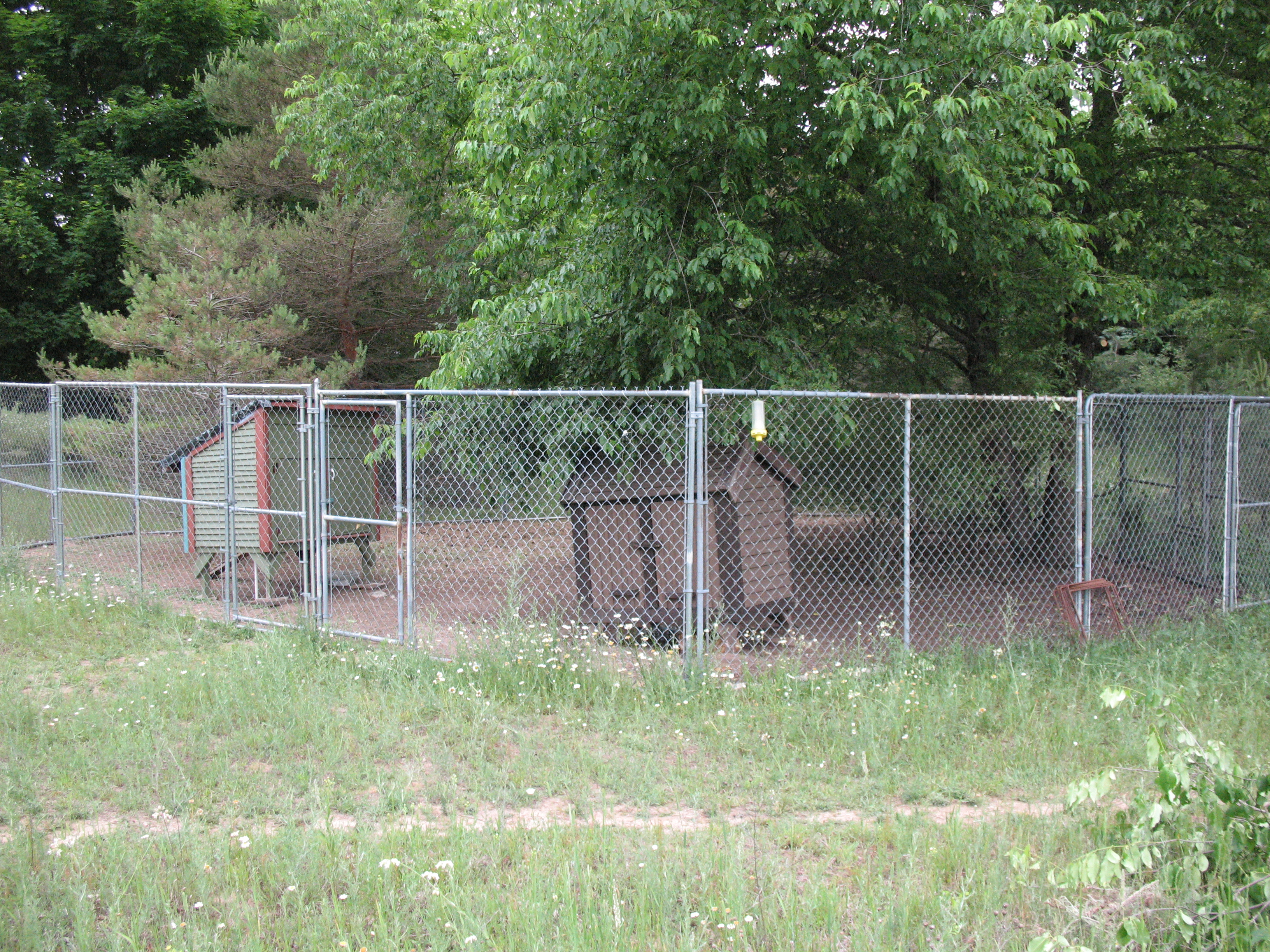
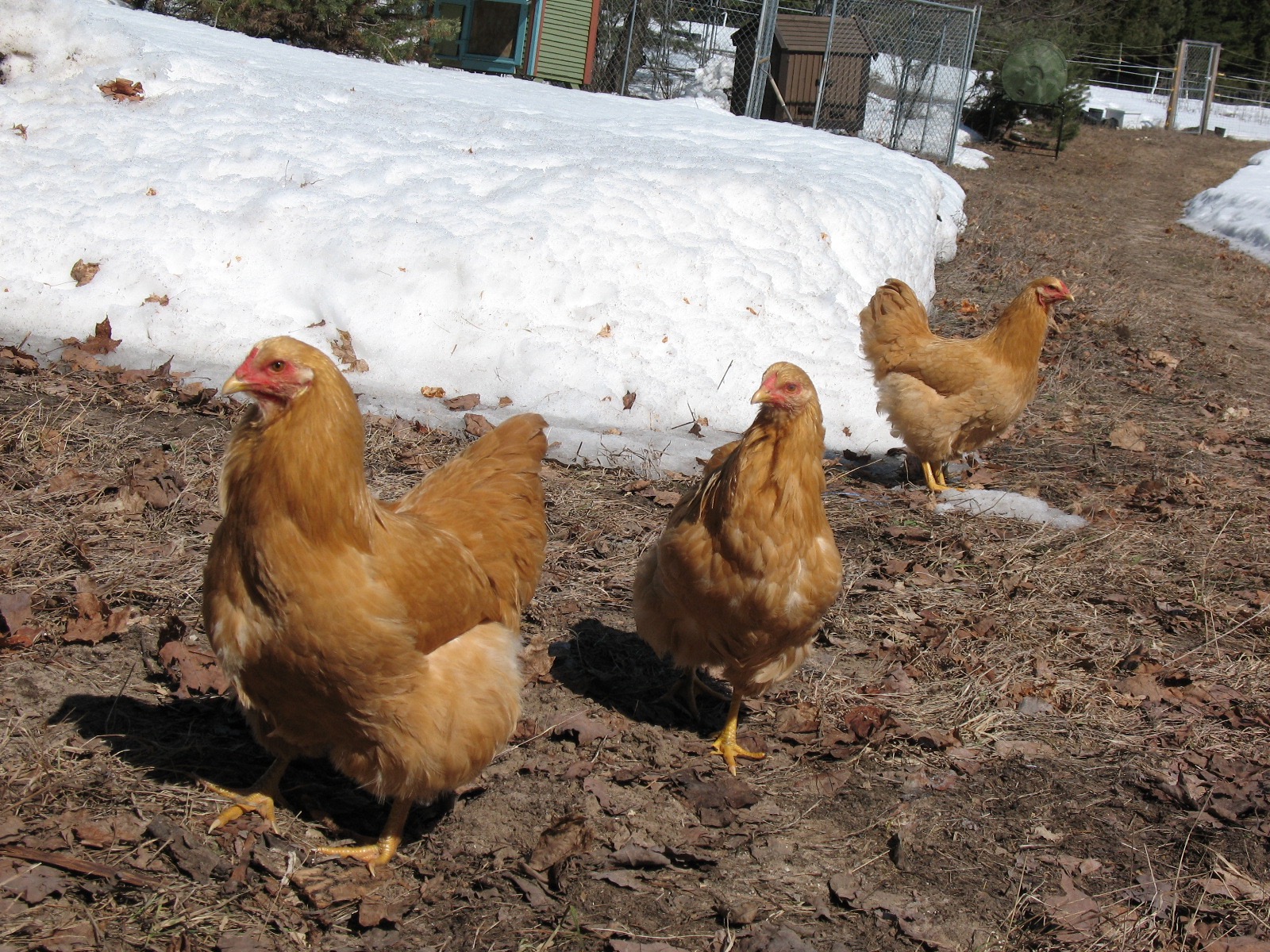
An aside, starting in early September, we had chicken troubles. Our chickens were happy free-range girls. But a recent addition to the neighborhood changed that. We now have a bobcat! Of course, its arrival gave me nightmares over Ollie’s fate, especially when one of the chickens was found as a loose pile of feathers, just steps from our back door. It brought an abrupt end to free range. Now the chickens were locked into their run all day. That’s not a bad gig—it’s a large chain-link enclosure about 50 feet across. The chickens were not impressed. You’d think they’d get it—after the loss of one of their own, but no. They squabbled and separated into rival groups. Since we have two coops, we left them both open and let the chickens sort it out. One night, noise from the chicken pen called us out with flashlights—a ruckus—which we assumed was yet another squabble. Dazed chickens were wandering around the pen—with some loose feathers in the air. We searched the entire area—but could not find anything amiss. We shrugged threw them back in their respective coops (minus one who wouldn’t go) and went back to bed. In the morning, two chickens were dead, their throats torn out. It took some research and a little detective work, but we determined that the culprit was a weasel. Weasels literally go for the neck. Their jaws limit how wide they can open their mouths—so on chickens—the neck is it. We dusted the area with flour and baited one of the coops with chicken necks and a strong rat trap. All chickens, regardless of personality squabbles, were locked into the large coop at night. The first effort at trapping was unsuccessful—the weasel took the bait but wasn’t caught in the trap. But, we did confirm through the footprints in the flour that it was a weasel—and a big one, at that. The remaining chickens were all pretty flipped out by then—first the bobcat, then the weasel. We were down to the point where we were concerned that the remaining three chickens wouldn’t have enough body mass to keep them warm for the winter. We started advertising for folks to take the chickens. No luck. After numerous unsuccessful attempts to trap the weasel, we decided the safest bet was to move the chickens to the small coop, as it was more defendable. Or so we thought. That weasel was still trying, every night. Maybe the smaller coop would be warm enough for our three survivors. Until one morning, two more chickens were dead. The damn weasel had torn part of the roof off of the small coop to get them. We were left with one, highly traumatized chicken. One chicken cannot survive the winter alone. Thankfully we found a chicken angel who invited our poor solo chicken to live in her flock. Frankly, it was beginning to seem that our year was about losses. We have plans for a new, impervious, coop, come spring. We sure miss the eggs.
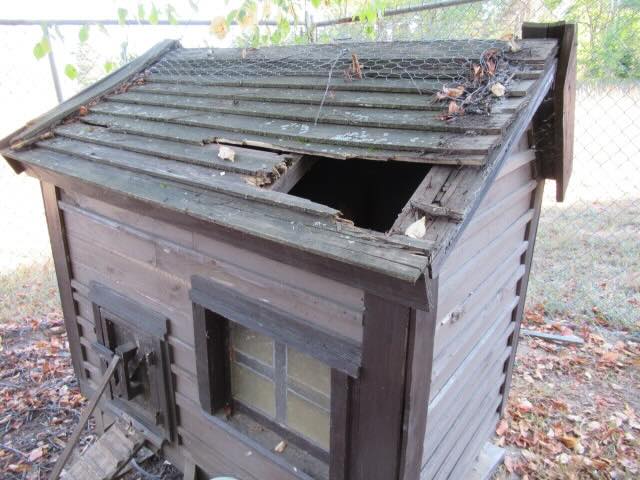
Damned Weasel

Back to the kitties. By their first vet visit, Maki had surged ahead, size-wise. Red seemed timid and delicate by comparison. They received their first round of vaccines and were scheduled for the next round, two weeks later. 

That two weeks was harrowing. Red became ill—his belly distended, but he wasn’t eating much, or using the cat box. Then, he had a high fever…for days. We were orally rehydrating him, and feeding him kitty-soup with a syringe. Of course this happened on the weekend, so we hoped he’d make it to the following Monday to see the vet. We didn’t know if it was related to the vaccine, or if there was some other problem. We made it through the weekend, and brought him in. The vet was not reassuring. She suspected that Red had FIP—which, in 55 years of cat care, I’d never heard of. She sent us home with everything we needed to keep him hydrated subcutaneously and told us to keep it up with the kitty soup. Their appointment for the second round of vaccines was later in the week. She told us to bring him in for a check-up—but that he probably would not be up for the vaccine round 2, just yet.

I went home and looked up FIP. It wasn’t good news. Feline Infectious Peritonitis is a lethal mutated coronavirus. Cats do not recover. Kittens catch the coronavirus when they’re little and then, in some kittens, the virus mutates in the kitten, turning its own immune defenses into a viral replicator of the mutated virus. One of the triggers for the mutation is vaccination. The mutated form is not contagious—but once it mutates in a kitten the results are always deadly for the kitten. My research showed that there was some promising research for treatment, but nothing had FDA approvals. 

The morning of their appointment, we were loading the two kitties into the carrier when there was a noise at the front door. I looked over and there, looking in the window, was Ollie. A very fat Ollie. We let him in—shocked. At this point he’d been gone for over four months. He’d obviously been more than well cared for—but given a chance, Ollie came home. We were thrilled to see him. He was not happy to see kittens in his home.

At the vet’s, a robust and healthy Maki got his second round of vaccines. Red was examined, the vet shaking her head. He’d improved from earlier in the week, but he was not a healthy cat. She made an appointment for the following week—either to complete his vaccine cycle, or to consider euthanasia.

It was a rough week. We doted. We spoiled. We coaxed. We hydrated and force fed. But Red was not rallying. On the day of his appointment, I asked Rick to stay home, to dig his grave.

The vet confirmed our worst fears. Red was failing. As we prepared for his final injection, I tearfully said that I couldn’t believe that, with all the corona virus research coming out of Covid that there wasn’t some coronavirus treatment for FIP. Our vet, whom we have trusted for a decade of cat care, made a strange face. “Well,” she said, “There’s nothing… unless you’re willing to go on the black market.” Behind her, her assistant was nodding vigorously—silently signaling to re-think putting Red down. Our vet continued, “There are treatments out there, but they’re not yet approved. There are no guarantees, here and I cannot be involved because this isn’t yet a legal treatment. Her assistant gave me a website to contact. It was all pretty sketchy—but it gave us a chance for Red. Our year had seen enough losses—we were willing to give Red a chance.

That night I checked out the site, and was assigned an Administrator to guide me through the FIP treatment. Because he was in such rough shape, she said we had to start with injections, and switch to pills when he’d improved. The next step was to find a source of the serum as soon as possible. They hooked me up with a woman a couple of hours from me who had leftover vials of the serum. I drove there, and met up with her. Her kitty had completed the treatment and survived! It was like a drug deal with angels. I took the vials home and we started the treatment that night.

Some people report miraculous results—within hours. Our Red was too far along for that kind of magic. But we stuck with it—along with the forced kitty soup and regular subcutaneous hydration. Poor Red was a feline pin cushion. So many injections on so little a kitty! He started treatment at 3.2 pounds—and then dropped below three pounds for the first week or so. His care took hours, every day. We weren’t sure he would make it—but he was willing, and affectionate, even if he could barely walk and only ate when forced. After a week, there was some small improvement—his balance was better, and he started to eat on his own. It was a long, slow, haul.

By week three, there was sudden, visible improvement. Red turned back into a kitten. Even wobbly, he was making an effort to play. He resumed grooming. On day 21, he was well enough to switch from injections to pills. The treatment calls for 84 days of treatment (with bloodwork along the way to check progress), followed by 84 days of observation—to make sure he doesn’t relapse. Red has completed the full treatment protocol, and has graduated to the observation phase.

During this whole treatment process, we’ve also been dealing with integrating our senior cat with these kittens. It was touch and go at the beginning. Ollie was not happy with kittens, but the kittens were infatuated with Ollie. They followed him everywhere. Ooooh—it’s BIG CAT. WE LOVE BIG CAT. They were relentless in their affection. And it’s working. Ollie is finally adjusting to having two rambunctious kittens in his sphere. Sometimes, he’ll even play with their toys, or let them groom his ears and face.

That’s how we ended up with three cats. I’ll have to look for a new song, because it’s beginning to look like we’ll be lucky enough to have three cats in our future. We’re starting the New Year with hope and crossed fingers.

Red, on graduation day

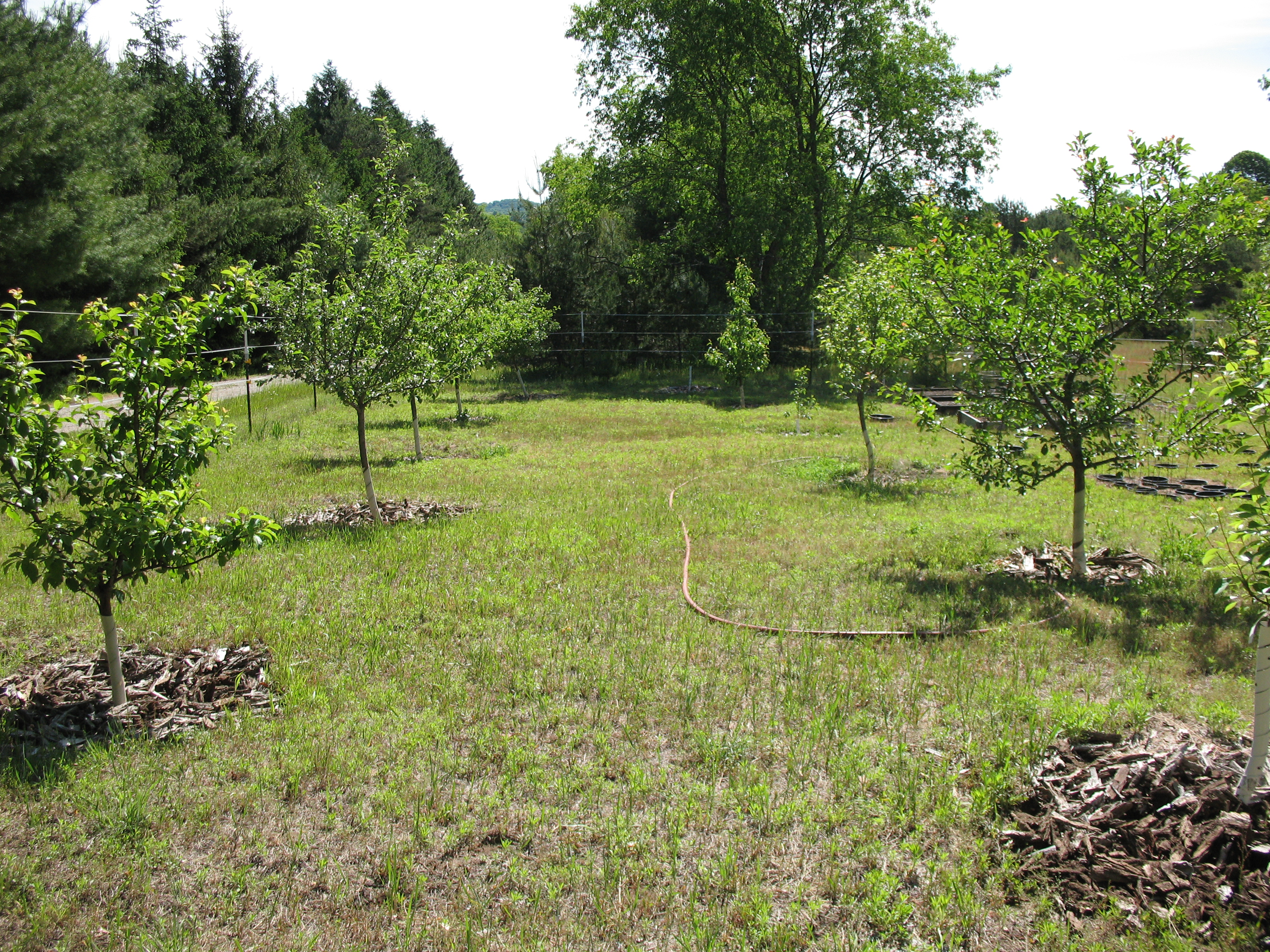
My mother loved pears, and I inherited that from her. This past summer would have been our best pear harvest. She’s gone, but I fully intended to enjoy the harvest for her, because of her. We have four pear trees, three to span the season and one as a pollinating guarantee. Only two bear, so far. The best of the two is the earliest of the season… those pears ripen in late August. I’d been watching that tree, easy enough as the dooryard orchard is in the same enclosure as the vegetable garden. The tree is still fairly small, narrow and upright. I watched, waiting for the pears to be ripe. 

One morning I ventured out, sure that there’d be some pears for the picking. But there were none. And I mean—none. There had been 21 pears on that tree, waiting to be picked, but this morning there were none. My first assumption was that a deer had breached the fence—but deer are not tidy foragers and there were no pears or pear bits on the ground. I was stunned—so I check the second pear tree—though its fruit wouldn’t be ready for another month. Most of it was there, but someone, or something, had broken some of the lower branches. They were wrenched from the tree, ripping some of the bark away from the trunk. I summoned Rick.

Together, like amateur sleuths we examined the damage. This was no animal. Some human intruder had ravaged our pears. When the late ripening tree didn’t easily yield her fruit, they pulled at it so hard they broke branches. I felt like weeping. Rick looked further and found the place at the back of the fence where the deer netting had been pulled away. Not that they couldn’t have come around to the house side and just walked in the gate. We were shocked. It’s not like our fence is some fortress of security, it’s just t-posts with wires supporting deer netting and rabbit fencing—we put it up to fend off the deer and the rabbits. But still, it takes some kind of gall to break into an enclosed garden area and steal produce. I checked, and, yes, there were tomatoes missing, too. But mostly those 21 pears.

Come spring we’re putting up a new, sturdier fence. We bought real fence posts, tall and sturdy, and there will be heavy duty welded wire. If they want in, they’ll need to bring bolt-cutters. We debate whether we need to put a lock on the man-gate. It seems crazy to consider a lock on a garden gate. We grow enough that we could share, if anyone were to ask. Back in Two Rock we grew enough for everyone on the farm, and then donated tubs and tubs of produce to the Food Bank. But nobody asked. 

This is a new, and ugly kind of intrusion. Friends have warned me. One came home to find a trio of “summer folk” helping themselves to the roses in her garden. They wanted to keep the severed roses—but she escorted them off the property with a shotgun. They threatened to call the police, but she assured them that that was her next call—and that her husband was a deputy sheriff. Another friend had frames of honey lifted right out of her hives! (That’s some brave thief!) And when we had workers on site, they raided our patch of morel mushrooms. Rick discovered it and made them give them back. Folks seem to think that everything is for the taking.

It was Robert Frost who first wrote that good fences make good neighbors. It’s about respecting boundaries, even, or especially when, working together. We have good neighbors, But times are changing, people are more mobile and local mores are breaking down.

We have suspects, some guys who were working on a neighbor’s house to get it ready for sale. They’d shown an unusual level of interest in my gardening. Thankfully they are not our neighbors—but we cannot prove anything or be sure of anyone. In the meantime we’ll upgrade the fence and keep an eye out. There’s not much else we can do.

IMG_2676

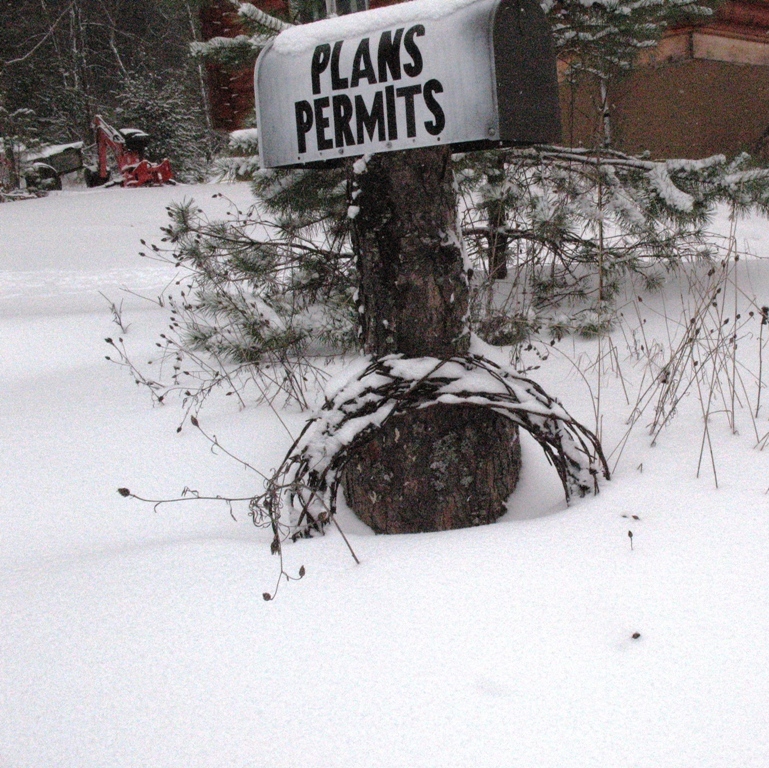
You may recall that a couple of years ago we started to build a barn. In our community, a barn does not require a permit. But, because we intended to keep the car in it (storage of personal, not farm property), a permit was required. We called it a barn, but the permit people know better–they call it a DURG (Detached Unfinished Residential Garage.) We are, just now finishing up enough to get the permit closed and squared away.

There’s a curious tension in this finalization process. The structure is, by definition, unfinished. If we were to finish it–insulate and put in interior walls–we’d be exceeding our permit. (This would trigger an whole new level of requirement and, I’m sure, additional permits.) So the push/pull is how finished does unfinished require?

Mostly it’s about safety. Apparently, it requires adequate lighting throughout. It requires that all wired items have proper fixture endings–either lights or plugs. And, though it doesn’t require interior walls, it does require a “finished surface to 36 inches,” or “code railing” in any location where there is an elevation drop. At our “rough” inspection, the inspector wouldn’t speculate as to what materials would suffice–just that it would need to meet those requirements.

Rick came up with the idea of fencing. It’s inexpensive, easy to install and can be re-used as fencing at such time that you might decide to actually finish the interior. As an added surprise, it has an interesting, post-ag look to it. So, fencing it is.

We are now ready for final inspection! Hopefully, we’ll pass. And then we’ll be officially unfinished.

IMG_2648

Last night something tried to get our chickens. It was late, into the wee hours and we’d been up reading. Rick opened the windows before climbing into bed, because it was a little on the warm side. We often use the night’s cool to keep the house comfortable. If it hadn’t been for the open window…

I heard a strange cry–I thought it might be the cats, downstairs. I walked to the top of the stairs–and it happened again, clearly from outside and from the chicken pen. It was far more of a wail, than a cluck. And if you know chickens, you know that they are near comatose at night. Something was very wrong.

I cried out to Rick–something’s after the chickens–and headed downstairs at a clip. I stopped in the kitchen long enough to grab a flashlight, and hurtled out into the night. I flipped on the flashlight as I stepped out on the path, and its beam reflected back a set of eyes in the dark. I couldn’t see the critter, but I saw it’s eyes glowing back at me. Then they disappeared.

I ran to the chicken pen. It’s a six foot chain link fence, about a 30 foot circle–the coop is a small wooden house, inside the pen. We’ve never had any problems with predators, and we’d become sloppy about security. We regularly left the coop door open at night. Einstein was on the west side of the pen–she’d been the wailing chicken. She seemed okay, so I played the light across the pen. Feathers, everywhere. A chicken lay prone a few feet from the coop. I assumed it was dead, and continued scanning for the third chicken. None in sight.

I opened the coop door–and there she was, still up on the roost. The inside of the coop was littered with feathers. One down, two okay. I closed and locked the chicken entry and turned to grab Einstein to return her to the coop. I’d deal with the dead one after the survivors were secured. While I retrieved Einstein, the “dead” chicken staggered over to stand next to me. It was our largest chicken, Alpha. She’d lost a lot of feathers, but I couldn’t see any blood. I popped both of them into the coop and locked it up tight.

By now, Rick was up and on the front porch barking questions. The whole animal neighborhood was alerted, and the night was peppered with unidentified weird night noises–and the call of a barred owl. I scanned the perimeter, but couldn’t see any sign of a critter having dug under the fence. I didn’t know what it was, or if it might be in the tree, above me. With the chickens secured, the rest could wait until morning.

Bright and early, I cut up some apple treats and went out to release the chickens. They seemed fine–and gobbled up the apple bits. Observing through the day, though, Alpha is a little worse for the wear. It’ll be a few days for her to recover.

We made several mistakes here. The chicken door to the coop was open, that’s obvious. Less so, though, is that we installed the pen several years ago. At the time, we were very careful to make sure that there were no overhanging branches that could give  predator access or egress. Things have grown. We can only assume that the predator came over the top–either jumping or climbing trees. We were lucky.

Rick spent today pruning and resecuring the pen. In addition to locking the coop, we’ll dust the area with flour tonight–just in case ‘it’ returns, maybe we can get some prints to identify it. Racoon? Fisher? Bobcat? We just don’t know. And until we know what we’re up against, we won’t know what strategy to follow.

I didn’t sleep much. Adrenalin will do that. And guilt.

IMG_2649

All trimmed up now, for safety. They sleep in the brown coop.


On nice mornings, I like to take my coffee into the garden and check on progress. That can mean: checking vegetable growth; looking to see what seeds are up; pulling a few knapweeds that have poked up; and squishing any caterpillars or rose chafers that come to my attention. Generally, my quest is to nip any trouble in the bud, but mostly, it’s nice to enjoy some early morning sun in the garden.

IMG_2637

A lovely morning stroll.


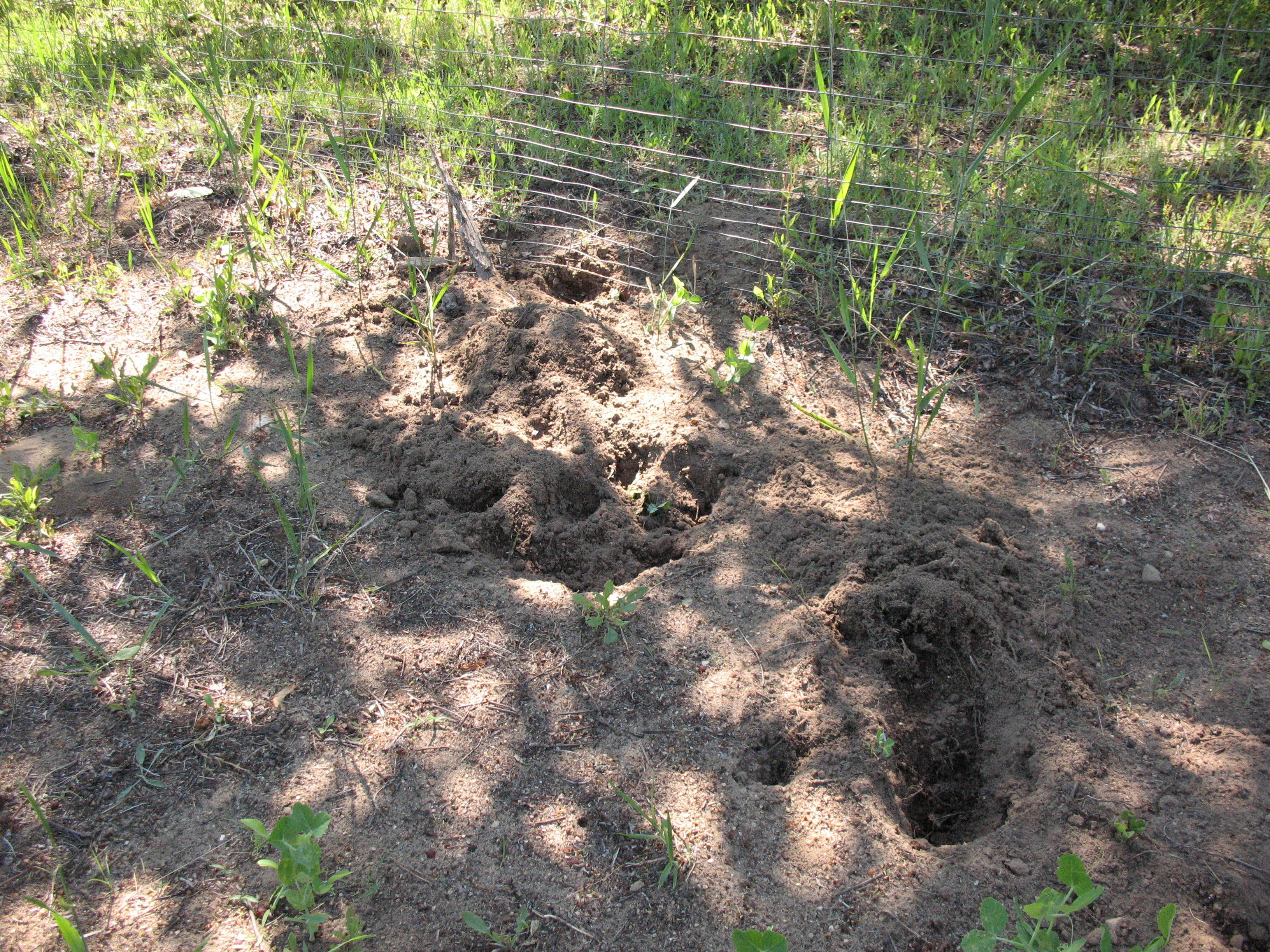
This morning was an exception. Someone had invaded. Someone who digs. Now, our garden has just been put in. Most of the beds are still seeds, just poking their noses out of the soil. So our intruder was not interested in our plants–it’s interested in grubs or worms in the soil.

IMG_2632

Wait! What’s this?

IMG_2633

Or this?

IMG_2634

Yikes! Or this!


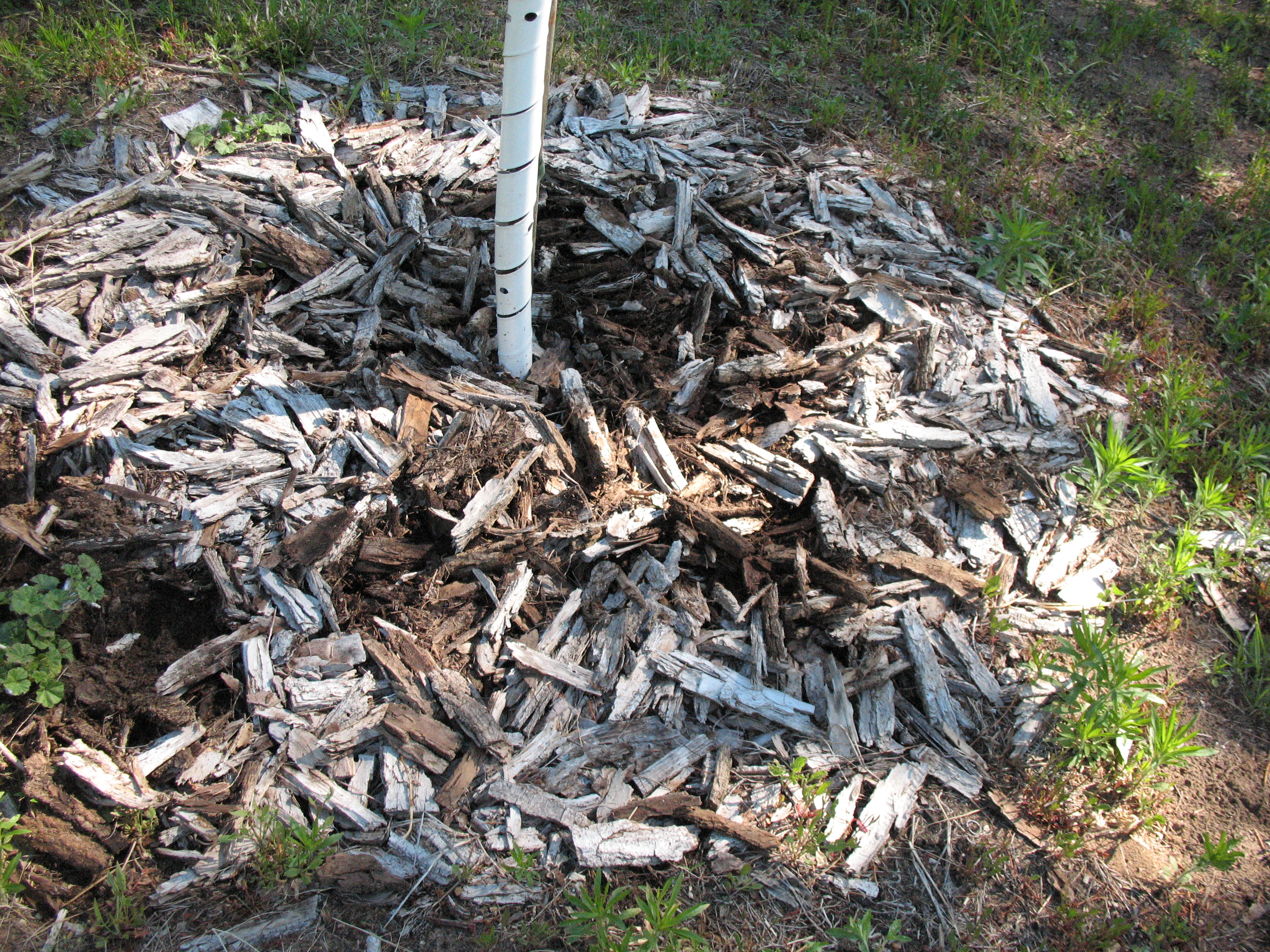
Yesterday we did our annual orchard treatment with fish emulsion. Even though we flushed the surface afterwards with clear water–a fish scented garden was probably a strong attraction. That critter tried to dig under every orchard tree. Each tree has a mulch of tree bark, under which there’s some strong landscape cloth. So the intruder didn’t get very far, and certainly never found the fish for which it was searching.

IMG_2635

IMG_2636

What we’d like, to be sure, would be a clear set of prints. I suppose every detective dreams of that absolute perfect clue for identification. No such luck. It made a mess of things but even with a bunch of digging in fresh soil, not one good print. We did find the place where it dug under the fence. We can fortify that, but, really, if this becomes a regular event, it would be a lot of work to bury over 300 feet of reinforcing wire. I’m hoping that the interest in the garden is a ‘one-off’ event, inspired by the search for fish.

IMG_2638

Ah-ha! Where it dug through.


We have noticed digging around the property of late. Rick has been burying rodent remains in shallow graves…the products of the cats’ hunting exploits. We’d noted that some of them had been dug up again. We blamed the cats. Grave robbers! Then, two nights ago, someone dug up our poor dead cat…buried last December. That raised the bar significantly–both because the cat had been buried deeper, and because it was just too gross to think of the cats digging up cats. We re-interred what we could find and put heavy stones on the grave. Now that the fenced garden has been breached, we have to take action.

We’re thinking it’s probably a skunk. We’re not thrilled about it–or how to handle it. They’re nocturnal. We’re not. And I don’t know if we could even see it to shoot it. We could trap it…but who wants a skunk in a trap? And then what would we do with it?

So my morning’s peace is suddenly punctuated with questions marks. I’m hoping this is a passing phase, so we can go back to the regular pests…the ground squirrels, birds and bugs that attack the garden. At this point, I think I need more coffee.


Post Script: It’s not a skunk. The footprints, though obscured are too small. And there are areas of excavation that only a smaller animal could have done. Maybe a weasel? It’s a partial relief, with a skunk, I’d need to be worried about the bees. Now, if it’s a weasel, I’ll need to worry about the chickens. Sheesh.

In addition to its ‘how-to’ features, this blog documents the evolution of a Northern Michigan fence. Who knew?

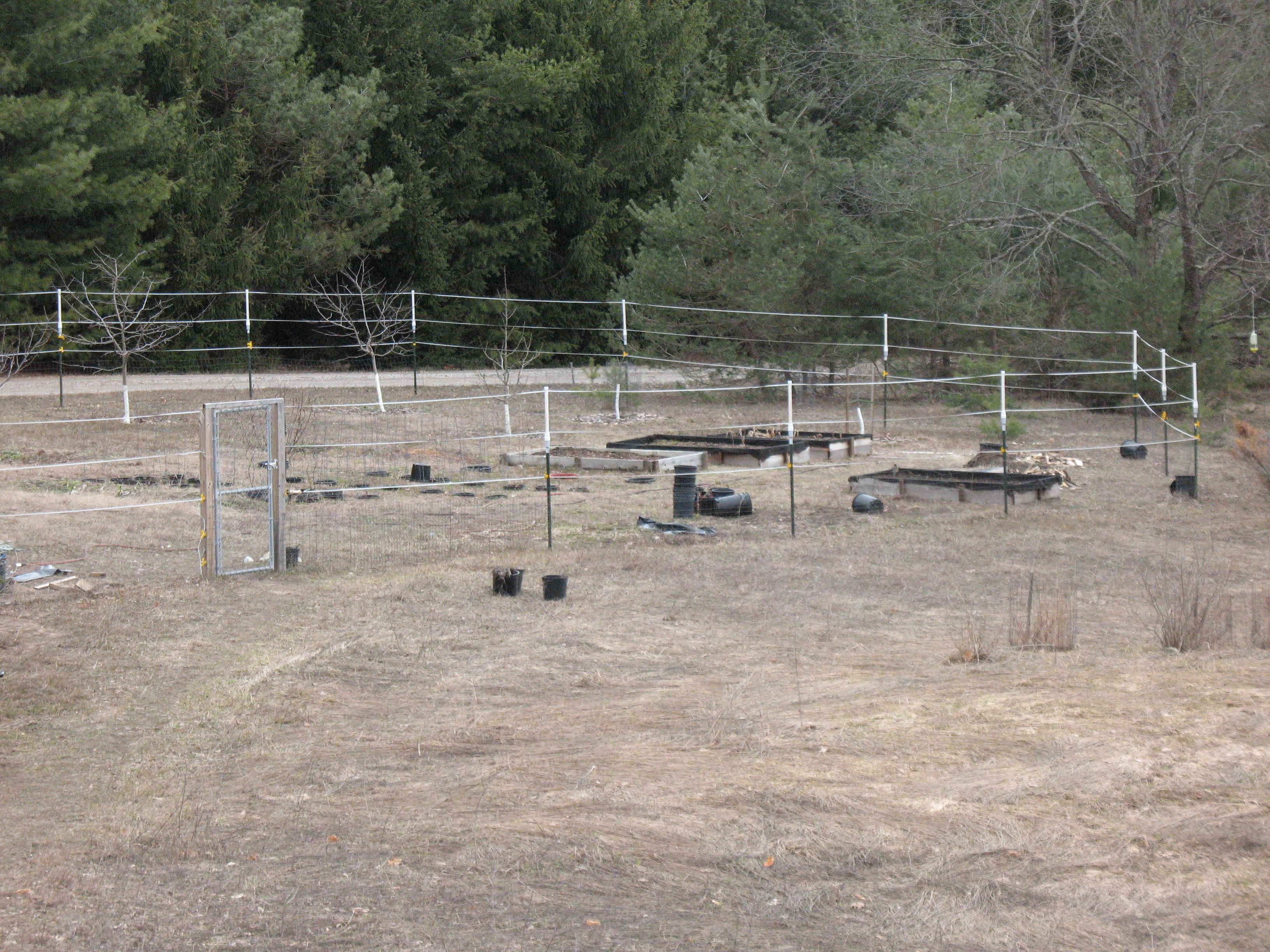
Once we’d settled, but before we moved in, we identified the area where we wanted the garden and dooryard orchard. Initially, we’d envisioned it further up the hill, only to realize that the upper area of the property is shaded by the hill, all afternoon. So we selected a sunny patch further down. Then we put in a pretty standard fence–your basic t-post, four foot fence. (Initially it was electrified for the bees, but later we moved them up the hill.) Then we planted our trees.

Then the deer came, jumped the fence and ate the tops off of all our baby trees. Sigh.   We pruned as best we could to salvage them and put a wobbly extension on the fence (as well as a run of rabbit proof fencing along the bottom.) We were surprised that there wasn’t some off-the-shelf fence-extension kit available at the big box stores. Our wobbly extension (sticks and twine held in place with zip ties) lasted a couple years, before we had to redo it. The fruit trees survived, and then thrived.

Then, this year, the fence extension started to fall again. The damn deer noted it immediately, hopped it (tearing it down even more) and did a little of their own winter pruning on the trees again. The good news was that, this time, the trees are much bigger, and the damage far less threatening to the survival of the orchard.

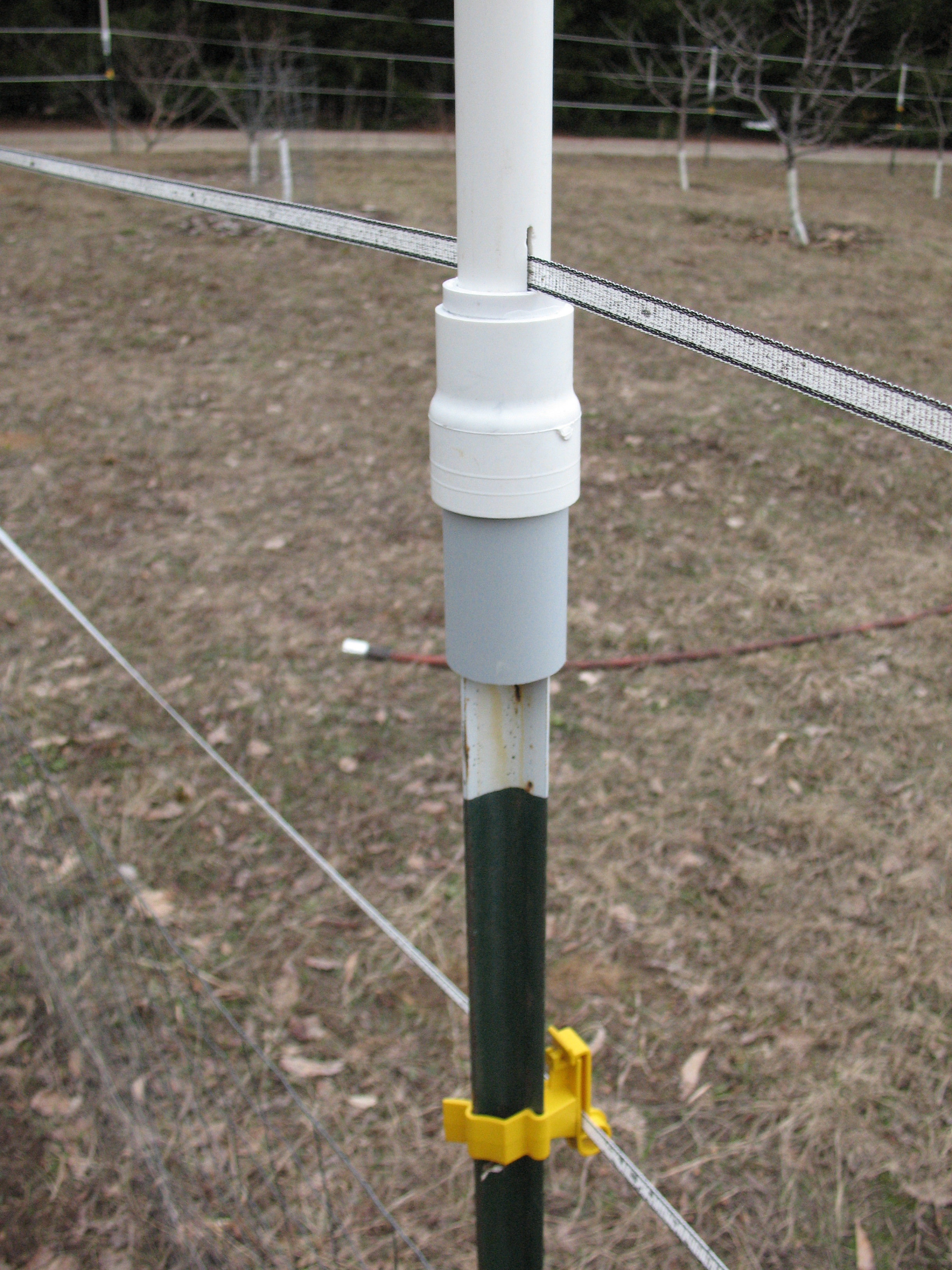
So, this time, Rick wanted a sturdier fence extension, and one that was clearly visible to the deer, so they wouldn’t get hung up in it, tearing it down with them. It turned out pretty well. This is the result.

IMG_2617

For those who might need to fortify their own fences, he used PVC pipe parts (a reducer that capped the t-post, then a short length of extension and a cap. Most of the pipe we had leftover from plumbing the house. We used some of the former electric fence tape, because we already had it, and it’s visible. You could also use clothes line (and drill it instead of cutting slots for the tape.) We’re now back up to the height which has previously been successful in dissuading the deer–only this is much sturdier, and hopefully will last longer. If the UV starts to erode the pipe, we’ll paint it, but for now the bright white suits our purposes.

IMG_2615

With the house and barn built (at least usable, if not completely finished), this is the year we want to focus on the garden. With the new fence in place, our efforts will not be in vain.

I suppose it would have been easier, had we known back at the beginning that we needed to protect the garden from leaping deer as well as hopping bunnies, but if we knew then, what we know now, we might have been daunted from even starting.

IMG_2486

The Pips

It’s not that I hate dogs. I don’t. I’m not a dog person, largely because I am allergic to them. I’m probably allergic because I was mauled by a cocker spaniel as a tiny child, which naturally gave me a healthy respect for bad dogs, and no respect for bad-dog-owners.

Because that’s the real problem, isn’t it? Bad dog owners. People who think their dogs are just fine, and don’t understand that it’s up to them to keep their dogs in check.

For several years we’ve had issues with a neighbor about her dogs. They aren’t malevolent, but she has never trained them. She believes that her dogs should be allowed to run and bark all night. She says she’s doing the neighborhood a favor to let her dogs “run deer.” She bemoans the loss of the good old days, when one let one’s dogs run loose without recriminations.

The neighborhood does not agree. Despite efforts to deal with her personally (to no avail) almost every neighbor in a half mile radius has had her cited. Her dogs bark incessantly. Her dogs chase cars and bicyclists. They’ve been known to menace pedestrians. Her dogs spook the deer at one neighbor’s hunting camp. She once complained to me that, if she kept the dogs on her yard all the time, there was too much clean-up to do. (Read, I prefer if my dogs crap in your yard.) So you see, it’s not really the fault of the dogs.

A couple of years ago I had a problem because one of her dogs took an interest in digging up my freshly planted orchard trees. After all, the soil was freshly worked and made for easy digging. I informed her that if I caught the dog digging on my property (which is literally pockmarked with its regular digging efforts), I would call the Sheriff. I did, and did. I also told her that, since she was enamored of “the old days of dogs running free,” she should well remember that in those old days, a loose dog doing agricultural damage was usually shot on the spot.

My neighbor didn’t appreciate my straight forward approach. And that was all before Blondie.

You may recall that last year we got chickens. We named them, based on recognizable features they had as chicks. Only one, Blondie, retained her chick coloration into adulthood, so we had Blondie and “the chickens.” I know, it sounds like a 90s punk band.

Blondie was an excitable and flighty chicken. She would try to take to the air with the slightest provocation–a person approaching with treats, a crow overhead. But she lived, safely we thought, behind a six foot fence. Not that chickens cannot fly, they can, and do. But chickens are like bumblebees–curiously designed when it comes to sustained flight. All of Blondie’s impulsive bolts for freedom ended when she hit the fence.

Late one afternoon, I decided to check the coop for eggs. Winter egg production is sporadic anyway, and if you’re not timely, the eggs will freeze. Approaching the chicken yard, I was dismayed by the sight of countless dog prints in the snow, endlessly circling the fence. Apparently those dogs had been harassing the chickens the night before. I collected the one egg, and then looked around to see how the chickens had fared. There were only three chickens. It was like the Pips, without Gladys.

I checked all around the fence–no Blondie, only feathers. I knew. It was getting dark, so my sleuthing would have to wait until morning.

Saturday morning, bright and early, I revisited the scene of the crime. Obviously the intensity of the dogs’ engagement had set Blondie airborne. For the first, and last time, Blondie was free. Direct into the mouth of the waiting dog. I checked the tracks (against my handy-dandy little animal track identification chart. Clearly dogs, not coyotes. I followed the feather-trail, which was clearly limited to one set of dog tracks, as it made a beeline for my neighbor’s property. The trail ended at the road, separating the two parcels. On her side, I found no feathers. There were many human footprints in the snow, though–and my neighbor is not usually one to wander around outdoors in the winter. I surmised that she’d cleaned up the feathers. My evidence was, at best, circumstantial.

After the weekend, I called Animal Control. They know us–after all we’ve been dealing with them over the dogs for years. I recounted my story and my observations. As I’d suspected, they could not issue a citation based on anything other than an eyewitness account. (Really? Don’t they know the research on how flawed eyewitnesses can be?) I warned that if I saw either dog near my chickens, I would just shoot it, as is my right.

Our friendly Animal Control Officer implored me not to take justice into my own hands. “Use the system,” he said. “It’s better for the neighborhood.” I’m not sure about that. My neighbors might arrange a hero’s parade if I dispatched those dogs. Still, I want to work with them. So, since then, we’ve been watching. If we see the dogs on our property, we call it in.

And such was the case this week. The snow is melting, giving the critters of the world easier access. Rick looked out one morning and saw the dogs on the property. He called Animal Control. When the officer arrived, he took the complaint. He also acknowledged that the day Blondie last flew the coop, there’d been a welfare check on my neighbor. In that report, the Deputy had noted that there was a dead chicken in her yard, which he pointed out to her. I was right. She’d cleaned up the evidence. After taking our report, the Officer headed across the way to talk to the neighbor. I yelled after him, “Tell her the chicken’s name was Blondie.”

Creatures of Habit–

A.V. Walters

IMG_2370

I’ve been away from the internet for some time. There are major changes in our lives which have required adjustments.

Once, at a bee meeting, one of our members was bemoaning how stupid bees could be. You see, while bees can navigate a vast range of flowers and local geography, if you shift their hives just a couple of feet, they may well be lost. They will fly to the spot where their entry was…and hover, lost. I am one to defend the bees. We are all creatures of habit. So I posed the question to our members, “Was that really evidence of stupidity? Did you ever reorganize and change the location of your cutlery drawer?”

My comment was met with silence, and nervous laughter.

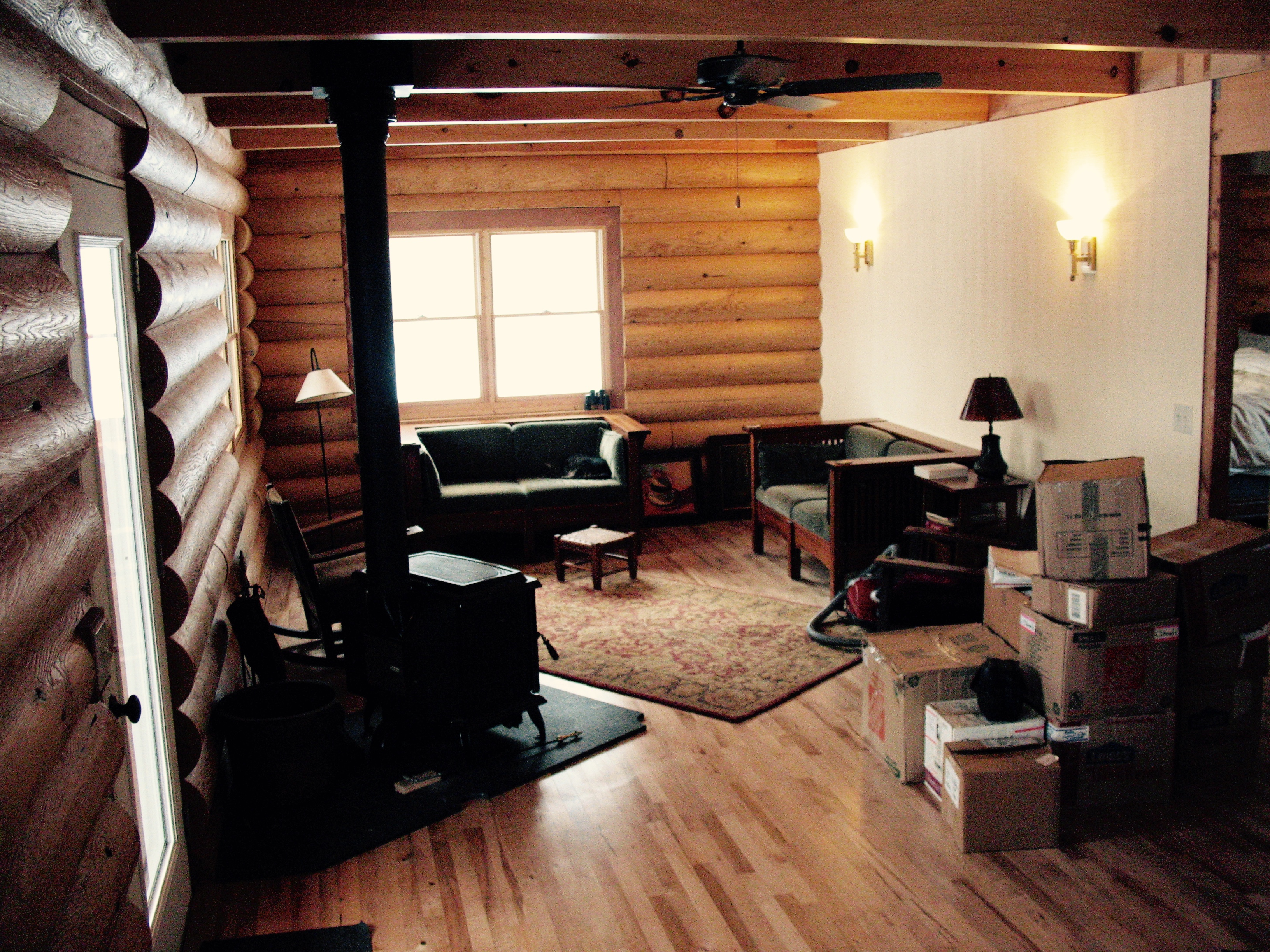
We have moved into our new house. It’s not finished, but in the eyes of the permitting authorities, it is “habitable.” It’s mostly finished, except for the upstairs bath, interior doors and trim. The move was lucky–we were in by the full moon–and just before it began to snow in earnest. Within days, the landscape completely changed and our days were preoccupied with snow removal and creating routines for stocking firewood. Our view has changed, from the taupes and browns of November to winter’s white, punctuated with evergreens. After years of this being a work site, it’s both a surprise and a relief to settle in.

We’re in that awkward stage in which you try to envision a new life and put things where you think you’ll need them–and wondering why you ever bought some of this crap in the first place. I’ve redone the pantry cupboards twice, still without any real comfort zone. It wasn’t a big move, just across the road from our little basement rental. Our walls are still lined with boxes whose contents await placement. I try to address a box or two everyday, but I’m remembering that even the bees can be discombobulated by a minor relocation.

IMG_2369

We also are enjoying the settling in and discovery process. It is a very quiet home– heated with wood there are very few “house noises.” Except for the occasional hum of the refrigerator, mostly we are learning the noises of the neighborhood from a new perspective. We can hear the snowplow from the main road, but very few of the other sounds from across the street interrupt our lives here. No dogs. We have a neighbor up the road with a bad muffler, and we can still hear his truck. With the shift in season, we can hear the (now more distant) whine of snowmobiles.

With the snow, we can see who our regular visitors are. Bunny prints cover the paths Rick has cleared. They like the convenience, too, but, Oh, My! How many of them are there? If the tracks are any indication, we live in Bunnyopolis. Alarmed, Rick has cleared all around the fenced garden area. The snow had reached the point where the bunnies would be able to hop right over the bunny-proof part of the fencing. We see the deer tracks, too. And we’ll spend the rest of the winter learning to recognize the footprints of rest of the visitors. Or maybe…it’s their home…and we are the visitors.


Better Late Than Never–

A.V. Walters.

IMG_2254

Yesterday’s Barbed Wire

The day before yesterday, Rick and I went for a walk in the woods. There was a wind-storm over Christmas, and we wanted to see if any more trees were down. We wore our regular shoes. There was no snow. So, we busied ourselves, with some minor trail-clearing, before yesterday’s predicted storm. (It’s nice to remove the trip hazards, while you can still see them.) At least the additional trees that fell were already dead—this is normal winter renewal.

We also wanted to check on our “widow-makers,” trees that came partially down in the wind-storm last August, but that were caught in the surrounding trees—hanging, but not stable. These are a woodsman’s worst nightmare. They are extremely dangerous to clear, as you can tell by their name. We have several snarls—where a fallen tree smashes into its neighbor, and that one into its neighbor—and so on, until four or five trees are entangled. We’ve been slowly clearing them, hoping that winter would level them for us. No such luck, so far.

IMG_2232

Widow-maker.

Unfortunately, several widow-makers block, or threaten, our trails. One of them is further complicated by being bound up in some of the ancient, barbed-wire fencing. The trees have grown, embedding the wire deep into their trunks. A big maple, split at its base, leans heavily on a smaller maple, over our main access trail, both of them wired together. It’s just a matter of time, and wind, until the smaller tree splits or collapses under the burden. (Should the bigger tree fall fast, that entrapped wire could cut through a bystander like a hot knife through butter.) We decided at least to clear the wire. Tinsnips in hand, we do what we can.

Yesterday morning we woke up to a different world. Finally, winter has arrived. It’s tough to estimate, with the drifting, but I’d guess we got a good six inches of dry, fine, powder. It’s about time.

IMG_2255

What a difference a day makes.

Though the mild season has seen great savings in heating costs and convenience, it is disconcerting not to have a real winter. This new blanket of snow sets that to rights. It will also provide needed “chill” hours to our fruit trees and down-time for the bees. Not that the bees need super-cold temperatures, but it is hard on them to have warm weather with no blossoms. Now, they can huddle and give up on the search for pollen and nectar.

Now, one would think that, being late December, we’d be ready for winter. Were we that well-oiled, seasonal machine, we’d be waiting, ready, with the snow-blower already set up on the Kubota. Yeah, right. Instead, we flailed about in the snow, disconnecting summer implements and hooking up the blower. The reward is that the blower makes short work of snow removal. Rick did the driveway, parking area and paths at the house site, and the drive at the apartment—ours and our landlady’s, in a couple of hours. Altogether it’s over a thousand feet of plowed road and path, about ten feet wide.

IMG_2256

Suiting up.

We’re settling in now, to the slower pace of winter. Things need to be more deliberate. A trip to town requires clearing the car, first. Work on the house requires warming glue or caulking materials. You have to think ahead. We don’t mind. We have the necessary tools and we like the snow. Another snowfall like this one, and we’ll break-out the snowshoes.


Wrapping up the Season

A.V. Walters


IMG_2235

Post bucket

We’ve had nearly an extra month of fall. Tomorrow, though, temperatures are expected to tumble down to seasonal norms. We’ve been rushing around to take advantage of the extended season and to get a jump on spring, next year.

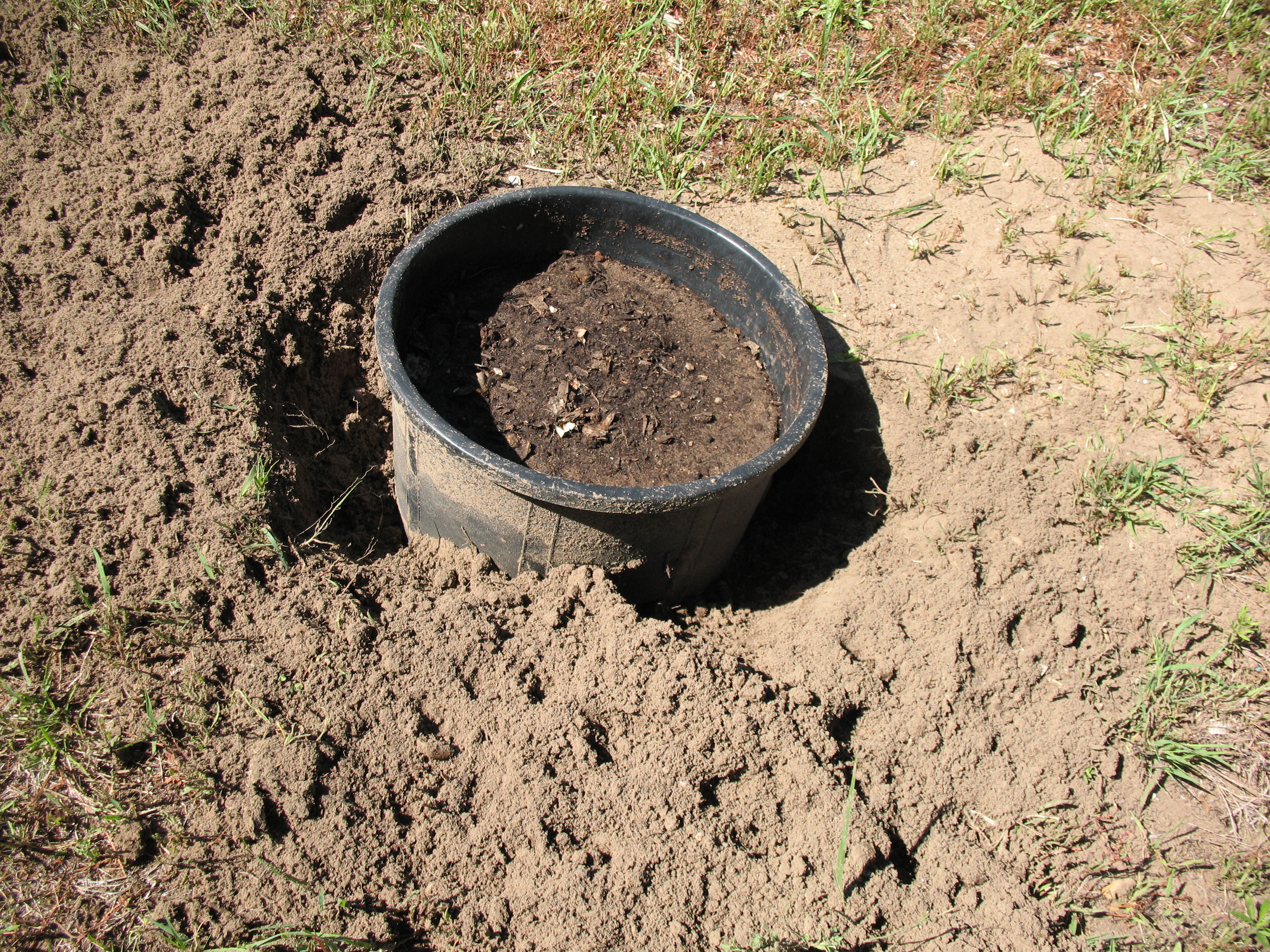
We garden in buckets. It’s habit, from California, where it solved some of our irrigation issues. It also kept the gophers out of the vegetables. We’ve kept it up here in Michigan for some of the same reasons–water, critters, and because our soils need a lot of work. The buckets let us amend most intensely where the plants will live. Before the next season, we pull the buckets and empty the amended soil and leftover roots back into the soil. It could wait until spring, but we had the warm weather, so I did it this week. It will make it easier to spread amendment over the whole garden area in the spring, but we’ll probably stick with the buckets for a few seasons yet. It is more work–but promises better harvests until we can get the garden’s soil into better shape.

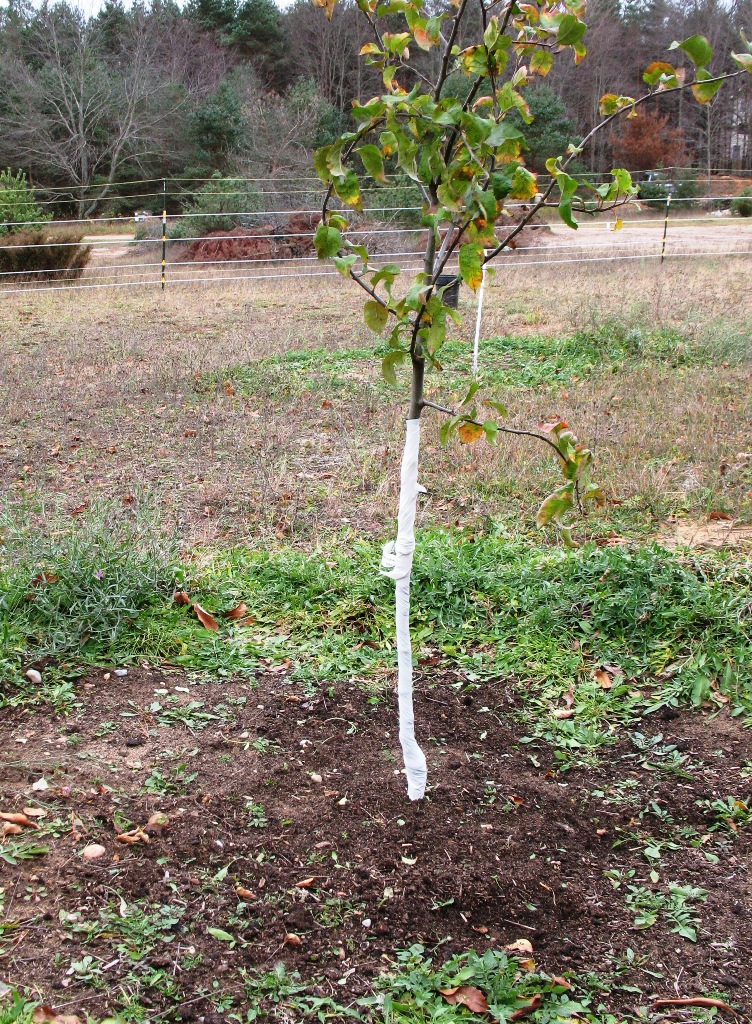
It was also time to attend to the fruit trees. They needed an end-of-season weeding, and it was time to wrap their trunks before winter. There are two main reasons for wrapping the trunks of fruit trees. It prevents sun scalding. Winter sun can warm the trunk–expanding the bark and the moist tissues below–on the sunny side. The temperature differential can split the bark, endangering the tree. By wrapping the trunk with light colored material, you reflect the sun’s heat away. The other reason to wrap is to dissuade mice and other critters who’d be inclined to nibble at the baby trees’ thin bark. Mice can easily girdle, and kill a young tree. I knew I’d arrived to the task just in time, when I saw that one of the apple tree’s lower trunk showed the early signs of nibbling! Now all of the fruit trees are wrapped and ready.

IMG_2238

A tidy wrap to protect the baby tree.

IMG_2237

Lined up in winter finery.

Along the way, I noted some successes. Before we planted the trees, located in the fenced garden area, we dug amendment in deep–very deep. In prepping their planting holes, we went down four to five feet deep and at least that far across. We wanted to give them a good start, and since our soils are poor, it was our best chance to add nutrients to the soil for the trees’ formative years. It has already paid off. Because we were attacked early by deer, the garden orchard trees had both the fence and individual tree cages for protection. In spite of having been seriously nibbled by deer, the apple, plum and pear trees have all more than doubled in size. They’ve outgrown the cages! They look more like 3rd or 4th year trees than 1st season trees. We may even see apples and pears next year.

IMG_2236

The cherry trees–grown outside the garden fence–didn’t get as much care. First, they’re all cherry trees. This is cherry tree country. One of the pioneer plants in our sandy soils is the American Black Cherry. I didn’t think that the cherries would require as much soil amendment. I only dug the amendment in to a depth of 18 to 24 inches. I also thought that cherry trees would be safe from the deer. They’re bitter! No such luck. We must have voracious deer. They munched on the cherries, too. Immediately after, we gave them cages, too. But while the others have recovered and really grown, the cherries have recovered, but stayed smaller. For future plantings, we’ll keep the deep-amendment program.

It makes me wonder if we should dig and replant the cherry trees. It’s a lot of stress on a little stick of a tree. I’m sure we’ll debate it all winter. More likely, I’ll be researching organic methods of fertilizing–not as good as a nice deep start, but we shall see. Any thoughts on that?

Baby Steps

A.V. Walters

Looking deceptively innocent.

Looking deceptively innocent.

The fence is complete. After tonight, the last night on which we expect a frost alert, we can put our garden starts outdoors into their permanent homes. We’ve been hauling them out every day (all seventy or so of them) and then hauling them all back in at night. They’ll join the orchard whips, to be protected from the deer by the new fence. If we had any doubts about whether the fence was needed, in the interim, a few deer stepped in to convince us we’re on the right path. We hope the trees will recover.

The bees arrived today. The same fence protects them from the bears. Today we simply placed their bee transport boxes next to their hives. They were too agitated from the trip to pull the frames and place them into the hive bodies—we’ll do it tomorrow. When we pulled the plug from the boxes, the bees from one of the hives poured out in an angry mob. I was afraid they’d swarm (and I’d fail on my first day of beekeeping!) Within an hour they’d settled down and already some of the bees had found the pin cherry trees, blooming right behind the hives. The autumn olives are in bloom, too; their near-tropical fragrance is the perfect bee balm. The bees wasted no time and got right to work. Tomorrow we’ll do the transfer to their permanent homes.

Home, sweet home.

Home, sweet home.

The roof framing crew showed up, too! Soon we’ll have a roof and we can settle in to the summer’s rhythm of finishing the house, minding the garden and the bees. We’re all on the same trajectory here. Things are looking up.

Good Fences Make…

A.V. Walters

electric-fence

It’s nearly time to put in the garden, and that means that we need to make fence decisions. Our biggest garden problem is deer. The deer are also a threat to the orchard saplings. We’ve combined the garden location with the orchard to consolidate fencing needs. We’ll also have the bees in the corner of the garden, which complicates things a bit. Locally there is a split on the type of fencing or garden protection needed from the deer. (Oh yeah, and from the bunnies, too.) No matter what you do, it’s expensive.

Some install tall traditional fencing—at least seven feet tall. Others go the electric route and install a multi-strand electric fence. One neighbor has completely foregone fencing. They protect their garden with a motion detector connected to a sprinkler system. We walk by regularly and we laugh when our meanderings, on the road, trigger the sprinkler response. Hey, I guess it works! (If not for the bees, I’d be tempted to go this route.)

The uber-tall solution looks fortress-like and it’s permanent. I’d like a little more flexibility to move the fence, in the future, when the garden expands.

So, I stepped into the vast world of electric fencing. Too many decisions! What’s the power source? Is it close enough to the house for AC power? (Not really, we’d have to underground several hundred feet of wiring for that.) That leaves us with the choice of solar, or DC. Solar sounds so….progressive and green. I was predisposed to that direction. Unfortunately, my research into reliability and power needs revealed that the system that would meet my needs (and have the warranty life I’d want) would be prohibitively expensive. That leaves us with 12 volt, DC batteries.

The pebble in the shoe of all these plans has been the bees. You see, bees attract bears. (The hives down the road were raided by a bear, last summer—it isn’t a hypothetical problem.) An electric fence system strong enough to get a bear’s attention has to be pretty beefy. Fence controllers are rated in several ways, by distance, by ‘joules’, and by the type of hazard (animal) contemplated. Though a “5 mile” fence would be fine for deer, to get the kick you need for bear, a 25 mile fence is needed (even though the fence dimensions themselves don’t change—it’s not the length of the fence that counts, it’s the total length of the wire strands you use.) A bear fence calls for a minimum of four strands. Some contend that seven is required. Not that appearance is the arbiter, but a seven-strand fence looks like a maximum security prison—minus the razor wire. (One beekeeper actually suggested a double fence—with a 30 inch no man’s land between them!) I think we’ll go with four strands. The fence must deliver a minimum of a one joule charge to dissuade a bear. That same power will make our fence pretty unfriendly to incidental human contact. It’s not a ‘leaning on the fence talking to neighbors’ kind of a fence. We worry about the cats.

All of this has been Greek to me. I’ve been researching the fencing on the internet. It’s quite an education. For every fencing option, there are at least three alternate opinions. Unfortunately, our tailored needs will make it near to impossible to pick anything up second-hand. I have about a week to make up my mind. By then, our seedlings will be busting out of their pots, begging for a permanent home in the garden. And right after that, about the first week in June, the bees will arrive. We’ll need to be ready by then.