
Like so many things, one can only guess at the future, but does so with greater accuracy if one can look at the past. There’s no doubt that our honeybees are in the crosshairs—but what can be done about it? Let’s start with the fact that honeybees are not a North American native species. Like most of us, our bees were brought here by Europeans.
Whether or not a non-native species is deserved of our protections is an interesting debate, complicated by the fact that the honeybee has become critical to our food system, and that pollination is required for one bite out of three in the American diet. We have no choice but to make the effort.
Honeybees are currently threatened by a troika of hazards; habitat loss (nutritional deficits because of the loss of a diverse ecosystem); poisons (both pesticides and herbicides); and parasites. Not included in the official list of risks is climate change, which complicates the bees’ nutritional challenges and causes seasonal maladjustments.
There are native pollinators. A study nearly a decade ago in Michigan suggested that as much as 46% of Michigan’s agriculture was pollinated by native species. This study was extremely difficult to undertake because it’s damn near impossible to determine who is doing what in any given orchard or garden, and we don’t have a handle on the status of our native pollinators. In fact, much of what we know about the hazards to our native pollinators is an extrapolation of the known problems with honeybees, precisely because it is so difficult to accurately study the natives. And, there’s no money in it. Because many of the challenges to our insect world are a direct result of the impact of our ridiculously lax rules on pesticides, the money too often falls on the opposite side of the equation. For example, repeated studies out of the European Union show that neonicotinoids are deadly to honeybees—and to pollinators in general. These pesticides have been banned in most of Europe, resulting in rebounding populations of pollinators. Despite the obvious connection, here in the U.S. no serious efforts have been made to restrict these pesticides.
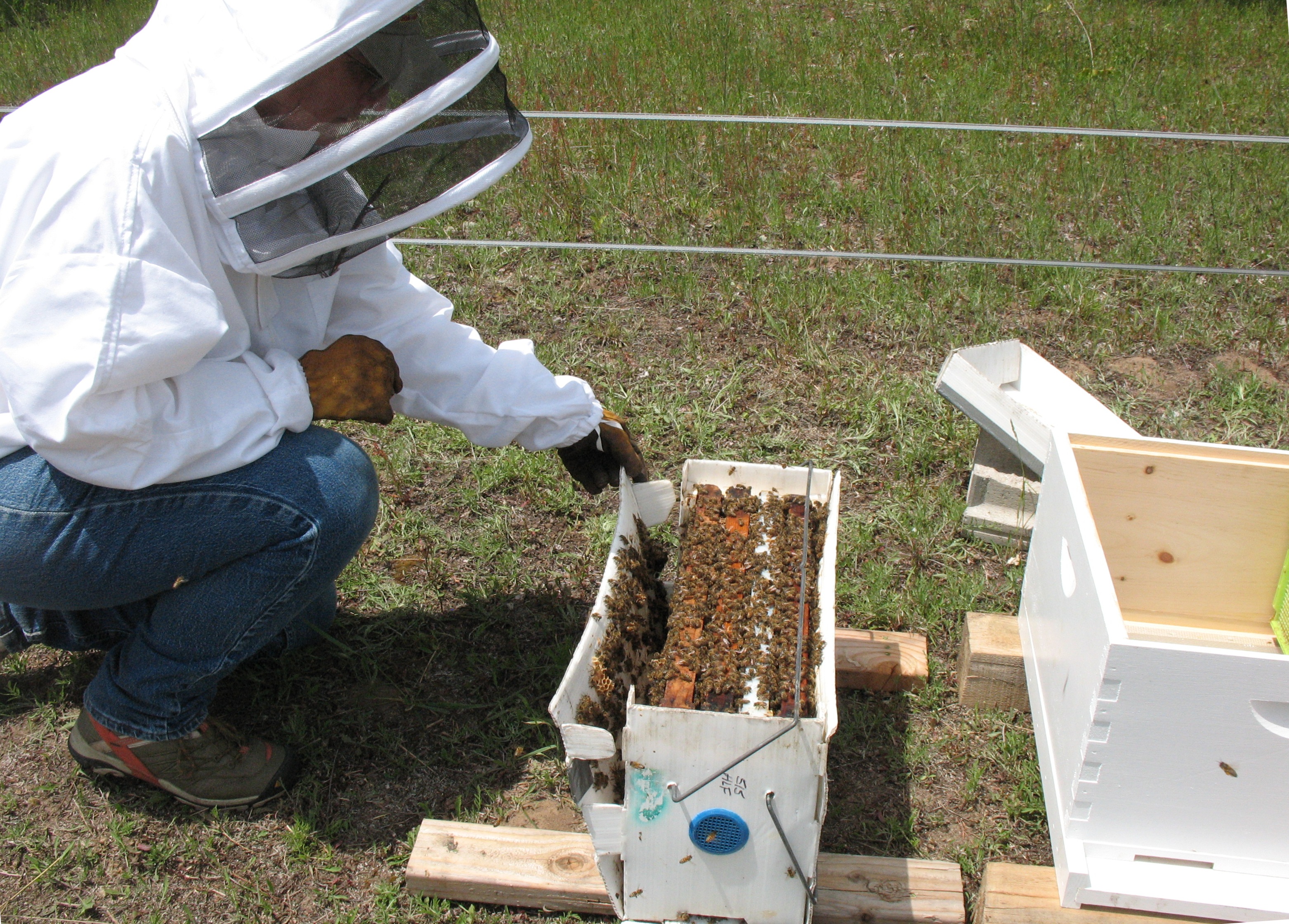
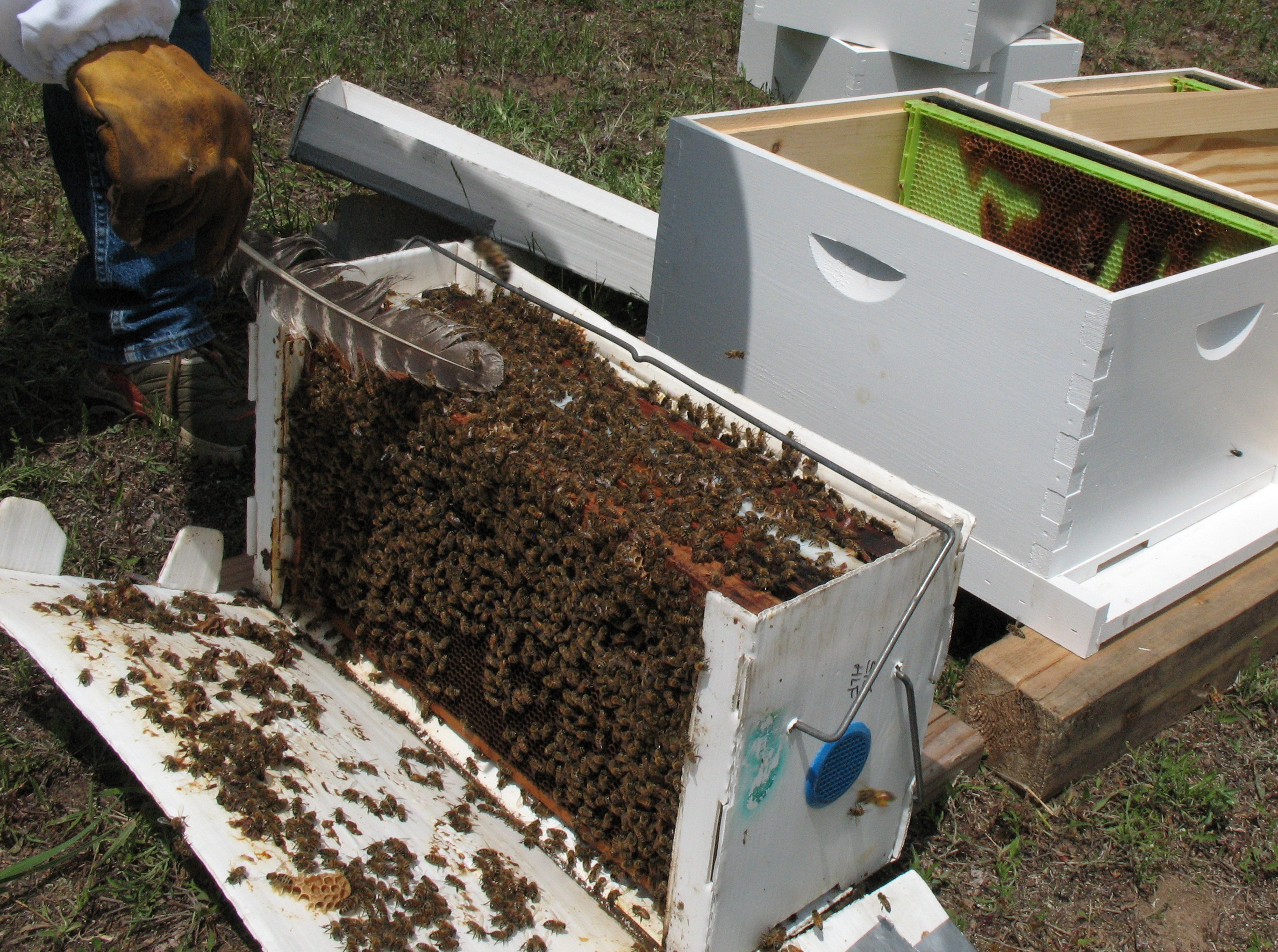
Add to that the complete disarray of the beekeeping world over the last decade, and we’re basically operating wearing blinders. I’ve only been beekeeping for a just under a decade, and the changes—mostly based on new science—in the beekeeping world are enough to make one dizzy. We have bee pests that are killing off our colonies. In large part, it’s because of the varroa mite—accidentally introduced to the U.S. in the late 1980s. These mites attach themselves to the bees’ abdomens and suck off the fat-bodies essential to bee survival. In addition to the direct damage sapping the bees, the mites carry and spread a number of bee viruses and bacterial or fungal diseases. Mite control has become essential. Early in the battle against the varroa mites, chemical treatments (essentially pesticides) were based on the treatment “load” delivered by the bees’ equivalent of blood. (Bees don’t have blood the same ways that humans do, but they do have an internal liquid delivery and balance system that approximates our circulatory system.) Despite decades of such treatments, it was only discovered in the mid-20-teens that the mites actually feed on the bees’ fat bodies. (Which means they had everything wrong—from a basic understanding of the mites’ impact on the bees, to how treatments were delivered.) Beekeepers are constantly reeling over the latest theories of how best to protect their colonies.
Early in my beekeeping endeavor, we were told that hive circulation (ventilation) was imperative to keeping hives healthy. We invested in screened bottom boards and upper entrances to maximize airflow and minimize moisture. (What? We didn’t trust the bees to know what was right for them?) Then, literally “out of left field” a British physicist analyzed the thermal dynamics of bees and determined that the standard model of bees ‘clustering’ to keep warm in winter was really a last ditch effort to save the hive—essentially a bee suicide mission to save the queen. Bees were freezing in their hives. The energy needed to keep warm was depleting them during the winter, leaving us with weak and challenged hives. So then, ‘they’ decided we needed to insulate our hives. Now, there are several competing versions of what beekeepers should be doing for winter management. It’s enough to make you crazy.
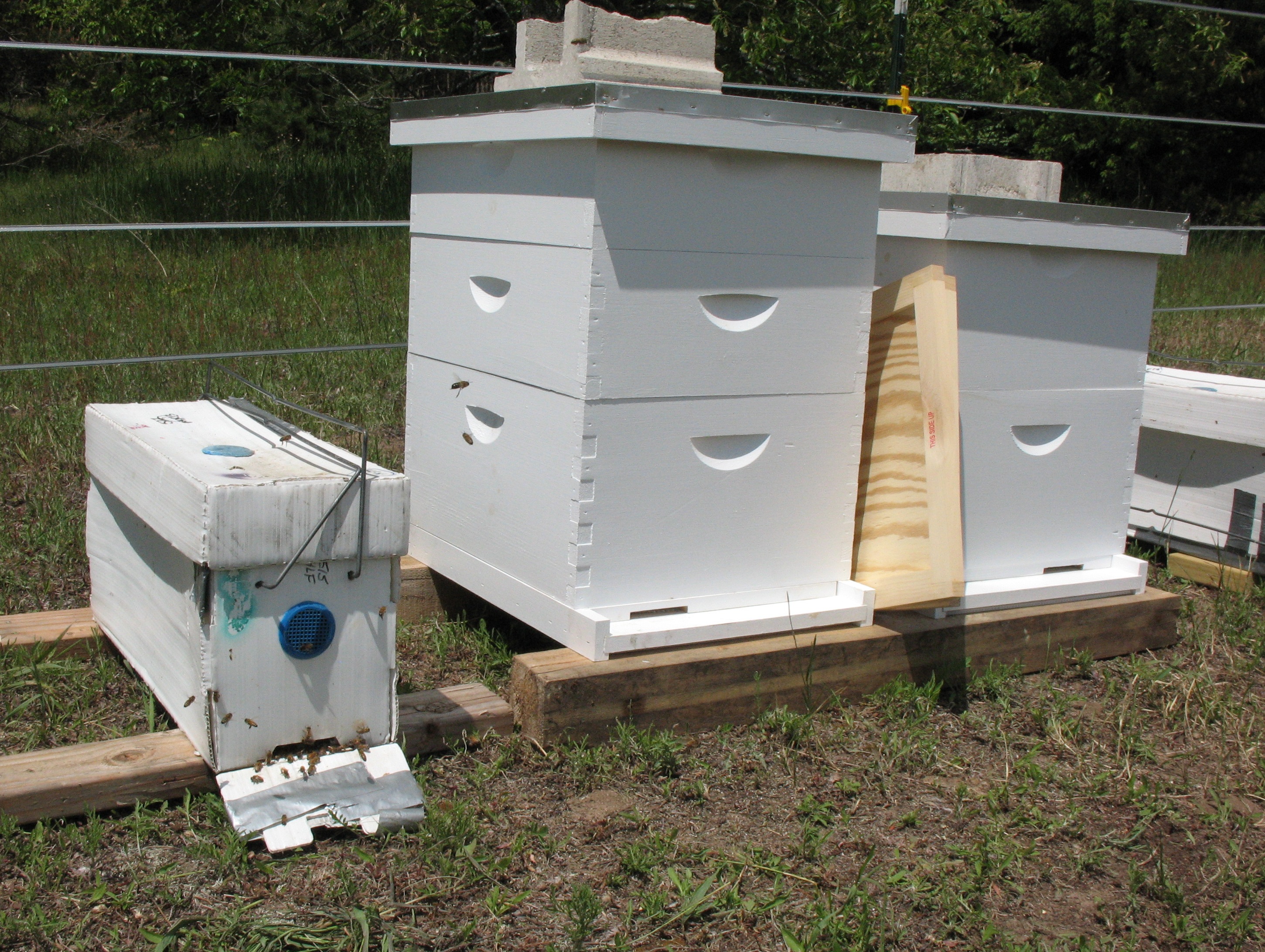
Here is where an interesting, if a little sad, historical review of ‘modern beekeeping’ is instructive. Historically—and I mean through the ages—‘domesticated’ bees were kept in ‘skeps,’ woven or wicker baskets. In order to harvest the honey or wax, the hive itself was damaged or destroyed. It was inefficient and unkind, if not deadly, to the bees. In the mid 1800s, all around the world, beekeepers were working on more efficient methods. I won’t get into the historical fray about who deserves the credit for the modern hive, except to say that the design of hives with moveable frames that accommodated proper “beespace” (the optimal size within the hive for bees to move and live) revolutionized beekeeping. It allowed bee management and harvest without killing the hive. We commonly call the modern equivalent hive the “Langstroth” hive, named for an American beekeeper, writer and scholar.
But, the hive we see in modern beekeeping today is not exactly what Langstroth created. In an effort to recreate the ‘natural’ bee colony found in hollow tree cavities, Langstroth created an inner hive with moveable frames, contained within an outer wooden box, with the cavity between them stuffed with leaves as insulation. Over time, but particularly fueled by the invention of the truck—which enabled larger orchards and mobile pollination services, the cumbersome outer boxes were stripped away. By the time ‘modern’ agricultural science evolved (starting in the 1930s), the stripped down hives were the standard, and became the baseline for apiary studies. We came to accept as ‘normal’ the idea that bees spent their winters huddled in a protective cluster around their queen. At no time has anyone presented any data about honeybees’ winter strategies when overwintering naturally inside a hollow tree. We have no idea what ‘natural’ would look like. But now we have evidence that the standard ‘winter cluster’ is probably not a natural norm.
Bees are considered livestock in American agriculture—but nowhere else in animal husbandry would it be acceptable to intentionally imperil one’s livestock on an annual basis.
And so, some experts are now telling us to insulate our hives in the winter. I have a beekeeping acquaintance, John, who is taking that even further. Frustrated with annual hive losses, a decade ago, he invested in the new wave of polystyrene hives. Currently, in Michigan, average annual losses hover at just over thirty per cent! (Last year nationwide average losses were over seventy-five per cent!) Since John switched, his winter survival rates exceed ninety per cent. (note: he also has an aggressive varroa control program and manages for maximum nutrition) John attributes most of his phenomenal success to his insulated hives. You can insulate wooden hives—but it’s a pain to do it right—and then you have to have somewhere to store those insulating covers during the summer (hence the reason why Langstroth’s original design with insulation got stripped away.) Something tells me that we’ve been doing beekeeping wrong for a century!
I’m not convinced that we can save the bees. Between the challenges of pesticide exposure and nutritional deficits caused by habitat loss* and climate change** we’ll need to be more thoughtful and intentional in our approach. I’ve just purchased four new polystyrene hives. I can see now that my efforts to insulate have been inadequate and haphazard. This spring, I’ll be starting on a new program, maximizing bee health as its centerpiece. Clearly, being average isn’t going to be good enough. I wonder though, on a broader scale, if we cannot save the bees, will we do enough to save ourselves?
*Habitat loss results in less diversity of plant life, and diminished nutritional returns on bees’ foraging efforts
**Climate change, and in particular, high levels of CO2, result in plants with lush foliage, but less developed flowers and pollen with substantially lower protein yields.
 tworockchronicles