
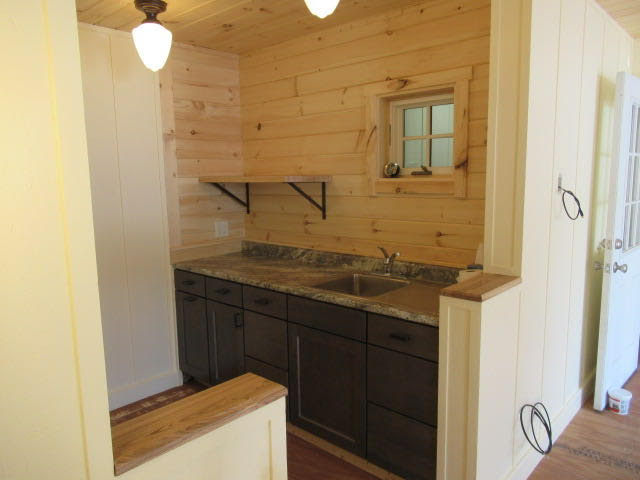
Rick and I have been remodeling a corner of our “barn,” which is really a two-story residential garage. Some years ago, I rescued my Uncle Mike, who had fallen into the hands of an elder abusing “friend.” Since then, Mike lived with my Mum—but now that she has passed away, Mike needs a new home. We don’t have room in our tiny house—hence the remodel.
Mike is developmentally disabled. He worked for most of his adult life as a busboy at Denny’s. Especially now, there is no institutional assistance to help with his meager SS retirement funds, so this project is operating on a shoestring. Still, when we agreed to take this on, Rick insisted that we create a living space that would be comfortable and attractive. “He’s coming to live with us,” he insisted, “We’re not warehousing him.”
And so, the months have slipped by as we two geezers planned, plumbed, wired, hammered, insulated, and painted our way towards a new home for Mike. It’s been an adventure.
In keeping with our normal (some say excessively frugal) standards, everything we could buy second hand, or discounted, was worked into the budget. Even some of the lumber (the t&g ceiling material) was purchased from a local mill, off a Craiglist posting. To some extent we used up leftover materials and fixtures from building our house, and we scoured for deals on Craigslist and Marketplace. We found a carpet bolt end for less than 25 cents per square foot, vintage and overstock lighting fixtures on Ebay and Marketplace, a little direct vent heating stove and a water heater on craigslist. You name it, we scrounged it.
Some things you have to buy new—and we were taken aback at the cost increases, just since we built the house. Plumbing and electrical parts and supplies are wildly expensive, and, of course lumber. We count ourselves lucky to have come in under the wire before the current tariff insanity started!
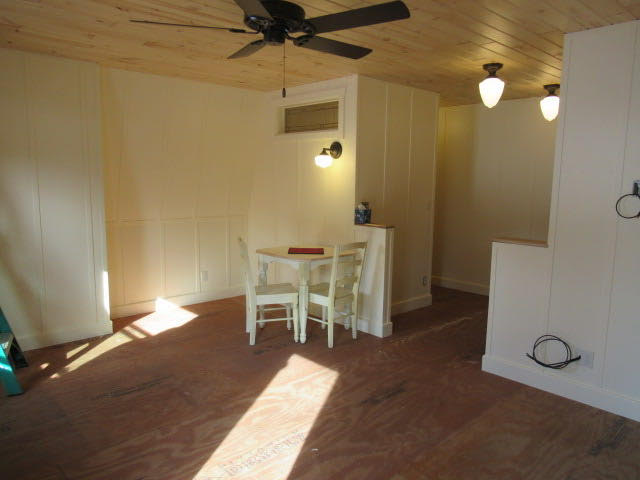
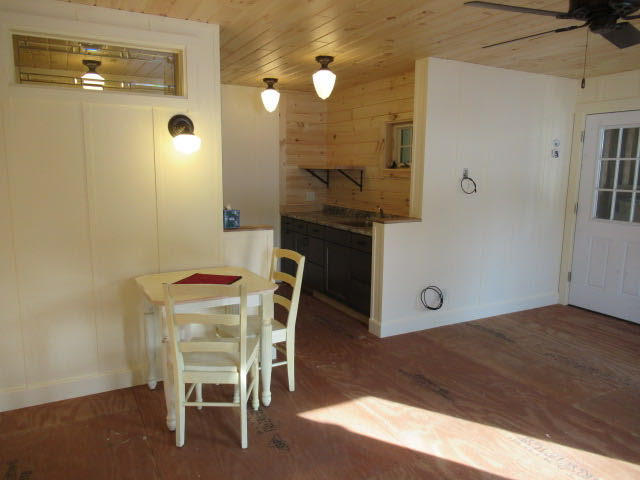
One of the biggest questions was what to do with the interior walls. Both Rick and I loathe drywall. We hate installing it, and mostly—sanding and taping, and sanding and sanding and sanding. Finally, after much debate, we settled on OSB and battens. It’s a little more expensive than drywall, but no sanding! No dust! For battens, we found that you can buy “lath” in rough four foot lengths—and with a little extra effort, you can make them work. A friend, watching the process from a distance opined that we were pulling the oldest DYI trick—substituting excessive, but free, labor for material costs.
We’re almost finished, just floors left to install, but the materials are on hand. We’re exhausted and satisfied. How’d we do?


 tworockchronicles