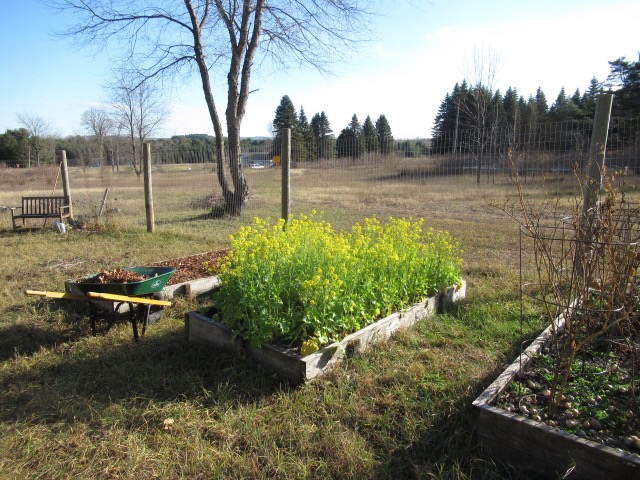
After a summertime harvest of a garden bed, I often plant a cover crop on the exposed soils. Mostly, I’m trying to slow the constant spread of red sorrel, which invades our soils. Often I’ll spread whatever seed I have in abundance. This year, after pulling the potatoes, I broadcast broccoli rabe seeds. I meant to dig them under before they flowered, but didn’t get to it. Now I’m glad it rolled out that way.
Our autumn has run long. Really long. We’ve hardly been heating the house, because it’s been warm. The trees have long since dropped their leaves, but the days have been warm enough to comfortably work in shirtsleeves. It has fooled us—our usual pre-winter chores have run late. So, it’s a bit of catching up that I’m out now, prepping the garden beds for winter.
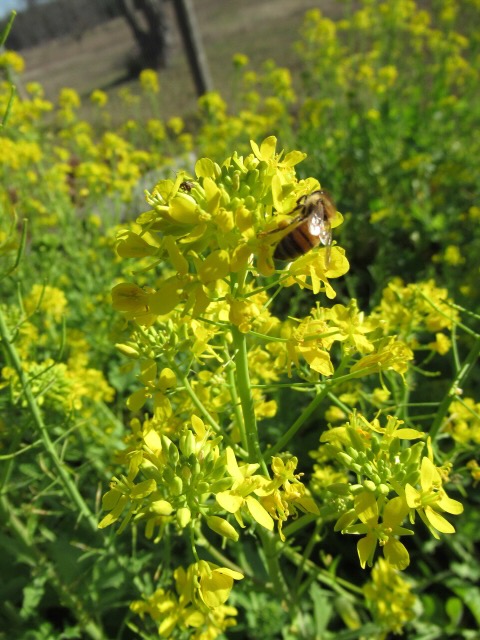
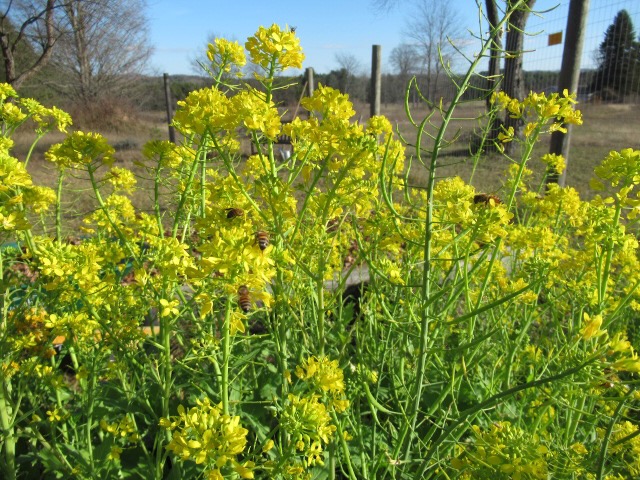
I try to clean up the garden each year, before the snow flies. I pull out and compost the remains of the season’s vegetable plants, remove the inevitable invasive weeds (mostly red sorrel), and mulch with shredded leaves. I was prepping the raised bed next to the broccoli rabe cover crop when I noticed a familiar low hum. The blooms from the cover crop were full of bees, honeybees. It’s November, there’s nothing else blooming. My timing error in not digging under the cover crop earlier has resulted in a late season feast for the pollinators.
Now I’m thinking that this could be a tradition. With our autumns running long, I could plant a late season treat for the bees. Beekeepers know that these long warm autumns are a challenge to our bees. The warm weather sends them out to forage (using up precious energies), long after the season has already exhausted the supply. These are sugar-feeding times. Yet it’s mid-November and the bees are still flying. In any event, it was a pleasure working next to them, keeping out-of-season company in our labors.