Archives for category: gathering firewood

We’ve been burning a lot of beech this year. A lot of beech. Winter is back, real winter, with the mercury hovering in the teens or below, and snow. A lot of snow. It’s a relief.

Our ‘normal’ snow load and its spring melt is nature’s natural drip irrigation for the forests. We’ve been missing it for several years, nervously noting the change. So this year’s normal La Nina winter comes as a mixed blessing. We’re happy to see the snow—even if it means snow removal duty. We’re noting the multiple polar vortices that our pushing our winter lows lower than normal. That’s also something to note. It’s an indication that the jet stream is unstable, one of the symptoms of climate change. Less visable, and more alarming is that similar instabilities are becoming evident in our ocean currents—the drivers of weather all over the world. 

Beech is not an optimal wood for heating. It doesn’t have the BTUs of ash or other, harder woods. It burns nicely, hot and fast, so we’re constantly filling the woodstove. Our ample beech supply is another disturbing symptom of climate change. We burn only deadfall, so the appearance of beech in our wood supply means the beech trees are in trouble. Beech Bark Disease has been in North America for well over a century. It hitchhiked to North Eastern Canada from Europe in mid-1800s trade, but remained there, relatively stable for its first North American Century. The disease is actually a partnership of several organisms—some fungal and some sap-sucking insects who serve to spread it. The conditions for their joint spread didn’t fuel its expansion until a shifting climate created opportunities to increase its range. It’s done so quickly since the turn of the most recent century, and beech trees are seriously threatened. 

“It all burns,” says Rick as we set out to harvest the deadfall to heat our home. We avoid conifers—because they burn dirty, but everything else that drops to the forest floor is fair game. We’re still burning ash—the last remnants from the ash die off, courtesy of another hitchhiker, the Emerald Ash Borer. Ash is a lovely firewood that burns long and clean. Our mix includes American Black Cherry, Ash, Beech, Maple, and a smattering of Hophornbeam. The only downside to the Beech is that you need more of it to get through the winter. If you’re relying on a glance of the total volume of the total cut and stacked firewood supply, you could run short. We’re running a little short this year. We have back up supplies, so we’ll be fine, but I made the mistake of forgetting to discount the beech when I stocked the woodshed. I remember harvesting the beech, several years ago. Rick was eager to get to some of the ash, but beech trees had fallen across the trail…so beech it was. 

Different species have different attributes when used as firewood. When I was growing up, my father favored oak—hard and long burning. I never liked the acrid edge of burning oak, but it’s a valuable heating source. Lucky for me—there’s not a lot of oak on our property. I don’t have to make that choice. Some woods deliver more heat, some burn fast—good for kindling or getting a fire going. Some wood, like our American Black Cherry, burn with colorful flames. It doesn’t speak to value on a heating level—but it’s pretty to watch in the woodstove. Burning wood for heat isn’t the easy thermometer setting that most folks understand. It takes many hours and hard labor to harvest, haul, stack and split. It’s free, but only in a monetary sense. We work for our warm winters. 

We are not normal in this respect. Most Americans rely on some sort of fossil fuel to keep warm through the winter. That puts the carbon footprint out of balance, essentially releasing CO2 from earlier eras into the atmosphere. This is where renewable energies can make a big difference. Our choice was driven by the economics of supply (we have acres of forest) and by an effort to minimize our carbon footprint. By burning only deadfall, we release only carbon from our own era that was already headed for the atmosphere. It isn’t a solution for everyone. It takes a minimum of 10 acres of forest to supply enough deadfall to heat a home. But it works for us. We extended our ‘utility’ by insulating the hell out of our small home when we built it. We can do even a hard winter with just under three cords of wood.

I have a recurring dream in which I am a ‘sommelier’ of woodburning. I sound like some high-end server as I inform my customers of their woodburning options. “Tonight we’re burning ash and maple—for a long burning fire with a golden hue. For a small added charge we can add some black cherry, which will burn in multiple colors throughout your evening. For special occasions, we can add some lovely imported varieties—like manzanita—hot burning and very colorful—but,” I nod knowingly, “That comes at a premium.” In the dream, I don’t know who my customers are, or what kind of business I’m running. Maybe it’s like a stress dream (like if you’ve ever waited table), or a roundabout way of appreciating life choices we’ve made. But it does make me reflect on, and appreciate, what the forest offers, even in death. Life is a beech…..

IMG_2582

As a teen, at my parents’ home, my least favorite task was to have to get wood from the woodpile, at night. In the snow. In the dark. We’ve set it up here so that this is never the case.

Sure, the woodpile is out back, at stone’s throw from the house. But by the basement door we put in a wood ‘crib,’ enough to hold two or three week’s worth of fuel, depending on the temperature. And, just inside the basement door is a woodbox, that we fill everyday, so that the wood for the day is dry, and warm.

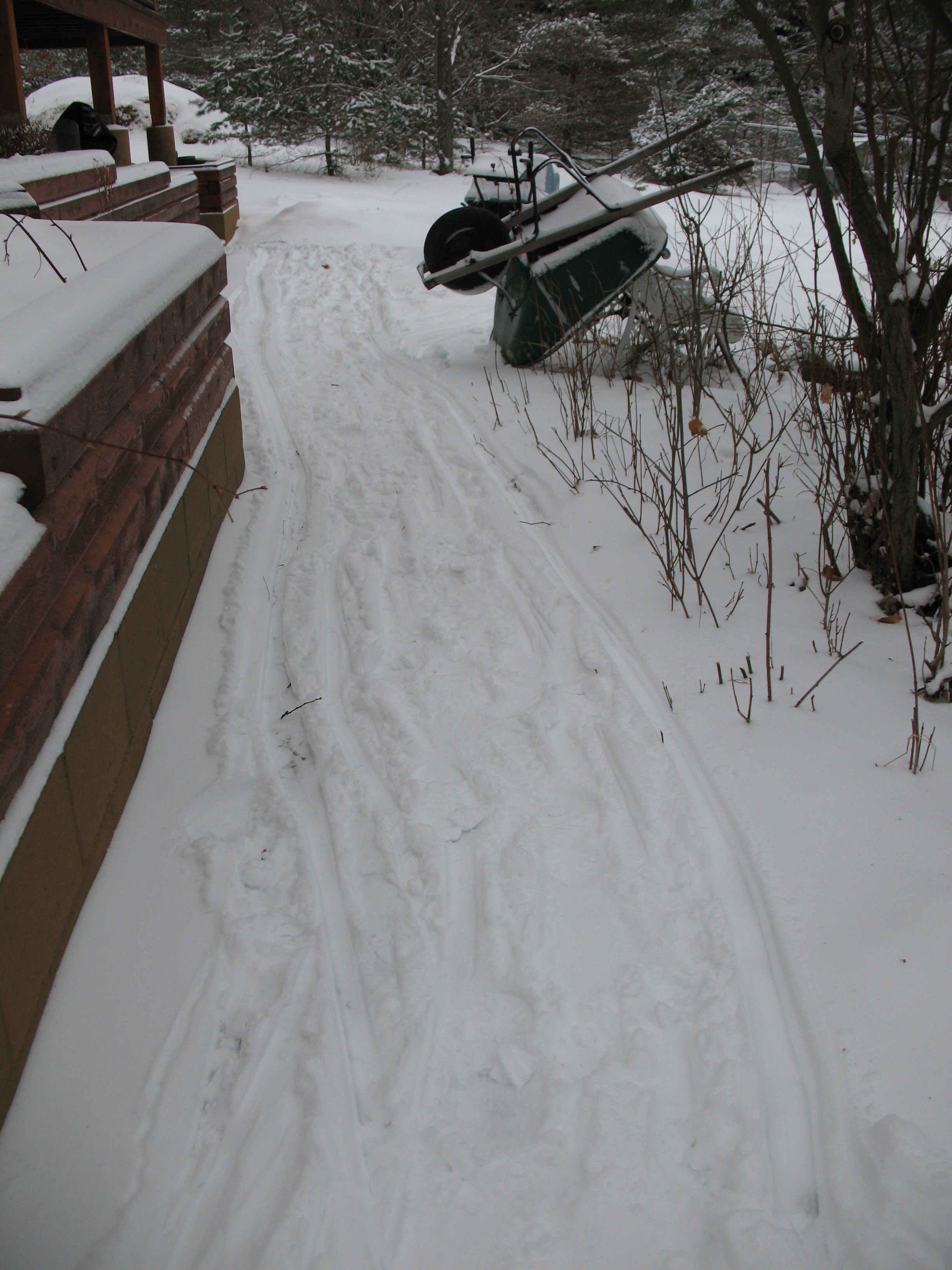
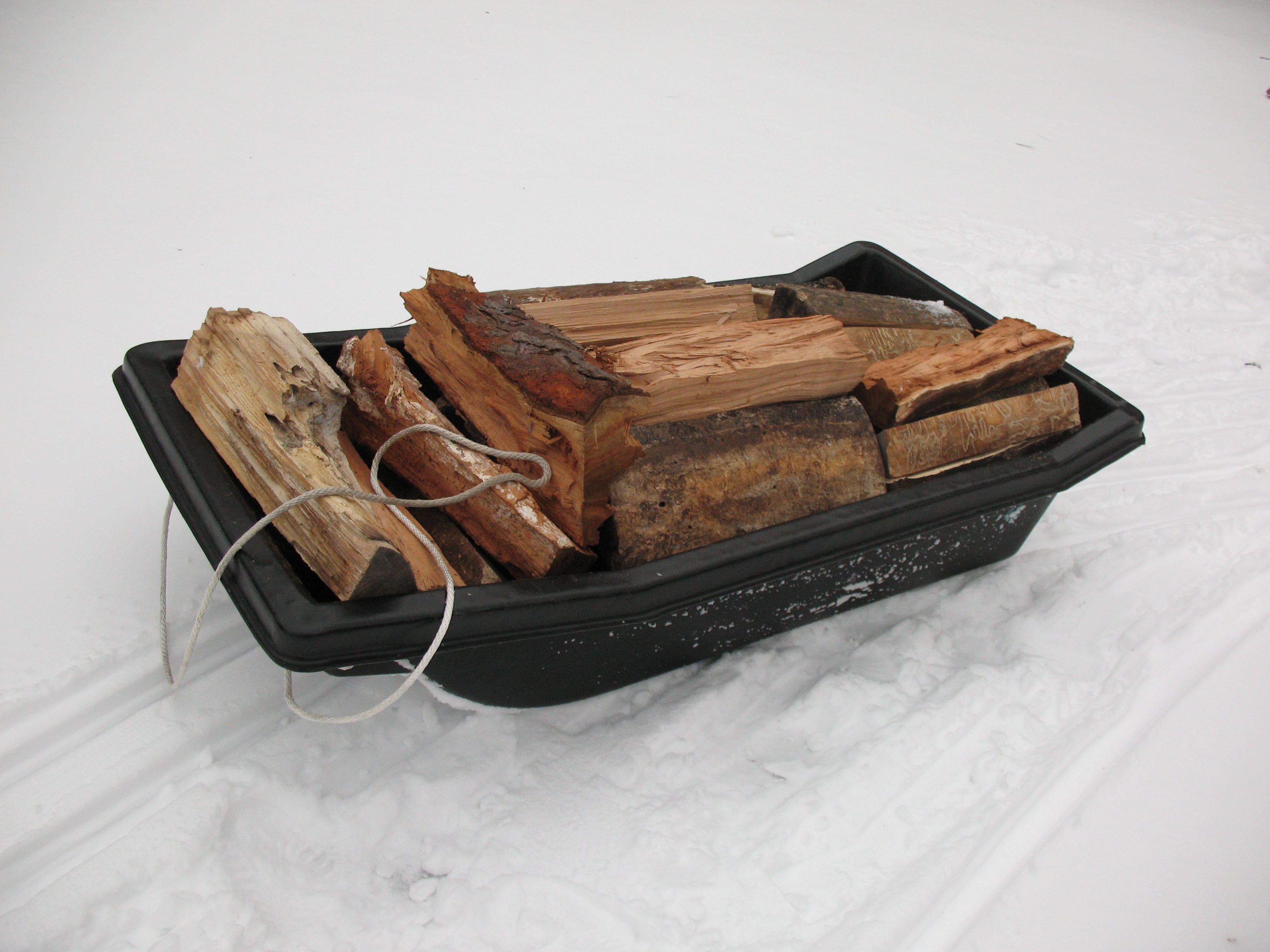
A couple of times each month I refill the woodcrib. I use a sled–the kind they make for ice-fishing, unless there’s no snow, in which case, I use a wheel barrow. It takes eleven or twelve full wheelbarrow loads to fill the crib–but only five or six sled loads. I prefer the sled.

IMG_2580

You cannot turn your back on that sled though. If the ground is uneven, it’ll do what sleds do. Just before the holidays, the sled got away from me and whacked me square in the knee–knocking me over. I hobbled for a couple of weeks after that. That was my stupid-tax–it was my fault. I need to be more careful about observing how the sled is positioned on any slope–especially if I’m going to get out in front of it.

IMG_2581

Just enough of a slope to cause trouble!

Unlike my sister, further north, we don’t burn 24/7. We start a fire when the temperature falls below 62, usually mid-day, and keep it going until we go to bed. Any more than that and the house would be too hot. In my parents’ house, the fire burned non-stop from October to April. I’m not sure if our difference in burn time is because of latitude, or the fact that we stuffed every nook and cranny of this house with insulation.

All the wood we burn comes from deadfall here on the property. It’s free, unless you count the hours we spend cutting, hauling and splitting. It’s heavy work, but it’s outdoors  in the woods and lovely. It’s one of our favorite tasks.

IMG_2583

And ready for next time–sled or wheel barrow.

I was the one who insisted that we heat with wood. Not only had I grown up with it, but I learned a lesson in a rental once, that made me insist on having some measure of control when it came to heat. We lost power at the farm where I rented–and it was out for nearly a week. The furnace, though propane fueled, required electric power to operate. It was a very long, cold, week. After that, even though it was a rental, I installed a small wood stove. I never again wanted to be at the mercy of a public utility.

We have back-up heat, propane stoves and some electric baseboard units–enough to keep the house from freezing if we go out of town in the winter. But for day to day use, we burn wood.

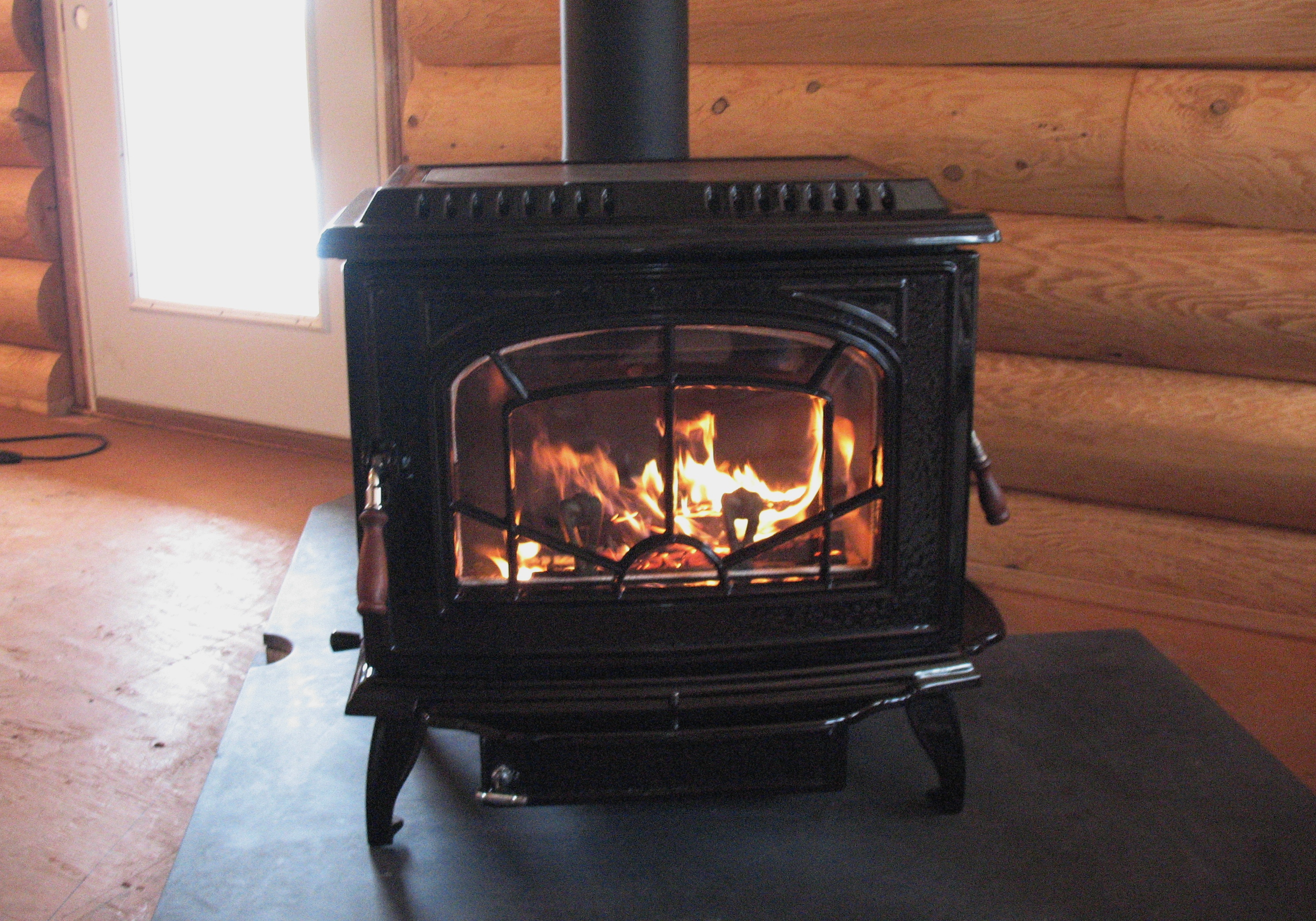
We’re having a winter storm today. Not much of a storm really, there was some wind last night and by tomorrow morning we expect to add a foot of fresh snow. It’s beautiful. We won’t shovel until tomorrow–no point in doing it twice. In the meantime, it’s toasty inside by the fire.

img_2342


IMG_2539

It’s not like we weren’t expecting it. We have, after all, been smug about it, boasting, “This  year we’re ready.” The bees are winterized, the chicken coops prepped, the wood, chopped, split and stacked. We even cleared the composter and spread the completed compost onto the harvested garden beds. But we still had things to do. Relying on previous years, I thought I still had time to put in new garden beds–and plant bulbs for spring. Rick has just a little bit of wiring left in the barn.

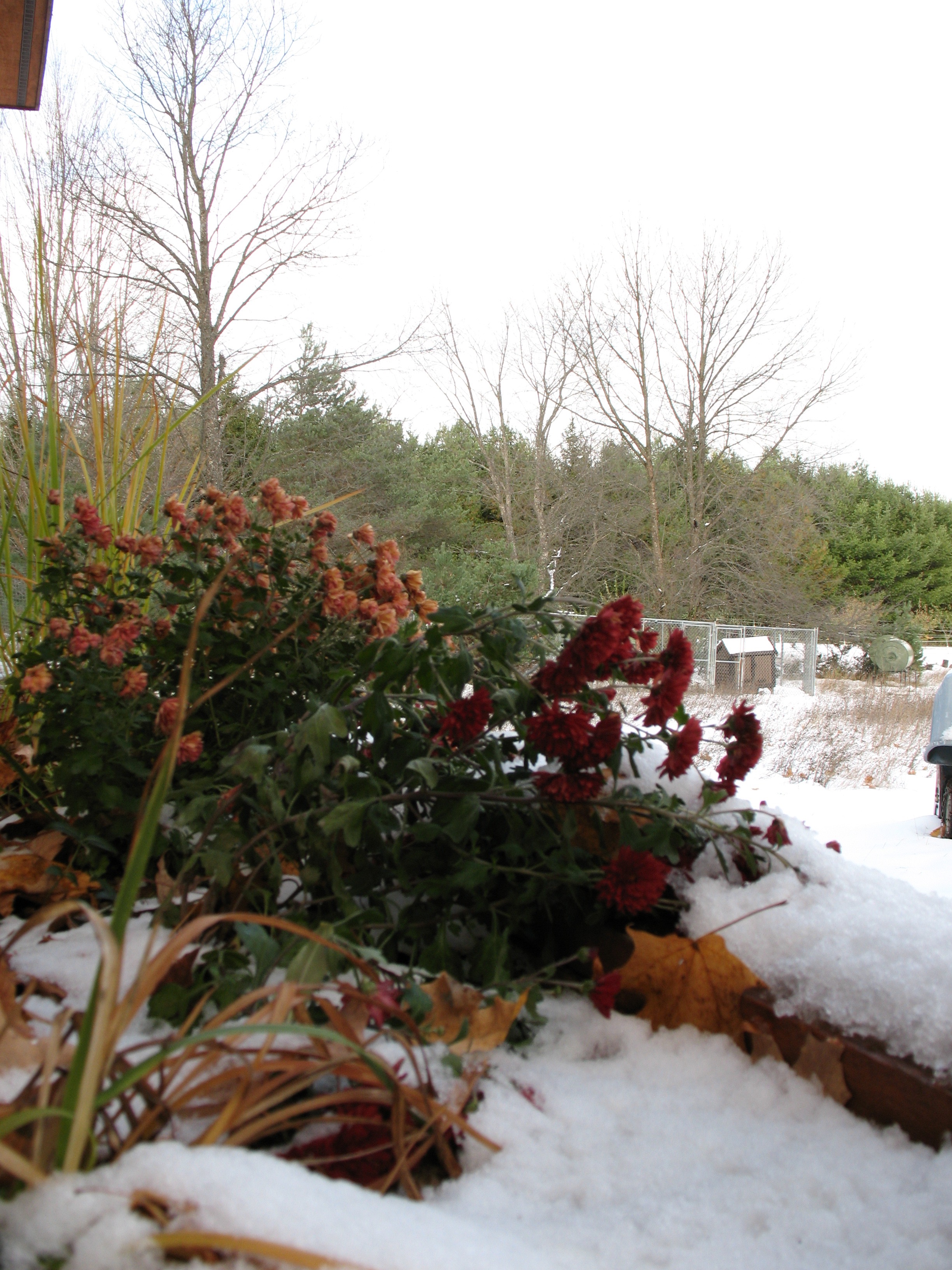
And we’re not surprised to have some snow at the close of October. It’s almost a tradition. The joke is that folks in Michigan get their Hallowe’en costumes three sizes large–so they’ll fit over their winter coats. What we didn’t expect was that it’d stay this cold, this long.

Last year I was transplanting, dormant, into December. This year, I’d have to search in the snow to find the garden beds. It often snows in autumn–and then it melts. This year, it didn’t just snow. It pelted! It stripped the colored leaves from the trees, nearly overnight. That snow? We thought, just like Bolsonaro*, that it would never stick. We were wrong.

North By Degrees

kindling cracker

It’s winter. Though we’re not yet through with summer business, when I look out the window, that blanket of white is pretty convincing. Though temperatures have been pretty mild, there’s no doubt that the season is upon us.

We don’t mind winter. It slows things down. And we love the cozy-evenings-with-a-fire-in-the-woodstove part. We’ve not yet reached the coldest part of winter, where a fire is needed round the clock.

I’m largely responsible for keeping the woodbin stocked from the woodpile. And I chop most of the kindling. That’s the only part I don’t much like. Admittedly, I’m not what anyone would call graceful or coordinated. Swinging a sharp hatchet near my fingers and thumbs makes me nervous.

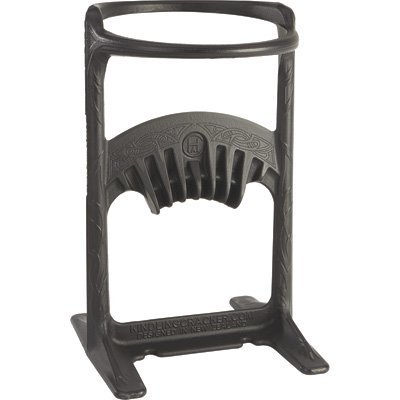
I’ve been eyeing those ads for a “kindling cracker,” a handy device for holding firewood whilst splitting it in a near-effortless, and finger-safe, procedure. They’re ingenious, and elegant, but not cheap. I’ve been considering it for a couple of years; it’s a woodburning accessory that I could almost convince myself is a safety necessity. As is often the case when it comes to Northern living, I thought I’d ask my sister—who’s several hundred miles north of me—and has heated with wood for her entire adult life.

My sister had never heard of it. “Kindling? Why are you cutting so much kindling?”

“To start fires, of course.”

“Well, how many fires do you need to start?” (I could tell that she wasn’t going to be much help with my rationalizing.)

“At this time of year, we start a fire every day.”

“Really?” (What? Is she just showing off?)

“Don’t you need to cut kindling for the season?”

She laughed. “Not ‘for the season.’ We start a fire in October. Then it burns until May, 24/7. And you?

“It’s not cold enough to burn round the clock. We’d roast.”

“Ah!”

And that, was that. Surely she’ll be of no help in my consumer decision. I’m not entirely sure if it was as cut and dried as all that. I could be the victim of Northern snobbery. But I’ll never know.

New (to Us) Trailer

A.V. Walters

trailer

There are probably a hundred things that we could have done today—some maybe more important than what we actually tackled. But, there is a special lure to a new toy, though. You just gotta try it out.

We’ve had cut wood sitting in the forest for some weeks now. Not that it matters; the firewood could sit there until fall. The problem was that, though we’ve cut the trails, we did not have a trailer to haul the wood out. I’ve been perusing craigslist for weeks. Trailers are not cheap! Who knew?

It needed to be small, to handle our steep terrain and tight turns. It did not need to be road-worthy. By that I mean that we didn’t need lights or brakes. We will never use this trailer off the property. And, we’re not likely to gather firewood in the dark.

I mentioned sometime back that I’m a bit of a scrounge. Indeed, I may be the Queen of Scrounge. Finally, last week we found the perfect trailer. It’s really junky! For some reason, that makes me love it all the more. The old metal frame is rusty, but it’s sound. The wood is a mess, but that can be replaced. This is probably an old military trailer. I guess we’ll refurbish it—though I kind of like it just as it is. Rick is just as enthused, in a more subdued kind of way.

Today was our first free day where we didn’t have to be doing something else. Rick was itching to try out the trailer. So, we decided to bring in some of the cut wood. Our funny little trailer worked like a champ. We brought in five trailer loads (plus what we could fit in the tractor’s loader.) Naturally, it turned out to be the hottest day so far this year—well into the eighties. It’s not ideal weather for the heavy lifting in this task. Still, off we went. We’re as happy as clams, though a little tired.

Now that so much wood has been brought down to the home site, I guess we’ll have to split and stack it. There’s more up there, but we’ve run out of room at the splitting station. Everything in it’s time…and then, we can go play in the hills again.