Archives for category: season
Hope the wind doesn't blow!

Hope the wind doesn’t blow!

Taking Leave(s)

A.V. Walters–

Six years on the farm cured me of a common American delusion—the need to clean up after nature. In rural living, nature is just too big to consider tidying up after her. Sure, if you make a mess (like after cutting firewood) you could clean it up, you could even mow, if you wanted or needed to. And, weeding in the garden makes good sense. But beyond that, I figure that nature is pretty much on her own.

When we left Two Rock, we gave away the lawnmowers. I don’t think I’m likely to live anywhere where I’ll need one, again. However, at our little, Empire rental, there is the issue of the leaves.

Our neighbors are positively obsessive about lawn care and leaf removal. I acknowledge that if you have a lawn, it’s better for the grass to remove the leaves. However, our garden implements are in storage—deep in storage. I’m not digging way to the back of the unit to find a rake so that I can collect the leaves at a rental. Besides, Empire is very windy. I note that there are often leaves there one day that are gone the next. (Sometimes, even in the direction of our obsessive neighbors.) In the old days, when I lived in the city, I used to enjoy raking leaves. But then there was the problem of what you’d do with them. If the city has a decent recycling program, it makes sense. But it makes no sense to gather them, only to pay to have them put in a landfill somewhere where they’ll never breakdown naturally.

I visited my brother this weekend. He has not raked at all this season. He lives on a tree-covered city lot, in a village with a great many trees. When we arrived, the leaves were deep in his front yard—in some places, a foot deep. Like many suburban folks, he secretly believes that the wind patterns deposit all the nearby leaves in his yard. He supports this theory by the fact that the leaves lay in deep drifts over his lawn, even as his neighbors lawns are relatively leaf free. And, he notes that some of the leaves in his yard are oak leaves, and he has no oak tree. Of course, those same neighbors, whose yards are clear, have been diligently blowing and/or raking those leaves into neat piles and removing them, regularly, for a couple of months. Still, my brother clings tightly to his leaf-conspiracy theory.

He lives in a community, where, if you deliver your leaves to the edge of the street (there are no curbs) the village will regularly send around a big, leaf-sucking rig to spirit away one’s unwanted autumn harvest. These leaves are then composted, so suburban homeowner’s can maintain their tidy lawns and feel positively righteous. If one doesn’t rake and remove, there’s always the possibility that the Village could cite you, or worse. I decided that I could help out by raking his leaves.
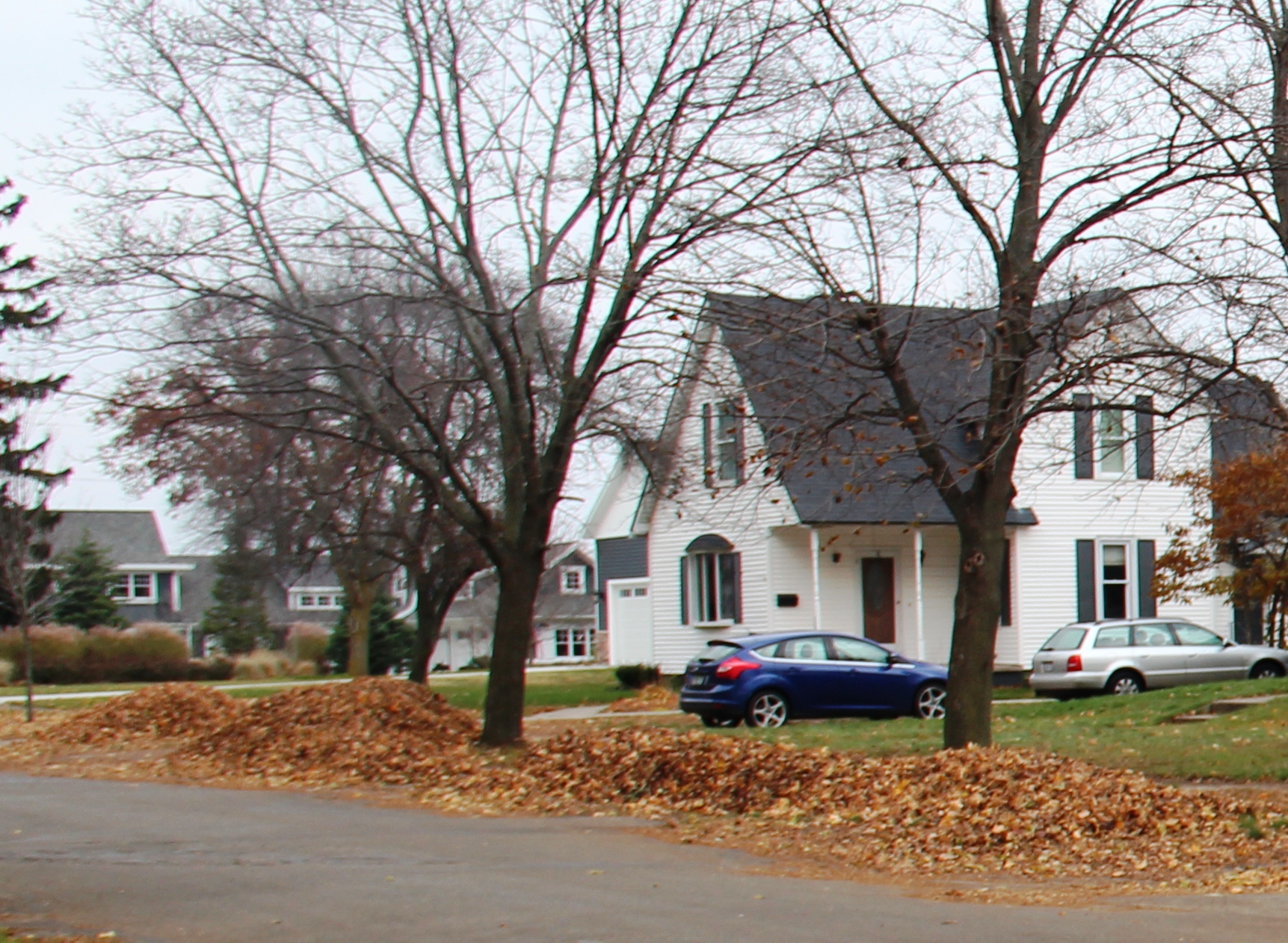
Waiting for Pick-Up

Waiting for Pick-Up

It went well at first. It was actually fun, wading shin deep and using my rake (and my body) as a plow. Soon, though, it became clear that I was going to run out of street-edge on which to deposit the autumn harvest. (And he has a corner lot!) The neighbors have tidy, minimalist leaf piles. The more I raked, the crazier my pile got. I began to marshall the leaves to the edge of the yard. A simple pile wasn’t going to do it, more like a line. Then, a wall. As I worked, the wall got taller, and deeper. I wasn’t sure what the rules were—just how thick could my wall get and still be leaf-suckable?

I started getting comments from neighbors as they walked by: “I sure hope you’re getting paid for that!” (I’m not.) “That looks like a lot of work!” (Yup.) “What are you gonna do with all them leaves?” (I dunno.) Some kids came by waving and laughing at the height of my leaf pile. One almost launched herself into it but I caught her eye, and brandished my rake, “You do, and you’ll have to rake it back up!” She giggled and ran off.

By the time I finished, I’d built a veritable fortress with my leaf-wall. It was three to four feet high, and at least as deep, running some 160 feet on two sides. I don’t know if it will work for the leaf-sucker, but I’m not really concerned. I don’t live here.
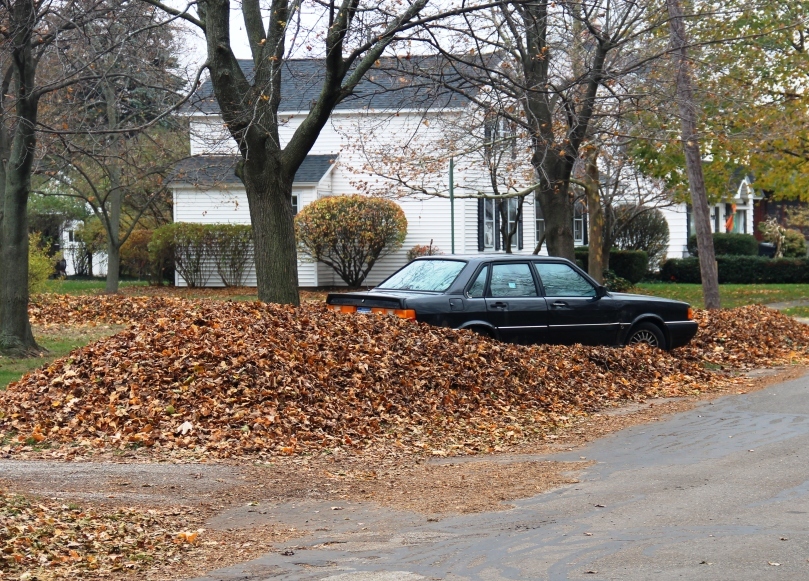
I was going to bury this car, but my nephew came out and caught me.
I was going to bury this car, but my nephew came out and caught me.

The Orphan Garden

Good Enough

A.V. Walters

The garden this year is an orphan garden. Though we planted it, and we care for it, it’s not really ours. We didn’t do our usual big production garden. We cheated and used older seeds (some of which never did germinate.) We transplanted volunteers and moved things around—so much so that now I’m not sure what’s what. Then, late in the game, one of the farm tenants dropped off two orphan tomatoes—of course, root bound, and those went in, too.

Still, watering and weeding it has been a pleasure. It’s that quiet, steady, work that inspires why I garden in the first place.

There’s a chicken in the garden this year—it happens sometimes that a chicken escapes the barn and sets up housekeeping in some corner. Usually nobody goes looking for them and they forage and do pretty well. This one likes snails. If I see that shiny, post-slime evidence of a snail on one of the plants, I root around in the bucket and find the culprit. I’ve been giving the snails to the chicken, and now she follows me around the garden. Somewhere over there, there are eggs, but I’m not looking.

The tomatoes (even the stragglers) are doing well and have baby green tomatoes hiding in a lacework of yellow flowers. The peppers are in bloom and the various squashes are all growing gangbusters. I just wish I knew what they were. I know there are pumpkins, zucchini, acorn, delicatta (my favorite), butternut and maybe crookneck squashes. I’m uncertain about the rest. The cucumbers (3 lemon and one regular) are filling out and reaching up for the sun. I think there’s a French melon plant in there, but only time will tell.

Unfortunately our hot spells have made the spinach bolt. We’re eating it up quick, before it gets too bitter.  We’ve also had some of the basil, and some early sprigs of cilantro. The radishes are almost ready, though they’ve been beset by bugs, we’ll still eat them. Even if this is all it is, it is good enough.

We didn’t plant this garden with the intention of a harvest. We may never satisfy our curiosity about just what’s in those buckets. We know we’ll be moving, but we don’t know when (or exactly where, for that matter.) We’re packing and checking our plans, Plan A, Plan B and Plan C (even Plan C.5!) We’re selling things that don’t need to go with us. And we’re waiting. The waiting is the worst. We have business to finish here, and we’re not in charge of how quickly that will roll along.

In the meantime, there are emus and chickens to feed and gardens to tend…


White Poppies

RR Edwards


Regular California Poppies

Regular California Poppies

Regular California Poppies

Regular California Poppies

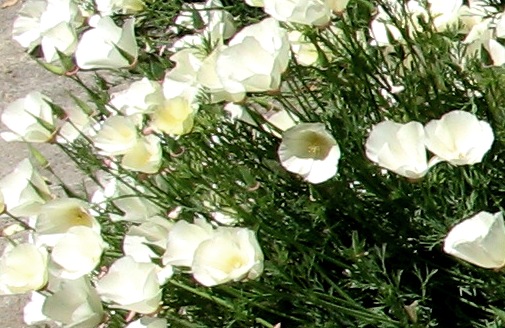
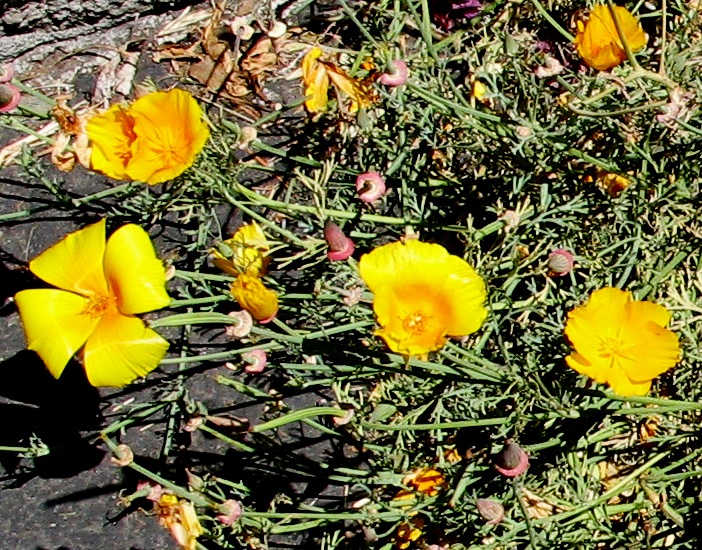
The obsession started the day I noticed an unusual patch of white-petaled flowers. They were among an irregular sea of bright orange California poppies—the only surviving descendants of a package of mixed, native wild-flowers that I’d sown a few years earlier.  There they were, White California poppies!


White Poppies

White Poppies

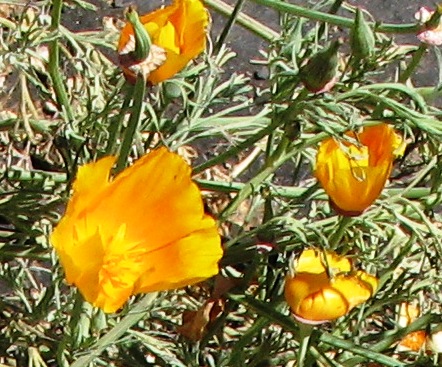
I’ve always loved our state flower, whose beacon of orange can be seen everywhere this time of year. In some respects, it grows like a weed—appears randomly, in small isolated patches, or covering whole fields. It spreads at will, thrives in most types of soil and, once the spring rains germinate its seeds, will continue to bloom through the dry months of early summer. But all this outward heartiness belies the sensitive side of this flower. You can look, but you cannot touch! Once established, it doesn’t like being jostled and will wilt and die at the drop-of-a-hat. As the state flower, they’re protected—you’re not allowed to pick them. But anyone who’s ignored, or been unaware of this law, is soon holding a drooping blob of orange and green, and that usually dissuades any future attempts at gathering. Though I’ve always believed this plant to be an annual (dying out completely, after dropping its seeds in the summer), I was surprised that a number of our potted poppy plants survived last winter, and went on to flower this spring. Who Knew?


A More Delicate Poppy

A More Delicate Poppy

I had never seen, or heard of a white California poppy. The only response my casual inquiries drew was, “Really?” Eventually, someone told me that it was a rare, but not unheard of genetic mutation that, over time, reverted back to brilliant orange in successive generations. That’s why you don’t see ever-spreading patches of white poppies. I can’t attest to the accuracy of this premise, but it made sense to me. I guess I could have gone on-line and researched the topic, but it made little difference to what had become my mission — to create a permanent strain of white California poppies.

I assumed that if I wanted to reinforce the mutation, I needed to find it in another, “unrelated” patch of white poppies. And so, during the travels of my daily life, I scanned my surroundings in search of other genetic outcasts. I finally found what I was looking for in an area I’d passed countless times—an embankment along a nearby freeway on-ramp. Now, I had to watch and wait for the white poppy petals to fall away, and the seed pods to ripen and dry. This was the same routine I was going through, in front of my home—anxiously waiting for the seed pods to dry, and collecting them before they burst and scattered their tiny seeds.


The Average Seed Pod

The Average Seed Pod

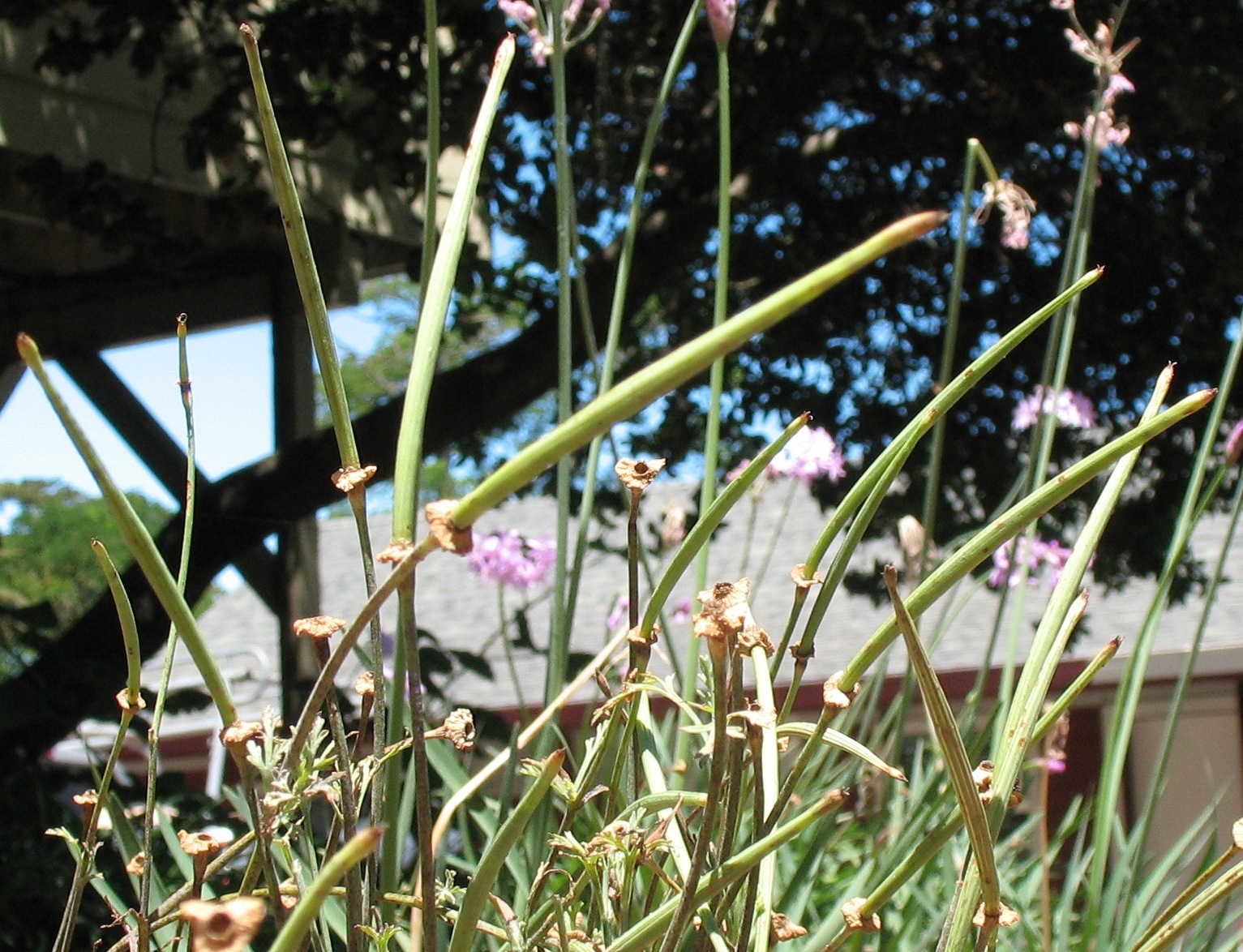
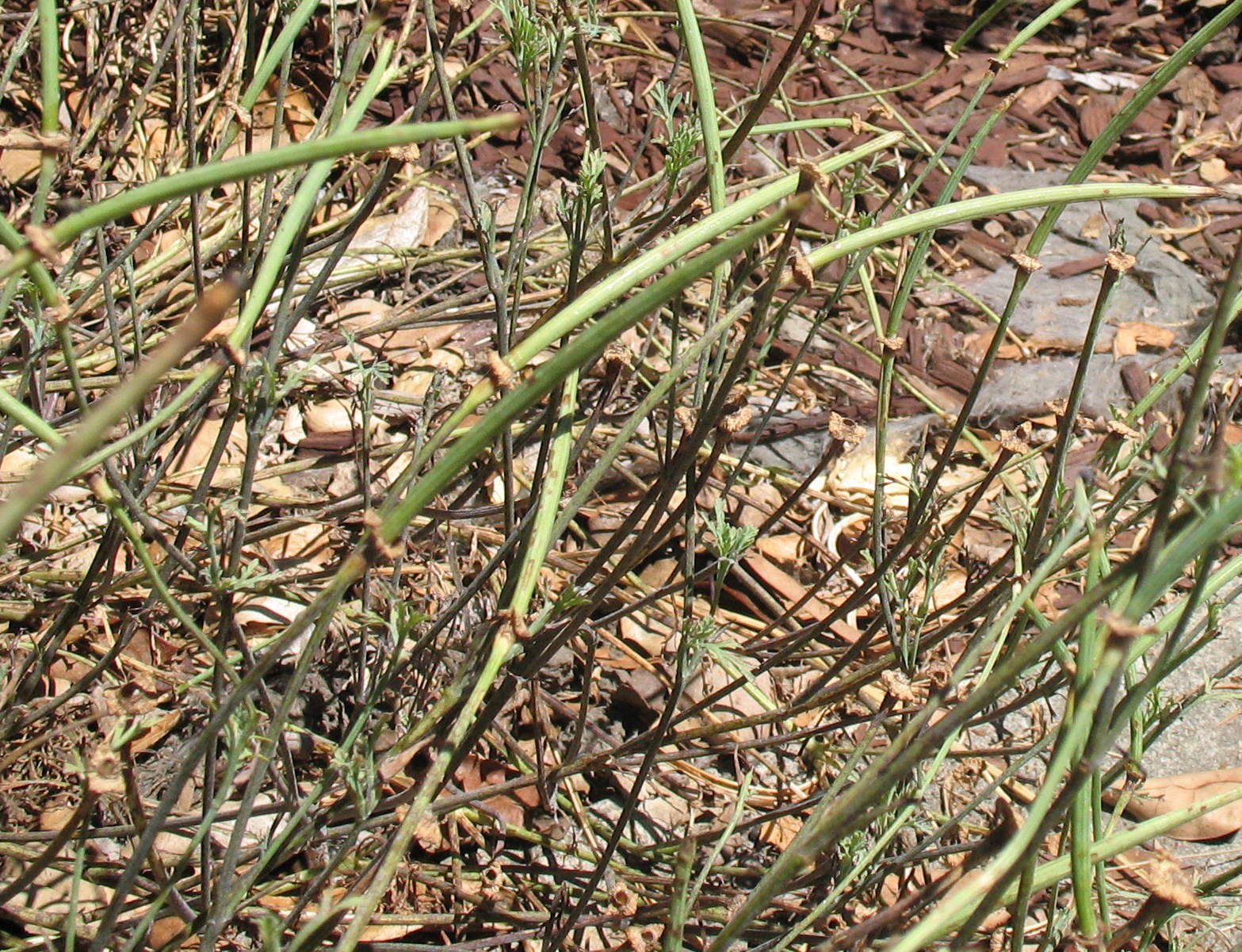
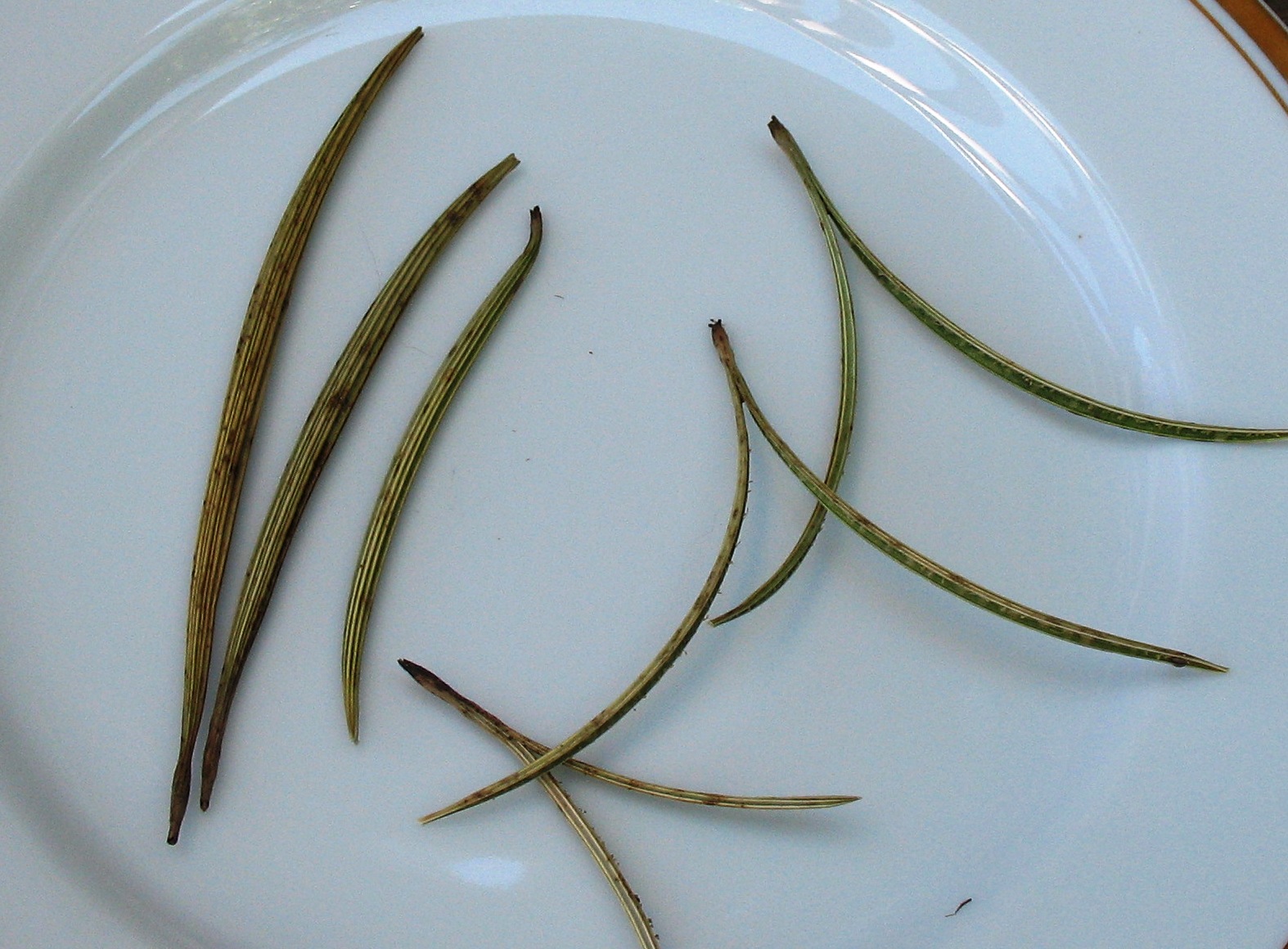
The average seed pod is about 3” long, about 1/8” in diameter, (though that can vary a lot) and tapers to a point at both ends. Its trick in spreading its seed is not unique, but it is unusual. When the seeds ripen, (they’re the size of large grains of sand) and the pods dry, the pod splits in half as if it were spring-loaded, and flings the seeds as far as several feet. The difficulty in gathering seeds is waiting long enough to be sure the seeds are mature, but picking the pods before they “explode.”


Nearly Mature

Nearly Mature on Scraggly Plants

When this adventure started, several years ago, I was able to collect several hundred seeds from my yard, but only a few dozen from the on-ramp location. (The difference, in part, was simply access.) A problem with the seed I collected was that I couldn’t ensure that all of them came from white-petaled plants. By the time I came up with my grand plan, the seed pods were already developing and had long since lost their petals, so there wasn’t a clear division of plants by color. Unavoidably, some of the seeds I gathered came from orange poppies.

Sprung and Unsprung

Sprung and Unsprung

That was a few years ago and it wasn’t until last year, after moving to Two Rock, that I had a chance to put my plan to work. I placed seeds in 6” pots, separating them into groups of “home” and “on-ramp” poppies. (I wanted to be sure that I could pollinate one group with the other.) When the plants started to bloom, I found that about half of them were white and the others were orange. I pinched off as many of the “undesirable” blooms as I could, and used a Q-tip to transfer pollen from one group of white flowers to the other. By this point I was second-guessing myself about my “scientific protocol” but it was, what it was.

On top of that we had to leave for about 10 days to attend a family memorial back east. I arranged for the neighbor’s son, (who we’d hired to feed the cats in our absence) to pick off the orange blossoms when they appeared. I explained to him the reason for the task, but perhaps it was all a little too esoteric for a 14 year-old boy to appreciate, because upon our return, I was greeted by a speckled patch of orange and white poppies. At this point, the experiment was out of control—the orange and white flowers had engaged in unbridled relations, and there was no telling what the color of their offspring would be. (Not that there’s anything wrong with that! That’s why they call them wildflowers.) I decided to make the best of it, and continued to remove the undesirables. When the pods were ready, I harvested those seeds where I felt confidant of white-petaled-parentage, and allowed the rest to go on about their natural business, spreading their seeds. But I vowed to do better next year.

As I mentioned before, I was surprised that a number of last year’s plants made it through the winter, and they became part of what turned out to be a sizable patch of new poppies that came up this spring. Rather than plant any of the seeds I had gathered from previous seasons, I decided to work with what nature had delivered. What I hadn’t expected, and was pleased to see, was that most of the new flowers were white. And so I began, again, pinching off the orange blossoms and, when possible, removing the entire plant that was producing them.

Bounty

Bounty

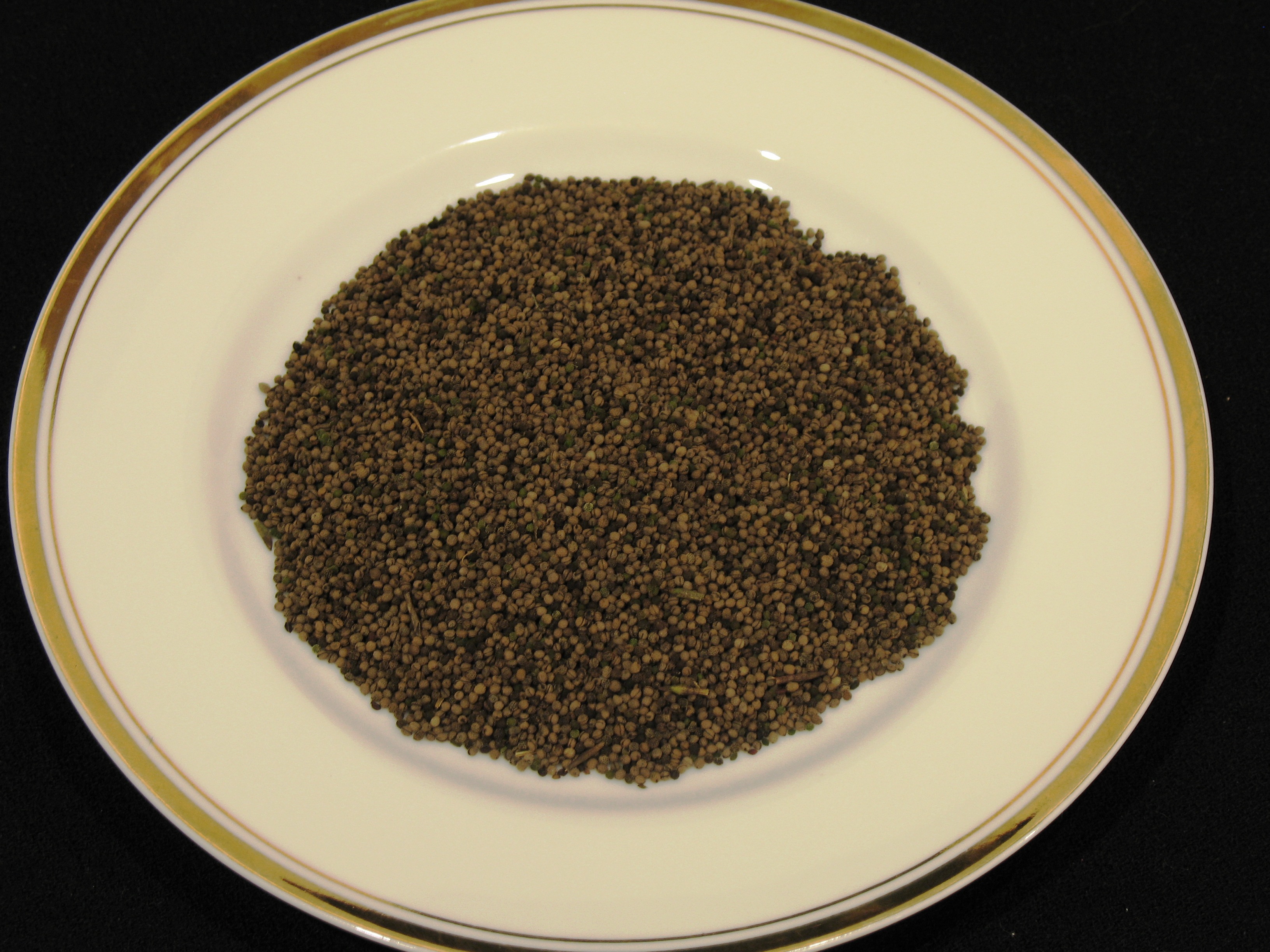
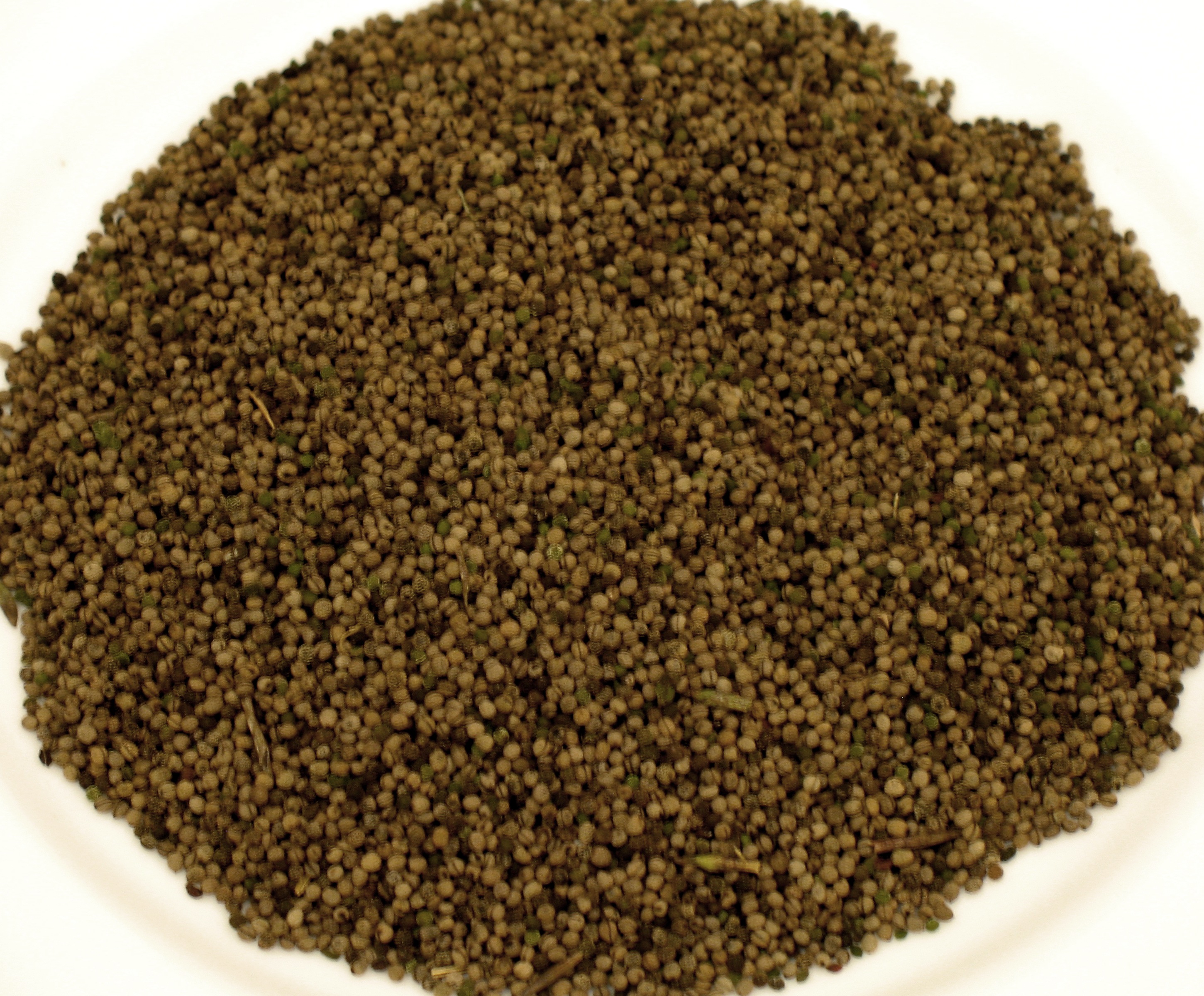
Well, the last of the poppies are now drying up. (Due to our unusual weather, it was an early poppy season.) And I’m happy to report that I’ve collected an impressive quantity of seeds—and there’s more to come. Just how many seeds is hard to say. By weight, it’s a little over an ounce and a half. That may not sound like much, but there are thousands of them. But when I started this whole thing a number of years ago, I had no idea how changed my life would be.

So many tiny seeds!

So many tiny seeds!

The love of a wonderful woman and an opportunity to create something special together, are calling me and my white poppies to lands in the east. I’m not sure how I’ll do with snow in the winter and humid summers, and I’m less sure how my fine petaled friends will do. But, I’m optimistic (and that’s saying a lot, for me) and I think these two California transplants will do fine, just fine.


Another Emu Day

A.V. Walters

The new garden is almost complete. Rick is working the last of the bugs out of the drip irrigation system. Three quarters of the plants are in, either as starts or as seeds. It’s a typical summer Two Rock day. It’s sunny and cool and the afternoon winds have whipped up. Over the weekend, in addition to the garden, Rick and I finished stripping the last of the diseased peach curl leaves from the peach tree. We’re in good standing with our spring/summer farm chores and it’s not yet Memorial Day.

With all our attentions elsewhere, the emus have been on their own. Their job at this point is to eat and grow into full size emus. If I sleep in, their chirping reminds me in the morning that it’s time for emu kibble. I wonder how long they’ll keep the chirping. I’ll miss it when they stop. They continue to lose their baby feathers and their striped markings. Rick and I can tell them apart, but nobody else can.

Elmer would like to tag them somehow, maybe with anklets—to tell their gender in the future. I’m not sure what kind of identification system would work, and still let them grow. I look at their dad’s feet and there’s a lot of growing to be done yet. I think they have a few weeks, if not a month more with us, before they’ll head out to learn the sheep trade. In the meantime they’ve become quite territorial about the front yard—keeping the feral critters at bay. They chase the dairy trucks, from the safe side of the fence. I wonder if the drivers notice…and wonder.

They’ll make good guardians, unless the predators come bearing apple treats.

It’s that time of year again…that time when we roll up our sleeves to volunteer as amateur builders (well, I’m an amateur, but Rick’s a pro) and spend a couple of weekends fixing up the homes of seniors and those on fixed incomes, so that they can remain comfortably in their homes. Rick and I are House Captains on a big project this year–so for the next week or so, there may be scant activity on the blog. Bear with us and our aching muscles. We have an entire yard to transform, two porches to rebuild, a bathroom to remodel. wiring to upgrade, a chicken coop to build, a garden to put in, fences all the way around….it will be transformative for all. But don’t worry, it’s not just us. This organization (Rebuilding Together) recruits a zillion volunteers for the ‘big day.’ Our project alone will probably have 40 volunteers who show up, work gloves in hand, ready to pitch in. (And we’ll need them.) On a large project like this, one day isn’t enough, so Saturday we met with 15 volunteers to set the fence posts. We cleaned up a lot and cut down some out-of-control trees (so there can be sunlight in the garden.) One of our volunteers yesterday was 83! (He’s worked on several of our projects and he works so hard he puts the kids to shame.)

This week is planning and logistics. Then, next Saturday our army of fresh-faced, muscle-flexing, angels will descend on the site and, by days end, our exhausted crew will go home with amazing images of before and after dancing in their heads. It’s incredible what you can achieve with good will, doughnuts and coffee! See you soon when things are under control and Rick and I can return to our own dreams of building a future.

Don’t worry about the emus–they’re thigh high now and spending their days munching away on the greens in my front yard.

Hearth and Home

A.V. Walters

It’s a strange underpinning to the season of renewal, an almost depressing release of the winter norms, that comes before the longer days and warmer weather can step in to ease the transition. You see, in winter we endure the long, dark days with the light and warmth of our woodstove. There is a center to our home, as we cozy up each evening in front of the fire to rehash the day, or play Scrabble, or just sit and read. When it’s warm, the fire isn’t necessary for heat, but we miss basking in the golden light of the flames. There’s an intimacy to it and a ‘place’ where we belong in the winter evenings.

The day-time temperature in our home now ranges around 64˚ (F)—that’s about what we heat it to, in the winter. Somehow though, especially if it’s gray out, it doesn’t seem quite warm enough. And we’re not sure where to sit in the evening—the living room suddenly darker, without the glow of the stove. I confess we’ve lit ‘cosmetic’ fires—small fires with just enough warmth to keep the “hearth” in “hearth and home.” The cold glow of a computer screen just isn’t the same, even if it does spell a certain increase in productivity.

Both Rick and I seem to be experiencing a similar winter withdrawal. We wonder whether this is common, or just us. The rhythms of spring and summer, gardening, long evenings outdoors, sometimes chatting with the neighbors—beer in hand, aren’t due for at least another month. Now, with daylight savings, the days are longer but not yet appreciably seasonal. Mostly, it just makes us feel tired.

We theorize that, in many homes, the cold blue glare of the television has become a poor, substitute hearth. Modern folks have opted for entertainment, rather then the primal satisfaction of day’s end in front of the fire. Do they even know this? Do they ever think about the crackle of kindling, and the random dance of the flames? We certainly don’t miss television, but we yearn for a more fully realized shift of season to help direct our energies away from our now-empty patterns of winter.

I confess that I’m filling some of the void with evenings of baking—tonight, a flourless, almond based chocolate extravaganza. Summer may find us, eventually, garden-ready, but a bit rounder.

Look Ma, No Kindling

A.V.Walters

Makes me sound like a boy scout, eh? Actually it’s a comment on the weather. It’s been full-blown winter in Two Rock, which, just back from northern reaches of Michigan, doesn’t feel that bad. Our nights are at, or just below freezing, and the days just now warming from the forties, on up into the mid-fifties. Apparently we missed a big storm that landed just before we did, and some really cold nights, or so the neighbors tell us. We live in a rambling, turn-of-the-century farmhouse. That translates to no insulation, so even our mild winter can put a serious chill in the air.

‘No kindling weather’ means that the woodstove seldom gets so cool that you need to start the fire from scratch. We’re pretty much running the fire 24-7. Sometimes, when I wake up in the night, I stagger out of bed and out to the stove to add a couple of logs—just so the morning won’t be so nippy. Our little stove is undersized for the house. Then add to that the lack of insulation and pretty soon you’re talking about a different kind of lifestyle—layers. No fashion plates, here. On a chill morning we look like Eskimos. The house isn’t really that cold—we try to keep it squarely in the upper fifties, but that can slowly chill to the bone if you don’t move around a little. I remember the uproar in the 1970s when Jimmy Carter suggested that Americans turn the thermostats down to 68!  After my Two Rock training, I start to sweat at 68. Writing in the chill is a challenge. I keep wandering off, to sit in front of the fire—just to warm up a bit, you know. Sometimes I cheat, and bake. The oven heats up the kitchen and takes off the frosty edge.

We’re both stubborn. So far, neither of us has even been tempted to do the modern thing and turn on the heat. There is a furnace, an ancient behemoth that is a hulking monument to inefficiency. We could warm this place up quick, but once you start, there’s no end to it. It’s really an indirect way to heat the great outdoors, and at enormous expense. When the furnace runs you can almost watch the propane meter drop by the minute. Long ago, when I first moved here, I vowed to use it only when I had guests. (I cannot expect innocents to endure my seasonal obstinacy.) I’m holding firm to that vow. Rick’s made of similar stuff. He shows no inclination to change course, so we bundle up and wait for spring. Just this evening, while out fetching wood, he said Hi to the neighbor across the way and asked, How you doing? Our neighbor, outside for a smoke and hunched against the cold, responded, Can’t complain. So Rick offered, Go ahead, just one. The neighbor grumbles, Well, I’m going through the propane awful fast! Rick smiled to himself, and said, I hear ya, as he headed back inside.

And sometimes, if the day is warm, we open the windows, and let it in.


Emu Nuz

A.V. Walters

I’ve avoided this blog. It’s always easy to report upon our triumphs, another thing entirely when were called to task to account for our failures. This is a tragedy of errors and assumptions. I’ve been attempting to assist the farm’s emus in their unsuccessful bid at reproduction for five years. It may well be time to accept that emus out of place with their home climate are doomed to dwindle. We’ve tried emu-assist (providing additional shelter/protection) and outright egg-napping and incubation. The long and short of it is—humans aren’t any better at it than exiled emus. In hopes that this can assist other emu-dreamers, I’ll account for our shortcomings.

When last I reported, we had failed in the incubation effort. It was not for want of equipment—we had a professional (though tired and abused) commercial incubator at our disposal. Quite the operation—I was impressed. It took us a bit of tweaking to get the thing set at the right temperature range (94-99 degrees F). The machine has a humidity sensor and sprayer—but it is designed to add moisture to the system. Here, winter is our wet season. The machine doesn’t contemplate humidity that is too high—so we did what we could and ignored that parameter. The book said 32% was optimal. We never got below 44%, so we were relieved of having to experiment with working the spray unit. Emu eggs will tolerate some temperature changes—after all Mr. Emu has to stand up, stretch his legs and turn the eggs regularly—but if they go beyond a minor period of chill, the incubating chicks will die.

Enter power failures and electricians. Winter is our stormy season. In rural areas, storms are synonymous with power interruptions. We had several—mostly short outages that made us worry. We peered in at those eggs, our eyes squinting through the glass. The eggs just look like eggs—they don’t give up their secrets. We tried several times to listen for heartbeats—but without a proper stethoscope (and with my hearing loss) the effort never revealed anything. You could almost convince yourself you’d heard something, but…. well, maybe not. Then came the human induced power interruptions. Elmer had an electrician doing work on the farm and he repeatedly shut down the power in the barns. We about had fits over it. Still, it’s not our farm and we’re not in control. Electricians don’t give up their secrets either.

Just before we went off for the holiday we performed the eggtopsy on the nine eggs we’d been tending. As much as I just wanted to bury those failed emu babes, we had to know.

Four of the nine eggs showed no development at all. Either they were not fertilized or some other problem—they’d failed right out the gate. Two were just lumpy bits, not even recognizable as birds. These are the easy failures. One was clearly a little naked emu, but not fully ready for prime time. The last two were tough. They were perfect little emu miniatures, fully feathered with beaks and feet and claws. The last three had clearly survived our egg-napping and incubation—except for the chilling and killing power interruptions. It begs the awful question of whether they’d have done better left with Mr. Emu. To add insult to injury, Elmer was peeved about the power we’d consumed in the adventure (and then, at the eleventh hour, sends the electrician to work on the system!) We were anguished about all the effort (ours and emus)—wasted by stupid human errors (and also, folks meddling with the incubator, itself!)

Soon after, on a feeding excursion, we came upon Mrs. Emu, and Mr. E was nowhere in sight. And that usually means one thing—unburdened by childcare responsibilities, they’d laid another clutch of eggs. Five of them, this time. We decided to let the emus do their own thing. But given winter’s edge (nights below freezing and bitter rains) we moved the open-sided emu shelter, we’d built last year, over the new nesting site. It was quite a production, hauling that thing from one field, over the fence, to the new location. We hoped it wouldn’t prove so traumatic to Mr. Emu that he’d up-and-abandon the eggs. When last we saw him that evening, he’d settled back down on the eggs and all seemed right.

Causation is a tough concept. Really, most situations are just TDMV. (That’s Too-Damn-Many-Variables—a phrase I’ve coined that is far more useful and descriptive than I’d like to admit. It acknowledges that frustrating reality that sometimes, we never really get to know, for sure.) Just before our departure on a last minute, out of town trip, we visited Mr. Emu one last time. Well, there he was, prancing around the pasture with the Mrs. Our hearts sank. There it was. We were left to wonder—had our hopeful (and well-intended) intervention spooked him and spoiled the mood? We walked over to the nest at the far end of the pasture to find five cold eggs, covered delicately with grass. I was ready to pin the responsibility squarely on our heads, except something else was amiss there. Not forty feet from the nest we found the fresh remains of a wild turkey, spread about the field. Turkeys are pretty big. This one had been ripped to shreds, and picked near-bone clean—coyotes probably, or maybe a fox. So, did we interrupt the emu family or did Mr. Emu, witness to the carnage, decide this was not so good an idea after all? The grass covering struck me as poignant (if an emu can be so.) Mr. E had made the effort, either to keep them warm when he fled, or to “bury” his babies when he returned to them, and found them dead-cold. We shook our heads, and decided this would probably be our last involvement in emu family life. We don’t know if we’re helping or hurting, and it breaks our hearts.

On our return from the trip, we decided to go visit Mr. and Mrs. Emu. It’d been really cold and we thought surely they’d like some apples. Coming up the hill we saw the Mrs.—alone! We exchanged glances. Here we go again. Sure enough, Mr. Emu was, yet again, bedded down with another clutch of brand new eggs—seven of them this time. We did the calculations. They’ll hatch (with any luck) at the end of February. By then, there’s a good chance the cold will have broken. That’s spring in Two Rock, and perhaps a survivable time frame for a baby emu or two. We’re almost afraid to be hopeful. But this time, it’s Mr. Emu’s turn. Our only involvement is to bring him the occasional apple and some emu-kibble, to get him through some of these cold nights. Otherwise, we’re backing away to let nature have her shot at it. We’re humble enough, now, to know that it’s not our show.

Playing Possum on the Bell Curve

A.V. Walters

It’s about nine miles into town and, at certain times of the year, it’s carnage. This is that time of the year. The hills are verdant. Our seasonal rains have started and the wild critters have come out, in force, to take advantage of the return of resources. That means they’re moving about and, unfortunately, they don’t understand the rules of the road. The only rule that should concern them (besides, RUN!!!) is that they cannot win in a faceoff with a motorized vehicle.

About a month ago, I noticed (what my partner calls) the annual, ‘Running of the skunks.’ All of a sudden, for just a couple of weeks, the skunks decide that they need to cross the road, now (and often fail.) Yes, of course, they’re trying to get to the other side, but why the sudden, yearly mass-migration, just to get there?

The steel-verses-fur imbalance is especially true of the possums. There were four of them on the shoulder today and they weren’t playing possum. Possums have an unusual survival strategy. When confronted with extreme stress—a life or death choice—they lose consciousness. That age old technique was a winner when their primary opponent was a predator. Some time ago, (say, a millennia) there was a survival advantage to fainting in the face of danger. (It worked for Victorian era women, too. Go figure!) Those oddball possums who developed this strategy, lived to see another day, and bred like rabbits.) It worked because many predators will only eat live prey, so the ‘play-dead’ strategy fooled them. Embedded deep in the predator instincts is the caution not to eat carrion—to protect them from illness borne by rotted or poisoned meat. (Oddly enough, that’s the strategy my partner used, growing up, while foraging through the family refrigerator.) But the possums don’t just ‘play’ dead, they actually go into a neurological overload, and completely shut down. They are literally, out cold.

When the threat at hand is a three-thousand pound, multi-wheeled projectile, hurtling directly at you, this passing out thing doesn’t quite cut it. Possums have failed to make the evolutionary connection to address this kind of threat. (On the other hand, they are such prodigious breeders, their niche in the ecosystem is safe— unfortunately, the predators don’t fare as well.)

In most species, a variety of coping mechanisms falls pretty evenly on a bell curve—some are aggressive, some passive (and in our species, some are passive-aggressive, but that’s another blog.) Someone once explained it to me this way: in an earthquake, some people will seize the moment and run outside the building at the first sign of a tremor. Others will hunker down in that “triangle-zone of safety” next to the kitchen counter or behind the sofa (or the I-beam tee-pee they had welded, ‘just in case.’) Nature can’t choose who will survive so she takes a Darwinian approach, and provides a range of personality types to address life’s risks. Maybe the guy who gets out, by running into the street, will be the lucky one (or maybe he’ll be crushed (inexplicably) by an I-beam tee-pee or cut to ribbons by the tons of falling glass from the skyscrapers above.) Perhaps the building won’t fall and the guy curled up behind a well-built sofa will brush himself off and go about his business. (Or, maybe he’ll die, trapped in his Ikea-built ‘cocoon of safety,’ before the rescue dogs can find him.) Since survival of the species appears to be nature’s objective, (okay, sometimes it‘s just a crap-shoot) she relies on variety to ensure that at least part of the team will make it to see another day.

Possums are failing that strategic variety test, and driving down the road, past the possums, makes me wonder how we’re doing in the strategic variety department. I wonder how the Walmart mentality of endless consumption ranks next to the possum’s self-induced anesthesia. Are we failing to diversify our options? From overreliance on fossil fuels, to the loss of species diversity, and the loss of knowledge of “the old ways,” (gardening, canning, cooking, building, animal husbandry and such) in the general populace, I worry that our culture is failing in its obligations to future generations (not to mention ourselves.) Politicians rail about preserving “the American way of life” without noting that it’s a recent phenomenon—and potentially unsustainable. What’s truly needed in our culture is a renewed diversification of talents , interests and, well, thinking.

I attended a party, last night, where the adults stood around chatting, wine glasses in hand, and the teenagers were in the next room, glued to the video games on the TV screen. I wondered, what kind of real, survival skills do video games develop. (Here’s a test you can do at home: Shut off the power, and see which kid gets up and looks for the fuse box, and which one just sits there in the dark.) In my narrow view electronic entertainment is a sorry waste of opposable thumbs. (Not that opposable thumbs would have done the skunks much good.) Still, the party was a holiday celebration for folks who’d volunteered all year to help fix up the homes of the poor and elderly. Those in attendance were builders, architects, tradespeople and genuinely nice people who volunteer their time for others. Wait a minute, there’s a survival strategy, altruism. On balance, I guess that helps a lot. That’s one area where we are ahead of the possums.

Paris rain

Between Seasons

A.V. Walters

The first serious storm of our winter rolled through last night. We were forewarned— forecasts of power losses and flooding in low lying areas made us tidy up and hunker down. It’s not cold though, and so, it doesn’t feel like real winter. The storm blew in from the southwest, with temperatures in the mid-50s (F). I went out to the garden for (yet another) last tomato harvest. I keep saying that, but the tomatoes aren’t listening, and keep ripening. I suppose only freezing will end the bounty. The garden looks bleak but tomatoes, scallions, peppers, beets and the occasional winter squash still make the garden walk worthwhile. No more canning though. These tomatoes go directly into daily meals, or into the dehydrator.

The idea of a power outage had us worried. It’s the downside of usurping nature in the incubation of emu eggs. Once undertaking the task, what do you do if the power goes out? It’s not like Mr. Emu will jump back into babysitting once we’ve disturbed his paternal, confinement trance. Now, we’re watching him, and the Mrs., to see if they go back into breeding mode. In the meantime, there are nine eggs in that incubator. What could we do to keep them viable if we go dark and the incubator goes cold? So, despite the fact that it wasn’t all that cold out last night, we fired up the wood stove to chase off the gloom and to test the temperature range to see if we could step in should the utilities fail. It turns out that the space under the stove, where Kilo usually sleeps, is exactly in the hatching range between 95 and 99 degrees, Fahrenheit. (What are the odds?!) As long as we don’t sleep through it, we’re covered for an emu power emergency. Of course, this morning the house was a toasty 68—about six degrees higher than our standard, indoor, winter norm. I should be happy to be within the range that most folks set as their low-normal, but I’m accustomed to my winter chill.

The winds have died, but it’s still raining.  A few small branches are down, the last of the fall leaves have been stripped from the trees and the valley below us is a new lake. That’s standard for winter, the pastures that frame our view, fill and drain to the rhythms set by the storms. The hills are a lush, eye-popping green. Now that the peach tree is leafless, we have our full-range view back. It’s not winter yet, but it’s coming. December will likely bring more high winds, rain and cold.

It’s also lambing season. I always thought it odd that the farmers’ timing ran opposite to what you’d expect. The calves and lambs here are born into our coldest weather, to take advantage of the free and healthy feed offered by our green hills. By spring, they’re ready for market (or nearly) and the farmers keep and feed only their breeding stock during the long dry summers. Good thing those lambs come in wearing sweaters! The baby emus (should we be so lucky they hatch) are a different story. We’ll need to keep them warm for about a month. We’re devising an emu-baby corral, out of straw bales, to be warmed by a heat lamp. Then, if the power goes out, we’ll really have a conundrum because they’re sure as heck not going to fit under the wood stove. What do you do with a passel of shivering emu-babes? Bring them in? A house full of them? Bedlam, I tell you. All we can do is cross our fingers and hope the power holds. We’re between seasons, autumn and winter, California and the emus’ native home of Australia.