Old Business (something old, something new, something rotten, something phew!)

We’re headed out of town for a couple of weeks, and so it was time to take care of some things that had gone a little ‘long’ anyway. There’s something especially satisfying about getting rid of old garbage before the New Year. In this case, I mean that literally. Garbage.

There’s a funny thing on the farm; we have no trash service. It’s assumed that if you select a rural lifestyle, you’ll adopt a more hands-on approach to the nitty-gritty details of life, as do most rural residents. From time to time the tenants whine about it, but Elmer sticks to his guns. If he provided trash pick-up, there’d be no incentive for tenants to reduce their trash stream by composting and recycling. Elmer knows of what he speaks. He spends a lot on dump fees. Despite the fact that he’s a farmer, Elmer doesn’t separate or recycle, at all. He doesn’t even compost. As a widower, he buys more processed foods than most, and all that packaging ends up in the trash. Besides that, there’s a Re-Use store at the dump, where folks donate things that are still good. Often on hauling day, Elmer will come home with as much as he took!

I gloat over my low dump charges. If you go through and get your vehicle weighed in and out, the rate is ridiculously low. Today we paid $5.00 for sixty pounds of trash. That’s especially low when you consider that this is our first dump run in about eight months. We recycled at least four times that much—but hey, recycling is free. It’s been funny over the years to watch the strategies of the tenants in disposing of their household waste. One woman sneaks to a department store dumpster on a regular basis. Another used to bring her garbage to a friend in town—and stuff it into her curbside bin (or that of the friend’s neighbors.) Still another used to bring her trash into work, until she got caught! I note that guys never discuss their trash strategies. They just cross their arms and nod.

I’m another odd case. I don’t have much household trash. I compost the organic stuff, burn some of the paper and cartons to start the fire in the morning, and recycle everything that I can. The county dump is located conveniently only a few minutes away, so I don’t know why everyone avoids it so. Even with all my waste reduction efforts, some stuff just has to go into the trash. The clear plastic bags that my dried fruits come in, and some blister-packs (which I avoid buying whenever possible)—these things must be hauled off to the dump. It takes me six to eight weeks to collect a full bag of these things. They’re clean, don’t smell and don’t attract pests—so I don’t mind them building up. It used to be that I’d go about 3 months before I’d make a trip to our local land-fill—but that was before Rick. You see, Rick has a truck.

Nobody wants to stuff a passenger car to the gills with garbage, but a truck gives a whole new horizon of hauling avoidance. By the time we need to load up the truck for the trash, the recycling is at the point of ridiculous. Today we filled the entire truck bed with paper, cardboard, bottles, plastics and a little scrap metal. (We don’t eat much in the way of canned goods—other than what we can, ourselves.) The bottles… Well, that gets a little embarrassing—it must look like we’re drunks—but it’s really just an accumulation over a fair amount of time. Today I unloaded four big plastic bins of assorted, glass containers. I was glad the dump was deserted, (it being Christmas Eve Day and all) so I didn’t feel like I’d need to explain—“No, really, this is over 8 months worth!” Once I was unloading my glass containers and some wise guy commented, “That must have been some party… How do you get invited?” I suppose it was a pick up line (you’d be surprised how many guys will try to hit on you at the dump) but even then, it was a little embarrassing.

After all is said and done, it feels good to have all the trash gone. We can go into 2013 with a lighter step and an empty basement. And it clears up one New Year’s resolution, before the new year even starts.

The Bad News and the Good News

A.V. Walters

We were already pretty much resigned to it. Yesterday was the deadline. It was several days past the last possible date on which we could expect the emu eggs to hatch. With as many doubts as we had about Mr. Emu’s ability to incubate the eggs during the coldest days of the year, I can’t say that modern technology did any better. (And, it’s been cold, into the twenties at night, several times.) At the moment, the score is: emus—0, electricians—1. Sadly, it was not the much anticipated storm-driven power loss that did us in; as best we can tell, it was the inadvertence of renovation. So yesterday we walked down to the incubator and flipped off the switch.

When the storm clears we’ll remove the eggs and take them outside, to open and bury them. We feel compelled to do an ‘egg-topsy’ to determine whether they were ever viable, and if so, at what stage of development they failed. I’ve done this before, and believe me, you want to do it outside. If you’ve ever experience a rotten egg—think of that times six (for the size of the emu egg) and with an explosive force rivaling anything outside of a military application. One time, an egg exploded when I was burying it. I was enveloped in a cloud of shimmering, golden light—a halo about 12 feet across. It was beautiful—until I took a breath. OH-MY-GOD! The stink—I thought I would die. There I was, encased in a cloud of rotten egg, my clothing saturated in the stunning mist of it. It was breathtaking, literally, in every way. There was no escape. Quickly, I finished the burial and headed directly into the shower—clothing and all. So this time, we’ll be very careful.

I’m sad it didn’t work out. Before we went to do the deed, Rick chopped up a bunch of apples. We thought it would be nice to visit the emus, after pulling that plug—sort of an affirmation of the reason we made the effort, in the first place. We hadn’t been up to visit them in four days, which isn’t unusual. So, we crossed the highway and headed up the hill. That part of the farm is almost a mile from our side, and we chatted about whether we should intervene in the emus’ future efforts, at all. (It’s not like we get a lot of support with it, and we’re not sure anyone even wants more emus on the farm.) Still, those emus keep trying, so it’s hard to not want them to succeed.

Well, it’s lambing time. (I know, it seems odd to bring those baby lambs into the world at the coldest time of the year, but they are dressed for it—100% wool!) I have to admit, it’s fun to watch them cavorting about, in the sun. (I mean, They actually frolic!) Sheep are lumbering, dirty and dumb, but watching little lambs, though, is like watching children. They bounce and run. They form little bands of trouble, and then, at the slightest provocation, run lickety-split, back to their moms.

Anyway, when we got to the high fields, only Mrs. Emu was in sight. We exchanged nervous, knowing looks. Well, when we had removed the eggs, we’d predicted it. Emus will continue to breed until the days start to lengthen. A search of the field revealed what we already figured—Mr. Emu was bedded down with five new eggs. By week’s end, we’re sure there’ll be more. (Those darned emus—you turn your back for a minute…)  This time, we won’t take the eggs. If Mr. E can keep them alive over the next 55 days or so, they’ll hatch into a warmer, Sonoma County Spring, with a good chance of surviving. (It’ll just be a question of outsmarting the predators.) We decided their start date is December 15th, so we’re counting down. There’s some good in this, beyond winter timing—the earlier batch of eggs was conceived during the worst period for emu nutrition (the late fall is yucky, dry grass and a few treats from us), this later clutch comes after two months of green grass and plentiful water. So perhaps these new emu babes have a better start, out the gate. A door doesn’t close, but a window opens…


Playing Possum on the Bell Curve

A.V. Walters

It’s about nine miles into town and, at certain times of the year, it’s carnage. This is that time of the year. The hills are verdant. Our seasonal rains have started and the wild critters have come out, in force, to take advantage of the return of resources. That means they’re moving about and, unfortunately, they don’t understand the rules of the road. The only rule that should concern them (besides, RUN!!!) is that they cannot win in a faceoff with a motorized vehicle.

About a month ago, I noticed (what my partner calls) the annual, ‘Running of the skunks.’ All of a sudden, for just a couple of weeks, the skunks decide that they need to cross the road, now (and often fail.) Yes, of course, they’re trying to get to the other side, but why the sudden, yearly mass-migration, just to get there?

The steel-verses-fur imbalance is especially true of the possums. There were four of them on the shoulder today and they weren’t playing possum. Possums have an unusual survival strategy. When confronted with extreme stress—a life or death choice—they lose consciousness. That age old technique was a winner when their primary opponent was a predator. Some time ago, (say, a millennia) there was a survival advantage to fainting in the face of danger. (It worked for Victorian era women, too. Go figure!) Those oddball possums who developed this strategy, lived to see another day, and bred like rabbits.) It worked because many predators will only eat live prey, so the ‘play-dead’ strategy fooled them. Embedded deep in the predator instincts is the caution not to eat carrion—to protect them from illness borne by rotted or poisoned meat. (Oddly enough, that’s the strategy my partner used, growing up, while foraging through the family refrigerator.) But the possums don’t just ‘play’ dead, they actually go into a neurological overload, and completely shut down. They are literally, out cold.

When the threat at hand is a three-thousand pound, multi-wheeled projectile, hurtling directly at you, this passing out thing doesn’t quite cut it. Possums have failed to make the evolutionary connection to address this kind of threat. (On the other hand, they are such prodigious breeders, their niche in the ecosystem is safe— unfortunately, the predators don’t fare as well.)

In most species, a variety of coping mechanisms falls pretty evenly on a bell curve—some are aggressive, some passive (and in our species, some are passive-aggressive, but that’s another blog.) Someone once explained it to me this way: in an earthquake, some people will seize the moment and run outside the building at the first sign of a tremor. Others will hunker down in that “triangle-zone of safety” next to the kitchen counter or behind the sofa (or the I-beam tee-pee they had welded, ‘just in case.’) Nature can’t choose who will survive so she takes a Darwinian approach, and provides a range of personality types to address life’s risks. Maybe the guy who gets out, by running into the street, will be the lucky one (or maybe he’ll be crushed (inexplicably) by an I-beam tee-pee or cut to ribbons by the tons of falling glass from the skyscrapers above.) Perhaps the building won’t fall and the guy curled up behind a well-built sofa will brush himself off and go about his business. (Or, maybe he’ll die, trapped in his Ikea-built ‘cocoon of safety,’ before the rescue dogs can find him.) Since survival of the species appears to be nature’s objective, (okay, sometimes it‘s just a crap-shoot) she relies on variety to ensure that at least part of the team will make it to see another day.

Possums are failing that strategic variety test, and driving down the road, past the possums, makes me wonder how we’re doing in the strategic variety department. I wonder how the Walmart mentality of endless consumption ranks next to the possum’s self-induced anesthesia. Are we failing to diversify our options? From overreliance on fossil fuels, to the loss of species diversity, and the loss of knowledge of “the old ways,” (gardening, canning, cooking, building, animal husbandry and such) in the general populace, I worry that our culture is failing in its obligations to future generations (not to mention ourselves.) Politicians rail about preserving “the American way of life” without noting that it’s a recent phenomenon—and potentially unsustainable. What’s truly needed in our culture is a renewed diversification of talents , interests and, well, thinking.

I attended a party, last night, where the adults stood around chatting, wine glasses in hand, and the teenagers were in the next room, glued to the video games on the TV screen. I wondered, what kind of real, survival skills do video games develop. (Here’s a test you can do at home: Shut off the power, and see which kid gets up and looks for the fuse box, and which one just sits there in the dark.) In my narrow view electronic entertainment is a sorry waste of opposable thumbs. (Not that opposable thumbs would have done the skunks much good.) Still, the party was a holiday celebration for folks who’d volunteered all year to help fix up the homes of the poor and elderly. Those in attendance were builders, architects, tradespeople and genuinely nice people who volunteer their time for others. Wait a minute, there’s a survival strategy, altruism. On balance, I guess that helps a lot. That’s one area where we are ahead of the possums.

The Anxiety of Young’Uns (And, what thanks do we get?)

A.V. Walters

We’ve been in a tumult lately. My sweetie’s teenage daughter has been in a downward spiral. You know, the you-can’t-tell-me-what-to-do phase, only in a big way. From strictly a developmental point of view, this is entirely normal. (Well, to a point.) Parents need to learn that they have limited control, and the best that they can do, is their best. Beyond that you cross your fingers and fasten your seatbelt. I believe that psychology has failed to fully plumb the depths of all the various, developmental periods in our lives.  Oh, they have the early years pretty well mapped; it’s easy to check out this tortured teen. But they’re missing the point, these life stages continue to unroll, dependent upon our own circumstances. Once we hit adulthood, the shrinks roll their eyes and say, “That’s just life.” (“So, how does that make you feel?”)

Many of these developmental plateaus are linked with common-life events, a marriage, the birth of a child, divorces, the death of a parent. They all resonate at deep levels that challenge our interior balance and make us question how to move forward, from here. My dad passed away almost two years ago. I still miss him terribly, but we did the best we could and that’s all anyone can ask. It changed me. I feel protective towards my mom, and I find myself planning my life for a different kind of future—planning for the fruitful and productive end-game. Now, I’m next in line, as the older generation. Not a geezer yet, but it’s on the horizon. Another stage, waiting to be explored.

My landlord is retrofitting one of his barns. Around here, a lot older farmers just let their barns decay and collapse. It seems wasteful, but it turns out there are ordinances about being able to tear down a derelict barn. Sometimes it’s about preserving historical structures or, to hold the ‘country-estate’ developers at bay, rural counties have legislated protection for aging agricultural buildings. Elmer is a hold-out. Despite his advancing years, he’s still fixing and building. There’s always some construction project going on around here, usually several at once. They seem to drag on forever that way, but time ticks by differently if you’re busy. By remaining in a constant mode of renewal, I think Elmer is cheating time. His knees are trouble and he says he’s ‘semi-retired,’ but he may well be the busiest man I know. And I think there’s something to that. If you think retirement is your golden time to sit back and relax, I think you may be planning on checking out. The secret seems to be staying in the thick of it—being busy and engaged. (I know, this ain’t a news flash, but a lot of folks seem to forget it.) I can’t imagine anything better than being too busy to notice the passing of the years.

But, there’s a downside to this meditation, and well, nobody’s perfect. As part of the ongoing barn work, Elmer had an electrician come to test and redo some of the wiring. No one remembers how long the power was down (or at least they’re not owning up to it) but when Rick went to check on the emu eggs, the incubator they’re in was now fifteen degrees lower than it should be. How long that had been going on, or how low it had gone before that, who knows. There we were, all set with strategies for enduring a storm induced power outage and, without notice, inadvertence steps in. With any luck, these eggs should start hatching as early as next week, but now, we don’t know if they’ll make it. There’s nothing we can do now except wait, and see. I guess it’s no different than teenagers — we just do what we can, keep an eye out for ‘power outages,’ and hope for the best.

Paris rain

Between Seasons

A.V. Walters

The first serious storm of our winter rolled through last night. We were forewarned— forecasts of power losses and flooding in low lying areas made us tidy up and hunker down. It’s not cold though, and so, it doesn’t feel like real winter. The storm blew in from the southwest, with temperatures in the mid-50s (F). I went out to the garden for (yet another) last tomato harvest. I keep saying that, but the tomatoes aren’t listening, and keep ripening. I suppose only freezing will end the bounty. The garden looks bleak but tomatoes, scallions, peppers, beets and the occasional winter squash still make the garden walk worthwhile. No more canning though. These tomatoes go directly into daily meals, or into the dehydrator.

The idea of a power outage had us worried. It’s the downside of usurping nature in the incubation of emu eggs. Once undertaking the task, what do you do if the power goes out? It’s not like Mr. Emu will jump back into babysitting once we’ve disturbed his paternal, confinement trance. Now, we’re watching him, and the Mrs., to see if they go back into breeding mode. In the meantime, there are nine eggs in that incubator. What could we do to keep them viable if we go dark and the incubator goes cold? So, despite the fact that it wasn’t all that cold out last night, we fired up the wood stove to chase off the gloom and to test the temperature range to see if we could step in should the utilities fail. It turns out that the space under the stove, where Kilo usually sleeps, is exactly in the hatching range between 95 and 99 degrees, Fahrenheit. (What are the odds?!) As long as we don’t sleep through it, we’re covered for an emu power emergency. Of course, this morning the house was a toasty 68—about six degrees higher than our standard, indoor, winter norm. I should be happy to be within the range that most folks set as their low-normal, but I’m accustomed to my winter chill.

The winds have died, but it’s still raining.  A few small branches are down, the last of the fall leaves have been stripped from the trees and the valley below us is a new lake. That’s standard for winter, the pastures that frame our view, fill and drain to the rhythms set by the storms. The hills are a lush, eye-popping green. Now that the peach tree is leafless, we have our full-range view back. It’s not winter yet, but it’s coming. December will likely bring more high winds, rain and cold.

It’s also lambing season. I always thought it odd that the farmers’ timing ran opposite to what you’d expect. The calves and lambs here are born into our coldest weather, to take advantage of the free and healthy feed offered by our green hills. By spring, they’re ready for market (or nearly) and the farmers keep and feed only their breeding stock during the long dry summers. Good thing those lambs come in wearing sweaters! The baby emus (should we be so lucky they hatch) are a different story. We’ll need to keep them warm for about a month. We’re devising an emu-baby corral, out of straw bales, to be warmed by a heat lamp. Then, if the power goes out, we’ll really have a conundrum because they’re sure as heck not going to fit under the wood stove. What do you do with a passel of shivering emu-babes? Bring them in? A house full of them? Bedlam, I tell you. All we can do is cross our fingers and hope the power holds. We’re between seasons, autumn and winter, California and the emus’ native home of Australia.

Egg-Napping—The Quest for Emu Survival

A.V. Walters

Emus have lived on this farm much longer than I have. I didn’t even know they were here until after I’d been here for about eighteen months. Then, I walked into an unusual scenario—After visiting my family for the holidays, my return was delayed by a Midwestern snowstorm. Because Elmer was watching my house, I gave him a call to let him know about the delay. He told me to drop by his place when I got home—the farm had Christmas surprises! Well, it certainly did—Elmer had a new puppy, he’d learned he was expecting another new grandbaby and, in a corner of his kitchen, was the strangest little bird—a baby emu.

The little guy was clearly sick. I asked Elmer where he’d got this little critter. He responded that he was a chick from the emus. Apparently, years earlier a friend had gone into (and quickly out of) the emu business, and he’d given Elmer some of the leftover emus. It turns out that ranchers here use them as guard animals for their sheep. It’s not so much that the emus like sheep, but that they really hate coyotes. So these emus have been living quietly across the road where most of the sheep are kept.

The emus on the farm have never bred successfully. Emus come from Australia, where the winter climate is more forgiving than in Two Rock. Their breeding cycle is triggered when the days start to shorten, and while that’s fine for Australia, here, our emus end up with vulnerable little (figure of speech) eggs and chicks at our coldest time of year. The chick in Elmer’s kitchen was the only survivor of the clutch–the rest all froze. So here was Elmer, in early January, with a living, but very sick little bird. I asked him what he was going to do with it.

“Hand raise it, I guess.”

“Yeah, what do you feed it?”

“Dunno, I’ve been giving it milk.”

Elmer, it’s a bird! Whatever made you think to give it milk?”

“Well, it’s a baby.”

And this from a chicken farmer! With that, I sat down in front of his computer and Googled “Baby emu feed.”

“Elmer, it says here to feed them kale and finely diced apples. And they need to be kept warm, really warm for a couple of weeks.” I was still busy peering at the screen when he handed me the box, emu baby and all.

“Here, you take him. You’re better at the computer research stuff.” (I should have seen the obvious connection, myself–computer research and raising baby emus.)

And so, I’ve been the Emu Lady ever since.

I set up at home with the first emu baby. He was pretty sick, and only lived a couple of days. But by then, I’d become the patron saint of baby emus. I did the research and we decided on a strategy of “emu assistance.” That is, trying to help the emus to raise their own.

One of our strategies was to delay breeding until later in the season, so that the babes would come at a warmer time. Unfortunately this required separating the randy couple. With sheep to move from pasture to pasture, farmhands (with good intentions) can’t seem to remember about the emus. The fence and gate protocols were a bit much–the process was like trying to chaperone teenagers. Let’s face it–emus may be dumb, but they’re faster than we are. Well, so much for that tactic.

It’s been three years now, with no luck. We’ve gone from no live young at all, to achieving success in viable chicks, only to have them succumb to coyotes, foxes, freezing cold, and just plain stupidity. (Like the emu baby who hatched and promptly hung himself on the fence of his enclosure that we put up to keep it safe! Who knew you had to baby-proof an emu pen?) So this season we had a new strategy. We were going to combine delayed breeding with a time-honored tradition—incubation. A friend of Elmer’s gave him emu incubating equipment. He’s all concerned that it’ll use too much power, but the tide is against him and we’ve fired up and tested the incubators.

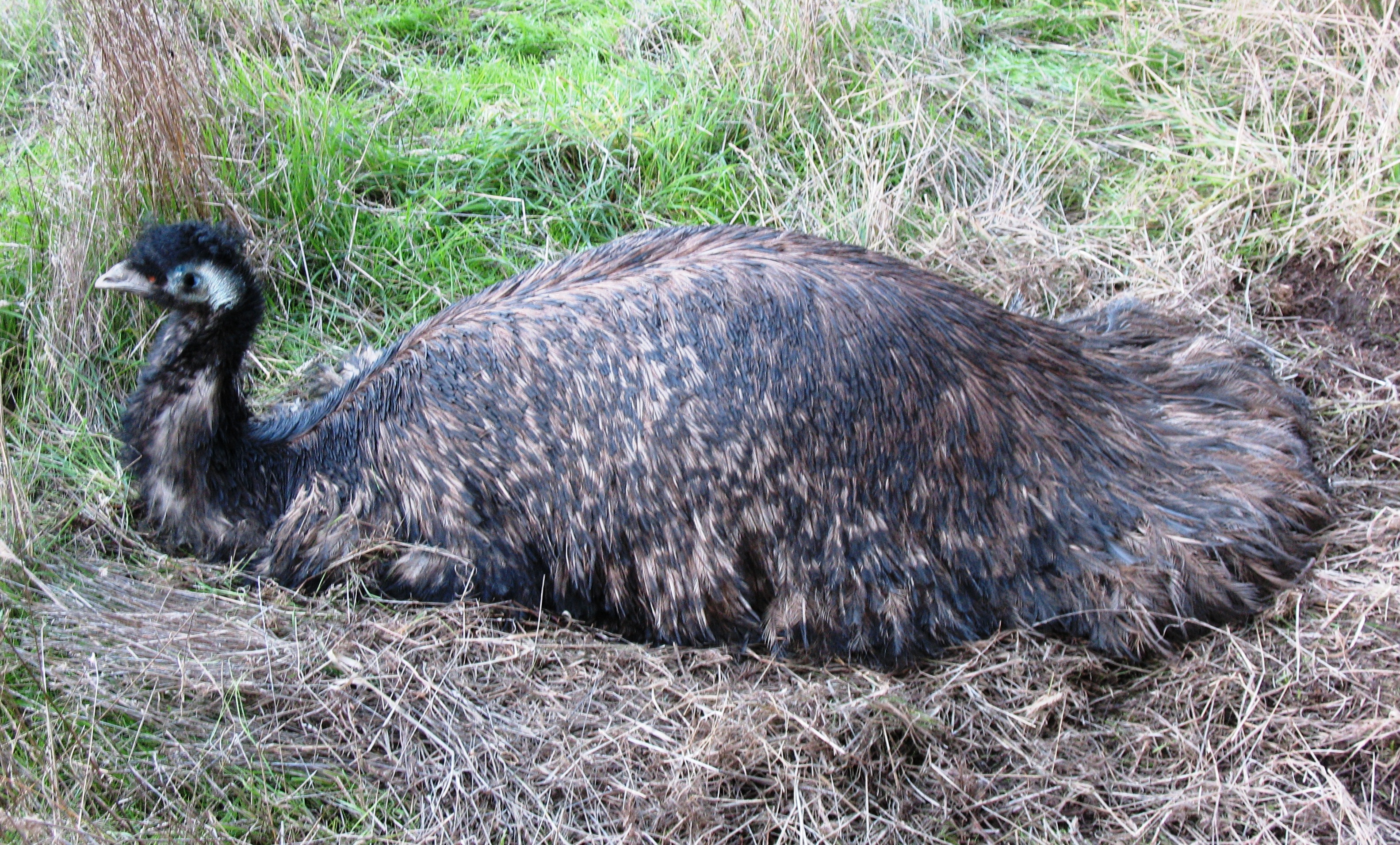
So, earlier this month we decided to check on those wily birds, figuring it was about time to get them on opposite sides of the fence. Too late. When we walked up to the pasture we saw only one emu. Mrs. Emu. That’s a sure sign that Mr. Emu is off sitting on a clutch of eggs! (With emus, the male is the caretaker parent. The female is basically a nervy, promiscuous hussy.) Sure enough, we walked up the hill to the pond to find Mr. Emu happily sitting on his new clutch of nine eggs. (The photo was taken just before we grabbed the goods.) They were early this year. By weeks. Well, that’s when we knew it was time to fire up the incubator.

Today was the big day. After a series of delays—real teenagers, neck injuries, late tomato harvests and elections—we were finally ready. It was anticlimactic, really. Mr. Emu was his usual genial self. I plied him with apple treats and, while he was snacking, I reached under him and removed the eggs, one by one. Rick wrapped them in a Mylar space-blanket and towel, and we stole off with his family! When we left, he was oblivious to what had happened, and was still gobbling down the apples. (Did I mention that emus weren’t real bright?)

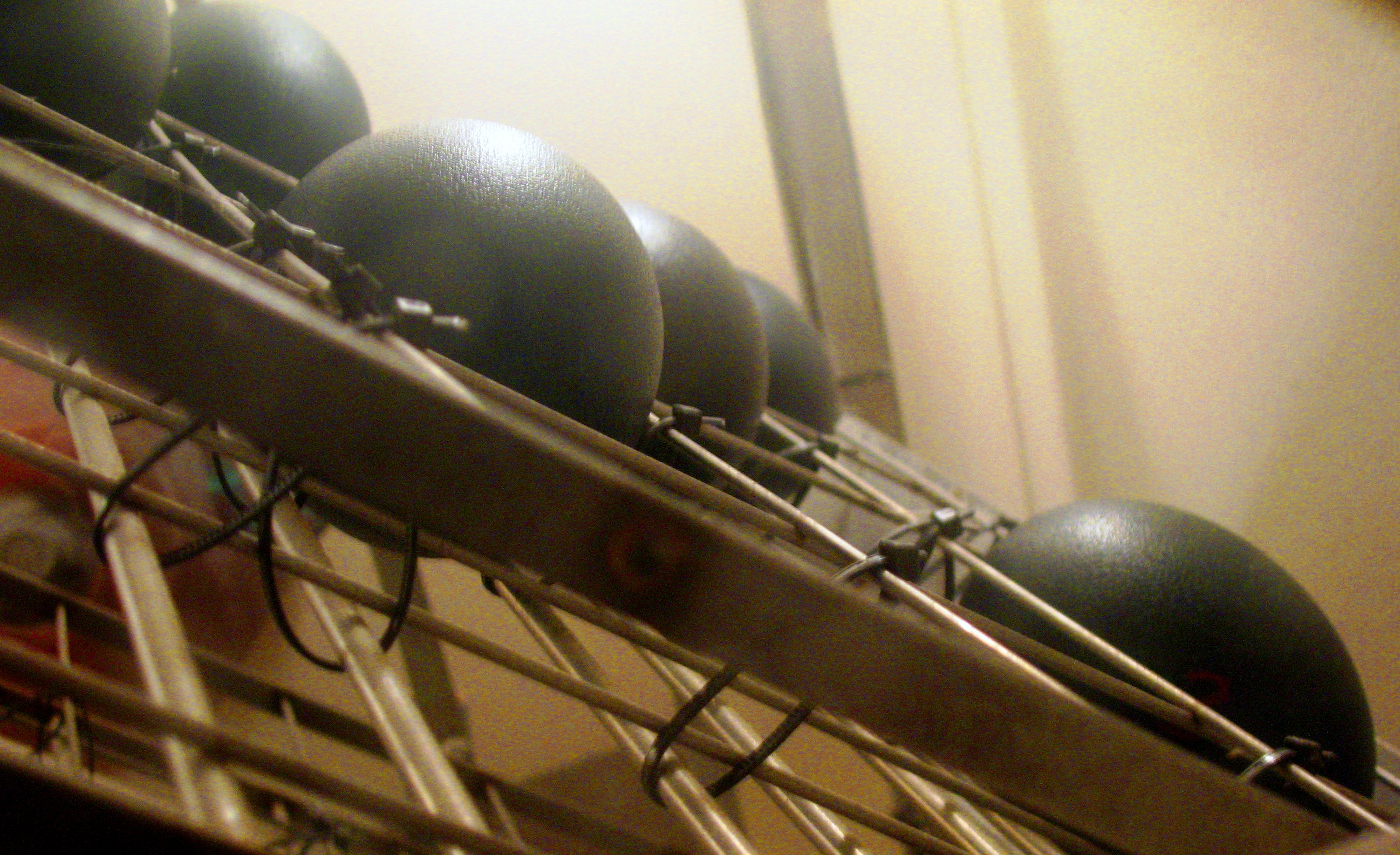
So, the eggs are now safely stashed in the incubator—calibrated and set. (In the other photo, you can see some of them sitting in the rack.) We numbered and weighed them. (Weight is one method of observing chick progress—during the process they lose weight as they lose water mass.) They weighed in at 20 to 23 ounces, each. Emu eggs are big. We’ll have to do some guessing about the “due date” as those sneaky emus got ahead of us. The normal egg gestation is 53 days, but who knows when they got started. Taking their eggs will likely result in a second effort by the emus and, a second clutch of eggs. We’ll try to keep our eyes open, this time. If it’s late enough, we’ll let them try it on their own. Otherwise, they’ll be more eggs bound for the incubator. Sometime around Christmas we’ll know if we succeeded with any of the emu babies, on this first batch.

But then what will we do?

A.V. Walters

I know I said I was finished canning for the season. And then, there was the threat of frost, so we decided to do one last harvest before the more delicate items perished. We brought in peppers, the last eggplant, basil (but unfortunately, not enough of it), a bunch of late-maturing winter squash (spaghetti, moschata, butternut and one lone delicata that was hiding in the foliage) and then we took a hard look at the tomatoes. Sure enough, many had split and rotted after the rains. But looking closer, there were still a lot of really lovely tomatoes in there, so we harvested.

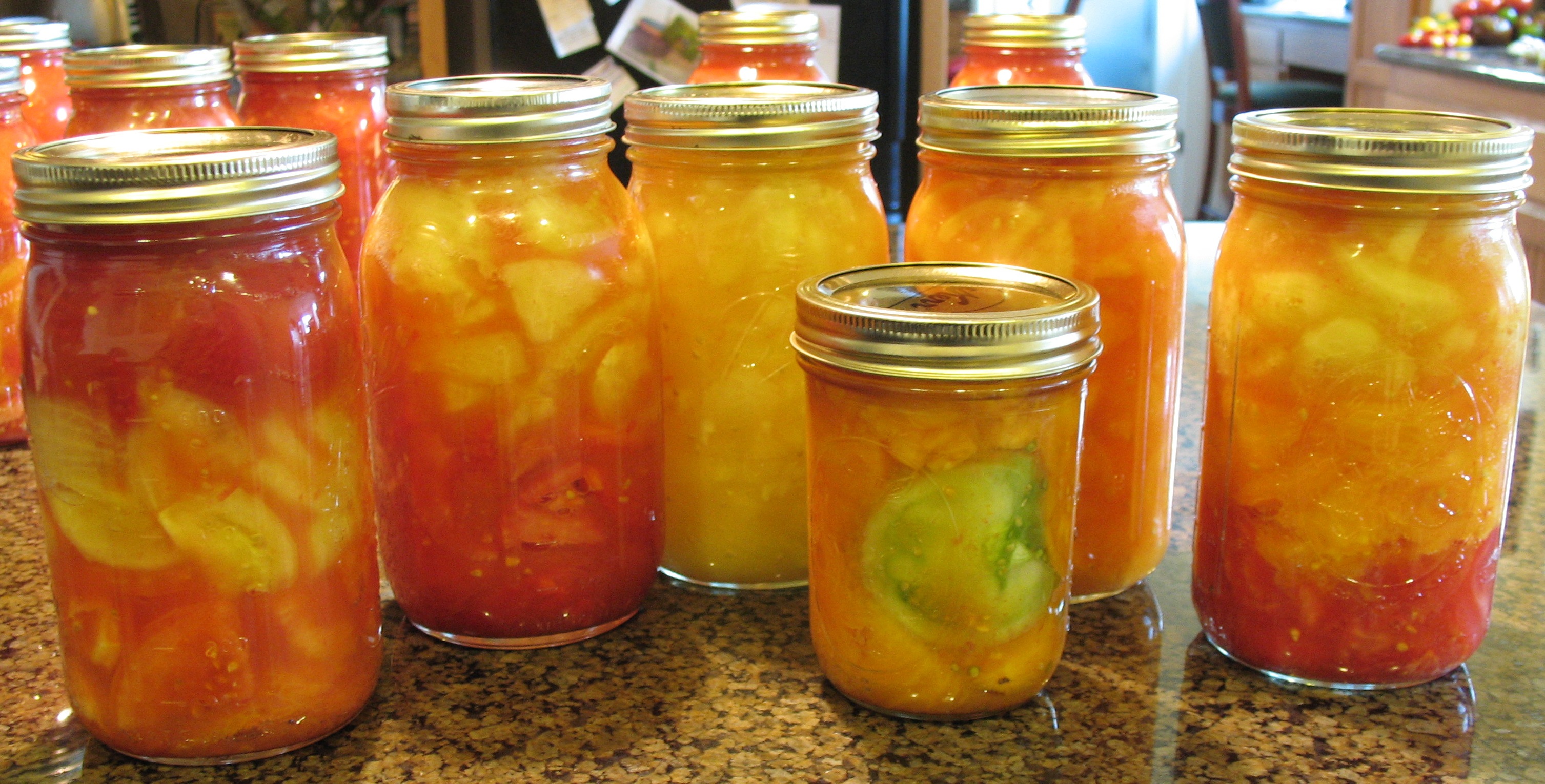
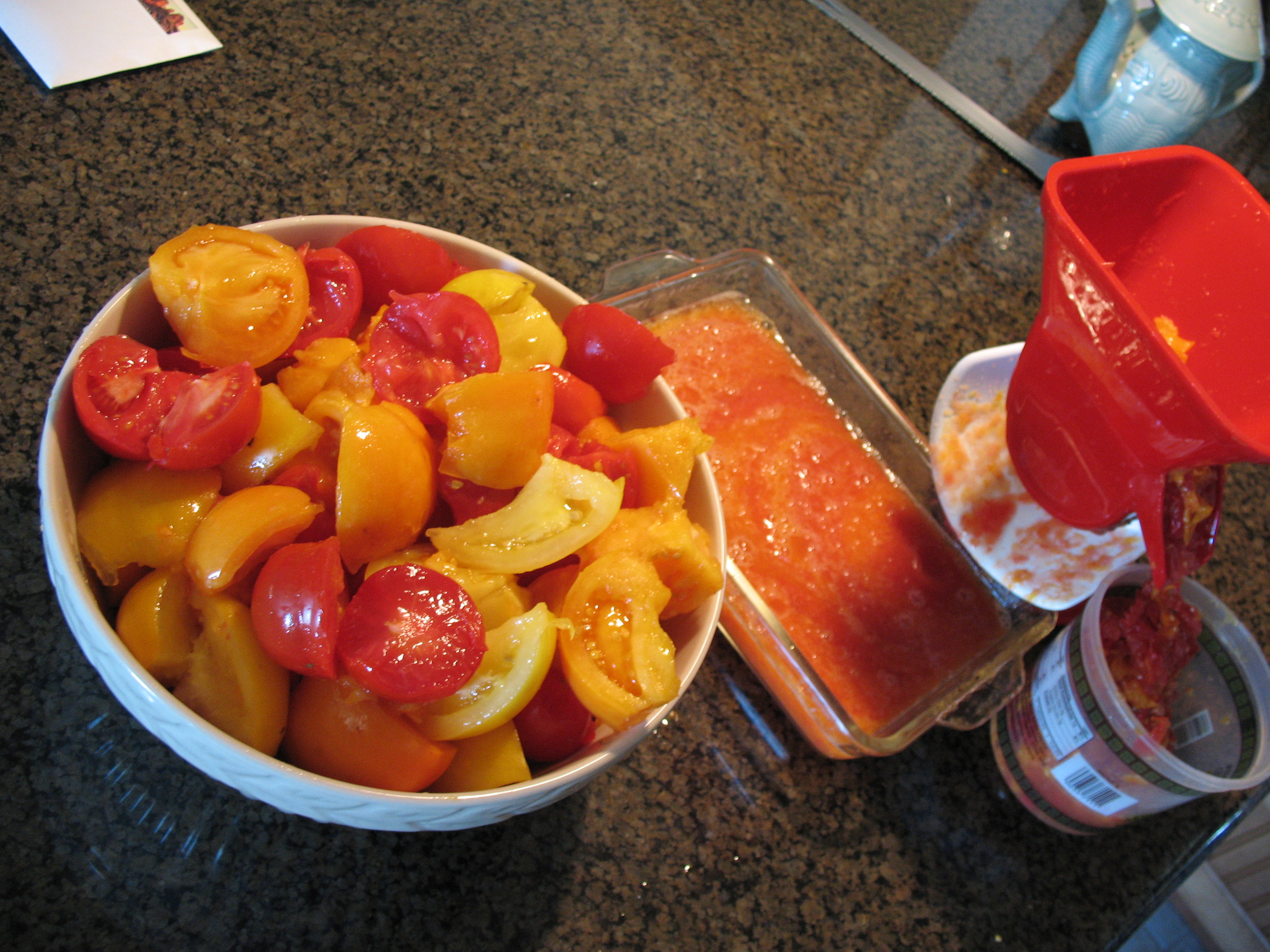
And harvested, and harvested. We made an ample last harvest delivery to everyone on the farm and still there were over three five-gallon buckets of tomatoes. Eighty-eight pounds of tomatoes—in November, no less. So we pulled out the canning equipment, from its brief rest in storage and set up for one last (no, really) run. Twenty-three quarts later, we are finished. We did extra thick sauce infused with basil (for pizza or spaghetti); we did tomato pieces, most sorted by color—red, orange or yellow, which will be lovely for stews or soups; and we did some fancies—mixed colors in patterns—which are almost too pretty to eat and will probably be gift items. (So if you’re family and you’re reading this, close your eyes on this part.) Then we washed up and put all the gear away again.

It was a welcome reprieve from regular life, which has had some twists of late. Anyone who is the parent of a teenager can relate—a runaway with issues and attitude. As much as you ache for their safety and mental state, you also wish you could can them, too, safely into tidy jars, tucked into the pantry until they’re ready for real life. Once we’d done all that we could do, a little tomato therapy of peeling and dicing and canning was just the ticket. And by the end of the weekend, she was home, safe, and probably already gearing up for her next snit. You wonder, was I ever that young and clueless?

By last evening, the kitchen was clean, the jars in neat rows, cooling, and we relaxed in front of the fire. Winter is coming and the early mornings are decked out in frost. Stupidly, I left a lot of the basil in the garden and the cold burned it to a blackened, limp mess. A day earlier and I could have dried it for winter. Oh well. In the daytime it’s too warm for a fire, but by night the chill is in the air and it’s time for some heat. This morning, I noticed that more tomatoes are ripe. No way. I’m not canning them. I’ve already put the canning stuff away twice. But, I may take some and dehydrate them. I heard from an old Italian friend that the secret of great cooking with canned tomatoes was to dry some too, and then snip bits of the dried tomatoes into the pot twenty minutes before the meal is ready. Supposedly the dried ones bring back the aroma of summer.

Last night, friends called. Their neighbor has an excess of apples—did we want any? Plenty for applesauce or the emus. Applesauce is always a lovely treat in the winter. Oh, on second thought don’t go too far with all that canning equipment; we still have some empty jars. And, more emu news, next time.

A.V. Walters

The rains have come. Those first showers over a week ago, have worked their magic. At first it was just a blush–a wisp of color if you caught it at the right angle. Now there’s no question, our hills are turning green. It’s a funny dynamic that our gardening season is the opposite of our green season. Still, after months of dead brown hills it’s a relief to the eye to see this transformation. There are still goodies from the garden, they’ll go on until the hard frosts hit. This is the seasonal pause, the green relief in still fine weather, before the storms and cold come. It’s a pleasure to work outside in the cool, sometimes grey days.

I’ll be posting a little less frequently this month. I am, after all, fully committed to NaNoWriMo. It could be that Editor Rick picks up the slack. He’s undertaking those end-of-season projects, readying for winter, seed-saving (he’s so organized), tool management, and soon, pulling buckets. All that stuff that I let lag until the storms force my hand. My head is miles and decades away, weaving the fabric of a 1931 speakeasy in Detroit. Outside, the creeping green is putting me in the mood with the intense colors of my childhood. While California is lovely, it is difficult to go without green for five or six months of the year. I’m not saying I miss snow (though sometimes, I do) but I do welcome the return of green.

It’s less than a week to the election–don’t forget to vote. If you’re here in California, and if you value good food and informed choice, remember to vote for Proposition 37. Let’s get those GMO foods labeled.

I’ll pull my head out of fiction at least once a week, to give you the what’s up in Two Rock.

A.V. Walters

Last week I said it was a race with the first hard frost, to get the tomatoes in. I was wrong. When you live somewhere where rain doesn’t happen for seven or eight months of the year, it’s easy to forget. If your tomatoes are ripe (or almost) there’s another thing that can be devastating–RAIN.

A growing tomato has the ability to expand its skin. But ripe tomato, having reached its full size, shifts its internal workings to focus on seed maturation, not growth. We take advantage of this by cutting back on watering in the late weeks of the garden–it protects the tomatoes and enhances their sweetness. A ripe tomato, if it gets a heavy dose of water, can suck up the long awaited drink, split its skin, and rot on the vine. So, Sunday’s forecast of rain got my attention–not just a little rain, either, they forecast days of the wet stuff.  So we got busy, stripping the plants of all the ripe or near ripe fruit.

We had to harvest in five-gallon buckets and when those were full, used the largest bowls and pots we had. One hundred forty pounds of tomatoes later, I made another delivery of fresh tomatoes to everybody on the farm, and then we confronted a kitchen that was already being held hostage by our previous efforts.  We canned whole romas (some in yellow tomato sauce), diced tomatoes and sauce, lots of sauce. A year’s worth of tomatoes. Tomatoes in every imaginable color, shape and size–reds, pinks, goldens, bright yellows, oranges, brunos, stripes (both green zebras and chocolate stripes), those multicolored “pineapple” tomatoes, you name it, a veritable rainbow of tomatoes. To make sauce that has enough heft you have to reduce the volume of liquid by more than half. Every large pot we own was simmering away on the stove. There were tomato seeds and spatters, everywhere. I had to stop regularly to clean my eyeglasses. Two days later, we’d canned this year’s quota — 63 quarts of various, tomato products. Another day to clean everything and we are finished. Whew.

We’re picky about this, we taste and blend–making sure that there’s a uniformity of color and flavor. Why else would we go to all this work? After all, store-bought canned tomatoes are cheap, you can buy them by the case at Costco–even organics. Needless to say, it’s not an economic choice we’re making here. We’re opting for taste and an alliance with a rural lifestyle from a bygone era of self-sufficiency. It’s one of the signs that summer is over and that we’re ready for winter. The wood pile is under cover, and the kindling barrel full. Tomatoes and jam are labeled and lining the pantry. So, we’re ready.

There is still a lot of fruit on the vines (our growing season starts late and finishes late) so the garden will continue to produce ripe, fresh tomatoes until frost hits. We’ll continue to use them fresh for salads or tossed in pasta–and deliver them to our friends and neighbors, until then. If they get ahead of us, we’ll take them to the food bank. But, I don’t think we’ll can any more. It starts to get silly at some point, and over sixty quarts is that point, for us.

Another View of Saint Kateri

A.V. Walters

Today, the Vatican is Canonizing a fresh batch of Saints. It’s sort of the “Hall of Fame” of the truly faithful. It’s interesting to note the blend of those selected–they don’t make new saints everyday, ya know. Among them is Saint Kateri Tekakwitha, “The Lily of the Mohawk.” This is notable because it’s the first time a North American, indigenous person has ever been granted saintly status. It seems that every 350 years, or so, they get it right.

A closer look at Kateri reveals that she presents with many attributes similar to the female saints of the middle ages. She was a young woman–of high rank (the daughter of a chief and then, when her parents succumbed to a small pox epidemic, the adopted daughter of her uncle, the new chief.) Small pox had left her scarred and partially blind–yet she still had opportunities for marriage, which she declined. Like many of the early European saints, the level of commitment to her faith was out of step with the expectations of her community. It was not regarded with favor, at least not during her lifetime. Kateri left her home and tribe, alone, and walked hundreds of miles north, to a tribe where she would be welcome because that tribe had fully adopted the new Christian faith. Disturbingly, she advocated harsh self-abdication–even to the point of endangering her already compromised health. She was a great friend to all, and dedicated herself to a life of service and toil. She died young–in her early twenties. On her deathbed, the first of her miracles was reported by the Jesuits who attended her. With her last breath, the disfiguring scars of smallpox were reported to have disappeared from her face. In the eyes of God, everyone is beautiful and equal.

It’s a story about finding a place for smart, uppity, young women. Scholars have noted the similarity between the female saints of the middle ages and young women of the modern era who suffer from anorexia or cutting behaviors. From a psychological perspective, unusually saintly behavior is coupled with refusal to adhere to the gender-determined norms of the day. It’s a narrow avenue of control by those whose social options were more limited than the powers of their intellectual, or spiritual, capacity. Not that I want to discourage selfless devotion to a cause–that being one of the hallmarks of humanity–but today I hope that the pathways to self-realization for young people are more open than, well, martyrdom.

I discovered Kateri during my research for The Gift of Guylaine Claire. Her story was the perfect counterpoint to the title character–who was herself an odd fit in society. Guylaine had been raised in a loving home, one that, almost accidentally, found space for her to bloom creatively. Kateri’s tale mirrored the pivotal story of Guylaine’s indigenous grandmother, Claire, and tied into some of the central themes of my book. Kateri was so perfect, that if I hadn’t found her, I would have had to invent her. Her actual role in the book, as the subject of one of Guylaine’s sculptures, is minor but thematically she is woven in throughout the story in terms of forgiveness, transcendence and making one’s own way. Kateri was drawn to her faith, despite the fact that her tribe blamed the “Black Robe” Jesuits for the very epidemic that had taken her family. In an odd way, both she and her tribe were correct in their convictions. So, today we celebrate the recognition of a young woman challenged by personal circumstance and race. Maybe we can all learn from it.

NaNoWriMo– Cheaper Than Therapy
A.V. Walters

So, what finally got me writing? I’d meant to do it, literally for decades. I had outlines, ideas, concepts…you name it. Two things finally turned the corner for me. The first was the complete unraveling of my life. Convinced that there had to be more–maybe even something in it for me–I walked out of a twenty-eight year marriage. I moved to the middle of nowhere, in part because I sought to recover the rhythms of my rural childhood and in part because I was broke and couldn’t afford to stay in the city where I was. And there I was. If ever you thought that you were held back by the cloying demands of a relationship, freedom comes with the hefty realization that if you don’t do it now, you have no excuse. If you don’t do it now, you might just as well have stayed, stayed to dedicate your every breath to the needs of someone else and let the creative spark within you suffocate and die. So there’s a pretty good incentive.

But, how do you start? Admittedly, for a little while, drinking helped. But the real impetus was NaNoWriMo.

What the hell is that? National Novel Writing Month. (NaNoWriMo.org) It’s a nonprofit group on the net that sets aside the month of November to challenge anyone brave enough to try, to write a novel in thirty days. A friend turned me on to it. The goal is to write every day with the objective of completing 50,000 words by the end of the month. There is no prize, only a lot of support, nagging, wonderful and dreaded email updates and writing for the sake of it. Really, check it out. Honestly, I never finished the 50,000 words in a month. Too much for me–but I got far enough in that I couldn’t stop and the end result of that first NaNoWriMo effort was The Emma Caites Way, an award-winning 400+ page novel. My second attempt–still without being able to finish the challenge of 50,000 words–was The Gift of Guylaine Claire, the novel I just published (though that one took two NaNo cycles to complete, even though it’s shorter.)

I’m gearing up again for November–and I hope to substantially complete my current manuscript, The Trial of Trudy Castor (again, a second time around Nano effort.) If you’ve ever dreamed of trying your hand at writing, I totally recommend it. It’s a maniac vacation (especially if, like most of us, there’s still the day job and Thanksgiving to distract you) into a self-inflicted world of angst, release, charging on–regardless and losing oneself totally in the story. It’s wonderful and hell, all in one. Its pressures (about 1,700 words per day) shake you free of the inclination to dither and sharpen your pencils relentlessly. You have to just do it.

For me, it came at just the right (write?) time. I was phenomenally depressed. I didn’t know where my life was going. I did know that I could weave stories and thus it started. Now, this is not the best option if you’re thinking that becoming an author is the path to wealth and fame. (That’s really fiction.) Writing is worthy in and of itself. It lets you explore the you of you. It helps you sort out your story and your characters and gives you insight into the you who created them. It is centering and terrifying. Here I am, five years later and I still don’t know where my life is going. Don’t expect NaNoWriMo to solve all your problems. But I have written two perfectly acceptable novels. I am a writer. I find that in a lifetime of experience, the only place you can really tell the truth is in fiction. I will continue with this, because I enjoy it, and because it allows me to explore and express. It turns out there was more to the me of me.

And so, if you ever thought that there was a story in you, I invite you to give it a try. November is coming. Sharpen your pencils. Breathe deep and ….. go!

Who Knew?

A.V. Walters

My last blog addressed the issue of produce theft. Who knew it was a trend? I discovered that community gardens all over the country have been vexed with this garden pilfery. And I thought gophers were bad! Friends sent me the following links.

http://kstp.com/news/stories/s2712848.shtml

http://www.chicagonow.com/chicago-garden/2010/08/please-do-not-steal-the-vegetables/#image/1

http://www.tcdailyplanet.net/news/2012/07/27/tomato-thieves-plague-st-paul-minneapolis-community-gardens

Since then, they’ve hit the corn and more tomatoes. Not that I’m left without; I’m still canning and at this rate it’s a question of what will happen first–the last of the tomatoes ripening or the first hard frost. Still, it’s a shock that garden theft is so common. It never occurred to me that the old organic maxim “And a third for the pests,” meant people.

We’re having one of those hot and muggy residual summer weeks. I’m not complaining, it will help to ripen tomatoes (who, so far have kindly not come ripe all at once.) I can only can so much at a whack–earlier this week my stove was simmering at capacity–a pot of sauce on every burner. Fifty pounds of them cooks down to about nine quarts of sauce and whole canned tomatoes. So the rest of October looks like tomatoes–and then NaNoWriMo in November. (What’s that? Oh, next blog I’ll explain and encourage.)

Tomato Thieves

A.V. Walters

Here it is, October, and the tomatoes are beginning to yield in a big way. Finally, the season catches up. Most all the regular summer vegies are gone, a few lingering summer squash, some cucumbers and then–the tomatoes. It’s October canning again. Last weekend I set the kitchen up for canning, prepped my jars, counted my lids and rings and then headed out to the garden with a three gallon bucket. When I got there, there were hardly any ripe tomatoes. Just the day before those vines looked like Christmas trees and then–next to nothing. I blamed Don. It’s not fair, because I had no evidence. But Don has a reputation for pulling jokes on people–I figured it had to be him. I picked what there was, and plotted my revenge.

Yesterday, I got a call from one of my neighbors. She said that there were strangers in the tomato patch. I threw on my clothes and bolted out after them. Sure enough, a friend of one our residents was there, picking a grocery sack full of tomatoes! This is a tough call. It is a community garden. Granted Rick and I provide most of the plants and almost all of the work, but all summer we regularly deliver the harvest to each of the residents on the farm. We encourage “the community” to help themselves to the bounty from the garden. And, we’ve never had a problem before with having enough to share and to can.

This interloper was accompanied by one of our kids from the farm, a human shield, in my mind. That’s a despicable tactic–to use children as cover in your fiendish plot. I know these kids, they’re good kids, but for the life of me, I cannot get them to eat tomatoes. I held my tongue, that is, until she went after the corn. She pulled several ears from the stalks, pulled back the husks and, determining that they were not yet ripe–threw them to the ground. That was it. I approached her, my eyes fixed on that paper grocery sack near filled with lovely heirloom tomatoes. She had a nervous smile. I initiated the conversation, “So, you know that this is a community garden–for the folks who live here on the farm.” She shifted the weight of the bag in the crook of her arm, nodding. The kid asked about the corn. I explained that it wasn’t ready yet–told her how to tell–and explained that we didn’t get full pollination, so some of those ears would have gaps, like missing teeth where the kernels didn’t fill in. And I told her that the ears they’d thrown down should be fed to the pigs, and not wasted. The kid and the tomato thief nodded.

They didn’t meet my gaze. It wasn’t clear that I’d made my point. “It’s fine,” I said, “As long as the stuff you pick is for farm residents, for consumption here on the farm.”

She paused, “Of course, these are for the kids, here.” She nodded at the kid. The kid nodded, too.

Sheesh, I’ve been trying for three years to get these kids to even try the tomatoes. You couldn’t pry their mouths open with a crowbar. And now this woman is lying and including the kid in the lie. Great training, eh? I sighed, turned and walked back over to my conversation with the woman who’d placed the call. She shook her head. Then she advised me that on Sunday morning there’d been a couple of folks here she didn’t even recognize, picking tomatoes. And I’d blamed poor Don!

I don’t know the solution to this problem. While I’m more than happy to share with my farm neighbors, I also want to get in my winter supply of canned sauce and canned whole romas. Who are these people who would show up at harvest and help themselves, when they’ve not participated in the garden–and who are strangers to the farm? I just don’t get it. My sister tells me I’m the little red hen.

When I came home this morning, I found lovely printed signs which Rick had made.


THIS GARDEN WAS

PLANTED BY AND IS FOR THE USE OF

FARM RESIDENTS

PLEASE RESPECT THIS

I don’t know if the signs will have any effect on the tomato pilferers, but already they’ve done wonders for me.


If you’re from a small town, you’re always from a small town. They don’t let go of you, they welcome you home when you visit and they celebrate your triumphs with you, even from afar.


http://www.mininggazette.com/page/content.detail/id/526936/In-the-Catbird-Seat-Joe-Kirkish.html

AV. Walters

And no rain, in even a normal year, for at least a month. We’re not getting our usual heat wave this month–and with the fields like tinder, that’s a good thing. We are all wary of the risk of wild fire. In most years I take the advice of ’30 feet of defensible space’ seriously–I clear everything away from the house diligently. This year there’s no need. Not even the weeds grew in this dry season. There was a fire yesterday–somewhere between here and town in the other end of the valley. It was a grass fire–it’s a different smell and taste than a more serious structure or forest fire. Smoke lite. Apparently they got it out, because the air cleared and the lingering haze made for a lovely sunset.

I’ve been following fire and emergency news these days because I’ve become more involved as a volunteer with our local fire department. Not fighting fires–I think I’m a little long in the tooth (and clumsy to boot) for that. But I can chip in with administrative stuff, or selling T shirts for fundraising. It’s a small community, everybody does what they can. It’s so dry that our new firefighters have to train on the hoses without water. Don’t laugh. Nobody has excess at the wellhead these days, so they learn to man the hoses dry–with the seasoned volunteers pulling and pushing at the back end of the hose to simulate the force of real water. Consider it a dry run, in the most real sense of the term. They revel at the chance to share training programs with nearby departments that have city water.

Our wells are low and that intensifies the mineral salts–leaving a cloudy blush on the glasses, if you use the dishwasher. When canning, I have to put vinegar in the water with the bottles, or they’ll come up clouded and gritty feeling. Some of this is normal at this time of the year. The rest has us seriously conserving and sniffing now and then for smoke when outdoors. It’s a good thing that the rainy season runs during the same time as the winter heating season. By the time I put a fire in the stove, it’s cold and wet out.

I buy bottled water for coffee–not because of contamination (our well is high up on the hill) but because I’m a coffee nut, and I like the flavor of a less–gritty–source of water. In the low part of the valley the wells are contaminated. It’s a fact of rural living–nitrates in the water. Those folks must drink bottled water, especially kids. It’s a reminder that , even here in rural county, we need to be aware of our footprint on the planet. Nitrates are a common form of contamination in areas with heavy livestock concentrations, especially where, like here, people rely mostly on shallow wells. This is a dairy area, with chickens and beef cattle thrown in for good measure.

Many years ago the county put in a dump, (now called a transfer station and refuse disposal area) about a mile from here. The runoff from the site runs into our local creek. There’s a debate in the valley, not too seriously entertained, that the county dump is the source of the contamination. Folks who’ve been spreading manure on these hills for generations wince–and don’t point too many fingers, except occasionally, for sport.


Gluten-free is all the rage right now. I guess I’m the lucky surfer riding that wave, since it has resulted in many new products and labeling that makes life easier for those of us who cannot tolerate gluten. I guess I’m a trend-setter. What’s gluten? It’s a protein found in wheat, rye and barley. It used to be that only celiacs avoided gluten, but they’re discovering that there is a whole range of people whose lives are easier and more comfortable if they follow a gluten-free diet. Now there is more accurate testing for the various gluten related ailments. Still, many doctors are completely ignorant of the symptoms and the treatment for folks who are gluten intolerant. I don’t blame them, the symptoms can be wildly diverse and confusing. The only real solution is a gluten-free diet, which isn’t easy in this world of processed foods. Still, since I quit eating gluten (and in my case, cow’s milk products, too) my life has completely changed. The first 46 years of my life I struggled constantly with many, many health problems–but my doctors just shrugged. Now, as long as I watch what I eat, I am one of the healthiest people I know.

What are the symptoms? They are wildly different for many people. I guess I’m lucky that my symptoms were “classic” celiac. They included gastro-intestinal problems, a chronic rash, aching joints, infertility, chronic upper respiratory problems and a continually growing list of foods and drugs that triggered allergic reactions. I remember feeling frustrated that, at some point, it felt like I’d be allergic to everything. I was afraid to end up like the boy-in-the-bubble. I always was the sickly kid. Little did I know I was the poster-child for Celiac Disorder. (aka Celiac Sprue, aka Celiac Disease)

I wish I could say that a kind and conscientious doctor listened to my complaints and did the detective work to find out what was wrong with me. Nope. Despite the fact that I presented with all the classic symptoms, and even endured years of unsuccessful infertility treatments, nobody ever suggested that we take a look at my diet. Long after childbearing was an option, I discovered I was a celiac, while driving down the road, listening to NPR. That’s it, my medical provider of choice, National Public Radio. It was December 27, 2004 and a talk show host was interviewing a man about his mysterious ailment. He went through his symptoms. I pulled over to the shoulder. By the end of the program I was weeping behind the steering wheel; this had been my problem all along. I stopped eating wheat the very next day.

Thank god for the internet. I did all my own research and completely reformulated how I eat. At first my family thought I was crazy, but within a month or two, even the doubters could see the improvement. I never looked back. My doctor initially resisted my self-diagnosis, but it’s hard to argue with a sudden attack of good health. For a while I was angry. I could have felt good decades earlier if the medical people had listened, and had known about the condition. Maybe I could have had children. Often with celiacs, especially younger celiacs, a year or two gluten-free can reverse all the symptoms. A niece of mine, also suffering from infertility issues, was able to conceive after changing her diet. Many gluten issues are hereditary. My discovery has changed everyone in my family. Three of us have gone completely gluten-free, with great results. Others are considering it–but it’s a big step and requires some sacrifices. (One just isn’t willing to give up her fancy micro-brew beer! Sheesh! Believe me, even though I like beer, too–it’s worth it.)

Why am I coming clean now? Someone I know through blogging has complained of similar symptoms. I occupy only a tiny corner of the blogosphere, but if, by writing this blog, I can lessen the suffering of just one person, then I should make that effort. I’m not NPR, but since my recovery I have made it part of my mission to help others transition to better health when the learn that they, too, have won the gluten-free lottery. So, Nick, look into it. Find out and choose health. It’s worth it.

Serendipity

A.V. Walters

How curious, that something I researched years ago, intended to play a small part in The Gift of Guylaine Claire, would surface as a current events issue simultaneously with the publication of the book.

I was looking for a concept sculpture, something to tie Guylaine to her indigenous roots and to Canadian history. (Something beyond the famous Maisonneuve monument in Montreal.) Even in fiction I like to find actual historical events that give my work texture and depth. In my search, I found Kateri Tekakwitha. Kateri was perfect. Her story mirrored the story I’d created for Guylaine’s grandmother, Claire, in that she was a native Christian convert, whose family and tribe ostracized her for her conversion. And, like Claire, her faith was deeper than that of those who’d lead her to it. Her childhood affliction with smallpox left her partially blind and disfigured and yet she was not bitter. She traveled hundreds of miles alone through the wilderness to find a community that would accept her. There, she lived a short life of service. Kateri is historically documented, as are many of the miracles attributed to her. In short, Kateri was a dream story come true as a subject for my fictional French-Canadian/Métis sculptor. She became a small part of the Guylaine Claire story.

It turns out that, after three and a half centuries, Kateri is about to finally achieve the ultimate recognition for her toil. On October 21, the Roman Catholic Church will canonize her as Saint Kateri. She will be the only First Nations individual to ever be so recognized. (Saints don’t just come along every day, you know.) Her story straddles the current day borders of New York and Quebec so she will be celebrated as an American, Canadian and First Nations Saint.

The Gift of Guylaine Claire is not exactly a glowing endorsement of traditional Catholicism. It is, however, a tribute to finding one’s own transcendent path regardless of any specific belief system or circumstance, in an atmosphere of forgiveness, loving and tolerance.

And with that, I announce the print release of The Gift of Guylaine Claire. It is now available* at your online retailer or, by request, at many fine brick-and-mortar book stores.


*also available as an ebook through Barnes & Noble, Smashwords and other ebook outlets.


Frozen Shoulder

A.V. Walters

I’m struggling with a frozen shoulder. (No, it’s got nothing to do with this cold weather that’s keeping the tomatoes from ripening! Our usual September heat is late.) It’s the second time this has happened, so it’s not a big surprise. I’m thinking back, a couple of decades, and remember that both my parents had trouble with frozen shoulders in their fifties. It happened to my mom twice, my dad, just the once. So, I figure I’m both due, and genetically doomed.

What is it? It’s an excruciating condition causing pain in the shoulder. Initially, it’s just a twinge when you reach, slowly escalating, until your arm hangs uselessly and the pain keeps you awake at night. It will often resolve on it’s own, eventually reversing its painful course after a mere 18 to 30 months! With therapy it can reverse faster—and, with less loss of range of motion that characterizes this dread condition. A friend of mine informed me that, in Japan, the common name for this condition is ‘Fifties Shoulder.’ Thanks! Just what I needed—another reminder, beyond my presbyopia, letting me know I’m over the hill.

I live too far out of town to bother with formal therapy. Between the time, the drive (gas and all) and the copay, I’ll pass on that. It’s not my style, anyway. I’m enormously stubborn when it comes to this kind of medical event, and the inevitable call for “professional” intervention. My sister says I’m so stubborn, that I’d perform my own brain surgery! I’m not quite that bad. (But, it does make me wonder if she thinks there’s something wrong with my brain, and that I should operate.) Okay, I’m the first to admit, I am medically “difficult.” Just show me what I need to do and I’ll take care of it on my own. You can learn a lot from the internet. (And, if you think a little knowledge is a dangerous thing…)

I wouldn’t be so cocky if I hadn’t just beaten it, with my right shoulder. After months of pain, I finally decided to research the therapy. I checked the net and asked my mother about her therapy sessions. Over a decade ago I had a long recuperative period after an auto accident. During that time, I got a survey course in the various and sundry methods of physical treatments. So now, I have a pretty good idea of the objectives and the techniques available. In January, I earnestly set to fixing my bad shoulder. It was painful but, in a couple of weeks, I had substantially increased my range of motion, and decreased the pain. In three months, I had it whipped. This time, (now, the left shoulder) I’m not going to let it get as far advanced as it had, before. I’m getting on it, right away.

It makes you wonder though—what does this ailment mean in the bigger picture? It’s usually self-correcting, albeit, after a painful run. So, it’s not just the inevitable, relentless decline of age. What bodily mechanism decides to throw the shoe into the works, only to fix itself, all without explanation? Of course, I have a theory. (See previous post, Presbyopia.) I believe that it is a natural part of the human cycle of interaction. Only by temporarily immobilizing the independent, but nearly-geriatric, can you get them to ask for help. That may be the only way to get the stubborn among us to slow down enough to show the next generation what needs to be done. So, if you haven’t already shared your knowledge of gardening, sewing, weaving, cooking or building—now’s the time. If it has to, your body will force you to ask, because these things must be done. The seasons wait for no one.

Well, that’s my theory and I’m sticking to it. I’m also using heat, massage and stretching. I get up from the computer frequently to vary my activities. I’m increasing my water intake. I’m determined to get back to normal as soon as possible. As I’ve said before, I’m a far shot from being ready for the ice floe. Really, I’m not dead yet—feeling better all the time—think I’ll go for a walk

And now, back to the garden.

A Busy Week

A.V. Walters

It’s been a busy week. Not only is this high season for the garden (and gophers) we are preparing for the print release of The Gift of Guylaine Claire.  We had to enter the last of the edits and then check to see that the ebook and the print version were both fully edited, and textually identical. After that, those last details, editing the new Acknowledgements, getting the ISBN and Library of Congress numbers in, and the bar codes ready, the final tweaking on the front and back covers, and I’m sure that even now I’m forgetting things. Editor Rick is the technical guy, and he wrestles with that end of it—getting the Smashwords final version through the dreaded auto-vetting process (again!) and finessing the cover colors and interior images—hopefully in a way that Lightning Source won’t overly darken the cover images this time. He takes his graphic responsibilities very seriously and the end results show it. Yesterday the files went off to be printed, and now we’ll nervously await that exciting proof copy. It will be a relief to have it finally finished, and listed for sale with the POD retailers.

Late summer has extra chores as well. The other day we re-stacked the firewood (from a loose drying stack to a tight, ready to go for winter, stack), checking for winter readiness. (We think we’re set with two solid cords of walnut, some apple and pine for kindling.) This could have waited, but it’s cool in August. September is traditionally our hottest month, so it’s nice to do the heavy lifting in the cool. We picked up a load of pine, for kindling, and I started splitting it. A little each day and it’ll be done in a week or so. Meanwhile, the temperatures are heating up and I’m wiping my brow in relief that the heavy lifting is complete.

And, of course, there’ll always be the day job.

Unlike most of the country, where mid-summer is the hottest, many areas of Northern California have a searing September. The lag has to do with ocean currents and how their “season” is a step slower to shift. The result is that in September we lose the fog that pours in from the coast, morning and evening, filling the valley, with moist, cool air. When that natural air conditioning shuts down, we get a glimpse of what they see all summer in the inland valleys.

That’s why I’m not sweating the myriad of still-green tomatoes, peeking out from under their leaves. If the butternuts are still blooming—well, let them take their shot. I’ve been in this valley long enough to know that September will turn it around. Even with this year’s late start, I’m sure we’ll bring in the crop. Don (whose advice has devalued since he abandoned his zucchini/pumpkin patch) is trying to spook me. “What you need is them floating, row covers. Winter’s just around the corner. Could happen any day, ya know!” Right.

Not that I’m against row covers as an experiment in lengthening our already long late season. In a mild year I can harvest tomatoes well into November. With row covers, maybe we could go to December or even into January. But I’m not buying into the fear factor. The season is what it is, and there’s still much to do.


Furry Ground-Blight

A.V. Walters

We do the garden walk everyday. It’s a way to check how things are doing, see what’s ripe and do a little weeding along the way. Admittedly, after last year’s debacle, I’m constantly checking the tomatoes for any sign of (I’m afraid to even say it) blight. By August, you expect a little bit of yellowing or leaf curl, but a true blight is a sight to behold. It can wipe out whole patches in a matter of days. The best you can do is to quickly dig out the affected plants and dispose of them—far away. Do not compost a blighted plant, especially towards the end of the summer season. It can infect your compost pile, which, if it doesn’t get hot enough thereafter, will spread the disease with every innocent looking shovel full of black gold. (By this time of year I don’t have enough high nitrogen materials to keep the compost cooking—especially this year when it’s so dry that even the weeds are gray.) Bottom line: Don’t ever risk composting blighted plants. ‘Taint worth it!

So, it was with some angst that yesterday’s walk revealed a tomato plant in full wilt. A Black Crim, too, one of my favorites. Blight? Too early to tell and it didn’t really have the signs. Was its drip emitter plugged? No. And then, the big question, any sign of gopher? We’ve never had a gopher problem with tomatoes. Last year, a friend of ours said gophers were going after his tomatoes, big time, and we could only wonder if different gophers might have different food preferences. Gophers—picky eaters?) In fact, some of the tomatoes are planted in bottomless buckets—ones that were cut in the early days of bucket farming, before I was aware of the dangers of that Furry Ground-Blight.

Our tomato plants are not small. Most of them are taller than me. They’re held up by our super sturdy, tomato cages but, by this time of the year, they’ve extended well beyond the perimeter of the cage. Rick has had to stake some of them because the weight of the plants has even the super-sturdy cages listing. And, it’s tough to find the cage in that jungle, let alone the bucket. There’ve been no major gopher signs in the immediate environs. So, yesterday afternoon, we did a triage watering to see if it had any effect. Sure enough, by evening the patient had perked up considerably. That’s a good sign.

First thing this morning I went back out to check. I’d left my morning schedule open, just in case I needed to quarantine that wilted tomato. Sadly, it had wilted again. I pushed my way through the foliage to get a look at the bucket and the drip emitter. And, AHA! There it was. The evidence. The loose pile of loamy soil was directly in the bucket. Damn gopher!!!

It is a relief that it’s not a viral problem. But, I don’t remember if this particular tomato plant is in a bottomless bucket. That’s a big issue. Following this morning’s revelation, we resolved to retire all of the bottomless buckets, next season. But, if this was a drilled-out bucket, we’ll need to worry about gophers that have learned to go in from the top!

Next season, we could have a serious problem. Don’s little, field-farming venture (the squash and pumpkin plot) has failed. Undone by gophers, is the official reason. And it is true that his “crop” has been hit hard by gophers. We include his pumpkin patch on our garden walks, and the ground is perforated with gopher holes. Every week we could count more and more of his plants, succumbing. There’s more to it, though. Don wasn’t really ready, or geared up, to harvest and market the produce. That may be okay for the pumpkins—we still have time before the Halloween, pumpkin season, and I’m sure he’ll harvest what pumpkins he has left. Pumpkins will endure enormous levels of neglect, but the other things, zucchinis, crooknecks and cucumbers, require attention and harvesting. Don never stepped up to the plate on this. There are zucchini’s over there the size of Buicks! And the crooknecks look like ancient gourds. He’s given up, and the field is now, Gopherland. He’s got a major case of the Furry Ground-Blight.

From our perspective, this is a debacle. He’s essentially breeding gophers over there and, next season, there will be more of them fur balls and they’ll be my problem. (Thank God for buckets.) So we’ll need to determine whether our poor Black Crim was the victim of a subterranean attack, or whether we need to worry about gophers mounting the ramparts of our defenses. I watered the patient again this morning. With extra water, it may be able to limp to the finish line. It’s a shame, that plant must have a bushel of tomatoes on it—beautiful green ones. During my inspection this morning I got the first two and hopefully, not the last, ripe tomatoes from that plant. We shall see. And, as usual, in Two Rock, we have a late season for tomatoes.

Rick is fuming. (Well, as fuming as Rick gets.) He’s determined to get this varmint, though he’s had limited luck with his trapping efforts in the past. Last I saw, he was muttering under his breath, “Rodenator.”

As I mentioned in a previous blog, the Rodenator is an expensive, propane fed device that explodes, frying underground varmints in their burrows. (“Hold my beer… watch this!”)

Bird Mysteries

A.V. Walters

Back in May I mentioned a new bird, a raptor that we couldn’t identify. In fact, we suspected a family of them, but couldn’t be sure because we never clearly saw two of them at the same time. He (or she)disappeared for a while but then he/she/they reappeared, in force, in these past few weeks. They had us baffled. Our bird guide, (granted, a very old and confusing tome) didn’t seem to cover this particular bird. He’s clearly a raptor, a hunting bird, but not colored like anything we’d seen before.

Our mystery was finally solved. I met some birders, by chance, during a business meeting. By the end of the meeting I felt comfortable enough to ask if I could send them a photo of our mystery guest—and then, I did just that. The answer came back in minutes (don’t you just love the internet) our bird is (drum roll, please) a white-tailed kite. In fact that’s birds plural, because we’ve discovered we have a bunch of them. (The bird guide we have at home, doesn’t even have a picture of them!)

No sooner did we get the name, than a whole family of them soared over us—four or five in a loose formation. And then a day or so later we spotted another one, a juvenile. (Yup, with a name and the internet, we’re able to confirm them from sight and even know what the babies look like. Forget about your privacy now.) In the five years I’ve lived here, I’ve never seen one of these birds and suddenly we are white-tailed-kite-central! We have enjoyed their company, even though they aren’t going to solve my other bird problem, those troublesome noisy mourning doves. Don’t get me wrong, the kites are entirely beneficial—eating large insects, mice and voles and, we hope, maybe gophers. BUT, they don’t do anything to scare off the darned doves. We’ll have to be content with the fact that they’re lovely to watch and a welcome addition to our farm’s roster.

But wait—all is not lost! There is a new development on the mourning dove front. You may recall that the tone of a mourning dove’s coo drives me crazy. I find it unnerving. Apparently, that’s not uncommon—I regularly get hits from internet searches looking for a solution to those noisy mourning doves. Well, we’ve found a possible solution. It’s funny because the fix was here all along. When I first moved here there was an abandoned, fake owl (with big, plastic eyes) under the balcony. I didn’t think much of it and it’s kicked around from place to place for five years now. Last week Rick came upon it and, with nothing to lose, mounted it on the back railing.

Within a day, Silence. It worked. The mourning doves relocated out of our back yard. (So did the swallows, but it’s worth it.) The doves are still active elsewhere on the farm but they stay clear of the backyard and the top of the house. It’s blissful. Well, it was ‘til today, when a pair decided to check out the front yard—in plain sight of my office. But we have a solution. We’ll just move the faux owl around to keep the fidgety little critters on their toes, and out of earshot. So, for all of you out there yearning for some mourning dove peace, it’s only been about a week but it’s still working.

We do have real owls on the farm, some barn owls and some screech owls. They are a pleasure to watch on an early evening stroll, but they don’t do anything for the doves, because the doves are daytime birds. So, fake owls it is.

Lessons from the Garden

A.V. Walters

It’s harvest time. One of the strangest things I find about gardening is how many gardeners plant and tend, but never harvest. For me, harvesting is the whole point, so those non-harvesters leave me scratching my head. If you don’t want to harvest, why not go with flowers? I’ve seen it often enough that it no longer surprises me. I think they fall into three categories: Those who plant for the visual payback (see my earlier post, “Gardeners/Florists”); those who like the idea of fresh from the garden food, but who, when push comes to shove, don’t like to cook; and finally those who overplant, and can’t possibly keep up with it when the garden starts to mature. (I think we’ve all been there from time to time—at the moment I’m having a little trouble keeping up with the crookneck.) Occasionally, you’ll get hit with a heat wave and things will bolt—and it’s a mad dash to eat up before it all goes bitter.

I’ve said before that one of my favorite things is to walk in the garden in the late afternoon to let what’s ripe determine my menu. More than once, since I’ve been here, the garden has been my salvation—funds were tight and having this amazing bounty took the pressure off the budget. And, if you can, the bounty continues through the winter months. New polls, released yesterday, revealed that far more Americans, than one would expect in this land of plenty, have gone hungry in this past year. I worry that that may continue, given the drought-parched fields in the Midwest this season. Food prices will have to respond and that will put the pinch on family budgets. I wish more people found the kind of solace and pleasure in gardening that I do. There is no down side, it’s food at its freshest and healthiest, it’s relaxing and enjoyable and it brings us closer to our most basic connections to the planet. What’s not to like?

Yesterday, I was poking around and I noted what should be obvious, but now that we’re in full season, is proven out by the garden. We have just over a dozen pepper plants. There are seven green/red bell peppers (depending on how long you wait) and the rest are a variety of sweets and hots. Some of them came to the garden late, refugees from too long in too small pots. Now, at mid-season, despite many weeks of equal treatment, you can still tell which was which, with some very real impact on output. Those that were put in young, and early, have filled out with many branches and leaves (which shade the peppers and prevent sunburn.) They are bearing peppers now, but they are also putting out new blossoms, promising a long pepper-bearing season. The ones who came in spindly and late, never developed a full canopy. They, too, are bearing but some of those peppers have their shoulders burned from the sun. They need extra water, since their more sparse foliage doesn’t shield them from the sun, and the soil in their buckets bakes. And, those plants didn’t branch out as much, leaving less foliage and fewer end buds for new blossoms. So our leggy, late arrivals will end up producing less than half the peppers as their somewhat pampered brethren.

There’s a potent argument for taking care early for a good crop. That requires knowing your climate, and timing your starts. (Especially peppers and eggplants which are soooooooo finicky about germination temperatures.) If you start too early, the garden isn’t ready when your starts are, and you risk leggy, root-bound transplants or plants that can be shock-dwarfed by a chilly transplant home. Taken beyond the garden, the message is that any new endeavor fares best if its needs are met early on. It’s a pretty common sense concept, but one too often lost in the throes of gardening, and rushing around harried in life generally. Still, as a gardener I’m sometimes surprised by the unexpected. Last year, some sorry cabbages, spindly and finally rescued late in the season, ended up delicious, their flavor piqued by the frost that nipped at their necessarily late harvest. This is tough territory for me, and many gardeners, who have trouble giving up on any little plant. But this year’s peppers have convinced me to be more orderly in my starting and planting practices. I’m still left with the problem of having to turn away orphans from well-meaning friends and neighbors though, and I’m not sure I’m up to it.

There’s another lesson in the garden. It’s a comeuppance for me. I did my second round of starts for peppers and eggplants a little late. My first set took forever, which I later learned was because they are particular about temperatures. The second set was a mad dash to try to fill in the buckets. In my rush, I wasn’t so organized about labeling. They sprouted early and I got them into their bucket homes as soon as the sprouts were strong enough. Now that it’s midseason, I see that some of the plants in the eggplant buckets are peppers and vice versa. Not a real problem, but a bit of an embarrassment. Those little label-sticks are important.

I’ve been gardening in a serious way for over thirty years now and still, every year, the garden teaches me something new.

Patience in Small Batches

A.V. Walters

This is the time of year when, as a kid, we picked berries and fruit and my mother made jam and preserves. Mornings were for picking and, after lunch, it was time to do the canning—the already hot, summer kitchen sweating with the aroma of fresh fruit, sugar and paraffin. (Yes, paraffin. We did it the old way.) We’re a large family and a successful summer could be counted in the Mason jars lining the pantry—enough to tide us over until the days lengthened and we’d be at it again.

With so many pickers (there were seven of us and that probably equaled five actual pickers) we brought in gallons of fresh fruit. You could count the season’s progression as the jars filled—strawberry, plum, blackberry, raspberry, thimbleberry, blueberry, peach, pear, and finishing up with apple. . My version of summer includes the bubbling of veritable cauldrons of jam and the jiggling rattle of jars and lids boiling on top of the stove. There were enough of us that we needed to do jam in quart jars.

My dad was in charge of paraffin. As the steaming jars were filled, each got a thin coat of paraffin, followed, after it cooled and turned translucent, with a thicker coat that filled in the deep well that formed in the cooling wax cap. He melted the paraffin in bent tin can, simmering in a pot of water. When he wasn’t looking, we’d quickly dip in our fingers in the hot wax, making perfect, inverted copies which my mother would find later. Canned goods, other than jam, actually still got glass lids with rubber gaskets and bails—the way my great-grandmother did it. When we modernized using the fresh, new, gummed caps and screw top lids, my father’s paraffin job was displaced. He resisted some, until he found out that the post-canning plunk, as the jar cooled,was the sign of yet another perfect seal.

My grandmother dragged us on the annual tour of her old, Finn lady-friends—them all exclaiming at us; a swarm of towheads, lined up in stair-step, chronological order. All of the old Finn ladies baked and canned—it being a measure of one’s housekeeping prowess. When one of them died, the others would assemble to grieve and compare notes. No funeral gathering was complete until they’d made an accounting of preserves in the decedent’s larder. (The old men, when they passed, were judged by the size of their woodpiles—winter’s warmth, split and stacked, ready for the widow.) So summer canning runs deep in my bloodline.

My adult life demanded smaller yields—there was no way that my smaller family could consume at that level. Still, there were gifts to consider and enough to get the two of us through winter, with enough to remember the flavor of summer, but nothing compared to the cornucopia of jars from my childhood. My parents continued to make big batches of jam, especially thimbleberry, which they shipped across the continent (and even across the ocean) to those of us far away from our childhood berry patches.

Eighteen months ago my dad passed away. True to tradition, he left an impressive wood pile, but the loss left a huge hole in our lives and my mom cut way back on her canning. Picking and putting foods by is, in large part, a social experience. Last year she hardly made any jam at all. This year, her berry season came early. It’s been happening a little earlier every year. Climate change isn’t fiction. It’s here—with Northern berries in mid-July, and ticks! (There weren’t ticks back home when I was a kid because the winters were too cold and too long. Now, they have to worry about Lyme disease.) Nobody believed that those early berries were really “the season.” Just some fluke—a smattering of early. My mother went out for just a few minutes, every day, and made small batches of jam, a couple of half pints at a time. Each day she’d report on her progress—she had set herself a summer quota. It worried me, a bit. It was not our normal, marathon method. I was afraid she’d lost heart in it. I thought she might be getting too old. Then, at the end of July, the berries dried up. (Usually that’s peak season!) The annual vacationers came, looking to recharge their own larders, but the berries were already gone! My mother sat smug—she’d reached, and then surpassed, her quota—all in small batches. I had to set aside my concerns. There’s more than one way to fill the pantry.

Thinking of her, I’ve been making small batches of peach jam as they come ripe on the tree (great peaches by the way—this is the tree from which we stripped all the leaves back in May.) But, they’re coming faster now, so I anticipate a large batch of peaches, any day now. Today I made 11 pints of plum jam. Our friend’s tree was laden, and so it all came at once. I still have blackberries to go and of course there’ll be tomatoes to can if they ever decide to ripen. (Still paying the price for our late start.)

I feel as though my dad is there with every jar, hovering— just in case we need paraffin.


A.V. Walters

I’ve been tapped…

I’ve been blogging away, quietly, for months now and, suddenly, I’ve been tapped for a bloggers’ award. (A Bloggie?) I’m a little surprised, since my blogging efforts have been, well, quiet. It is very sweet to have someone you’ve never met (but yet, have come to know) reach out and give you the nod to let you know that your efforts are appreciated. Thank you Sarah—half a world away and still a part of this strange, new kind of community.

I understand that there are rules about these things—which has delayed my response, a little. So, for those people that I will, in turn, nominate, the summary of those rules is:

a) You must thank the individual who has nominated you;

b) You have to turn around and tap ten others, to recognize them with the same award;

c) You need to tell seven things about yourself that you haven’t already revealed in your blog, and;

d) You must post the award symbol somewhere in your blog.

For me, the most difficult will be the seven revelations. Blogging was a challenge, for me, from the start because I so jealously guard my online privacy. I don’t do Facebook or the kind of personal, social media that is readily available. Some years ago I had an unfortunate experience with a stalker and I learned how cautiously one had to guard one’s sense of privacy. All the writers and self-publishing folks said I had to Facebook, and tweet, and blog (oh my!)  There was no way I would do Facebook (or, the pictorial kinds of “sharing.” I hate to break it to the Facebook folks, but those aren’t real friends. It took me almost a year to agree to do an author photo and, even then, I did it as a spoof. So, I decided to try blogging instead.

In the spirit of shameless self-promotion, I was dragged into it—but you wouldn’t know it once I started. I’ve found that I really enjoy sharing that one little corner of my life—a rural/gardening perspective. It’s an important sliver of who I am. I find solace and warmth and humor in the everyday of rural life. It has almost nothing to do with my more formal writing, so far there’s not even a gardener in any of my books. (What’s up with that, eh?)

I’m not a very good blogger. I am forever getting notices that tell me I need to “optimize my online presence.” I just shudder. I’m not technical, can’t even figure out how to post photos—there’s no way I could do all that technical stuff to “reach out to a wider audience.” I can’t even get the Twitter feed thing going. I have no idea how the people who did find me, did so. I laugh when I read the word searches that brought people to my blog—usually about gophers, or bucket farming, or some poor soul desperate for a solution to those damned noisy mourning doves. (And I have no remedies to offer that don’t come from the end of a double-barrel. Sorry.) But blogging seems to have stuck and, whether it sells books or not, I seem to be here, to stay.

Thank you

As for this award, I’m touched to have been recognized. (“I’m ready for my close-up, Mr. DeMille.”) So, thank you, Sarah the Gardener. I’ve loved watching and hearing about your garden, in its Down Under oppositeness. I’ve learned from you just as I hope others may have picked up a tidbit or two from me. (For example, until your last entry I didn’t know pepper and eggplants were so temperature fussy for germination. I thought I had bad seeds! One of this year’s eggplants seedlings came up after eight weeks, and there was Sarah, explaining to me just why.) So thank you, thank you, thank you (and the seedlings thank you, too.)

There are others…

I have come to enjoy many other bloggers. I’ll nominate the ten, but there are more. These ones are special because they showed me that there are others who take the garden pleasures seriously. I am not the only one whose very favorite thing is to go out to the garden to see what’s for dinner. There are some blogs that I follow just because they make me laugh, sometimes uncomfortably so. And finally there are blogs from whom I learn and enjoy a little different perspective, even wickedly so. They are, in no particular order:

1) Soulsby Farm, A Very Small Farm—for giving me faith that there are younger people out there reaching back into our agricultural heritage. http://soulsbyfarm.wordpress.com/

2) Planthoarder—for a glimpse of gardening and what’s in the weather back home and totally luscious photos. http://planthoarder.wordpress.com/

3) A Stay at-home Scientist—for a touch of gardening and a spoonful of science that speaks directly to the heart of this wonk. http://stayathomescientist.com/

4) Cristian, because he’s very, very, young, and yet runs full tilt at writing what matters to him, and because he has his own aesthetic. http://cristianmihai.net/

5) Catherine Caffeinated because she gives out pep talks and dispenses the self-publishing scoop (at least her version) unselfishly and with a dollop of humor. (Though the pink is a little much.) http://catherineryanhoward.com/

6) All the fearless contributors at Fresh Ink, for their bravery and for providing and using a platform to showcase new writers. http://fresh1nk.wordpress.com/

7) For the chronicler of Joe’s Shitty Ideas, because you make me laugh and sometimes wince. http://joesshittyideas.com/

8) Clotilda Jamcracker, because she gardens, she has a wild perspective, she’s a hoot and makes me think. http://www.clotildajamcracker.com/

9) Dianne Gray, because she writes, and writes about writing and takes her characters as seriously as other people. http://diannegray.wordpress.com/

10)  A French Garden, because she has lovely photos, she gardens with sincerity and she’s so brave to have picked up and followed a dream. http://afrenchgarden.wordpress.com/

And now the damnable revelations……

1. I have a cat named Kilo (No, not that! Because when I rescued him he weighed 2.2 pounds) and my cat has a cat, named Bob.

2. I’ve known all about the Hispano-Suiza since was about four because my dad thought it was important and loved to hear us little kids say it. Excellence at all cost!

3. I just learned that you can eat pumpkin greens! (Not that I’ve tried them, yet.)It’s a good use for those creeping vines once you know that you’ve got all the pumpkins you need (and, then a little, in case the gophers get them.) One year we went to harvest a lovely pumpkin, only to find the gophers had hollowed it out and eaten the interior then, stuffed it full of dirt! (It was actually, pretty impressive.)

4. I am a news junkie and a policy wonk. Moving to the farm helped a lot because it made me cut back on my news sources. Of course, you could keep busy full-time, just on the net… At least I got rid of the television.

5. I am not a technical person. I can’t even put a photo in the blog! (I don’t have a camera, and couldn’t transfer the photos if I did. (There’s only so much begging one can do… Rick?) I almost rejected this award because of the requirement that you post the award logo on your blog. I’ll have to figure it out.

6. I just sent two pounds of Manzanita ash to my mother in Michigan.

7. In 1974, I was an E.C.S.S.A. cross-country running champion. (Yeah, go a ahead, figure that one out.)

And, that’s it. I addressed all the responsibilities of this awesome honor and I can now go back to regular blogging… once I figure out how to post that darn picture. (Rick?)


Water Wars

A.V. Walters

Have you ever noticed how folks are at their very best in times of scarcity? I don’t mean hard times generally, but true (or perceived) commodity scarcity, just warms their little hearts. It’s good to watch it on a small scale because it gives you a better understanding of it on a global level—“Worry globally, obsess locally.” So, I’ll tell this tale, but you must remember that I, too, have a dog in this fight. I can rationalize that my bucket garden is already a water-saver, and that the produce I’m growing is for the benefit of everyone on the farm—it’s all true, but I’m sure that everyone who’s got a pony in this show, has good reasons, too.

So, I’ve said, several times, that it’s been a dry year and that we’ve all been concerned about the wells running dry. It hasn’t happened yet, and we’re all trying to avoid that, but it’s in the air. We’ve all seen the news—the record temperatures and drought back east, the fires in Colorado.

I remember when I lived in the city during one of California’s recurring droughts. We were on water restrictions and it became almost a point of pride to drive a dirty car. Everyone was eager to show that they were conserving water. The lawns on our block were dead and our yards all looked like hell. When things start to get really tight though, it degenerates quickly to backbiting and finger-pointing. I had a little flower garden in my front yard then, mostly santolina, rosemary and lavender (all drought resistant), which I watered exclusively from the cold water that ran in the shower before the hot water arrived. I collected it in a bucket and used it judiciously in the garden.  One woman, whose peonies didn’t survive the watering restrictions, rebuked me for having my lovely, little garden. It didn’t matter that it was already a Xeriscape, or that it was watered with gray water, what mattered was that my garden had survived and hers had not. So, I come to this with some history. It’s why I started bucket gardening in the first place.

The landlord has been cautioning us to conserve. One neighbor has a nice garden—not a thirsty one, but she keeps it up. Elmer has complained to me several times (and to her) that she waters too much. She doesn’t really—she chose good plants and now they’re well established and deep rooted. Those comments have left her feeling defensive, so much so that if there’s any interruption in the water—she makes the point, to me, that “It wasn’t me!” By comparison, my yard looks parched. I water a couple of hydrangeas at my front gate, but I let the “lawn” die every summer and only the truly determined yard plants survive the neglect. I stated from the start that my landscaping water goes to the vegetable garden. Since last year there was produce that went to waste, this year we cut back the size the garden. The garden’s total, water consumption runs about 200 gallons per week. So far, I’ve avoided Elmer’s evil eye. In the house, we’ve always tried to conserve water—such as, fewer showers, fewer flushes. We live in California and that has, for some of us, become a permanent, lifestyle adjustment.

Don, with his field of pumpkins and squashes, keeps telling me I water too much. He says he’s keeping an eye on me. Right, like my little bucket garden compares, in any way, with a field full of water-loving squash! His is watered with drip-irrigation but, even then, just one of his waterings drops the level in the big tank by 8 to 12 inches. (He told me so, I didn’t check.) He asked me not to water on weekends, because that’s when most of the tenants are home—using water. I agreed, but said that I’d still have to water new seedlings or transplants. He wagged his finger at me. Last weekend I transplanted the last of the corn—and of course I watered it. Monday morning he commented, revealing that he knew I’d watered. (I’m not sure if he’s got spies or was bluffing!) I felt I had to defend myself—“Only the transplants!” Really, scout’s honor.

Added to the drought-anxiety is that they’ve been working on the water system (again.) Ever since this spring’s debacle with the pop-up tank, Elmer has been working to “upgrade” and add extra storage to the system. This past week, they took one of the older, concrete tanks (it’s more like a cistern) out of service to repair and upgrade it. As tenants, we never know what’s up with the water. (There have been more interruptions to water service this year than in the previous five that I’ve been here.) We are nervous every time the pressure drops—is this it? Did we run the system dry?

Invariably, the problem is with the switching system. It’s supposed to be an automatic changeover—when one tank gets low it should seamlessly switch to another tank. More often, something fails and, because my house is highest on the property, I’m the first to turn on the tap and… nothing! Then, I get to call and report that there’s no water, which only gets everybody started again—finger-pointing and defensive. We’ve offered, but nobody will teach us, (or permit us) to step in and pinch-hit when the system goes down, so we’re always having to call Elmer, or Don, at a family picnic or dinner out. Of course, they grumble and ask, “Well, you been watering today… was So-and-So…?” It makes us all feel a little guilty. (Which is probably the point of it.) The fact is, we’re in better shape than in earlier years because of the added storage. Don tells me that there’s an extra 10,000 gallons, but damned if he can figure out how to get it fed into my system. Only Don and Elmer understand the system and, more often than they’d like to admit, not even them. The system goes back to Elmer’s dad, parts of it at least seventy years old.

It grates on tenants that Elmer harps about conservation and then pressure-washes everything in sight. Spotless trucks and tractors shine, parked next to the shop, while tenants’ gardens wither. Well, that is the landlord’s prerogative, but I don’t think it’s wise social policy. So, the sniping goes in all directions. (Unlike the water!)

I watered Friday night—everything—all three gardens, because I’d committed not to water on the weekend. The pressure was low (don’t ask), so it took longer than usual—hours actually. Rick finally came out looking for me, wondering where I’d got to.  (He doesn’t much like the water-sniping and chafes a little with the scheduling requests and unannounced shut-downs, for repairs. We don’t use that much water!) Saturday morning the pressure was still low but there’s little we could do—Elmer was called away to a family funeral and Don’s on vacation.

Rick and I did “the garden walk” just to see how things were doing. (The garden looks great, except something’s messing with the beet greens—looks like a virus, probably carried by those little light green beetles with the dark spots.) We walked over to check on Don’s squash field. We do that from time to time—mostly because he’s got quite a gopher problem there, and we’re watching to see what, if anything, in his anti-gopher arsenal, might be working. Sometimes we just go and pull weeds there. Lo and behold, Don’s zucchinis have taken off. He has baseball bat sized squash. Don, who last year scolded me for letting the zucchinis get too big, has a field full of them. Apparently eight inches is the commercial standard (insert your own joke, here)—or so he chided me last summer. All of these squash will have to become animal feed. Partly, this is because Don’s on vacation, but it’s also because he planted a crop for which he didn’t secure a market. (I can see Rick’s blood pressure rising.) We’ve been conserving water so that Don could plant a crop that he’s now letting go to waste. (Insert your own profanities, here.)

Well, that night, the taps ran dry. Of course, nobody who knew the system (you know, the members of the secret, Only We Know the Water System Club) could be summoned—I called Don on the cell phone, cutting into his vacation, and he walked me through a manual switching to a reserve tank. As you know, I’m not supposed to know how this is done, and Don commented that he’d catch hell for letting out water secrets. (He may have to kill me.) What’s goofy is that there’s all this secrecy and water paranoia. There’s no shortage. We have an extra 10,000 gallons more than in previous years—we’re just working out the bugs on delivery. Still, there’s a perceived shortage and it’s bringing out the worst in everyone. Tenants bridle because they think Elmer is cowing them into a ridiculous level of water conservation (one man invited Elmer to live with his wife when she hadn’t showered in days.) We’ve come to the conclusion that the bee in Elmer’s bonnet is probably not the amount water being used, but the amount of electricity he’s paying, to pump it.

What’s really worrisome is how badly people behave when there’s a shortage—even when it’s not a real shortage. What happens if the wells really do run dry? Not just here, but everywhere. We really need to look at water issues in this country—nothing is more important, to keeping our world safe and sane, as a sound water policy. (So, why on earth are they permitting “fracking” without safeguards for critical, aquifer protection? We can survive without oil for a lot longer than we can live on poisoned water.)

Anyway, not everyone behaves badly. Sunday morning, Rick got up and installed drip irrigation in the long garden. Smart use of resources is half the battle.

Today is the last day that The Gift of Guylaine Claire will be a free smashwords download. (Just go to smashwords.com and enter the book title) Coupon codes will be available in the future for reviewers, but you might want to dust off some space on the old hard drive. Tomorrow we’ll do the final edits (because someone from Australia kindly pointed out a few minor tweaks)(and thank you to the sharp-eyed folks Down Under, who’re snuggling up with a good book because it’s winter there) and then it joins the ranks of Not Really Recent News and takes its place on the shelf next to The Emma Caites Way. A print version will be out by the end of August.
After that, you’ll have to wait for January for the next release, The Trial of Trudy Castor.
Thanks again.

The Question of Corn

A.V. Walters

It’s a tough call, especially if space and/or water are limited. Yet, what summer is complete without that incredible, mid-season jolt of fresh sweet corn?

At this point, I have to disclose that I grew up in The Valley of the Jolly (Ho, Ho, Ho) Green Giant. No, I’m not kidding. I lived just a little over a mile from the Green Giant canning plant where they processed Niblets corn. It was a rich agricultural area—Green Giant grew corn, Heinz grew tomatoes there, and it was generally considered the market-garden, banana belt of Southwestern Ontario. We weren’t farmers, but we knew farmers. When I was really little, the fields behind our house were strawberry fields. Time passed and the area eventually filled in with houses. Still, farming was an ever-present part of the economy. In high school I de-tasseled corn for Funk’s Hybrid during the summer.

While I never much liked canned, store-bought vegetables, Niblets corn was one of the better options. But fresh, their corn was incredible. If you found yourself driving behind a Green Giant corn truck (piled high with fresh cobs), you’d follow it and, occasionally, a bump or sharp turn would jostle free some sweet bounty. Sometimes we’d ride our bikes out into the county to nab a few ears from the fields. Some of the farmers were known to shoot rock-salt at anyone they saw pilfering. But finally, the cannery got smart and opened a fresh corn stand during the season. Cars would line up for it. We’d ride our bikes two miles along the highway to get it, and then hightail it home with a dozen corn ears strapped to our backs. It was well worth the effort.

I tell you this because, in the corn department, I have street cred. Growing corn is the toughest calling for the home gardener, and most don’t do it right. For years my city, square-foot garden didn’t include corn. I couldn’t justify the space. Each cornstalk requires about one square foot of garden space. Also, corn must be rotated in the garden, or else serious amendment is in order to replace the nitrogen that it strips out of the soils. And, it’s thirsty. Good corn requires a lot of water. So, if you have a good, local source, growing your own doesn’t make much sense. Local is important, because the secret of great corn is freshness.

This is so much so that there’s an American mystique about garden corn. Almost all home gardeners feel compelled to throw in a row or two of sweet corn. It’s often an exercise in disappointment.  I’ve learned some about how corn grows that makes me laugh at the memory of all those suburban gardens backed with a lonely, green line of cornstalks.

Corn pollinates by wind and gravity. The tassels, up high on the plant, release the pollen needed to make up those corn kernels. The pollen falls and hits the corn silk, which transports it, one silk at a time, to each kernel. It requires a lot of pollen to populate a full ear of corn. That’s why it’s pointless to plant a single row of corn. You just can’t get adequate pollination, and so you end up with spotty, incomplete corn ears. The Native Americans knew this; they planted their corn grouped together in mounds, combined with beans and squash. But somewhere along the way the agricultural concept of corn in rows took hold and that practice was imported into the backyard garden. In a field of corn, there’s no problem, there’s plenty—rows and rows—of cornstalks to create a deep enough bench for pollination. But in the urban or suburban garden, it can be a problem. If you want to plant in rows, you need at least four of them to consolidate enough pollen.

Here, we grow our corn in circles, hemmed in by a low border of corrugated roofing material. The edging holds in the water—or at least keeps it in the vicinity of the corn. The circles are about 6 feet across and hold about 18 stalks of corn. Unlike our buckets, there’s no bottom. Corn has deep roots, so there’s no easy way to protect them from gophers. (Though last year, they left it alone.) We just plant more than we need and hope it works out. Using circles, we use less water and get more complete pollination. When I first arrived here I was hesitant about planting corn, but Elmer looked so disappointed I changed my mind. We’ve had some great corn successes, except for last year.

Last year we used an heirloom corn variety. It was the tallest corn I ever planted, towering corn! The whole farm watched and waited. And then—the corn was tasteless. Really tasteless. (Which might also explain why we didn’t have any gopher losses.) I tried eating it twice, and then gave up. The sheep wouldn’t even eat it. What a waste! The most disappointing part was that we didn’t find out until after we’d put in all the work of raising it (120 stalks of it) only to be disheartened. I confronted the woman at the seed bank—this was really terrible corn, and they needed to know!

That one disaster has really damaged my gardening reputation. So this year, I’m trying two, tried and true, heirloom varieties—on separate sides of the farm. One is Golden Bantam, a perennial favorite, and the other is Country Gentleman a sweet, silver shoe-peg corn. We’ve put in 145 stalks in two shifts—early and late. I always try to stagger my corn to extend the corn-eating season. (Sometimes this doesn’t work, because if the two shifts are too close in age, they’ll “equalize” and come ripe all at once.) This weekend we transplanted the last round of starts. I was assured that these corns will be as tasty as some of the super-sweet hybrids.

I have another motivation for a good crop, this year. This year, the devil is releasing (from hell) the new, GMO, sweet-corn varieties. In the absence of labeling, there will be no way for the consumer to know whether the corn they buy will have been modified. So, suddenly home-grown takes on new significance. Also, with the heat and drought across the country—there may not be much sweet corn around this year. So, I’m counting on our water-saving, corn rings.

We’re also going to do an experiment to see whether it makes any difference whether or not you cut off the suckers. I’ve done the internet research that says it makes no difference, but our farm foreman, Don, swears that the suckers sap the plant’s strength. It’s a small sample, but we’re going to test it in a side-by-side study. (I’ll let you know about that one.) I may be overdoing it this year, but I have to try to rehabilitate my corn standing.

Training Tomatoes

A.V. Walters

Okay, so I lied. While the watchwords of this particular phase of the garden are weed, water and wait, that’s not all that goes on. There are regular, if not daily inspections for pests and varmints. (We call it gopher patrol.) There is the usual round of reseeding for those rotating plants that we do all summer, like lettuce and beans, along with occasional reseeding where the cutworms get to the sprouts. And, there is the constant need to train the tomatoes.

Tomatoes are vines. Sure there are determinate varieties, more likely to stand upright, but the underlying, genetic predisposition of a tomato plant is much like that of a teenager—an inclination towards messy, outward sprawl. The cages provide structure, but like rules, you’ve got to be nipping at their heels (roots?) to make the program work. Given the option, your tomatoes will ignore your well-meaning cages, take the path of least resistance, and sunbathe willy-nilly all over the garden.

There are reasons why upright is better. (We didn’t get to be Homo-erectus for nothing!) I’m not just an uptight adult raised by an army-brat parent with a fixation on order.  While I understand that it wouldn’t necessarily work for a farmer (many of you already know the ugly truth about the commercially produced variety), tomatoes that are caged are less subject to moisture and ground-carried diseases, they provide more shading for the developing fruits, you don’t step on them as you try to water and harvest, and they’re easier to tend. I’m not old, but I am old enough and smart enough to avoid needless stooping.

So, everyday I try to tour the tomatoes to train them into upright, garden citizens. It’s just nudging, if you do it right. (Stand up straight! Have you done your homework?) You have to be regular about it, or they’ll get away from you. Up is not their natural inclination (especially those cherry tomatoes that always stick out at odd angles.) This week I missed two days and came back to tomatoes bent on escape. When that happens, you need to wrestle them back into place, sometimes resulting in the heartbreak of snapped branches.

Despite late planting, many of our tomatoes (especially the vinier ones) are reaching the tops of their cages. The others aren’t far behind. It’s impressive to see over thirty, four-foot tomato plants standing in formation. When I tuck those wayward branches back into position, I can see bunches of green globes hiding in the foliage, protected there from sunburn. Sometimes, if it gets too dense within the cage-column, I do a little pruning for better air circulation and harvesting access. I’m mindful of the danger of spreading disease with all this handling. If any tomato looks less than healthy, I tend to it last, or wash my hands and tools thoroughly before touching another tomato plant. So far, with the exception of one plant, the tomatoes this year are all remarkably vigorous. Without the cages, we’d be in tomato anarchy by now.

That one problem plant doesn’t have any particular symptom of disease. It’s just failed to thrive. It’s scrawny, without explanation. I’m at the point when I’m probably going to pull it out, sterilize everything in sight and replant with a new tomato plant. (I still have some orphans who’d be thrilled with the opportunity to be in first-string placement.) I hate to give up on it but the memory of last year’s blight is still fresh in my mind—then, in one foggy week the blight that came with the romas spread to more than half of the other tomatoes, turning them black and leafless, almost overnight. This year I’m being more cautious. (I’ve even planted the romas in an entirely separate garden, just in case.) Romas in exile—nice digs, but segregated confinement, nonetheless. (“It’s for their own good!”) It’s probably over-reacting but it’s working out. Those risky Romas are in the backyard where I can keep an eye on them.

All the tomatoes have fruit now, along with an outer crown of yellow blossoms. We’re looking at a steady harvest that will start by mid-August and, hopefully, run well through October. I may even have to stake those tomato cages. Even though I bought the beefiest ones on the market, this year’s tomatoes are coming in pretty big and heavy.

A.V. Walters

The July free download of my second novel, The Gift of Guylaine Claire, is ticking by! Check it out at https://www.smashwords.com/books/view/177928

Enjoy it now, before it goes to print and gets a hefty price tag! Pages and pages of characters and plot! All available now. And, if you like it, you can leave a review. (Well, I suppose you can leave a review either way, eh?)


Spiders and Flies and Cows, Oh My!

A.V. Walters

Warning: This blog contains graphic descriptions that may be offensive to sensitive readers.

It is that time of year when gardeners, plants-in and waiting, are beset by bugs. I live next door to a dairy. Dairies attract flies. (Let’s not go there. It’s enough to say, it’s about the cows.) Flies attract spiders. I live in what must be the spider capital of the universe. If I don’t “sweep” or power-wash my house a couple of times a year, it looks like the wicked witch of the west lives here. The entire shadow area under the edge of the clapboards is completely filled in by spider webs. The eaves are, well, scary. My car is home to countless arachnids as well, and gets so covered in fly specks that people comment when I go into town. While I’m not fond of spiders, living here has helped me put them in perspective. At least they help keep the bugs (flies!) in check. Our plethora of insects also feeds an enormous number and variety of birds. Hey, I’m looking on the bright side here.

At about this time every year we get The Invasion of the Leaf Hoppers. They’re after green, anything green. Wave your hand over my radishes and you’ll see a cloud of them. As the green dries out of the surrounding landscape, gardens are left to absorb the bugs from everywhere else. This past week the valley farmers cut and bailed the last of the hay from the bottomlands. The hills are golden and dry. All those bugs are on the move—looking for their next meal.

It would be easy to panic and reach for a chemical solution. I think it would also be a mistake. Organic growers have options for a real emergency, but the basic framework calls for patience. Over time, the mantra, feed the soil not the plant, should lead to soil and plants healthy enough to endure the annual onslaught. This is a natural, seasonal event and agriculture over the centuries has survived pests. I guess I can, too.

Left to their own devices, plants are not defenseless against insects. When insects nibble (or chomp), plants respond chemically by making their leaves a little more bitter. It’s not so much that we’d notice (though I have tasted some overly stressed and, resultingly bitter, greens in my time) but enough to dissuade the bugs. It takes a little time. I know that when the leaf hoppers first arrive, it looks like an emergency. Hold off! Don’t reach for sprays or toxic powders. Let the plants do their magic. (The same can be said of white flies—though with them I’m inclined to reach for the Safer Soap earlier on.) You can help. Make sure they have enough water, especially if it’s hot. One year I fed my garden manure tea, but I can’t say if it was any more effective than water—but I felt better. Probably with that little extra bit of care the vegies will be just fine.

Of course, from time to time there are infestations that threaten the survival of the garden, or maybe just one of your crops. The watchword there is Know Your Bugs. We do have natural methods for most pests. For larger marauders, there’s hand-picking. This is not for the squeamish for faint of heart. It is very effective, particularly for slugs, snails, caterpillars (especially those amazing tomato hornworms, which you can feed to your chickens) and squash bugs (which I always thought was an imperative command.) These larger pests can do damage quite quickly—a tomato hornworm can defoliate a plant in days. I just squish them in my fingers, which makes the kids on the farm recoil in horror. You can also throw them in soapy water, or gently relocate them to a different environment (yeah, right.) Check the undersides of leaves for eggs, which you can squish, or wash off (or spray) with soapy water. With squash bugs, if you stay on it early in the season, you may solve your problem early on. In any event, make sure you exterminate them at the end of the season (they’ll congregate on the last remaining squash and pumpkins, or their leaves) or you’ll see them again next year. In a bucket-garden, handpicking pests is easy. When you fill the bucket reservoir, they all head up the plant for high ground. And there you are, waiting…

For little winged critters, there’s soapy water spray, both for them, their larvae and their eggs (in particular watch for those voracious cabbage moths and their larvae—sure they look like pretty white butterflies but they can do real damage.) For crawling critters—especially at the seedling stage, there’s diatomaceous earth. And if things are really bad, you can treat with Bt (bacillus thurengensis)—the organic gardener’s ace in the hole. Probably you won’t need most of these tactics.

The internet is an incredible resource, both in identifying the pest of the moment, and in suggesting treatment alternatives. Check there first, before resorting to the hardware store.

I have spiders in my garden, too. They are honored guests. I try to water and weed without disturbing them. They are my plants’ guardians. My family will be surprised that I have made my peace with spiders. From arachnophobe  to arachnophile in just a few short garden seasons.

Now if we can just do something about the gophers.


A.V.Walters

We have settled into our normal summer weather pattern. That’s warm (80s) days and cool nights, fueled by ocean fog. It slows down the garden some, but makes this valley extremely livable. You can watch its magic, just before dusk when the winds from the west sweep in a low ‘cloud’ layer, that’s really high fog. Some evenings the sunlight streams in, below the fog, and its raking light illuminates the fields, revealing things you never see in mid-day.

This pattern lets us reap the benefit of old-fashioned air conditioning—we open the windows at night and close them in the morning before the first glimpse of sunshine. It keeps the house in the 60s and 70s, regardless of the daytime highs. Each day the overcast, fog really, clears by about 10:00 am. This gives us marginally shorter daylight exposures, and, sure, that makes for a slightly longer number of days to harvest. It’s worth it. Because our daytime temperatures are also mediated by the ocean, we don’t get the blistering summer temperatures of the inland valleys. It keeps the grapes away. The grapes like really hot days.

Now, doesn’t that sound catty? The NorthBay area, famous for it’s stellar wines and acres of rolling vineyards, has agricultural flair, but sometimes lacks the depth of real farming. It is boutique and/or corporate. Throughout the north bay counties our organic farmers and Farm Trail participants keep it real. It’s only my opinion, but to keep the farm atmosphere, I think the investment side needs to have a stake in the game. Put simply, I like to see dirt under the fingernails. Elmer doesn’t do dirt, but, at an age when most would’ve retired, he still sweats the details of chickens and sheep. If the coyotes yip and howl at night, he wakes up to listen—are his flocks at risk? And he’ll roll out of bed to pull on his jeans and shoes if there’s something to be done about it.

I’m not against vineyards, but when I head inland and see those valleys covered with endless rolling fields of vines, I wonder just who is going to drink all that wine? And, from a gardener’s perspective, monoculture often means too much of a good thing. I believe in diversity.

These past four years have been telling for the grape growers. In this economy, who can afford twenty-dollar bottles of wine? It’s been a boon to cheap wine drinkers, but has put the squeeze on the vineyards. As the high end wines lost market share and reduced their ouptut, the quality vineyards have been forced to sell their grape juice to some of the lower end producers. For the savvy shopper, that spells pretty damn good wines at very reasonable prices. (She smiles as she licks her lips.)

Still, I like that our valley’s climate has kept us in more traditional agriculture. Even though we have great soils, our cooler climate makes real crop/vegetable farming a challenge. So these rolling hills are still host to chicken farmers, rangeland for beef cattle, and dairies.

A dairy is a strange kind of range. Around here we see old-fashioned dairies, where the cows primarily eat grass and the size of the operation is limited to how far a cow can walk twice a day. The dairy next door rotates its fields, and has extra land for harvesting hay. That hay feeds the cows once our dry summer hits and the green drains out of the landscape. We watch out the windows as the cows move from field to field, and every night and morning head in for milking, like city commuters. Right now the only green grass in sight is in the very bottom of the valley, which currently is crowded with cows.

The garden is in. Now we just water, weed and wait. We are behind, but I’m not worried about it. It’s not like last summer, when the fog lasted through the days and the garden just didn’t mature. Even with our late start, things are perking along nicely. We’ve had a couple of crook neck squash, tomatoes and cucumbers so far, with the promise of many more—copious flowers and many many baby green vegetables in sight. It’s a nice time to pause, count our blessings and catch our breath. After all, in a few short weeks we’ll be starting in with some of the winter vegetables, and there’s harvesting and canning to come. For now, we can let the bees do the work.

Food Fight!

A.V. Walters

We share this house with two cats. Both are rescue cats—one urban, one farm. They get along famously; indeed, the fact that they were already friends figured into Bob’s being invited to stay when his own home options dried up. Kilo is still king of the roost, but he is a benevolent ruler and the two get along like littermates, even though they met as adults with very different backgrounds. When I first moved here, Kilo was a sheltered, city cat. Bob, already a farm resident, would come down to visit, both me, and Kilo. Soon, Bob started teaching Kilo how to hunt gophers. Clearly, Bob won a place in my heart that way.

One thing they have in common is food issues. Kilo is allergic to most cat foods. It’s one of the reasons I kept him, after rescuing him. I, too, have many food allergies, so I stuck with him until we found a brand he could tolerate. I suppose, if I’d had to, I’d still be making him chicken & brown rice mush. I’m a softy that way.  I also had to recognize the marketing limitations of a cat who could only eat one brand of kibble. Kilo took to his limited diet with gusto—maybe too much so. After a scrawny kittenhood, he’s developed into a cat that Rick calls Butterball.

Bob loves to hunt and eat gophers. It’s an honorable farm cat tradition. The only problem is that gophers don’t agree with Bob. Poor Bob can’t keep a gopher down; he’s a gopher-barfer. If I see Bob with a gopher in his mouth, I run to close the cat door. If he insists on repeating the gopher-in/gopher-out performance, he has to do it outside.

Probably half the country could learn a lesson from Bob’s plight. The problem, from Bob’s perspective, is that the consequences of his eating habits are not immediate enough for him to make the connection. Just like most of the rest of us. It took me years to discover my food issues. But we do have the advantage of science, education and news. We can learn from the collective knowledge of the health and medical professions. Still, we don’t do so well.

We’re told that obesity is epidemic. Yet, most Americans fail to change their eating habits even when their health and waistlines are screaming the obvious. A new study shows that our biggest adversary in this may be the food industry. Processed foods are killers. They’ve been saying for over a century that a calorie is a calorie is a calorie. According to the makers of highly refined, junk-filled foods, the obesity problem is an individual problem—it’s how much people eat, not what they eat. I call that a blame-the-victim defense. Just recently, science has stepped in to prove that processed foods are a big part of the problem.

The Journal of the American Medical Association published the results of a clinical trial by Dr. David Ludwig. On its face, it looked like yet another analysis of weight loss/maintenance diet regimes. The study’s post-weight-loss subjects were divided into three groups. Each group represented a different theory of weight-loss maintenance—a high protein, Atkins-type diet, a standard low-fat diet (the one we’re all advised to eat, whole grains, fruits, vegies and lean proteins) and a low-glycemic diet—lower carbohydrates in total, and those were “slow carbs,” the kinds of carbohydrates that digest slower and convert to blood sugar levels at a slower rate. This diet reduced the available processed foods. Each group rotated through each of the diet regimes and each individual was kept to a set caloric intake for the duration, regardless of the diet at any particular time. The rotation through the various regimes was designed, in part, to determine whether there was a metabolic adaptation to the weight loss, or, put more simply did what the participants ate, post-weight loss, change how they metabolized those calories?

The results were notable. Clearly, regardless of caloric intake (because all the diets maintained the same calorie count), the fewer carbohydrates consumed the more energy the subjects expended—as measured by weight maintenance. The Atkins-style, high protein diet was most efficient at both weight loss and weight maintenance—it produced more energy on the given caloric intake. But this diet also produced adverse health effects, and that made it a poor, long-term choice for a healthy life-style. The low-fat diet was the worst for weight maintenance—belying decades of weight and health expert advice! The best bet for health and weight maintenance was the low glycemic diet. Its low blood sugar carbohydrate approach prevented the insulin-endocrine response that tells the body to store fat. The really interesting thing about this diet is that it completely limits highly refined and processed foods because, regardless of calorie counts, these high-glycemic foods trigger the body’s response to store fats. Processed Junk Foods Kill.

Knowing this, we can still eat well—especially lean meats, some whole grains, and our fresh from the garden vegetables cooked at home without additives—and maintain a healthy weight and metabolism. It makes perfect sense, the “obesity epidemic” has compounded since our culture abandoned fresh foods for the convenience of highly refined, packaged foods. Even more deadly are the “super sugars” —high fructose corn syrups that are abundant in processed foods and beverages. Fifty years of corporate food tinkering have brought us an epidemic of obesity, and all its attendant health woes. These high glycemic foods tap into our innate drives—it was one thing as a hunter-gatherer to crave sweets and calories, another entirely in the land of plenty, a cornucopia of processed sugars and treats.

You won’t see much of this study, out in the light of day. It’s likely to be buried in the boring science files. You see, it flies in the face of the farm-food industry. There’s no money in selling ingredients—only in the “value-added” convenience products, those same refined products loaded in high-glycemic, refined carbohydrates. Big Food is out to make you fat. And, when you get fat, they’ll tell you it’s your fault—that you eat too much. They won’t cop to the fact that their products actually disrupt your endocrine system, tricking your body into becoming a fat producing machine. (They’ve known this for years!)

Knowing this, we are armed with the solution to the Bob problem. We can determine what is good for us and change our habits so that we don’t suffer from our foods. After all, Bob is a cat. I don’t expect him to reflect deeply on his food choices. Faced with a boring bowl of kibble and a warm, fresh, wriggling gopher, Bob is making a hardwired, cat choice. The other part of the problem, the personal discipline part, is tough for everyone. We don’t want to completely eliminate desserts, or fun foods. But we do need a way to keep them in their ‘occasional’ corner. They are designed to tap into our tastes in a way that speaks to irresistible. Food scientists have carefully tinkered with the balance of sweet, salt and fat to create Frankensteins of satisfaction. Most of the time, we must resist.

A doctor friend once told me that genetics was largely responsible for choosing our life spans, that eating right and moderate exercise would only buy us a few months to a year at the end. “Then why do you harp on it so?” I demanded. He smiled, “Oh, you’ll live almost as long, you’ll just wish you hadn’t.” So we are left with the challenge of choice—the result of which will be decades away.

The other day, I was chatting about gopher garden strategies with two of the women who live on the farm. One of them, in the medical profession, paused and then asked, “Do you think you could get sick from eating a bad onion?”

“A bad onion?” I said, startled by the abrupt about face.

“Well, yesterday when I was cooking, I took the last onion. It was a little black and soft at one end, so I cut that part off and used it anyway. Then, later, I got pretty sick.”

The other woman leaned forward, “The part you ate, was it firm and looked good?”

“Yeah, looked fine, smelled fine.”

We kicked it around, but the general consensus was that the onion didn’t seem a likely suspect for her stomach upset. Who hasn’t pruned off the mushy bit of an onion from time to time?

“I guess, then, it must have been the huge piece of chocolate cake and ice cream that made me sick.”

We were quiet for a minute and then, simultaneously the other woman and I said, “Naw, must have been the onion.”

The Proper Planting of Buckets

A.V. Walters

Recently, I’ve come across some not-so-clear-on-the-concept plantings, and so, perhaps, we need some clarification on the bucket farm issue.

As usual, if one first defines the objectives, and communicates (and here I may have failed), the implementation will be more successful.

So, the objectives of Bucket Planting are:

1)   The bucket directs watering directly to the root zone and thus saves water;

2)   If the plant is placed low in the bucket, the top unused area (3”- 6”) serves as a reservoir for watering;

3)   Properly planted (see above), the bucket serves as a wind shield for seedlings;

4)   The top of the exposed bucket serves as a hose curb to protect the plants;

5)   By watering only into the bucket, you keep the area (walkway and unplanted areas) weed free (Since even weeds need water–granted in areas that get ample summer rainfall this is less helpful, but it will still reduce your weeding chores.);

6)   Most weeding is limited to the interior of the bucket, and once your plants are established, they’ll shade that area, further minimizing weeds and reducing water losses;

7)   And finally, properly prepared buckets prevent gophers from eating your plants!

Of course, there are limitations. Buckets can’t protect truly long-rooted plants, whose roots navigate through the bucket’s bottom holes and beyond—but they do buy them time to get established. That way they’re more likely to survive if they get nibbled on.

Here are some basic guidelines to proper bucketification:

I prefer the black, semi-pliable nursery buckets. They last for several seasons, and they don’t get all brittle in the sunshine. Plus, most people just throw them away when they bring their nursery plants home. Sometimes you can get them free from recycling (and even neighbors, “Hey, I got a bunch of them!”) They’re pliable and drill out nicely. A bucket must have enough drainage. If you use just the holes that come with it, your vegetables will have “wet feet” and they’ll suffer rot or fungal problems. We drill three-quarter inch holes (using a sharp “spade” bit) every couple of inches, or so, across the bottom and a row or two around the bottom of the sides. (That’s an editorial ‘we,’ as I am not in the drilling department.) Our hole size is specific to the size of gophers, larger holes can be used if you don’t share this risk. (Indeed, for things gophers don’t like, we sometimes use bottomless buckets, which are much easier to pull out at the end of the season.)

When you ‘set-in’ a bucket, dig a hole as close as possible to the size of the bucket (up to its ‘shoulders’ so you leave a lip above the ground surface—2”- 3”.) Loosen the dirt in the area below the bucket, so the migrating roots don’t hit a solid barrier of compacted earth. Place the bucket in the hole and fill in around it, packing the dirt firmly. Now, refill the bucket, leaving the 3”- 6” inch area, I mentioned before (depending on the level of compaction) at the top of the bucket. You need at least three inches to be a decent reservoir. At the time you refill the bucket, this is a good opportunity to add any amendment. We use well-composted chicken manure because, well, we’re on a chicken farm.

When you plant a bucket, (especially if you’re using starts) make sure you’re not filling in your reservoir area. Take out some of the soil, if necessary. (Your start may look lost, deep in the bucket, but that also helps protect it from the wind—and we’ve got a fair amount of that, here.) If using starts, as with any other transplant, remember to loosen the root ball! I recently had to re-plant some peppers that had been put in too high by a neighbor and discovered that, though the soil in the bucket appeared properly damp, she’d set the whole start in as a root-bound block, and little of the moisture was getting in to the roots through that block.

When watering, especially initially, use a soft, slow watering method. The bucket contains the water’s energy, and if you’re not careful you can erode all around your poor baby vegies! And yes, this is a good opportunity for even more water savings, if you use drip irrigation.

These simple steps should ensure buckets of success.

Canada Day

A.V. Walters

In the old days we called it Dominion Day. Just days before the Fourth of July, it was a huge summer celebration in our border town. Both sides of the border joined forces for a combined Freedom Festival affair that said as much about reveling in summer as it did about the countries’ respective national holidays. There were art fairs and barbeques, music and, of course, rides to shake up all that junk food and soda-pop on a hot day. We loved it.

The kick-off event was the fireworks. Funded by the J.L. Hudson Company in Detroit, the show lasted near an hour in the mid-summer late evening of the first of July. Though held on Dominion Day, the fireworks were a joint celebration for both countries, fired off over the border that separated them, the Detroit River. Spectators lined the shores on both sides of the river for about a mile, tens of thousands of us milling about waiting for darkness to fall. The downtown areas of Windsor and Detroit stopped for an evening of oohs and aaahs and cotton candy and hot dogs on sticks.

I was from a mixed family. My American parents were landed immigrants in Canada. Only my little sister and I were actually Canadian—a circumstance of birth location. We celebrated a motley mix of combined holidays. We never missed the fireworks. I was always impressed that though the pyrotechnics were donated by businesses on the American side, the fireworks display was always held on the Canadian holiday. Even more, as I didn’t understand the physics of fireworks, I was captivated by the generosity of the American donors, because, from our Windsor perch on the river it seemed that we, on the Canadian side, always got to enjoy the front side of the of the annual display.

And so it is, with the release of my second novel, The Gift of Guylaine Claire. Canada Day is the perfect day to launch this, most Canadian, of explorations. Like those fireworks of long ago, it comes from an American or outsider perspective, but one that has always had a foot in each camp. While the focus, the front side of it, is specifically Canadian and French-Canadian, I hope my readers will find that the real focus is universal. So, check it out at

https://www.smashwords.com/books/view/177928

The print release will be in August, but for the curious, or for those who arrive early at the river’s edge for the good seats, the ebook release should provide its own oohs and aaahs, in anticipation of paper.

Farm Surprises

A.V. Walters

You just never know around here—something’s always up. We water the gardens by hand. I don’t mind, it’s a bucket by bucket meditation. We’ve got a couple of good watering wands—with off/on switches—that let you shut the flow between buckets. This saves water and minimizes spillover, which cuts down on weeds. I water each section twice a week, on different days for the three gardens. It takes me four to five hours each week. Usually, I get up early and try to get the watering done before the regular work day, and before the sun is high. I admit, after such a dry winter, the buckets look like little islands of green on a moonscape. The ground is very dry this summer.

Aside from the heightened fire risk, the dry doesn’t affect our garden operation. We are already operating on water conservation mode with the buckets. Elmer is concerned that, before the summer is out, we’ll be trucking water in, but he hasn’t said anything about cutting back in the garden.

That leads to the first farm surprise. About a month ago (while I was still down and out with the cold from hell) one of our pastures was plowed and planted! Not a big pasture, but it was usually occupied by 3 rams who have the thankless job of “servicing” the ewes. As I’ve said before, this is not a dirt farm, but the farm foreman convinced Elmer to let him put in a cash crop of pumpkins, zucchini, crookneck and cucumbers. Whatever possessed him to put in a field crop in the driest year in a decade is beyond me. (And, these crops are water suckers.) Don, the foreman, is conscientious, though; he set up the field with drip irrigation. At least we won’t be wasting water. I don’t know what kind of a deal he worked out with Elmer—we are all sharecroppers in one way or another.

Because of my head-cold, Don’s crop got a head start on my garden. His vegies, looking much more like a farm operation than my silly bucket brigade, are a half-foot taller than mine. Don has always had a quiet respect for my garden over the years, but now, with victory in sight, he’s ribbing me. He pulled up next to me while I was watering yesterday and asked how my midget garden was doing. I smiled and told him we had a long season and I intended to take full advantage of it. It’s a good thing, he said, because his corn is tasseling and chest high. Mine, of course, was only just transplanted from starts and is all of a strapping five inches. Okay, I know I got a late start. But, Don has to be nice to me—I have the tomatoes.

Don is giving me flack about why I don’t use drip irrigation. He sees all this hand watering as sheer insanity. Sure, it would be easier. And, for a cash crop it makes perfect sense. However, it’s a significant investment for the gizmos and tubing and a lot of work to install. I remind myself from time to time that I am a tenant here. I am a gardener, not a farmer. In five years, I’ve never had an offer of help for such a high-end investment of time and money. But for twenty bucks, I got this lovely switchable watering wand. And so I drag the hose behind me. I’m not complaining. I don’t begrudge one minute I spend in the garden. (Except for those two moments this summer, so far, when I stupidly went into the garden barefoot, and both times ended up getting stung by the wasps.)

It was the dragging hose that led to the discovery of the second farm surprise. We are not kidding when we call one of the gardens “the long garden.” It’s over 160 feet long and about 15 feet wide. There’s a hose spigot at one end. At the other end, across the lane there’s a hose spigot at a tenant’s house. I can use that. I have a 75 foot hose, which I don’t mind pulling along behind me. But I do object to having to undo the hose and haul the whole thing 160 feet to the next spigot. Rick suggested that we plumb in another spigot, halfway down the long garden, and then my hose will essentially cover the entire garden without having to move it. We consulted with Elmer, who said it was fine, just get the materials from Number Four.

Rick looked around, no pipe. He checked out the far reaches, behind the chicken barns, still no luck. Then he looked in, under and around Number 7 only to find oversized pipe and—pigs! Yes, surprise, surprise. There are now 4 pigs in a pen in the shaded area, under the far end of Number 7. Who knew? It turns out that one of the tenants approached Elmer about keeping a couple of pigs. The tenant works in a fancy high-end grocery store and brings home the gourmet, ‘unused’ produce—so essentially the pigs eat pretty well, and for free. Elmer said it was okay, but he’d buy two baby pigs, too (so we have four.) The tenant does the feeding and slopping and mucking, and at the end of the season they each get two grown up pigs. It’s a sweet deal, all the way around. I told you we were all sharecroppers in one way or another. Elmer gets his summer vegies from our garden (plus a load of winter squash) and we get to have a garden that exceeds any tenant’s dreams. Like I said, it’s a sweet deal all the way around.

So the surprises are pumpkins and pigs. But these things are supposed to come in threes, aren’t they? There’ll be one more surprise. Last year some wise guy (and we’re betting it was Don. “Who, me?”), planted carving pumpkins in the winter squash buckets.  So this year, somebody’s going to plant strange and exotic squash in his pumpkin patch. (“Who, us”?) It’ll be awhile until he figures it out. But, I can wait.


All our efforts have paid off, but this is only the beginning of the fight. In November, Californians will get to vote on whether or not genetically modified foods must be labeled in their state. This spring the California Right to Know (GMO) initiative effort collected 971,126 signatures in support of the measure, almost twice the number needed to qualify for November’s ballot. A broad coalition of organizations came together to launch this statewide referendum that will require that any genetically modified foods, or products containing genetically modified ingredients, be labeled in the marketplace.

Who worked for this? Volunteers fanned out across the state. We are gardeners, organic farmers, health professionals, scientists, parents and regular people who are concerned about the inevitable consequences when ‘Frankenfoods’ are released into the food chain and into the environment. The public support for the labeling movement is enormous, even in this divisive political year. A National poll taken by the Mellman Group found that 91% of Americans favor labeling of GMO foods. (see website http://www.labelgmos.org/)

But it’s not over yet. We still need to win in November. GMO seeds and their companion chemicals are big business and those corporate interests aren’t going to go away without a fight. Already, the storm clouds are on the horizon. Despite overwhelming public support, every similar measure across the country has been defeated in the last weeks before the vote, flooded with corporate money and disturbingly inaccurate PR. They paint us as anti-farmer! The nerve! Just watch the airwaves; we will be inundated with the tragic tales of farmers who need GMOs to get by. We’ll be told that GMO technology is essential to feeding the world. We’ve heard it all before. This initiative isn’t anti-farmer. It doesn’t ban GMO products. If farmers and food producers want to grow and use these products in our food, they just need to tell us. This bill is about transparency and our right, as consumers, to know what we’re eating. We’ve proven with other food labeling that consumers use the information on those labels, and that providing that information isn’t prohibitively expensive to producers. When we win, California will be the first state to successfully protect its consumers’ right to know.

This country was founded on the idea that, in the marketplace of ideas, the best will rise to the top. For that to work, we, as voters and as consumers, need to have the information to make our own decisions. That’s what labeling is about. It’ll be a big fight, but I think we’re up to it. Almost a million people signed the petition. If you believe in this, talk about it, tell your friends, volunteer. I can’t imagine any good reason why labeling isn’t a good idea. After all, if what they’re pandering isn’t sinister, why are they afraid to tell us what’s in it?

Tomatoes in Bondage

A.V. Walters

There’s a debate, heated sometimes, about whether tomatoes should be allowed to sprawl or whether they should be restrained in cages. This is a true measure of the farmer-gardener divide. Obviously, tomatoes grown in the field couldn’t be effectively caged. (It would interfere with all that mechanized equipment.) Here, on our farm, there’s no question. Elmer likes a tidy garden. When I came, I decided to solve that with a few cages, and now he’s a convert. (Well, an armchair convert, since it’s us doing the work.)

The garden stores offer a wide, and wild, variety of vegetable restraints. I’ve tried most of them. Any such restraint system must be analyzed in terms of ease of use, strength, durability (season to season), visual impact (yes, it matters), accessibility (if you can’t get your hand in, nothing’s coming out) and cost. Since it’s an investment, the repeat gardener wants something that will give years of use. Back in the city, over the years I tried those wooden stacking cages, standard wire cages, lattice fencing, and these lovely, but expensive, aluminum spiral stakes. Part of the consideration is just how many tomatoes do you have? With just a couple of pampered urban vines you can afford the high end stylish systems. These days, though, with thirty-three bucketed tomatoes, we have to go with industrial strength cages

We made the investment last year. We’d been monkeying around with “tomato-cage-lite” for a couple of years and they kept collapsing under the weight of the plants. So last year, we bit the bullet and bought thirty, heavy-duty, welded-wire, 54 inch cages. (That’s the gardener part of me.) They were on sale, and since I was buying so many of them, I negotiated an even better price. There was no way I’d have paid the original sticker price of over nine bucks a cage. (That’s the farmer part of me.)

Our cages are the envy of the farm. I’m not sure why, because it’s a community garden—so everyone enjoys the tomatoes. But both years that we’ve had them, they’ve elicited comments of admiration and envy. I don’t think it’s a come on—Hey honey, them’s fine restraints you got there—this is real equipment admiration, with just a touch of covetousness. They just are nice sturdy industrial strength cages and everyone who sees them, notices.

I suppose you could put in the cages when the tomatoes were just little sprites. But, that would be too easy. It’s not just that, though, in the early garden, when you’re digging in, there’s so much to do to catch the early season. You do what’s needed so you can get it all done. Then, when there’s a breather between establishing the garden and the onset of weeds, you can worry about the extras, cages, structures for pole beans and cucumbers, etc. Some years I’ve been caught short, wrestling undisciplined, sprawling, teenage tomatoes into cages. It can take up to three people to do it if you wait too long. This year was just right. I needed to sterilize the cages in bleach-water after last year’s blight, so that caused a little delay, but otherwise the timing was perfect. For the most part, the tomato plants were less than a foot tall, so the cages slid over them easily

The installation of the cages brought out the neighbors. It’s a sign; the garden is in. (Hopefully it’s also a sign that there’s no room for any more tomatoes.) We all stood out in the early evening rays, enjoying beers and garden talk. One of the neighbors nodded at how good they look and added, “You know, I’ve got a bunch of beans started…” She doesn’t know if they’re bush beans or pole beans. More buckets to dig in….beans, fit to be tied.

Orphan Tomatoes

A.V. Walters

Well, we’re behind schedule but things are finally falling into place. You know that the garden is “in,” when the stragglers begin to arrive. I have a reputation for an open door policy to wayward vegetables. I can’t help it; there is nothing so sad as a homeless vegetable-start, without a garden. They have roots, after all, and need someplace to call home and put them down.

And every spring, tomatoes are the best example. This year we put a limit on tomato plants. (Not that we don’t every year, to no avail.) We dug in twenty buckets, in the long garden, and six in our backyard (for the exiled Romas.) That was it! Right.

The buckets we dug in were supposed to accommodate the ten or twelve tomatoes I had in my sights, six Romas, and then room for the inevitable tomato contributions of my farm neighbors. On our return from vacation, we planted the Romas and eight heirloom tomato starts and put the call out. One neighbor had three, another two. I planted them in short order. I’d thought there would be more, but I was certainly game to pick up a few more for vacant buckets. I even checked with Elmer, because his cousin has a habit of late tomato start donations. No, No, he says, she would only have a couple, and those he wanted to give to his girlfriend for her garden. So the coast was clear and I could pick up enough heirlooms for the remaining buckets. That was ten days ago—I thought the tomato question was finally closed.

But, there are always tomato stragglers. The main garden sprouted it’s own volunteer, so we honored it with a bucket. This week the neighbor who’d had three late arrivals, popped up with four more! I eyed the patch. We’re starting to get heirloom duplicates. Two black cherry tomatoes, two brandywines, two black crims. The new prospects looked healthy and not too leggy. Well, okay, we can squeeze them in without crowding—but no more—I looked right into her eyes. She avoided my gaze. Digging in new buckets this late is a bitch. She held them out and I took them. Our famous hardpan is a challenge if you don’t get the buckets in early. I huffed and puffed and then dropped them into place in their new buckets. It’s been warm this week.

Yesterday, three more showed up in half gallon pots. Nobody claimed them; they just appeared out of nowhere, in amongst the established tomatoes. They seemed harmless enough and, clearly, well tended. Sigh. So, in they went. This weekend we’ll be doing the cages. I can only hope that that sends the message that we are done.

Today another neighbor—this time with two tomatillos! “They’re not tomatoes, really!” (I jammed both the little buggers in one bucket.) We’re up to thirty-three. And, just for good measure, she brought along another lemon cucumber. This is how the garden grows. I’m just glad they’re not kittens.

You heard it here first. The Emma Caites Way has won the Best Literary Fiction Award by the Bay Area Independent Publishers Association (BAIPA.) Formal Press releases and such needed, but we’re still at the jaw-hanging, stunned phase. I guess we should celebrate and, maybe, garden!

A.V. Walters

Trot out your crazies for the young folk,

The looney uncles or grandma with her spells.

Empty the closets of skeletons and bottles.

Raise up them kids to recognize peculiarities,

without obsessing on deviants,

To accept eccentricity with humanity,

without succumbing to the mutual degradation

of appeasement.

Gently divulge your family ghosts and bastards,

so they’ll recognize ghosts elsewhere.

Share the humor and history

and spare them from embracing some sitcom gestalt,

leaving them longing for Ike.

Trot out your crazies for the young folk,

so their stories are woven into the fabric of regular living

like the time when Geri went out on the roof.

Discuss diagnoses at dinner, and options. . .

intervention, therapy or fluoxetine

So they’ll speak the language

when they move

to California.

Snake on the Road (and Behind the Wheel!)

A.V. Walters

I was driving into town today and saw a dead snake on the side of the road. It was a big snake, maybe three feet long. Driving by, I couldn’t tell what kind of a snake it was, not that I’m an ophidian expert. But I do know that snakes fill an important niche in the ecosystem. Admittedly, I’d wouldn’t want a rattlesnake close to the house or anything but for the most part, like most creatures, if you leave them alone, they’ll leave you alone. What disturbed me about this snake was that it had been run over. It was well over on the side of the road, squished flat in two spots; so somebody had to have aimed at it. Since generally folks don’t go driving on the shoulder, I guess that, seeing the snake sunning itself on the edge of the road, the driver veered off the roadbed proper to kill it. It wasn’t near where anyone lived–sort of an open fields area. So why go to the trouble to kill a snake that wasn’t posing any danger to anybody in particular?

The stretch of road between here and town is a pretty dangerous place for wildlife. I know, a deer hit me there, just a few weeks ago. In the paper-scissors-rock game of survival, it doesn’t matter who started it, the car has the clear advantage. On any given day there are several roadkill victims along that stretch, mostly deer and possum, with the occasional raccoon or skunk thrown in. These though, are accident victims. I don’t get the feeling that anyone is aiming at the poor possums. (But, given what I saw today I might have to adjust my thinking on that.) Unfortunately for them, their stress coping mechanism (passing out and  “playing possum”) may work well for those predators who won’t eat dead meat, but it’s just not working with the yokels in pick-ups, crowd.

I’m squeamish about spiders, so I can understand that some people might have their hesitations about a particular species. I’ll dispatch a spider if it’s in the house. But I hold my breath, and go on about my business, when I encounter them outside. They, too, have their place.

I understand we have a lone (and lonely) wolf that’s made the news in Northern California. He’s tagged with a tracking collar. Apparently he roamed south from Oregon, in search of a mate. That wolf has a hinky sense of direction, as there aren’t any prospective partners for him down our way. There’s been an outcry from some of the locals in that area–against the wolf–so much so that the wildlife researchers studying him have to be careful not to release any real-time information about his whereabouts. The anti-wolf contingent would go out of their way to hunt him down. Some are ranchers, concerned for their livestock. Some are hunters, worried that the wolf will kill something they might’ve wanted to kill first. The wolf’s scat reveals that he mostly eats rodents and small critters along with the occasional deer, not exactly your big game opportunity. Some people don’t like wolves on principle. Even the fairy tales treat wolves unfairly. Our language picks on them, too, “a wolf in sheep’s clothing,” or “a wolf at the door.” (And, of course, the reference to a predatory male of our species.)

I’m having trouble with that. What makes us think that we should be the arbiters of what is, or isn’t a desirable species? That snake was just minding his own business when, out of nowhere, somebody decided to snuff out his existence. Up until that moment, it had been a pretty good day. (For me and the snake.)

A.V. Walters

Garden Starts

I don’t know why I’m surprised by it; it’s the same every year. It’s as though someone pulled the plug and then all the green runs out of the landscape. It starts at the top of the hills, and in just a few weeks, we go from spring green to that golden-straw color that says summer in California.

Last week when we got home it was still green here, but flying in, over the Central Valley, I could see that the hills and everything east of us was already dry. We usually get a longer run of it in Two Rock—through June, usually. But this year’s dry winter is leaving its mark. Between last week and now, our hilltops have turned from green to gold. Where they’ve cut hay has gone gold. Yesterday there were deep ridges of cut hay, showing the contours of the hill. We wanted a photo of it—in the elongated evening light—but before that could happen, they’d bailed it and now the hill is punctuated with lines of square dots like a computer punch-card.

The bottom of the valley is still green, and near the creek it’s even lush. The pond is shrinking by the day, and only a few, stubborn egrets remain.

Today, with our head-colds in check, we finally started putting the garden in. We’d dug in the buckets the first week of May, so I was surprised that the soil in them was still loose and soft. It made planting a breeze. We put starts in 38 buckets—about half tomatoes and then some squash (more to come), peppers, eggplant (more of these too), and cucumbers. The rest will filter in over the next couple of weeks, and then there’s just watering and weeding.

Since we have the advantage of being pre-plowed, it’s odd to be planting and weeding simultaneously. But, the interval of absence, since the early May plowing was enough for weeds and (and quite a few, volunteer squashes) to get going so, Rick hoed the long garden. I have trouble eradicating vegetable volunteers but he’s an editor, amongst other things, so cutting things out (except being a smart-ass) doesn’t bother him at all. We’re not sure what kinds of squashes these were—last year, we turned out a bumper crop of four kinds of summer squash and at least twice that number of varieties of winter squash. But the plow spreads the seeds and there’s no telling what’s what but, judging by general location, we think most were yellow, patty-pans—they weren’t too popular, so a lot were left where they stood. (Won’t be planting them again, anytime soon.)We’ll let the “escaped” potatoes stay to see how they fare with the gophers. They were planted in bins, with bottoms, but in the early plowing this spring, Don wasn’t watching where he was going and he mangled the bins, spreading potatoes throughout that whole corner of the main garden. So, we shall see.

This year’s garden is a bit of a cheat. Usually we start a lot of our own seeds. This year, however, the trip away interrupted that, and we couldn’t rely on folks here to make sure that starts would be watered while we were gone. I know that sounds odd—well intended farm people not taking care of the garden—but, I speak from experience. (I think I’ve mentioned that this is not a dirt farm.) We decided we’d put in store-bought starts on our return. That’s a much more expensive garden approach than that to which I’m accustomed, but there it is. We’ll fill in with seeds—lettuces, radishes, beets and such.

We were running errands the other day and came upon an innocuous sign reading, “Vegetable Starts” with an arrow pointing down a rutted country lane. “Turn there!” I said, but, too late. So, we circled around and came back. We carefully worked our way down a terrible road in a borrowed car with bad shocks. (My car’s not back from the shop yet and, beggars can’t be choosers.) Finally, like a breath of fresh air, there it was. Senk Farms.

It’s a wonderful little operation, many kinds of vegetables, at very reasonable prices, lavender, honey, pick-your-own strawberries, home made jams.  Their starts are healthy, appropriately sized in their containers (not root bound) and lush. They had the widest variety of heirloom tomatoes I’ve seen this year! They had everything except pony rides for the kids. The women running it were very, very nice and helpful. Who knew that that unpretentious little sign would lead to the solution to this year’s garden dilemma? We gathered up the little pots and she came over with boxes. I went to write her a check—and, pointing, she told me just to put in the slot in the wall. They run on the honor system! Did I fall into a time warp? It makes me want to spend my money there. Later, I checked them out online—and they list their vegetable selection for the year, complete with what’s low and what’s gone already. I think I’m in love. We were going to finish the garden up from seeds, but now I think I’ll go back to Senk Farms for one more round.

(At) Loose Ends

A.V.Walters

So, the vacation cold from hell lingers on. I’ve turned the corner though, and whilst I’m not yet up to gardening, I am trying to putter about, being productive. I’m back to working and sneezing and coughing—those being my current forms of aerobic activity. This whole thing has landed me in a cranky mood—which I’m taking out on my number one enemy, those damn mourning doves.

This place is bird central. If I look out the window (the same view you see above in the blog header) I’m likely, in that moment, to see at least five kinds of birds. (No, I don’t include chickens in that mix—you can’t see them from here, anyway.) As often as not, at least one of the birds I usually see will be a mourning dove—those cloying, cooing agents of rural decay. Elmer loves them. I have never been a mourning dove fancier. Having spent thirty years in the city, I know a pigeon when I see one—and these, for all intents and purposes, are pigeons. If you didn’t recognize them visually, that telltale coo ought to be enough to correctly place these country cousins in their correct category—rats with wings.

And it’s not just the result of this damned cold, I am a curmudgeon when it comes to mourning doves. My friends are appalled. Here I am, Ms. Farm Fresh and Natural and yet, I hold a grim grudge against this hapless species.  They see it as out of character. And that’s the issue—they “see” it. I am a largely auditory person. Some sounds really get to me. There’s a particular tonal thing with the coo of a mourning dove that gets under my skin. It’s one of those fingernails-on-a-chalkboard things, the call of mourning doves actually grates on me. Sometimes I play music to escape that damning pitch.

And they never shut up. Before I installed the wood stove they used to sit on the top of my chimney and coo down at me, the whole house reverberating with their incessant coo. Even now, when they can no longer use the house as their sound chamber, all day I hear the constant coo of the mourning doves. There are at least four breeding pairs within a stone’s throw of my house. They are so damn chatty. Other people don’t hear it, until I point it out. And then they raise their eyebrows at my anti-dove vitriol. They think I’m nuts.

Really, I don’t mind the hoots and screeches of the owls, the high-pitched squeak of our occasional bat. The chickadees are just fine with me. I’m quite impressed with the goings on of the house finches and those little yellow guys I haven’t yet identified. I love to watch the constant swooping of the swallows (though I won’t allow them to build their mud nests under our eaves.) And you know how I feel about egrets. So I’m not just a general, bird hater. It’s just those damn doves. Perhaps they bother me just a little more when I’m under the weather.

On a lighter note… We have a farm rule about nesting birds. You can dissuade them all you like, but if they get to the point of a nest with eggs, they get to stay, unmolested, until the chicks are grown. Do you begin to understand now just how much of a softie Elmer is?

I’d hoped that our fledgling raptor would grow up to be a mourning dove devourer. Unfortunately, he’d completely flown the coop by the time we returned from our recent trip, so he will not live out my dove-eradication fantasy. We never even figured out who he was. He kept grooming and preening and pulling out all his baby-fuzz feathers. He was literally changing by the day. I’ve read stories and scientific explanations of the phenomena of “going grey overnight” because of some traumatic experience. It appears that it does occur, not because the hair changes color, but because the stress of the event causes hair loss—and that shedding occurs first in the older hair shafts—so the more-recent grey hair survives the trauma. Such is the case of the fledgling raptor. The baby-fuzz feathers conceal the bird-to-be, who, in his fledging phase, preens his way to a whole new self. Kind of like teenagers, if you know what I mean. Anyway…

The doves do drive me crazy and, like I said, it’s not about some dark, avian animosity. I guess I’ll just turn up the music until I’m feeling better.

Oh, while I’m addressing loose ends, and if you’re wondering, the peach tree’s forced-defoliation has been a complete success! While still a bit sparse, it has leafed out anew with only about 5% of the leaves still affected with peach curl. Like the garden, I’ll get to those last curled leaves when this damned cold abates.

A.V. Walters
Home from the holiday. While I’m not one for hauling souvenirs post vacation, I did manage to bring home one whopper of a cold. And like out-of-focus pix of treasured monuments, I’m sharing this with my traveling companions, friends and family. Next time I’ll send postcards. This has put a crimp in my post-vacation style (Well, this and the pre-vacation collision with a suicidal deer that’s disabled my car.) I was supposed to be putting in the garden over the last couple of days, but have opted for ibuprofen and Benadryl cocktails instead.
The purpose of the trip, aside from, well, a vacation, was to snap pictures of relevance to The Emma Caites Way, for the website. Wait a week or so, until this cold clears up (for both me and photographer/editor/book designer extraordinaire, Rick) and then check to see the results on the website (TwoRockPress.com.) Maybe we will even have garnered some shots worthy of a cover for the upcoming release of The Gift of Guylaine Claire. It’s tough to tell such things when rambling in an anti-histamine fog. On the home front, something must have died out in the valley, because the buzzards have been circling. It makes me nervous, having a cold and all. In the meantime, the garden (and Rick’s weeds) wait…

Late Rains

May 6, 2010

I live in Northern California, where our sunny summers are the envy of gardeners and farmers everywhere. We can grow things here that, in ways,  make our country’s eastern and northern brethren sigh, and reach for chemical solutions.

Decades ago, one of my sister purchased a home on ten rural acres in Northern Michigan. Of that, several acres were planted in peach trees. She was excited to include canning peaches, as part of her repertoire.

Already an urban farmer myself, I was excited for her—wow, an orchard! (Though, I’ll confess that I’m not much of a peach fan, even less so if they’re cooked.) I had my own sorry, little, peach tree next to my kitchen window— badly planted in the worst light in the yard, and sandwiched between two houses in poor clay soil. It was all I could do to keep the poor thing alive.

After my sister and her husband closed escrow, they trouped down to the local agricultural extension office to learn all about peaches. The the good news was—the extension agent was already familiar with their orchard. The bad news—the same; it had a history. It was planted on a north facing slope—in his dealings with the former owners, the agent had recommended against its planting—poor light, and in that climate, the peaches needed a warm, southern exposure to do well. Beyond that, my sister’s new farmette had poor soils—too much sand. Had there been any rich soil mixed with it that it wouldn’t have been a problem, but with just sand, the rains drained right through with no organic soils components to hold the water. As a result, the trees were spindly, required near-constant irrigation and frequently suffered from diseases.

The agent sent them off with a long list of all the sprays and fertilizers needed to compensate for their poor location. Chagrined, but by no means dissuaded, they were still eager to grow their own organic peaches. The first season was not stellar, but the proud owners harvested enough to can and send quarts of peaches to all the relatives. My husband loved them. Cooked peaches, eh? Still, it’s exciting to produce your own food and we discussed it frequently—me with my spindly single tree and her with a spindly orchard. They resisted the chemical approach.

Well, their trees got worse every year. With peaches, the biggest and most obvious problem is peach-curl. They had it—and once you have it, there’s not much you can do that year. The treatment is a noxious, dormant spray that is applied in the winter. On the organic side, it’s important to clean up the leaf litter, the disease spreads from the infected leaves to the soil, and then re-infects the following year when warm conditions and rains release the blight into the air—to once again attack the trees. If you catch it early enough, you can strip all the affected leaves off the tree and hope that the rain holds off when the new leaves appear. Then there are peach-borers that leave your trees peppered with holes and oozing sap like a drive-by victim. I was learning on my own what a pain it is to nurse a plant along in an environment where it didn’t belong in the first place.

The following year, after a beautiful blossoming season, she called to announce that the new baby leaves were curling—again! She was near tears and announced that they were going to breakdown and spray that winter. I was sympathetic. I was in my own battle with borers. The nurseryman warned me that the real problem was that my tree didn’t belong where it was, and so there would always be problems. She and I were in the same peach boat.

With little else to offer, I suggested to my sister that she could try stripping all the leaves.

“Two acres? There’s a couple of hundred trees out there!” She was not comforted. They didn’t spray—and the following year, she started pulling out the peach trees and got sheep instead. I finally cut down my peach tree and landscaped the narrow set back with some appropriate plants.

So, three years ago my brother’s town was hit by a tornado, late in June. The fierce winds stripped every leaf from the trees . It looked like winter! And yet, those trees were able to re-leaf and still create a lush, summer canopy on which the Midwest relies for relief from its hot muggy summers. I was reminded of that sorry peach orchard all those decades ago.

As a tenant here, I now find myself the guardian of another spindly-ass peach tree. To maximize the tree’s visual impact, it was planted on a little knoll behind the house, in a rock garden, with a “water feature” (an old, buried claw-foot tub.)  It’s a treacherous way to plant a tree that’s going to need a lot of tending, pruning and regular maintenance.  (Never put a water feature under a peach tree!) Over the years I’ve been fighting to bring this tree back to health—pruning and trying to rake-up the leaves (in between the rocks and the tub and the ground-cover.) Some years are better than others. This winter I finally got it pruned back to a healthy shape and proportion. With this year’s dry weather, cold nights and strange warm days, it bloomed early. I worried about it freezing and whether there’d be any bees around to pollinate. Still it did very well and the leaves looked pretty good—until the late rains came.

I can’t complain about any rain. We got so little this winter that it’s just bad form to whine about “bad weather.” Whenever it rained, we’d all congratulate each other. Every drop was needed and welcome, except that in the back of my mind, I was worried about my susceptible little ward, the peach tree. And I was right to be worried. Soon, those shiny, spring-green, baby leaves began to pucker. They picked up that weird rosy color and ballooned into thick, twisted, cabbagey-looking shapes. The tree looked terrible. Nothing about peach curl looks healthy. Those leaves cannot possibly photosynthesize the food needed to support the tree. It’s heartbreaking. What could I do? There was no point in attempting anything until the rains stopped—any new leaves would surely succumb all over again in the wet. So finally, it’s clearly the end of the rainy season. And about time, too. That little bit of late rain wasn’t enough to help our soils but it sure did a number on that little peach tree. Too bad, too, since this year it’s laden with little fruit.

So, today, I walked my peach talk. I hand-stripped all the damaged leaves from the tree and hauled them away. Rick helped. I only fell into that damn, claw-foot tub once. The tree looks very spindly, but all the deformed leaves are gone, leaving only the few fresh spring green baby leaves that the tree was already sprouting to compensate for the blight. So, we shall see, what we shall see. I’ll report back in a month or so to say whether it’s worked.

Hard Pan

A.V. Walters

The blessing and curse in this area of Sonoma County, is the ubiquitous, clay layer in the soil. There’s a reason that there’s an Adobe Road in Petaluma. During the rainy season it’s not a problem but starting around June, about six inches down, we get a really hard, clay layer. You plant early here, or not at all. (Oh, I suppose you could use dynamite and break up the soil, and get a handle on the gophers, in one step.) The good news is, that once the garden is in, that subsurface clay layer locks the moisture down in the root zone—making for lovely gardening conditions. No rain in the summer means very little weeding. Since we plant in buckets, we water into the well of the bucket and don’t waste any water where there aren’t vegetables. The soil otherwise is lush and fertile.

Since we will be away for the early part of May, Rick and I started early yesterday, digging in some of the buckets. It’s still too cool at night to put our starts in but daytime temperatures soared into the eighties, for a blistering day of digging (It takes extra planning to be sure you’ll be digging on the hottest days.)  I’ve been worried about the soil. All winter I’ve been commenting about how little rain fell this season. We need it to recharge the soils—and the supply for well water. And, if yesterday was any indication, we’re in for a very dry summer. Already the clay layer has started to harden—in May! We dug in about fifty buckets, about half of what we’ll do for the season. Usually we wouldn’t see these conditions for another four or five weeks. It makes for slower going, because the buckets go in deeper than that hard clay and because you need to break through it, or you risk having a “perched” layer, where any water you add follows the clay shelf and doesn’t sink down into the root zone. We dig in each bucket with a shovel-full or two of Elmer’s finest, eight-year-old manure.

It’s a community garden, sometimes in The Little Red Hen, sense. Though everyone this year is excited about the garden, only one neighbor stepped up to the plate with a shovel, yesterday. I guess we must have looked pretty rough—sweating up a storm with our grunting and digging—not exactly an ad for Fun with Gardening. At least we didn’t need to pull out the adze.

I’m particularly fond of “The Claw” for this kind of work. Yep, The Claw, (As seen on TV!) I used to scoff at those ads, but my nephew set me straight. It was years ago, during a time when I was disabled from a car accident. My nephew was visiting and had been directed by his mother to help me put in the garden. He asked me where my Claw was. Eh? What’s that?

He went on to say that his mum couldn’t garden without it. He turned up his nose at my trusty spade and garden fork. So, off he went to the hardware store to get The Claw. I was dubious. Then I watched, and tried, and became a convert. It’s the perfect tool for breaking down through our cursed, clay layer. Real men scoff at it, it looks like a girl-tool. But when push comes to dig, I noticed that even they reach for The Claw.

So, it’ll be a dry summer in the garden. Thank god for buckets. I noticed how strange my priorities have become when our new neighbor offered some really lovely, black buckets to the cause. I was almost drooling. Testing the waters I inveigled, “You know, we’ll have to drill holes in these for drainage?”

“Sure, do whatever. I was going to take them to the recycling-center, anyway.”

Nirvana! Lovely, choice buckets, heavy-duty, wide, but not too deep (think grueling, clay layer, here) perfect for winter squash or cooking-pumpkins. (This ain’t no Jack-O-Lantern garden!) You know you’ve gone a little batty when you covet someone’s used, nursery buckets. What a garden-gal won’t do…. Rick drilled them (adding additional, drainage holes—large enough for fast drainage but still too small for a gopher!) and we had them in the ground within an hour. A rolling stone gathers no moss.

Now, we’re ready for whatever weather comes our way.

Tomato-land is ready to go into its new digs, in the long garden. This is our warmest, sunniest garden and I’m expecting great results this year. Today I’ll sterilize the tomato cages and get them in. We have the super-sturdy, delux, 42-inch tomato cages. That part of the garden always looks impressive. Elmer likes a tidy garden. I accommodate by planting with plenty of space between the tomato buckets. I’ve done square-foot gardening with great results, but here we have room to spare, so we spread out some. We put in twenty-two tomato buckets, (plus six in our back yard for those troublesome Romas.) Hopefully, this year we’ll keep the tomatoes plants to less than thirty. (I know, I’ve said that before.)

On Frost’s Edge

A.V. Walters

It’s been cool here, in the valley. Not cold, mind you, but cool in a protracted way. Nights in the low forties, combined with damp, daytime temperatures in the fifties to low sixties. They’ve conspired, over the last few days, to lower the interior of the house to the low sixties. Now, we’re flirting with our threshold temperature where, were it winter, we’d be lighting a fire. But, a fire in May? This is not some northern latitude, were talking about. We stopped with the fires weeks ago. Now we’re debating whether to light one up tonight, or wait until tomorrow morning. By then the projected temperatures will have dropped the house into the fifties. It seems like a seasonal defeat, to start burning again. After all, we’ve already done the spring cleaning–that vacuum-every-surface and launder-every-linen event that marks the end of seasonal ash and muss. We’ve shrugged off the grey dusting that accompanies a regularly fired, wood stove. Still, especially working at a computer all day, 62 or 63 feels right chilly. The walk out to the mailbox (about a half mile) is a welcome break when it’s actually warmer out, than in. We’re torn. Fire up the wood stove and enjoy a last, lovely game of scrabble before the summer season, or bundle up and rally on, regardless?

Nights in the low forties remind us that it’s not yet time to plant. We’re getting some buckets dug in, but we’re still at risk for frost, so we don’t dare plant. This lull gives us the opportunity to turn our attentions to other things in the environment. For the past few days we’ve been trying to identify a new bird in the neighborhood. We’ve never seen him before. He’s some kind of a raptor, but not any of the ones we typically see around here. He sits tall, like an eagle, but (while we initially suspected am immature bald eagle) his beak just isn’t that distinctive, long-hooked eagle beak. It’s short. He’s pale grey with darker wings or wing banding, and a long tail. His belly is very light and his head’s light but a tad more grey than the belly. He has a yellow beak and dark bands to the eyes. It makes him look sophisticated, unless you watch too long. Oh, and he’s clumsy. We gather that he (or she) is an immature whatever, because he hasn’t yet figured out the mechanics of a graceful landing. He approaches it from afar, with his legs in a stiff, outstretched position. It makes us think that maybe he’s an osprey. He practices touch-and-goes all day, in the tall, near-dead tree next door at the dairy. Since he showed up, all the littler birds have made themselves scarce. Sometimes he lands (though not well) in a taller evergreen near the near-dead tree. We were watching just a few minutes ago as he faltered in the tree again, and then—-again. But, wait a minute! Now there are two of these clumsy critters! They’re fledglings and that tall evergreen must have a nest! Oh, my. This is going to be more interesting than I thought. Any birders out there with suggestions on what we’re actually looking at?

Today the first chapter of my second novel, The Gift of Guylaine Claire will be posted on the TwoRockPress.com website. For those of you who liked The Emma Caites Way, we hope you’ll also enjoy the new book. It is a very different book, about life, the connections we build and the losses we sustain, with its roots in Canadian and French-Canadian history, art and sculpture. This book gave me a chance to explore my own Canadian connections and history. Full publication is expected at the end of this month.

For those of you unfamiliar with The Emma Caites Way, Smashwords.com still has a sample download available, as well as ebook purchase.

A.V. Walters

Prep Work

A.V. Walters

Today was the kind of pre-garden work that I wouldn’t wish on anyone. Last year some of our orphan, Roma tomatoes brought a blight with them. You can always second guess yourself about taking-in strays. They looked a little peaked upon planting but perked right up and grew beautifully for weeks before the blight hit. It seemed to be associated with our summer fog. I know that after a couple of damp, foggy mornings the plants were ravaged. Usually I rotate the beds but the tomatoes had been so happy that I planted them in that same bed at least two years running. Not a good practice.

So, this year, before anything could go in, I had to scrub and bleach-treat all the buckets that were in the same garden as last year’s tomatoes. It’s a lot of work–about fifty buckets, all muddy from last year. A lot of bending,  stretching and scrubbing, so tomorrow, I’ll ache some. I still have to spray the tomato cages–they’re a likely contamination vehicle, as well. And then we’ll be ready. I dug in a handful of buckets today. Rick tried digging in a couple of the plastic bins that Elmer wants to use. No way. They’re flimsy 35 gallon bins. By the time you drill the bottoms for drainage, it’s apparent that they don’t have the structural integrity, or UV resistance, to be worth the effort. A season of summer sun and these things will be in pieces. (And digging them back out, like we do the buckets? I-don’t-think-so!) So, I think we’ll be sticking with the buckets.

We’ll get the bulk of them dug in over the next ten days and some of them planted. We need to go away for a bit, in mid-May, which is going to disrupt our usual garden schedule. I was all panicked about it, but then realized that a week or so, one way or the other, is not a big deal. We have such a long growing season, on the tail end, that there’s a lot of leeway on planting time. Not like back home, where it’s a race to get things in as early as possible because of the danger of an early September frost. Here, we’re still picking tomatoes in November. Last year we were still canning tomatoes in October! We ate chard all winter. Our cool summers–with the occasional, heavy fog–can stall everything except the squash. Nothing slows the squash. Our pumpkins and zucchinis are relentless.

That was it for the day. Not really gardening, but it all works in that direction.

Rebuilding
A.V. Walters

It’s become somewhat of a seasonal ritual. It started way back in school when we’d cripple ourselves training for track and field. Later, when that idiocy abated, my spring enthusiasm would takeover and I’d break out of my winter lethargy with a ten-hour day of heavy digging, in preparation for planting the garden. Of course, over the next few days, my body would pay for it. It’s always the same, and I never learn. But like I said, it’s a ritual.

Here in Two Rock, it stays cooler longer, so we have a late planting date, and the worst of the digging gets done by Elmer’s plow. (Granted, digging in the buckets later is still no cakewalk, but I’m always up for it.) So, I’ve managed to substitute my disabling, spring digging ritual with an equally disabling, spring volunteering ritual. And, like the Garden, it’s all well worth it.

Petaluma has a local chapter of Rebuilding Together—an organization that helps our low-income, elderly or disabled neighbors. We make repairs and improvements that helps make it possible for them to continue living in their own homes. It’s a great organization. There are two main workdays each year– in the spring the volunteers help individuals and in the fall, we plant trees around town or work on our public parks. I’ve been at it for five years now; it’s a ritual that has stepped in to fill the void left by track and field practice. Usually I’m put on a crew that works to tame out-of-control gardens. (Though, I’ve done everything from painting and laying floors to installing a garbage disposal.) It’s an all-day work-fest with a score or more of other volunteers per work site. We all work like crazy people, and at the end of the day a life and home are transformed. There’s enormous satisfaction in it. (A couple of days later, when I can bend over again to tie my shoes, I feel even better about it.)

You should see our volunteers. Our crew, this spring, included a guy in his eighties. He had his work gloves on and was manning a wheelbarrow, delivering mulch. There were a handful of septuagenarians, and then the rest of us, mostly in our forties and fifties. It’s incredible to see all these strangers (and some familiar faces from past Rebuilding days) come together and, without any kind of rehearsal and surprisingly, little direction, fall into a comfortable and steady work rhythm. We’re like bees—each busy and productive, compounded by the activities of the whole group. You can’t believe how much work can be accomplished with so many hands pulling together! If you would like to participate in that kind of community, I can highly recommend you contact your local Rebuilding Together chapter. Spring is a lovely time to help in a positive transformation.

So, now I’m broken in for the season. This weekend I can start digging in my buckets, getting ready for a late, but frost-free, planting. I can hardly wait. (We’ve even talked about adding a fourth garden plot!)Winter has faded and my neighbors on the farm are coming out of their homes, rubbing the winter out of their eyes like bears emerging from hibernation. And what’s on their minds? “Where are we going to put the tomatoes this year?” “Did you know the Seed Bank has organic vegetable starts?” We’ve managed to cultivate a crop of eager gardeners. It’s exciting.

My only question about all of this is, where are the young people? Clearly, we’re not reaching out to share and nurture the values that connect us to our community, the seasons, our bountiful gardens and, most of all, each other. Suggestions, anyone?