Archives for category: Wood burning

We’ve been burning a lot of beech this year. A lot of beech. Winter is back, real winter, with the mercury hovering in the teens or below, and snow. A lot of snow. It’s a relief.

Our ‘normal’ snow load and its spring melt is nature’s natural drip irrigation for the forests. We’ve been missing it for several years, nervously noting the change. So this year’s normal La Nina winter comes as a mixed blessing. We’re happy to see the snow—even if it means snow removal duty. We’re noting the multiple polar vortices that our pushing our winter lows lower than normal. That’s also something to note. It’s an indication that the jet stream is unstable, one of the symptoms of climate change. Less visable, and more alarming is that similar instabilities are becoming evident in our ocean currents—the drivers of weather all over the world. 

Beech is not an optimal wood for heating. It doesn’t have the BTUs of ash or other, harder woods. It burns nicely, hot and fast, so we’re constantly filling the woodstove. Our ample beech supply is another disturbing symptom of climate change. We burn only deadfall, so the appearance of beech in our wood supply means the beech trees are in trouble. Beech Bark Disease has been in North America for well over a century. It hitchhiked to North Eastern Canada from Europe in mid-1800s trade, but remained there, relatively stable for its first North American Century. The disease is actually a partnership of several organisms—some fungal and some sap-sucking insects who serve to spread it. The conditions for their joint spread didn’t fuel its expansion until a shifting climate created opportunities to increase its range. It’s done so quickly since the turn of the most recent century, and beech trees are seriously threatened. 

“It all burns,” says Rick as we set out to harvest the deadfall to heat our home. We avoid conifers—because they burn dirty, but everything else that drops to the forest floor is fair game. We’re still burning ash—the last remnants from the ash die off, courtesy of another hitchhiker, the Emerald Ash Borer. Ash is a lovely firewood that burns long and clean. Our mix includes American Black Cherry, Ash, Beech, Maple, and a smattering of Hophornbeam. The only downside to the Beech is that you need more of it to get through the winter. If you’re relying on a glance of the total volume of the total cut and stacked firewood supply, you could run short. We’re running a little short this year. We have back up supplies, so we’ll be fine, but I made the mistake of forgetting to discount the beech when I stocked the woodshed. I remember harvesting the beech, several years ago. Rick was eager to get to some of the ash, but beech trees had fallen across the trail…so beech it was. 

Different species have different attributes when used as firewood. When I was growing up, my father favored oak—hard and long burning. I never liked the acrid edge of burning oak, but it’s a valuable heating source. Lucky for me—there’s not a lot of oak on our property. I don’t have to make that choice. Some woods deliver more heat, some burn fast—good for kindling or getting a fire going. Some wood, like our American Black Cherry, burn with colorful flames. It doesn’t speak to value on a heating level—but it’s pretty to watch in the woodstove. Burning wood for heat isn’t the easy thermometer setting that most folks understand. It takes many hours and hard labor to harvest, haul, stack and split. It’s free, but only in a monetary sense. We work for our warm winters. 

We are not normal in this respect. Most Americans rely on some sort of fossil fuel to keep warm through the winter. That puts the carbon footprint out of balance, essentially releasing CO2 from earlier eras into the atmosphere. This is where renewable energies can make a big difference. Our choice was driven by the economics of supply (we have acres of forest) and by an effort to minimize our carbon footprint. By burning only deadfall, we release only carbon from our own era that was already headed for the atmosphere. It isn’t a solution for everyone. It takes a minimum of 10 acres of forest to supply enough deadfall to heat a home. But it works for us. We extended our ‘utility’ by insulating the hell out of our small home when we built it. We can do even a hard winter with just under three cords of wood.

I have a recurring dream in which I am a ‘sommelier’ of woodburning. I sound like some high-end server as I inform my customers of their woodburning options. “Tonight we’re burning ash and maple—for a long burning fire with a golden hue. For a small added charge we can add some black cherry, which will burn in multiple colors throughout your evening. For special occasions, we can add some lovely imported varieties—like manzanita—hot burning and very colorful—but,” I nod knowingly, “That comes at a premium.” In the dream, I don’t know who my customers are, or what kind of business I’m running. Maybe it’s like a stress dream (like if you’ve ever waited table), or a roundabout way of appreciating life choices we’ve made. But it does make me reflect on, and appreciate, what the forest offers, even in death. Life is a beech…..
And, just like that, a profound chill settled over the land. People who thought they were impervious began to have second thoughts. People who thought they were prepared stopped and took stock of the situation. Plans changed abruptly. Things looked normal enough, but there’d been a subtle shift, you could almost hear Dorothy saying, “I’ve a feeling we’re not in Kansas anymore.”

It’s not a big adjustment for us. We don’t commute and we’re not big travellers, so road conditions are not an issue. It’s damn cold out there, running below zero at night and the single digits in the day. Mostly it means we run the woodstove 24/7, instead of just afternoons and evenings. It begins to chew into our firewood supply. What? Did you think I meant something else?

We went into this winter season a little lean—mostly because of other projects. The last few mild winters have made us lax—even though I said, all summer, that this would be a “real winter.” I follow weather and climate issues, and all the indicators were that we were coming into a La Nina cycle. Now I’m eyeing our fuel supply in the woodshed, wondering if it’s enough to carry us through spring.

Not that we’re without back-up. We burn deadfall—trees that have already died and fallen—so our wood supply is pretty seasoned by the time we cut. Even then, it usually doesn’t all make it into the woodshed the year we cut; it sits, cut, but not necessarily split, on pallets for another season. And then there’s usually a pile of “difficult wood” or newly cut (like when we take out a diseased tree), that we could use in a pinch. And there’s a stack of uncut, but fully seasoned wood in longer log form, out behind the barn. So if we run the woodshed empty, we can always turn to alternate supplies. 

Looking at it now, I’m guessing we’ll run about a third of a cord short from the woodshed—and we have a half cord sitting there, covered, almost ready to go. We’ll be warm enough. It’s a country thing, pantry mentality. It means you have what you need, and then some, just in case. I know most folks don’t give it another thought—they adjust the thermostat, or run to the grocery store if things run low. But it’s a good idea to take a longer view, to keep an eye on the horizon to be prepared.

Because there are cold and dark days ahead.

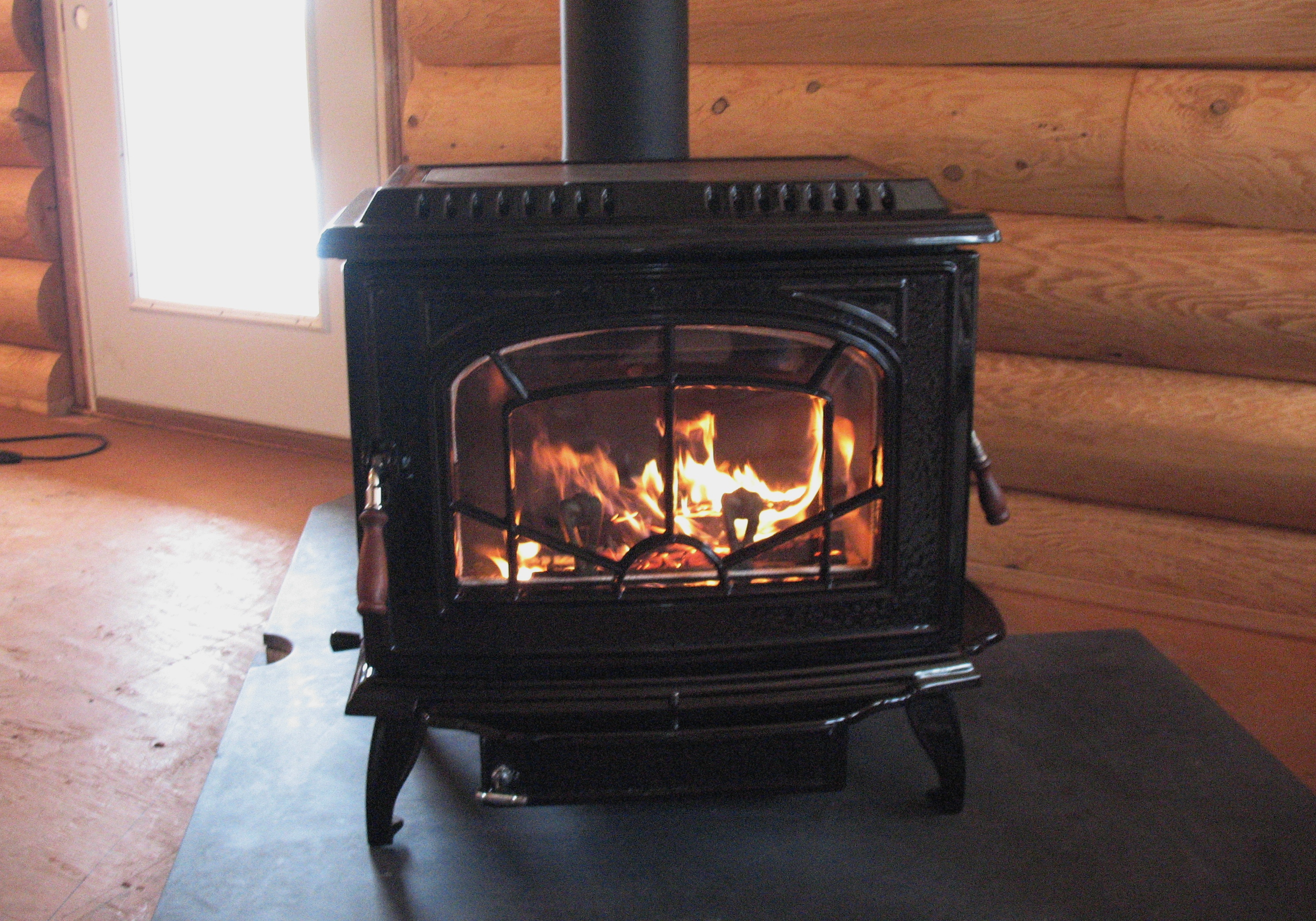
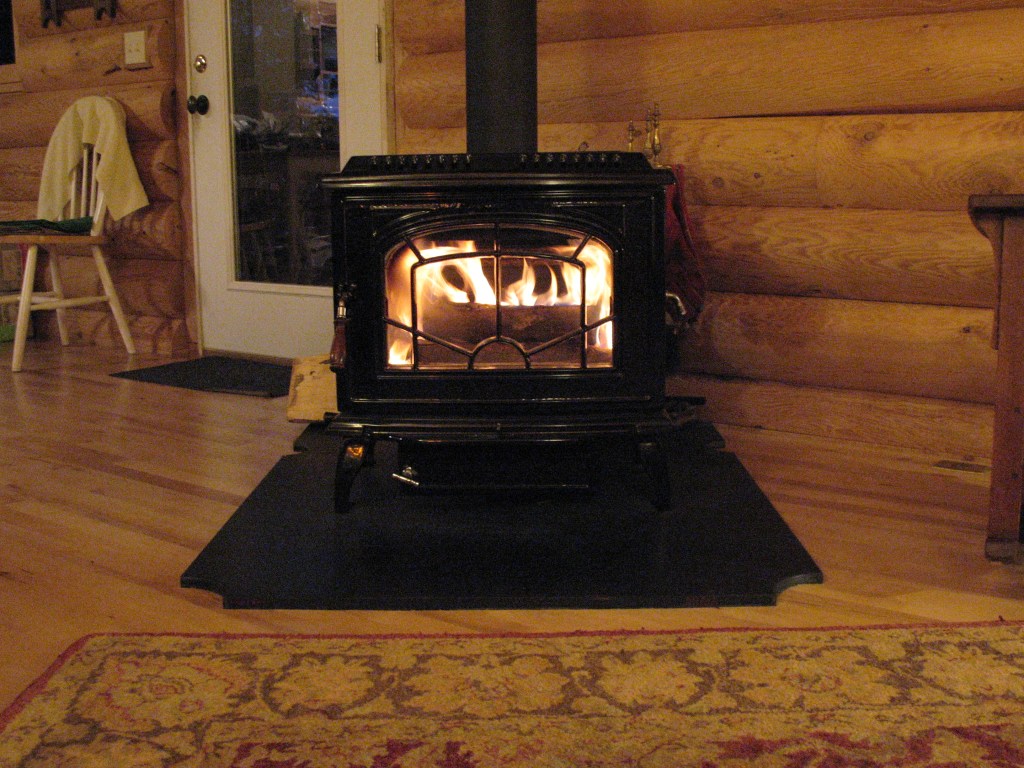
We’ve never started a fire so early in the season. But it’s been cool and rainy today–a cozy fire is just the thing to take the chill away. This may seem insane to my California friends, battling heat and fires. But it is perfect for conditions here. Time to settle in with a good book and a warm beverage.

IMG_2582

As a teen, at my parents’ home, my least favorite task was to have to get wood from the woodpile, at night. In the snow. In the dark. We’ve set it up here so that this is never the case.

Sure, the woodpile is out back, at stone’s throw from the house. But by the basement door we put in a wood ‘crib,’ enough to hold two or three week’s worth of fuel, depending on the temperature. And, just inside the basement door is a woodbox, that we fill everyday, so that the wood for the day is dry, and warm.

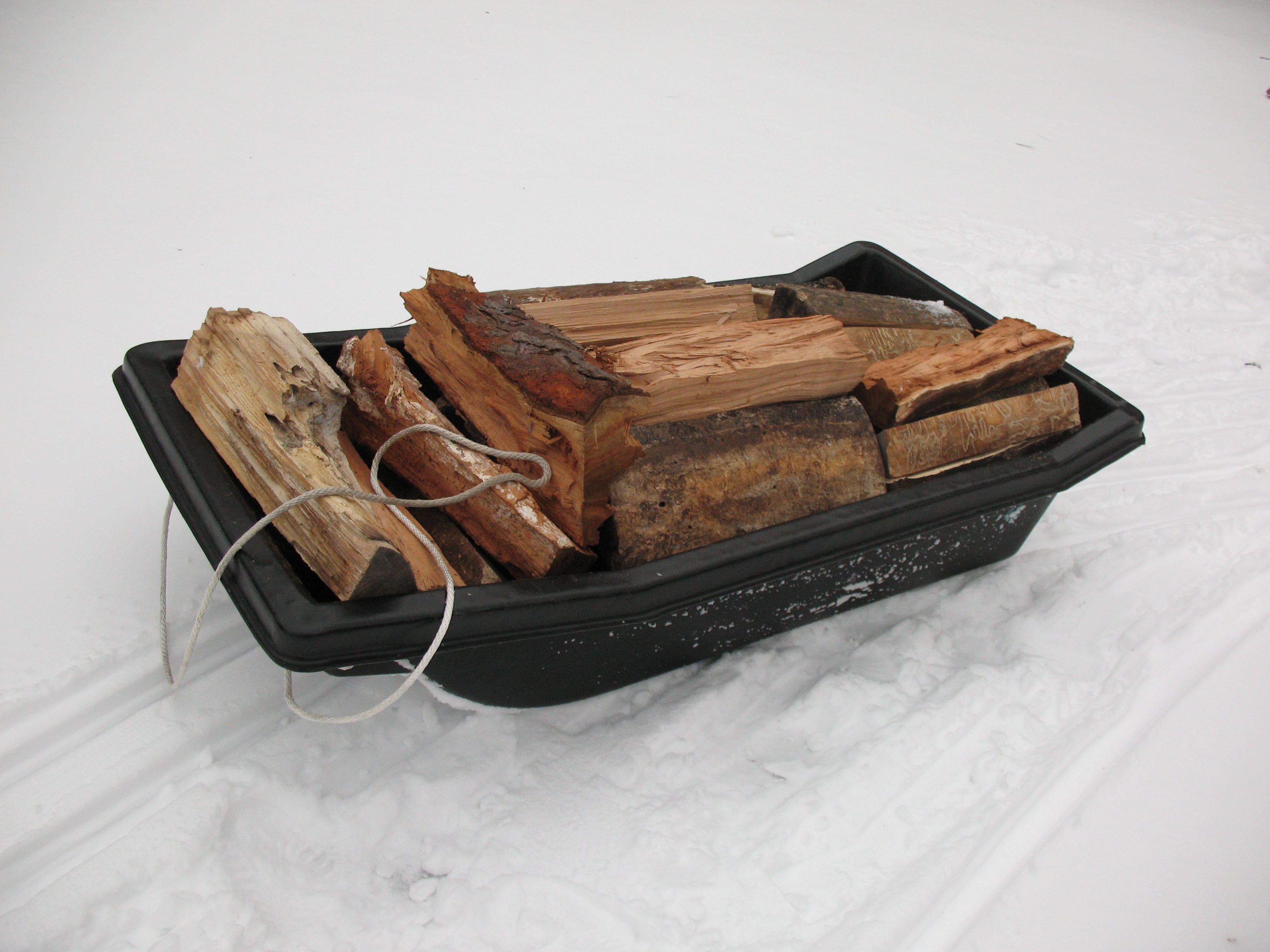
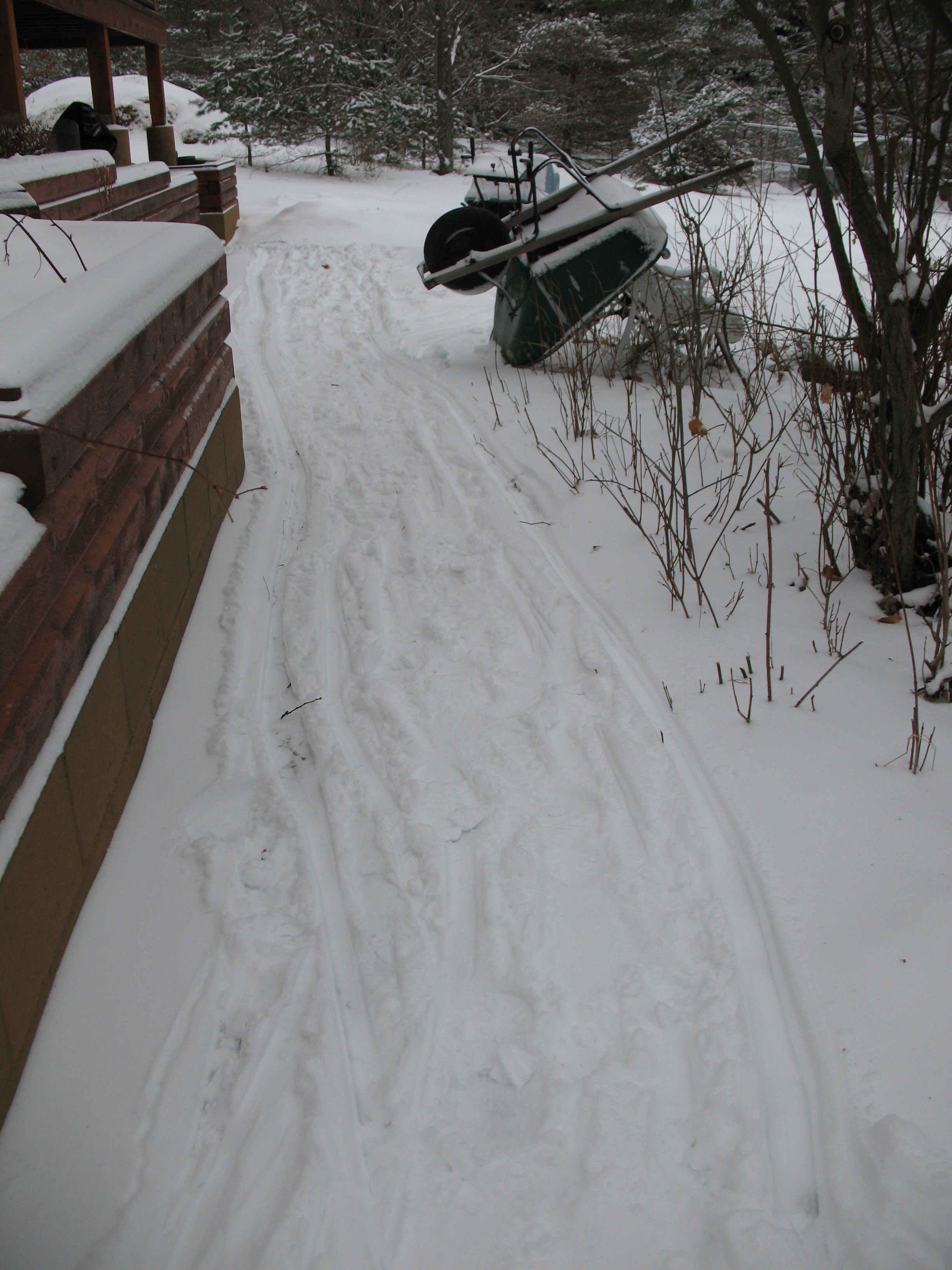
A couple of times each month I refill the woodcrib. I use a sled–the kind they make for ice-fishing, unless there’s no snow, in which case, I use a wheel barrow. It takes eleven or twelve full wheelbarrow loads to fill the crib–but only five or six sled loads. I prefer the sled.

IMG_2580

You cannot turn your back on that sled though. If the ground is uneven, it’ll do what sleds do. Just before the holidays, the sled got away from me and whacked me square in the knee–knocking me over. I hobbled for a couple of weeks after that. That was my stupid-tax–it was my fault. I need to be more careful about observing how the sled is positioned on any slope–especially if I’m going to get out in front of it.

IMG_2581

Just enough of a slope to cause trouble!

Unlike my sister, further north, we don’t burn 24/7. We start a fire when the temperature falls below 62, usually mid-day, and keep it going until we go to bed. Any more than that and the house would be too hot. In my parents’ house, the fire burned non-stop from October to April. I’m not sure if our difference in burn time is because of latitude, or the fact that we stuffed every nook and cranny of this house with insulation.

All the wood we burn comes from deadfall here on the property. It’s free, unless you count the hours we spend cutting, hauling and splitting. It’s heavy work, but it’s outdoors  in the woods and lovely. It’s one of our favorite tasks.

IMG_2583

And ready for next time–sled or wheel barrow.

I was the one who insisted that we heat with wood. Not only had I grown up with it, but I learned a lesson in a rental once, that made me insist on having some measure of control when it came to heat. We lost power at the farm where I rented–and it was out for nearly a week. The furnace, though propane fueled, required electric power to operate. It was a very long, cold, week. After that, even though it was a rental, I installed a small wood stove. I never again wanted to be at the mercy of a public utility.

We have back-up heat, propane stoves and some electric baseboard units–enough to keep the house from freezing if we go out of town in the winter. But for day to day use, we burn wood.

We’re having a winter storm today. Not much of a storm really, there was some wind last night and by tomorrow morning we expect to add a foot of fresh snow. It’s beautiful. We won’t shovel until tomorrow–no point in doing it twice. In the meantime, it’s toasty inside by the fire.

img_2342


Happy Thanksgiving All! I hope you all made it out, and home, unscathed. Since we head so far north for holidays (up to Copper Harbor, MI), we watch the weather. The first leg of the winter storms was due Wednesday, so we traveled Tuesday. Clear roads, great weather. In fact, the storm started to hit just as we pulled into my mum’s driveway. And then it really hit! With the winds as Maestro, Lake Superior put out an amazing symphony –somewhere between a roar and the sound of a freight train. It’s like that in November. Until it freezes along the shoreline, the wild winds toss the beach stones along the shore, making quite the racket. (That’s why those stones are so smooth and round.) I don’t think I slept all night.

So, it was no surprise the following morning when the power went out. Being from the far north, this is not unusual. It was a little odd that it stayed out for 30 hours, putting a bit of a crimp in Thanksgiving roasting and baking schedules. Some folks have generators. Many, if not most, heat with wood, or have a wood stove as a back up. You can cook a whole Thanksgiving dinner on a propane barbeque, if you have to. I have. But this time, my sister and her husband had a little generator–just enough for some lights and to meet the needs of her propane range. On most modern gas cooktops, you can cook on top–by lighting a burner with a match. But the fancy electronic ignition for the oven needs power. We have the same thing at home. It made me wonder, when we built our kitchen, whether to buy a vintage gas stove, one with a pilot light. Sometimes old technology is better than high-tech.

There’s a kitchen in the community center–and a generator–but someone already had their turkey in it. And there’s one in their one room school–I don’t know how they handle first dibs. In any event, We were fine. The power came back on the next day in the early afternoon, so most folks were able to still cook for the holiday.

In Copper Harbor, no power means no light, no internet, no telephone and only minimal sewage. It’s the sewage that worries me. This means a houseful of holiday people, and no flushing. Most have lanterns or oil lamps (like we do, at home.) It’s an inconvenience–a holiday to be remembered.

We timed our departure to miss the next round of storms; that’s the threading the needle part. Again, yesterday, we made the drive home without difficulty. Last night the storm rolled in and now, we cannot see to the end of the driveway.

It captured Rick’s attention. We’ve been lolly-gagging on the barn wiring. But one component of that project is a hardwired transfer switch, so when the power goes, we can power the house, from the generator in the barn, without tripping over a dozen extension cords running willy-nilly.

We don’t use a lot of power. It’s tough to do without refrigeration, though. The ritual from my childhood always included loading the contents of the refrigerator into coolers–which were carried outside in winter–or packed in ice and put in the shade in the summer. And we need power for our well water (though not for the septic.) In the past we’ve bought bottled water for consumption, and carried stream water up to the house for flushing. The new wiring should make storm outages more comfortable, even though we always managed in the past.

Storms are getting increasingly fierce, and more frequent, so I guess it’s time. We’ll follow the motto of the Girl Guides/Scouts, “Be prepared.”

IMG_2550

Without a doubt, he is. The hearth-cat is in charge.

We’ve been looking for a chimney sweep. We’ve been using the woodstove for over a year, and it’s time to clean the chimney before the heating season begins. The guy I intended to use up and retired, just as I was ready to hire him. I suppose we could do it ourselves, but it’s a messy job, and might require working on a ladder, on a steep roof. So, we’ll hire, and watch, and decide later if we’re up to it.

This morning I woke up to some strange noises. I couldn’t tell what it was–until I came downstairs. Then it was clear. A bird had flown down our chimney and become caught in the stovepipe to our wood stove. The pipe’s damper was closed–and the bird was trapped there, at the damper. The sound was frantic.

This happened once before, just after we installed the wood stove, but before we’d really used it. Since we weren’t yet living in the house, we didn’t discover the trapped pair of nesting birds until it was too late and they’d died. We hoped that once the system was in use that the smell of smoke and ash would warn off any other feathered visitors. And it did, until now.

Rick came downstairs, having deduced from the noise, that we were, once again, hosts to an involuntary bird guest. After coffee, we gathered the tools to disassemble the top of the stove, to provide access to the pipe. It seemed simple enough, once we were ready, we’d just flip open the damper, and the bird would fall into a pillowcase that Rick had pressed up around the bottom of the stovepipe. I’d open the door and he’d release the bird. Ha!

Just before we started, he warned me that we had to be in sync, because the last thing we needed was a soot-covered bird flying around inside the house. We assumed our positions and I opened the damper. Suddenly there was a bird, flying around the house!

It was a tidier bird than we’d expected–dropping a few feathers, but not a lot of soot. But a lot of soot, dislogded by the bird’s struggles, emptied into the pillowcase and the top of the stove. With a minimum of bird chase, and several opened windows, the bird found its way to freedom. A young grackle, I think.

It took a little vacuuming, but mostly it went well. Afterwards, Rick commented that we didn’t need a chimney sweep; we just needed a couple more birds.

I don’t know. I think two birds in the bush are worth a lot more than one in the hand.


North By Degrees

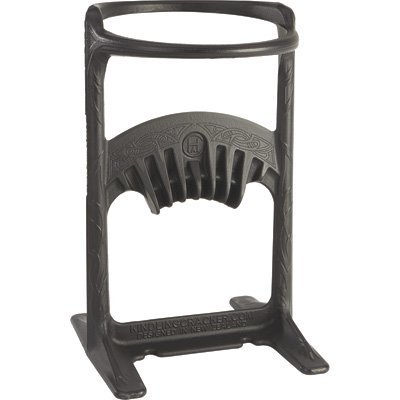
kindling cracker

It’s winter. Though we’re not yet through with summer business, when I look out the window, that blanket of white is pretty convincing. Though temperatures have been pretty mild, there’s no doubt that the season is upon us.

We don’t mind winter. It slows things down. And we love the cozy-evenings-with-a-fire-in-the-woodstove part. We’ve not yet reached the coldest part of winter, where a fire is needed round the clock.

I’m largely responsible for keeping the woodbin stocked from the woodpile. And I chop most of the kindling. That’s the only part I don’t much like. Admittedly, I’m not what anyone would call graceful or coordinated. Swinging a sharp hatchet near my fingers and thumbs makes me nervous.

I’ve been eyeing those ads for a “kindling cracker,” a handy device for holding firewood whilst splitting it in a near-effortless, and finger-safe, procedure. They’re ingenious, and elegant, but not cheap. I’ve been considering it for a couple of years; it’s a woodburning accessory that I could almost convince myself is a safety necessity. As is often the case when it comes to Northern living, I thought I’d ask my sister—who’s several hundred miles north of me—and has heated with wood for her entire adult life.

My sister had never heard of it. “Kindling? Why are you cutting so much kindling?”

“To start fires, of course.”

“Well, how many fires do you need to start?” (I could tell that she wasn’t going to be much help with my rationalizing.)

“At this time of year, we start a fire every day.”

“Really?” (What? Is she just showing off?)

“Don’t you need to cut kindling for the season?”

She laughed. “Not ‘for the season.’ We start a fire in October. Then it burns until May, 24/7. And you?

“It’s not cold enough to burn round the clock. We’d roast.”

“Ah!”

And that, was that. Surely she’ll be of no help in my consumer decision. I’m not entirely sure if it was as cut and dried as all that. I could be the victim of Northern snobbery. But I’ll never know.

img_2339

Notice Anything New?

Can you see it? It’s transformational! It changes everything.

This isn’t smoke and mirrors. (Well, maybe smoke.)

I’ll give you a hint. It’s about heat.

img_2342


Waiting on Color

A.V. Walters

Color is late this year. Not just here, I’m hearing it everywhere. Back home, where normally it would be finishing up by now, most of the trees are still green. Here we’re a couple of weeks behind–and we’re only seeing the occasional branch, or isolated tree, that has bolted into spectacular. I keep telling myself I’ll blog when I can post great color shots. And then I wait.

It’s not like the weather hasn’t changed. It’s autumn here. Night time temps are dropping into the 40s. I have to harvest the last of my basil and tomatoes, before the first hard frost. I’m staining the cabin–and some days it’s too chilly to stain. Though staining is akin to paint–and should be an improvement–Rick and I have grown attached to the look of cedar logs. They must be stained, to protect from rot and UV damage. Still, we like the natural look and cringe that the work I’m doing makes the cabin look like Lincoln Logs. I’m sure I’ll get enough warm days to get the first coat on–the cooler days I use for prep. Rainy days, I work on the computer. Rick is busy putting in the septic. Those cool power tools, the Kubota and the backhoe, are seeing good use. We’ll get it in, and inspected, just in time for the weather to really turn.

Some folks plan their vacations around color. It’s a risky venture–trying to guess when nature will accommodate. Is it a failure if you head off to the boonies–and have only green to reward you? I suppose an early winter would be worse–or a dry year with only shriveled, brown leaves. Our neck of the woods has recently been voted the best color-drive in the country. I don’t know how such things are judged. (I’ll bet folks back in the Keweenaw, or at the Porcupine Mountains, will think the jig is rigged.) I only know that it will extend our tourist season–which can’t be all bad for the local economy. The wine-tasting vineyards and orchard stands will be happy.

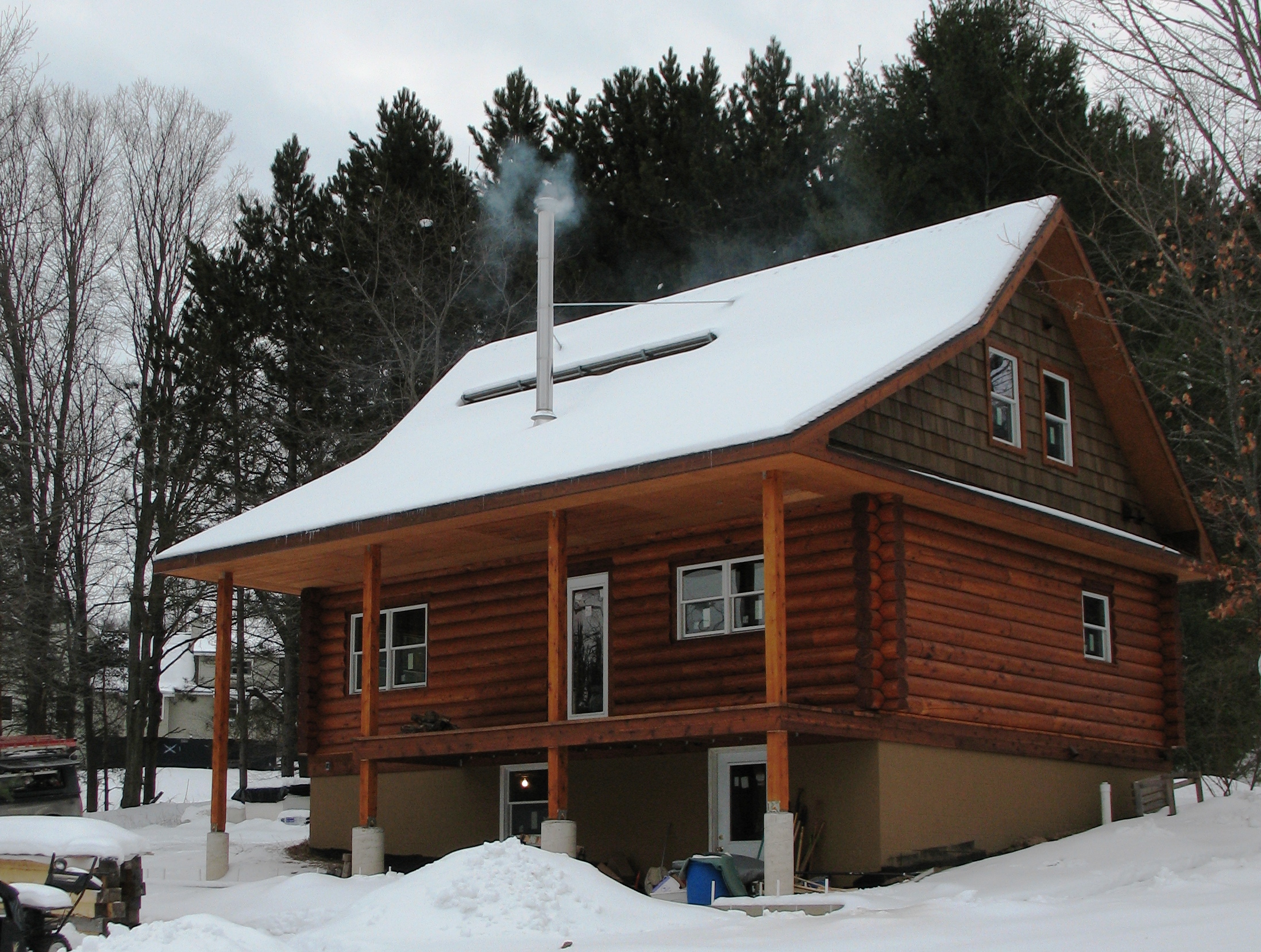
In the meantime, we keep working. It’s a year late, but we have our winter-defendable shell in place. The doors and windows went in last week. Once we get the chimney in, we’ll actually be able to heat it, making for a cozy place to work until it’s ready for us to move in. All things in due time. Next time, color shots!

Ibuprofen Monday

A.V. Walters

Spring Peeking Through

Spring Peeking Through

It was a glorious weekend. Temperatures in the 60s and sunshine! Almost all of the snow is gone—except in a few spots in the shade (north facing slopes) or where Rick piled it with the blower during the winter.

There are a thousand things we should be doing. But the ground is not yet thawed, and … well, we rationalized why the highest and best use of our time would be to open up the trails to the “back forty.” The property has a slightly graded panhandle (for road access) and then a chunk of steep hills and valleys leading to an upper meadow. On foot, it’s a heavy breathing hike. Until now, we’ve only been able to access it with a vehicle by going on an old logging road through the neighbors’ back yard. The neighbors have been good about it, but not enthusiastic. So, really it was about getting access and keeping good neighborly relations. It had nothing to do with the outrageous weather.

We need the access because back there is where we harvest the deadfall for our firewood heating supply. The hills are heavily forested and, especially with the Emerald Ash Borer losses, they are littered with standing and dropped dead trees.

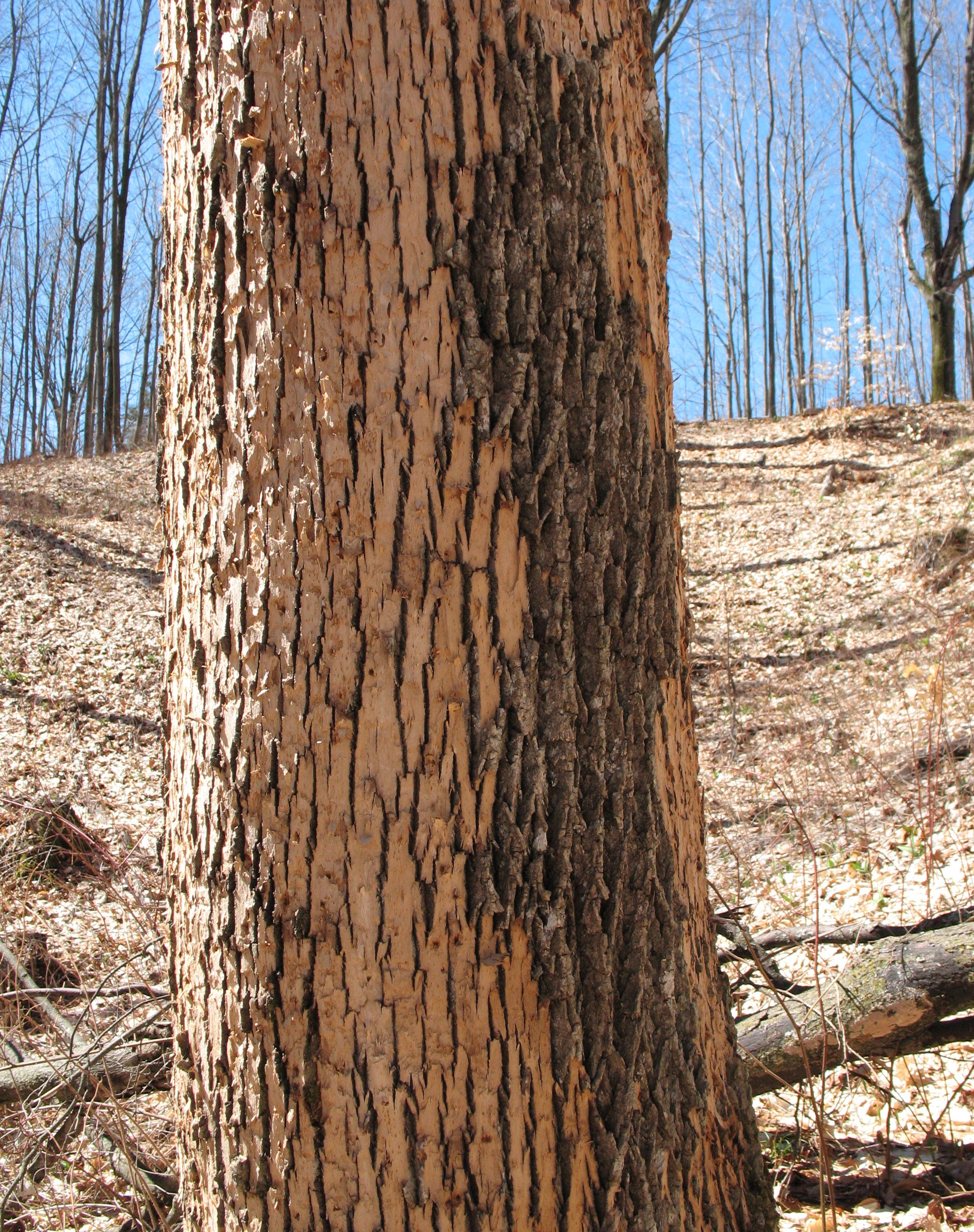
This ash is doomed. Pileated woodpeckers have  chipped off the bark surface to get at the borers, below.

This ash is doomed. Pileated woodpeckers have chipped off the bark surface to get at the borers, below.

It breaks our hearts, to see these dead any dying trees but we’d be fools to let the wood go to waste. The property is criss-crossed with old (and pretty steep) logging roads, many of them blocked with fallen trees. The weekend would be a trail clearing exercise. It was not to be a harvesting foray.

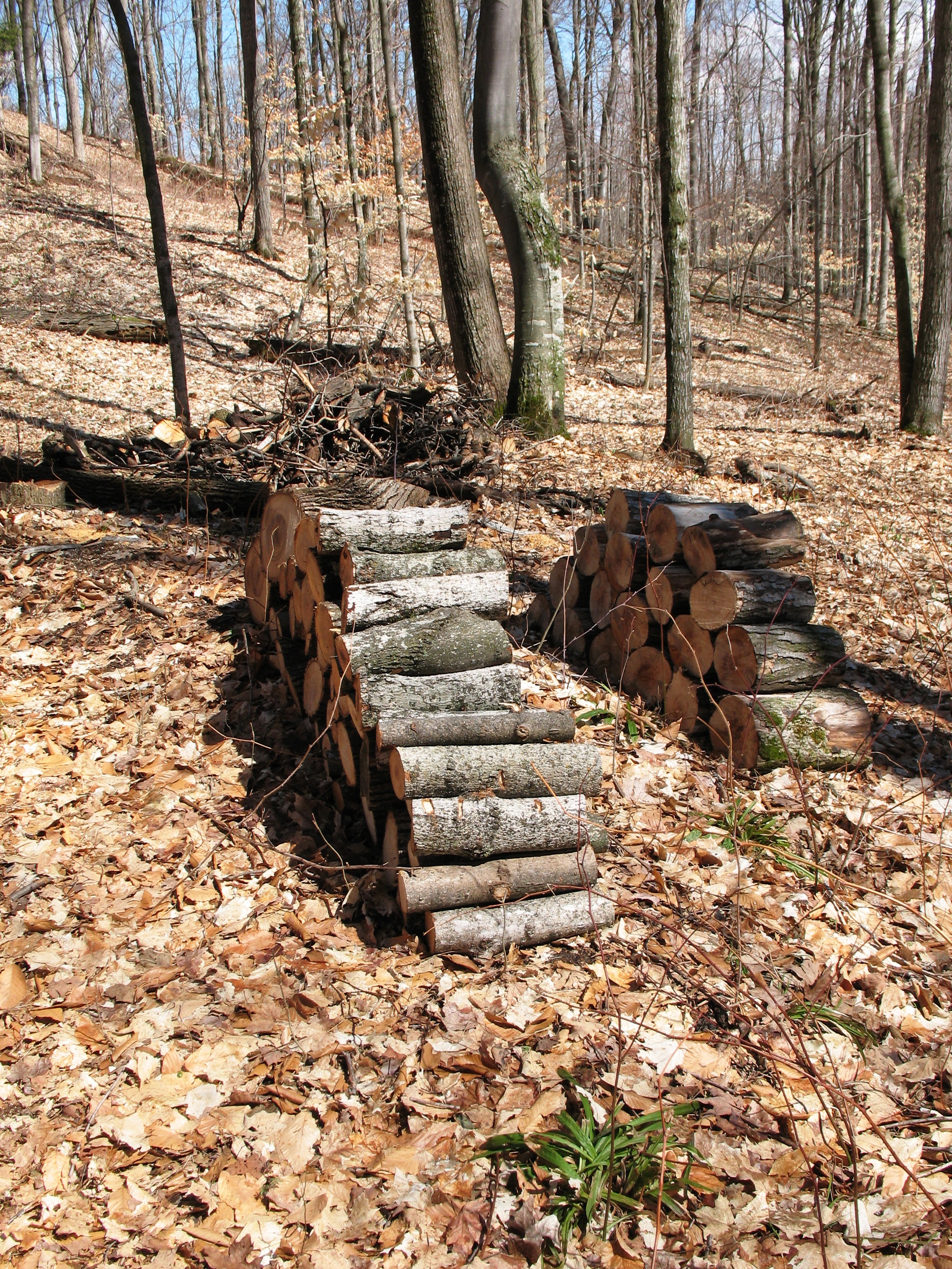
It started like this, just to clear the trail:

IMG_2101

But one thing led to another…and there was this:

IMG_2106

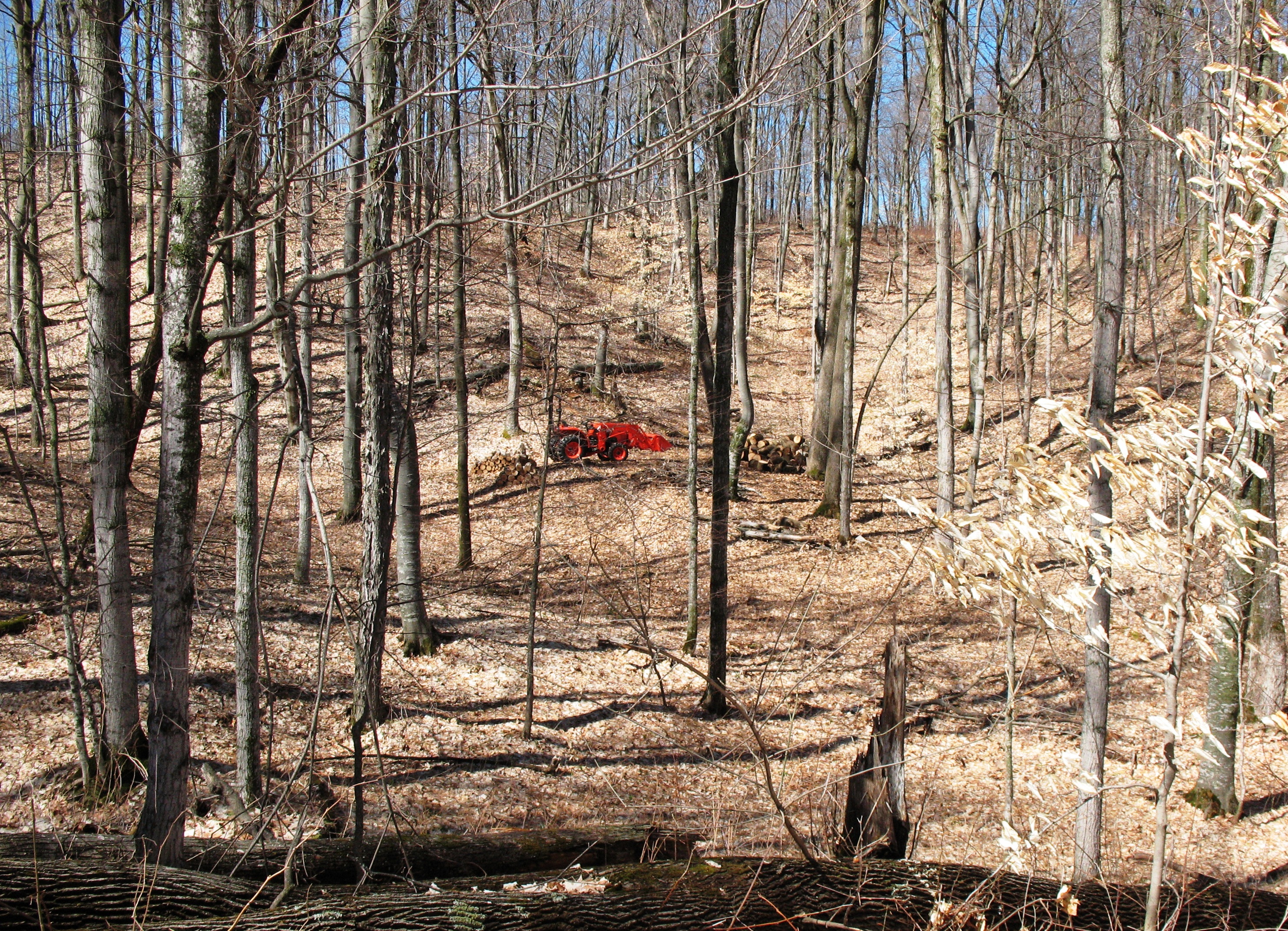
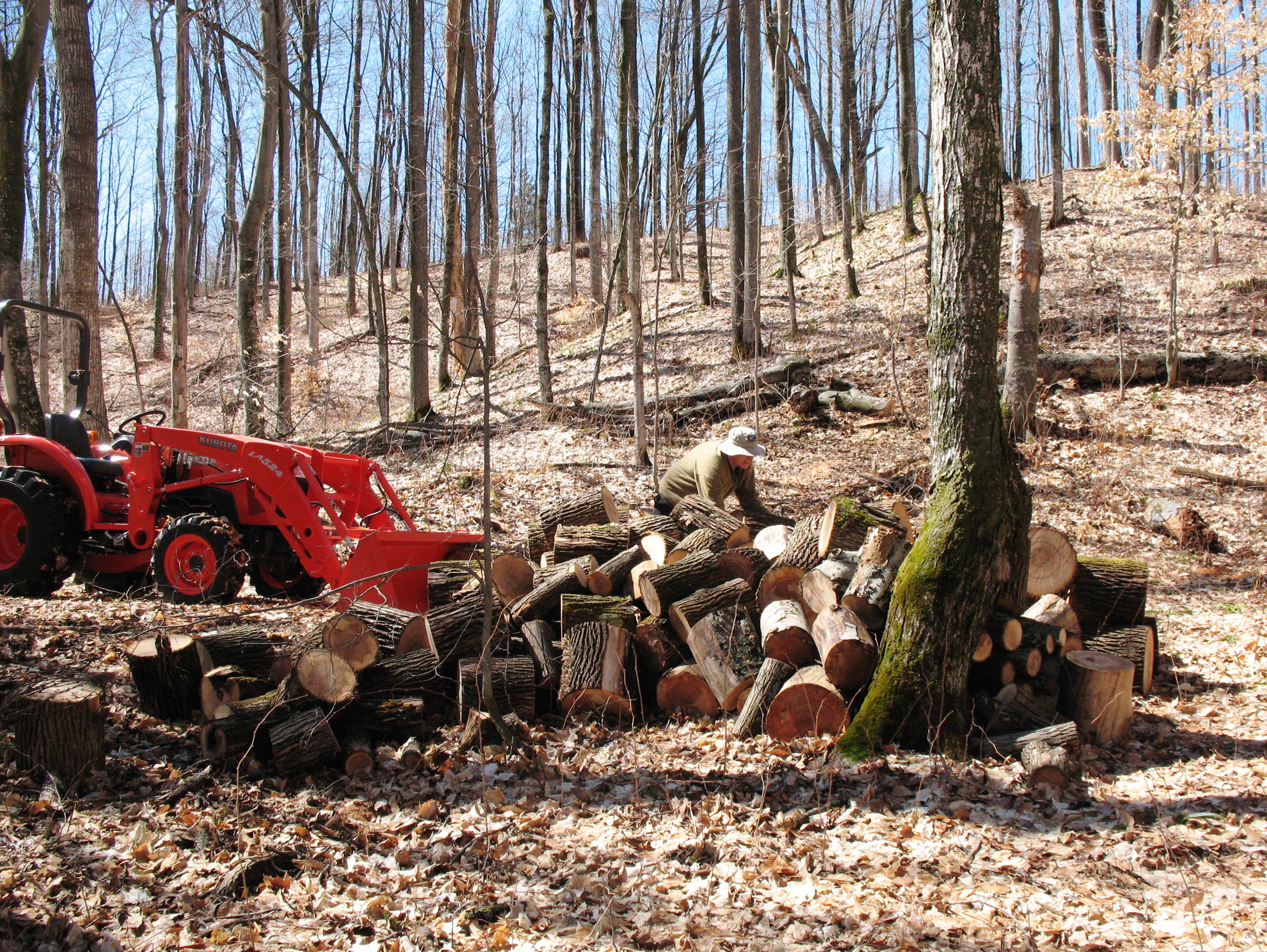
And then, when we made it over the ridge and down the trail on the Kubota, we could hardly contain ourselves. So there was this:

IMG_2103

IMG_2105

And then, a couple of stragglers on the way home yielded this:

IMG_2102

We are agog over how much safer and easier the firewood harvest can be with Kubota assist. You can chain lift logs for safer sawing access, or just drag them down the slopes to cut where there’s no danger of rolling. Even with that, it’s heavy work. We came home each night achy and sweaty, but elated. We’re naming the “new roads” as we open them up.

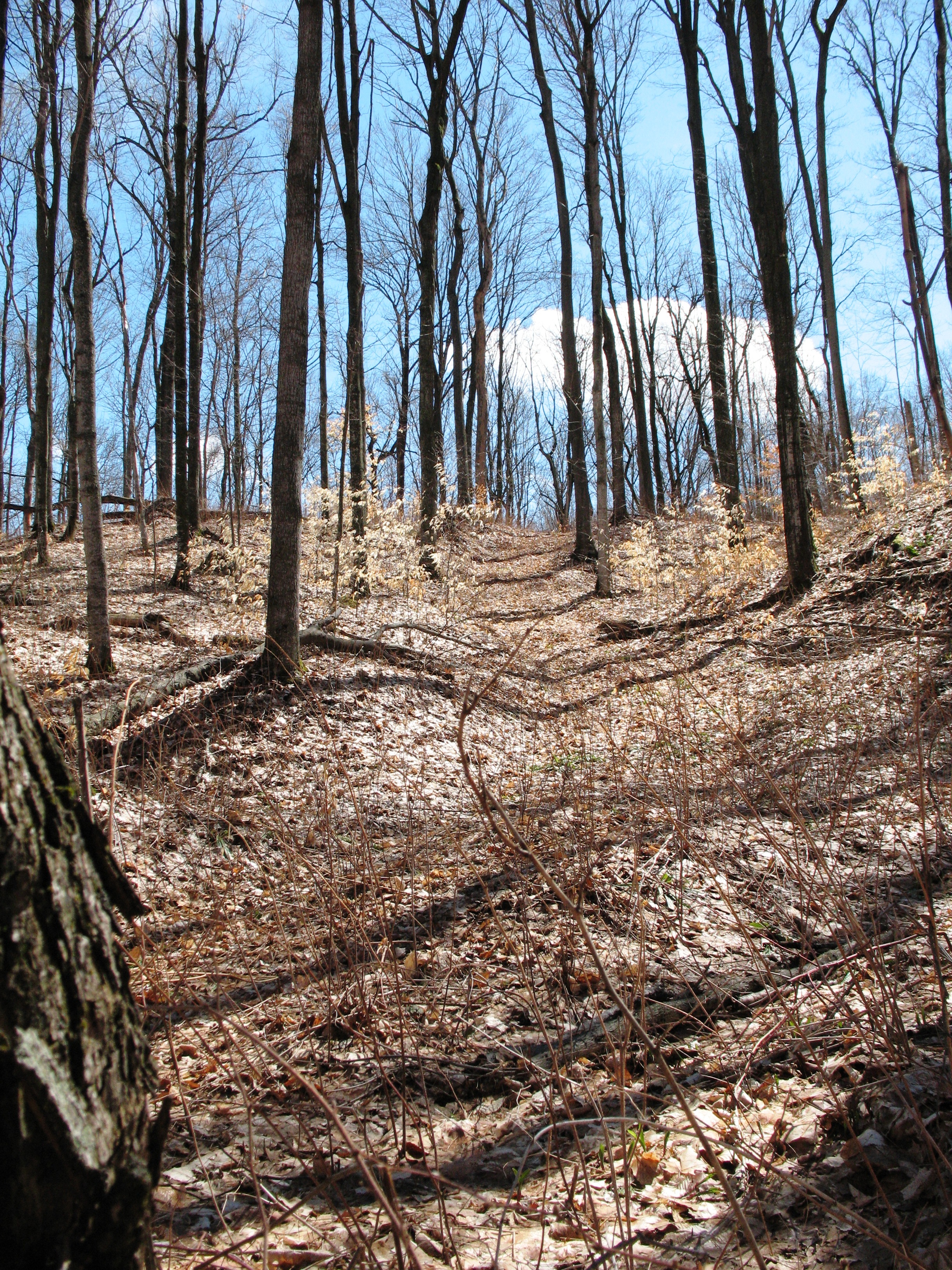
Believe it or not, that's the "road."

Believe it or not, that’s the “road.”

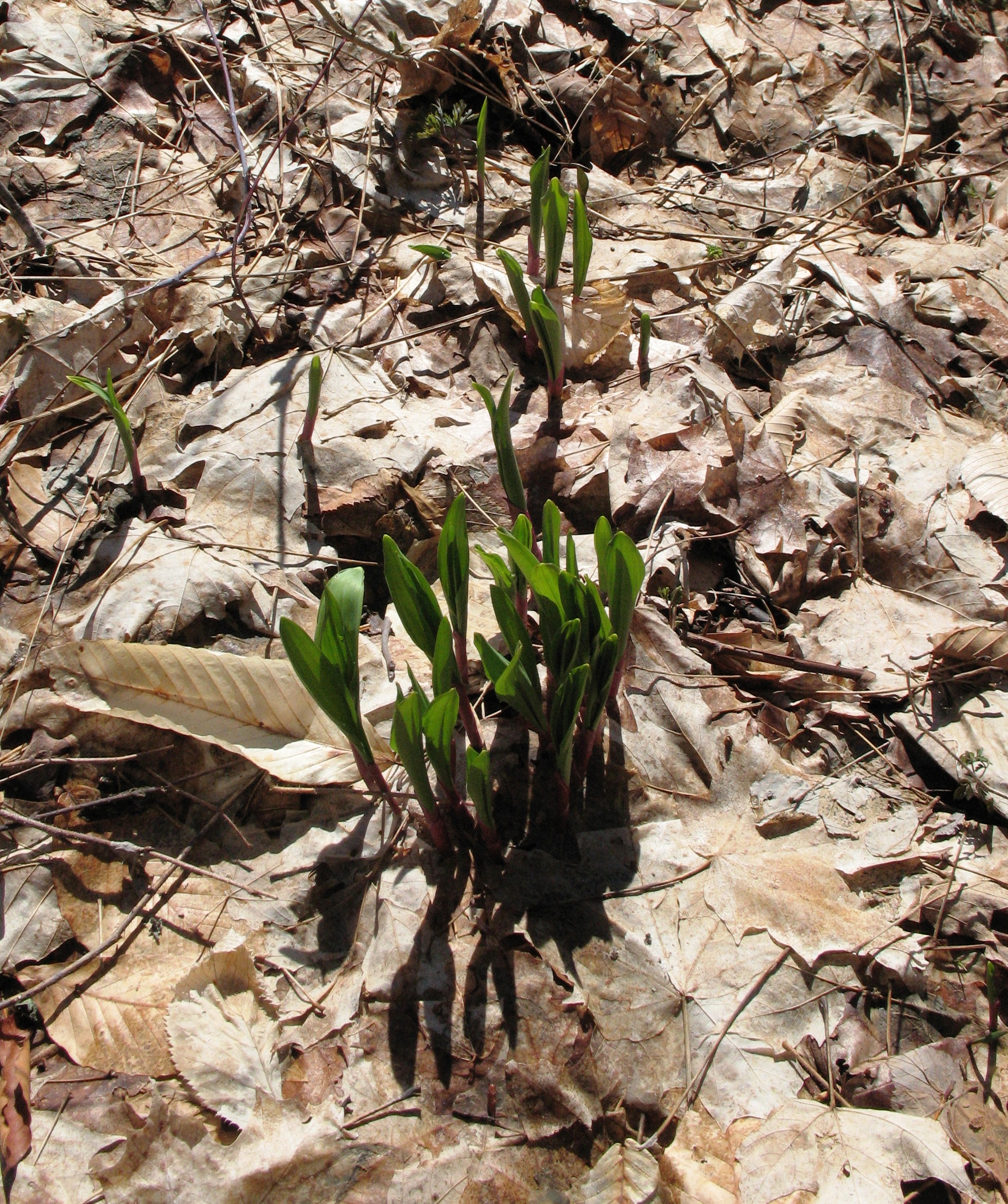
The woods are lovely this early in the year. There’s the carpet of leaves, and just the tips of the wild leeks and Dutchman’s Breeches peeking through.

There’s only one hitch. Now there’s no doubt that we need a little trailer. Our lovely circuitous trails can get us in to make wood—but that’s where the wood will stay until we can wrangle a trailer in. It’s too much wood to try to remove with just the loader.

IMG_2107

And like many in the Midwest, after the first incredible weekend of spring, we’re stiff and sore.