We’ve been burning a lot of beech this year. A lot of beech. Winter is back, real winter, with the mercury hovering in the teens or below, and snow. A lot of snow. It’s a relief.
Our ‘normal’ snow load and its spring melt is nature’s natural drip irrigation for the forests. We’ve been missing it for several years, nervously noting the change. So this year’s normal La Nina winter comes as a mixed blessing. We’re happy to see the snow—even if it means snow removal duty. We’re noting the multiple polar vortices that our pushing our winter lows lower than normal. That’s also something to note. It’s an indication that the jet stream is unstable, one of the symptoms of climate change. Less visable, and more alarming is that similar instabilities are becoming evident in our ocean currents—the drivers of weather all over the world.
Beech is not an optimal wood for heating. It doesn’t have the BTUs of ash or other, harder woods. It burns nicely, hot and fast, so we’re constantly filling the woodstove. Our ample beech supply is another disturbing symptom of climate change. We burn only deadfall, so the appearance of beech in our wood supply means the beech trees are in trouble. Beech Bark Disease has been in North America for well over a century. It hitchhiked to North Eastern Canada from Europe in mid-1800s trade, but remained there, relatively stable for its first North American Century. The disease is actually a partnership of several organisms—some fungal and some sap-sucking insects who serve to spread it. The conditions for their joint spread didn’t fuel its expansion until a shifting climate created opportunities to increase its range. It’s done so quickly since the turn of the most recent century, and beech trees are seriously threatened.
“It all burns,” says Rick as we set out to harvest the deadfall to heat our home. We avoid conifers—because they burn dirty, but everything else that drops to the forest floor is fair game. We’re still burning ash—the last remnants from the ash die off, courtesy of another hitchhiker, the Emerald Ash Borer. Ash is a lovely firewood that burns long and clean. Our mix includes American Black Cherry, Ash, Beech, Maple, and a smattering of Hophornbeam. The only downside to the Beech is that you need more of it to get through the winter. If you’re relying on a glance of the total volume of the total cut and stacked firewood supply, you could run short. We’re running a little short this year. We have back up supplies, so we’ll be fine, but I made the mistake of forgetting to discount the beech when I stocked the woodshed. I remember harvesting the beech, several years ago. Rick was eager to get to some of the ash, but beech trees had fallen across the trail…so beech it was.
Different species have different attributes when used as firewood. When I was growing up, my father favored oak—hard and long burning. I never liked the acrid edge of burning oak, but it’s a valuable heating source. Lucky for me—there’s not a lot of oak on our property. I don’t have to make that choice. Some woods deliver more heat, some burn fast—good for kindling or getting a fire going. Some wood, like our American Black Cherry, burn with colorful flames. It doesn’t speak to value on a heating level—but it’s pretty to watch in the woodstove. Burning wood for heat isn’t the easy thermometer setting that most folks understand. It takes many hours and hard labor to harvest, haul, stack and split. It’s free, but only in a monetary sense. We work for our warm winters.
We are not normal in this respect. Most Americans rely on some sort of fossil fuel to keep warm through the winter. That puts the carbon footprint out of balance, essentially releasing CO2 from earlier eras into the atmosphere. This is where renewable energies can make a big difference. Our choice was driven by the economics of supply (we have acres of forest) and by an effort to minimize our carbon footprint. By burning only deadfall, we release only carbon from our own era that was already headed for the atmosphere. It isn’t a solution for everyone. It takes a minimum of 10 acres of forest to supply enough deadfall to heat a home. But it works for us. We extended our ‘utility’ by insulating the hell out of our small home when we built it. We can do even a hard winter with just under three cords of wood.
I have a recurring dream in which I am a ‘sommelier’ of woodburning. I sound like some high-end server as I inform my customers of their woodburning options. “Tonight we’re burning ash and maple—for a long burning fire with a golden hue. For a small added charge we can add some black cherry, which will burn in multiple colors throughout your evening. For special occasions, we can add some lovely imported varieties—like manzanita—hot burning and very colorful—but,” I nod knowingly, “That comes at a premium.” In the dream, I don’t know who my customers are, or what kind of business I’m running. Maybe it’s like a stress dream (like if you’ve ever waited table), or a roundabout way of appreciating life choices we’ve made. But it does make me reflect on, and appreciate, what the forest offers, even in death. Life is a beech…..
Like so many things, one can only guess at the future, but does so with greater accuracy if one can look at the past. There’s no doubt that our honeybees are in the crosshairs—but what can be done about it? Let’s start with the fact that honeybees are not a North American native species. Like most of us, our bees were brought here by Europeans.
Whether or not a non-native species is deserved of our protections is an interesting debate, complicated by the fact that the honeybee has become critical to our food system, and that pollination is required for one bite out of three in the American diet. We have no choice but to make the effort.
Honeybees are currently threatened by a troika of hazards; habitat loss (nutritional deficits because of the loss of a diverse ecosystem); poisons (both pesticides and herbicides); and parasites. Not included in the official list of risks is climate change, which complicates the bees’ nutritional challenges and causes seasonal maladjustments.
There are native pollinators. A study nearly a decade ago in Michigan suggested that as much as 46% of Michigan’s agriculture was pollinated by native species. This study was extremely difficult to undertake because it’s damn near impossible to determine who is doing what in any given orchard or garden, and we don’t have a handle on the status of our native pollinators. In fact, much of what we know about the hazards to our native pollinators is an extrapolation of the known problems with honeybees, precisely because it is so difficult to accurately study the natives. And, there’s no money in it. Because many of the challenges to our insect world are a direct result of the impact of our ridiculously lax rules on pesticides, the money too often falls on the opposite side of the equation. For example, repeated studies out of the European Union show that neonicotinoids are deadly to honeybees—and to pollinators in general. These pesticides have been banned in most of Europe, resulting in rebounding populations of pollinators. Despite the obvious connection, here in the U.S. no serious efforts have been made to restrict these pesticides.
Add to that the complete disarray of the beekeeping world over the last decade, and we’re basically operating wearing blinders. I’ve only been beekeeping for a just under a decade, and the changes—mostly based on new science—in the beekeeping world are enough to make one dizzy. We have bee pests that are killing off our colonies. In large part, it’s because of the varroa mite—accidentally introduced to the U.S. in the late 1980s. These mites attach themselves to the bees’ abdomens and suck off the fat-bodies essential to bee survival. In addition to the direct damage sapping the bees, the mites carry and spread a number of bee viruses and bacterial or fungal diseases. Mite control has become essential. Early in the battle against the varroa mites, chemical treatments (essentially pesticides) were based on the treatment “load” delivered by the bees’ equivalent of blood. (Bees don’t have blood the same ways that humans do, but they do have an internal liquid delivery and balance system that approximates our circulatory system.) Despite decades of such treatments, it was only discovered in the mid-20-teens that the mites actually feed on the bees’ fat bodies. (Which means they had everything wrong—from a basic understanding of the mites’ impact on the bees, to how treatments were delivered.) Beekeepers are constantly reeling over the latest theories of how best to protect their colonies.
Early in my beekeeping endeavor, we were told that hive circulation (ventilation) was imperative to keeping hives healthy. We invested in screened bottom boards and upper entrances to maximize airflow and minimize moisture. (What? We didn’t trust the bees to know what was right for them?) Then, literally “out of left field” a British physicist analyzed the thermal dynamics of bees and determined that the standard model of bees ‘clustering’ to keep warm in winter was really a last ditch effort to save the hive—essentially a bee suicide mission to save the queen. Bees were freezing in their hives. The energy needed to keep warm was depleting them during the winter, leaving us with weak and challenged hives. So then, ‘they’ decided we needed to insulate our hives. Now, there are several competing versions of what beekeepers should be doing for winter management. It’s enough to make you crazy.
Here is where an interesting, if a little sad, historical review of ‘modern beekeeping’ is instructive. Historically—and I mean through the ages—‘domesticated’ bees were kept in ‘skeps,’ woven or wicker baskets. In order to harvest the honey or wax, the hive itself was damaged or destroyed. It was inefficient and unkind, if not deadly, to the bees. In the mid 1800s, all around the world, beekeepers were working on more efficient methods. I won’t get into the historical fray about who deserves the credit for the modern hive, except to say that the design of hives with moveable frames that accommodated proper “beespace” (the optimal size within the hive for bees to move and live) revolutionized beekeeping. It allowed bee management and harvest without killing the hive. We commonly call the modern equivalent hive the “Langstroth” hive, named for an American beekeeper, writer and scholar.
But, the hive we see in modern beekeeping today is not exactly what Langstroth created. In an effort to recreate the ‘natural’ bee colony found in hollow tree cavities, Langstroth created an inner hive with moveable frames, contained within an outer wooden box, with the cavity between them stuffed with leaves as insulation. Over time, but particularly fueled by the invention of the truck—which enabled larger orchards and mobile pollination services, the cumbersome outer boxes were stripped away. By the time ‘modern’ agricultural science evolved (starting in the 1930s), the stripped down hives were the standard, and became the baseline for apiary studies. We came to accept as ‘normal’ the idea that bees spent their winters huddled in a protective cluster around their queen. At no time has anyone presented any data about honeybees’ winter strategies when overwintering naturally inside a hollow tree. We have no idea what ‘natural’ would look like. But now we have evidence that the standard ‘winter cluster’ is probably not a natural norm.
Bees are considered livestock in American agriculture—but nowhere else in animal husbandry would it be acceptable to intentionally imperil one’s livestock on an annual basis.
And so, some experts are now telling us to insulate our hives in the winter. I have a beekeeping acquaintance, John, who is taking that even further. Frustrated with annual hive losses, a decade ago, he invested in the new wave of polystyrene hives. Currently, in Michigan, average annual losses hover at just over thirty per cent! (Last year nationwide average losses were over seventy-five per cent!) Since John switched, his winter survival rates exceed ninety per cent. (note: he also has an aggressive varroa control program and manages for maximum nutrition) John attributes most of his phenomenal success to his insulated hives. You can insulate wooden hives—but it’s a pain to do it right—and then you have to have somewhere to store those insulating covers during the summer (hence the reason why Langstroth’s original design with insulation got stripped away.) Something tells me that we’ve been doing beekeeping wrong for a century!
I’m not convinced that we can save the bees. Between the challenges of pesticide exposure and nutritional deficits caused by habitat loss* and climate change** we’ll need to be more thoughtful and intentional in our approach. I’ve just purchased four new polystyrene hives. I can see now that my efforts to insulate have been inadequate and haphazard. This spring, I’ll be starting on a new program, maximizing bee health as its centerpiece. Clearly, being average isn’t going to be good enough. I wonder though, on a broader scale, if we cannot save the bees, will we do enough to save ourselves?
*Habitat loss results in less diversity of plant life, and diminished nutritional returns on bees’ foraging efforts
**Climate change, and in particular, high levels of CO2, result in plants with lush foliage, but less developed flowers and pollen with substantially lower protein yields.
I know, from my stats, that my readers prefer posts about rural living filtered with light humor. Generally, I respect that–it’s certainly territory that is more fun to write. There’s plenty in the news to make you grind your teeth.
But, if you have an ounce of awareness, you know that things are not normal right now. There’s a lot at stake. “They” would prefer that you just keep scrolling. Here’s a brief list of the things you may miss, once they’re gone (and this is no exaggeration, some of this is happening NOW): the Rule of Law; Due Process; your right to privacy and your data integrity; a livable environment; safe food; the possibility of government assistance in the event of a natural disaster; the availability of affordable fresh food; access to government information on medical and/or epidemic status; assistance for disabled citizens; equal rights under the law if you happen to be female or some other minority; and the promise that you’ll be able to enjoy the social security that you spent your entire working like paying into. This is a short list; if “Promises Made/Promises Kept” is the mantra, there’s a lot more in store for us. One begins to wonder to whom such promises were made.
From time to time, I may stray from my pleasant rural musings to remind you that we’re living in interesting times. My hope is that some of you will respond with meaningful action. Call or write to your elective representatives. Consider donations to those afflicted by the new regime, or to those groups who are on the front lines, fighting for your rights. Work to build community, to help each other if belt tightening becomes necessary. Plant a garden for your summer produce. Do some canning and preserving with your excess produce or donate it to your local food bank. There are more ways to create community, or resist chaos than I can list–but I’m sure you have ideas, too. Act on them. Discuss them. Speak out and step up.
Okay, now I’ll go back to my rural musings. It’s February–time to make garden plans.
We’ve never had three cats before. We didn’t plan on it. I’ve always taken my lead on cats from the Crosby, Stills, Nash & Young song, “Our House.” (“with two cats in the yard….”) Two cats makes perfect sense, especially if you get them together, as kittens. They keep each other company and they romp, tussle and roll.
2024 was another tough year. My Mum passed away in the Spring. A week later, a neighbor dog killed one of our cats, Milt. We mourned. Our other cat, Ollie, mourned. There was nothing we could do for him. After a few weeks he seemed to recover some—at least he resumed eating, and he even reveled in attention and grooming. I cannot say that we’d recovered, but it was good to see Ollie being more of himself. We were resigned to being a single cat household.
Then, three weeks after Milt was killed, Ollie disappeared. We assumed it was the standard Spring “got caught in someone’s shed” deal, and that he’d be home in a week. And then he wasn’t. We talked to the neighbors. Where we live is pretty rural—there aren’t a lot of neighbors. We did the usual missing cat things—walked the roads, checked with animal control. It’s an unfortunate part of country living—lots of things can take out a cat. Dogs, coyotes, owls and raptors can all turn your fluffball into dinner. After a month I was despondent. At two months, my sister gave me ‘the talk.’
If you love cats in the country, you either have to keep them in, or you have to be prepared for losses. It just comes with the territory. We don’t want to keep them in. We spend a lot of time outside, in the garden, in the woods. Our cats have always followed us. They are indoor and outdoor companions.” Cats,” my sister said, “Are a renewable resource.”
At just over two months I started checking the ads for rescue kittens. I resolved not to get hung up on looks—that all cats need homes and I’d take the first set of brothers I could find. And so we got Maki and Red. Maki looks shockingly like Milt. He’s a long-bodied, short legged, medium hair tabby—clearly some Maine Coon in him—tufted ears, neck ruff, thick racoon-like tail. His littermate, Red, is the complete opposite. He’s a long-legged, short necked, short-haired, ginger tabby, with a long, narrow striped tail.
When they arrived, Maki was much smaller, the runt of the litter. They came infested with fleas and ear mites. We’re old hands at cat care, we started combing and treating the ears. We held off a month on their first vet visit, to get them cleaned up a bit, and stabilize them. At this stage they were strictly indoor kitties. I have a nine pound rule. Kittens do not go outside unsupervised until they’re bigger than the average appetizer. We draw the line at nine pounds.
An aside, starting in early September, we had chicken troubles. Our chickens were happy free-range girls. But a recent addition to the neighborhood changed that. We now have a bobcat! Of course, its arrival gave me nightmares over Ollie’s fate, especially when one of the chickens was found as a loose pile of feathers, just steps from our back door. It brought an abrupt end to free range. Now the chickens were locked into their run all day. That’s not a bad gig—it’s a large chain-link enclosure about 50 feet across. The chickens were not impressed. You’d think they’d get it—after the loss of one of their own, but no. They squabbled and separated into rival groups. Since we have two coops, we left them both open and let the chickens sort it out. One night, noise from the chicken pen called us out with flashlights—a ruckus—which we assumed was yet another squabble. Dazed chickens were wandering around the pen—with some loose feathers in the air. We searched the entire area—but could not find anything amiss. We shrugged threw them back in their respective coops (minus one who wouldn’t go) and went back to bed. In the morning, two chickens were dead, their throats torn out. It took some research and a little detective work, but we determined that the culprit was a weasel. Weasels literally go for the neck. Their jaws limit how wide they can open their mouths—so on chickens—the neck is it. We dusted the area with flour and baited one of the coops with chicken necks and a strong rat trap. All chickens, regardless of personality squabbles, were locked into the large coop at night. The first effort at trapping was unsuccessful—the weasel took the bait but wasn’t caught in the trap. But, we did confirm through the footprints in the flour that it was a weasel—and a big one, at that. The remaining chickens were all pretty flipped out by then—first the bobcat, then the weasel. We were down to the point where we were concerned that the remaining three chickens wouldn’t have enough body mass to keep them warm for the winter. We started advertising for folks to take the chickens. No luck. After numerous unsuccessful attempts to trap the weasel, we decided the safest bet was to move the chickens to the small coop, as it was more defendable. Or so we thought. That weasel was still trying, every night. Maybe the smaller coop would be warm enough for our three survivors. Until one morning, two more chickens were dead. The damn weasel had torn part of the roof off of the small coop to get them. We were left with one, highly traumatized chicken. One chicken cannot survive the winter alone. Thankfully we found a chicken angel who invited our poor solo chicken to live in her flock. Frankly, it was beginning to seem that our year was about losses. We have plans for a new, impervious, coop, come spring. We sure miss the eggs.
Damned Weasel
Back to the kitties. By their first vet visit, Maki had surged ahead, size-wise. Red seemed timid and delicate by comparison. They received their first round of vaccines and were scheduled for the next round, two weeks later.
That two weeks was harrowing. Red became ill—his belly distended, but he wasn’t eating much, or using the cat box. Then, he had a high fever…for days. We were orally rehydrating him, and feeding him kitty-soup with a syringe. Of course this happened on the weekend, so we hoped he’d make it to the following Monday to see the vet. We didn’t know if it was related to the vaccine, or if there was some other problem. We made it through the weekend, and brought him in. The vet was not reassuring. She suspected that Red had FIP—which, in 55 years of cat care, I’d never heard of. She sent us home with everything we needed to keep him hydrated subcutaneously and told us to keep it up with the kitty soup. Their appointment for the second round of vaccines was later in the week. She told us to bring him in for a check-up—but that he probably would not be up for the vaccine round 2, just yet.
I went home and looked up FIP. It wasn’t good news. Feline Infectious Peritonitis is a lethal mutated coronavirus. Cats do not recover. Kittens catch the coronavirus when they’re little and then, in some kittens, the virus mutates in the kitten, turning its own immune defenses into a viral replicator of the mutated virus. One of the triggers for the mutation is vaccination. The mutated form is not contagious—but once it mutates in a kitten the results are always deadly for the kitten. My research showed that there was some promising research for treatment, but nothing had FDA approvals.
The morning of their appointment, we were loading the two kitties into the carrier when there was a noise at the front door. I looked over and there, looking in the window, was Ollie. A very fat Ollie. We let him in—shocked. At this point he’d been gone for over four months. He’d obviously been more than well cared for—but given a chance, Ollie came home. We were thrilled to see him. He was not happy to see kittens in his home.
At the vet’s, a robust and healthy Maki got his second round of vaccines. Red was examined, the vet shaking her head. He’d improved from earlier in the week, but he was not a healthy cat. She made an appointment for the following week—either to complete his vaccine cycle, or to consider euthanasia.
It was a rough week. We doted. We spoiled. We coaxed. We hydrated and force fed. But Red was not rallying. On the day of his appointment, I asked Rick to stay home, to dig his grave.
The vet confirmed our worst fears. Red was failing. As we prepared for his final injection, I tearfully said that I couldn’t believe that, with all the corona virus research coming out of Covid that there wasn’t some coronavirus treatment for FIP. Our vet, whom we have trusted for a decade of cat care, made a strange face. “Well,” she said, “There’s nothing… unless you’re willing to go on the black market.” Behind her, her assistant was nodding vigorously—silently signaling to re-think putting Red down. Our vet continued, “There are treatments out there, but they’re not yet approved. There are no guarantees, here and I cannot be involved because this isn’t yet a legal treatment. Her assistant gave me a website to contact. It was all pretty sketchy—but it gave us a chance for Red. Our year had seen enough losses—we were willing to give Red a chance.
That night I checked out the site, and was assigned an Administrator to guide me through the FIP treatment. Because he was in such rough shape, she said we had to start with injections, and switch to pills when he’d improved. The next step was to find a source of the serum as soon as possible. They hooked me up with a woman a couple of hours from me who had leftover vials of the serum. I drove there, and met up with her. Her kitty had completed the treatment and survived! It was like a drug deal with angels. I took the vials home and we started the treatment that night.
Some people report miraculous results—within hours. Our Red was too far along for that kind of magic. But we stuck with it—along with the forced kitty soup and regular subcutaneous hydration. Poor Red was a feline pin cushion. So many injections on so little a kitty! He started treatment at 3.2 pounds—and then dropped below three pounds for the first week or so. His care took hours, every day. We weren’t sure he would make it—but he was willing, and affectionate, even if he could barely walk and only ate when forced. After a week, there was some small improvement—his balance was better, and he started to eat on his own. It was a long, slow, haul.
By week three, there was sudden, visible improvement. Red turned back into a kitten. Even wobbly, he was making an effort to play. He resumed grooming. On day 21, he was well enough to switch from injections to pills. The treatment calls for 84 days of treatment (with bloodwork along the way to check progress), followed by 84 days of observation—to make sure he doesn’t relapse. Red has completed the full treatment protocol, and has graduated to the observation phase.
During this whole treatment process, we’ve also been dealing with integrating our senior cat with these kittens. It was touch and go at the beginning. Ollie was not happy with kittens, but the kittens were infatuated with Ollie. They followed him everywhere. Ooooh—it’s BIG CAT. WE LOVE BIG CAT. They were relentless in their affection. And it’s working. Ollie is finally adjusting to having two rambunctious kittens in his sphere. Sometimes, he’ll even play with their toys, or let them groom his ears and face.
That’s how we ended up with three cats. I’ll have to look for a new song, because it’s beginning to look like we’ll be lucky enough to have three cats in our future. We’re starting the New Year with hope and crossed fingers.
And, just like that, a profound chill settled over the land. People who thought they were impervious began to have second thoughts. People who thought they were prepared stopped and took stock of the situation. Plans changed abruptly. Things looked normal enough, but there’d been a subtle shift, you could almost hear Dorothy saying, “I’ve a feeling we’re not in Kansas anymore.”
It’s not a big adjustment for us. We don’t commute and we’re not big travellers, so road conditions are not an issue. It’s damn cold out there, running below zero at night and the single digits in the day. Mostly it means we run the woodstove 24/7, instead of just afternoons and evenings. It begins to chew into our firewood supply. What? Did you think I meant something else?
We went into this winter season a little lean—mostly because of other projects. The last few mild winters have made us lax—even though I said, all summer, that this would be a “real winter.” I follow weather and climate issues, and all the indicators were that we were coming into a La Nina cycle. Now I’m eyeing our fuel supply in the woodshed, wondering if it’s enough to carry us through spring.
Not that we’re without back-up. We burn deadfall—trees that have already died and fallen—so our wood supply is pretty seasoned by the time we cut. Even then, it usually doesn’t all make it into the woodshed the year we cut; it sits, cut, but not necessarily split, on pallets for another season. And then there’s usually a pile of “difficult wood” or newly cut (like when we take out a diseased tree), that we could use in a pinch. And there’s a stack of uncut, but fully seasoned wood in longer log form, out behind the barn. So if we run the woodshed empty, we can always turn to alternate supplies.
Looking at it now, I’m guessing we’ll run about a third of a cord short from the woodshed—and we have a half cord sitting there, covered, almost ready to go. We’ll be warm enough. It’s a country thing, pantry mentality. It means you have what you need, and then some, just in case. I know most folks don’t give it another thought—they adjust the thermostat, or run to the grocery store if things run low. But it’s a good idea to take a longer view, to keep an eye on the horizon to be prepared.
My mother loved pears, and I inherited that from her. This past summer would have been our best pear harvest. She’s gone, but I fully intended to enjoy the harvest for her, because of her. We have four pear trees, three to span the season and one as a pollinating guarantee. Only two bear, so far. The best of the two is the earliest of the season… those pears ripen in late August. I’d been watching that tree, easy enough as the dooryard orchard is in the same enclosure as the vegetable garden. The tree is still fairly small, narrow and upright. I watched, waiting for the pears to be ripe.
One morning I ventured out, sure that there’d be some pears for the picking. But there were none. And I mean—none. There had been 21 pears on that tree, waiting to be picked, but this morning there were none. My first assumption was that a deer had breached the fence—but deer are not tidy foragers and there were no pears or pear bits on the ground. I was stunned—so I check the second pear tree—though its fruit wouldn’t be ready for another month. Most of it was there, but someone, or something, had broken some of the lower branches. They were wrenched from the tree, ripping some of the bark away from the trunk. I summoned Rick.
Together, like amateur sleuths we examined the damage. This was no animal. Some human intruder had ravaged our pears. When the late ripening tree didn’t easily yield her fruit, they pulled at it so hard they broke branches. I felt like weeping. Rick looked further and found the place at the back of the fence where the deer netting had been pulled away. Not that they couldn’t have come around to the house side and just walked in the gate. We were shocked. It’s not like our fence is some fortress of security, it’s just t-posts with wires supporting deer netting and rabbit fencing—we put it up to fend off the deer and the rabbits. But still, it takes some kind of gall to break into an enclosed garden area and steal produce. I checked, and, yes, there were tomatoes missing, too. But mostly those 21 pears.
Come spring we’re putting up a new, sturdier fence. We bought real fence posts, tall and sturdy, and there will be heavy duty welded wire. If they want in, they’ll need to bring bolt-cutters. We debate whether we need to put a lock on the man-gate. It seems crazy to consider a lock on a garden gate. We grow enough that we could share, if anyone were to ask. Back in Two Rock we grew enough for everyone on the farm, and then donated tubs and tubs of produce to the Food Bank. But nobody asked.
This is a new, and ugly kind of intrusion. Friends have warned me. One came home to find a trio of “summer folk” helping themselves to the roses in her garden. They wanted to keep the severed roses—but she escorted them off the property with a shotgun. They threatened to call the police, but she assured them that that was her next call—and that her husband was a deputy sheriff. Another friend had frames of honey lifted right out of her hives! (That’s some brave thief!) And when we had workers on site, they raided our patch of morel mushrooms. Rick discovered it and made them give them back. Folks seem to think that everything is for the taking.
It was Robert Frost who first wrote that good fences make good neighbors. It’s about respecting boundaries, even, or especially when, working together. We have good neighbors, But times are changing, people are more mobile and local mores are breaking down.
We have suspects, some guys who were working on a neighbor’s house to get it ready for sale. They’d shown an unusual level of interest in my gardening. Thankfully they are not our neighbors—but we cannot prove anything or be sure of anyone. In the meantime we’ll upgrade the fence and keep an eye out. There’s not much else we can do.
We’re having hot weather. Summer hot—but then, you have to wonder, is it more than that? After all, the Northern Hemisphere is currently plagued with three simultaneous Heat Domes. In Europe, from Spain to the United Kingdom, it’s brutally hot, complete with forest fires and heat related deaths. Similarly, from Texas to the Michigan/Wisconsin border there’s a Heat Dome with triple digit temperatures in multiple states…and heading eastward. There’s a third Heat Dome in Asia, but our news on that one is scant.
Here, we are making accommodation changes. Before the heat really hit this week, we rushed to mulch this spring’s tree plantings. When we first started planting, years ago, we didn’t mulch. But we have hotter weather now and things were looking parched. Mulched, and watered, they recovered. Mulching can lower soil temperatures significantly—and in an episode like this, by as much as 20 to 30 degrees. We caught it in the nick of time. Lower soil temperatures, less weeding, and less watering—the mulching is a given. We are clearing parts of the property, so we used the chipper to make the mulch.
We upgraded our generator. The old one we bought for construction—to run the compressor and power tools on the house before the electrical was brought in. We’ve used it for outages, and it runs the entire house adequately, except for the well. The well runs on 220. The generator doesn’t. We found a craigslist deal on an upgrade, one with more power and 220. Power outages are becoming more frequent, and lasting longer, as climate change makes storms more extreme. It makes sense to be prepared. Rick has almost finished the transfer wiring for the new generator.
We’ve decided to put in a rainwater storage tank to use the water from the roof for watering the garden. I’m doing the research now for the right tank. Rainwater is better for the plants than our very, very hard well water. The house sits high above the garden area, so we’ll have adequate pressure, without pumping. It makes sense to save the earlier, spring rains, to tide us through the drier months of summer. This has been a particularly dry summer. It has our attention. We’ll have it all worked out for next season—but it’s an upgrade that makes sense to make us more sustainable.
We bought a tote for tree watering. A tote is a 275 gallon portable tank. They’re recycled from the food industry, where they’re used for transporting raw ingredients. We’ve always watered newly planted trees for the first two years, as needed (most of which are well beyond hose reach.) But “as needed” has increased substantially (as has the number of trees under care.) Sometimes we’re watering twice a week, using a motley assortment of drums and buckets. The tote will reduce “trips” and reduce slosh losses.
And, finally, we’ve decided to mount sunshades around the front porch. The house faces east, and that’s the only direction from which it has no shade from trees. (We’re also planting trees, but that takes time.) If we can block that early morning blast, we can probably shave 3 to 5 degrees from our hot-day temperature swings inside. It makes a difference, our generally shady location and night-time open windows keep the house comfortable—but we could do better. We have no intention of installing air conditioning. You cannot air-condition your way out of a spiraling climate emergency.
These are small steps. But I’m recognizing a change in our approach, and in the way our friends and relatives are meeting the challenge. We’re hardening for the long haul. Climate change isn’t a future hazard. It’s here, now. We’re finding ways to address changing realities, and to further lower our carbon footprint. We have stopped believing that “someone” is going to do something about this. They won’t. So we must.
We won’t give up. And neither should you. We still have the most powerful tool at our disposal. We can vote as though our lives depend upon it. Because they do.
Let me start by reassuring you that we don’t see this as a loss. We’re okay with it, but we recognize how it feels ominous.
Our front ten acres is where we mostly live. The house, barn, (soon to be shed), garden, bees and most of the hazelnut trees are in the front ten. It is also occupied by scrubby evergreens–turns out they’re mostly Scots Pines. We’ve never much liked them, but, trees are trees and the world needs more of them.
We noted some time ago, that the “scrub pines,” especially the small ones, weren’t doing so well. I spoke to the Forester at the Soil Conservation District, and she informed me that it was pine borers, and not to worry since it wouldn’t affect larger trees. Since we didn’t much care about the scrub pines, we shrugged it off.
Until this year. This summer the scrub pines started looking especially shabby. Not all of them, but about sixty percent. Dying, from the bottom up. And not just the little ones, either. Our view became punctuated with the dead and dying. We contacted the new forester, who came out to take a look.
“Yup,” she agreed, “These are some pretty sick trees.” We looked for borer holes, or obvious signs of insect infestation. The sick trees were almost all Scots Pines (aka Scotch Pines.) They are not Michigan natives. They have escaped from a planted parcel my neighbors put in some twenty five years ago as a cash crop–Christmas trees. They were never harvested, because the husband became ill. Later, on her own, his widow was certainly not equipped to cut and market Christmas trees.
Our Forester returned to her office and, days later responded with a long email about the possibilities, concluding that the problem was the heavier than “normal” rainfall of the past few years. We weren’t buying it. Other trees, nearby and even lower than ours (towards the swamp) were not dying. I got online and looked up all the evergreen diseases, narrowing it to about 3 suspects. It’s surprising how many pests and diseases there are out there!
I decided to send samples to Michigan State University. We needed to know, not only to know what was killing these trees, but because it was obviously spreading, and we needed to know what to do with their remains. It’s a lot of trees. Hundreds. I’d hate to have to burn them all.
But I didn’t know what to sample–needles? bark? root margins? It depends on the pest suspect. So I called the University Department that does the testing. They were wonderful. Send photos–and then they can narrow the field of culprits, to do targeted testing. I sent photos.
No need to test. Even with my blurry photos, the plant pathologist nailed it in a heartbeat. Brown Spot Needle Blight. Sigh. It was one of the three on my list. He identified two other diseases, Pine/Pine Gall, and Pine Borers, but those were merely opportunistic–attacking the already diminished Scots Pines. Brown Spot is relatively new to Michigan, perhaps one of the pests on the move with climate change. That’s probably why the Foresters missed the signs. To her credit though–the increased rainfall is a factor in the spread–just not the mechanism of death that she’d thought.
But what to do about it? It is a fungal disease–spread by airborne spores off the needles. We don’t want to be Patient Zero in some larger infestation. As I suspected, the best thing would be to burn them. All of them. Hundreds of them. We discussed other alternatives. We could fell them in place–leaving a scrappy looking plain of death that would take years to break down. The thing was, we need to get them down, out of the wind, because that’s what spreads the spores. I suggested chipping the bulk of it–which the plant pathologists liked–so long as we don’t move the chips around too much. The spores will remain on the debris, but without continuing live needles, it will all break down over time. It will also help to build our sandy soils. It’s a good thing we bought a big chipper.
Most importantly, we don’t want it to spread. Any two, or three, needled conifer is at risk. Not necessarily a high risk, but we have some 14 acres of red pine behind the house–and that would be devastating.
This will take us years to clear. We’ll replant as we go, with deciduous trees. We’ll research it first to find healthy varieties that will accommodate a changing climate. Part of the problem was importing non-native trees into the landscape in the first place. It’s not the end of the world…but sometimes… I wonder if you can see it from here.
If you’ve followed this blog for any time, you know that I usually dedicate the entire month of June to spraying and squishing rose chafers, in the orchard. Not any more. (Well, not as much as usual.)
Not all of the trees are subject to rose chafer damage, but those that are, suffer terribly. Last year the relentless bastards killed one of the plum trees. It’s the plums they go after the most. Plums, cherries, apples, then pears…in that order. It is the rose chafer scale of delicious. This year, we needed a strategy more formidable than one little old lady with a spray bottle full of soapy water, and a keen eye for for squishing bugs. But, we aren’t willing to go chemical.
The answer is fashion. What is the sensible fruit tree wearing this spring? Why, tulle, of course! We bought yards and yards of agricultural fabric and UV resistant thread (for outdoor upholstery) and I whipped up a few summer ensembles for the plum crowd. Since the younger trees of any type are also at risk, we ran a childrens’ line, as well. We’ve now covered the most vulnerable, and are watching like hawks to see if the thwarted predators shift over to the less-delicious. (And we’re ready, if they do.) So far, it’s working well. We’re not asking what the neighbors think. (Michigan gardeners can be such fashion snobs!)
I don’t know what I’ll do with the month, now that I’m freed up from guard duty.
We tried to repatriate the broody Alpha a day earlier than we had planned. She seemed so sad. As soon as we sent her back to her back to her crew, she undertook her role as a totally-harassing-bitch to each of her underlings, in turn. We figured we were on the right track–Alpha, back up to speed, and in character. But, no sooner had she made her appointed rounds (of dominance), she headed right back to the brood coop, hunkering down on a nesting box. Still broody. So, back to the chilling barn for her. If this doesn’t work, I’ll have to try the torturous, cold-dunking. (Once reserved for Witches and heretics.)
In the meantime, we thought the remaining chickens were fine (if not relieved) in her absence. Not so in chickenland. Egg production dropped precipitously.
At first we thought they were upset by her absence (because, how the hell can you tell with a chicken?) But, that was not the case. I was working in the garden and I heard a chicken ruckus in the wild berry bushes, by the front steps. I didn’t investigate–but did glance over to make sure that we didn’t have one of the cats, harassing a chicken, and thought no more of it.
Later, when Rick mentioned the drop in egg production, I remembered the fuss, and then we investigated. Sure enough, one of the Wyandottes had laid two eggs in a lovely little protected spot, under the bushes.
We didn’t have a production problem, we had an egg location problem, which sent us scouring the chickens’ usual haunts for eggs. In Alpha’s “leadership” vacuum, the rest of the flock had gone rogue! We’re still on the lookout for missing eggs, hoping to locate them before they spoil…and smell.
Now, all chickens are confined to their pen, until such time as they have all done their daily-lay . “No free-range for you, little missies–unless you behave!”
They’re responding to detention by flying up and perching on top of the coop. It’s a threat (if you speak chicken)–because from there, it’s a short hop, over their enclosure fence, to freedom. Rick responded immediately with some wire on the coop peak to discourage them from roosting up there. Sheesh, It’s always something.
We’re hoping to return to normal rhythms, once Alpha returns to her job as top chicken. Assuming she’s not destined for a dunk in the Trough of Truth. (“Waiter, what’s this chicken doing in my soup?”)
We watch the police blotter in our local news. It’s sport–there’s not much real crime and so the posts are funny. But, right about now, we can expect a rash of expected, but sad “dog-at-large” complaints. Back home, in the far north, my mom’s dog is likely to run loose, too. We’re at that point where the snow, and wind riven drifts, top the fences. The dogs just walk right over the top, without so much as a “good day–just off to run a few errands.”
We’ve been here long enough now to know the patterns. It’s sad, because running free in a snowstorm isn’t exactly fun for a dog–not after the first few minutes. Before long they are lost. Hell, in this storm, even the people can get lost. And then it’s a tale of frantic dogs and worried dog owners.
If this year is like earlier years, my mum’s neighbors will rescue her dog and bring her home. Copper Harbor is a small town, where everyone knows everyone, and their dogs. My mum will reciprocate by baking some delectable treat, in thanks for the dog rescue. I wonder if my home town wrestles for the opportunity to be the lucky hero.
Here it’s not so easy. Running scared, dogs can be a hazard on the roads. Our neighbor’s dogs will jump at the opportunity to harass our chickens…which is why we have a six foot fence. We’re not looking for a repeat of our recent chicken tragedy.
By next week, this will all have “blown over,” literally and figuratively. After the storm, folks will knock down the drifts at the fence line–putting an end to canine liberation. There will be some posts in the blotter, and we’ll resume the long wait to spring.
Beautiful? Yes. But look closely at the bumps on the twigs.
Rick and I have returned to our Sundays “day off,” in which we spend Sunday afternoons cutting wood up in the woods. We are still clearing trails and cleaning up after the wild Storm of 2015. I’m sure that the trees down, from just that storm, will heat our Michigan winters for several years to come. This doesn’t even touch the backlog of deadfall accumulating from the dying ash and beech trees. We’ll have work, and heat, for the rest of our lives.
Last Sunday I noticed that the forest was sticky. All over, the understory plants are glazed with a tinge of sap—not unheard of in spring, but a little unusual, given how dry it has been. After a light snow year, April and May had precious little rain for us. The forest is crispy-dry. We didn’t get any of our usual spring morel mushrooms. Here, and up in the U.P., there have been fire warnings. (In May!) We watched the Canadian wildfire in Fort McMurray in horror.
This is not really unusual—when California has an El Nino season, Michigan’s weather is mild and dry. Finally, this week the dry spell broke and we’ve seen lovely storms to accompany the greening of our forests.
So what’s up with sticky? Yesterday, a friend, brow furrowed with concern, pointed out the scale on the maple tree next to our house. Yuck. His trees have it, too. Scale is an insect infestation. Maples always have some measure of scale, but the outer branches of our tree were lined with the limpet-like outer shells of these tiny sap-sucking vultures. It appears that we are having a major infestation of scale. The scale is responsible for the sugar-coated forest.
We live in Michigan. Bugs, in all shapes and forms, are a way of life here. Still, bugs of any kind, in great numbers, are unnerving. After our friend left, I stood in the soft rain, running my hands down every branch I could reach, squishing all those thousands of little scale bugs. Rick just shook his head.
“What are you going to do, molest every tree in the forest?”
Well, no. But the two maples next to my house—those I can help. It’s worrisome. Is this, yet another forest calamity in our future? Naturally this called for a research trip to the internet.
The likely problem is the dry spring. Maple trees under stress produce a thinner, more sugary sap. It’s a stress reaction, to ensure the energy needed leafing out in spring. The scale bugs, in turn, thrive on the sweeter mixture, ironically putting the trees under more stress. So, as long as the dry cycle is not repeated too much over the years, the scale is a cyclical problem that will solve itself.
There are measures I can take. I could have “power washed” the trees, before the leaves came out. I could use poisons (not likely!), sprays or root saturation with systemics. I could use a dormant spray in the very early spring—a perfectly acceptable organic measure—like we’ll be using on the orchard trees when they’re bigger. But, Rick is right. I cannot treat the entire forest. I need to relax here, and wait patiently for the ladybugs. Scale is a favorite of ladybugs and birds.
In the meantime, the rains will wash the forest clean of “sticky.” And, at the same time, they will feed the trees, making them stronger and better equipped to deal with the pests. I’ll step back and let the problem solve itself. Sometimes there is a danger of looking too closely.
Late April and early May were a whirlwind of activity. We ordered over 200 trees, anticipating the participation of 40 volunteers in this spring’s tree planting extravaganza. The trees arrived. The volunteers did not. There were good reasons for standing us up, but that still left us on our own with a lot of bare root trees.
With bare root plants, you have, at best, two weeks to get them into the ground. You can “heel them in” to buy additional time. Heeling in is essentially storing them in dirt—either by digging a trench, or mounding. Still it’s planting and uprooting them again—more work for us and more trauma to the tender roots. So, we rolled up our sleeves, and planted.
No sooner were the trees in, than we began to lose them to deer and rabbits. So began the next great surge—the making and installation of the tree cages. In all, over a very short period, we made and installed almost one hundred and fifty cages. By the time we finished, and feeling invincible, I was almost beginning to think that rabbits could be cute. Then, we (mostly Rick) re-fenced the garden/orchard area with rabbit-proof fencing. You’d think that there would be an opportunity then, to breathe and rest. Ha! Just when you thought it was safe to go back into the water…
Below the house, we’ve planted a hedge of berry and blooming plants. Well, eventually it will be a hedge; currently it is a widely spaced and hopeful collection of spindly plants. Its purpose is to provide a visual break and to host a wide variety of blooming plants that will be good for the bees. As a side note, there are a number of berry plants that will provide treats for us, too. There are blueberries, high-bush cranberries, service berries and elderberries, mixed in with lilacs, redbuds, red osier, and lavender. In a few years it will be really beautiful. Because the berry plants are particularly tasty (and because I have an emotional and aesthetic stake in this hedge), they were among the first to be caged. Finally, after weeks of work, we could relax.
Well, I actually went into town for groceries, and bought some new work shoes. Rick was working on plumbing, so I walked up to the house to show him my fancy new footwear. On the way up the path, I saw it. A baby bunny. Cute, eh?
Not so much. The baby rabbits are very small. They fit nicely between the wires of our new tree cages. Once in, they are protected from predators, and can munch, at their leisure on our berry plants. From my vantage on the path I could clearly see a baby bunny giving my brand new blueberry bush a serious pruning. I rushed it, waving my arms, screaming. It ran. And stopped, thirty feet from the new hedge… waiting. Quickly, I surveyed the damage. One blueberry, neatly pruned to half its original size. One baby bunny, stalking. And, across the field, half a dozen baby bunnies, frolicking.
Rick came to the door of the house, alerted by my cursing. I held out the severed blueberry branches and he understood immediately. We pulled out a roll of chicken wire and began cutting cage-wraps, glancing nervously over our shoulders to the hedge. I should have stood guard, because in the twenty minutes it took to cut the wire wraps, three more blueberry plants were pruned to within an inch of their lives! Thank God for new shoes!
Blueberry, it’s branches trimmed!
Now, all of the berry and bloom hedge plants have double cages. I’m also going to string deterrent wires across the tops, to discourage any deer, who might reach down into the shorter cages for a nibble. It’s the Fort Knox of landscaping. Maybe now we can relax a bit. Except that it’s time to put in the garden.
I’ve wanted to keep bees since my age was in the single digits. My grandfather kept bees. And turkeys. And rabbits. We never knew how many hives he had, because he was forever loading them up into the back of his old Suburban, and carting them around to “someone who needed them.” I didn’t understand why someone might need bees.
He was a quiet man of many talents. He was not a big feature in our lives, because there had been a divorce. For their own reasons, neither my grandmother, nor my grandfather’s second wife, were eager to see a relationship between Grandpa and his grandchildren. The visits were few and far between. But he was interesting and different. He made things with his hands. He was, literally, always trying to build a better mousetrap. He didn’t talk much, but when he did, what he said was solid. Or funny. Sometimes, darkly funny. He thought it was funny to pick up hitchhikers when his Suburban was full of bees.
So, bees have always been in the back of my mind. But, there were always too many reasons why I couldn’t keep bees. In my urban years, my partner was adamantly against it. In Two Rock, my landlord was allergic to stings. (You don’t waste a good landlord, like that.) So the move to Michigan was my chance to finally become a beekeeper. I say “become,” because it takes some time to really be a beekeeper. There’s a lot to learn, especially now, when the bees are in so much trouble.
I’ve joined a beekeeping group. Many of us are “newbees” but in the group there’s a generous wealth of talent and experience—and the rest we make up for with enthusiasm. Our founder is a dynamic young man, willing to share his decade or so of experience.
When spring rolled around, our group put together an order of bees from a supplier down in Holland. It’s a three and a half hour drive to Holland, but our fearless leader, Matt, said he’d do the pick up. There was only one wrinkle, Matt’s wife was expecting their second child—if the baby came early, Matt needed a back-up driver. I volunteered. How hard could it be? Others in the group looked dubious. They teased me, advising me to drive with the air-conditioner on full—to chill-out the bees.
Of course, by volunteering, I somehow guaranteed an early delivery date (for the baby, not the bees.) The day before the scheduled pick-up I emailed Matt—to ask how his wife was doing. “Funny you should ask,” he responded. They were just checking in to the hospital. I was now on-the-hook.
I told my mother, who was horrified at the idea of sharing a ride with hundreds of thousands of bees.
I told my sister, who told me not to pick up any hitchhikers.
I told Rick, who devised a system of bed-sheets and boards—to put over the bees to keep them away from me in the car.
I’m not put off by a long drive. The morning of the trip, though, we lost our spring weather. On the way down, I experienced every kind of weather, driving rain, sleet, buffeting winds and hail. Finally, in Holland, I missed my turn. I didn’t worry; I could just double back—or so I thought. Holland was having its Spring Tulip Festival. Many streets were closed and the town was a maze of festival detours. It’s a pretty little town, and many of its streets are lined with tulips. Lots of tulips. The tourists were there, en masse, dressed for a spring festival despite near freezing temperatures and occasional snow squalls. And, predictably, traffic sucked.
Finally, I arrived at my destination. The bee pick-up was held in the bee-master’s garage. The car area was filled with bee “packages” and the adjacent shop area displayed many bee accessories—wooden-ware, bee tools and such. Bees are sold as three-pound packages, in shoe-box sized wood and screened boxes, each containing approximately 10,000 bees and a queen. They also come as “nucs”—mini-hives with five frames containing all the components of a working hive, bees; a laying queen, brood, drones, honey and “bee-bread” (the mixture of honey and pollen fed to the larvae.) I was there to pick up about forty packages.
The garage was not only filled with boxes of bees, it was awash with loose bees, and beekeepers. Beekeepers are an odd lot. The beekeepers assembled for the pick-up and bee related shopping were oblivious to the loose bees, drifting in and around the garage. Regular folk would flee.
The bee vendors loaded the car for me, concerned that I wouldn’t leave adequate space between the packages. “Bees need air, you know.” The bee-master was concerned that the car wasn’t big enough for the Club’s order. I was concerned that he’d want to put bees in the passenger seat, right next to me.
Bees, in every nook and cranny.
Finally, after many adjustments, and one sting (not me), the loading was complete. Loose bees hovered in and around my open vehicle. The bee-master saw me unfolding Rick’s driver-protection-sheet, and shot out of the garage.
“Whoa, what’s that for?”
“To cover the bees while I’m driving.”
“No way. There’s too many bees—too much heat. You cannot cover them at all.”
“But it’s freezing out…”
“Good thing, too,” he replied. “I’d keep the AC on full, just in case.”
(FYI—when the temperature drops, the bees settle down and hunker together, to stay warm)
And so it was. I swallowed hard for a long drive with loose bees. I layered up my clothes and drove home with about 400,000 bees in the car, through the snow and sleet, and with the air-conditioning on full. The bees didn’t give me any trouble at all. I wondered what my grandfather would think of that! The bees had to spend the night, in the car. I worried, since it really was cold, but I needn’t have been concerned. In the morning the car was warm, and the windows were steamed up, all generated by the bees.
There was something else, too. Most beekeepers are familiar with the smells of their hives. On a warm day in the bee yard, the hives are redolent with the aroma of honey and the fragrance of beeswax. It’s a clean, sweet smell that I equate with beekeeping. But, that’s not really the smell of bees. In a small car with, 400,000 bees, you get to smell thebees. It took me awhile to figure it out—notes of the musky smell of barn and fresh cut hay, with a hint of tobacco leaf. That’s the smell of bees. I wonder if my grandfather, tooling about in his Suburban full of hives, ever caught the scent of bees.
Spindly cages over even more invisible tree whips!
Just as you can identify a critter by its tracks, you can tell who is eating your trees and foliage by what is left behind. This is critical information to the hopeful planter of baby trees. If you don’t know who is doing the munching, how will you know how to stop them?
Last year, we lost some of the seedlings early—like within a week of planting. At the same time, a deer jumped our garden/orchard fence and ravaged the baby fruit trees. Though they survived, I was devastated. I could clearly follow the deer tracks to each and every tree victim—and then on out and over the fence. Bastards! We solved that problem by making the fence higher—but I missed a learning opportunity in garden sleuthing. And, I blamed the deer for other losses outside the garden.
I was wrong.
You see, when a deer grazes on your seedlings, they bite and run. They leave a ragged edge. Other critters have other distinctive habits. The modus operandi of the dreaded cottontail is to use those sharp rodent teeth, leaving a clean, angled cut—almost as though pruned with a shear. Bunnies are an under-recognized threat.
Porcupines also dine on seedlings and branches. I’ve been impressed with what I thought was deer damage on the wild bramble canes, only to learn that raspberry and blackberry canes are among the porcupines’ favorite spring and summer foods. And in the winter, they’ll also gnaw on tree bark at the base of a tree, eating the nutrient rich cambium layer, girdling and often killing the tree. Indeed, starved for salts, they’ll gnaw on plywood siding, or the tires on your car! (Salt from road clearing gets imbedded in the rubber tires.) Just this week we saw gnaw marks on our rubber garden hose! (And on our neighbor’s garden shed.)
Yesterday, I saw a huge porcupine, swaying in the wind in the top of a maple tree. They love the leaf buds—before they unfurl and get too tannin. It was a very windy day and, looking up I saw that porcupine hanging on for dear life—just to eat those tender new bits. Never before had I contemplated the risk of being thunked by a falling porcupine. Ouch.
But my chief opponent of the moment is those bunnies. When we plant trees in the forest, I don’t worry about the rabbits. It’s too hilly and woodsy. The bunnies are out front, by the house, in the grassy open areas. That’s where we’re putting the hazelnut and mixed berry hedges. No sooner did we start the planting than the rabid rabbits were right after them.
This is no surprise. Tomorrow we will be changing the fence around the vegetable garden (before we plant) because last summer the bunnies made short work of our garden. With the tree seedlings, we had to quickly change gears and immediately put up welded-wire tree cages around each seedling. The cages are made from cut fencing material, formed into circles by bending over the wire tabs from the cuts. With a more than a hundred seedlings at risk, that’s a lot of work!
The natural world notices. We finished the planting (and most of the cages) yesterday. We came out this morning to a parade of deer prints—a veritable square dance of deer, checking out the new additions to the neighborhood. Thank God those seedlings were safely in their cages.
Dear readers, I will return. But there are still bare-root trees to plant, and until they’re all in the ground, these aching bones will not be blogging. The oaks and tulip poplars are in, the hazelnuts (almost, just five to go) The service berry, black elderberry, and redbuds are almost in (I’m saving just a handful for the end, when I’ll put in a mixed berry hedge. Most of the trees were selected to make the bees happy. Right now, getting them all planted, will make me happy. Another day, maybe two. Then I have to make cages for them to keep them safe from the bunnies and deer. And then we pray for rain.
And that doesn’t even include the trees we bought from Benzie County!
Professional “re-foresters” can plant hundreds, even thousand of trees each day. Depending upon the terrain, they use dagger-like tools, either hand or foot powered, and can put in acres of trees in short order.
I am not one of them. I am too fussy. Each tree gets an actual hole, not just a slash with the roots jammed in. Each tree gets a shovel-full or two of compost, which must be blended into the natural soils, so water doesn’t “perch,” causing root rot. I layer in the roots, so they’ll have a stable start. This year, I’m loading up a little on the compost. They’re predicting a hot, dry summer and the compost helps to hold moisture in the root zone. I cheat a little, and soak the roots in Terra Sorb (or work a pinch of it into the hole), also to give them the moisture advantage. If no rain is predicted, they get a starter sip of water, (though spring soils are pretty moist.) Sometimes, we give trees a cage, to protect it from deer or rabbits during its infancy. There’s only so much you can do.
Professional tree-planters work on a scale that allows for a relatively high failure rate. From my perspective, there seems to be little point to doing all that work if the trees don’t survive. Sure, there are losses from natural forces, deer, bugs, and the like. This past year we lost two baby trees when other trees fell on them. There’s nothing you can do to protect from natural hazards. The best you can do is to give them the best start possible. Do I sound like a parent? I’m pleased to report that we have a good survival rate for last season’s seedlings.
In the forest, you need to look for a good spot–a hole in the canopy for light, not too close to existing trees, not near an obvious deer path, not in the “fall-line ” of any existing afflicted trees, and hopefully sheltered from strong winds. Of course, you’re carrying a bunch of seedlings in one bucket (with some water) and another bucket of compost and a spade. I spend a good bit of time, wandering in the woods, finding those good spots. I couldn’t be happier, even with the load–what a lovely way to spend time.
We don’t celebrate Earth Day. We spend a couple of weeks each year, planting. So far this season, I’ve put in 98 trees (including 3 orchard trees.) I’m over the half-way mark. I hurt like hell, but things are moving right along.
In our minds, our little house—our work in progress—is picturesque. All winter, we could hardly wait for spring to get back to work on it, in earnest. I’ve been asked to send photos of our progress. Then, earlier this month, the snow finally melted. It was like waking up after a bad drunk.
Construction is a messy thing. Just before the snow, we finished up the septic system, and sealed the log exterior. Somehow, in my minds eye, things under that snow were peachy. Spring has been an awakening.
Installing your own septic system is like buying new underwear. You’re happy to have it, maybe even proud of it. But it isn’t something you show off. It is, in fact, an ugly scar on the scenery. It was time to do some reconstructive landscaping. With any luck, after an enormous amount of work, you won’t be able to tell that we dug there at all.
We added this to our annual spring planting schedule. We take a fervent approach to diversity, adding dozens, if not hundreds of new trees and plants, every year, to fill in what climate change takes. I don’t mean that lightly. The forest is suffering. We are losing our ash trees to the Emerald Ash Borer, and the beech trees to Beech Bark Disease. Last summer’s “freak” wind-storm took out over 35 trees. Changes in the environment are accelerating. We have to hustle just to keep pace. We select our plants emphasizing climate tolerance, and, hopefully, outguessing the next blight. At least diversity should serve us there.
So, every year we purchase baby trees of many varieties to diversify the forest. This year, in trees, we will plant white oaks, hemlock, tulip poplars, witch hazel, dogwood, and redbud. We’re also planting shrubs and bushes for soil conservation and wildlife habitat (a hazelnut windrow and a mixed berry hedge.) To the forest trees, we add 100 hazelnuts, red osier, elderberry, serviceberry, blueberry and high bush cranberry. And then, to fix the scar over the new septic we have clover, native knapweed and various wildflower mixes. Needless to say, we are not putting in a lawn.
So far, the 27 white oaks are in, and we’ve prepped and seeded the front with a mix of clover and over 3,500 square feet of wildflower mix for the bees. I’m trying to keep them closer to home with a delicious variety of safe blooms that haven’t seen pesticides. (I can’t account for what the neighbors, or local farmers, plant.) Rick says the bees will go wherever they want, but I’m like the frantic parent, putting in a swimming pool so the teenagers will stay home. (Rick says that just means you have to feed their ill-mannered friends, too.) That’s not lost on me because I know we may lose many of the new wildflowers to the deer and the bunnies. Bambi and Thumper are no longer cute to me.
By this time next month, we’ll have used all of the 45 tons of composted manure that we purchased last year. Rick can hardly believe it. He thought I was crazy.
I’m exhausted and we still have 158 plants and trees to go. Until the front area heals, there’s no point in pictures, it’s just sorry looking. The next few weeks will be all about planting. The first waves, fruit trees and oaks, are in. Next week the big shipment will arrive. And after that, we should be frost free enough to put in the garden. Ah, Spring.
Back in my California days, I always wanted to go see the Sandhill Crane migration. There was an area outside of Modesto where the cranes would come and settle for a while each year during their migratory cycle. A couple of friends were also interested—but we never made it happen. One of the three would always have a conflict—and the other two never got it together to do it anyways, or we’d miss out on the limited reservations for crane viewing. Back there, you had to do Sandhill Cranes by appointment.
The cranes are beautiful. They’re a little odd, with a strange whooping type call. I know this because, now, thousands of miles away, the cranes are our neighbors. They live nearby in the cedar swamp between here and the town of Cedar. We can hear their weird yodeling call during the long light of summer evenings. In the late autumn, or early spring, sometimes they’ll fly over to the cornfield adjacent our little apartment, to glean corn bits from the field.
It’s funny how something you failed to pursue in one part of life, actually comes to your doorstep later. We don’t get a whole migrating flock. It seems that our cranes stick around for the winter. Maybe they do a short trip south—but if they do, it’s pretty abbreviated, because we see them so frequently here. I think I prefer just a couple of neighbor cranes to some overwhelming migratory flock. It’s certainly more intimate—and doesn’t require a reservation.
The day before yesterday, Rick and I went for a walk in the woods. There was a wind-storm over Christmas, and we wanted to see if any more trees were down. We wore our regular shoes. There was no snow. So, we busied ourselves, with some minor trail-clearing, before yesterday’s predicted storm. (It’s nice to remove the trip hazards, while you can still see them.) At least the additional trees that fell were already dead—this is normal winter renewal.
We also wanted to check on our “widow-makers,” trees that came partially down in the wind-storm last August, but that were caught in the surrounding trees—hanging, but not stable. These are a woodsman’s worst nightmare. They are extremely dangerous to clear, as you can tell by their name. We have several snarls—where a fallen tree smashes into its neighbor, and that one into its neighbor—and so on, until four or five trees are entangled. We’ve been slowly clearing them, hoping that winter would level them for us. No such luck, so far.
Widow-maker.
Unfortunately, several widow-makers block, or threaten, our trails. One of them is further complicated by being bound up in some of the ancient, barbed-wire fencing. The trees have grown, embedding the wire deep into their trunks. A big maple, split at its base, leans heavily on a smaller maple, over our main access trail, both of them wired together. It’s just a matter of time, and wind, until the smaller tree splits or collapses under the burden. (Should the bigger tree fall fast, that entrapped wire could cut through a bystander like a hot knife through butter.) We decided at least to clear the wire. Tinsnips in hand, we do what we can.
Yesterday morning we woke up to a different world. Finally, winter has arrived. It’s tough to estimate, with the drifting, but I’d guess we got a good six inches of dry, fine, powder. It’s about time.
What a difference a day makes.
Though the mild season has seen great savings in heating costs and convenience, it is disconcerting not to have a real winter. This new blanket of snow sets that to rights. It will also provide needed “chill” hours to our fruit trees and down-time for the bees. Not that the bees need super-cold temperatures, but it is hard on them to have warm weather with no blossoms. Now, they can huddle and give up on the search for pollen and nectar.
Now, one would think that, being late December, we’d be ready for winter. Were we that well-oiled, seasonal machine, we’d be waiting, ready, with the snow-blower already set up on the Kubota. Yeah, right. Instead, we flailed about in the snow, disconnecting summer implements and hooking up the blower. The reward is that the blower makes short work of snow removal. Rick did the driveway, parking area and paths at the house site, and the drive at the apartment—ours and our landlady’s, in a couple of hours. Altogether it’s over a thousand feet of plowed road and path, about ten feet wide.
Suiting up.
We’re settling in now, to the slower pace of winter. Things need to be more deliberate. A trip to town requires clearing the car, first. Work on the house requires warming glue or caulking materials. You have to think ahead. We don’t mind. We have the necessary tools and we like the snow. Another snowfall like this one, and we’ll break-out the snowshoes.
Over the hills and through the woods…. There is something nostalgic about going home for the holidays. You can sample the traditional recipes from your past, and slip comfortably into the identity assigned to you by your family, oh-so-many-decades ago. Your siblings are there to remind you, just in case you forget, and pretend to be an adult.
This effect is doubly true in my case. Home, my mother’s house, is in the far north. It echoes with the traditions of the past–heating with wood, guaranteed power outages that have you pulling out the oil lamps, and storing the holiday excess out on the deck (or back porch)–where frigid temperatures are a certainty, and a back-up, for regular refrigeration. Even holiday meal planning comes with an asterisk (and, if the power goes, we’ll just put that ham out in the barbeque….)
My home town is a summer tourist destination; it lies on the shores of Lake Superior, in the lee of Brockway Mountain. It’s that mountain that prevents any cell phone or digital reception. During the height of the summer season you can watch the tourists, desperately waving their various high tech devices doing reception ballet–searching, in vain, for signal. We tell them, “You’ll have to drive to the top of the mountain–you can catch a signal there.” Indeed if you go up there to catch its world famous view of Lake Superior, half the people up there are making calls, or catching up on their internet connections. In the winter, they do not plow Brockway Mountain Drive, so there’s no cell service at all.
There are plans and skirmishes to bring the twenty-first century into town. It’s not a bad idea–the local volunteer fire department is still radio dispatched, because cell phones don’t work. The volunteers carry pagers. It’s argued that the absence of cell reception could cost lives–especially given that the town and its environs are renowned for extreme sports, mountain biking and black-diamond ski slopes. That brings us to the continuing tower, and anti-tower battles. The pro-tower folks have the built in safety issues on their side. The anti-tower forces argue that cell towers have no place in the pristine forests of the far north. Rightfully, a cell tower will clash with the historic views–which have been safe from interference since the turn of the last century, when copper mining played out. I see the need–but I secretly am anti-tower–if only because I hate for things to change.
It’s Christmas. The guests have yet to arrive–my mum and I have been cooking all day. And, I guess in recognition of tradition, we are enjoying the annual internet-down quiet of the holiday. I’d post this, but Copper Harbor is comfortably settled into internet silence, to match its cellular status. Oh well, the holiday is for nostalgia, anyway. We are moments away from plenty of noise–as the siblings, their kids and grandkids will fill the house with more energy than we can muster. There will be the parade of gifts, the meeting of the boyfriend-du-jour, and the dog, snuffling around the kitchen to poach anything that drops. We’ve slipped into the 1950s, and all is well.
Perhaps, a tiny basement apartment isn’t really the best place to process honey. After all, it is a sticky business.
Last week, we “harvested” the honey—which was simply removing the frames from those hives we decided could afford to share their honey with us. That’s honey “in the comb and on the frame,” though—nowhere near ready to pour into jars for the pantry.
Some people just eat comb honey—wax and all. It is certainly the most “natural” way to do it—but I have limited patience for that much wax in my teeth. And, it’s messy. There are several options for how to separate the wax from the comb. You can cut it from the hive frame, crush it and filter it—an insanely messy business. Or, you can spin it.
We picked spinning. We bought a cheapie, two-frame spinner, online. It came with no directions. (I guess we’re supposed to know what we’re doing.) We looked at the tools recommended, in the many catalogues and bee sites, and decided to improvise. Our process is based on common sense, not experience. We’re winging it here, so don’t think this is the right way, or the only way, to do it.
We start with the frames. There are ten frames in each layer of a standard Langstroth hive. Many backyard beekeepers use an eight frame configuration, for lighter, more maneuverable supers (hive boxes.) It’s not a bad idea, but since we went with a mix of used and pre-fab hives, we stuck with the standard, larger ten-frame design. We removed a full hive layer (super or bee box) of honey—so ten full frames. Once you lift a full ten frames of honey, you begin to appreciate why the smaller eight frame configuration has become popular. (We’ll just have to grow muscles.)
If you harvest early in the season, you need to first separate the bees from the frames you want to remove. This is done either with a “bee escape” (it allows the bees to leave, but not come back in) placed in the hive a day before harvest, or by using a blower to remove the bees from of the frames. But, when it starts to get cold, the bees crowd lower in the hive for warmth and we took advantage of this with a late season harvest. We only had a few of workaholic bees on the honey frames, which we brushed off with a feather. (That’s not a metaphor, we used an actual feather.)
We placed the honey-laden frames in a sealed bin (so the bees couldn’t go after them) and brought it inside for processing. The honey is much easier to spin if it’s warm. We don’t keep it very warm in our home, so we had to turn up the heat to a sweltering 72 degrees. We used a sharpened putty knife to skim the top coating of wax from one side of each frame, the “capped” comb—and then placed it in the spinner. Voilà, liquid gold! Then we flipped each frame, skimmed the cap off that side, and repeated the process. We put the “skim,” (a mixture of beeswax, with some honey) into a crockpot. On moderate heat, the wax softens, and floats to the top, leaving honey below. After it cools, we pulled the hardened wax off, and poured off the remaining honey. That way, we don’t waste any honey.
A two-frame spinner can only handle one side of two frames, at a time. Spun, the honey flies against the inside of the spinner and collects in the bottom as you process. It’s slow and tedious, but it smells incredible. Honey and beeswax—sweet and clean. This very tangible reward is enough to keep you going.
After it was all spun, it sat over-night. (Though it wasn’t our intention, letting it sit allowed almost all the bits of wax to float to the top, making the next step easier.) We then cold-filtered the honey and put it in jars. (We used paint filters from the hardware store.) Most of our canning jars are in storage, so we’d been saving store-bought honey and peanut butter jars for months. As we filtered, we began to panic. This was much more than we’d expected—and we were nearly out of jars (oh, and lids!) Soon we were using old honey-bear squeeze bottles…and anything else we could find. We ended up with over 35 pounds of honey. (At roughly 2.85 pounds per quart, it left us scrambling.) That’s enough for us for maybe a year—and some gift jars. Not bad, from one hive, in a ‘bad’ year. (According to local beekeepers, this was a low-yield year.)
Now, we need to do is figure out how to process the wax. We’re thinking, candles. And amazingly, the place is not too sticky.
Where is winter? We have no snow. Though the ENSO (El Nino Southern Oscillation) typically gives us a mild winter—this is the most extreme in forty years of Michigan, El Nino tracking. The temperatures are hovering in the mid 40s during the day, some days it’s warmer. If I’d known, I’d have planted chard, and maybe garlic. On warmer days, our bees are out and about, but I have no idea what they’re doing. There’s very little blooming in this odd December weather. I’ve heard that bees enjoy the occasional mid-winter jaunt—out to stretch their wings and to defecate. Like most creatures, they hate to soil the nest.
The mild season poses tough questions for us as newbee beekeepers. On one hand, the bees, so far, have not been subjected to the temperature extremes of the past few years. That must be good. On the other, they are out and about and active—potentially increasing their caloric needs. How do we balance this out? It’s like the old question, do you get wetter walking or running in the rain?
We were all ready to harvest some honey in October—but it didn’t get cold. We could see the bees out there, still gathering. So we waited and debated. We are in this, for the bees, and honey is a fringe benefit, not the primary objective. Our first inclination was to leave all the honey for the bees during the winter—perhaps to harvest a little in the spring. Our bee group looked at us like we were crazy. Not only was that a waste (in their view), they added that a hive, top-heavy with frozen honey, was a liability for winter survival. That swung us back towards a harvest. All this extra warm time has only compounded our confusion.
We have two issues: winter-wrap and harvest. In northern climates, beekeepers have a variety of bee protection measures to keep bees warm (other than carting them off to Florida.) There are simple hive-wraps, insulated hive-wraps, or baffled hive enclosures. Then, there are special feeding formulas, and the debate of the protein/carbohydrate balance suitable for winter nutrition. It’s daunting. The catalogues are full of bee pampering solutions, vitamins and herbal treatments. We shrug. Honey is bee food. We’ll leave them with their honey. After all, our goal was to keep Michigan-hardy bees. We selected our bees from Michigan over-wintered stock (not those pampered, Florida snowbirds.) We see over-pampering as part of the problem. As for the winter-housing, we do intend to wrap the hives when temperatures fall into the 20s on a regular basis. The biggest issue is to protect them from wind. Bees huddle and give off heat and moisture during the winter. The northern beekeeper must be careful not to impair circulation too much, because trapped moisture can lead to mold and mildew borne bee illnesses. Really, there are almost too many variables!
Finally, over the weekend, we did an inspection and took some honey. It was winter-warm—low 50s, so the bees were in slow-active mode. Mostly, they ignored us. At first blush, the hives looked terrible. We know that there is a normal fall die-off—but nothing prepared us for the mound of dead bees on the ground in front of each hive. Oddly, that may be good news. The location of the bee bodies (just below the entry) indicates that bees, dying in the hives, are being tossed out the front door—in a normal, housekeeping kind of way. A true hive collapse has few bodies—since the bees just fly away and die, mysteriously. Our active bees, though slowed by winter, look good. And the scouts are doing their jobs. Both Rick and I received “warning thunks” as we disrupted the hives, but no stinging.
We first investigated the two friendlier hives, Niña and Pinta. I’ve been worried about Pinta, since it was the first to slow down, back in October. We have limited experience, so we can only compare the three hives to each other. Pinta seemed listless—and had the most noticeable pile of corpses. But her guards were quick, and the bees inside were clumping in the middle—a good sign. We were disappointed that the top super (a hive box) held only some beeswax comb—no honey. Below, things looked good—plenty of honey and bees. We found the same situation with Niña, the other mild-mannered hive. We decided not to harvest honey from either of them. Maybe we are too conservative, but we’d like our bees to over-winter naturally.
Of course, the winner is Santa Maria, our beehive on steroids. Santa Maria, (our problem child of the summer) calmed down after we added an extra super to the hive. We think the aggressive behavior was just because the bees were busting out at the seams of their space. We’re lucky we caught it, and they didn’t swarm! This is the upside of an aggressive hive. They are industrious! These bees went right to work and filled that entire super with honey. We were shocked. Looking deeper, the hive had more than enough for winter—two full supers of honey! We relieved her of one whole super. (Ten frames from a standard, medium, Langstroth hive.)
This was the hive we were so anxious to trade! We’ll just have to learn to harness that energy, and keep them busy! (I remember parents saying things like that about us as kids. There may be something to it.) With this new appreciation for “busy as a bee,” we closed up the hives and carried off our bounty.
Next, we’ll deal with processing.
Note: I realize that the recycled photo, above, may give the wrong impression about the mild winter. I didn’t take pics when we harvested honey–so I used one from earlier in the summer. I didn’t think of it until later–but our trees are bare and most of the greenery is gone.
I read all the science on it, and I find it frustrating that there is no consensus about just what is up with the bees. I’ve been a bee fancier for decades. My grandfather was a beekeeper and my interest was piqued as a little kid. However, my urban life didn’t favor beekeeping. When I finally moved to the country, in Two Rock, I was more than ready to keep bees. Then, I learned that my landlord was wildly allergic to bee stings. I liked the landlord—so, no bees.
Even going back two decades, the bees were in trouble. The culprits then were tracheal mites and varroa mites. These mites are still a problem for the bees but, in an otherwise healthy hive, a manageable problem. Now we have what’s called Colony Collapse Disorder, with bee losses ranging from 25 to 50%, per year. They just fly away and abandon the hive, en masse. Science has yet to find the reason that the bees lose their sense of direction and wander off to die. In fact, it’s likely there are several reasons. We really are at a point where bees are at risk—and with them a substantial percentage of our food supply. One-third of what we eat requires bee involvement.
When North Americans think of our bees, they are generally European honeybees. They have been domesticated for thousands of years—and we brought them with us to America. They are not “natural” to our North American biome, but they are a vital component of our agriculture. There are plenty of native pollinators, but they’re not a big part of the way America produces food. And, that’s a very big part of the problem.
It seems to be lost on Big Ag that bees are insects, just like many of the other agricultural “pests.” Our industrial agricultural model—based on monoculture, is hostile to most insects and weeds. The dominant approach is to saturate the crops, and the fields, with poisons. There is an enormous “collateral damage” quotient in the dominant approach. Our foods are coated in pesticide residues, our soil and groundwater are being contaminated, our agricultural workers suffer from chronic exposure syndromes and we poison the bees, our pollinators. Some newer pesticides, neonicitinoids, appear to be particularly damaging to bee populations. Unfortunately, while the bees are dying, the “debate” continues whether the neonicitinoids are legitimate suspects. The makers of these toxins, Bayer and Syngenta, claim that proper use will not result in bee losses—taking a page from the tobacco companies’ old playbook on what does or doesn’t cause lung cancer. Denial can hold truth at bay for decades. After all, there are a great many factors at work.
Included in the mix are issues of proper beekeeping. The emphasis for professional beekeepers tends to fall into one of two camps—the pollinators and the honey producers—though the pollinators produce honey, and the honey folks’ bees are obviously out there pollinating, too. Both camps are guilty of not taking great care of their bees. Here, the big issues seem to be food and travel.
Like most of us, bees are healthiest if they have a diverse diet and a low stress lifestyle. Left to their own devices, bees will collect the nectar and pollen from of a variety of plants and will produce more than enough honey to feed the hive through the winter. The pollination industry interferes with the natural order by trucking the bees from place to place to pollinate specific crops. There is no diet diversity, the bees are exposed to high levels of insecticides on the crops they pollinate, and living on the road is hard on the bees’ navigation skills.
The honey industry is no better. In the quest for high honey production, the beekeepers strip the hives of honey and then winter-feed the bees with high fructose corn syrup or sugar—the bee version of junk food. (Not that the pollinators don’t use sugar diets, they do, too!) In both cases, bees are weakened, and then at risk for the various bee hazards, including the tracheal and varroa mites and pesticide exposure. There’s so much finger-pointing going on in the bee tragedy that the bees will be all gone before any coherent science can catch up. Indeed, I heard one beekeeper justify his poor practices on the grounds that everyone else does it, and the bees will soon be dead, anyway! (I wonder if he has the same attitude when it comes to raising his kids.)
Every single day I am solicited online for donations to “save the bees.” Most of these are seeking funds to fight the use of neonicitinoids which really are a big problem, but only a part of the problem. The challenges of beekeeping are a microcosm of the challenges we have in agriculture, anyway. It’s a problem of scale—diversity equals strength—monoculture equals weakness. The solution isn’t to pour on chemicals; the solution is to grow our crops and our bees in ways mindful of, and taking full advantage of, the rhythms and ways of nature. Organics. It can be done.
So this week, Rick and I have started to make our contribution to save the bees. A month ago, I took a beekeeping class. And we’ve invested in hives and beekeeping gear. Ours will be pampered bees. They will live in one place. They will have a natural and diverse diet—and in the winter, they’ll eat their honey, like bees should. We’ll enjoy smaller yields in the spring—after the bees have had the chance to overwinter. Small scale, “bees first”, management is the solution. We’ll do our bit to save the bees, while the bees earn their keep by pollinating our gardens and giving up a bit of honey. Win-win. And now, if we could just get these hives assembled….
It’s been an adjustment, moving from California back to the land of winter. Winter is not just a season; it’s a culture. It’s been cold this last week, single digits and below. And, it’s not a joke—people really say it, wherever you go, “Cold enough for you?”
In the past few days, we’ve seen about nine inches of new snow–the dry, powdery, fine stuff that you see in really cold weather. It doesn’t stick. It won’t pack for snowballs or snowmen. It’s tough to walk on. It blows every which way, with even a puff of wind. When Rick is out with the snow-blower, he looks like his own mini-blizzard. Everyone has their own little microclimate, depending on how close you are to the lake, how frozen the lake is, or isn’t, and whether you’re in hills, woods or cleared areas. Driving into town, today, put us through three distinct climate changes. Even people who live a scant few miles from each other compare constantly. And, it’s competitive.
If you look on the weather map, where we live is a funny little comma-shaped blotch, where we get the most snow in the “Mitt” of Lower Michigan. When I visit my brother, 180 miles south of here, I am always surprised at how little snow he gets. I try not to be belittling. Where my mother lives, in Keweenaw County on the Upper Peninsula, gets the most snow in the state. With that guaranteed advantage, you wouldn’t expect that she’d be competitive, but she is. We talk every day.
“Snowing down there?”
“Yeah. About six inches. Rick’s out clearing now.”
“Really, six inches? New Snow?”
‘New snow.’ That’s code for whether or not you get credit for it. It’s either snow or blow–old snow that’s just being whipped up and redistributed by the wind. Blown snow still needs to be plowed, still impairs visibility, still drifts up against your door in a wall that has to be shoveled before you can even step outside, but you don’t get credit for it. Snow or blow, though, it’s still beautiful.
This competition is harmless. It’s designed to give Northerners something to talk about through their dry, chapped lips. It’s a bonding experience. It masks the envy underlying the shtick of snow removal. Yesterday we met with a guy who has a Kubota with a front mounted snow-blower and a heated cab. The King of Kings. We’re a couple of rungs down from that– a Kubota with a 3 point, rear mount snow-blower and many layers of goose down and scarves. Because ours is a rear-mount, our snow-blowing has to be done in reverse gear. Rick has become pretty good at it. I tell him he’s the Ginger Rogers of snow-blowing—doing everything the King of Kings can do, only backwards. (And, in heels?) Below us there’s a whole field of snow removal–folks who use blades (or plows) (truck or tractor mount), walk-behind snow-blowers (with or without attached snow shields), snow fences, and a vast array of shovels and scoops. Snow removal is what Northerners do in the winter for exercise.
There’s strategy involved, too. We waited one season before we put in our driveway, so that we could chart a path less likely to drift over. Some folks plant trees or shrubs for snow breaks. Others place seasonal snow fencing to deflect the wind and discourage drifting in areas they have to clear, or they pile accumulated snow as a barrier. Farmers will leave sections of corn stalks standing–for the same reason. But the corn field next to us, left uncut last fall, is neck deep in snow. No help there. Of course none of this compares to last year, when we broke records for snowfall, fully double what we’re reporting this year. This year is colder though–if it keeps up we may break that record. The Great Lakes are well on their way to freezing over (and then it’ll really get cold.) The local weekly does a full column of weekly winter weather.
Things move slower in the winter. Drivers move more cautiously on slippery roads and schedules are buffered by the need for extra prep. If you have an appointment, you need to add extra time for shoveling and scraping beforehand. Depending on the weather, that could mean an extra hour. (Not including the extra ten to fifteen minutes it takes, just to suit up.)
There’s a funny running debate about whether it’s better to leave your windshield wipers up or down, in winter weather. I can see reason for putting them up if you expect freezing rain. A week ago I walked out to the car after sleet, only to find it encased entirely in a cocoon of clear ice. The wipers were stuck to the windshield. It took me ten minutes just to get into the car (where I keep the scraper.) It was another twenty minutes until I could see enough through the windshield to drive. As you drive around the North, you can see some cars parked with their wipers pointed up, like antenna. My dad opined that, like life preservers in chilly Lake Superior—it only makes the bodies easier to find. As far as I’m concerned, if the snow is up to your wipers, you’re not going anywhere, anyway. When he ribbed me about asking if I should leave the wipers up, I countered, demanding what strategy he favored.
It’s the organic gardener’s mantra. If the soil is healthy, the plants will be healthy. If the soil isn’t healthy, there’s little you can do for the plants, that isn’t ultimately bad for the soil. Chemical fertilizers are the equivalent of an IV drip. Maybe it will do in a pinch, but it’s no solution to the nutrition issue. Do things that are good for the soil, and you will be rewarded with a healthy garden. It’s almost that simple.
I’ve been soil building for over thirty years. Trouble is, I keep moving on and leaving my efforts behind. This year we will have a garden. Last year we didn’t have our well in, so it wouldn’t have been responsible to put in a garden. Instead, I took soil samples and sent them in to the extension office for testing.
The results were grim. Our soils are largely glacial deposits. Sand, and lots of it. We’re deficient in most of nutrients for which they test. Most importantly, there’s not a lot of organic material to hold what’s there. With straight sand, it’ll take a good bit of soil building before we have something to hold the nutrients and to hold moisture.
That said, it’s not a disaster. Our delays have helped. We’ve changed the location for the garden–our first pick didn’t have as much sunlight as we thought. Being here has let us learn more about the location, the winds and how the sunlight falls. This land hasn’t been farmed (conventionally or otherwise) in at least thirty years, so the good news is that there are no bad things in the soil. We just need to build it up. The fastest way to get that process started is to add compost, or composted manure. And we’re lucky. It’s easier to amend sand than it is to lighten heavy clay.
I watched last winter as the Amish farmers spread manure on their fields in February and March–really in the middle of winter. At first I was surprised, but thinking more, it made sense. The fields are frozen, so their teams (they farm with draft horses) don’t get mired in the muck from early spring rains. The composted manure doesn’t care when it is spread, it’ll freeze now, but then “activate” when things thaw, and the early rains will carry the nutrients into the soil. It’s an efficient use of winter down time. I knew then that I’d need to watch for a supply of composted manure, come February.
And, this past weekend, there it was. A craigslist ad for 100 tons of composted cow manure. I forwarded it to Rick. He laughed. Meanwhile, I went to the internet to get the weight to volume conversions and I did the calculations.
I assured him, “No sweetie, we don’t need 100 tons.”
“What do you think we need? Says in the ad that there’s a ten ton minimum.”
“We need fifty tons.”
He could hardly believe me. But if we’re going to jump start this garden, and if we’re serious about it, that’s what we need. There’s the garden, and then more for our small orchard. We’ll need to amend deeply in the orchard. (Thank God for the Kubota and the backhoe! Maybe, if it’s a light enough mix, we could use the snowblower to spread it!) (I wonder what Rick will say about that.)
You can see where I get the idea.
Rick is a nice boy from Southern California. I don’t think there’s any way in the world that he ever thought that he’d be the kind of guy to purchase fifty tons of composted manure. He’s shaking his head. I’ve negotiated with the dairy owner for a good price. So, now we just need to find a trucker to haul it. This isn’t a case where owning a pick up will help. This is easier said than done. I haven’t yet been able to find a hauler. The primary crop in these parts is cherries. Cherry farmers use flatbed trucks (with stacked bins.) A flatbed won’t work for manure. I’ve asked around, so far with little luck. Once I disclose what I want hauled, I’ve detected a near-immediate, and serious lack of interest.
It may take a while or so to get this all arranged. That’s good, because in the interim, I’d like to haul all of the trees we cleared last summer over to the new garden site to do a burn. Nothing helps a new garden like bio-char. Winter isn’t just about seed catalogs and dreaming. Sometimes there are garden chores that are best saved for the dead of winter.
After several false starts, I think we can finally say that it’s winter. The last eighteen hours have dropped six inches on us, with another five or six expected over the next two days. More than that, the temperatures are dropping. The next week promises single digits and lower, if you count the wind chill factor. It’s not last year’s record breaking snows and recurring ‘polar vortex,’ but it is winter.
We’re a bit concerned about the heat in our little basement apartment. So far we’ve been fine—interior temperatures in the low sixties, which works for us. When we did the remodel, we did connect the apartment to the heating and cooling for the house—then we promptly blocked it. The landlord keeps it way too cold in the summer and way too hot in the winter. In addition, she has dogs—lots of dogs. I’m allergic to dogs, so a shared HVAC system isn’t going to work for me. I’m a mess when I visit my mum, with just the one dog, so blowing three dogs’ worth of winter dander into my living space is a non-starter.
Up until now, we’ve done fine with a little plug-in baseboard heater. After all, it’s a (walk-out) basement apartment. Nearly two sides are imbedded in the ground. As a baseline, underground keeps things warmer than at the surface.
Our landlord’s heat ducts run above us, and that warms us up a little more. The furnace is in the basement—two rooms away; it’s collateral heat. Still, we start to worry when our interior temperature drops into the fifties, a tad chilly, even for us. At that point, I begin baking. While Rick loves the goodies, it’s not exactly a heating strategy (and threatens to send us both into spring portly.)
With the snow drifting around the house, and with silent thanks to my dear departed dad, I finished up our regular snow removal chores by ‘banking’ the foundation. It’s an old-fashioned insulation strategy. I piled the snow up about four feet against the cinder-block foundation walls that are also our exterior walls.
My dad grew up in the far northern reaches of Michigan’s Upper Peninsula. When we returned there, he had a local-yokel solution to most of the problems posed by extreme weather. To be really effective, my dad used to make us bank the house two or three feet thick, cautioning us not to pack it against wood or other surfaces that could be damaged. We don’t have quite that much snow yet, but today was a good start. In the next few days, with the snow we’re expecting, I’ll finish, and bank the foundation anywhere that there aren’t windows. Rick smirked a little at my efforts, but I noticed that he packed snow over areas of shallow or exposed pipes. He’s not eager for a repeat of last winter’s pipes freezing.
It’s “cold snow,” light and fluffy. With a grin, Ricks tells me that it’s snow—but that it’s a dry snow.
I’ve been off for a couple of days of travel for the day job. It’s just as well. I’m not much use building right now because of a pesky little broken rib. It’s my own fault. We were moving a washing machine (a great craigslist deal) and, because I wasn’t communicating from my end, I got myself underneath it in a creative and unfortunate way. Sometimes I think I’m sturdier and stronger than I am, and that can lead to trouble.
There’s not much one can do for a broken rib. In days past, they used to immobilize patients, or tape them up. These approaches frequently led to pneumonia. We’re like sharks that way; stop moving and you don’t breathe. So I’m wandering around, doing what I can. With all the other delays, this one is just icing on the cake. A few days travel and work for a little recovery time is a good thing. Then, I’ll take advantage of my limited capacity to do Kubota work. Yay! I’ll get to use the tractor and backhoe!
We have a few weeks yet before the ground freezes. On the way to the airport, the other day, the road was so icy that we floated through a corner–where four other vehicles were stuck in the ditch! Our car has all-weather tires. (I think Rick decided that morning that it’s time to put the snow tires on the truck.) Still, the ground isn’t frozen. There’s still time to dig in the septic tank and maybe even the field.
Despite representations otherwise from the power company, our work site does not yet have power. Like us, they’ve experienced weather delays. The most recent promise is for early this week. With it nippy, power would sure be nice. Running a generator indoors is not a good idea, even when your “indoors” is a breezy, windowless, roofless cabin. It’d be great to work with artificial light and power tools, without the drone, and stink, of the generator. Maybe, just maybe, this week will bring electricity.
We’ve already seen snow. When I returned from my work foray (48 hours, one seminar and seven flights) the season had changed. We’re ankle deep in the big white fluffy stuff. My mum, some distance to the north, is knee-deep. Being as it’s only mid-November, it’s a tough call whether this is “it,”—whether winter has arrived for good. The weather report for the week calls for snow, every single day, time to find that snowblower that I’ve been talking about.
Actually, I’m excited to see snow. It will bring a return to our snow-shoeing adventures. As soon as the rib is fully healed, I’ll get back to my plan to improve my generally spastic cross-country skiing. Here again, the delay is probably a good thing. Hunting season started yesterday, so it isn’t a good idea to go traipsing through the bush. In the meantime—just don’t make me laugh.
It’s an anniversary of sorts. A year ago today, two exhausted ragtag souls arrived in Michigan, California cats in tow, truck, trailer and pick up. It was a hairy trip, with no clear home in sight. Here we are, a year later–under construction but with a light at the end of the tunnel. We’ve learned a lot, mostly that this still appears to be the most sane plan for what we want to do when we grow up. We’ve survived the fiercest Michigan winter in decades (with another on the way, they say.) We are not dissuaded. It’s been raining–and the forecast for at least the next week predicts the kinds of rainstorms that hold construction work at bay.
We sigh, we shrug. At least we have a solid plan. Our little cabin is wrapped in its raincoat. The well drillers came last week–113 feet to ample, clear, clean water. We’re digging–site drainage, water lines, and then we’ll get to the septic. You can almost always dig in the rain.
I was talking to a California friend today. He asked after our progress and listened for a minute or two while I bemoaned weather delays. Then he made me stop. “Remember, you’re talking to California, here. What we wouldn’t give for just a fraction of your rain. It’s 95 degrees out here today–in October. We look up and wonder when…. if, our rains will come.”
Water was one of the reasons we came. We also came because my mum wasn’t well. I’m happy to report that she is much improved. It’s good to see her with energy and plans again. She’s getting ready for winter, too.
I’m ready for it. We’ll keep on keeping on. We’re feeling lucky on this anniversary.With one eye on the sky, I’m looking at craigslist for a used 3 point snowblower for the tractor.
Also known as Russian Olive, the Autumn Olive is considered a pest species. In the want ads of our local newspaper, guys advertise that they’ll pull it up by its roots, for a fee. Apparently it arrived as a domestic landscaping plant—but escaped into the larger wilds. I don’t know why nobody likes it.
In the spring is has tiny, extremely fragrant, delicate yellow, trumpet–like blooms. Though you have to inspect to see how lovely they are, just walking by smells terrific—like you’d walked into a tropical bouquet. The plant itself is just a shrub, with foliage looking a lot like olive leaves—and so, the name. I suppose some object to the thorns. I haven’t had too much trouble with thorns—even pruning. You just need to be mindful of them to avoid being scratched.
The real surprise is the fruit. It’s ripe in the fall. The plant book describes it as tart, but edible, mostly for migrating birds. I guess I’ll have to leave some for them—I love it. It is a sweet/tart combo that I love. Rick just turns up his nose, thinks I’m crazy. Next year I’ll try making jelly out of it. I think that tartness would be lovely captured in a clear jar of scarlet. I haven’t seen any recipes. Could it be I’m the only one that likes them? (Other than the cedar waxwings.)
We’re busy building. I suppose, given how late it is in the season, we could/should just power on through and build every day. But there are other priorities in the mix. Once built, we’ll need to heat our new home. Our plan is to heat as much as possible using wood from the property. One cannot wait until the snow is thigh-high to go out for firewood. “Making wood” is what the old Finns call it, back home. Mostly, we’re cutting deadfall. There’s plenty of it these days, because those damned (but beautiful) Emerald Ash Borers keep killing the ash trees. At least the wood will still make good fires, and keep us warm in the winter.
Anyway, we decided to take one day a week to cut firewood. Sundays. It’s a lovely change of pace, and brings us deep into the forest. It’s still backbreaking labor, especially on our steep hills but there’s always something new to see. Today it was Indian Pipes.
Indian Pipes are a rare form of plant. Also called “ghost plant,” they are a luminescent white—turning to a soft pink. They have no chlorophyll, and so cannot make their own food. Instead, they tap into certain kinds of fungus, which themselves have tapped into certain trees. The fungus-tree relationship is mutually beneficial, but the Indian Pipes are parasitic—they do not give back to either the fungus or the tree. They actually flower, like a regular plant—and are food for bees, both in nectar and pollen. Because they have no “plant” color, many think that the Indian Pipes are fungal. Without chlorophyll, they don’t need sunlight and can grow even in the densest of forests. No bigger than the spread of your hand, they’re easy to miss on the forest floor. They are often found in areas with beech trees or pines. We have both.
We’ve seen several patches of them this summer. When I was a kid we used to find them in the northwoods of Keweenaw County. We picked one once, from deep in the forest, to bring to a naturalist friend for identification. She chastised my parents, because the ghost plants are so rare. That got my attention—an adult wagging her finger at other grown-ups—my parents! No picking! I took the admonishment to heart and, to this day, I treat Indian Pipes with respect.
The Indian Pipes were our big score of the day. Of course, the firewood, too. All of it came from trees that had already fallen. Unfortunately, when the ash trees fall, they take prisoners—crashing to the forest floor, dragging their neighbors down with them. Today we gathered mostly ironwood (hophornbeam), beech and a little maple. We’re clearing trails for future access, so the day’s haul was moderate. Next Sunday, we’ll be at it again and who knows what we’ll find.
I had the best of intentions this spring. We walk most days, and my plan was to try to identify all the new plants as they popped up through the leaf litter in the forest floor. Ha! Then, we started work on the apartment, putting in such long hours that we didn’t get out for our regular walks. By the time we got back into the forest, it was lush and green, overgrown way past my ability to catch up on the name-game.
It’s not like I don’t know anything. After all, I grew up around the Great Lakes—most of these plants are familiar. But I know them by the names that kids use, like sour grass, white man’s footsteps and sugar plums (oxalis, plantain, serviceberries.) I’m looking to upgrade my botanical vocabulary.
We’re back to walking regularly. My new goal is to positively identify at least one plant a day. We come home from our walks with pockets stuffed with leaves and berries. Then I hit the books (and the internet) to find their “real” names. We notice other things along the way, too. A few weeks ago someone dropped off a load of bee hives in a clearing along the road we live on. Sometimes, you can hear their hum from 100 feet away. A few weeks later, an electric fence went up around them. We scratched our heads. Just who was that fence supposed to dissuade?
According to the DNR (Department of Natural Resources), there are no wolves, bears or cougars in Leelanau County. You hear of sightings, but they’re never “substantiated.” I’ve been hearing of them for 25 years. I can’t imagine that the DNR has a stake in not acknowledging them, but neither is it comforting to think they’d be wrong for so long. (More head-scratching.) Almost twenty years ago I found a deep and impressive set of scratches in the bark of a tree—six feet up from the ground. That’s a bear. This winter, on one of our snowshoe hikes, we found (big) cat scratch marks on a deadfall tree—with big cat prints to match. (More tree scratching.) Yesterday, on my walk I found bear scat. I spent my childhood summers in Keweenaw County—I know bear scat when I see it. Then, I heard through the neighborhood grapevine that one of the neighbors had seen a bear in her yard.
For whatever it’s worth, these things don’t scare us. It doesn’t change how we move through the trails. (I might re-think planting blueberry plants around the new house, though.) I’m glad that the forest is healthy enough to support the critters all the way to the top of the food chain. Other than us, I mean. I have no intention of setting the record straight in any official capacity. I’ll keep cataloguing my way through the plant kingdom, so I’ll feel more at home, in my new home.
My California friends can’t believe that I moved to a place that has snow in the winter and bugs in the summer. I usually put it right back at them—both of those features are a direct result of one thing—we have water.
In California you don’t even need screens on your windows. Sure you’ll get a couple of insects—but because of the long, dry summers there never was a big problem with mosquitoes in the summer (early spring, sometimes, but it never lasted.) In Two Rock, living right next door to a dairy, we had flies and spiders. (There, I was glad for the screens, though, in all honesty, sometimes the dairy smelled so bad you didn’t dare open the windows.) When Californians recoil about insects, they mean one thing—bugs that bite.
We have them here. I know all the jokes—In Michigan, the mosquito is the state bird… Okay, so there are insects; it’s a given. We measure them in seasons. Just now, we’re (hopefully) coming to the end of blackfly season—which is usually June, but running late this year because of the overlong winter. Blackflies are an annoyance in Leelanau. Back in Keweenaw, they are a force of nature. (I always suspected it was why June brides wore veils.) Back home, one’s wardrobe for June activities includes a “bug baffler,” screened headgear that looks like beekeeper’s clothing.
July is the main mosquito month, though Rick and I have already earned our fair share of bites. We insist on being outdoors, even into the evening, and that’ll do it. Mostly we wear hats and we keep moving. In August and September we have an assortment of biting flies—horseflies, deerflies and stableflies. Again, a hat and proper clothing for the outdoors is your best defense. They (the biting flies) aren’t really looking for you (though you’ll do in a pinch.) The worst of it is that they annoy as they buzz in circles around you. As kids, we’d pick ferns to wear on our heads, like some kind of pixie tribe. It kept the biting flies on a farther perimeter and gave us some small measure of control.
Having adequate rainfall means we have bugs. Having bugs means we have birds, so don’t wish your bugs away so quickly. We have amazing birds. The air here is, more often than not, filled with birdsong. We live outside the town of Cedar. That’s a polite way to say “swamp.” It’s located in a low-lying area and, like any wetland, rich in biodiversity. Bugs.
We try to get some kind of exercise, every day. Right now we get it primarily through working on the property. We’re doing site prep—and in the summer heat and humidity, it can be grueling. If that wasn’t enough, we often go for a walk around the block at the end of the day. “Around the block” is a three-mile loop. The bottom third of that loop runs adjacent the swamp. It’s probably crazy to go walking there at the buggiest time of the day—but it’s cool, and, if you keep moving, you can escape without being bitten. We went for one of our walks the other night, right at dusk. It’s a great way to unwind— to talk about the day’s events and connect with your surroundings. We were just getting to the swamp section when I first saw them. At first, I thought it was a bit of trash, maybe a scrap of Mylar, catching the fading light. When I saw it again, I realized—fireflies! Even though I grew up in the Great Lakes region, I’d never seen them before. Once you look, suddenly they are everywhere–a profusion of flashes, shining at you in an orchestrated mid-summer display of sparkles. Some, in mid-flight, look like three-dimensional punctuation, illuminated ellipses. Rick was amazed—both at the tremendous surprise of nature, and that we were seeing it, together, both for the first time.
You won’t see them from a passing car. You have to be out with them, at the right time of day and, at risk from the rest of the insect kingdom. But, it’s well worth it. It leaves you breathless, awestruck and feeling almost childlike. This will do for our July fireworks display.
We knew. We’d even talked about it. Our landlady rents the acreage around her house to a local dairy farmer. He grows corn to feed his cows. We stand at the edge of the lawn, where our clothesline is, and we look. There are no weeds in this cornfield. The farmer does not practice no-till planting. On a windy day, the sandy soil catches, and the air fills with an ominous dustbowl specter. Worse, he plants corn, year in, year out, without any crop rotation, depleting the soil of nitrogen and other nutrients. Why should he care? It’s not his land. Some people actually like the tidy lines of weed-free corn in formation. I find it sinister.
You see, I know that nature abhors a vacuum. Weed-free is unnatural. It means that her fields are sprayed with Round-Up. I live within spitting distance (literally) of GMO corn. Worse yet, the lower part of our property is downwind of it. It’s a little funny; for years I’ve been protesting and writing about the dangers of GMO and its impact on the environment, and now, I have a front row seat.
Yesterday morning was as still as death—unusual in our normally wind-whipped world. For that, I’m thankful. I’d gone out to the compost and heard, and then saw, a tractor headed up the road in our direction. I had a bad feeling. I sprinted back inside, gathering up a loose cat along the way, and closed the windows. Sure enough, it was the farmer coming to spray the field. I stayed in most of the day, canceled my plans to do laundry, and kept the cats inside—feeling a little trapped. But, my little garden is out there, on the side facing the field. If that Round-up went airborne, it’ll be dead within days
I know that this is the norm in agricultural communities. As a kid, I remember they’d spray the fields right by us, even as we walked to school. Even now, nobody thinks twice about it—it’s a way of life. Yet, there are studies galore showing the neurological impact of pesticides and herbicides on those living within a mile of sprayed crops. A new one came out this week showing the correlation (not causation) between the increased incidence of autism in the children of women so exposed. I have a friend who has Parkinson’s—the legacy of her childhood exposure to pesticides in California’s Central Valley. It’s not just her saying it—the medical studies bear her out. In my world-view, chemicals have become the problem in farming, not the solution.
My landlady thinks that my property—vacant for twenty-five years, overgrown and wild—is an eyesore. She was glad I’d finally appeared, thinking I would whip things into shape. She thinks that any insect or weed on her property must have come from the undisciplined wilds, of mine. We were at a function together when she informed me that she’d told her farmer how much I’d love to have him grow corn on my bottomland.
I recoiled in horror. “You said what?”
“You know, get rid of all that scrubby pine and weeds—he pays well. We have good soil here.”
We are worlds apart. There are times when one should hold one’s tongue. Unfortunately, when it comes to neighborly relations, I forget about those times.
“Think again. I wouldn’t let that man set foot on my property.”
She looked like I’d slapped her. “He’s a good farmer—and what’s wrong with corn?”
So, I let her know what’s wrong with corn, at length—especially with the way it’s grown on her property. I’m afraid (but not totally regretful) that I even said that she stands by while he’s killing her soil. She looked injured. Well, she only knows what she knows. She grew up on a farm and better living through chemistry is deeply ingrained in her limited, world-view.
What will we say to the next generations? Maybe (just maybe) those of my landlady’s generation have an excuse. They just did what everyone else did, what the Agriculture People told them. My generation started out knowing better. We started out with Silent Spring and a glimpse of the damage done by “modern life.” Where did we go with it? From fertilizers, to organophosphates, to GMO/ Glyphosate, to neonicitinoids. How will we explain a world of dead soils and contaminated groundwater? How will we justify the loss of the bees? And this is just farming I’m talking about.
For much of my adult life, I grieved that I was unable to have children. I’m at peace with it, now—maybe it’s even a little bit of a relief. I have always tried to do my part—to garden within the rhythms of nature, to avoid products that do damage to the environment and to limit my participation in our throw-away culture. I look around now and realize that taking personal responsibility isn’t enough. We all need to do more, to tip the scales back in balance. So, there is a sense of relief that I’ll never have to look into my children’s faces to tell them we knew, but we didn’t do enough to stop it.
It’s said that, when the Europeans arrived in Michigan, a squirrel could cross the state, Great Lake to Great Lake, without its feet ever touching the ground. That didn’t last. Michigan’s vast forests became the fuel for building the region’s great cities. By the turn of the twentieth century, the pillaging was near complete. Only a few stands of virgin timber remained (and remain still.) Here in Leelaunau County there were numerous mills—timber being Michigan’s first wave of development. Empire, the little village where we spent the winter, was historically a booming timber mill town, with the largest, best equipped and most productive hardwood mill in the region. Its claim to fame is that they invented tongue and groove boards. (Our previous home, Petaluma, was responsible for the invention of the chicken incubator. It’s always something.)
In 1917, the Empire Lumber Company mill burned to the ground—and not for the first time, either. But, it was the last time. With the timber all but gone, there was no point in rebuilding. The devastation from Michigan’s unrelenting, statewide clear-cutting inspired Teddy Roosevelt to create the National Park System. It was the era of the Robber Barons. They gave little thought to man’s impact on the environment. After all, with all its rainfall, it’s a climate that renews. But you can never rebuild the majesty of a virgin forest. Michigan remains a timber state—eager to clear-cut the very minute the trees are marketable. We’ve seen the results, a striking scar on the landscape, and a hazard of erosion on these sandy soils.
As if to illustrate the point, our property is actually zoned “Timber Cutover,” shorthand for “already cut and too steep to farm.” Though there are some fair sized trees, now, the land shows distinct signs of clear-cuts through its history. It’s crisscrossed with ancient barb wire fences—grazing being the normal succession to clear-cut. The land was last “selectively” logged in 2004—to thin the trees, as recommended by the local extension people. I saw first hand how the taste of timber-money can change one’s view of the land. When I bought the property, I saw it as a sanctuary, a refuge in the forest, but my then-husband’s view of it changed after the quick profits from the cut. It became a timber holding and he, by extension, a timber baron, eagerly awaiting the next opportunity to cut. It’s silly to aggrandize so small a kingdom. I knew then that he had no intention of ever living on the land.
The property is still recovering from the ’04 cut, and we’re suffering the ravages of the ash trees to the Emerald Borer. But, Rick shares my dedication to the land. We walk its steep hills, taking note of the trees and identifying the undergrowth. Blackberries sprout up in the sunny spots where fallen trees have left openings in the canopy above. There are wild strawberries, grapes, and, we hear, morel mushrooms in the early spring. We explore and plan, learning the land’s glaciated folds like the lines on our hands. We’re cutting a little now—mostly scrub pine out front on the more gentle slopes—to make way for a driveway and the foundation of our home. We debate the merits of each tree. Does it provide screening for privacy, sun, or snow? Is it healthy? Does it have aesthetic value? Does it block the view? Is there another alternative to chopping it down? We are pioneers to a new future, which goes to show that life can be full of wonderful surprises. We laugh at the short tag line I use to describe the circuitous circumstances that brought us here at this late point in our lives—right plan, wrong man.
The unfortunate placement of this volunteer spruce begs the question.
It kicked on at 10:20 in the morning, and it got me thinking. It’s a beautiful day. Clear and clean, post-storm. It’s not hot out, though it likely will be later today. Upstairs, the landlady’s central air conditioner has kicked on, already.
I’m sorry to burden you with my rant, but more people need to think, to plan a little, in their trajectory on this planet. This is only partly about landscaping but it starts there.
I identify a particular brainless “yard pattern” with Michigan, though I expect it’s all over. You see it driving down any street or road, though it’s particularly noticeable in the country. Michigan is a fertile state. If it’s not planted or maintained, its natural tendency is to revert back to forest. So it’s a bit of a shock that folks will buy a place in the country, cut down all the trees, and put in a lawn. They plunk their house in the middle of it—kings of their environment. Landscaping? Well, it’s a border mentality. They plant along the lot-line. Daffodils, trees, whatever, regardless of aesthetics, they celebrate ownership with a string of ill-advised plantings whose only assignment is to state, “This is mine!”
A century ago, farmers were not so self-absorbed. Clearing land took a lot of energy, which they reserved for their fields. They oriented their homes to take advantage of the sun’s rays in the winter. They had adequate roof overhangs to protect them from the rain or heat of the summer, and—they strategically planted deciduous trees to shade them from the heat and still let the sun’s warming rays help them in the dead of winter. I lived in such a home in Two Rock, a turn of the (last) century farmhouse that never got too hot, because trees were planted to provide shade. In the winter, the sun’s low rays streamed in through the living room window to provide welcome warmth and light. In really hot summer weather, we’d close the curtains and windows to the sun and the daytime heat. When the evening cooled, we’d open everything up again to the refreshing breeze. No air-conditioning, just good, old common sense. In the seven years I lived there, and despite some really blistering heat waves, that house never went above 81˚F. Where did that wisdom go?
This house we’re in now has been here for some thirty or forty years, yet nobody has ever planted a shade tree to provide summer cooling. (Instead, there’s a line of spruces on the lot line, whose long winter shadows screen the sun’s warmth when it could be useful.) The house is surrounded by lawn, which, to look good, requires regular watering—with the electrical expense of pumping that water. There are plenty of windows, but no one ever pulls a curtain against the summer heat. Instead, before the dew is even off the grass, the air-conditioner fires up its relentless drone. In an era of global warming triggered by energy use, somehow the air-conditioning solution seems to miss the point. I can almost hear the planet sigh, “Work with me here!”
You can always retrofit with well-placed trees. Drapes closed in the daytime, especially in a home that’s empty while you’re off at work—that’s not too much to ask, is it? We have a regular steady breeze—so you can open the windows in the evening, smell the fresh country air and cool your home. We can work with nature, instead of against it.
Rick and I have selected our building site based on existing tree placement. We’ll have the summer shade even before we have the home. Those trees will lose their leaves and we’ll get some winter warming and light on the south side during sunny winter days. Window placement is designed to maximize light and sun, when it’s needed and to avoid unnecessary heat loss. In that way, it’s an old-fashioned placement. Sure, there’ll be a view—but not at the expense of energy. We can all do a little more, to use a little less.
Now, a good gardener would have done things differently. A good gardener would have had the soil tested and would have amended accordingly. This year, I’m going to have to be a good-enough gardener. The plants went into their buckets in a flurry of enthusiasm, an unexpected last chance to see things growing, and enjoy them on my dinner plate through the season. What can I say; it’s a done deal.
I’ve heard that the soil here is alkaline. (And the water is hard.) I suppose you could say that this little bucket-garden is a test plot. We’ll just have to see how things go. I fully expect to test the soil on our property, next year, and amend accordingly. So far, we’ve been pretty lucky. We planted in a good spot, which I picked for the southern exposure. What I didn’t figure on was wind. Wow. Like Two Rock, this place has wind, and then some, to spare. (The wheels are turning and I’m thinking… a good spot for wind power.) My little southern exposure turned out to be perfect, because the house also offers the garden some shelter from the wind.
I’m not joking about the wind. It’s a beautiful day, so I hung out the laundry. It hangs horizontal. By the time I finished pinning up the first load, the first things up were already dry. Whipping in the breeze, even the towels dry soft and everything comes up lint free. There has to be another way to harness that energy for good.
Today was watering day for our little garden, too. In Two Rock I was able to satisfy watering by topping off the buckets, twice, once a week. In Two Rock, there was no rain during the growing season. But, there was more clay to the soil, and that helped to hold the moisture
Here, it is largely sand. Even with Michigan’s regular rainfall, I think I may have to water a little more frequently—especially with these winds. The plants, in the ground for about a week now, look healthy and have started to take off. Everything has sprouted a round of new leaves, and the peppers and tomatoes have started to flower. I was surprised at how little they suffered from transplant shock. I’m looking forward to the results of our experimental garden.
With today’s gardening finished, I decided to take advantage of the wind and do “extra” laundry. You know, the stuff you don’t usually do—the throw rugs and some blankets, even my winter coat and the winter’s down clothing. They’ll easily be dry by evening. I’m letting the wind do the rest of my day’s chores, and I’ll get the credit.
Almost all the snow is gone. We’re forecasting days of rain this week (“April Showers”), so that will be the end of that. The days are not warm, but neither are they cold. The lawn is turning green. I’ve turned off the tap water!!! We were digging earlier in the week, and the frost is gone. While there’s still float ice in the Lake, it’s nearly clear along the shore. The forest floor is bursting with wild leeks, and now with Dutchman’s breeches, too. I see swollen buds on the trees–they’ll be leaves in days. Spring, better late than never.
We enjoyed the winter. Now that it’s gone, I can be honest about the two things I didn’t like. Six months of hat hair. Six months of a runny nose, everytime I went outside. Otherwise it was pretty grand. I can hardly wait for the best bits of Spring, though. Flowers, many, many birds, blooms on fruit trees (we have a lot of that, here in the land of cherries) and….morel mushrooms! More on that, later.
Yesterday I made up a big batch of spaghetti sauce and used up the last two quarts of my Two Rock tomatoes. I am really ready for Spring.
Most of the country is experiencing Spring, in all its glory. Some, in the northern reaches (like my mum) feel the warmth, see the birds, but still have 6-8 foot snow banks, and the woods are still zebra-striped—tree trunks and snow. Some of us have a little bit of everything.
Granted, if you look out the window here, you can only spy a few stubborn patches of snow, hidden in shady spots, or where the snowplows had piled it deep. Here, in town, we have snow-drops and crocuses in bloom. The daffodils aren’t far behind. But if you go into the woods, it’s a different story.
Our favorite hike takes us up and over three layers of wooded dunes before it delivers an amazing high-bluff view over Lake Michigan. The secret of the variable unfolding of season is revealed on those dunes.
The path, compacted by hardy winter hikers, may be the last to melt.
The exposed, or south-facing slopes, are snow-free. There, the forest floor is carpeted with leaf litter and spring plants, pushing through to the sunshine. These early plants of the forest floor are well on their way staking out their spots in the sun—wild leeks, trillium and dutchman’s breeches. They’ll get established before the ferns pop up—later competing for sun and water. Stepping into the woods, I try not to tread on the sprouts, but they’re everywhere. One wrong step and I can identify who’s first in the race for spring. It’s the leeks—pungent and oniony. These early pioneers into season have a built-in defense against the winter-starved deer.
Wild leeks!
Just on the other side of the rise, it’s also a different story. On the north-facing, or shade sheltered slopes, it still looks like winter. The snow is deep enough to make for tough walking (and slippery purchase.) In a few weeks these slopes will catch up, Spring–the sequel. But north-facing slopes have slight variations in vegetation, with cooler, damper, shade-loving plants having the edge.
As you traverse the dune forest, up and down, you alternate your way through the seasons—winter, spring, winter, spring. Until last week we had the same dichotomy in town. All through the village it was winter on one side of the street while the snow was gone on the other.
The forest floor, now visible, is littered with the fallen ash trees, victims of the Emerald Ash Borers.
The critters tell a different tale. To them, it’s clearly Spring. Robins, cardinals, chickadees and sparrows are reveling in the bounty of seeds and worms to be found in the warming earth. The deer, who, all winter would stroll down our road at dusk, now have the full run of the fields. They still come by, but now they’re grazing on the first bits of grass that will be our lawn in a week or two. We’ve seen a pair of pileated woodpeckers, too, our attention drawn by their relentless carpentry pounding.
The destination of this hike is the ever-changing face of the Great Lake. Last week the Lake Michigan was almost clear—with just a lacy edge of ice along the shoreline. This week the wind has changed and we see shifting continents of float ice, punctuating the deep blue of the open lake. Seagulls are back, bobbing and nearly indistinguishable from the small chunks of ice on the surface.
We’re due for some heavy rains this week. I think that will finally spell the end of the snow. In the meantime, I’ve enjoyed this glimpse of the in-between.
Surprisingly, it turns out that Rick is making the California to Michigan transition better than I am. I still have a foot in each world. I’m still on political and activist email lists for California and Sonoma County. I still check the weather for Two Rock.
I have an off-beat sense of humor. Sometimes it gets me into trouble. Sometimes it reveals an underlying sense of order that is just a little out-of-step with the “regular” world.
This was never more clear than, a decade or so ago, when I received a telephone call from my sister, whose home had just burned to the ground. (“Defective dryer wiring.”) She was near hysterical.
“It’s gone, everything…(sobbing)…”
“Everybody get out okay?”
“Yeah, we weren’t home—Bill was at the neighbors, when they saw the smoke…”
“Pets out, too?”
“Yeah.”
“What’s left… like, how high are the walls?
She broke down again, “Nothing. Nothing’s more than waist high. Just smoldering embers. (Sobbing) What am I going to do?”
Here, perhaps I should have paused to think. But I didn’t.
“I dunno. Got any marshmallows?”
Needless to say, it wasn’t well received.
From this, I’ve developed my theory of Marshmallows or Popcorn. It seems to me that any disaster has radiating circles of impact. If it’s your disaster, it’s Marshmallows. You are close enough to feel the heat; you’re the one feeling the loss. Someone else’s is Popcorn—you’re role is, essentially, an observer. It seems we humans make a spectator sport of disasters. Rick calls it the Rubbernecking Rule—you know, how you just can’t help but slow down and look at an accident. You read an obituary—and check the age. You hear that someone has cancer and the first thing you ask is, “Did he smoke?” It’s a way to handle loss that isn’t yours. Intellectualize. Engage from a safe distance. The psyche wants to understand and, at the same time, dissociate from the loss. That’s Popcorn. The news cycle essentially feeds on our addiction to Popcorn.
I read that there are very strong indications of an intense El Nino cycle, brewing in the Pacific. Ocean temperatures are significantly elevated. In any normal cycle, this could lead to drought conditions in California. Right now, though, California has already seen a number of abnormally dry years. Rick and I were discussing it, the double whammy of ocean warming and El Nino, and whether that fell into an underlying climate-change warming pattern.
Generally they report California’s water status in terms of snow-pack and reservoir levels. We know, though, that that doesn’t tell the whole story. It’s a short-sighted measurement that doesn’t reflect the impact on the environment, or what happens in rural areas, where folks and farmers rely on well-water. For them, annual rainfall is critical to recharge the aquifers. I thought about our lives in Two Rock and our life and friends back on the farm.
“What will we do with yet another year of drought?”
Rick looked over at me, “What do you mean, we?” He grinned. “I live in Michigan.”
We’ve been busy here in Empire. We’re gearing up to build—and hoping that the snow will melt in time for construction. Spring is making inroads into winter’s territory. Here in Empire, there’s a big patch of ground making itself visible in our front yard. Once it gets started, you can almost watch it by the hour. Yesterday, robins appeared. Neighbors whom we haven’t seen in months have started to take walks around town and in front of our house. Spring is here. (But the tapwater has yet to get the memo. It’s still 34 degrees. I can hardly wait for it to warm up enough so that I can turn off the water.)
Of course, Cedar/Maple City (only 15 minutes away) was the season’s big winner in the snow department. We went there yesterday—it took snowshoes to get us to the building site. Snow is still at least knee-deep there, mushy, crusty, difficult to maneuver snow. It’s a case of hurry-up-and-wait. We’ve fetched our tomato cages and buckets, in preparation of the bucket garden–but one look at the site and we just sighed. (We’ll need to fence the garden, the deer here are voracious.) I’m anxious to get back to my gardening.
I’ll report more as the situation develops. In the meantime, perhaps I can update the emu situation from Two Rock.
We’ve stopped tallying the snow totals. Once you’ve bested the old records, every additional inch isn’t quite so crucial. Last night dropped another four, wet, sloppy inches—but we no longer have a handle on the running accumulation. Instead, we’ve joined the ranks of the Spring Predictors. My mother called the other day to inform me that “The back of winter is broken!” Mindful of some of her earlier pronouncements, I demanded, “What, is this some guy from the Almanac, again?”
“No, no. This was the weather guy, on TV. And he had a map! He explained the whole thing.”
“Okay, Mum, I’m game. What’s his theory?” I clicked on the Ebay icon and scrolled through vintage light fixtures. I didn’t have much hope for this, the newest prognostication.
“The polar vortex thing is done. It’s been influencing the temperatures all winter, had us in it’s grip, it did. But the regular jet stream pattern is re-emerging. By the weekend we’ll have seasonal temperatures!”
I flipped to the weather site. Sure enough, the temperatures are predicted to jump this weekend.
“Yeah, mom. I’m seeing it here, too. Maybe you’re right.”
I did a laundry run, yesterday. I gambled, and wore shoes. It’s the first time I’ve stepped out of the house, in shoes, since November. What lightness of being! What fleetness of Foot! I’ve loved winter, but at some point, it’s a relief not to have to pull on your hefty winter boots. That’s not to say that the snow is gone—or that it’s warm. But for a trip to town with laundry, it’s finally a safe bet that the roads and parking lots will be clear of the slippery stuff
We’re suffering from faux-Spring. You look out and it’s sunny. We can even see some dirt. There’s a snow-free zone around trees, and on sidewalk areas that have been kept relatively clear of snow. But when you step out, it’s beyond brisk, mid-twenties. I neglected to pull on my thermal layer before heading out for the Laundromat, and I paid for it in chill. Today it even snowed a bit. Winter isn’t finished with us yet.
Shoes, though, that’s a big step. (Pun intended.) And, it gives you big ideas. Gardening. Building. Picking berries. Oh, yeah, and even sandals!
This is the part of March that drives Spring-starved folks crazy. They crave the warmth, and the promise of Spring. This week is typical pre-spring weather—days in the high 30s (even into the 40s) and nights in the high 20s. Look out, it’s treacherous! That melting daytime temperature brings the constant sound of water running. Roads and paths—otherwise clear of snow and ice—are wet. Then comes the evening chill and the world turns slick and slippery. The low spots in town are blinking, lake/rink, lake/rink, keeping diurnal rhythms. The next day, we start all over again. And, that’s the good news.
You see, a gradual thaw like this trickles the melt-water into the soils. A fast thaw could lead to flooding. It would also see the runoff head straight to the rivers and lakes, without percolating into the soils and recharging the aquifers below. So, this maddeningly slow transition is all good.
There was a warning on the radio—despite the general warming trend, this melt and freeze cycle is particularly troublesome with frozen pipes. The super-chilled melt water seeps deep into the soil, even below the existing frost line—and then refreezes at night. They warned to keep that tap water running. I’ll know that Spring has finally arrived when I can turn off the water.
Our snow cover has condensed. Between melting and settling, we’ve lost several feet in snow depth. What’s left is dense, crusty and dirty. The deer amble across the top of it, demonstrating how solid it is. Rick is angling for a couple of inches of fresh snow—just for the visual clean-up. I’m not sure that he has any particular pull in that direction. Whatever falls is unlikely to stick, in any event. Tonight, we’re actually expecting rain—I can hardly wait to see its impact. Rain can really diminish standing snow-banks. Maybe we should take before and after pics. Actually, the sun is out, so maybe, we should go for a walk.
In California, they’ve had the warmest winter on record and the third driest. My California friends have raved about the weather (even while admitting that the drought is a problem. But hey, if you’re going to have a weather calamity, you might as well enjoy it!) Knowing I’m a gardener, they’ve sent photos of Spring, to tempt me from here, under my blanket of snow. Late rains finally brought the green back into the hills of Two Rock, and that’s good for—emus!
Green Hills for Grazing
Emu Views
Yes, Emus! Back on the farm, Elmer’s daughter is raising four emu chicks. She wants them to be guards for her organic duck operation. The emus we reared last year are a little skittish around the ducks—and there were some duck injuries when raucous ducks agitated their delicate emu sensibilities. Ducks were stepped on. The solution is emus who have been raised with ducks. So that’s what Deb is doing.
Emus at the Feeder
Up Close
A Quiet Moment in the Pen
So, our teen emus, Kelvin and Gatsby, will be stuck with sheep duty. That’s not such a bad gig, more turf, more freedom, better view. Nice work, if you can get it.
Emu Teens. You have to wonder, is botching the job the way out of chores?
After some early garage and barn living, (Deb is not so crazy, as we were, to keep emus indoors) the new babies are settling in nicely.
Can we come out, yet?
Now, they stay with the ducks. Not that they socialize, but they are comfortable sharing space. Right now the emu babes are about the same size as the ducks. In the future, the emus will shoot up, no doubt surprising the ducks! They’ll serve as their guardians from predators. The teen emus were doing okay at the guardian job; during their tenure the duck losses stopped. Coyotes, foxes, and even hawks were discouraged by the emu presence. However, it wasn’t working because the emus themselves were injuring the ducks. Clumsy emus.
Ducks above, emus below.
It’s nice to hear how things are back on the farm. We’re biding our time, waiting for the snow to melt. Then things will get very busy around here.
Emu Huddle–For these last pics, I asked Deb where the fourth emu was. Apparently, Number Four was occupied pecking at her red shoes!
–Everyone is waiting for Spring. The signs are here: the days are growing longer; the cats are shedding, and my mother’s seed catalogs have arrived. So, there you have it—what are we waiting for? Of course we’re still seeing sub-zero temperatures and we’re ass deep in snow. And, that has a way of slowing things down.
Most everyone has a method for predicting the arrival of Spring. The cruel, (or totally depressed,) promise us that we’ll be able to break ground by, oh, August, at the latest. My mother assured me that come March 1st, things were going to warm up, immediately. (She’s on the edge of her seat, to garden.) Then, there’s that damn groundhog thing (which predicts nothing, except a really good film.) At the library, (where we rented Groundhog Day) someone said it would be a late Spring—based solely on the excessive number of berries on this past season’s mountain ash trees. My nephew hinted that our purchase of snowshoes would spell the demise of winter.
The human brain is an awesome, pattern-recognizing machine. Patterns suggest predictability. They streamline the critical-thinking process with the utility of fact-based assumptions. To be effective, this cerebral shorthand requires repetition. Of course, it’s a fair guess that Spring will come. Until this winter, most of us believed that there was a certain regularity in the calendar. “Record-breaking” is novel and all, but it’s not helpful when forecasting. My mother originally based her balmy projections on something my brother-in-law said. She’s since recanted—as she learned that he based it on the Farmer’sAlmanac!
My Rick, is a man of science. Beyond mild amusement, he has little interest in hare-brained, prediction theories. He believes in climate change because it is borne out by observable facts, over the last few decades, and further supported by climate models developed from the collected data. (Now, there’s a mouthful.) We both have the National Weather Service site bookmarked on our computers. He regularly peruses the various science sites. Since it is his first true winter, he has little on which to base prediction. Moreover, as this year is notably abnormal, he questions any prognostication. Rick waits… patiently.
Perhaps that’s the real difference. Some of us are more impatient than others. I’m eager to start gardening and building. Besides, my experience of Spring is more than just reaching the equinox. Spring is a cluster of things—birds returning, the budding of certain plants and trees, and the smell of damp earth. So, I keep an ear open for the more creative projections. My mum says that all the malefic planets are going retrograde this week and the beneficial planets are coming direct. (Another mouthful!) That’s got to be a good sign, eh, Rick?
Yesterday, we tried out our new snowshoes. I remember snowshoes from my youth. They were cumbersome affairs, long and wide with bindings that seemed to wrap around endlessly. They were not as sleek and fast as cross-country skis, but they were useful, nonetheless. Snowshoes gave you hands-free mobility. They were good for steep terrain, working outdoors, and for traipsing through the woods. Ever clumsy, in snowshoes I found the grip to enjoy a sturdy form of winter transport. Sure-footedness aside, I’m in no shape to try those up-slopes on skis, and some of our favorite hikes are on steep slopes, as they wind their way through the wooded dunes.
Last week’s winds obstructed the road
That inspired our snowshoe venture. But, buying snowshoes is a confusing endeavor. I did my research online, and then went searching for bargains. I tried craigslist, but every time I spied a set of worthy snowshoes, they’d be gone before I got there. Either that, or they were hundreds of miles away. So, I went to my trusty retail back-up, Ebay.
I wasn’t interested in the authenticity of the wood-and-gut appendages of my past. Today, there are newer, sleeker, lighter snowshoes. There are aluminum frames with synthetic webbing or the lighter, smaller, solid-deck models. I opted for the latter, and picked a mid-priced model. Then, I hovered over my eBay auctions like a vulture over fresh kill. (It’s amazing how high-up I can be, and still smell a deal.) Later, my nephew quizzed me on my selection. He was all for the super-expensive ones, but I explained what I’d purchased, and why. When he, the-expert-on-all-things-outdoors, acknowledged the wisdom of my selection, I knew I’d done alright. Finally, they arrived.
We’d opted not to get poles. We see our hiking comrades out poling their way through the snow, and assume there must be something to it. But, from my perspective, the whole point of snowshoes was that they were hands-free. So, we slipped into the easy, cinch-up bindings, and headed out into the yard to check them out. They’re easy! It’s a breeze!! Without another thought, we launched off on our favorite route, up to the Empire Bluffs.
Hands-free, with snowshoes!
The best thing is that modern snowshoes have incredible traction. They have teeth that dig into the icy snow, and rim cleats, too. I never felt so sure-footed. They let you head off into deep virgin snow, without so much as a second thought. In our regular winter boots we didn’t dare step off the trail, or we’d be ass-deep in snow. I saw a bird’s nest, off the trail, and headed out to take a look. These snowshoes give unfettered access. You can wander off to see whatever beckons. (And then follow your own monster-tracks back to the trail. No Hansel and Gretel “lost-in-the-woods” issues.)
New vistas, off trail
There is a lovely rhythm to the snowshoes’ scrunch and slap of progress.
We figure that our standard, hike to the bluff (including the road up to the trailhead) runs about 3 to 3.5 miles. The outgoing leg is a pretty steep climb, at times, but the snowshoes tackled that like a champ. We probably put in some extra distance, because of the regular temptation to take off into previously inaccessible areas. We worked a little harder, too, because tramping through fresh powder was a novel option, even if we stuck to the general area of the trail. Still, they are comfortable and, for winter gear, relatively light and sleek. I didn’t fall once! (As compared to my luck on skis, where a major component of the exercise is the getting-back-up.)
They do use a whole new set of muscles, though. We felt it later that night—walking around on rubber legs. And, we slept like logs. We’re fine today—and some of that is the point of it anyway. We’d recommend it to anyone who’d like a back-stage pass into the beauty and quiet of the winter woods.


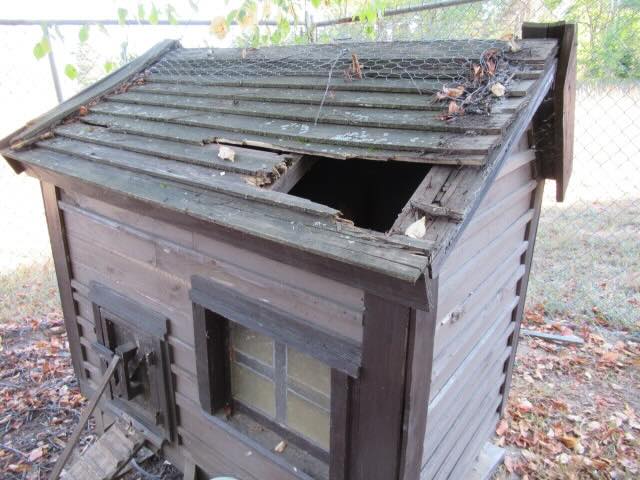

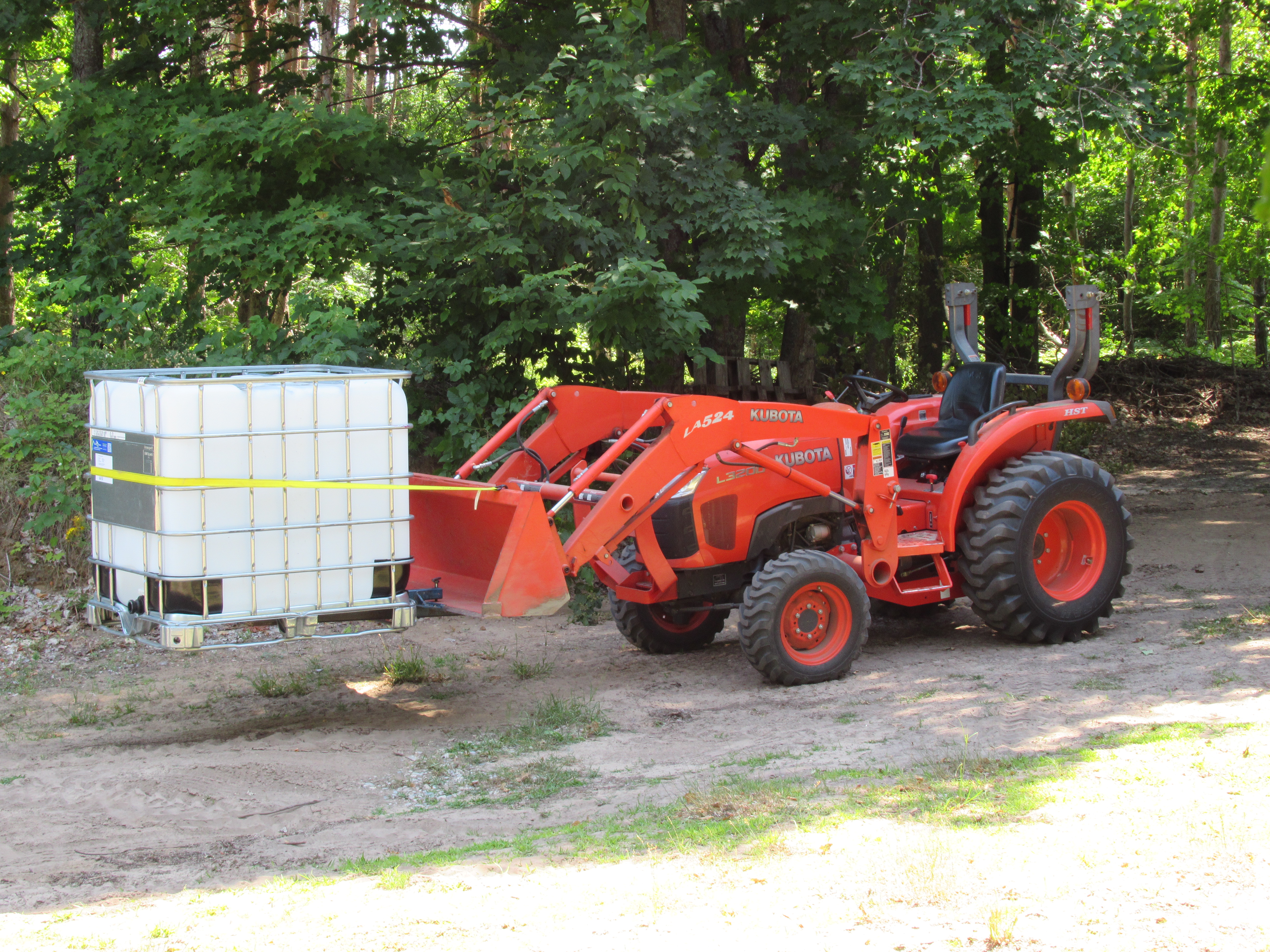
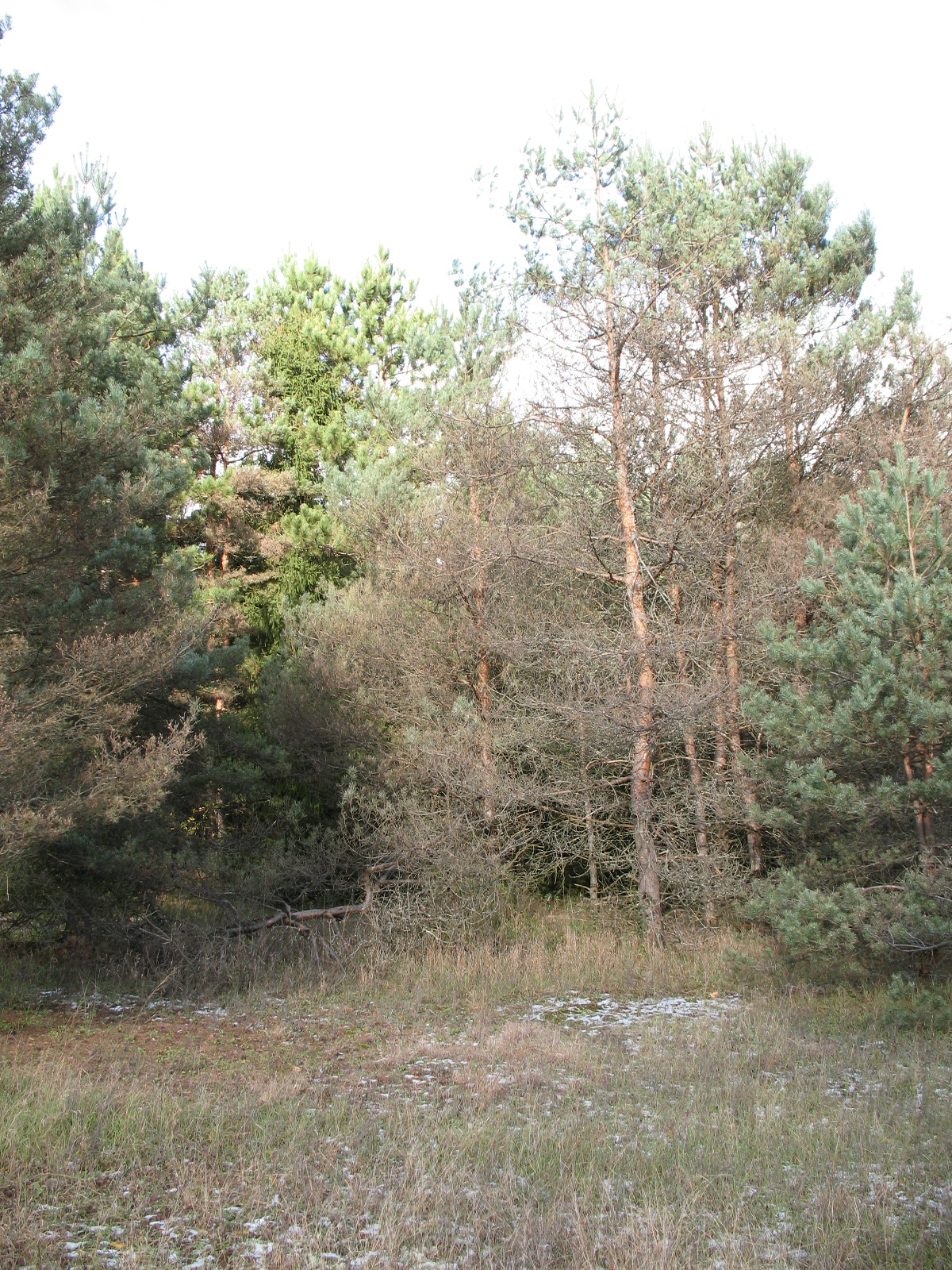


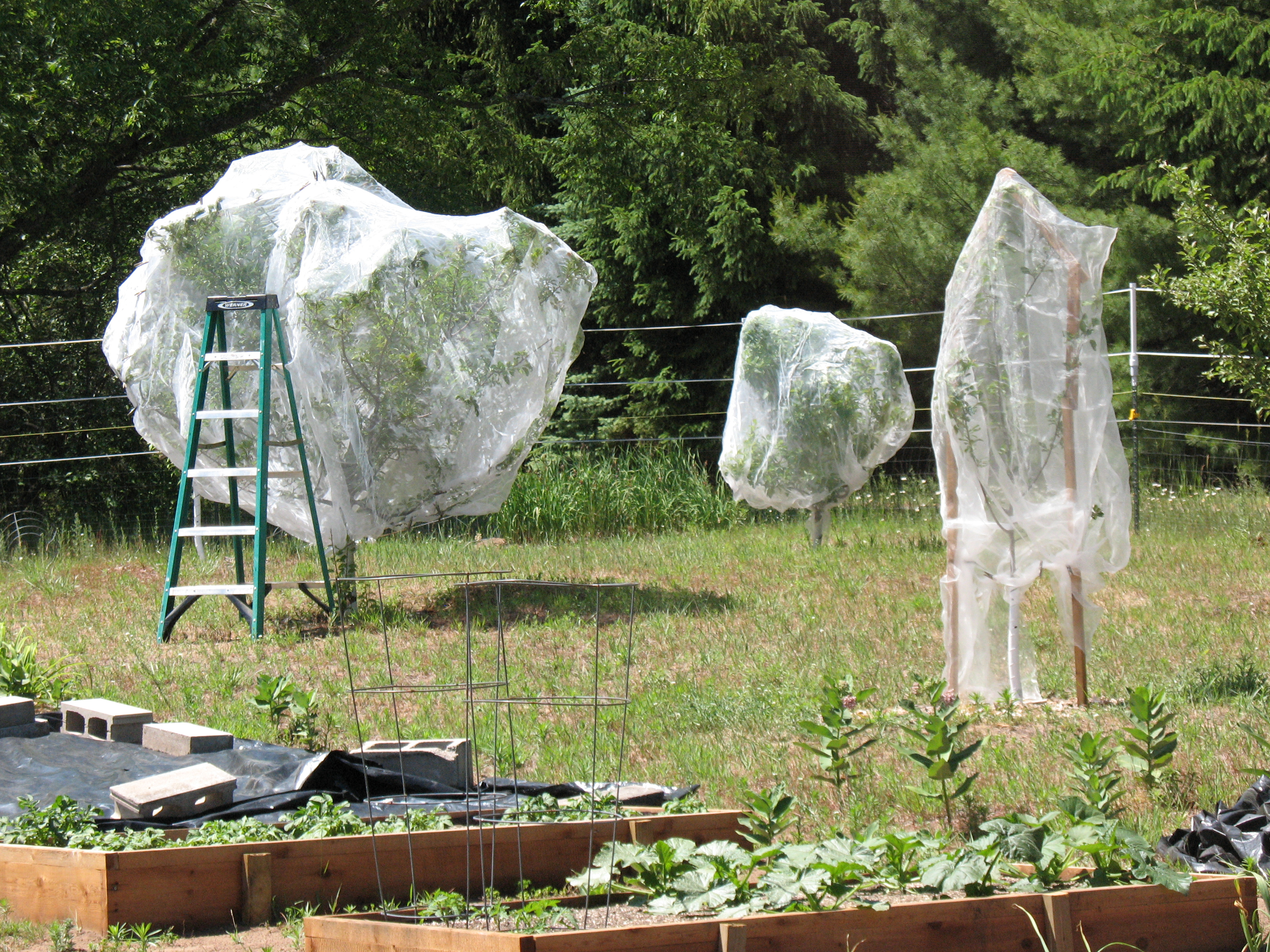

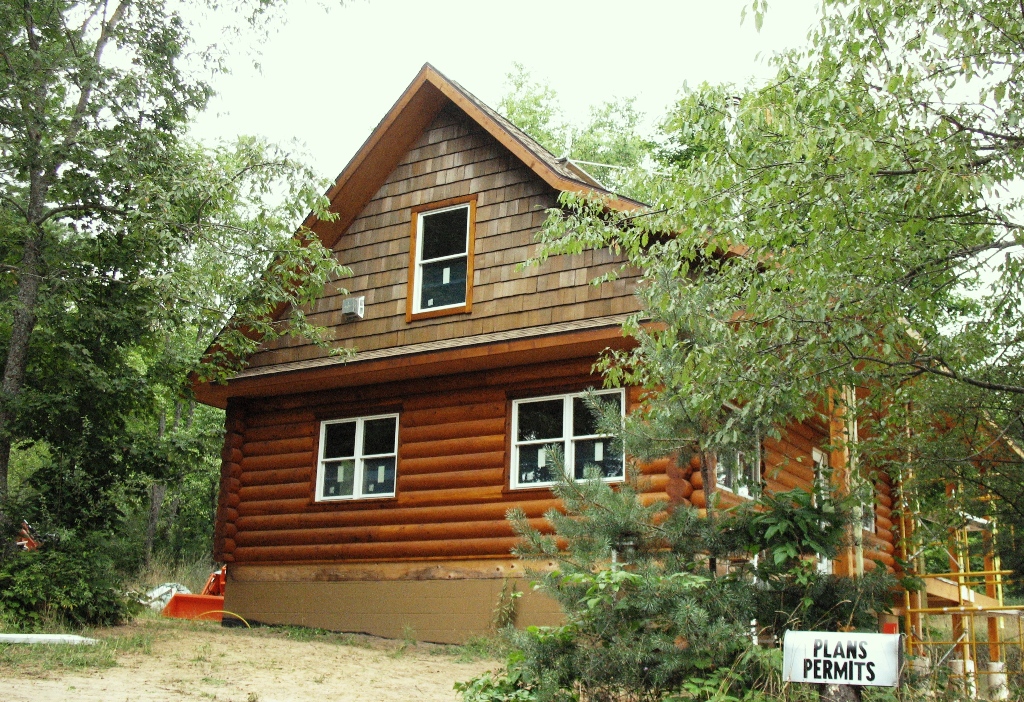

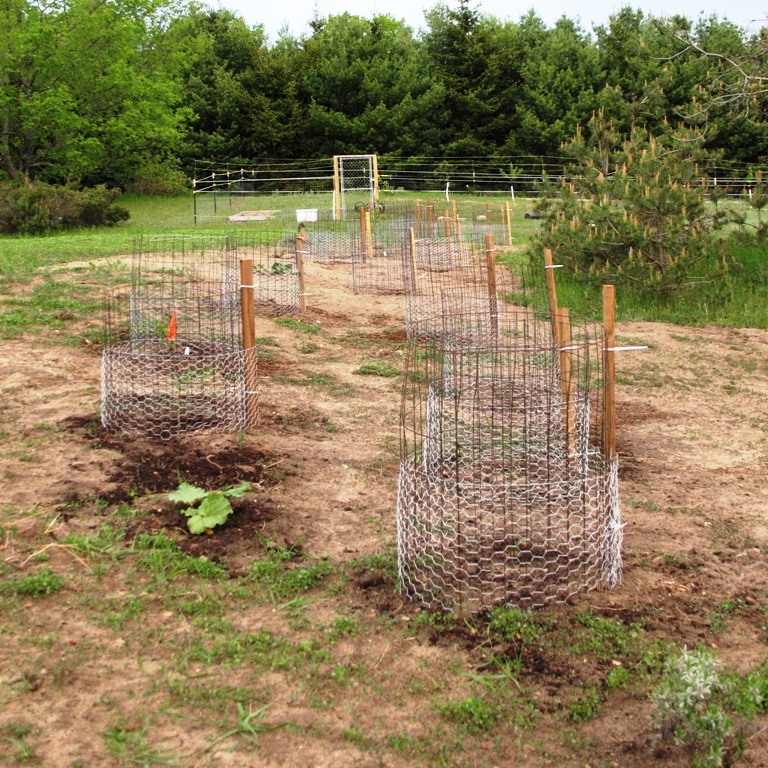
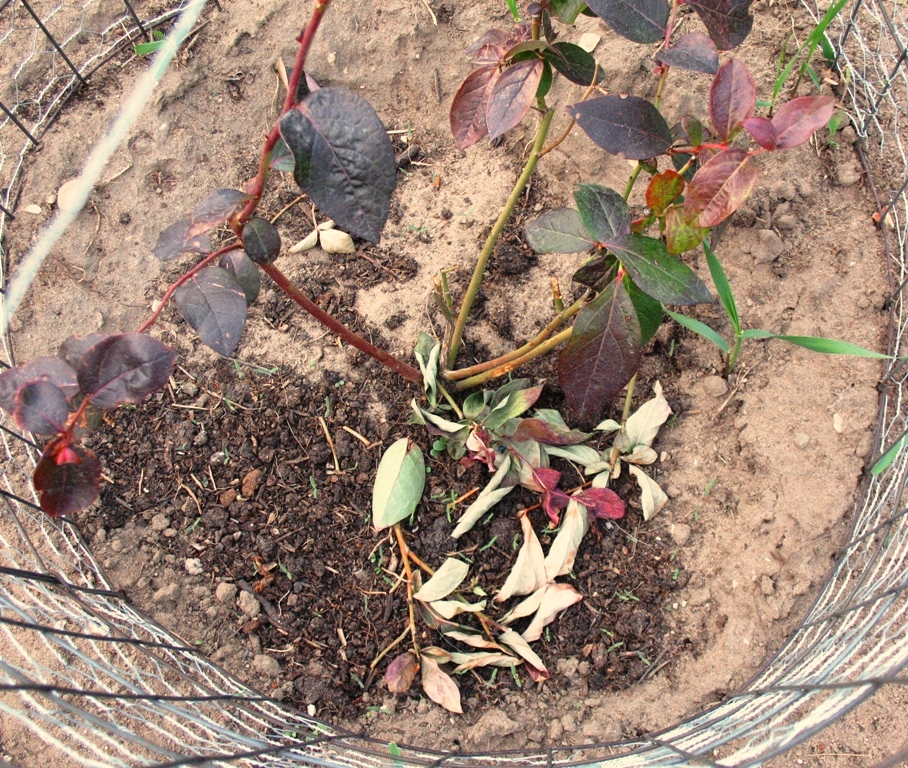
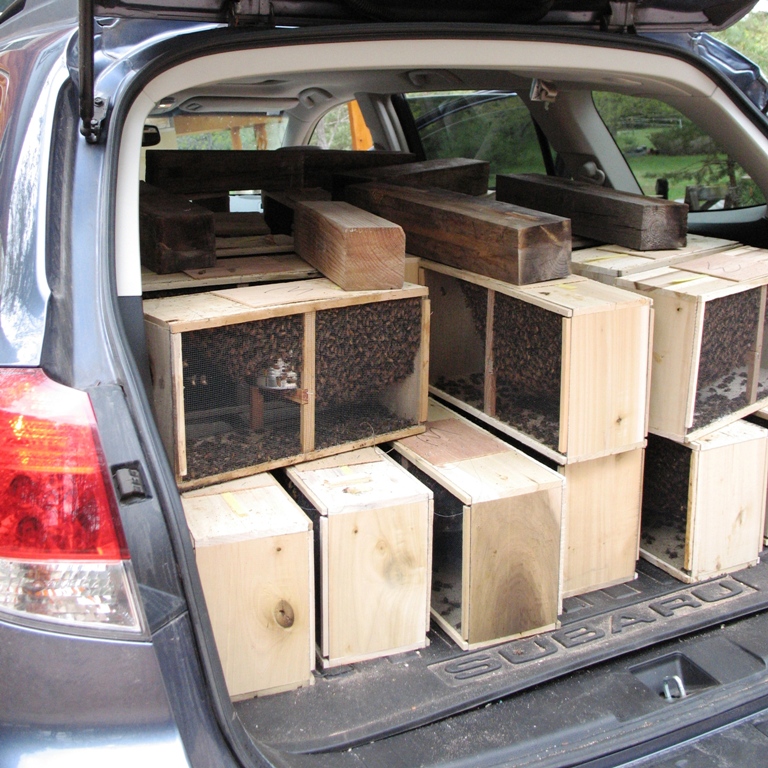
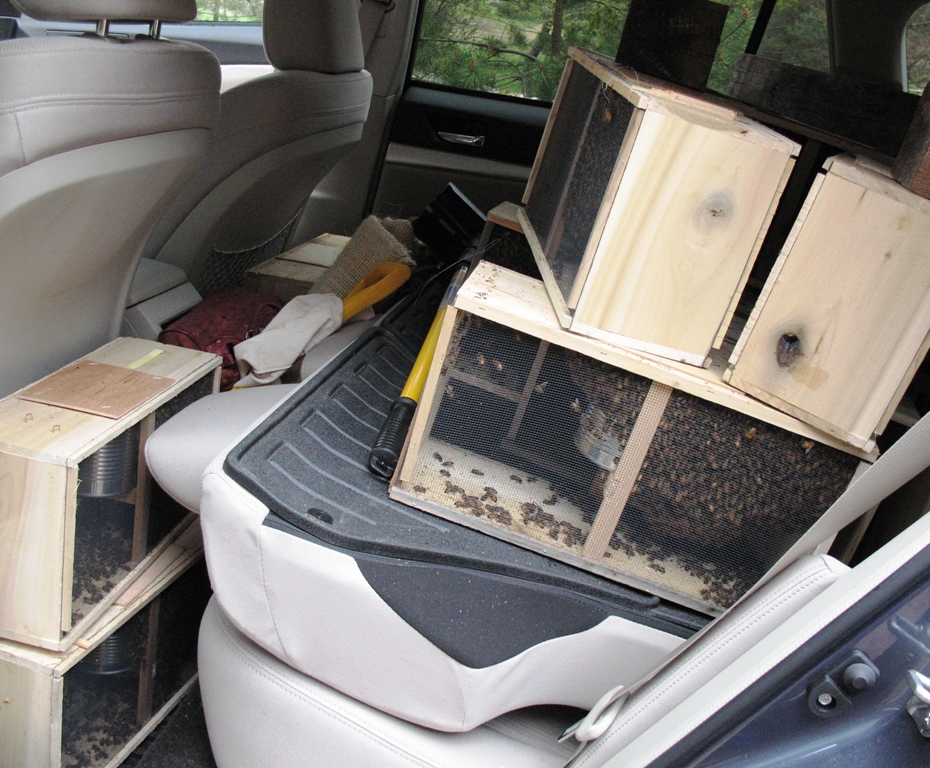


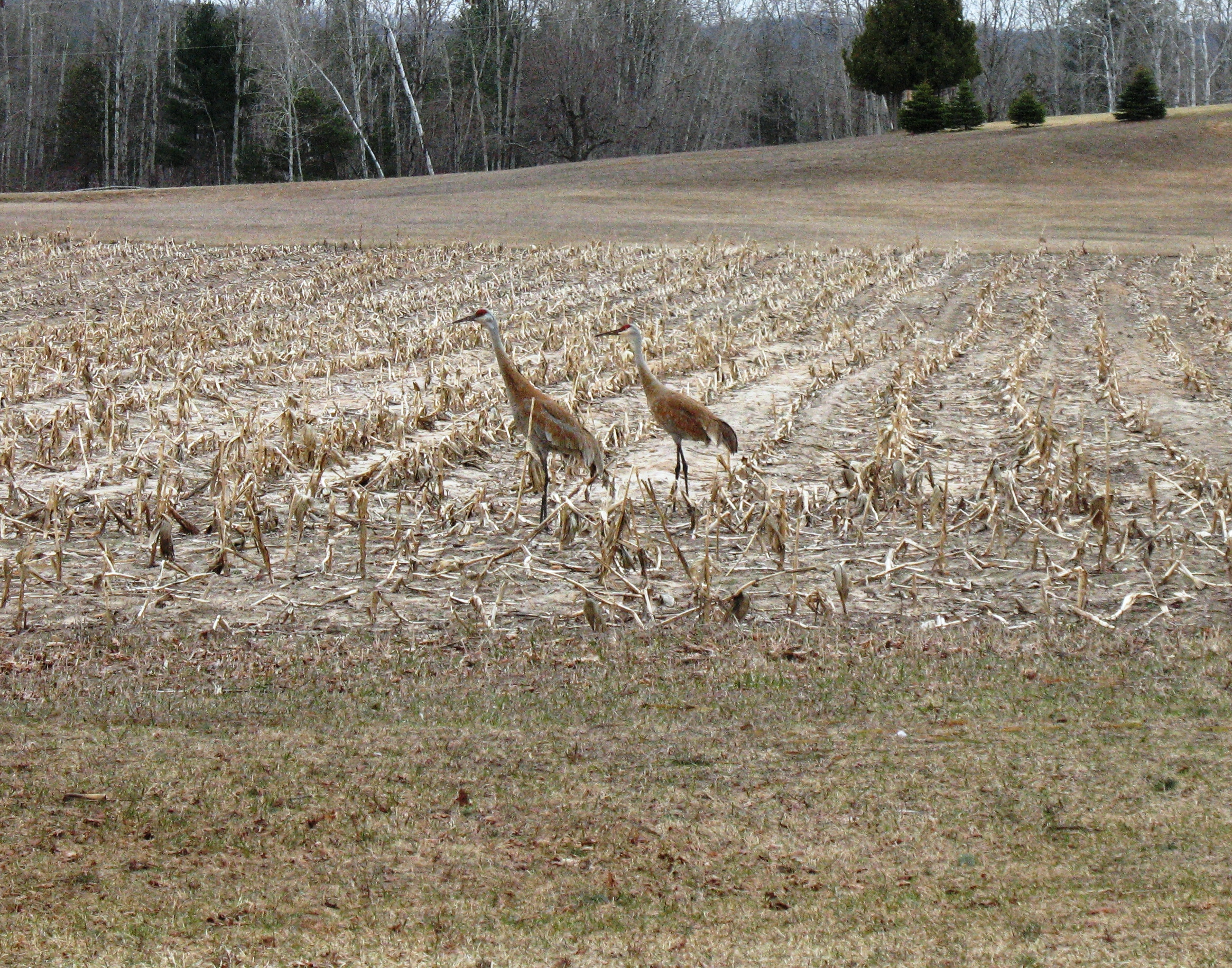
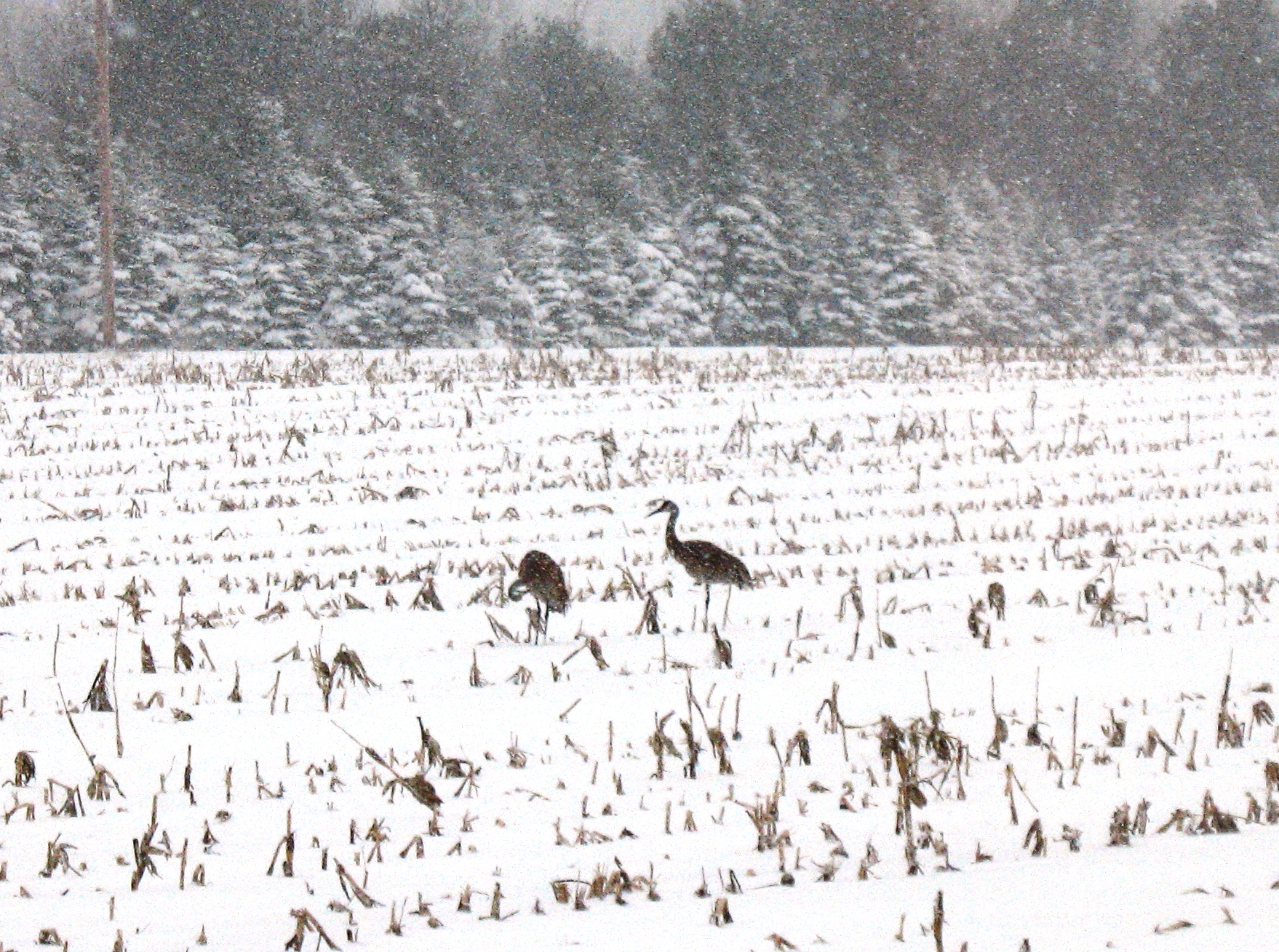


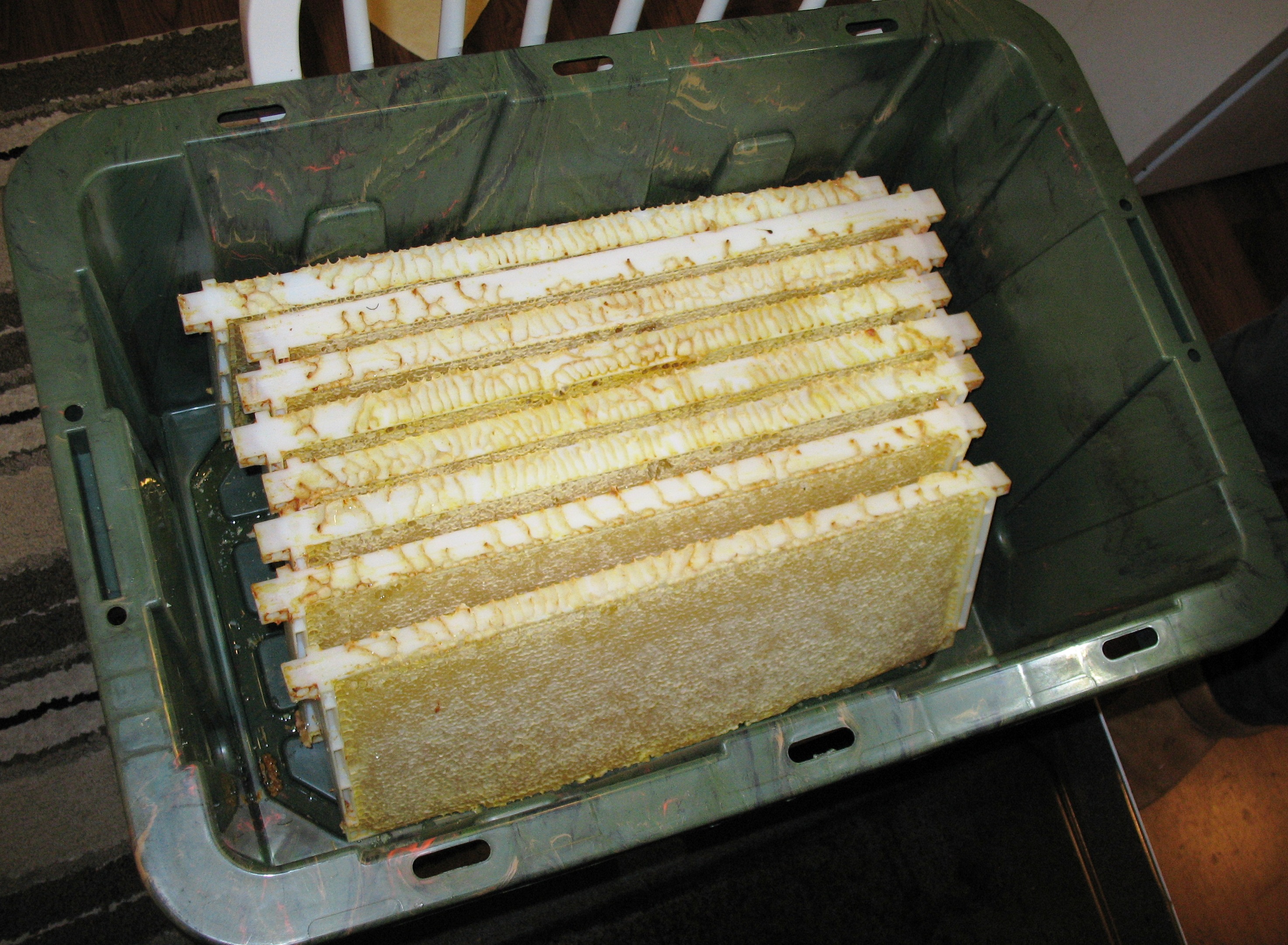
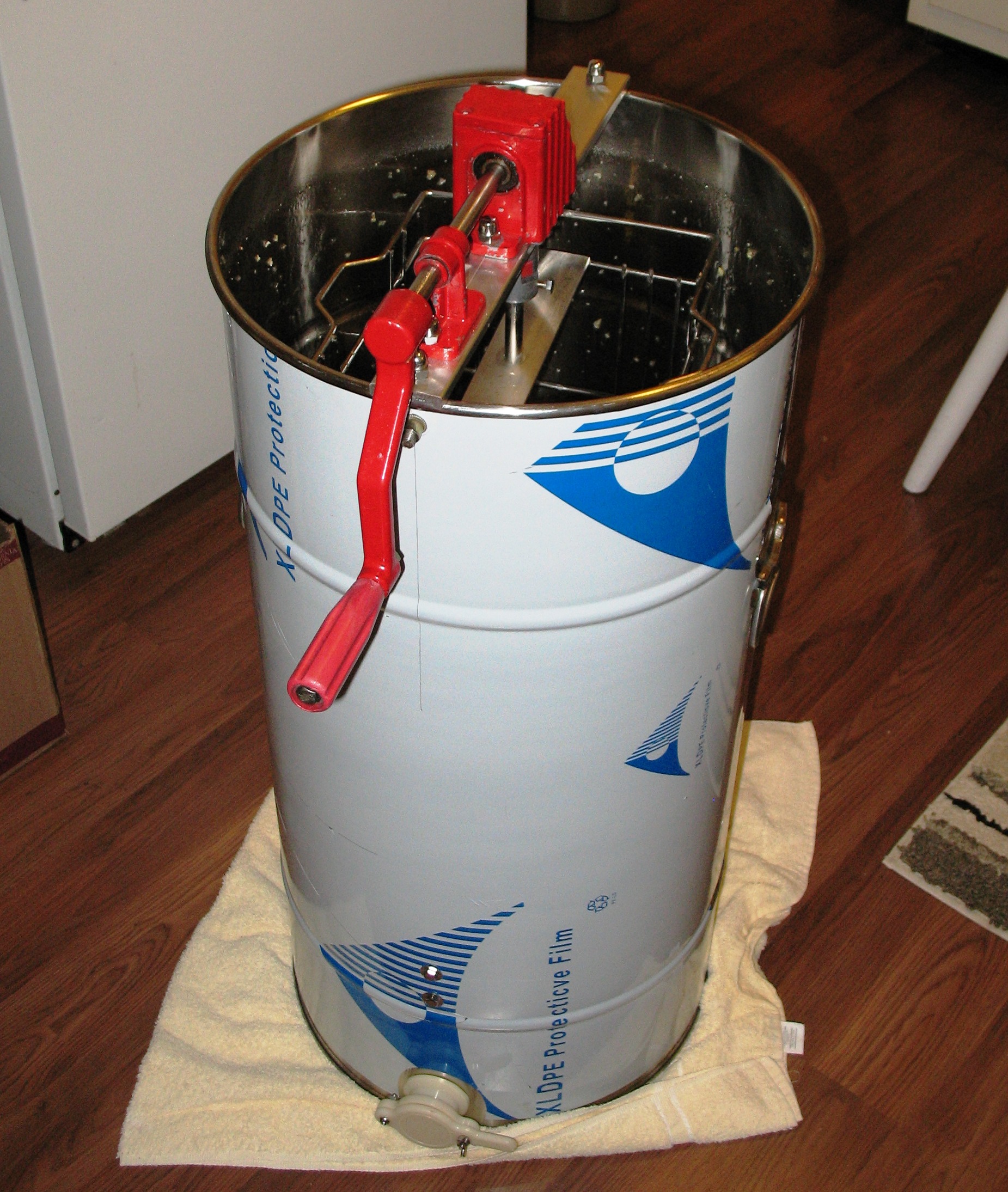
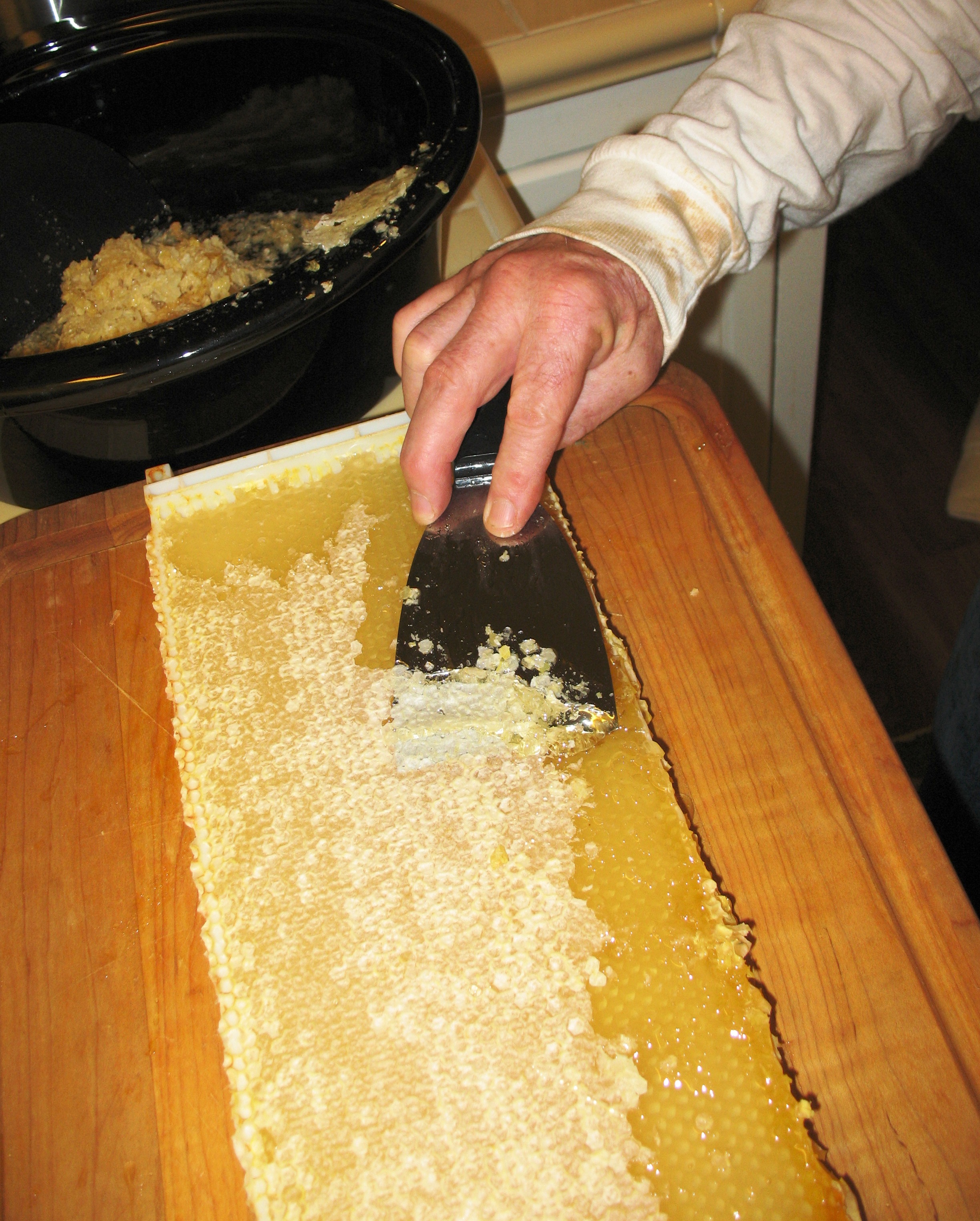
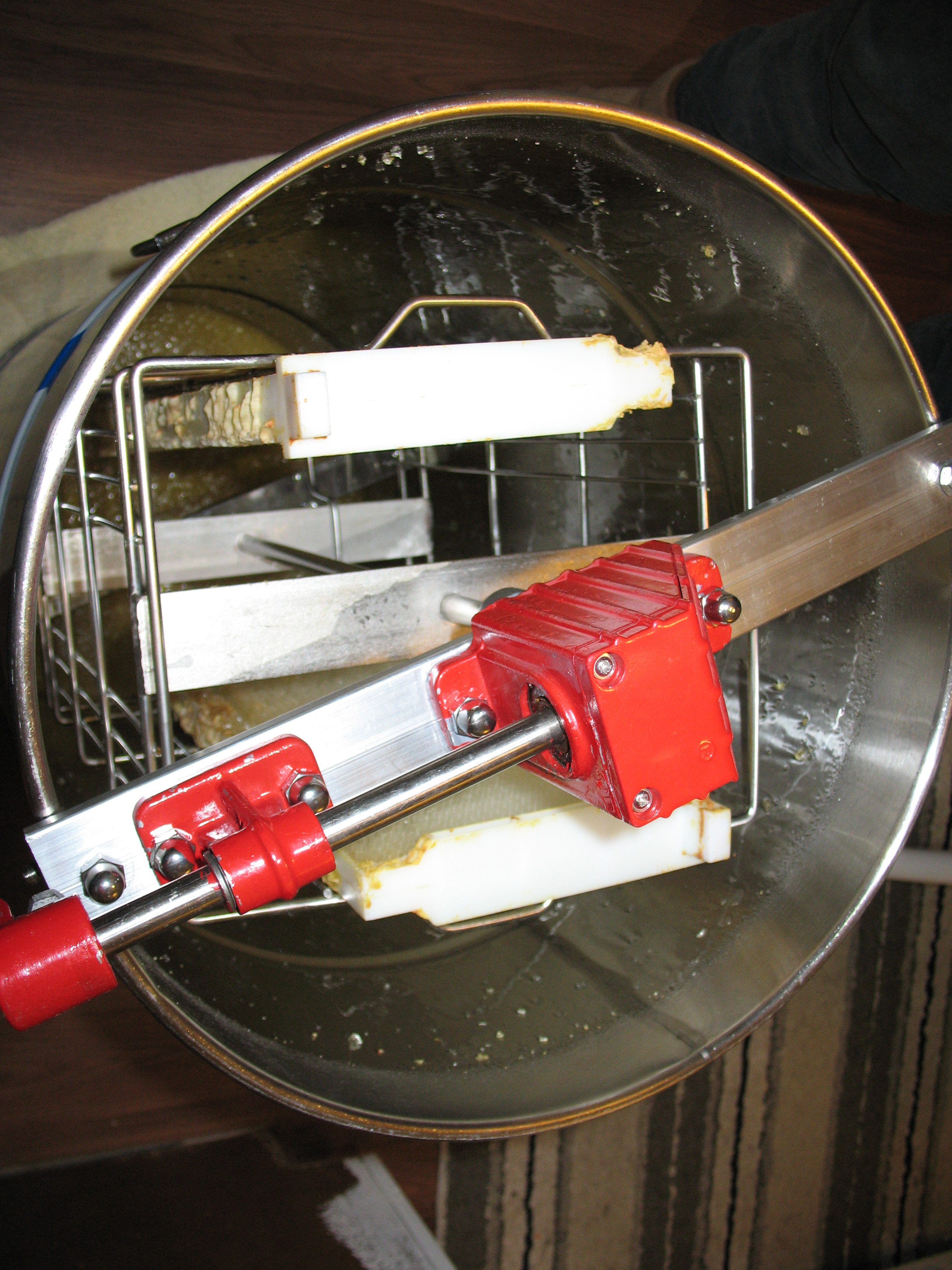
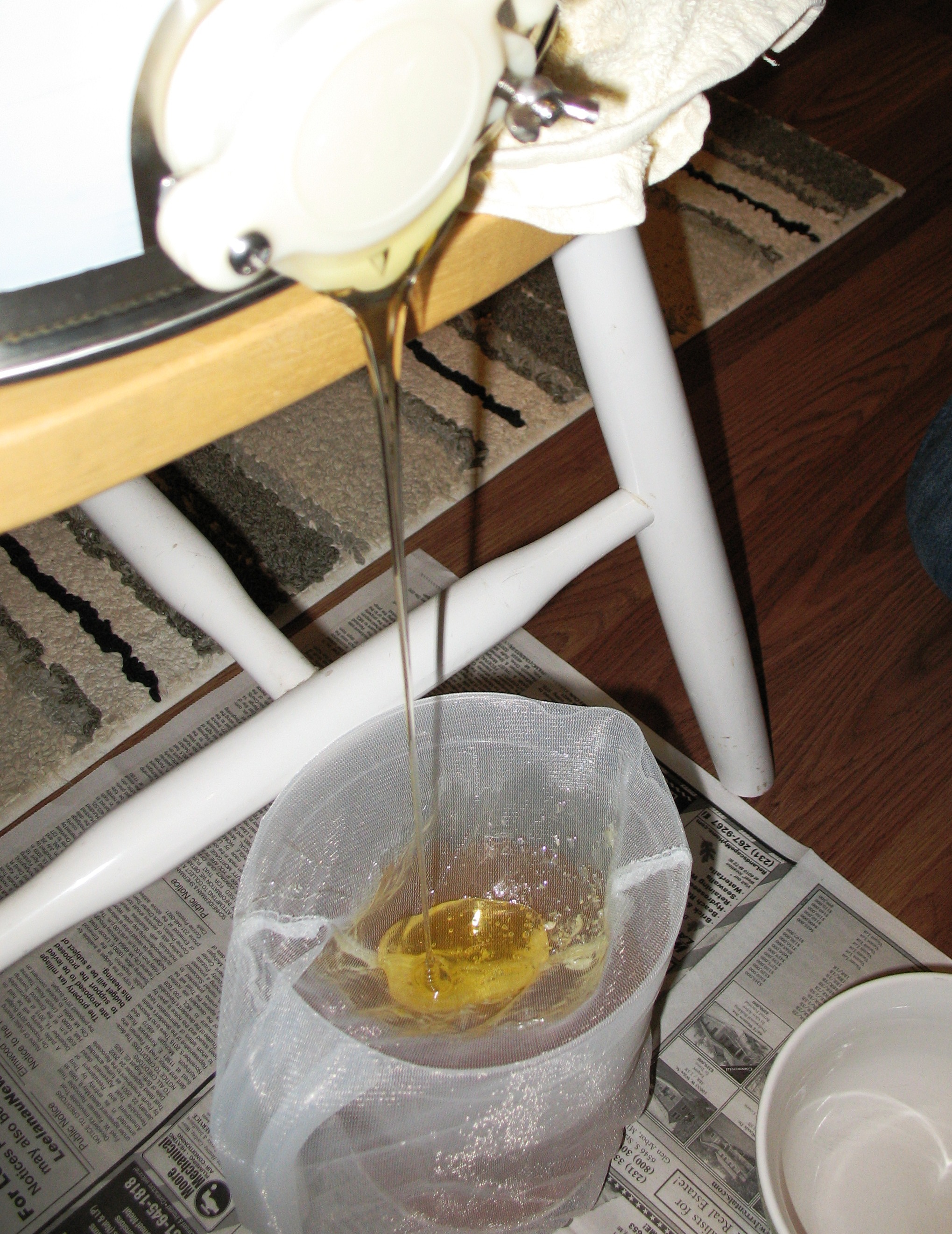
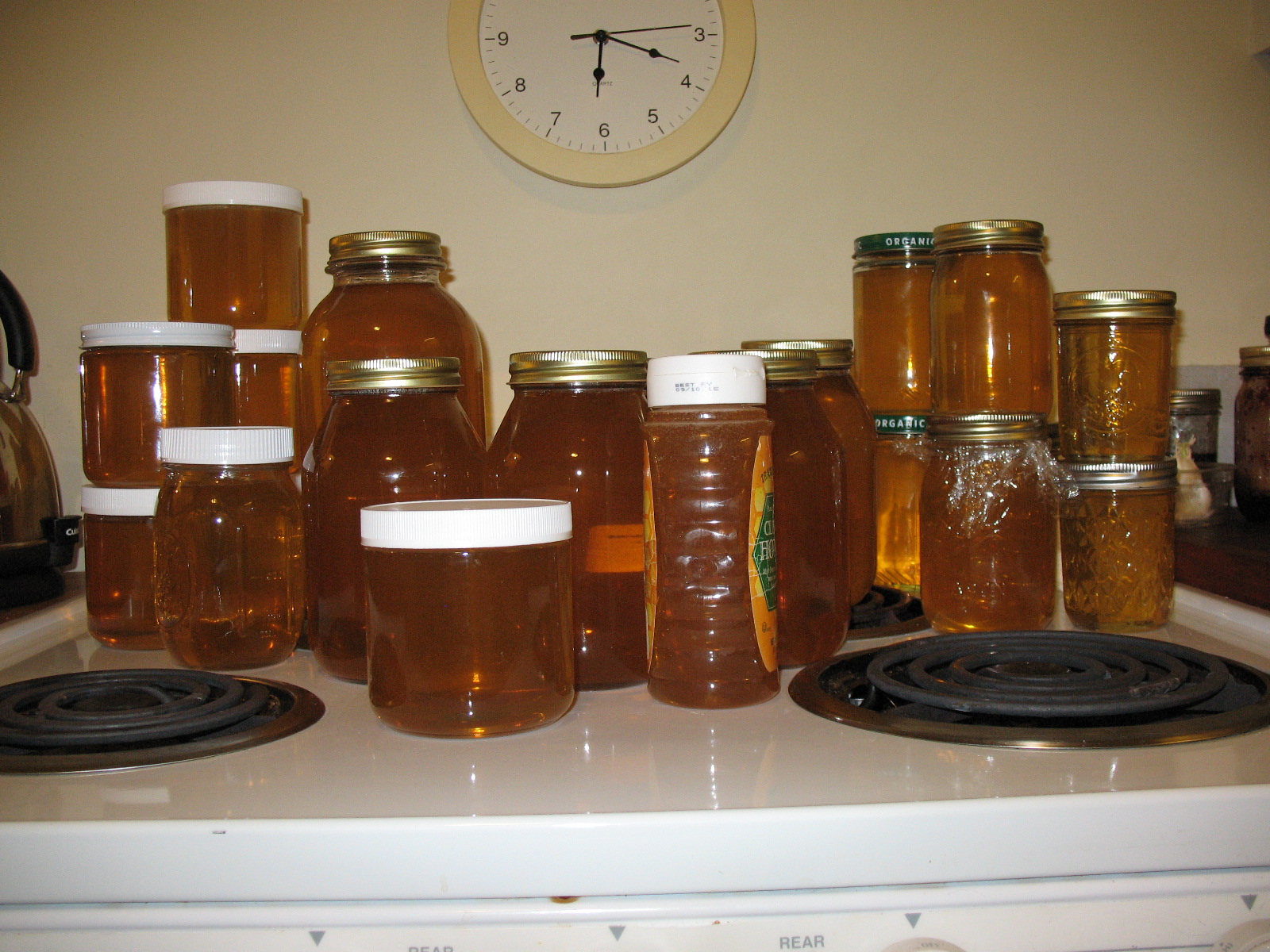

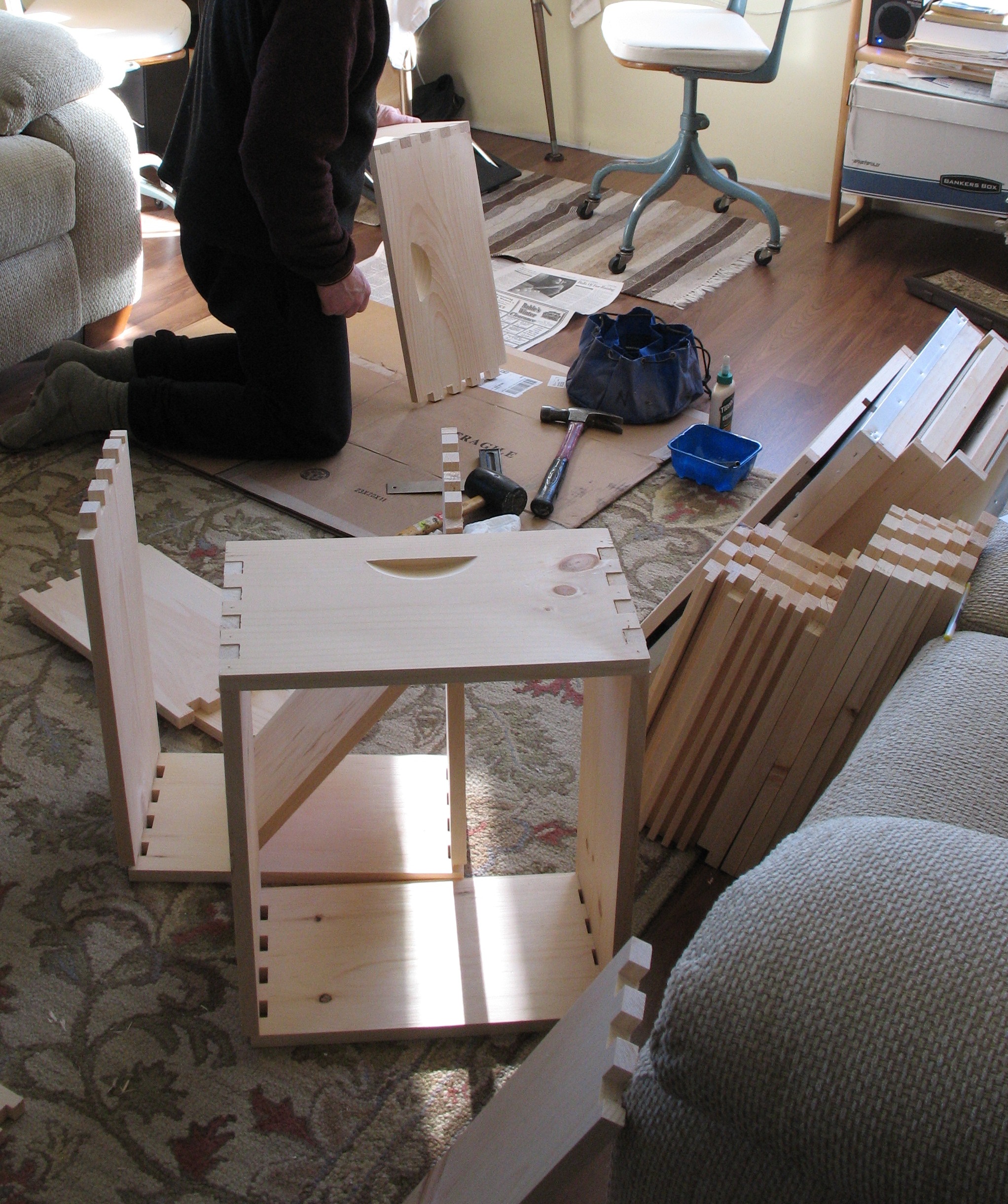
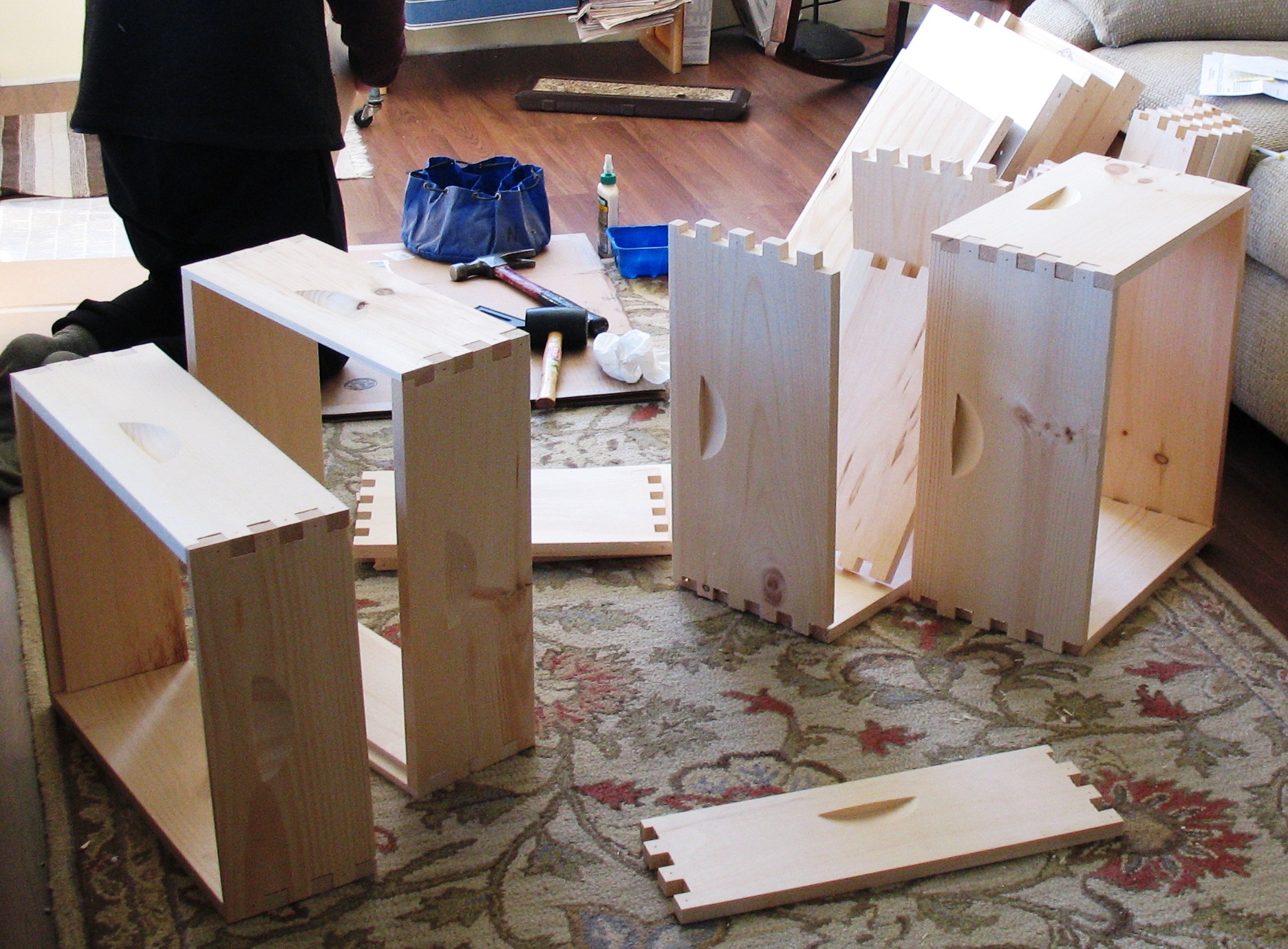
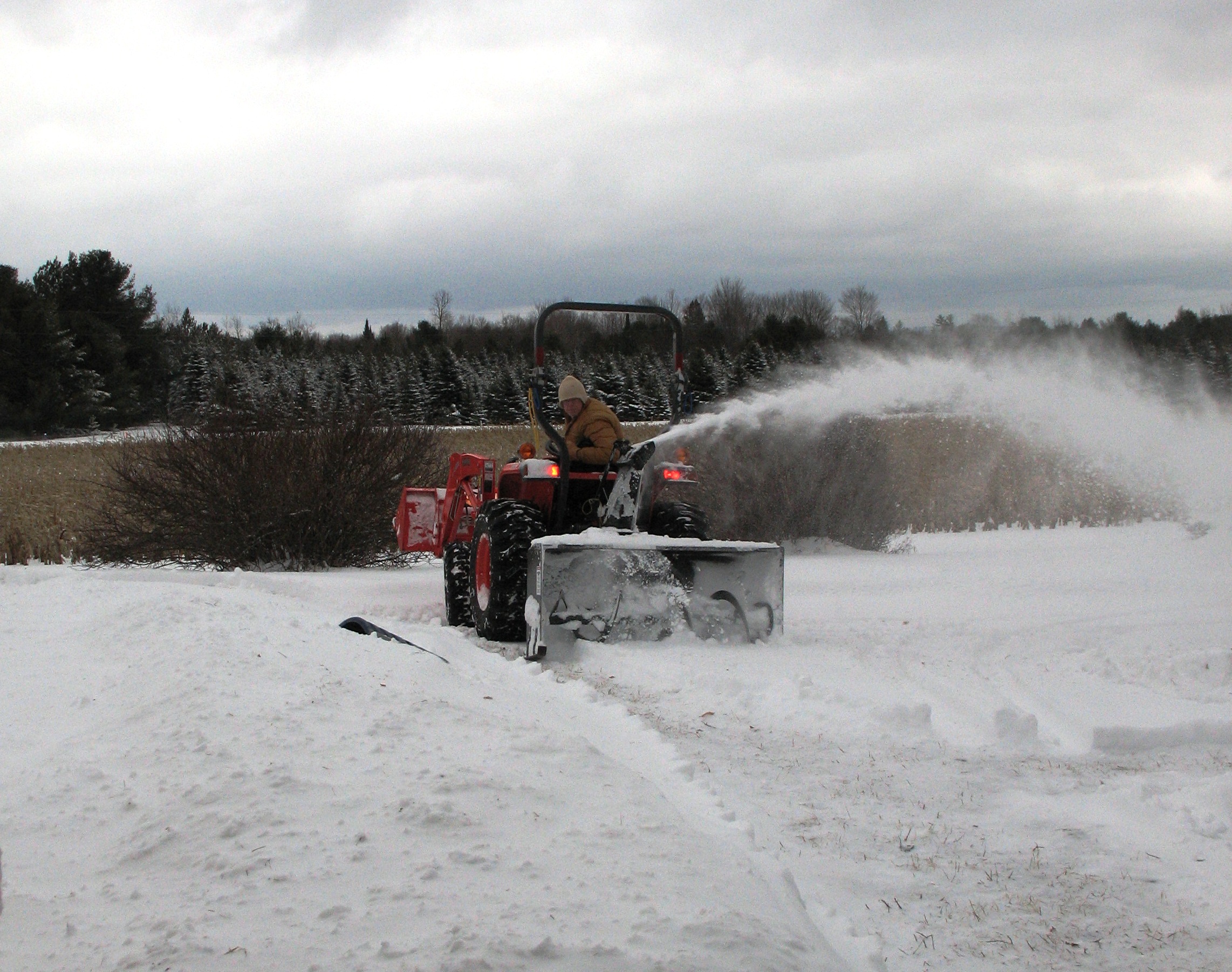
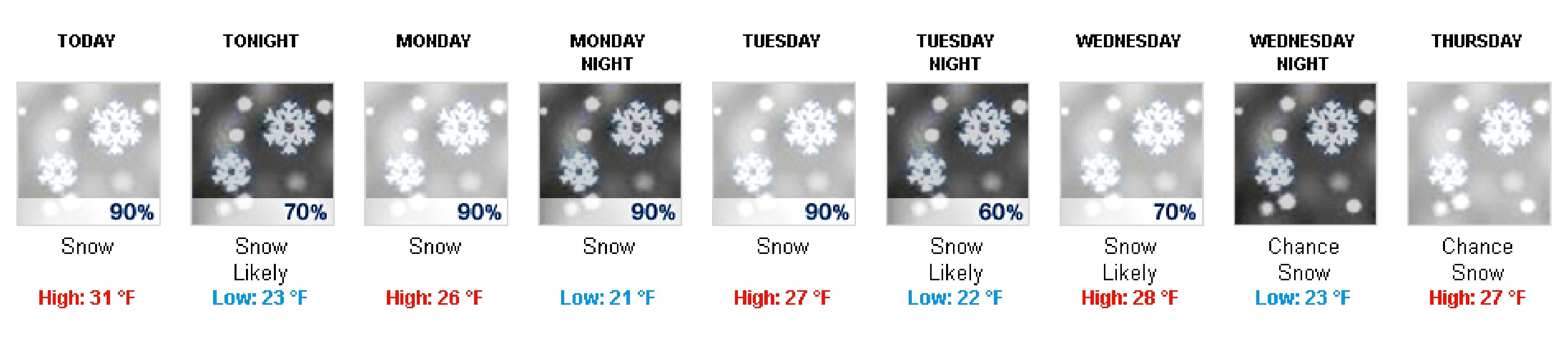
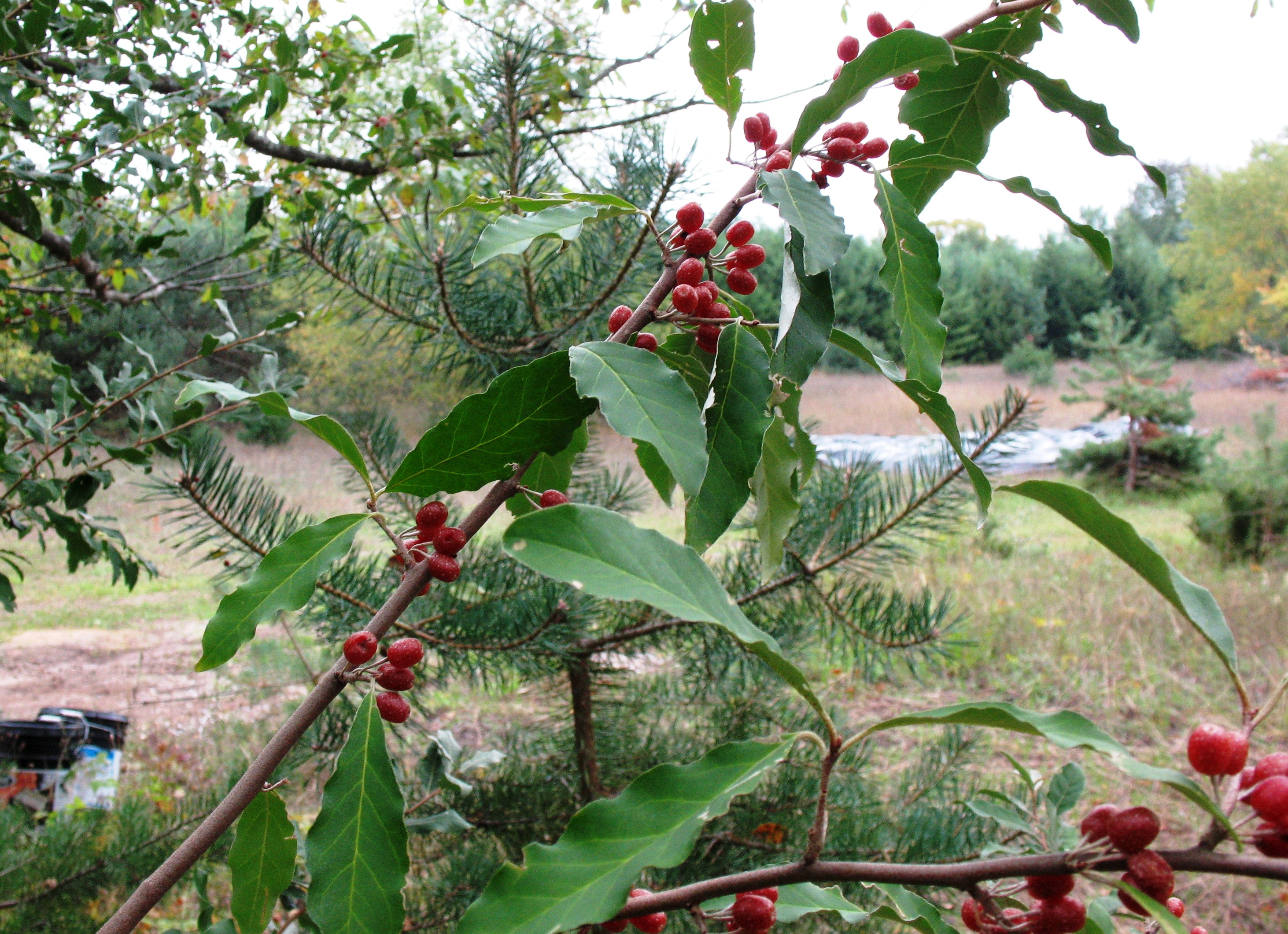

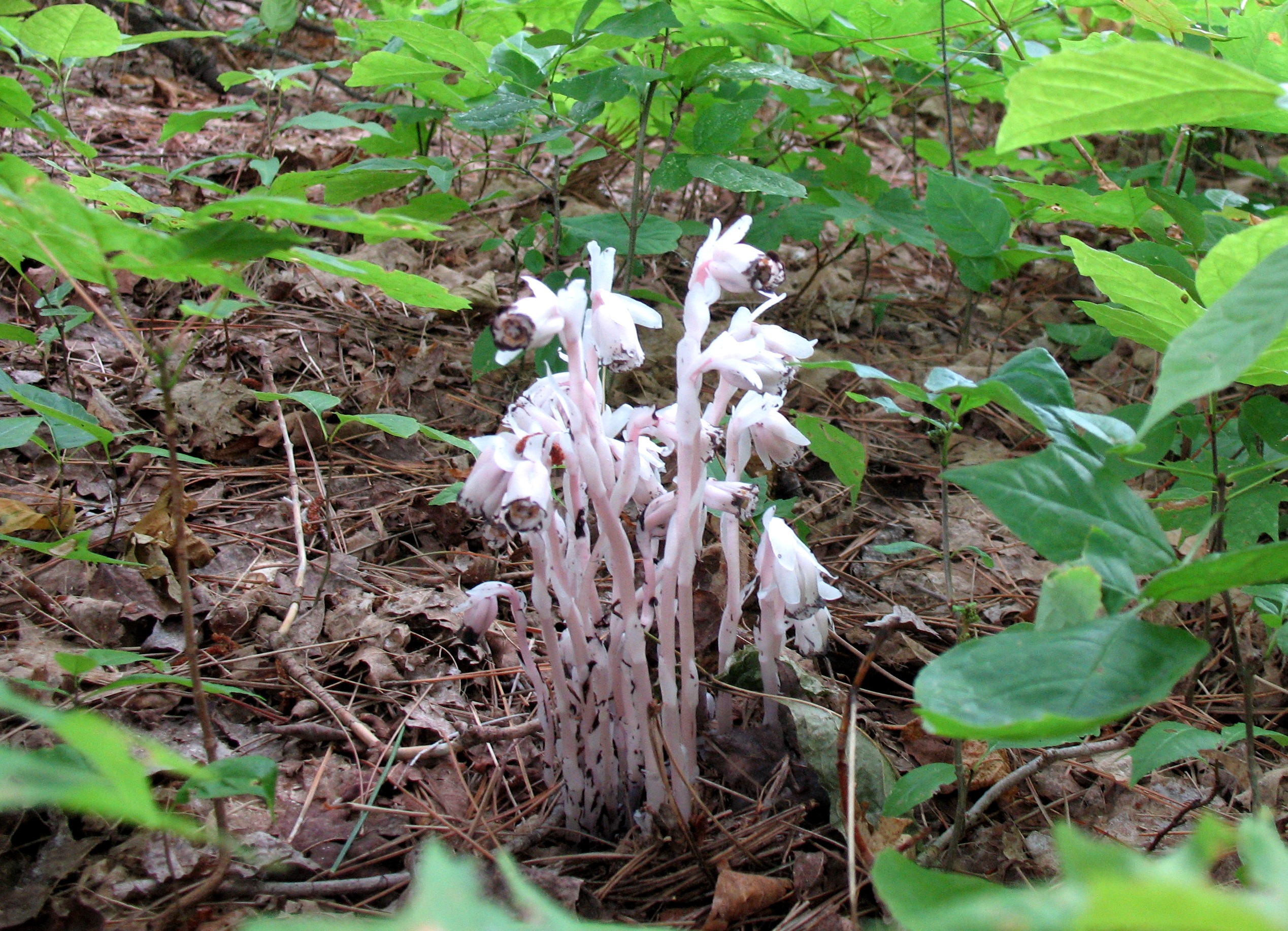

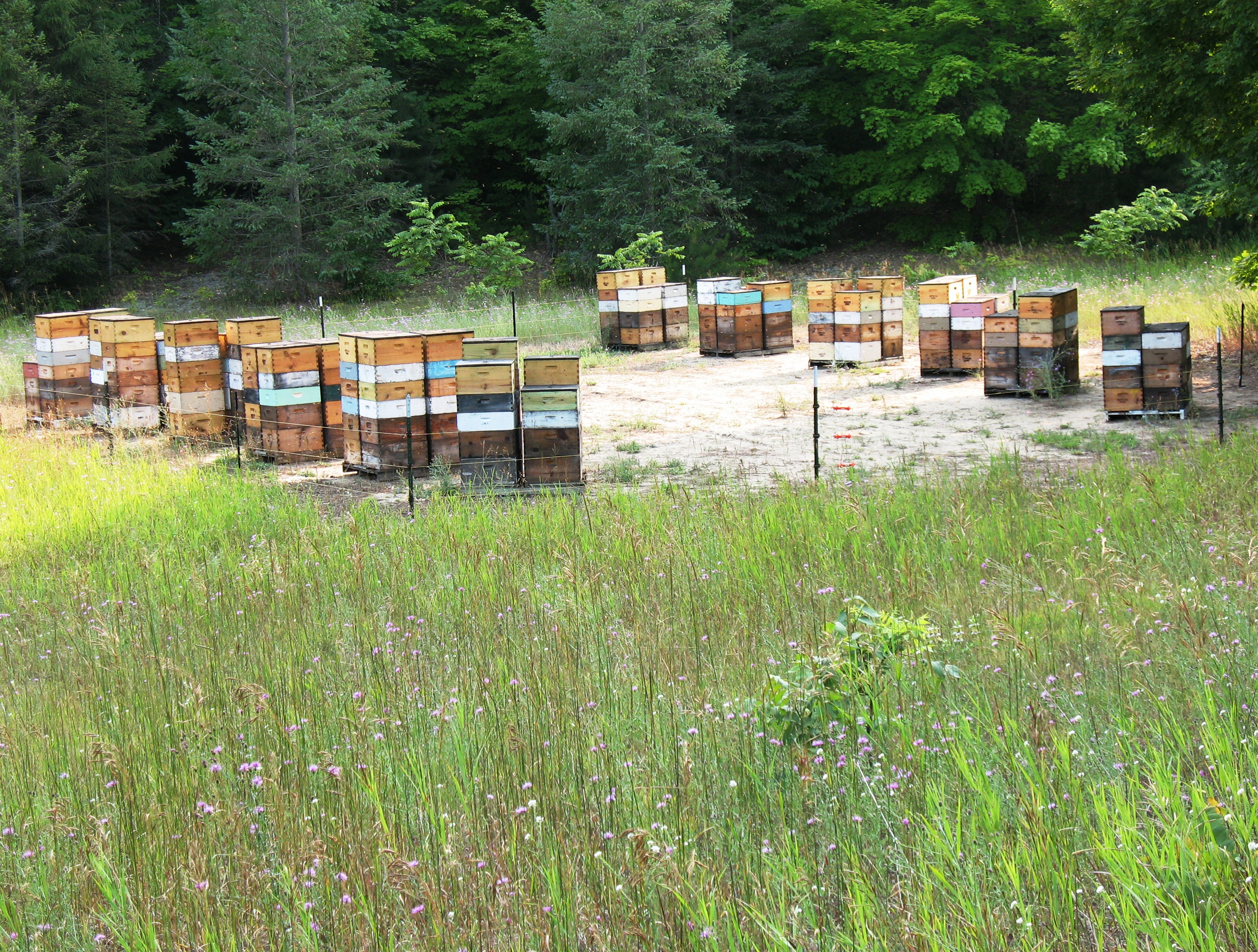

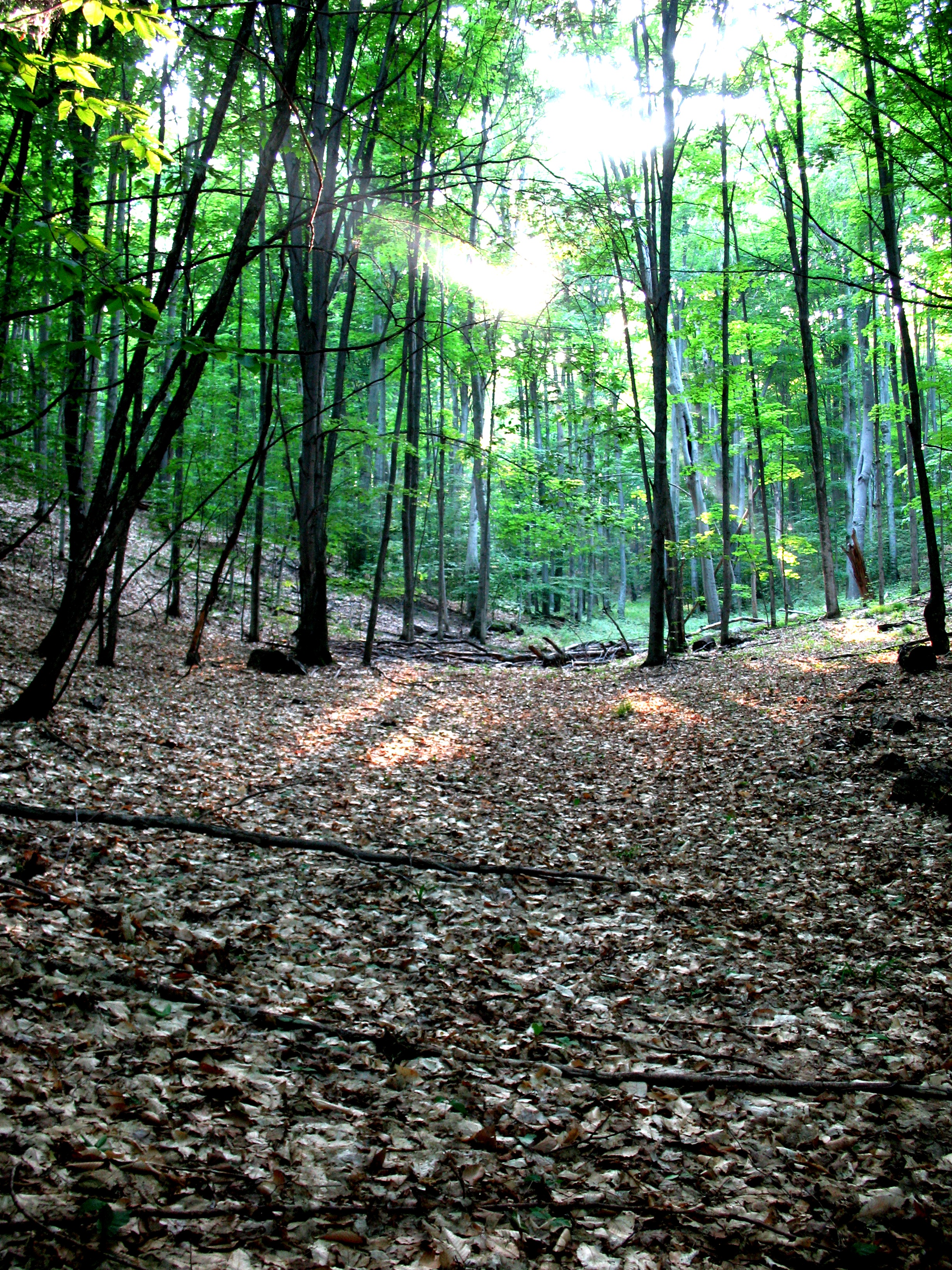
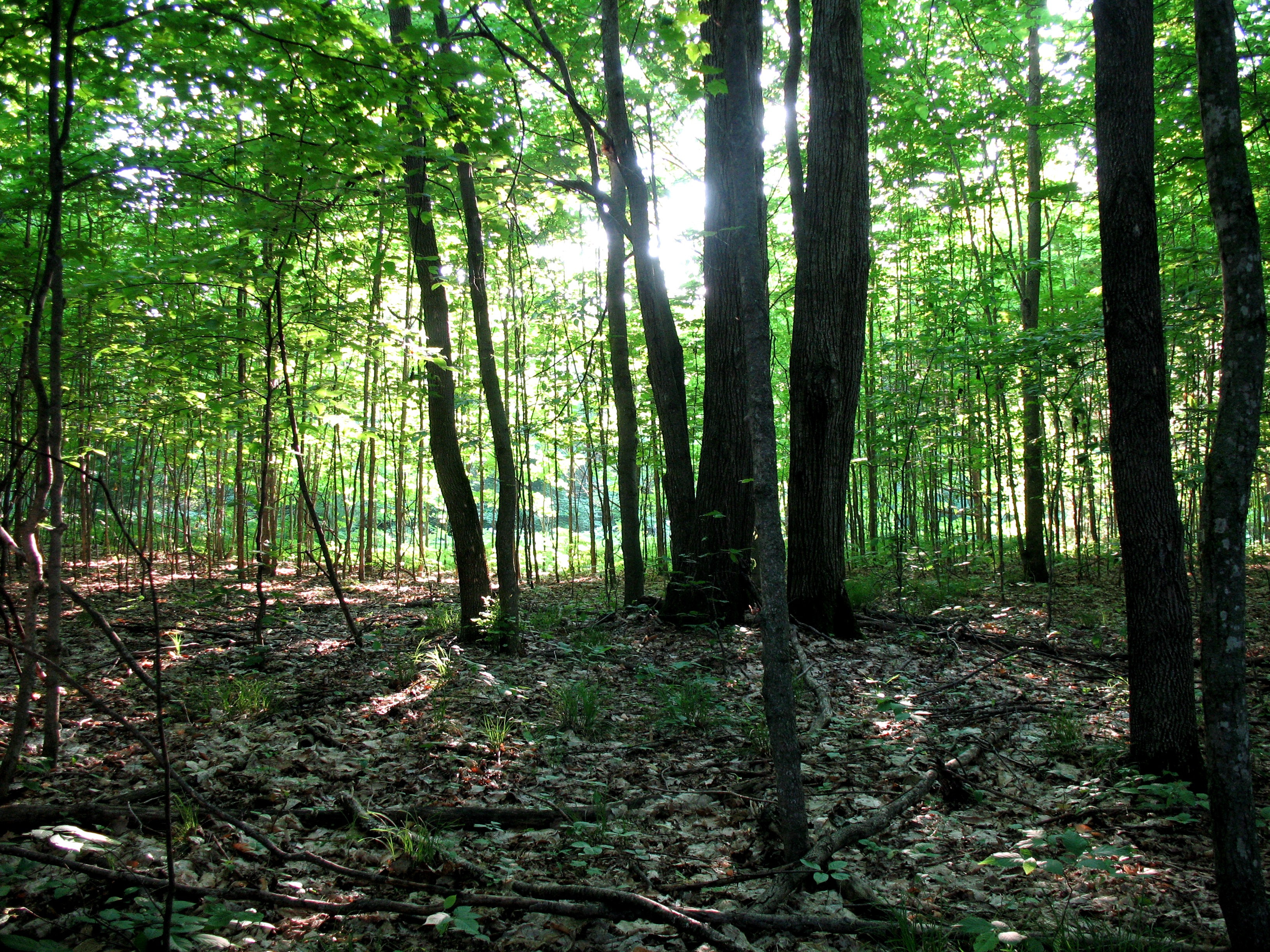

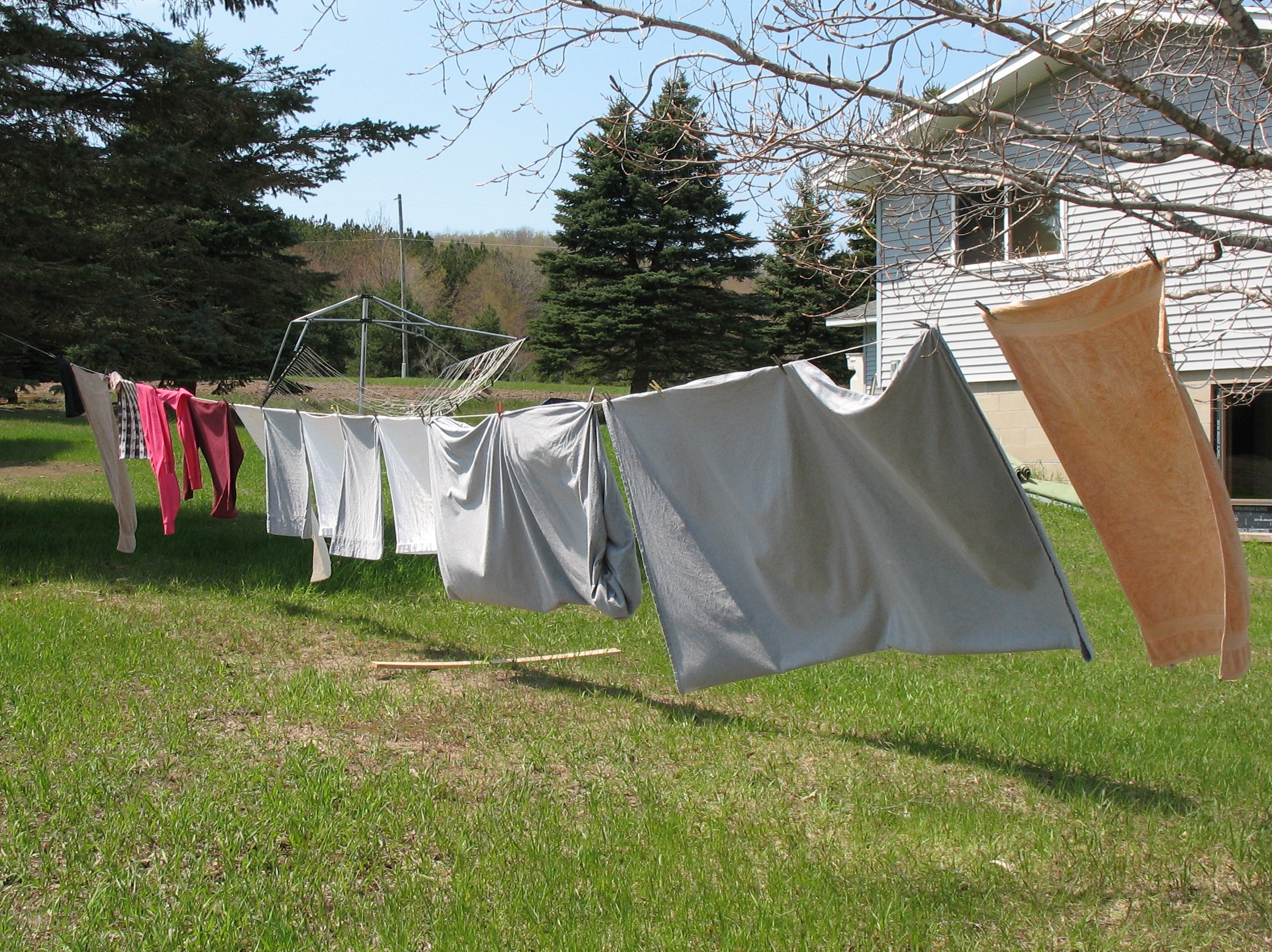
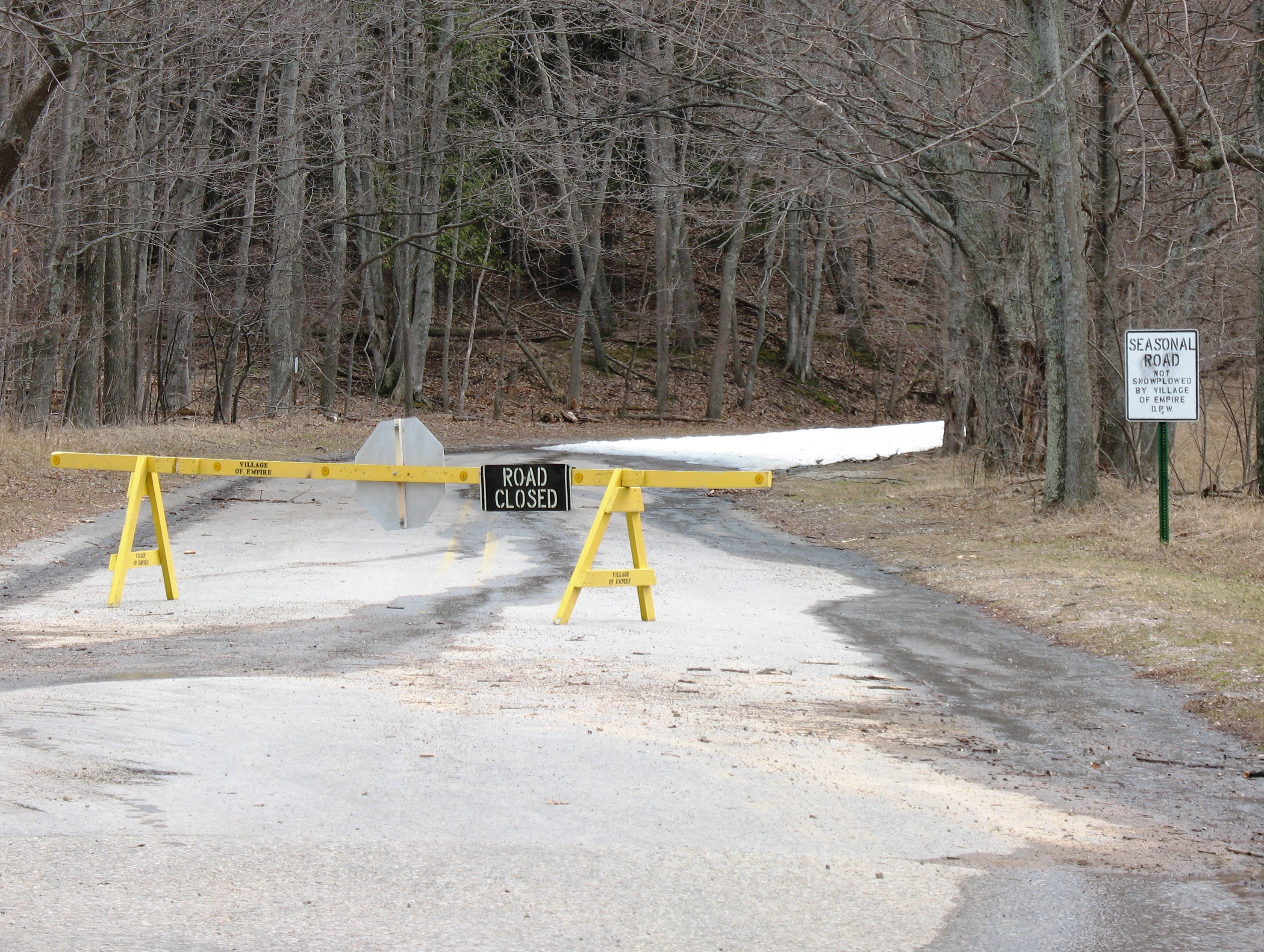
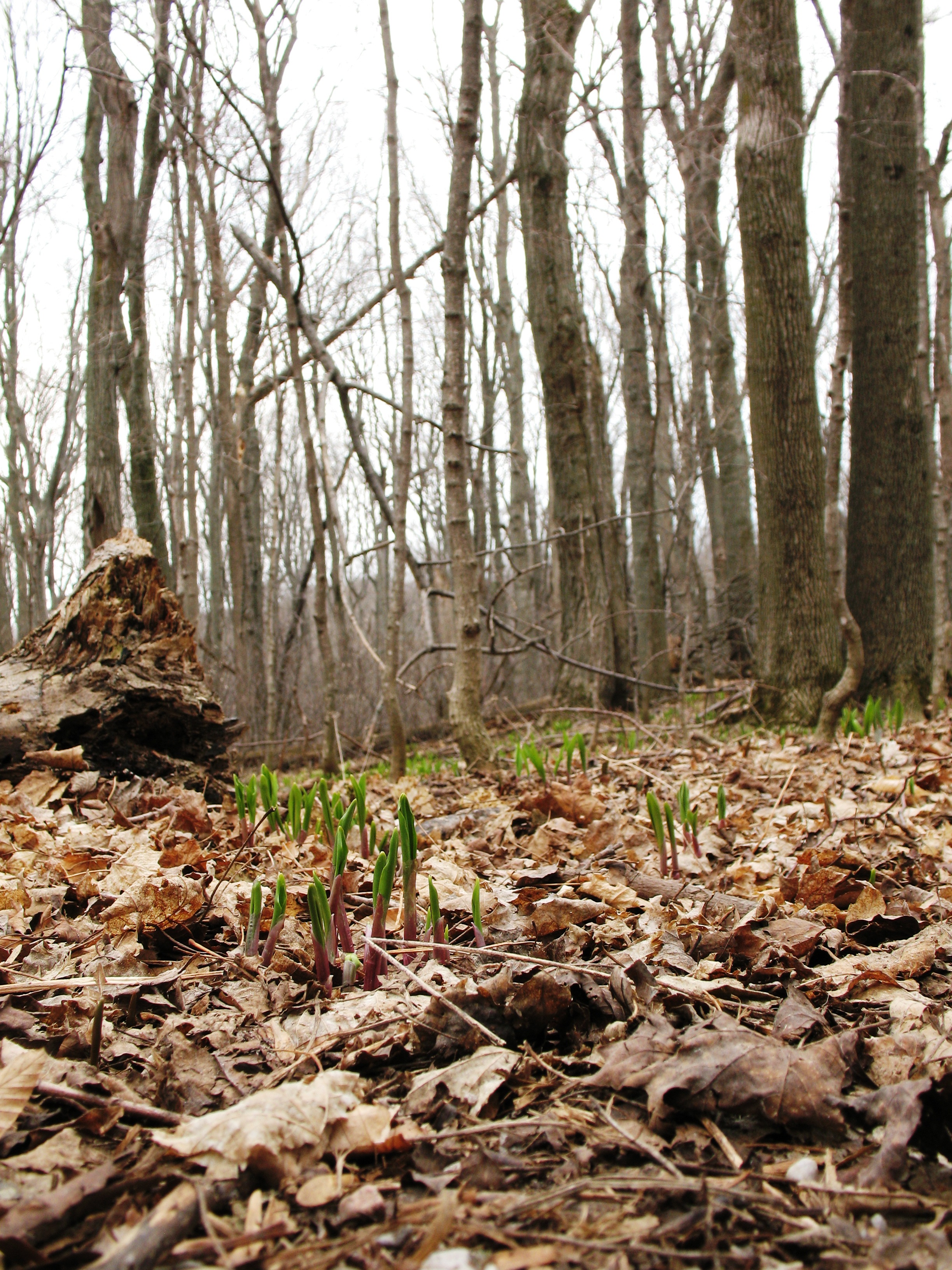
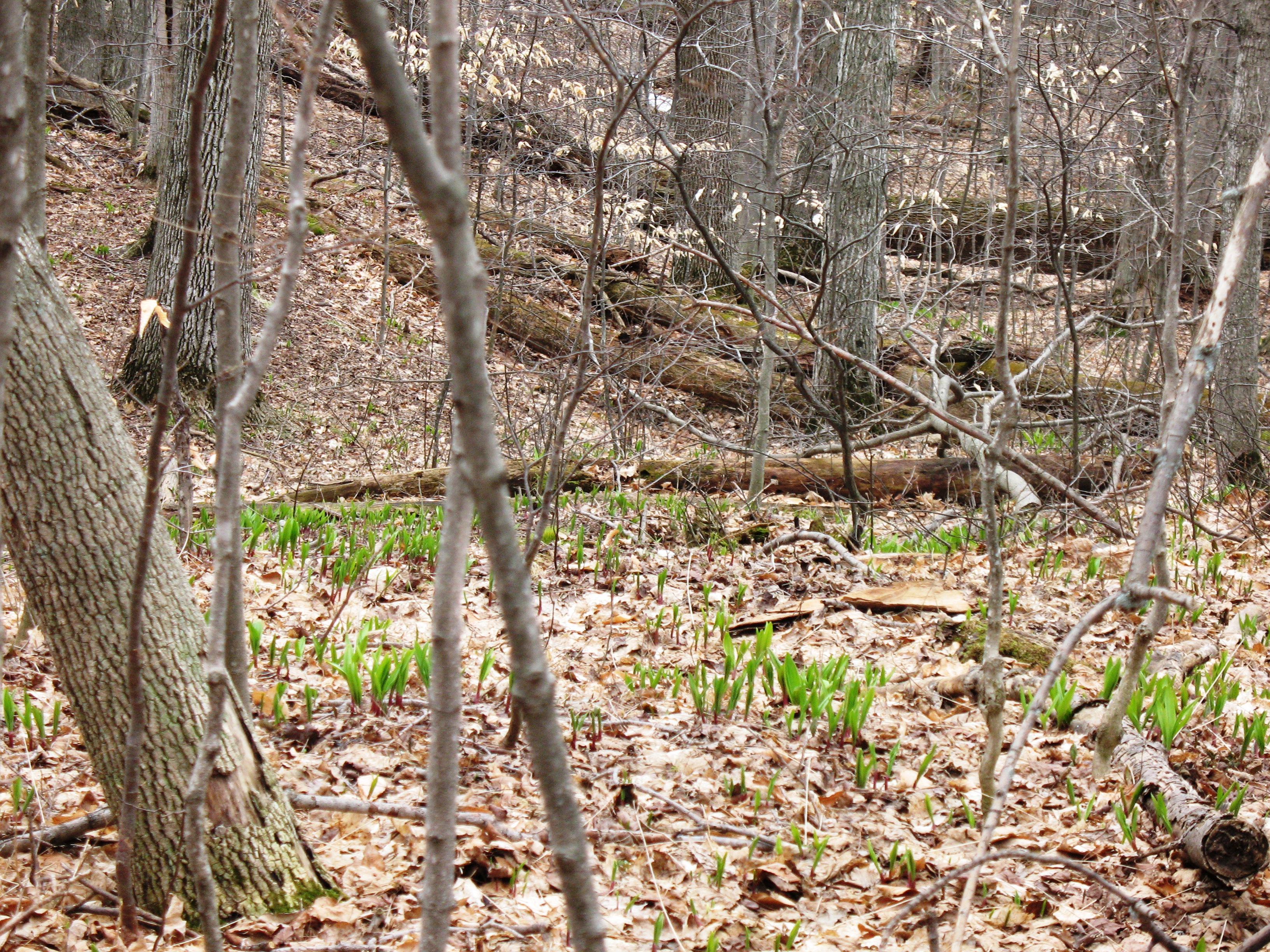



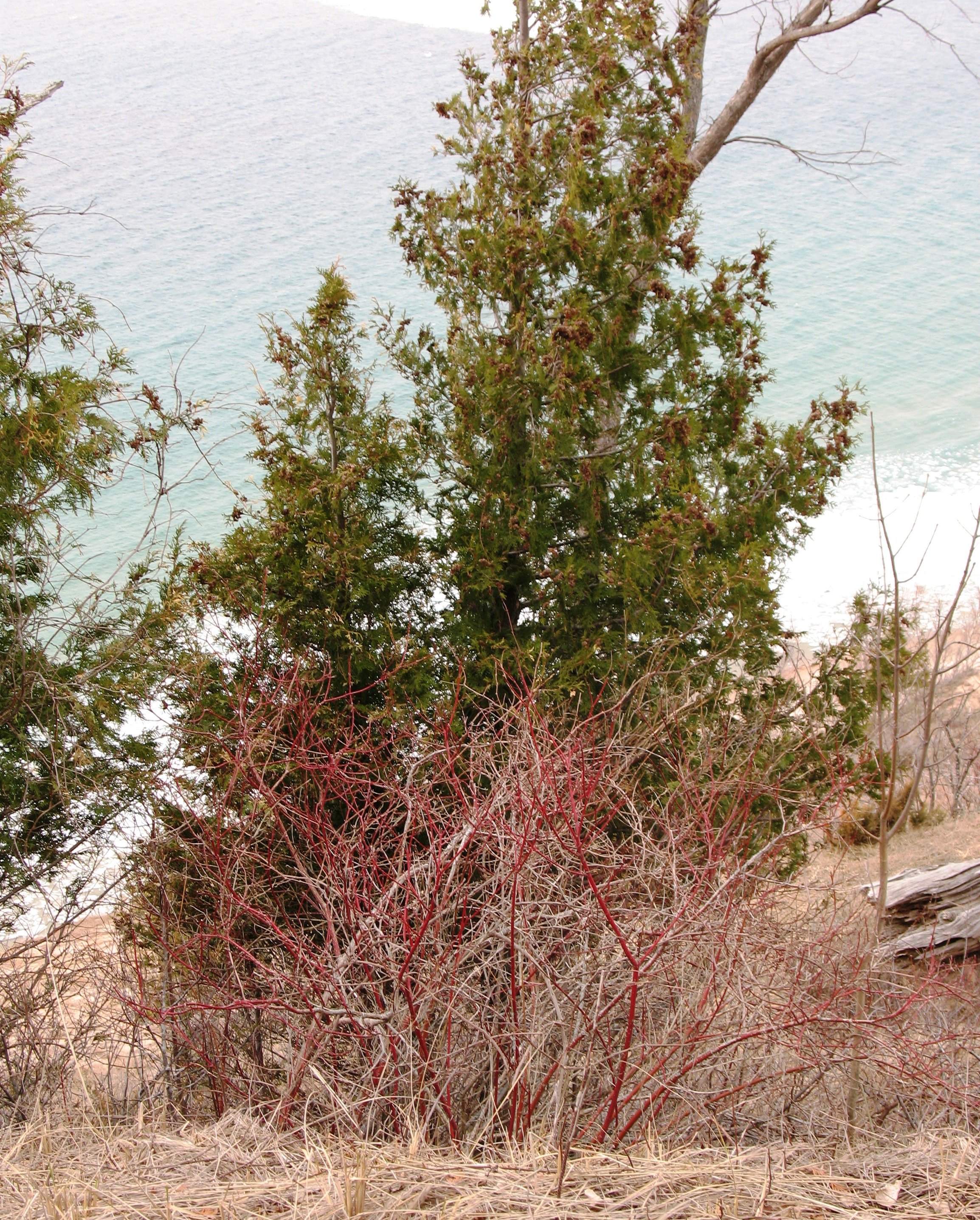

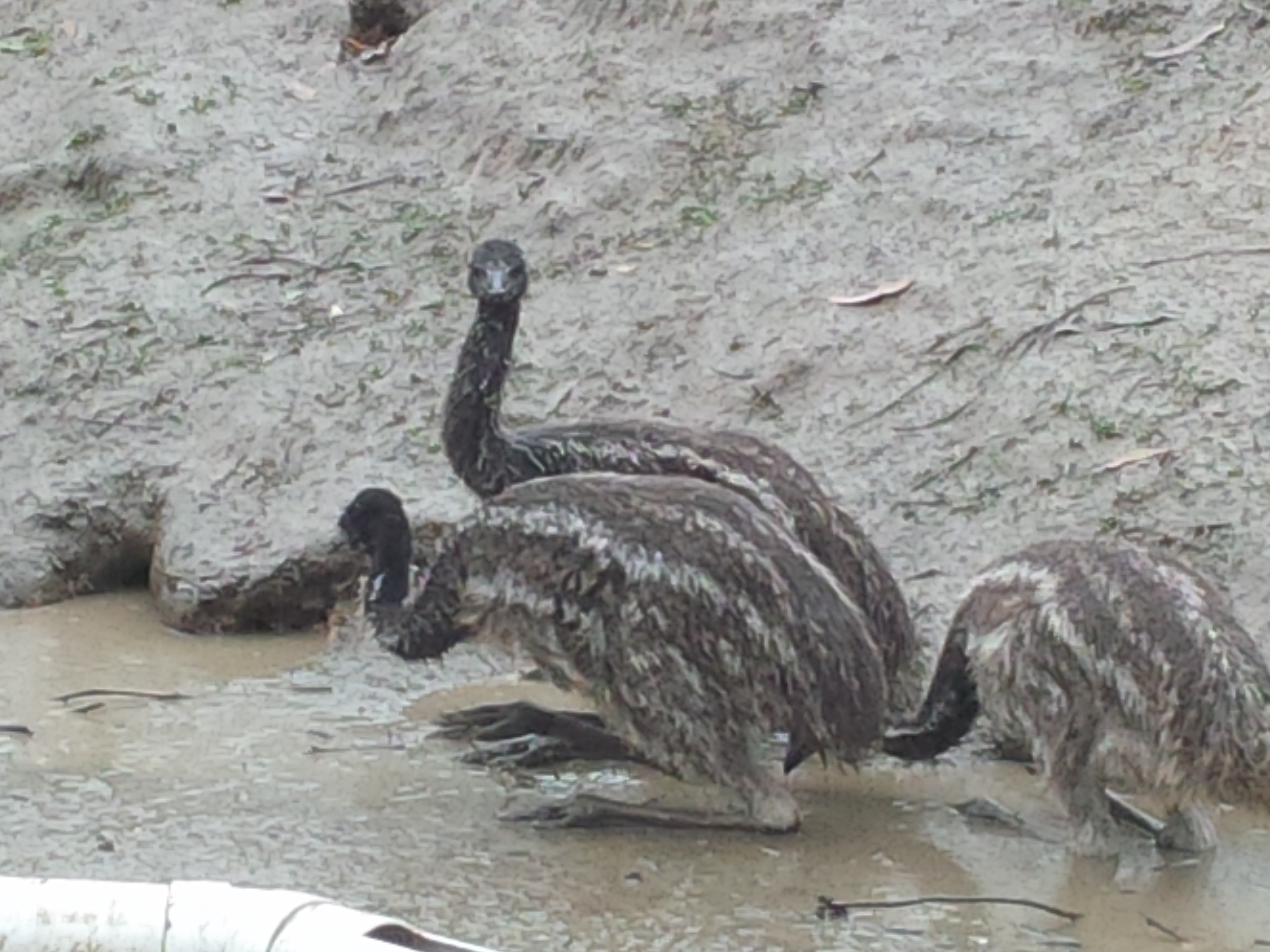

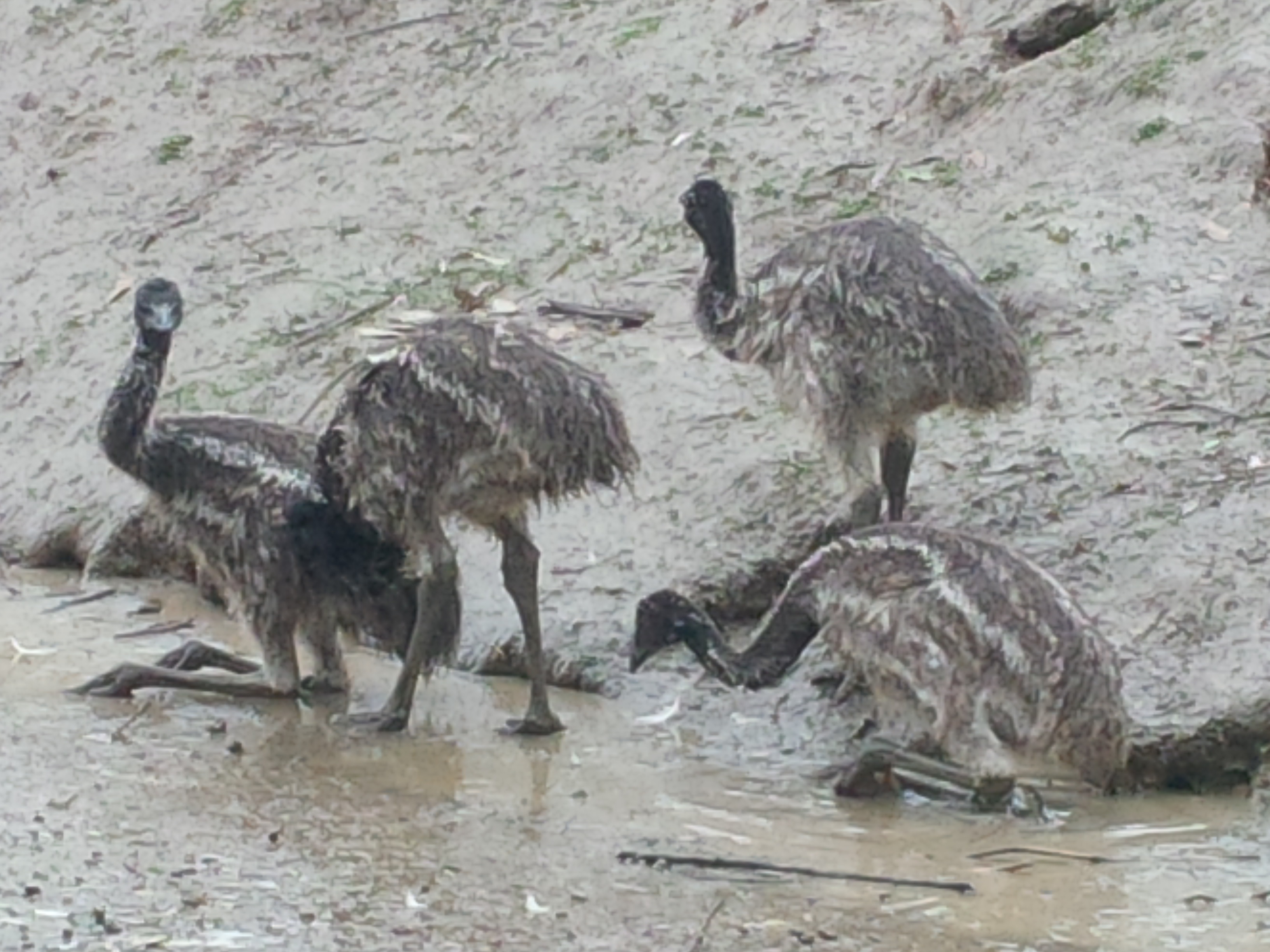
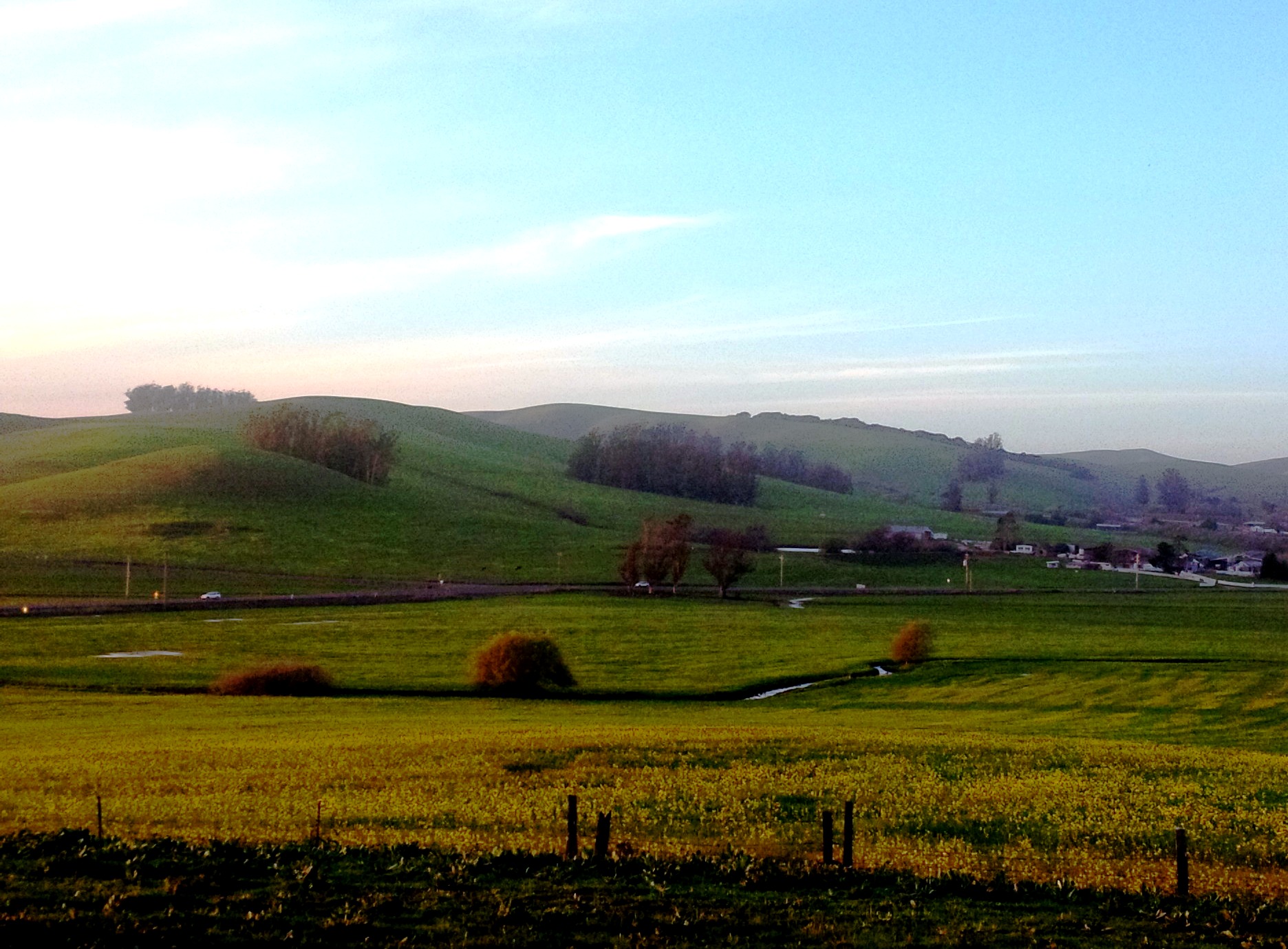
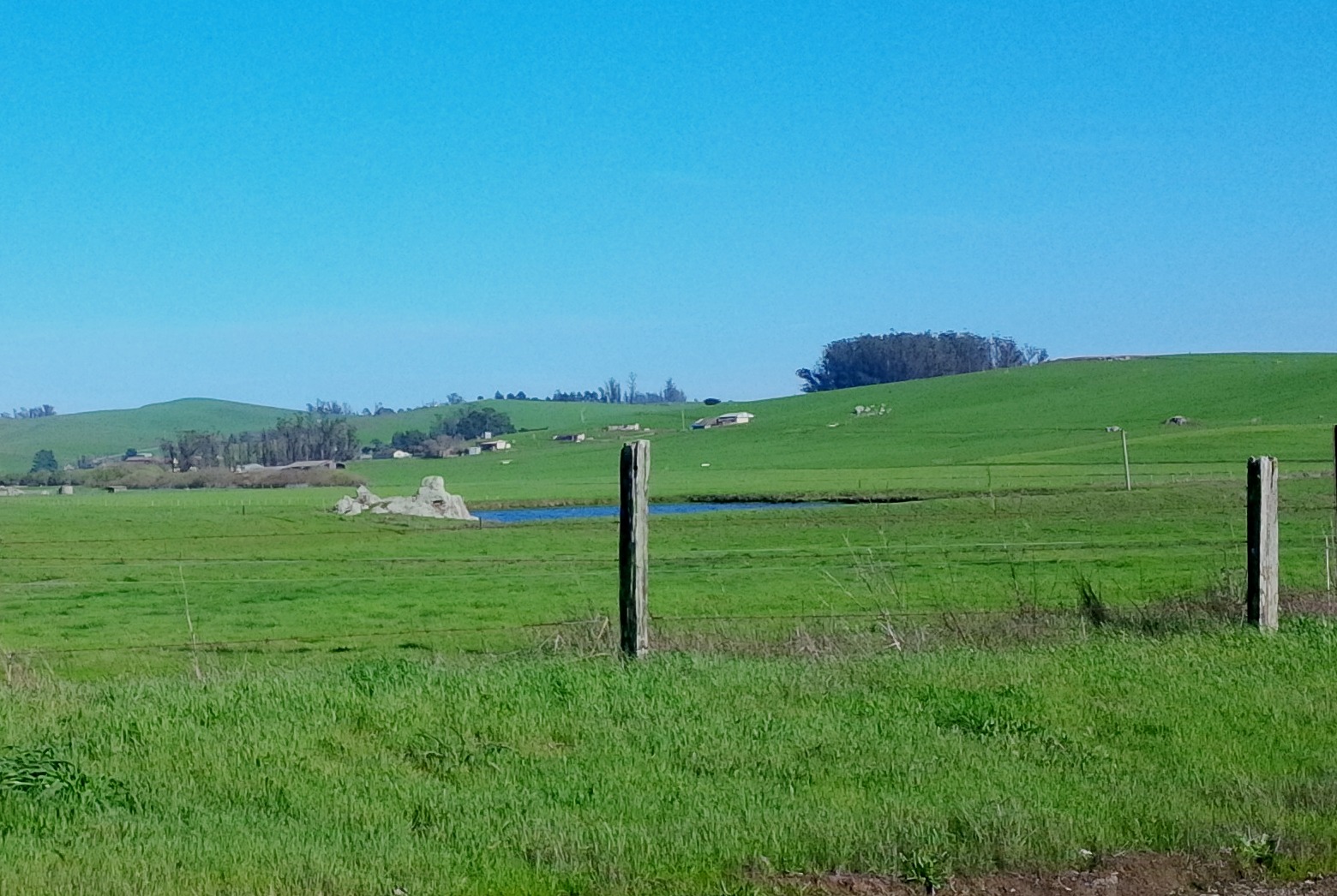
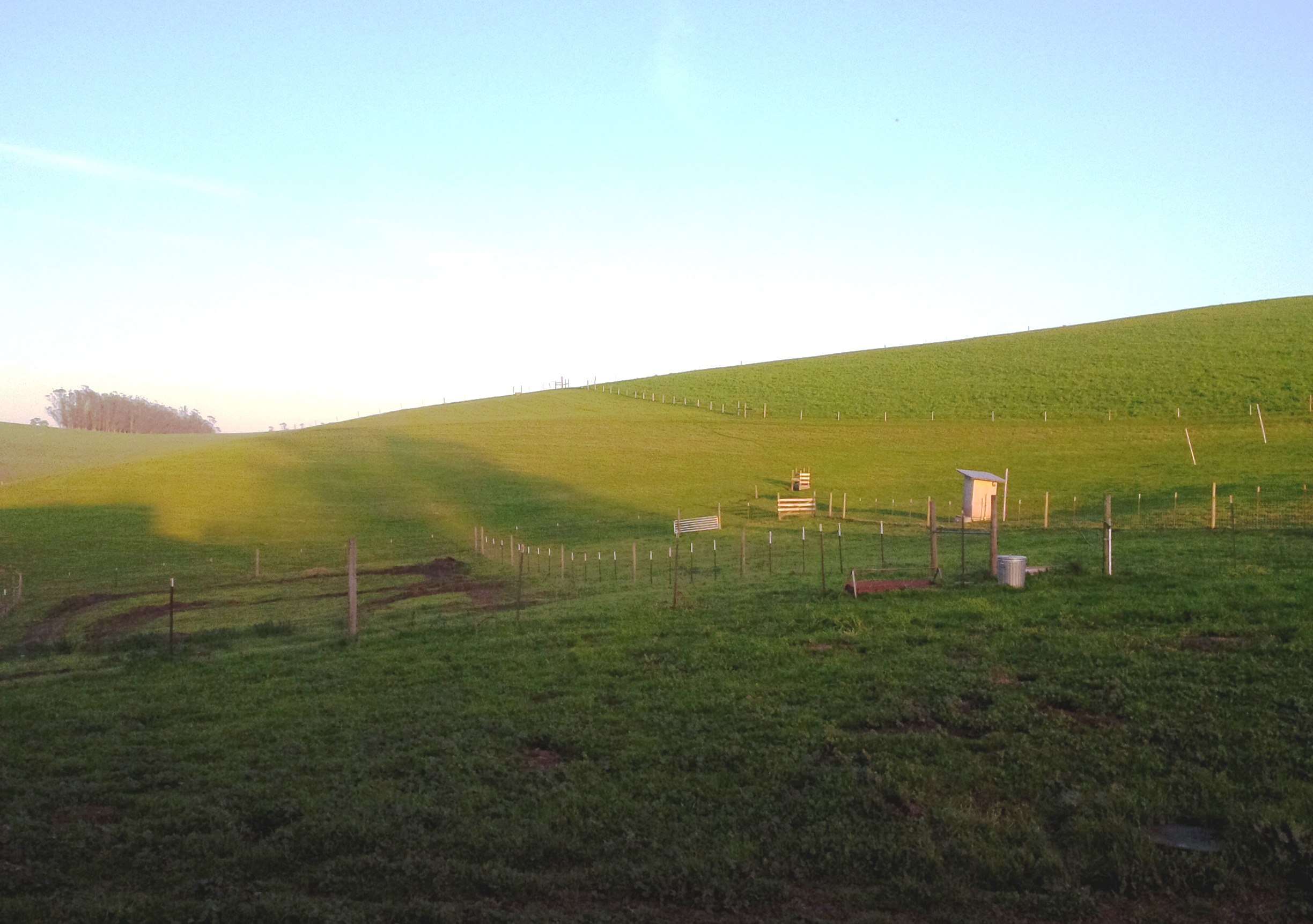




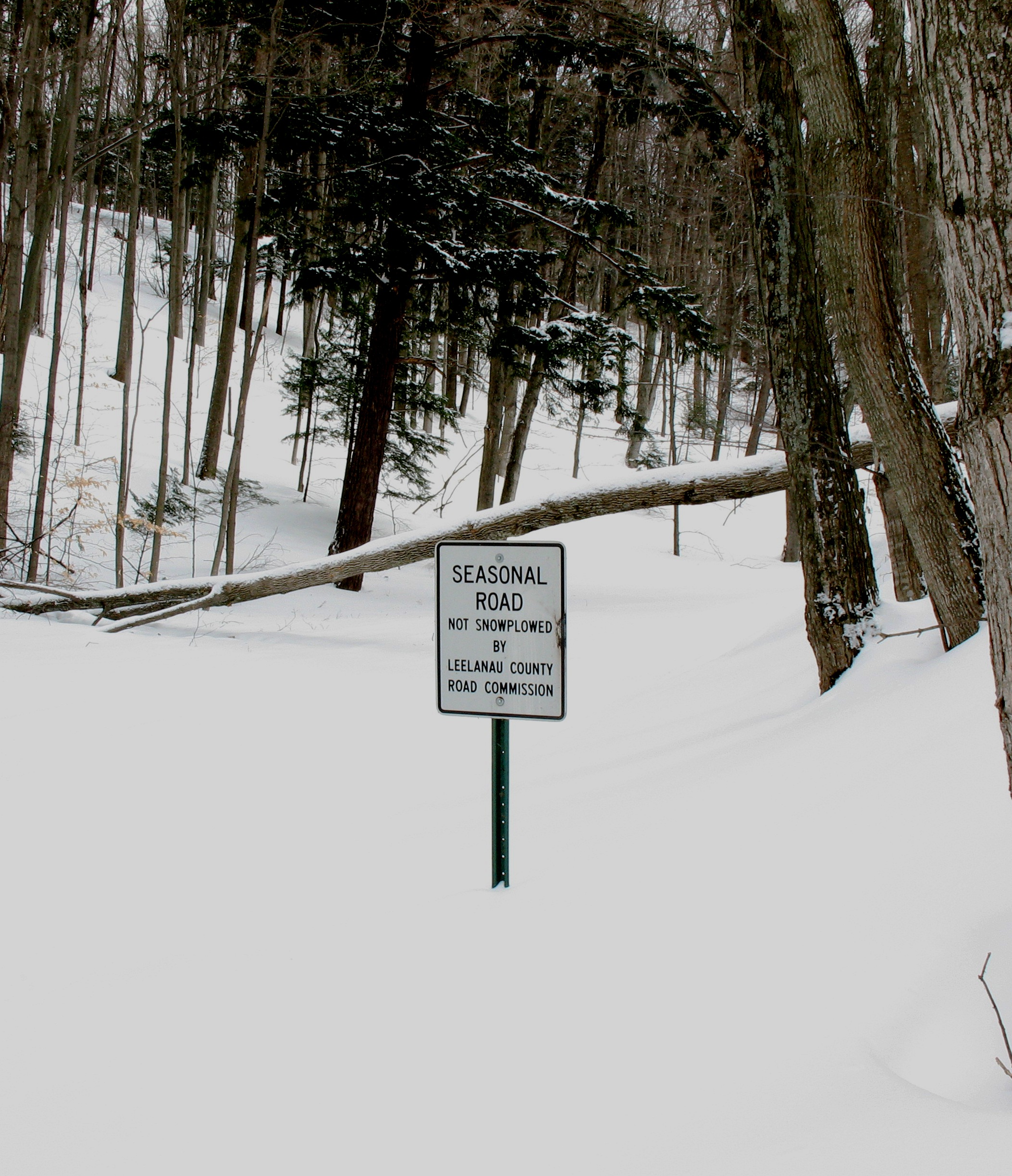
 tworockchronicles