Learning the Language…

A.V. Walters–

IMG_1897

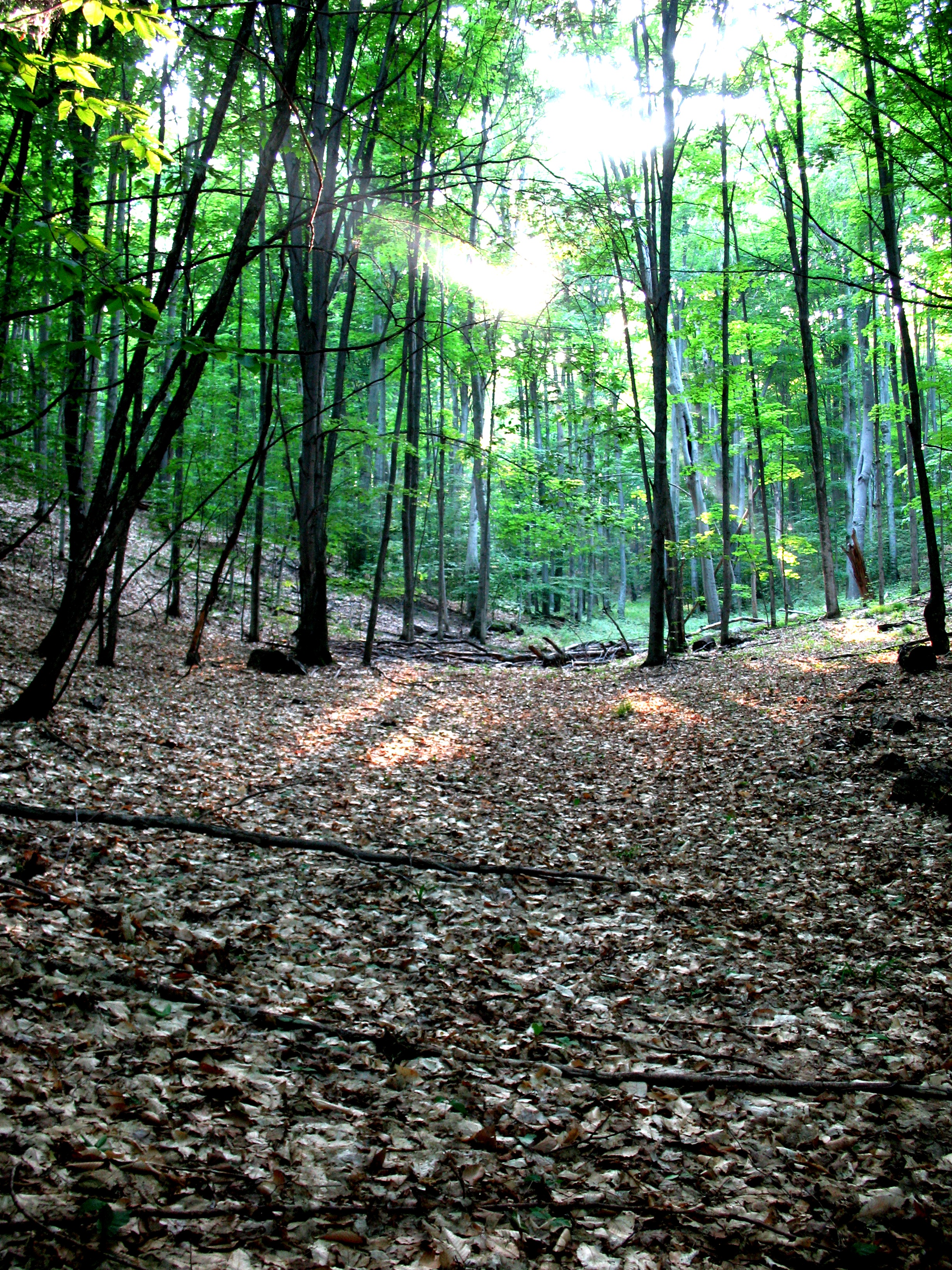
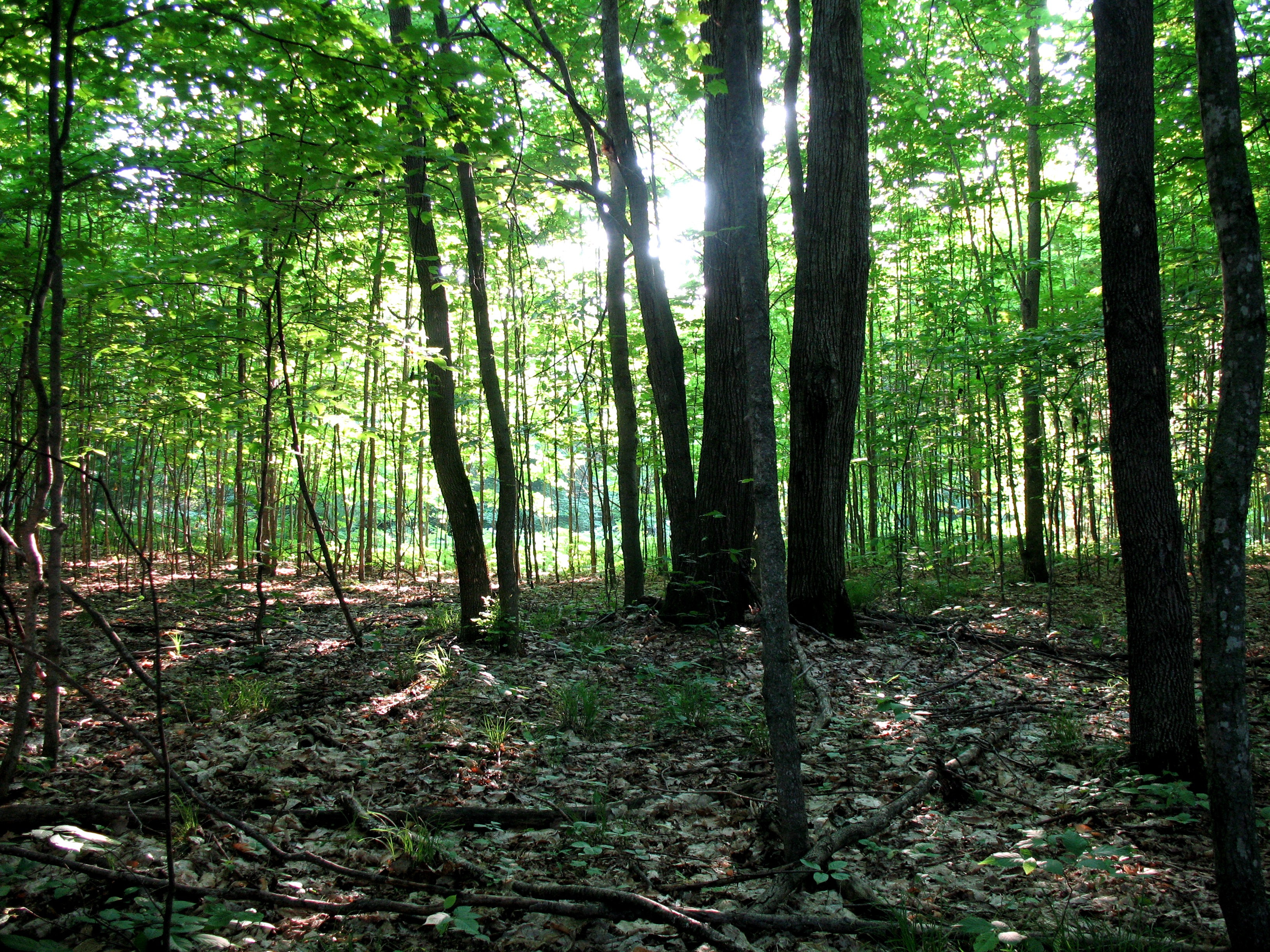
I had the best of intentions this spring. We walk most days, and my plan was to try to identify all the new plants as they popped up through the leaf litter in the forest floor. Ha! Then, we started work on the apartment, putting in such long hours that we didn’t get out for our regular walks. By the time we got back into the forest, it was lush and green, overgrown way past my ability to catch up on the name-game.

It’s not like I don’t know anything. After all, I grew up around the Great Lakes—most of these plants are familiar. But I know them by the names that kids use, like sour grass, white man’s footsteps and sugar plums (oxalis, plantain, serviceberries.) I’m looking to upgrade my botanical vocabulary.

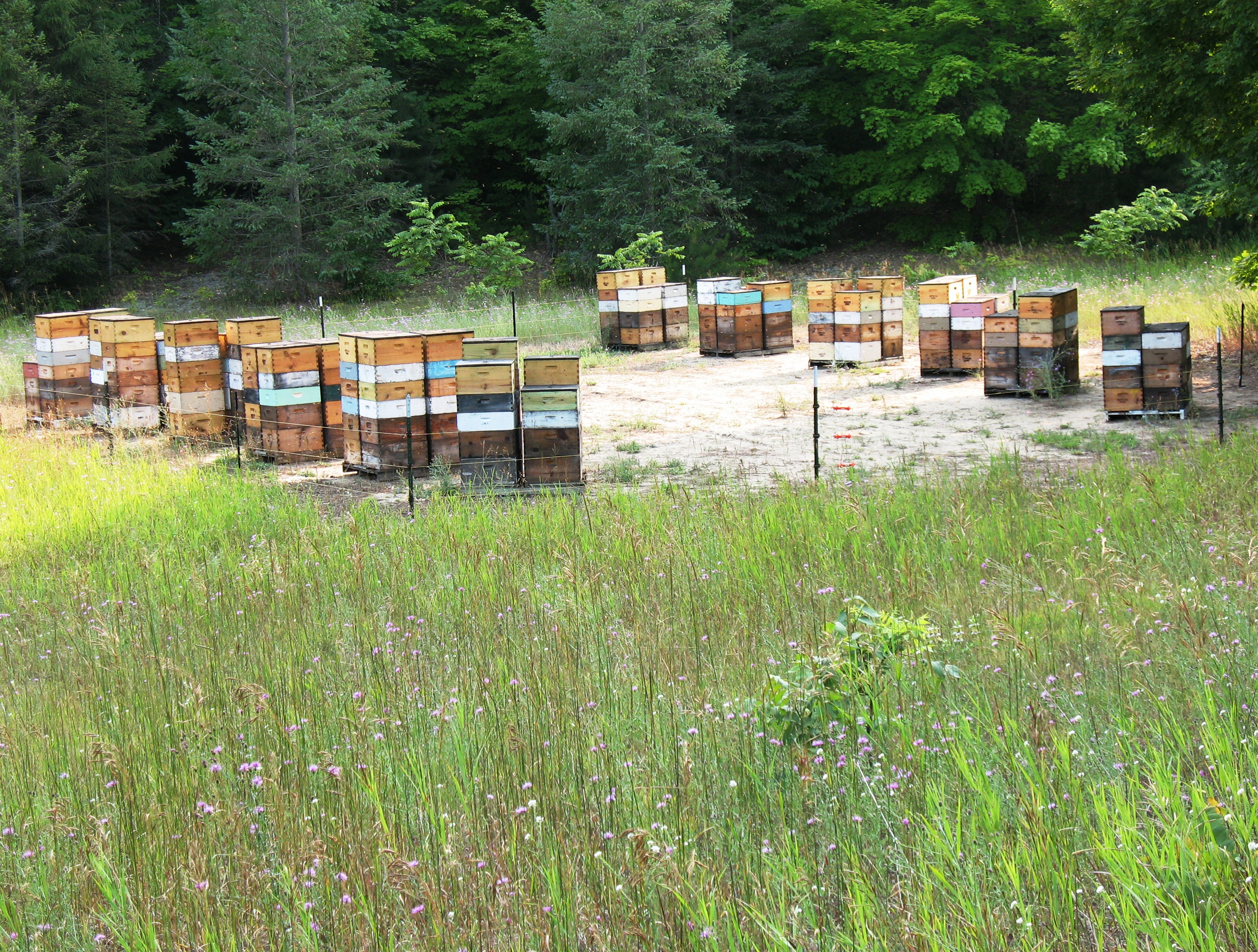
We’re back to walking regularly. My new goal is to positively identify at least one plant a day. We come home from our walks with pockets stuffed with leaves and berries. Then I hit the books (and the internet) to find their “real” names. We notice other things along the way, too. A few weeks ago someone dropped off a load of bee hives in a clearing along the road we live on. Sometimes, you can hear their hum from 100 feet away. A few weeks later, an electric fence went up around them. We scratched our heads. Just who was that fence supposed to dissuade?

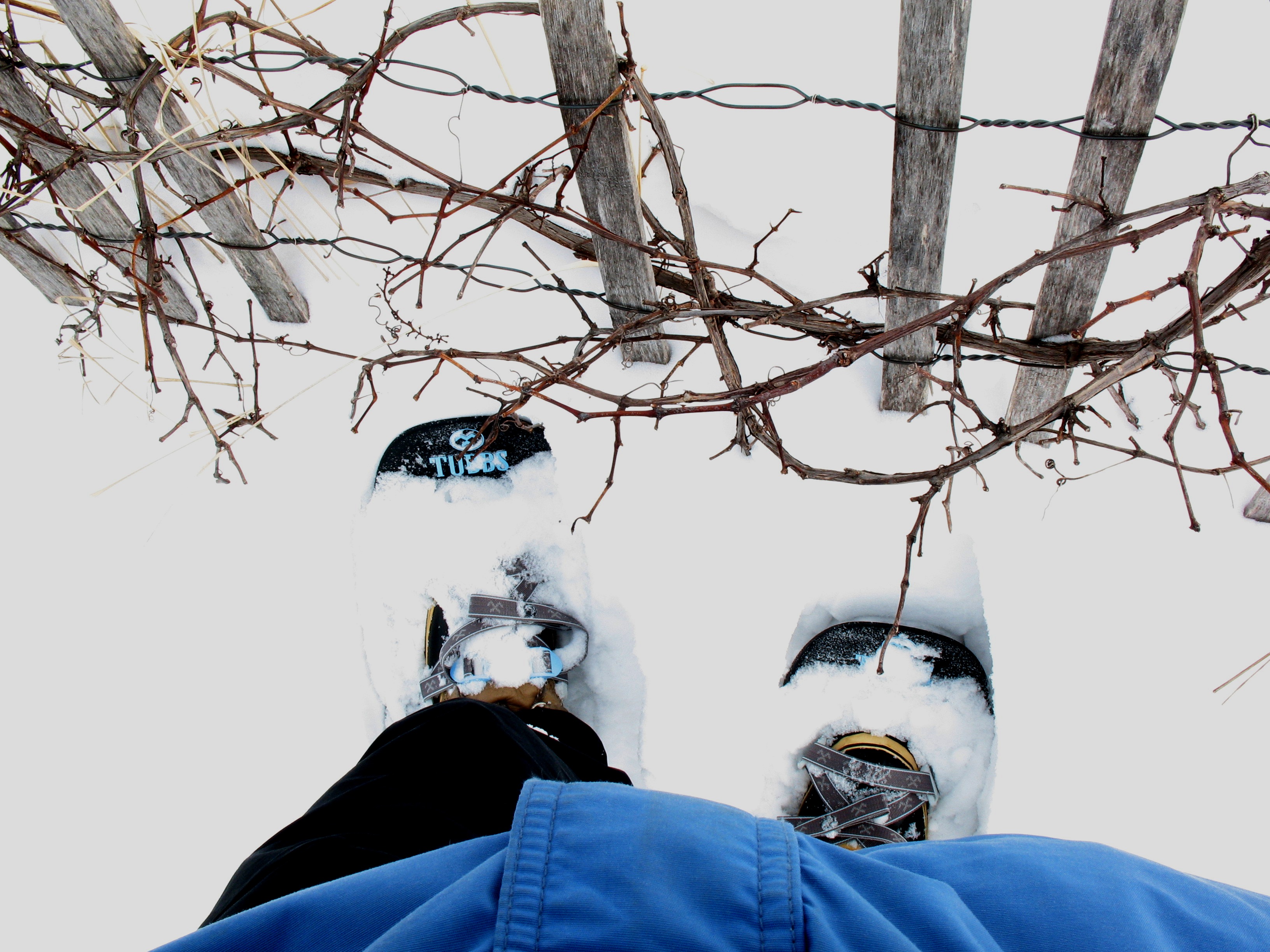
According to the DNR (Department of Natural Resources), there are no wolves, bears or cougars in Leelanau County. You hear of sightings, but they’re never “substantiated.” I’ve been hearing of them for 25 years. I can’t imagine that the DNR has a stake in not acknowledging them, but neither is it comforting to think they’d be wrong for so long. (More head-scratching.) Almost twenty years ago I found a deep and impressive set of scratches in the bark of a tree—six feet up from the ground. That’s a bear. This winter, on one of our snowshoe hikes, we found (big) cat scratch marks on a deadfall tree—with big cat prints to match. (More tree scratching.) Yesterday, on my walk I found bear scat. I spent my childhood summers in Keweenaw County—I know bear scat when I see it. Then, I heard through the neighborhood grapevine that one of the neighbors had seen a bear in her yard.

For whatever it’s worth, these things don’t scare us. It doesn’t change how we move through the trails. (I might re-think planting blueberry plants around the new house, though.) I’m glad that the forest is healthy enough to support the critters all the way to the top of the food chain. Other than us, I mean. I have no intention of setting the record straight in any official capacity. I’ll keep cataloguing my way through the plant kingdom, so I’ll feel more at home, in my new home.


Ripples…

A.V. Walters–

ripples

Sometimes there are crystalized moments in your life, moments that are loaded in a way that forms who you will be, or that define a new direction that your life will take. I’m fascinated at how a chance event can snowball to construct an entirely different version of you, than the expected path might have yielded. You may not even know it at the time but, upon reflection, you can see how the impact of that moment left its fingerprint on you, and maybe on others around you.

We all have answered those “pivotal” questions, “Where were you when…” But they reflect a wider sensibility—that of a community or a nation. And I don’t doubt that those incidents that form the arc of history have an impact overall. What I’m talking about here, though, are the more personal moments—the AHA! events that took who you were, an instant before, and then mapped a new direction for who you became as a result.


From time to time, in this blog I’m going to address those ripples—in my life, and in the lives of those I know. I invite you to ponder your own circuitous paths, and how the “you” of today emerged. Feel free to share.


The Magnificent Radovini Brothers

stick built

We were stair-step kids, arriving with catholic regularity, one, nearly every year. Before long, our standard issue, three-bedroom tract home was too small, owing to our lopsided gender distribution. When the time came that my brother, the only boy, really needed a room of his own, we four girls were too much for the other bedroom.

My parents own interests were running out of space, too. My father’s woodworking and my mother’s new involvement, in the world of clay, were spilling out of the utility room and into the kitchen. So, my parents took the plunge. Together they sketched out a plan to expand our home to make enough room for our wild tribe, and enough for all the different things we did. An architect made their dreams into plans and the bank gave the go ahead. My parents found builders, the highly recommended Radovini Brothers. These young men accepted the job, but warned that, in the middle of it, they’d be taking off for two weeks for a long planned family reunion. As long as the project was enclosed before they left, and then finished before the end of the summer, my parents didn’t mind. How could they? They understood family.

It was high theater for us. It was summer and we were off school so we could watch. They were doubling the size of our house, there was digging, with its piles of dirt and concrete, and finally, The Radovinis arrived. We loved them. They were five brothers with mops of dark hair and sun-bronzed skin. They worked shirtless. The neighbor women came to watch. The Radovinis worked and laughed and sang—sometimes opera, sometimes Italian folk tunes. The brothers harmonized, in their songs and in the rhythms of their work. They brought enormous lunches, which they unpacked from coolers with great ceremony. Food was important. They ate with great gusto, the jokes and ribbing continuing between bites.

It was like being visited by the circus. They were as charmed by us as we were by them, a string of blond towheads, following their every move like puppies, soaking in the aroma of pine boards, and watching the building take shape.

Our house grew by the day—faster even than we’d been told to expect. These men loved their work, and loved showing off their skills. Our jaws hung slack as we watched the drawings from the plans take shape in the air. It was a two-story addition and they were fearless—walking out on the thinnest of planks, twenty feet in the air, tossing up tools to the outstretched and ready hands of trapeze-artist framers. We tipped our heads back and shielded our eyes from the summer sun with cupped hands, to watch. How lucky we were to have found such tradesmen! As the time for their scheduled vacation approached, they worked long hours, determined to frame and sheath the structure before their trip—as promised.

The oldest brother approached my father. Were we happy with the work? Of course! Sheepishly, he requested that my parents advance the full contract price. The brothers were traveling across Canada for their reunion and wanted a “safety reserve.” My parents, thrilled with their work, were happy to oblige. Hell, they’d have adopted them if they could.

In their absence, we clamored over the new addition like squirrels. We collected nails and pieces of scrap wood—which we hammered into odd towers. When parents weren’t watching, we walked on the skinny joists, high above what would be our new garage. It was all so exciting–we could hardly wait for their return.

My father broke the news at dinner one night. We knew that something was up. My mother’s face was puffed and red. There’d been an accident. The Radovinis, they were going over the mountains—with most of the family riding in a travel trailer. A passing car clipped their trailer and forced it, and its tethered truck, over the edge. Four of them had been killed, along with their wives and children. The surviving brother would never walk again. With him, all that remained of this vibrant family was the elderly grandmother and an infant child, who’d remained home. The singing and laughing, gone.

My parents never mentioned the money. And, from that day, we became builders. My dad rolled up his sleeves and learned. His weekends became building time. We were his cadre of conscripted workers, little fingers stuffing insulation around windows, holding the end of the measuring tape and carrying tools and supplies. He learned wiring and plumbing and tiling (Oh My!) So did we. He harnessed his intense fear of heights to finish the roof and upper walls. We learned to put our fears in context. Money was tight, but skills we could learn. We became a family that built what we needed. We never shied from what willing hands could perform. It took my parents, and us, ten years to finish, but it was done, and done well.

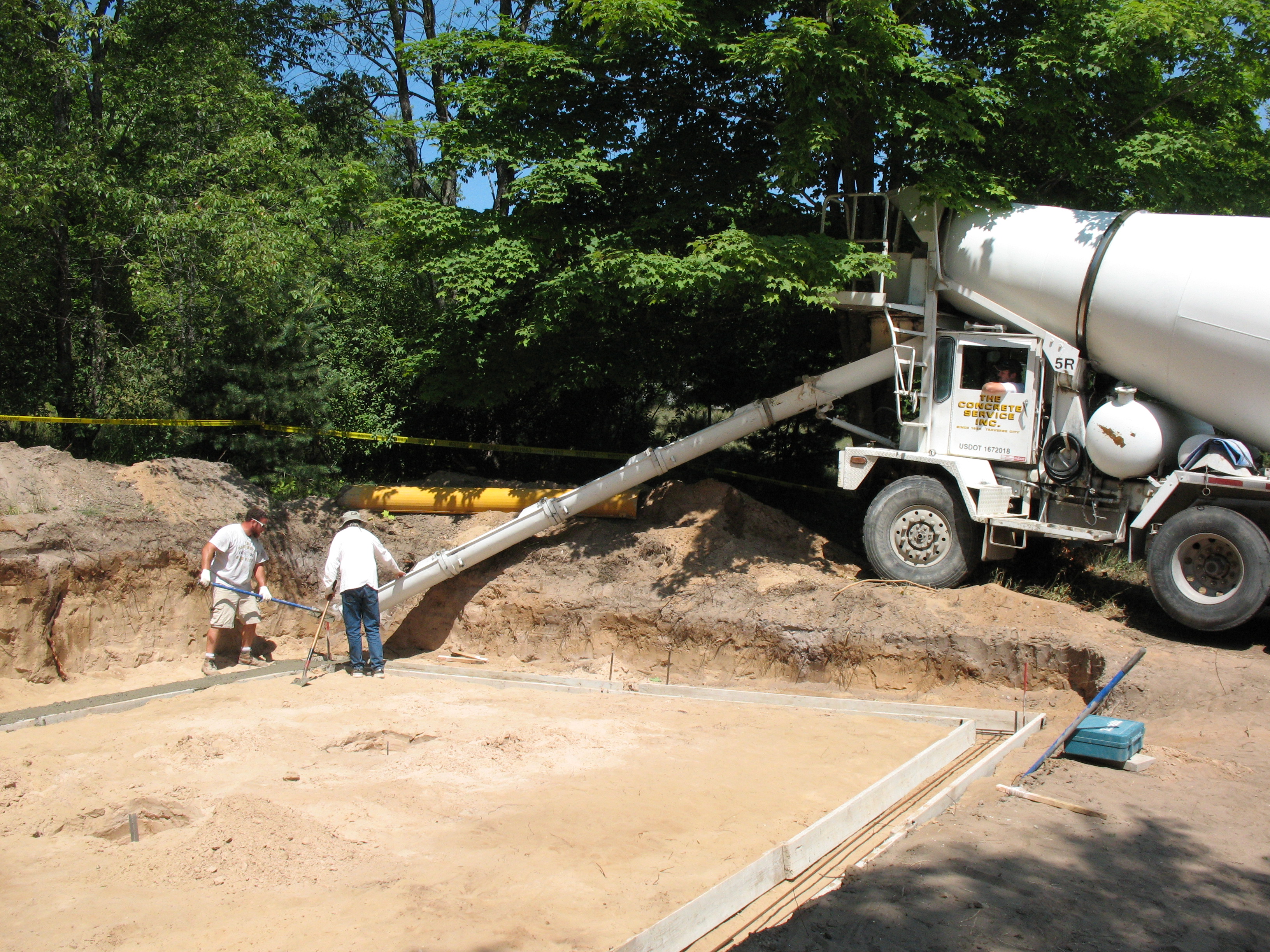
That continues to today—not a professional builder in the bunch, but my siblings, mostly girls, are not strangers to the working end of a hammer. The Radovinis came into our lives nearly five decades ago. Right now, I am poised at the largest project of my adult life—my husband and I are building a home. As I wrote this, the concrete truck arrived to pour the footings.


Pouring Footings

Pouring Footings

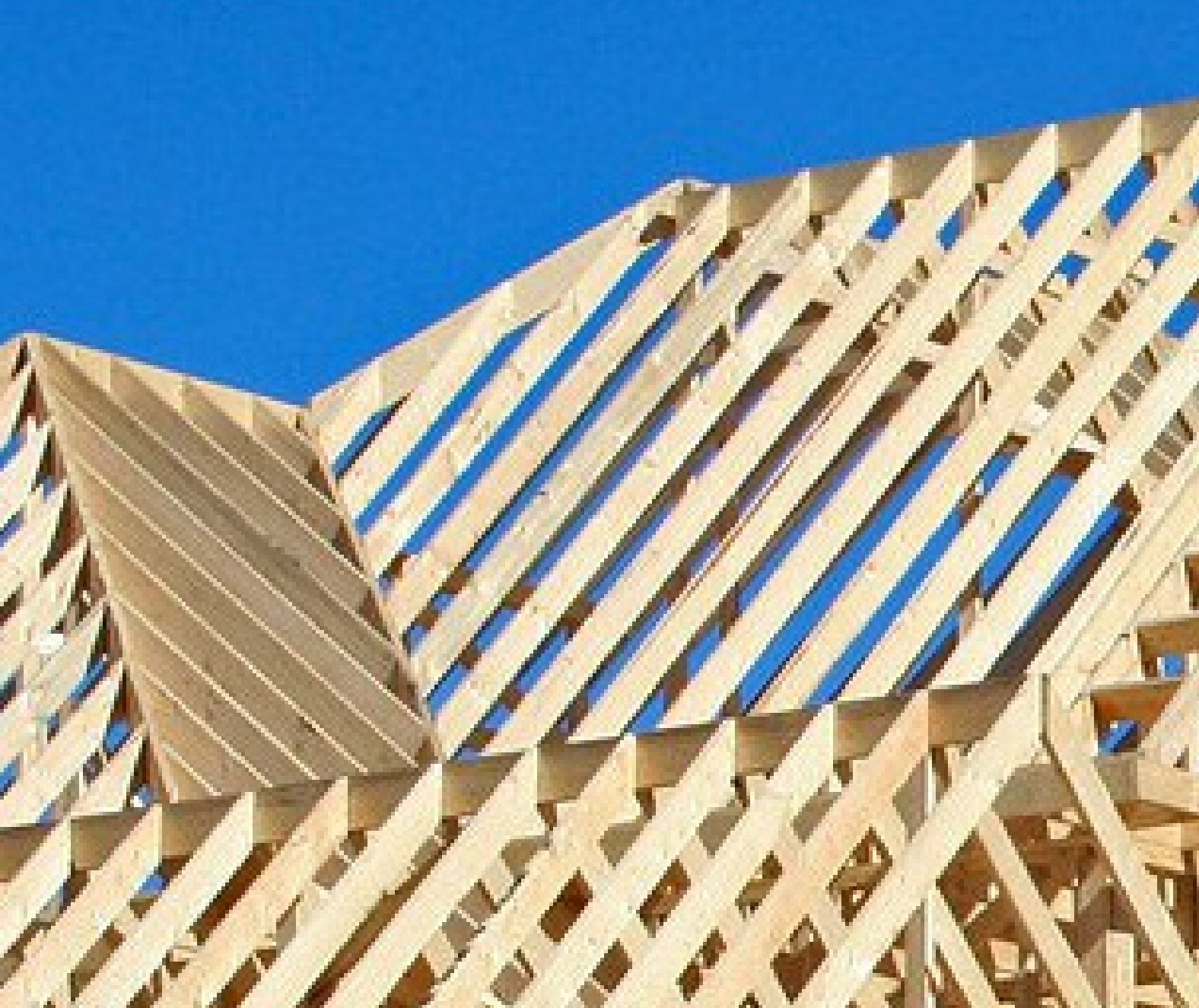
In my minds eye, I can see the Radovinis, perched, straddling the skeletal ribs of our new roof, drinking ice water from re-filled Coca-Cola bottles. They chug it down and pour the rest over their heads, laughing and working in the summer’s heat.


Slash and Burn

A.V. Walters

We learned about it in grade school. It’s a “primitive” agricultural practice of cutting down the forest, burning the “slash,” any unused timber products, and then planting crops in the resulting ash-fertilized clearing. Typically, in areas with poor soils (mostly areas outside the soils-rich Pleistocene glaciation) agricultural use would be for a limited duration, until the soil was nitrogen depleted. Then the farmers move on and the cycle begins again. It was, we were taught, a short-sighted and damaging form of farming. Looking in the mirror, I think that that was Western agriculture’s pot calling the kettle black.

In most of North America, we are blessed with deep and rich topsoils, compliments of the ice age and biodiversity. Our European forebears were more lucky than skilled when it came to farming. Indeed, many of them practiced exactly the slash and burn techniques that my grade-school teacher bemoaned. How else, in a world of hand tools and oxen, was a pioneer family to clear an old growth forest for farming? Over time, excessive cultivation of dry or marginal soils, and the failure to rotate crops, brought us to an ugly truth—the dustbowl. Even without dustbowl conditions, 1970’s estimates showed that using American, post-war agricultural practices were causing the loss of up to six inches of topsoil, per year!

Some early colonialists brought with them time tested farming methods that fed and protected the soils, as you can still see in Amish and Mennonite farms throughout the Midwest. They considered themselves the stewards of the land. Studies have shown that the natural methods used by these farmers retain the topsoil and keep it loaded with organic material and beneficial bacteria. From these traditions, today’s organic farmers learned the mantra, “Feed the soil, not the plant.” Organic farming methods have been proven to fight soil erosion, build the soil’s ability to retain moisture (even in dry conditions) and foster a micro-biome that supports healthy crops.

We’ve sent a soil sample, from our property, in for analysis. We know we have some soil building to do, but it’s been lying fallow at least thirty years for a running start. We start with the premise that we’ll build the soil as we go. We’ll start first thing, next season. Ours is not a conventional approach

The GMO corn planted on our current, landlord’s property, is suffering. Its leaves are curling in; its growth stunted. I’m hardly heartbroken about it. We do not have a drought here. These sandy soils are “well draining,” which could be a pun if you wanted to irrigate. We haven’t had rain for just over a week—which shouldn’t make too big a difference in healthy soil. That corn doesn’t have healthy soil. Years of successive corn crops, over-tilling and outright chemical abuse have stripped the cornfield to its geologic base—sand dune. This soil cannot hold moisture. There is some stubble tilled in, but in the absence of “the living soil”—the bacterial component, the stubble cannot breakdown and feed the soil. (Though it may hold a little moisture.)

So, who is practicing slash and burn, now?


Spam, Spam, the Menu Plan

A.V. Walters


Hey bloggers, we all get spam, right? Do you read yours? Sometimes, it’s tough to tell whether it is spam. After all, you’d feel bad thwarting some poor commenter–for bad grammar or other minor sin. (Though I’d love to have a chat with all those folks who want to convince me that I could make oodles, if only I’d stoop to online marketing.) We want to be inclusive. We just don’t want spam.

A few days ago, I received the spam shown below. Hell, somebody made a mistake. They sent out their whole playbook–complete with optional fact inserts. (You know, so you can personalize your spam.) I laughed so hard, I almost peed my panties. Of course, I’d seen most of these–just not the whole list. I goes to show you that the spam forces out there are organized. They speak the language of ambivalence (and flattery.) To keep our blogs clean of the senseless blather of marketing hitchhikers, we must be vigilant!

Because I never want to be guilty of failure to attribute someone else’s work, I will disclose that this compendium of spam comes courtesy of

http://topfunnyweddingcaketoppers.com/
topfunnyweddingcaketoppers.comx
cheribracker@hotmail.com
192.230.42.130


And here it is, in excruciating detail….

{
{I have|I’ve} been {surfing|browsing} online more than {three|3|2|4} hours today, yet I never found any interesting article like yours.
{It’s|It is} pretty worth enough for me. {In my opinion|Personally|In my view}, if
all {webmasters|site owners|website owners|web owners} and bloggers
made good content as you did, the {internet|net|web} will be {much more|a lot more} useful
than ever before.|
I {couldn’t|could not} {resist|refrain from} commenting.

{Very well|Perfectly|Well|Exceptionally well} written!|
{I will|I’ll} {right away|immediately} {take hold of|grab|clutch|grasp|seize|snatch}
your {rss|rss feed} as I {can not|can’t} {in finding|find|to find} your {email|e-mail} subscription {link|hyperlink} or {newsletter|e-newsletter} service.
Do {you have|you’ve} any? {Please|Kindly} {allow|permit|let} me {realize|recognize|understand|recognise|know} {so that|in order that} I {may just|may|could} subscribe.
Thanks.|
{It is|It’s} {appropriate|perfect|the best} time to make some plans for the future and {it
is|it’s} time to be happy. {I have|I’ve} read this post and
if I could I {want to|wish to|desire to} suggest you
{few|some} interesting things or {advice|suggestions|tips}.
{Perhaps|Maybe} you {could|can} write next articles referring
to this article. I {want to|wish to|desire to}
read {more|even more} things about it!|
{It is|It’s} {appropriate|perfect|the best} time to make {a few|some} plans for {the future|the longer term|the
long run} and {it is|it’s} time to be happy. {I have|I’ve}
{read|learn} this {post|submit|publish|put up} and if I {may just|may|could} I
{want to|wish to|desire to} {suggest|recommend|counsel}
you {few|some} {interesting|fascinating|attention-grabbing} {things|issues} or {advice|suggestions|tips}.

{Perhaps|Maybe} you {could|can} write {next|subsequent} articles {relating to|referring to|regarding} this article.
I {want to|wish to|desire to} {read|learn} {more|even more} {things|issues}
{approximately|about} it!|
{I have|I’ve} been {surfing|browsing} {online|on-line} {more than|greater than} {three|3} hours {these days|nowadays|today|lately|as of late}, {yet|but}
I {never|by no means} {found|discovered} any {interesting|fascinating|attention-grabbing} article
like yours. {It’s|It is} {lovely|pretty|beautiful} {worth|value|price} {enough|sufficient} for
me. {In my opinion|Personally|In my view}, if all {webmasters|site owners|website owners|web owners} and bloggers made {just right|good|excellent} {content|content material} as {you did|you probably did}, the {internet|net|web} {will
be|shall be|might be|will probably be|can be|will likely be}
{much more|a lot more} {useful|helpful} than ever before.|
Ahaa, its {nice|pleasant|good|fastidious} {discussion|conversation|dialogue} {regarding|concerning|about|on the
topic of} this {article|post|piece of writing|paragraph} {here|at this
place} at this {blog|weblog|webpage|website|web site}, I have read all that, so {now|at
this time} me also commenting {here|at this place}.|
I am sure this {article|post|piece of writing|paragraph} has touched
all the internet {users|people|viewers|visitors}, its really really
{nice|pleasant|good|fastidious} {article|post|piece of writing|paragraph} on building up new
{blog|weblog|webpage|website|web site}.|
Wow, this {article|post|piece of writing|paragraph} is {nice|pleasant|good|fastidious}, my {sister|younger
sister} is analyzing {such|these|these kinds of} things, {so|thus|therefore} I
am going to {tell|inform|let know|convey} her.|
{Saved as a favorite|bookmarked!!}, {I really like|I like|I love} {your blog|your site|your web site|your website}!|
Way cool! Some {very|extremely} valid points!
I appreciate you {writing this|penning this} {article|post|write-up} {and the|and
also the|plus the} rest of the {site is|website is} {also very|extremely|very|also really|really} good.|
Hi, {I do believe|I do think} {this is an excellent|this is a great}
{blog|website|web site|site}. I stumbledupon it 😉 {I
will|I am going to|I’m going to|I may} {come back|return|revisit} {once again|yet again} {since I|since i have} {bookmarked|book marked|book-marked|saved as a favorite} it.

Money and freedom {is the best|is the greatest} way to change, may you be
rich and continue to {help|guide} {other people|others}.|
Woah! I’m really {loving|enjoying|digging} the
template/theme of this {site|website|blog}. It’s simple, yet effective.
A lot of times it’s {very hard|very difficult|challenging|tough|difficult|hard}
to get that “perfect balance” between {superb usability|user friendliness|usability} and {visual appearance|visual appeal|appearance}.
I must say {that you’ve|you have|you’ve} done a
{awesome|amazing|very good|superb|fantastic|excellent|great} job with this.
{In addition|Additionally|Also}, the blog loads {very|extremely|super} {fast|quick} for
me on {Safari|Internet explorer|Chrome|Opera|Firefox}. {Superb|Exceptional|Outstanding|Excellent} Blog!|
These are {really|actually|in fact|truly|genuinely} {great|enormous|impressive|wonderful|fantastic} ideas
in {regarding|concerning|about|on the topic of} blogging. You have
touched some {nice|pleasant|good|fastidious} {points|factors|things} here.
Any way keep up wrinting.|
{I love|I really like|I enjoy|I like|Everyone loves} what you guys {are|are usually|tend to be} up
too. {This sort of|This type of|Such|This kind of} clever work and {exposure|coverage|reporting}!
Keep up the {superb|terrific|very good|great|good|awesome|fantastic|excellent|amazing|wonderful} works
guys I’ve {incorporated||added|included} you guys to {|my|our||my personal|my own} blogroll.|
{Howdy|Hi there|Hey there|Hi|Hello|Hey}! Someone in my {Myspace|Facebook} group shared this {site|website} with
us so I came to {give it a look|look it over|take a look|check it out}.
I’m definitely {enjoying|loving} the information. I’m {book-marking|bookmarking} and will be tweeting this to my followers!
{Terrific|Wonderful|Great|Fantastic|Outstanding|Exceptional|Superb|Excellent} blog and {wonderful|terrific|brilliant|amazing|great|excellent|fantastic|outstanding|superb} {style and design|design and style|design}.|
{I love|I really like|I enjoy|I like|Everyone loves} what you guys {are|are usually|tend to be} up too.
{This sort of|This type of|Such|This kind of} clever work and {exposure|coverage|reporting}!
Keep up the {superb|terrific|very good|great|good|awesome|fantastic|excellent|amazing|wonderful} works guys I’ve {incorporated|added|included}
you guys to {|my|our|my personal|my own} blogroll.|
{Howdy|Hi there|Hey there|Hi|Hello|Hey} would you mind
{stating|sharing} which blog platform you’re {working with|using}?
I’m {looking|planning|going} to start my own blog {in the near future|soon} but I’m having a {tough|difficult|hard} time {making a decision|selecting|choosing|deciding} between BlogEngine/Wordpress/B2evolution and Drupal.
The reason I ask is because your {design and style|design|layout} seems different
then most blogs and I’m looking for something {completely unique|unique}.
P.S {My apologies|Apologies|Sorry} for {getting|being} off-topic
but I had to ask!|
{Howdy|Hi there|Hi|Hey there|Hello|Hey} would you mind letting me know which {webhost|hosting company|web host} you’re
{utilizing|working with|using}? I’ve loaded your blog in 3 {completely different|different} {internet browsers|web browsers|browsers} and I must say this blog loads a lot {quicker|faster} then most.
Can you {suggest|recommend} a good {internet hosting|web hosting|hosting} provider at
a {honest|reasonable|fair} price? {Thanks a lot|Kudos|Cheers|Thank you|Many thanks|Thanks}, I appreciate it!|
{I love|I really like|I like|Everyone loves} it {when people|when individuals|when folks|whenever people} {come together|get together} and share {opinions|thoughts|views|ideas}.
Great {blog|website|site}, {keep it up|continue the good work|stick with it}!|
Thank you for the {auspicious|good} writeup. It in fact was
a amusement account it. Look advanced to {far|more} added agreeable from you!
{By the way|However}, how {can|could} we communicate?|
{Howdy|Hi there|Hey there|Hello|Hey} just wanted to give you a quick heads up.

The {text|words} in your {content|post|article} seem to be running off the screen in {Ie|Internet
explorer|Chrome|Firefox|Safari|Opera}. I’m not sure if this is
a {format|formatting} issue or something to do with {web browser|internet browser|browser} compatibility but I {thought|figured} I’d post to let you know.
The {style and design|design and style|layout|design}
look great though! Hope you get the {problem|issue} {solved|resolved|fixed} soon. {Kudos|Cheers|Many thanks|Thanks}|
This is a topic {that is|that’s|which is} {close to|near to} my heart…

{Cheers|Many thanks|Best wishes|Take care|Thank you}!
{Where|Exactly where} are your contact details though?|
It’s very {easy|simple|trouble-free|straightforward|effortless} to find out any {topic|matter} on {net|web} as compared to
{books|textbooks}, as I found this {article|post|piece of writing|paragraph} at this {website|web site|site|web
page}.|
Does your {site|website|blog} have a contact page?
I’m having {a tough time|problems|trouble} locating it but,
I’d like to {send|shoot} you an {e-mail|email}.
I’ve got some {creative ideas|recommendations|suggestions|ideas} for your blog you might be interested in hearing.
Either way, great {site|website|blog} and I look forward to seeing it {develop|improve|expand|grow} over time.|
{Hola|Hey there|Hi|Hello|Greetings}! I’ve been {following|reading} your {site|web site|website|weblog|blog} for
{a long time|a while|some time} now and finally got the {bravery|courage} to go ahead and give you a shout out from {New Caney|Kingwood|Huffman|Porter|Houston|Dallas|Austin|Lubbock|Humble|Atascocita}
{Tx|Texas}! Just wanted to {tell you|mention|say} keep
up the {fantastic|excellent|great|good} {job|work}!|
Greetings from {Idaho|Carolina|Ohio|Colorado|Florida|Los angeles|California}!
I’m {bored to tears|bored to death|bored} at work so I decided to {check out|browse} your {site|website|blog} on my iphone during
lunch break. I {enjoy|really like|love} the {knowledge|info|information} you {present|provide} here and can’t wait
to take a look when I get home. I’m {shocked|amazed|surprised} at how {quick|fast} your blog loaded on my {mobile|cell
phone|phone} .. I’m not even using WIFI, just 3G ..

{Anyhow|Anyways}, {awesome|amazing|very good|superb|good|wonderful|fantastic|excellent|great} {site|blog}!|
Its {like you|such as you} {read|learn} my {mind|thoughts}!

You {seem|appear} {to understand|to know|to grasp} {so much|a lot} {approximately|about} this, {like you|such as you} wrote the {book|e-book|guide|ebook|e book} in it or something.
{I think|I feel|I believe} {that you|that you simply|that you
just} {could|can} do with {some|a few} {%|p.c.|percent} to {force|pressure|drive|power} the message {house|home} {a bit|a little bit}, {however|but} {other than|instead of} that, {this
is|that is} {great|wonderful|fantastic|magnificent|excellent}
blog. {A great|An excellent|A fantastic} read. {I’ll|I will} {definitely|certainly} be
back.|
I visited {multiple|many|several|various} {websites|sites|web sites|web pages|blogs} {but|except|however} the audio {quality|feature} for audio songs {current|present|existing} at this
{website|web site|site|web page} is {really|actually|in fact|truly|genuinely} {marvelous|wonderful|excellent|fabulous|superb}.|
{Howdy|Hi there|Hi|Hello}, i read your blog {occasionally|from time to time} and i own a similar
one and i was just {wondering|curious} if you get a lot of spam {comments|responses|feedback|remarks}?
If so how do you {prevent|reduce|stop|protect against} it, any plugin or anything you can {advise|suggest|recommend}?
I get so much lately it’s driving me {mad|insane|crazy} so any {assistance|help|support} is very much appreciated.|
Greetings! {Very helpful|Very useful} advice {within this|in this particular} {article|post}!
{It is the|It’s the} little changes {that make|which will
make|that produce|that will make} {the biggest|the largest|the greatest|the most important|the
most significant} changes. {Thanks a lot|Thanks|Many thanks} for sharing!|
{I really|I truly|I seriously|I absolutely} love {your blog|your site|your website}..
{Very nice|Excellent|Pleasant|Great} colors & theme. Did you {create|develop|make|build} {this
website|this site|this web site|this amazing site} yourself?
Please reply back as I’m {looking to|trying
to|planning to|wanting to|hoping to|attempting to} create {my
own|my very own|my own personal} {blog|website|site}
and {would like to|want to|would love to} {know|learn|find
out} where you got this from or {what the|exactly what the|just what the} theme {is called|is named}.

{Thanks|Many thanks|Thank you|Cheers|Appreciate it|Kudos}!|
{Hi there|Hello there|Howdy}! This {post|article|blog post} {couldn’t|could not} be written {any better|much better}!
{Reading through|Looking at|Going through|Looking through} this {post|article} reminds me of my previous roommate!
He {always|constantly|continually} kept {talking about|preaching about}
this. {I will|I’ll|I am going to|I most certainly will} {forward|send} {this article|this
information|this post} to him. {Pretty sure|Fairly certain} {he will|he’ll|he’s going to} {have a good|have a very good|have a great} read.
{Thank you for|Thanks for|Many thanks for|I appreciate you for} sharing!|
{Wow|Whoa|Incredible|Amazing}! This blog looks {exactly|just}
like my old one! It’s on a {completely|entirely|totally}
different {topic|subject} but it has pretty much the same {layout|page layout} and design. {Excellent|Wonderful|Great|Outstanding|Superb} choice of colors!|
{There is|There’s} {definately|certainly} {a lot to|a
great deal to} {know about|learn about|find out about} this
{subject|topic|issue}. {I like|I love|I really like} {all
the|all of the} points {you made|you’ve made|you have made}.|
{You made|You’ve made|You have made} some {decent|good|really good} points there.
I {looked|checked} {on the internet|on the web|on the net} {for more
info|for more information|to find out more|to learn more|for additional information} about the issue and found {most individuals|most people} will go along with your views on {this website|this site|this web
site}.|
{Hi|Hello|Hi there|What’s up}, I {log on to|check|read} your {new stuff|blogs|blog} {regularly|like
every week|daily|on a regular basis}. Your {story-telling|writing|humoristic} style is {awesome|witty},
keep {doing what you’re doing|up the good work|it up}!|
I {simply|just} {could not|couldn’t} {leave|depart|go away} your
{site|web site|website} {prior to|before} suggesting that I {really|extremely|actually} {enjoyed|loved}
{the standard|the usual} {information|info} {a person|an individual}
{supply|provide} {for your|on your|in your|to your} {visitors|guests}?
Is {going to|gonna} be {back|again} {frequently|regularly|incessantly|steadily|ceaselessly|often|continuously} {in order to|to} {check up on|check out|inspect|investigate cross-check} new posts|
{I wanted|I needed|I want to|I need to} to thank you for
this {great|excellent|fantastic|wonderful|good|very
good} read!! I {definitely|certainly|absolutely} {enjoyed|loved} every
{little bit of|bit of} it. {I have|I’ve got|I have
got} you {bookmarked|book marked|book-marked|saved
as a favorite} {to check out|to look at} new {stuff you|things you} post…|
{Hi|Hello|Hi there|What’s up}, just wanted to {mention|say|tell you}, I {enjoyed|liked|loved} this {article|post|blog post}.

It was {inspiring|funny|practical|helpful}.
Keep on posting!|
{Hi there|Hello}, I enjoy reading {all of|through} your {article|post|article post}.
I {like|wanted} to write a little comment to support you.|
I {always|constantly|every time} spent my
half an hour to read this {blog|weblog|webpage|website|web site}’s {articles|posts|articles or reviews|content} {everyday|daily|every day|all the time} along with a {cup|mug} of coffee.|
I {always|for all time|all the time|constantly|every time} emailed this {blog|weblog|webpage|website|web site} post page to all
my {friends|associates|contacts}, {because|since|as|for the reason that} if like to read it {then|after that|next|afterward}
my {friends|links|contacts} will too.|
My {coder|programmer|developer} is trying to {persuade|convince} me to move to .net from PHP.
I have always disliked the idea because of the {expenses|costs}.
But he’s tryiong none the less. I’ve been using {Movable-type|WordPress} on {a number of|a
variety of|numerous|several|various} websites for about a year and am {nervous|anxious|worried|concerned} about switching to another platform.
I have heard {fantastic|very good|excellent|great|good} things about blogengine.net.
Is there a way I can {transfer|import} all my wordpress {content|posts} into it?
{Any kind of|Any} help would be {really|greatly} appreciated!|
{Hello|Hi|Hello there|Hi there|Howdy|Good day}! I could have
sworn I’ve {been to|visited} {this blog|this web site|this website|this site|your blog} before but after {browsing through|going through|looking
at} {some of the|a few of the|many of the} {posts|articles} I
realized it’s new to me. {Anyways|Anyhow|Nonetheless|Regardless}, I’m {definitely|certainly} {happy|pleased|delighted} {I
found|I discovered|I came across|I stumbled
upon} it and I’ll be {bookmarking|book-marking} it and checking back {frequently|regularly|often}!|
{Terrific|Great|Wonderful} {article|work}! {This is|That is} {the type of|the kind of} {information|info} {that are meant to|that are
supposed to|that should} be shared {around the|across the}
{web|internet|net}. {Disgrace|Shame} on {the {seek|search} engines|Google} for {now not|not|no longer} positioning this {post|submit|publish|put up} {upper|higher}!

Come on over and {talk over with|discuss with|seek advice from|visit|consult with} my {site|web site|website}
. {Thank you|Thanks} =)|
Heya {i’m|i am} for the first time here. I {came across|found} this board and I find It {truly|really} useful & it helped me
out {a lot|much}. I hope to give something back and {help|aid} others like you {helped|aided} me.|
{Hi|Hello|Hi there|Hello there|Howdy|Greetings}, {I think|I believe|I do believe|I do think|There’s no doubt that} {your site|your website|your web site|your blog} {might be|may
be|could be|could possibly be} having {browser|internet browser|web browser} compatibility {issues|problems}.
{When I|Whenever I} {look at your|take a look at your} {website|web site|site|blog} in Safari, it
looks fine {but when|however when|however, if|however, when} opening in {Internet Explorer|IE|I.E.}, {it has|it’s got} some overlapping issues.
{I just|I simply|I merely} wanted to {give you a|provide you with a} quick heads up!
{Other than that|Apart from that|Besides that|Aside from that}, {fantastic|wonderful|great|excellent} {blog|website|site}!|
{A person|Someone|Somebody} {necessarily|essentially} {lend
a hand|help|assist} to make {seriously|critically|significantly|severely} {articles|posts} {I would|I might|I’d} state.
{This is|That is} the {first|very first} time I frequented your
{web page|website page} and {to this point|so far|thus far|up to now}?

I {amazed|surprised} with the {research|analysis} you made to {create|make} {this actual|this particular} {post|submit|publish|put up} {incredible|amazing|extraordinary}.
{Great|Wonderful|Fantastic|Magnificent|Excellent} {task|process|activity|job}!|
Heya {i’m|i am} for {the primary|the first} time here.
I {came across|found} this board and I {in finding|find|to find} It {truly|really} {useful|helpful} & it helped me
out {a lot|much}. {I am hoping|I hope|I’m hoping} {to give|to offer|to provide|to present} {something|one thing} {back|again} and {help|aid} others {like you|such as you} {helped|aided}
me.|
{Hello|Hi|Hello there|Hi there|Howdy|Good day|Hey there}!
{I just|I simply} {would like to|want to|wish to} {give you a|offer you a} {huge|big} thumbs up {for the|for your} {great|excellent}
{info|information} {you have|you’ve got|you have got} {here|right here} on this post.
{I will be|I’ll be|I am} {coming back to|returning to} {your blog|your site|your website|your web site} for more soon.|
I {always|all the time|every time} used to {read|study} {article|post|piece of writing|paragraph} in news papers but now as I am
a user of {internet|web|net} {so|thus|therefore} from now I
am using net for {articles|posts|articles or reviews|content}, thanks to web.|
Your {way|method|means|mode} of {describing|explaining|telling} {everything|all|the whole thing} in this {article|post|piece of writing|paragraph} is {really|actually|in fact|truly|genuinely} {nice|pleasant|good|fastidious}, {all|every one}
{can|be able to|be capable of} {easily|without difficulty|effortlessly|simply} {understand|know|be aware of} it, Thanks a
lot.|
{Hi|Hello} there, {I found|I discovered} your {blog|website|web site|site} {by means of|via|by the use
of|by way of} Google {at the same time as|whilst|even as|while} {searching for|looking for}
a {similar|comparable|related} {topic|matter|subject}, your {site|web site|website} {got here|came} up, it {looks|appears|seems|seems to be|appears
to be like} {good|great}. {I have|I’ve} bookmarked it in my google bookmarks.

{Hello|Hi} there, {simply|just} {turned into|became|was|become|changed into} {aware of|alert to} your {blog|weblog} {thru|through|via} Google, {and found|and located}
that {it is|it’s} {really|truly} informative.
{I’m|I am} {gonna|going to} {watch out|be careful}
for brussels. {I will|I’ll} {appreciate|be grateful} {if you|should you|when you|in the event
you|in case you|for those who|if you happen to} {continue|proceed}
this {in future}. {A lot of|Lots of|Many|Numerous} {other folks|folks|other people|people} {will be|shall be|might be|will probably be|can be|will likely be} benefited {from
your|out of your} writing. Cheers!|
{I am|I’m} curious to find out what blog {system|platform} {you have been|you
happen to be|you are|you’re} {working with|utilizing|using}?
I’m {experiencing|having} some {minor|small} security {problems|issues} with my
latest {site|website|blog} and {I would|I’d}
like to find something more {safe|risk-free|safeguarded|secure}.

Do you have any {solutions|suggestions|recommendations}?|
{I am|I’m} {extremely|really} impressed with
your writing skills {and also|as well as} with the layout on your {blog|weblog}.
Is this a paid theme or did you {customize|modify} it
yourself? {Either way|Anyway} keep up the {nice|excellent} quality writing, {it’s|it is} rare
to see a {nice|great} blog like this one {these days|nowadays|today}.|
{I am|I’m} {extremely|really} {inspired|impressed}
{with your|together with your|along with your} writing {talents|skills|abilities} {and also|as {smartly|well|neatly}
as} with the {layout|format|structure} {for your|on your|in your|to
your} {blog|weblog}. {Is this|Is that this} a paid {subject|topic|subject matter|theme} or did you {customize|modify} it {yourself|your self}?

{Either way|Anyway} {stay|keep} up the {nice|excellent} {quality|high quality} writing, {it’s|it is} {rare|uncommon} {to peer|to see|to look} a {nice|great} {blog|weblog} like this
one {these days|nowadays|today}..|
{Hi|Hello}, Neat post. {There is|There’s} {a problem|an issue} {with your|together
with your|along with your} {site|web site|website} in {internet|web} explorer, {may|might|could|would} {check|test} this?
IE {still|nonetheless} is the {marketplace|market} {leader|chief} and
{a large|a good|a big|a huge} {part of|section of|component to|portion of|component of|element of} {other folks|folks|other
people|people} will {leave out|omit|miss|pass over} your {great|wonderful|fantastic|magnificent|excellent} writing {due to|because of} this problem.|
{I’m|I am} not sure where {you are|you’re} getting your
{info|information}, but {good|great} topic. I needs to spend some time
learning {more|much more} or understanding more. Thanks for {great|wonderful|fantastic|magnificent|excellent} {information|info} I was
looking for this {information|info} for my mission.|
{Hi|Hello}, i think that i saw you visited my {blog|weblog|website|web site|site} {so|thus} i came to “return the
favor”.{I am|I’m} {trying to|attempting to} find things to
{improve|enhance} my {website|site|web site}!I suppose its ok
to use {some of|a few of} your ideas!\

Add Your Voice–

A.V. Walters–

The deadline for comments to the FCC regarding net neutrality is July 15. The head of the FCC, Tom Wheeler, has indicated that he’ll give more weight to those comments that are unique and personal. This is not a “click” opportunity. For those of us who feel that net neutrality is critical to free speech–now is the time to add your voice. (Do it while we still can!) You can email your comments to Docket Number:14-28 Protecting an Open Internet at the FCC (OpenInternet@fcc.gov) Or you can call at 888-225-5322. You don’t need to write a lengthy tome, but we all need to express the importance of Net Neutrality. If we hand the keys of the internet over to the corporate interests that would like to make it a toll road, we can kiss our free speech goodbye. This is way more important than cute cat videos. Write and tell them why a free and open internet is important to you. Here’s my two bits:


There is an inner kernel to the internet–maybe it’s the core of what’s wonderful about it. It isn’t photo swapping on facebook. It isn’t shopping on Amazon, or downloading movies. These are pedestrian and commercial uses. The important stuff is the inner core, the “small d” democratic use–like what I’m doing right now.

Over the past few decades, there has been unprecedented consolidation in the media. Maybe even because of the internet, newspapers have failed or merged. Increasingly, we are left with fewer and fewer real voices. If one’s position isn’t that championed by major media (who are increasingly co-opted by corporate interests) there are few forums for free speech. The internet is that free speech forum. Keeping it neutral guarantees that there will continue to be an avenue of opposition and dissent. In this country we cherish our freedoms. Unfortunately, too few of us actually exercise them. Those who do become the fulcrum of democracy. Given an opportunity to be heard, they are our collective conscience and are often the inspiration for the rest of us to wake up and act. Without that speech opportunity, we are lost. Without it, there will be no true marketplace of ideas, there will only be those voices that have corporate or government support. We cannot let the ideas that drive the nation be reduced to the occasional tweet. In a world where our politicians and process are for sale to the highest bidder, we need to preserve citizen speech.

Net neutrality guarantees us an outlet of democratic access. If the internet is a toll road, if there are prepaid “fast lanes,” the rest will fall to disrepair. The internet lets us meet, online, to discuss the issues that are central to our today. Net neutrality ensures that those voices can be found, and heard. Out there, in the din of corporate and commercial messages, is the real soul of our nation–the blogger who protests government or corporate tyranny–the witness whose photo goes viral and forces us all to look in the mirror at oppression–the artist whose work isn’t pretty but graphically makes us look in our hearts to see whether we are part of the problem or part of the solution. True free speech isn’t pretty or popular. It’s not likely to garner corporate sponsorship or the internet fast lane.

Even more worrisome is that, in the hands of a corporate fast lane, there is no incentive to protect true speech. Their interests are to sell, to entertain, to market. Despite frightening recent court rulings that corporations have rights, we all know that the driving force in the world of business is money. There is no business interest in the small conscientious voices among us. Indeed, the voices we most have to protect frequently challenge government or corporate authority. Ideas like equality and fairness do not have price tags associated with them, yet they are the most valuable currency this country has. That’s why we need net neutrality.

We all learned this as children. Basic fairness and etiquette don’t give the advantage to the dollar. Net neutrality is a simple proposition, and one that’s difficult to argue against–first come, first served.

Bugged–

A.V. Walters

My California friends can’t believe that I moved to a place that has snow in the winter and bugs in the summer. I usually put it right back at them—both of those features are a direct result of one thing—we have water.

In California you don’t even need screens on your windows. Sure you’ll get a couple of insects—but because of the long, dry summers there never was a big problem with mosquitoes in the summer (early spring, sometimes, but it never lasted.) In Two Rock, living right next door to a dairy, we had flies and spiders. (There, I was glad for the screens, though, in all honesty, sometimes the dairy smelled so bad you didn’t dare open the windows.) When Californians recoil about insects, they mean one thing—bugs that bite.

We have them here. I know all the jokes—In Michigan, the mosquito is the state bird… Okay, so there are insects; it’s a given. We measure them in seasons. Just now, we’re (hopefully) coming to the end of blackfly season—which is usually June, but running late this year because of the overlong winter. Blackflies are an annoyance in Leelanau. Back in Keweenaw, they are a force of nature. (I always suspected it was why June brides wore veils.) Back home, one’s wardrobe for June activities includes a “bug baffler,” screened headgear that looks like beekeeper’s clothing.

July is the main mosquito month, though Rick and I have already earned our fair share of bites. We insist on being outdoors, even into the evening, and that’ll do it. Mostly we wear hats and we keep moving. In August and September we have an assortment of biting flies—horseflies, deerflies and stableflies. Again, a hat and proper clothing for the outdoors is your best defense. They (the biting flies) aren’t really looking for you (though you’ll do in a pinch.) The worst of it is that they annoy as they buzz in circles around you. As kids, we’d pick ferns to wear on our heads, like some kind of pixie tribe. It kept the biting flies on a farther perimeter and gave us some small measure of control.

Having adequate rainfall means we have bugs. Having bugs means we have birds, so don’t wish your bugs away so quickly. We have amazing birds. The air here is, more often than not, filled with birdsong. We live outside the town of Cedar. That’s a polite way to say “swamp.” It’s located in a low-lying area and, like any wetland, rich in biodiversity. Bugs.

We try to get some kind of exercise, every day. Right now we get it primarily through working on the property. We’re doing site prep—and in the summer heat and humidity, it can be grueling. If that wasn’t enough, we often go for a walk around the block at the end of the day. “Around the block” is a three-mile loop. The bottom third of that loop runs adjacent the swamp. It’s probably crazy to go walking there at the buggiest time of the day—but it’s cool, and, if you keep moving, you can escape without being bitten. We went for one of our walks the other night, right at dusk. It’s a great way to unwind— to talk about the day’s events and connect with your surroundings. We were just getting to the swamp section when I first saw them. At first, I thought it was a bit of trash, maybe a scrap of Mylar, catching the fading light. When I saw it again, I realized—fireflies! Even though I grew up in the Great Lakes region, I’d never seen them before. Once you look, suddenly they are everywhere–a profusion of flashes, shining at you in an orchestrated mid-summer display of sparkles. Some, in mid-flight, look like three-dimensional punctuation, illuminated ellipses. Rick was amazed—both at the tremendous surprise of nature, and that we were seeing it, together, both for the first time.

You won’t see them from a passing car. You have to be out with them, at the right time of day and, at risk from the rest of the insect kingdom. But, it’s well worth it. It leaves you breathless, awestruck and feeling almost childlike. This will do for our July fireworks display.


Killing Fields

A.V. Walters

The view out our window.

The view out our window.

We knew. We’d even talked about it. Our landlady rents the acreage around her house to a local dairy farmer. He grows corn to feed his cows. We stand at the edge of the lawn, where our clothesline is, and we look. There are no weeds in this cornfield. The farmer does not practice no-till planting. On a windy day, the sandy soil catches, and the air fills with an ominous dustbowl specter. Worse, he plants corn, year in, year out, without any crop rotation, depleting the soil of nitrogen and other nutrients. Why should he care? It’s not his land. Some people actually like the tidy lines of weed-free corn in formation. I find it sinister.

You see, I know that nature abhors a vacuum. Weed-free is unnatural. It means that her fields are sprayed with Round-Up. I live within spitting distance (literally) of GMO corn. Worse yet, the lower part of our property is downwind of it. It’s a little funny; for years I’ve been protesting and writing about the dangers of GMO and its impact on the environment, and now, I have a front row seat.

Yesterday morning was as still as death—unusual in our normally wind-whipped world. For that, I’m thankful. I’d gone out to the compost and heard, and then saw, a tractor headed up the road in our direction. I had a bad feeling. I sprinted back inside, gathering up a loose cat along the way, and closed the windows. Sure enough, it was the farmer coming to spray the field. I stayed in most of the day, canceled my plans to do laundry, and kept the cats inside—feeling a little trapped. But, my little garden is out there, on the side facing the field. If that Round-up went airborne, it’ll be dead within days

I know that this is the norm in agricultural communities. As a kid, I remember they’d spray the fields right by us, even as we walked to school. Even now, nobody thinks twice about it—it’s a way of life. Yet, there are studies galore showing the neurological impact of pesticides and herbicides on those living within a mile of sprayed crops. A new one came out this week showing the correlation (not causation) between the increased incidence of autism in the children of women so exposed. I have a friend who has Parkinson’s—the legacy of her childhood exposure to pesticides in California’s Central Valley. It’s not just her saying it—the medical studies bear her out. In my world-view, chemicals have become the problem in farming, not the solution.

My landlady thinks that my property—vacant for twenty-five years, overgrown and wild—is an eyesore. She was glad I’d finally appeared, thinking I would whip things into shape. She thinks that any insect or weed on her property must have come from the undisciplined wilds, of mine. We were at a function together when she informed me that she’d told her farmer how much I’d love to have him grow corn on my bottomland.

I recoiled in horror. “You said what?

“You know, get rid of all that scrubby pine and weeds—he pays well. We have good soil here.”

We are worlds apart. There are times when one should hold one’s tongue. Unfortunately, when it comes to neighborly relations, I forget about those times.

“Think again. I wouldn’t let that man set foot on my property.”

She looked like I’d slapped her. “He’s a good farmer—and what’s wrong with corn?”

So, I let her know what’s wrong with corn, at length—especially with the way it’s grown on her property. I’m afraid (but not totally regretful) that I even said that she stands by while he’s killing her soil. She looked injured. Well, she only knows what she knows. She grew up on a farm and better living through chemistry is deeply ingrained in her limited, world-view.

What will we say to the next generations? Maybe (just maybe) those of my landlady’s generation have an excuse. They just did what everyone else did, what the Agriculture People told them. My generation started out knowing better. We started out with Silent Spring and a glimpse of the damage done by “modern life.” Where did we go with it? From fertilizers, to organophosphates, to GMO/ Glyphosate, to neonicitinoids. How will we explain a world of dead soils and contaminated groundwater? How will we justify the loss of the bees? And this is just farming I’m talking about.

For much of my adult life, I grieved that I was unable to have children. I’m at peace with it, now—maybe it’s even a little bit of a relief. I have always tried to do my part—to garden within the rhythms of nature, to avoid products that do damage to the environment and to limit my participation in our throw-away culture. I look around now and realize that taking personal responsibility isn’t enough. We all need to do more, to tip the scales back in balance. So, there is a sense of relief that I’ll never have to look into my children’s faces to tell them we knew, but we didn’t do enough to stop it.


Right Plan…

A.V. Walters —

A walk in the woods

A walk in the woods

It’s said that, when the Europeans arrived in Michigan, a squirrel could cross the state, Great Lake to Great Lake, without its feet ever touching the ground. That didn’t last. Michigan’s vast forests became the fuel for building the region’s great cities. By the turn of the twentieth century, the pillaging was near complete. Only a few stands of virgin timber remained (and remain still.) Here in Leelaunau County there were numerous mills—timber being Michigan’s first wave of development. Empire, the little village where we spent the winter, was historically a booming timber mill town, with the largest, best equipped and most productive hardwood mill in the region. Its claim to fame is that they invented tongue and groove boards. (Our previous home, Petaluma, was responsible for the invention of the chicken incubator. It’s always something.)

In 1917, the Empire Lumber Company mill burned to the ground—and not for the first time, either. But, it was the last time. With the timber all but gone, there was no point in rebuilding. The devastation from Michigan’s unrelenting, statewide clear-cutting inspired Teddy Roosevelt to create the National Park System. It was the era of the Robber Barons. They gave little thought to man’s impact on the environment. After all, with all its rainfall, it’s a climate that renews. But you can never rebuild the majesty of a virgin forest. Michigan remains a timber state—eager to clear-cut the very minute the trees are marketable. We’ve seen the results, a striking scar on the landscape, and a hazard of erosion on these sandy soils.

As if to illustrate the point, our property is actually zoned “Timber Cutover,” shorthand for “already cut and too steep to farm.” Though there are some fair sized trees, now, the land shows distinct signs of clear-cuts through its history. It’s crisscrossed with ancient barb wire fences—grazing being the normal succession to clear-cut. The land was last “selectively” logged in 2004—to thin the trees, as recommended by the local extension people. I saw first hand how the taste of timber-money can change one’s view of the land. When I bought the property, I saw it as a sanctuary, a refuge in the forest, but my then-husband’s view of it changed after the quick profits from the cut. It became a timber holding and he, by extension, a timber baron, eagerly awaiting the next opportunity to cut. It’s silly to aggrandize so small a kingdom. I knew then that he had no intention of ever living on the land.

IMG_1863

The property is still recovering from the ’04 cut, and we’re suffering the ravages of the ash trees to the Emerald Borer. But, Rick shares my dedication to the land. We walk its steep hills, taking note of the trees and identifying the undergrowth. Blackberries sprout up in the sunny spots where fallen trees have left openings in the canopy above. There are wild strawberries, grapes, and, we hear, morel mushrooms in the early spring. We explore and plan, learning the land’s glaciated folds like the lines on our hands. We’re cutting a little now—mostly scrub pine out front on the more gentle slopes—to make way for a driveway and the foundation of our home. We debate the merits of each tree. Does it provide screening for privacy, sun, or snow? Is it healthy? Does it have aesthetic value? Does it block the view? Is there another alternative to chopping it down? We are pioneers to a new future, which goes to show that life can be full of wonderful surprises. We laugh at the short tag line I use to describe the circuitous circumstances that brought us here at this late point in our lives—right plan, wrong man.

IMG_1864

Okay, Work With Me Here…

A.V. Walters–


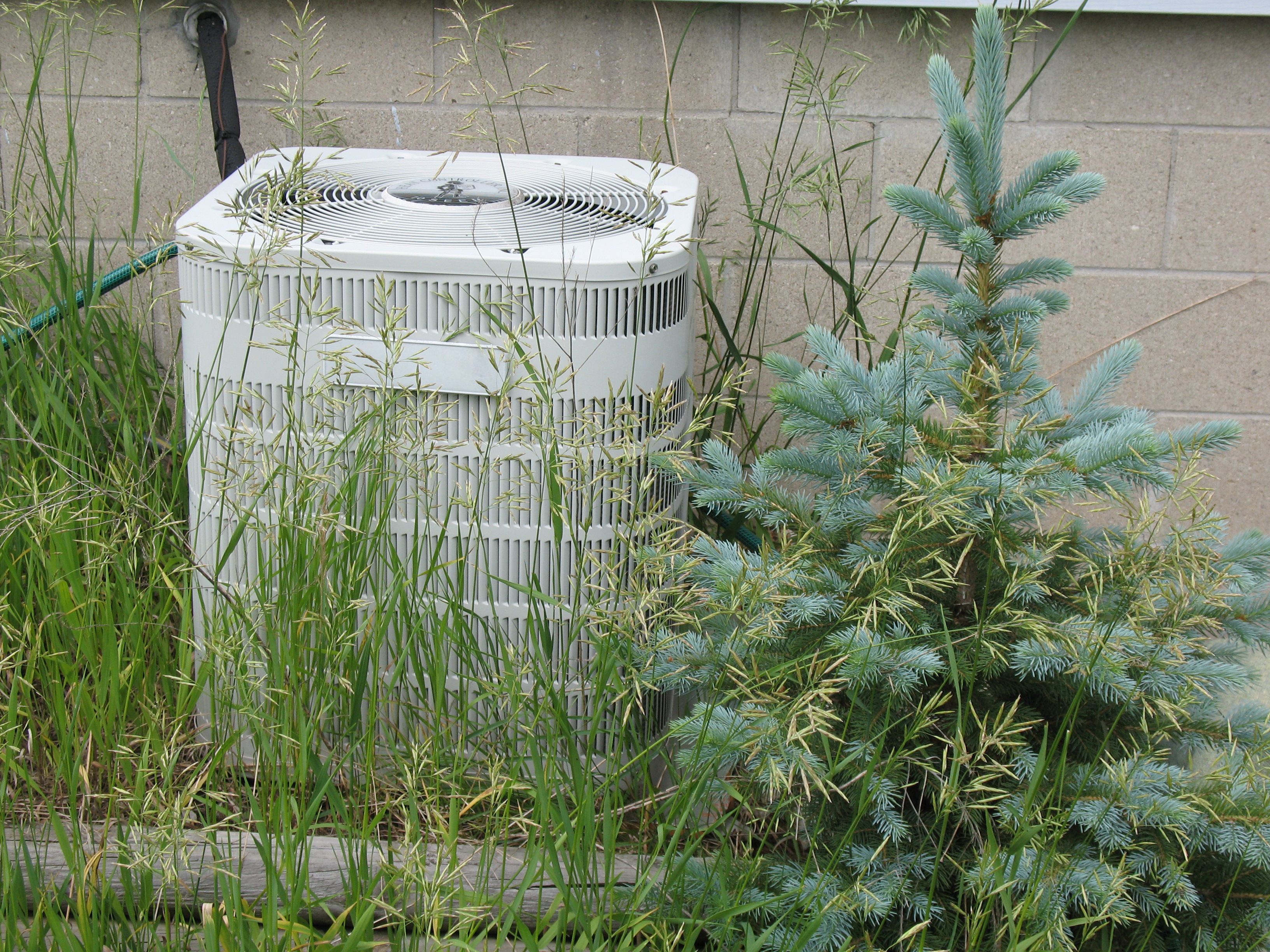
The unfortunate placement of this volunteer spruce begs the question.

The unfortunate placement of this volunteer spruce begs the question.

It kicked on at 10:20 in the morning, and it got me thinking. It’s a beautiful day. Clear and clean, post-storm. It’s not hot out, though it likely will be later today. Upstairs, the landlady’s central air conditioner has kicked on, already.

I’m sorry to burden you with my rant, but more people need to think, to plan a little, in their trajectory on this planet. This is only partly about landscaping but it starts there.

I identify a particular brainless “yard pattern” with Michigan, though I expect it’s all over. You see it driving down any street or road, though it’s particularly noticeable in the country. Michigan is a fertile state. If it’s not planted or maintained, its natural tendency is to revert back to forest. So it’s a bit of a shock that folks will buy a place in the country, cut down all the trees, and put in a lawn. They plunk their house in the middle of it—kings of their environment. Landscaping? Well, it’s a border mentality. They plant along the lot-line. Daffodils, trees, whatever, regardless of aesthetics, they celebrate ownership with a string of ill-advised plantings whose only assignment is to state, “This is mine!”

A century ago, farmers were not so self-absorbed. Clearing land took a lot of energy, which they reserved for their fields. They oriented their homes to take advantage of the sun’s rays in the winter. They had adequate roof overhangs to protect them from the rain or heat of the summer, and—they strategically planted deciduous trees to shade them from the heat and still let the sun’s warming rays help them in the dead of winter. I lived in such a home in Two Rock, a turn of the (last) century farmhouse that never got too hot, because trees were planted to provide shade. In the winter, the sun’s low rays streamed in through the living room window to provide welcome warmth and light. In really hot summer weather, we’d close the curtains and windows to the sun and the daytime heat. When the evening cooled, we’d open everything up again to the refreshing breeze. No air-conditioning, just good, old common sense. In the seven years I lived there, and despite some really blistering heat waves, that house never went above 81˚F. Where did that wisdom go?

This house we’re in now has been here for some thirty or forty years, yet nobody has ever planted a shade tree to provide summer cooling. (Instead, there’s a line of spruces on the lot line, whose long winter shadows screen the sun’s warmth when it could be useful.) The house is surrounded by lawn, which, to look good, requires regular watering—with the electrical expense of pumping that water. There are plenty of windows, but no one ever pulls a curtain against the summer heat. Instead, before the dew is even off the grass, the air-conditioner fires up its relentless drone. In an era of global warming triggered by energy use, somehow the air-conditioning solution seems to miss the point. I can almost hear the planet sigh, “Work with me here!”

You can always retrofit with well-placed trees. Drapes closed in the daytime, especially in a home that’s empty while you’re off at work—that’s not too much to ask, is it? We have a regular steady breeze—so you can open the windows in the evening, smell the fresh country air and cool your home. We can work with nature, instead of against it.

Rick and I have selected our building site based on existing tree placement. We’ll have the summer shade even before we have the home. Those trees will lose their leaves and we’ll get some winter warming and light on the south side during sunny winter days. Window placement is designed to maximize light and sun, when it’s needed and to avoid unnecessary heat loss. In that way, it’s an old-fashioned placement. Sure, there’ll be a view—but not at the expense of energy. We can all do a little more, to use a little less.

That’s my rant. (Live with it – we all can!)


Good Enough Gardening

A.V. Walters–

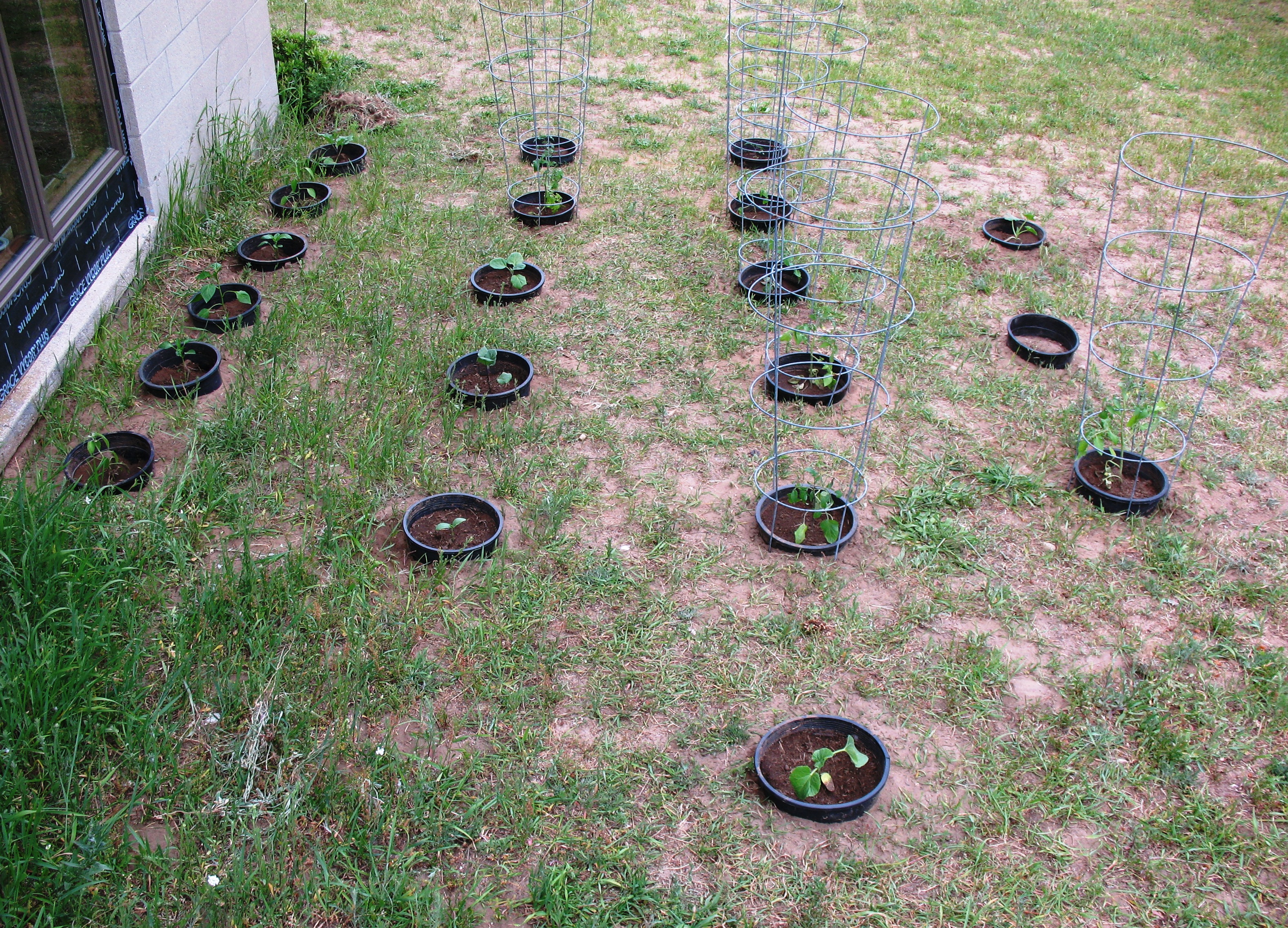
Now, a good gardener would have done things differently. A good gardener would have had the soil tested and would have amended accordingly. This year, I’m going to have to be a good-enough gardener. The plants went into their buckets in a flurry of enthusiasm, an unexpected last chance to see things growing, and enjoy them on my dinner plate through the season. What can I say; it’s a done deal.

I’ve heard that the soil here is alkaline. (And the water is hard.) I suppose you could say that this little bucket-garden is a test plot. We’ll just have to see how things go. I fully expect to test the soil on our property, next year, and amend accordingly. So far, we’ve been pretty lucky. We planted in a good spot, which I picked for the southern exposure. What I didn’t figure on was wind. Wow. Like Two Rock, this place has wind, and then some, to spare. (The wheels are turning and I’m thinking… a good spot for wind power.) My little southern exposure turned out to be perfect, because the house also offers the garden some shelter from the wind.

I’m not joking about the wind. It’s a beautiful day, so I hung out the laundry. It hangs horizontal. By the time I finished pinning up the first load, the first things up were already dry. Whipping in the breeze, even the towels dry soft and everything comes up lint free. There has to be another way to harness that energy for good.

Today was watering day for our little garden, too. In Two Rock I was able to satisfy watering by topping off the buckets, twice, once a week. In Two Rock, there was no rain during the growing season. But, there was more clay to the soil, and that helped to hold the moisture

Here, it is largely sand. Even with Michigan’s regular rainfall, I think I may have to water a little more frequently—especially with these winds. The plants, in the ground for about a week now, look healthy and have started to take off. Everything has sprouted a round of new leaves, and the peppers and tomatoes have started to flower. I was surprised at how little they suffered from transplant shock. I’m looking forward to the results of our experimental garden.

With today’s gardening finished, I decided to take advantage of the wind and do “extra” laundry. You know, the stuff you don’t usually do—the throw rugs and some blankets, even my winter coat and the winter’s down clothing. They’ll easily be dry by evening. I’m letting the wind do the rest of my day’s chores, and I’ll get the credit.

Garden Surprise

Michigan Meets the Bucket Garden

Another Bucket Garden

Another Bucket Garden

A.V. Walters–

I had resigned myself to not having a garden this year. There’s just too much going on. We have building to do—and that has to take the lead. In Empire, we had a late spring, and nowhere to start seeds. Now that we’ve moved, well, it’s a little late. Michigan has a shorter season—and, unlike Two Rock, it’s not forgiving on the harvest end. Besides, in a rural setting like this, a garden needs infrastructure. I don’t have time for infrastructure.

A garden, especially a vegetable garden, is an artificial environment. Its inhabitants have needs. In Michigan, they have some basic needs that exceed my Californian framework. Here, we have garden predators. And not just the usual gopher hazards (though we have those, which, like in Two Rock, we can solve with buckets.) Here, we have deer. Worse yet, the place is crawling with bunnies. That means we need a really tall fence (six feet or better) and it has to extend underground. Bunnies are not deterred unless you prevent them from burrowing under the fence. With their Bambi faces and cute eyes, these critters’ benign outward appearance hides a darker garden reality

Moreover, we don’t yet have water on the property. I’m no fool. I read French Dirt. Never plant a garden until you have a sure water supply. Our well is not yet in. No well, no water. No water, no garden. It’s as simple as that

Still, Monday I ran into town and stopped at my favorite grocer, Oryana (a local co-op). I was doomed, even before I stepped inside. There, at the entrance, were racks and racks of organic vegie starts. At good prices, too! Some of them even knew my name! I have no discipline—I quickly snagged a bunch and headed home. On the way I rationalized my decision. I could plant them just outside the window of our little, basement apartment. After all, my planting buckets are sitting idle. The landlady’s dogs, though pests in many other ways, allegedly keep the yard clear of deer and bunnies. (We’ll see.) Surely the landlady would enjoy fresh produce through the summer, too.

It won’t be a big garden—only twenty buckets. Eight tomatoes, five peppers (can’t find decent hot peppers in Michigan), an eggplant assortment, cucumbers, zucchini, crookneck, and a cantaloupe. We’ll skip the leafy things—I just picked through what was left at Oryana’s. It’s just a tad late in the season, but I’m happy to have something to grow.

I was sheepish on my arrival home. After all, we’d had the garden discussion. Rick knew something was up immediately. He laughed when I admitted to my impulse purchase. But, of course, he helped me dig-in the buckets.

Gypsies and Win-Win

A.V. Walters

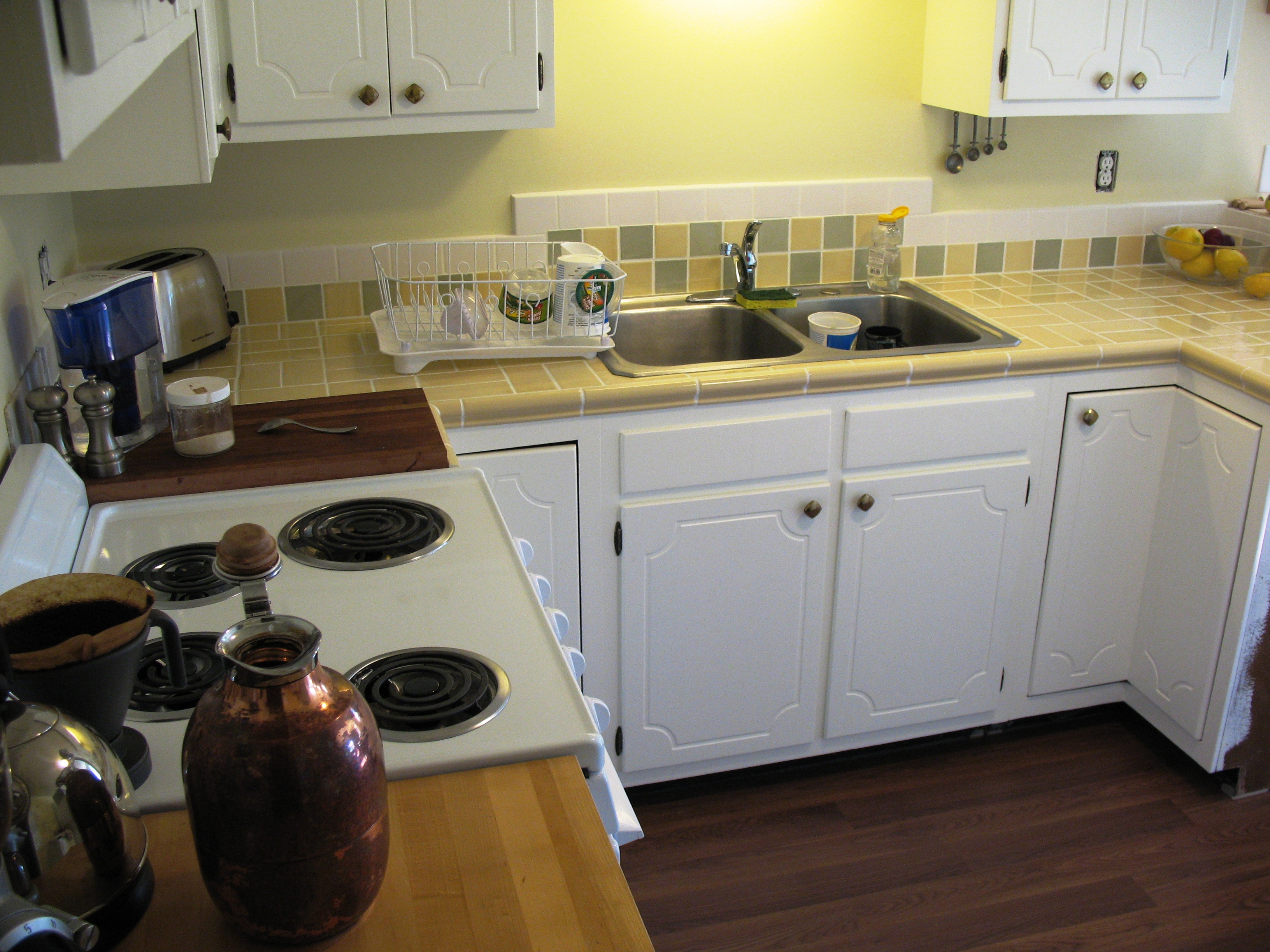
Cozy kitchen

Cozy kitchen

I have a sister who moves all the time. She’s not an economic refugee; she has a comfortable life. It’s just that she and her husband seem to have itchy feet. They buy a house, fix it up, and then, when even a faint whiff of opportunity calls them elsewhere, they are gone like the wind and the process starts anew. I used to say that her middle name was “never-in-ink,” based on the damage that her peripatetic ways did to my address book. At one point she had three homes (and an orchard with a pole barn) in three different countries! We joke that some people go on vacation and send postcards—my sister buys real estate. Her defense? Well, they needed somewhere to park. The process has slowed some, maybe it’s age. More likely, the real estate juggling has diminished because they bought a big boat that now takes them from place to place, to satisfy some of that wanderlust.

Rick and I are not like that. We are homebodies, gardeners and people of roots. So it’s surprising that in the past eight months we’ve moved three times—with another planned before the end of the year.

We did love our little honeymoon cottage in Empire, but it was, after all, a “vacation” rental and that means that we had to move on once the “season” started, or pay the steep hotel-like rates that tourists pay. In a vacation area, the season runs from Memorial Day through Labor Day. Some people extend a little beyond that, for a second-wind season that we call “color.” So, we packed up and moved again.

The problem with living somewhere this beautiful is that, if you’re not a grower (cherries, apples or wine grapes), the most lucrative business for locals is the tourism industry. The county is chockablock with cottages, B&Bs and little hideaway granny units that are rented to tourists by the day, or week. It’s almost impossible to find a longer term rental because everyone is cashing in on the vacation market. Rick and I are building, this summer, and we needed a place to stay—somewhere near the building site—until it’s ready to occupy. We’re getting a late start because of the heavy winter and delays in permitting. That put us smack-dab in the middle of the vacation season—no reasonably priced housing. We checked with our soon-to-be neighbors (two of whom have vacation rentals) but they needed the tourist rates. We considered buying a trailer, or even a heavy duty tent—though that’s a tough transition with cats. Then we stumbled on what looked like a win-win.


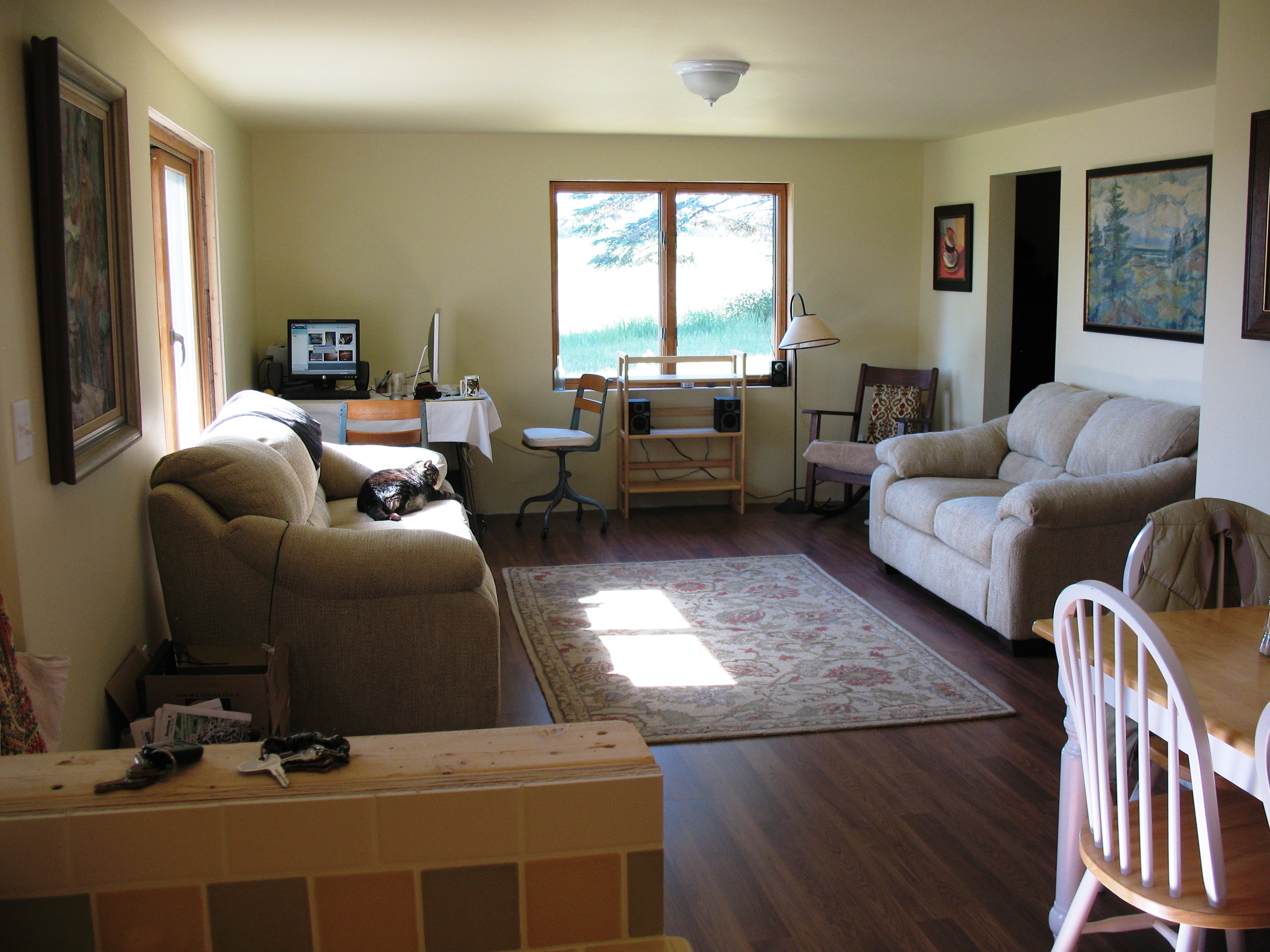
An old-fashioned look.

An old-fashioned look.

Back in Petaluma, each year in April, we volunteered for an organization, Rebuilding Together, that helps to renovate homes for elderly or low income owners. Often the services are critical to letting them stay in, and maintain, their homes. It’s a great organization—and it was where we met, Rick a volunteer builder and me—volunteer grunt labor. This year, April came and we noted that it was the first time in a long while that we weren’t on a Rebuilding crew.

In preparation for our impending relocation to Cedar, I went around introducing myself to all the neighbors. Some of them I’d known for years. I bought this property over two decades ago, and so I was that absentee owner from California. I thought we should re-connect in more of a, “Hi, we’re moving in,” kind of way. At each stop there were the usual discussions—“we’ll be building, yes, my husband is a builder… no, it’s not a summer/vacation home, we’ll be living here….” One neighbor in particular took interest—“Does he do work on the side?” Apparently some years ago she considered renovating her walk-out basement into a rental. She hired some fly-by-night-guy and it went badly from there. After a considerable investment (and some bad blood) she fired the guy and the job sat, unfinished—in fact, it had barely been started. Though I’d only just knocked on her door, technically I’d been her neighbor for years. Maybe that’s why she felt so comfortable telling me her life story and all her woes, though it seems to be a common thread in my life. People tell me stuff.

It didn’t take long before I thought—hmmmm, she needs renovation work, we need a place to stay… I connected the dots. I suggested it to Rick, before I approached the neighbor. It would be a big undertaking—not to be entered into lightly. Oddly enough, it was an alternative to our usual, April volunteer gig. This was a win-win—there was something in it for us, and it could work for her, too. When we approached the neighbor, she was intrigued, but wary. It took her weeks to decide (and we even had to interview with her priest!)

So that’s where we’ve been for the past month, or so. We’ve been building a little apartment. We were running on a short time frame—after all we had to be out of Empire by June 1. And, as usual, it was on a shoe-string budget. Another project brought to you by Craigslist. We pulled many 10 hour (and a few 15 hour) days until we reached the point of “habitable.” We still have trim-work (baseboards and window trim, etc) to do, but we moved into this little pied-à-terre the first of June. It’s just across the road from our building site. As soon as our permit is approved (which is taking longer than we thought) we’ll be building, yet again, only this time (for the first time) for us.

Still work to do, but a comfortable way-station to home.

Still work to do, but a comfortable way-station to home.

We’re not like my sister. We’re not gypsies. We’re itinerant builders, looking for a spot to call home.

Of course, there is next April…


e) All of the above…(every little bit helps)

A.V. Walters–

INVEST IN SOLAR AND WIND POWER!

INVEST IN SOLAR AND WIND POWER!

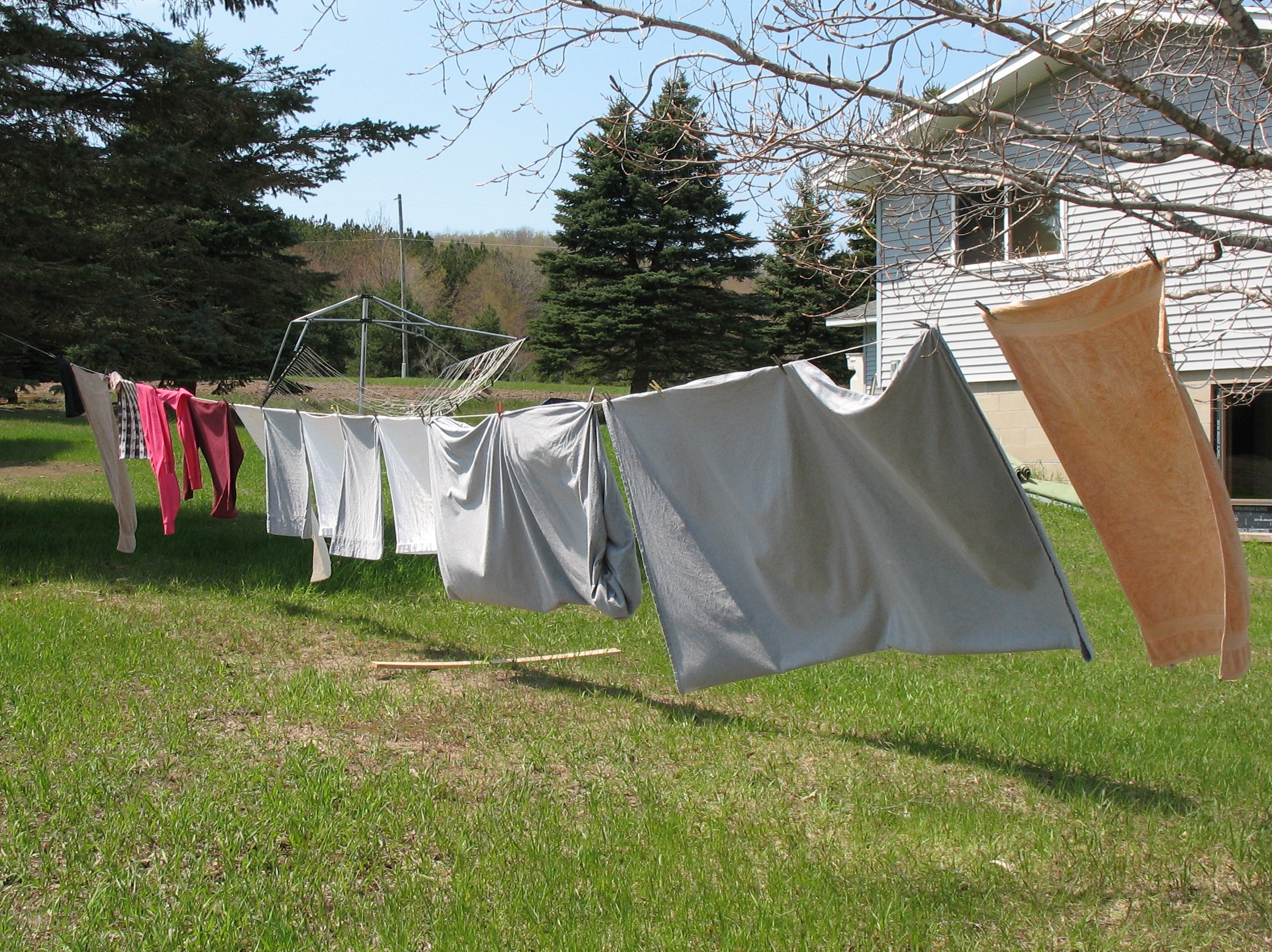
Now that we have warmer weather–we can all do our bit to save energy and enjoy the best the season has to offer!

You, too, can participate–use solar and wind energy!

SUN AND WIND--FAST AND FRESH

SUN AND WIND–FAST AND FRESH!

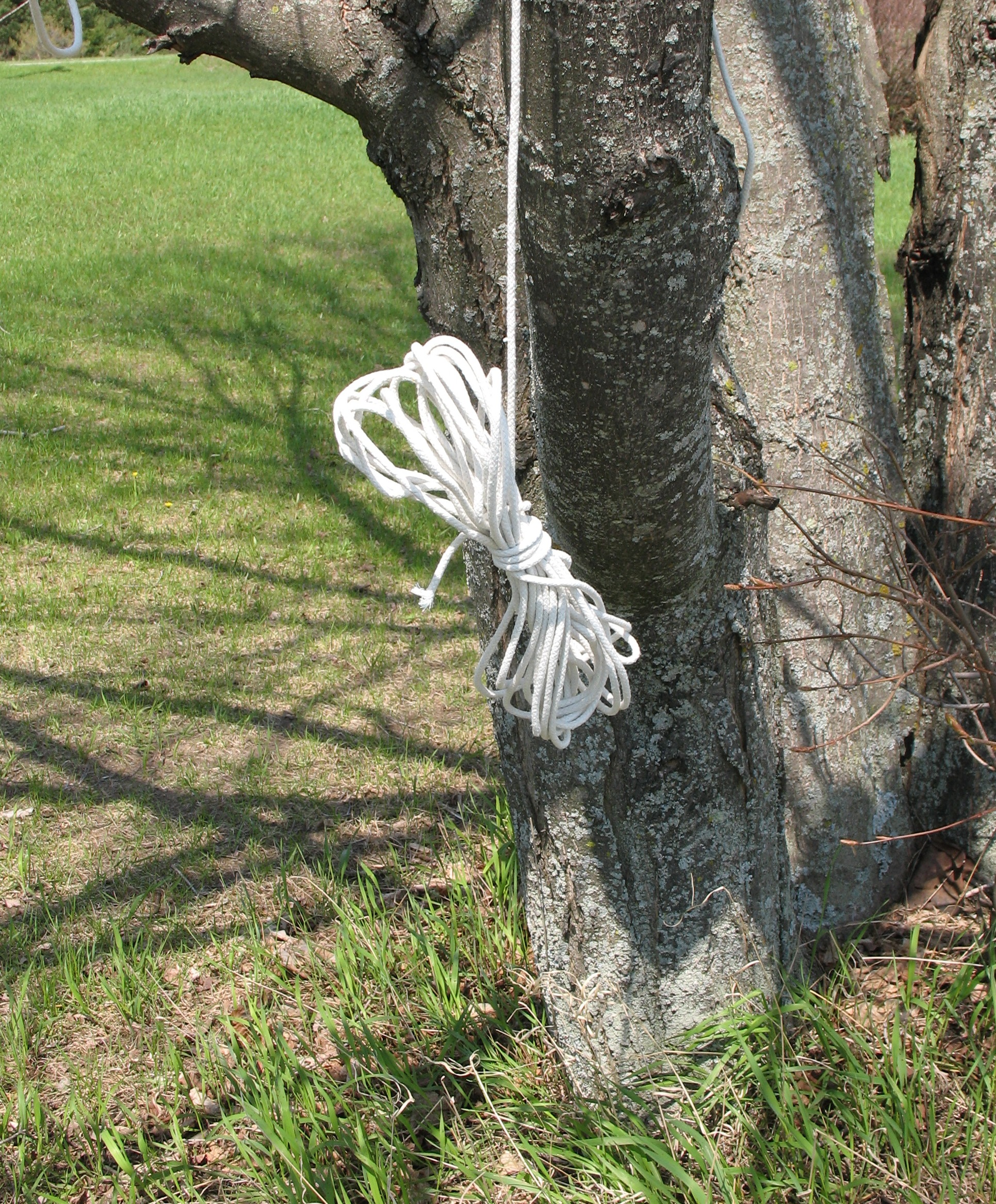
(a little rope and two trees.)

It’s Official, Spring Is Here

A.V. Walters

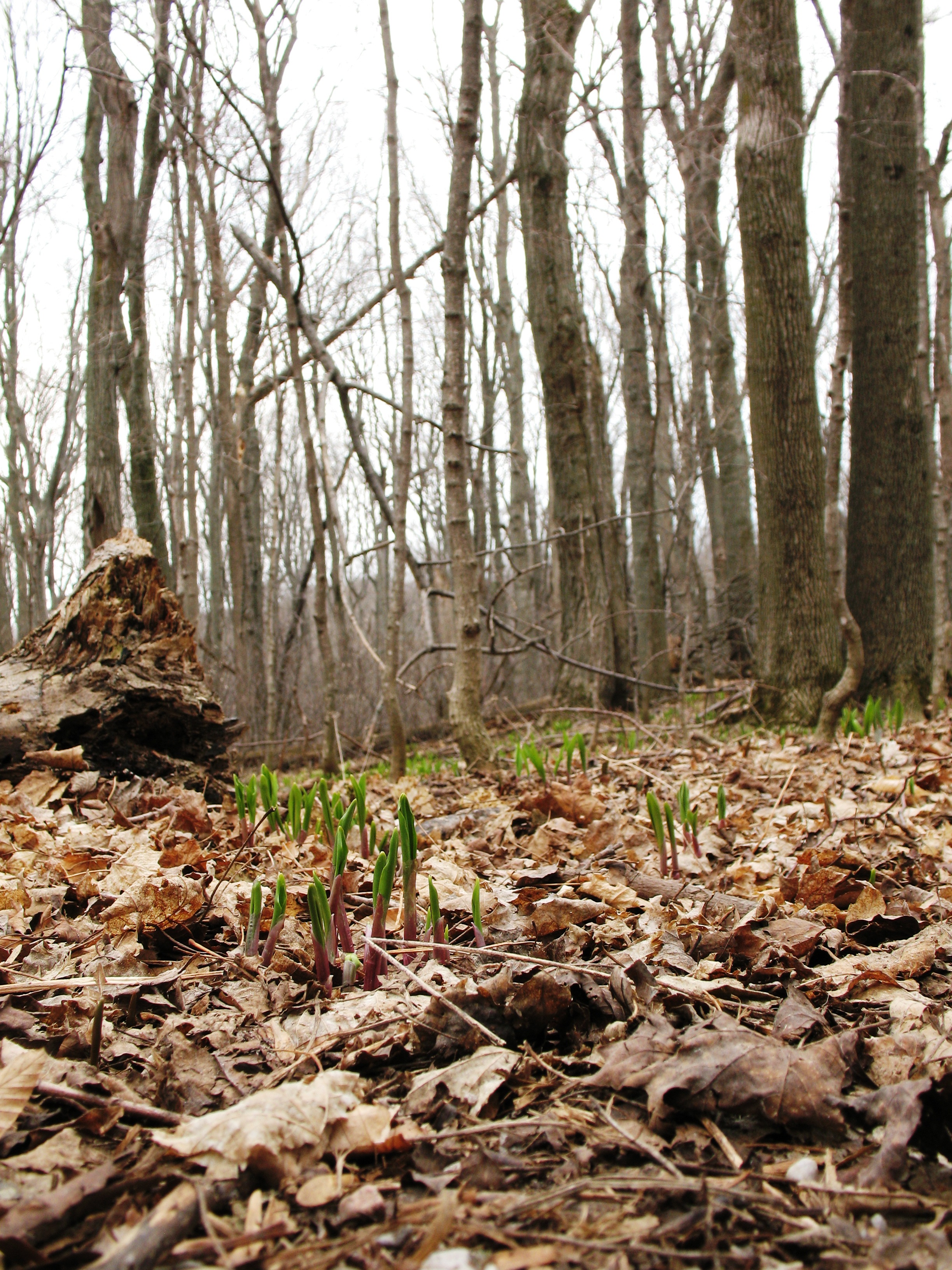
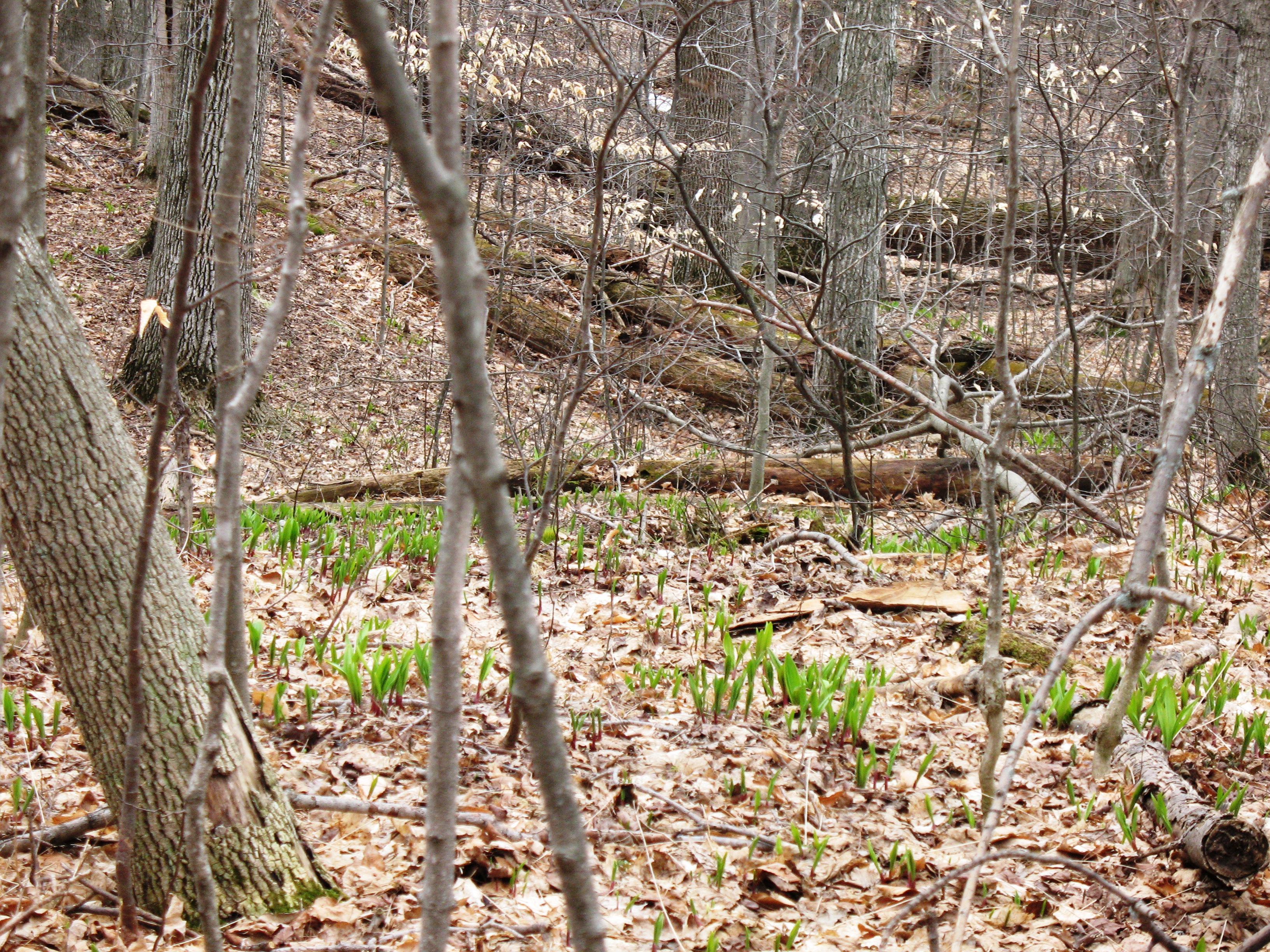
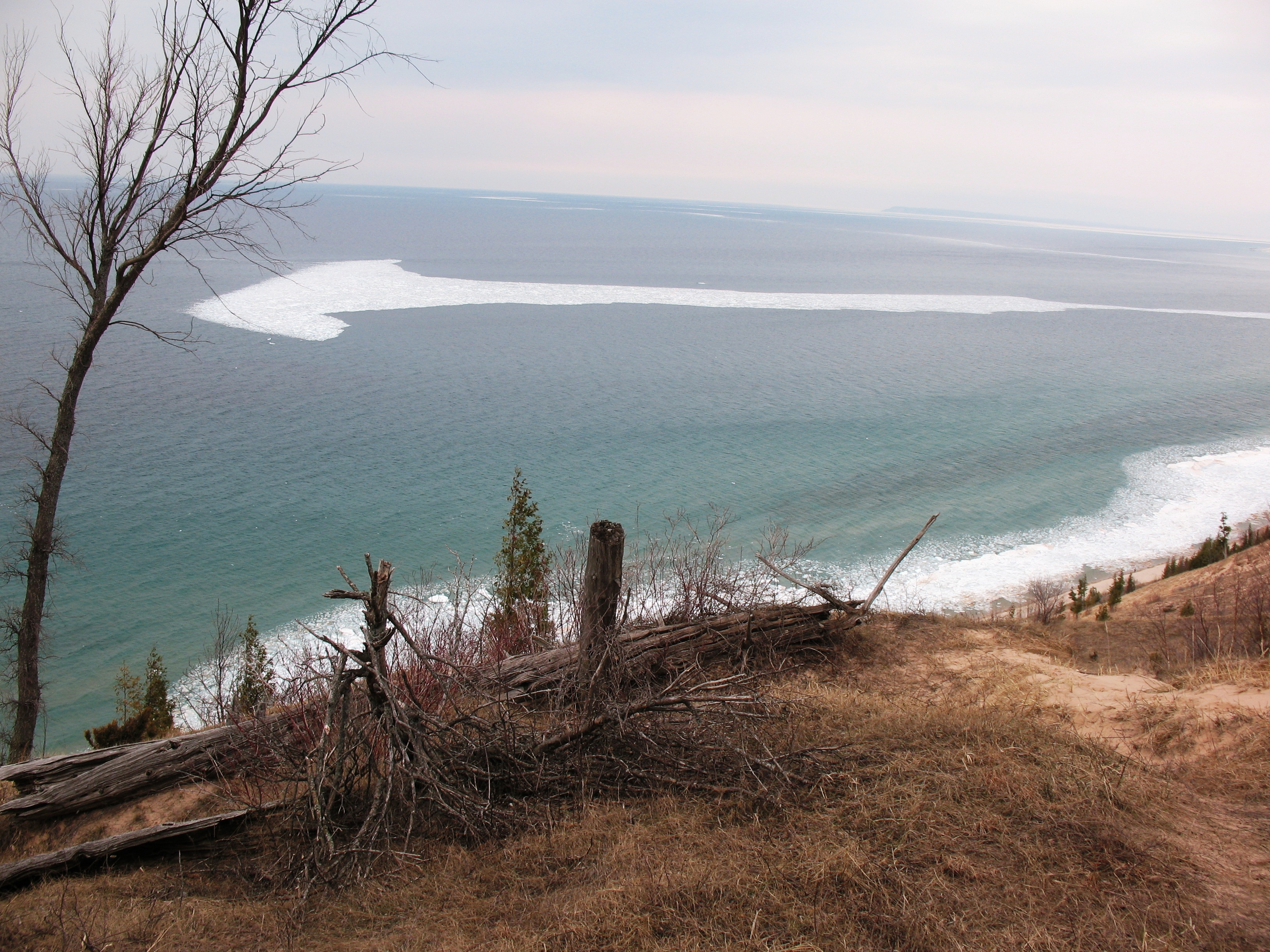
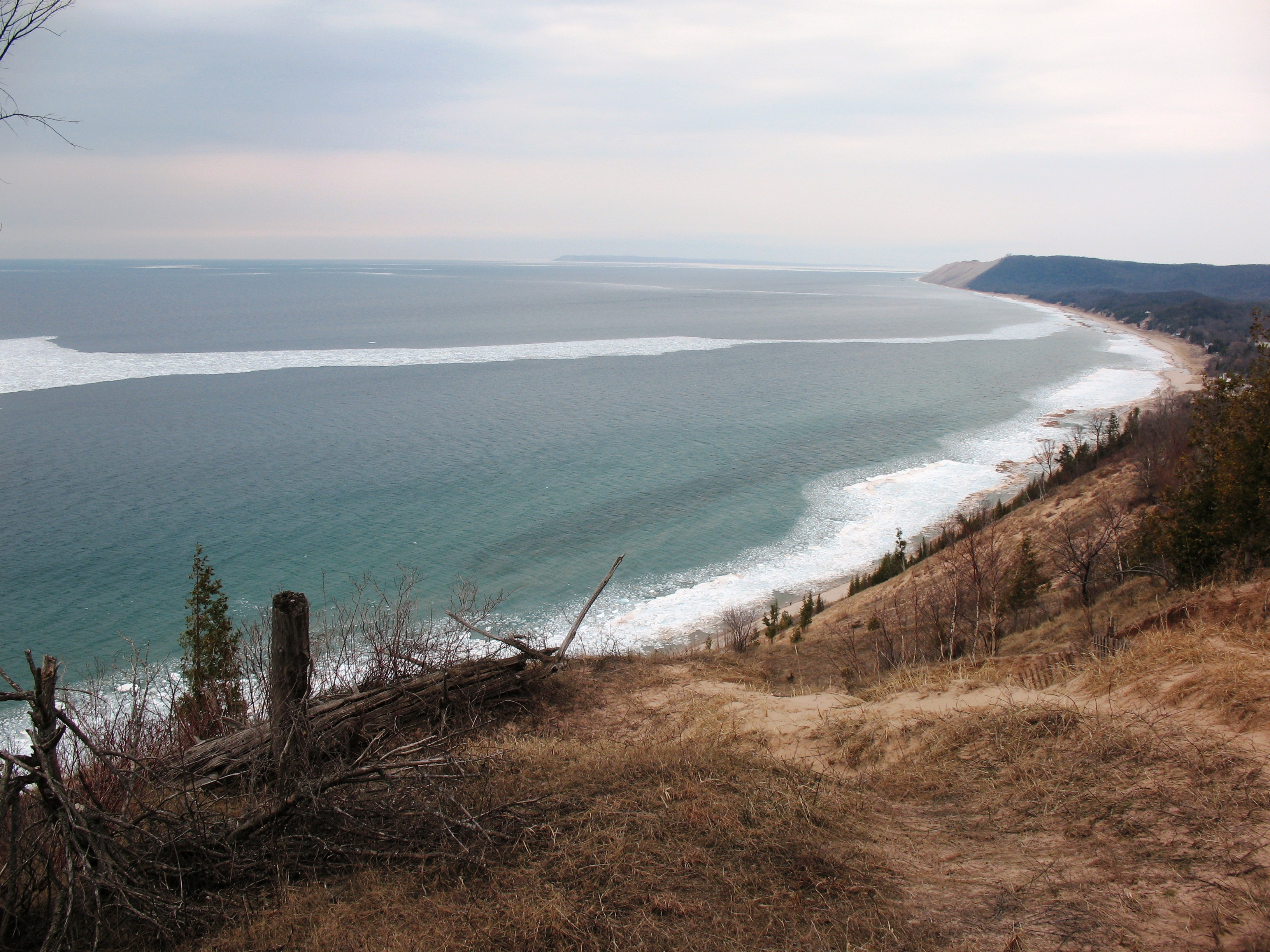
Almost all the snow is gone. We’re forecasting days of rain this week (“April Showers”), so that will be the end of that. The days are not warm, but neither are they cold. The lawn is turning green. I’ve turned off the tap water!!! We were digging earlier in the week, and the frost is gone. While there’s still float ice in the Lake, it’s nearly clear along the shore. The forest floor is bursting with wild leeks, and now with Dutchman’s breeches, too. I see swollen buds on the trees–they’ll be leaves in days. Spring, better late than never.

We enjoyed the winter. Now that it’s gone, I can be honest about the two things I didn’t like. Six months of hat hair. Six months of a runny nose, everytime I went outside. Otherwise it was pretty grand. I can hardly wait for the best bits of Spring, though. Flowers, many, many birds, blooms on fruit trees (we have a lot of that, here in the land of cherries) and….morel mushrooms! More on that, later.

Yesterday I made up a big batch of spaghetti sauce and used up the last two quarts of my Two Rock tomatoes. I am really ready for Spring.


Marching Through the Seasons

A.V. Walters–

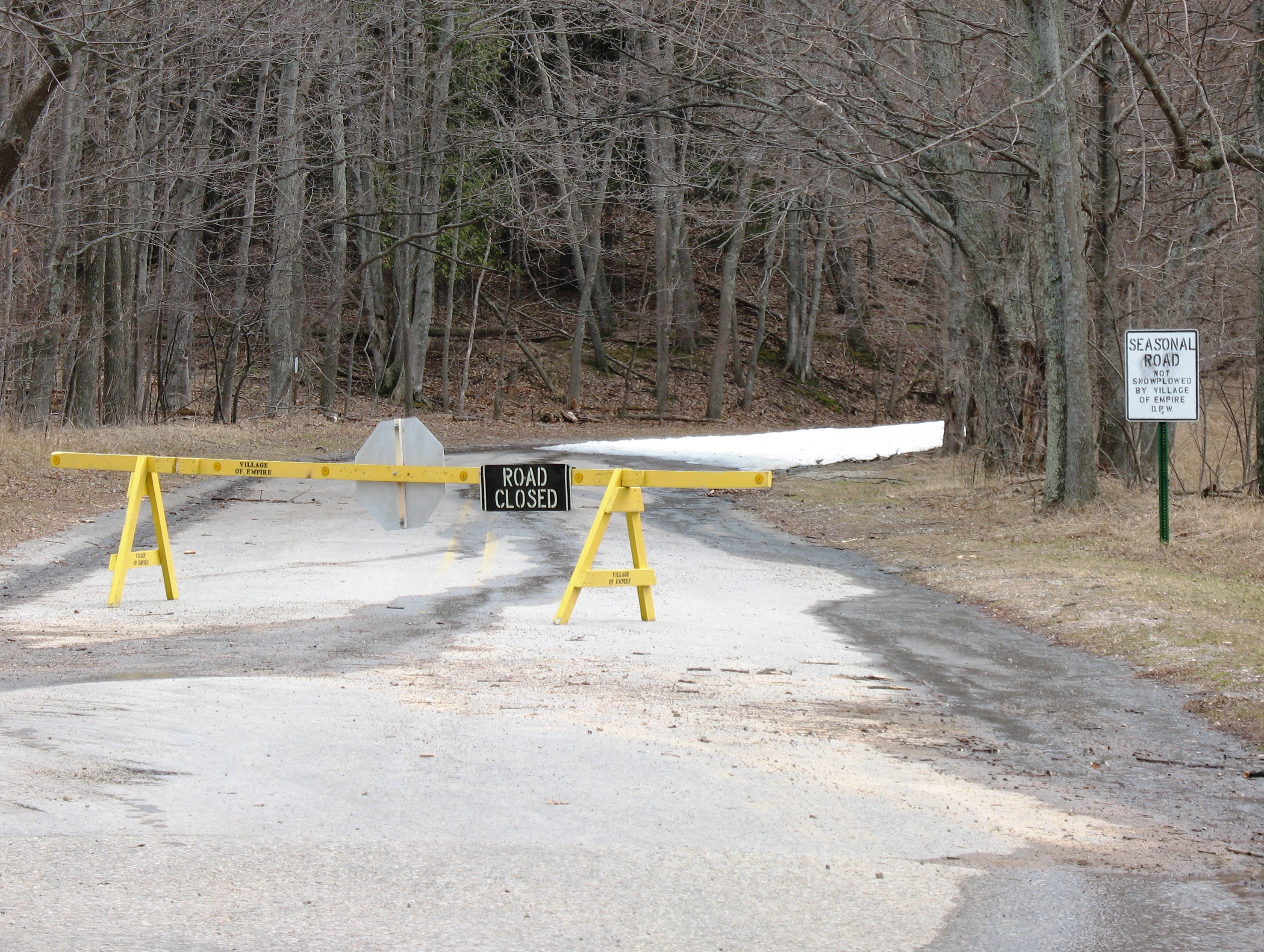
Still Closed.

Still Closed.

Most of the country is experiencing Spring, in all its glory. Some, in the northern reaches (like my mum) feel the warmth, see the birds, but still have 6-8 foot snow banks, and the woods are still zebra-striped—tree trunks and snow. Some of us have a little bit of everything.

Granted, if you look out the window here, you can only spy a few stubborn patches of snow, hidden in shady spots, or where the snowplows had piled it deep. Here, in town, we have snow-drops and crocuses in bloom. The daffodils aren’t far behind. But if you go into the woods, it’s a different story.

Our favorite hike takes us up and over three layers of wooded dunes before it delivers an amazing high-bluff view over Lake Michigan. The secret of the variable unfolding of season is revealed on those dunes.

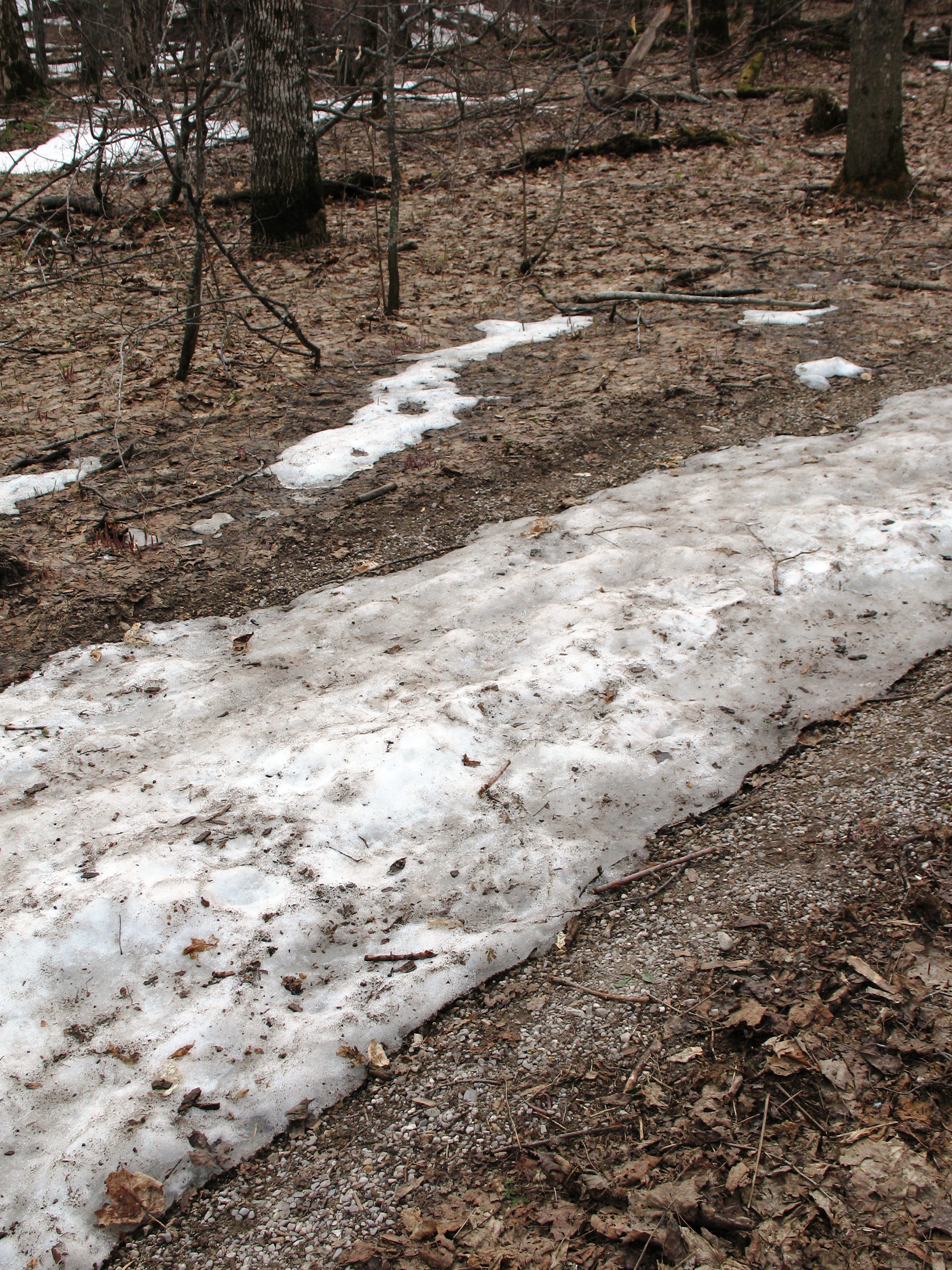
The path, compacted by hardy winter hikers, may be the last to melt.

The path, compacted by hardy winter hikers, may be the last to melt.

The exposed, or south-facing slopes, are snow-free. There, the forest floor is carpeted with leaf litter and spring plants, pushing through to the sunshine. These early plants of the forest floor are well on their way staking out their spots in the sun—wild leeks, trillium and dutchman’s breeches. They’ll get established before the ferns pop up—later competing for sun and water. Stepping into the woods, I try not to tread on the sprouts, but they’re everywhere. One wrong step and I can identify who’s first in the race for spring. It’s the leeks—pungent and oniony. These early pioneers into season have a built-in defense against the winter-starved deer.

Wild leeks!

Wild leeks!

Just on the other side of the rise, it’s also a different story. On the north-facing, or shade sheltered slopes, it still looks like winter. The snow is deep enough to make for tough walking (and slippery purchase.) In a few weeks these slopes will catch up, Spring–the sequel. But north-facing slopes have slight variations in vegetation, with cooler, damper, shade-loving plants having the edge.

420 8

As you traverse the dune forest, up and down, you alternate your way through the seasons—winter, spring, winter, spring. Until last week we had the same dichotomy in town. All through the village it was winter on one side of the street while the snow was gone on the other.

The forest floor, now visible, is littered with the fallen ash trees, victims of the Emerald Ash Borers.

The forest floor, now visible, is littered with the fallen ash trees, victims of the Emerald Ash Borers.

The critters tell a different tale. To them, it’s clearly Spring. Robins, cardinals, chickadees and sparrows are reveling in the bounty of seeds and worms to be found in the warming earth. The deer, who, all winter would stroll down our road at dusk, now have the full run of the fields. They still come by, but now they’re grazing on the first bits of grass that will be our lawn in a week or two. We’ve seen a pair of pileated woodpeckers, too, our attention drawn by their relentless carpentry pounding.

The destination of this hike is the ever-changing face of the Great Lake. Last week the Lake Michigan was almost clear—with just a lacy edge of ice along the shoreline. This week the wind has changed and we see shifting continents of float ice, punctuating the deep blue of the open lake. Seagulls are back, bobbing and nearly indistinguishable from the small chunks of ice on the surface.

420 6

420 4

We’re due for some heavy rains this week. I think that will finally spell the end of the snow. In the meantime, I’ve enjoyed this glimpse of the in-between.

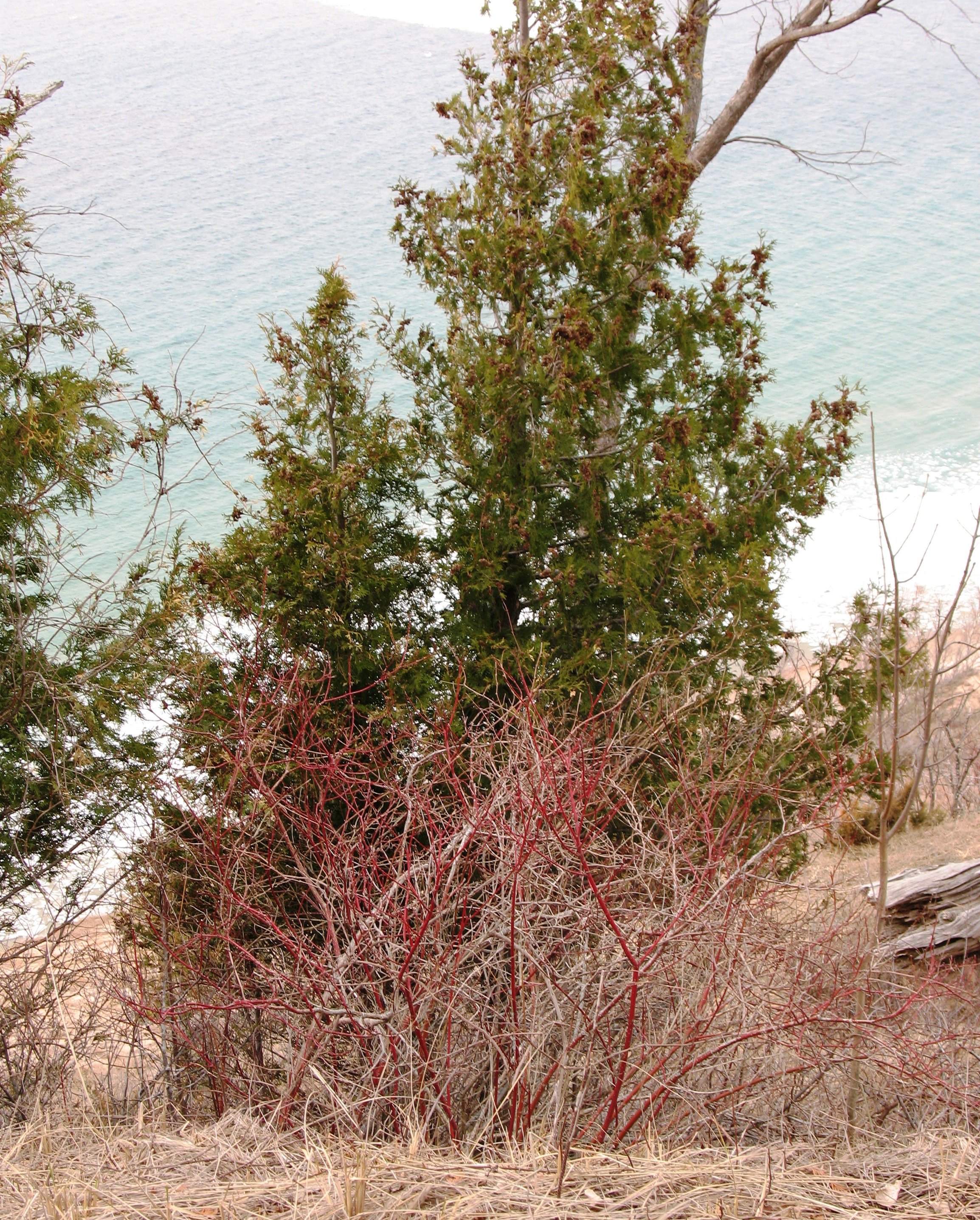
Look at those red branches, waiting to leaf out.

Look at those red branches, waiting to leaf out.

Marshmallows or Popcorn

A.V. Walters–

marshpop

Surprisingly, it turns out that Rick is making the California to Michigan transition better than I am. I still have a foot in each world. I’m still on political and activist email lists for California and Sonoma County. I still check the weather for Two Rock.

I have an off-beat sense of humor. Sometimes it gets me into trouble. Sometimes it reveals an underlying sense of order that is just a little out-of-step with the “regular” world.

This was never more clear than, a decade or so ago, when I received a telephone call from my sister, whose home had just burned to the ground. (“Defective dryer wiring.”) She was near hysterical.

“It’s gone, everything…(sobbing)…”

“Everybody get out okay?”

“Yeah, we weren’t home—Bill was at the neighbors, when they saw the smoke…”

“Pets out, too?”

“Yeah.”

“What’s left… like, how high are the walls?

She broke down again, “Nothing. Nothing’s more than waist high. Just smoldering embers. (Sobbing) What am I going to do?”

Here, perhaps I should have paused to think. But I didn’t.

“I dunno. Got any marshmallows?”

Needless to say, it wasn’t well received.

From this, I’ve developed my theory of Marshmallows or Popcorn. It seems to me that any disaster has radiating circles of impact. If it’s your disaster, it’s Marshmallows. You are close enough to feel the heat; you’re the one feeling the loss. Someone else’s is Popcorn—you’re role is, essentially, an observer. It seems we humans make a spectator sport of disasters. Rick calls it the Rubbernecking Rule—you know, how you just can’t help but slow down and look at an accident. You read an obituary—and check the age. You hear that someone has cancer and the first thing you ask is, “Did he smoke?” It’s a way to handle loss that isn’t yours. Intellectualize. Engage from a safe distance. The psyche wants to understand and, at the same time, dissociate from the loss. That’s Popcorn. The news cycle essentially feeds on our addiction to Popcorn.

I read that there are very strong indications of an intense El Nino cycle, brewing in the Pacific. Ocean temperatures are significantly elevated. In any normal cycle, this could lead to drought conditions in California. Right now, though, California has already seen a number of abnormally dry years. Rick and I were discussing it, the double whammy of ocean warming and El Nino, and whether that fell into an underlying climate-change warming pattern.

Generally they report California’s water status in terms of snow-pack and reservoir levels. We know, though, that that doesn’t tell the whole story. It’s a short-sighted measurement that doesn’t reflect the impact on the environment, or what happens in rural areas, where folks and farmers rely on well-water. For them, annual rainfall is critical to recharge the aquifers. I thought about our lives in Two Rock and our life and friends back on the farm.

“What will we do with yet another year of drought?”

Rick looked over at me, “What do you mean, we?” He grinned. “I live in Michigan.”

So, we do the math: Time + Distance = Popcorn.


Who, us?

Who, us?


Emu Wet

For this post, I’m going to quote Deb’s last emu update, verbatim. Thanks to Deb for sharing the emu experience.

“Don’t they just match in with the land of mud. And they are loving the water puddles, but dancing and running crazy when it started to rain on them.

Funny fellers indeed.


They do love water.

They do love water.

Enjoy the Day!”

IMG_00000882

As my grandmother used to say, “Nice weather for ducks.”


Spring has Sprung

A.V. Walters

We’ve been busy here in Empire. We’re gearing up to build—and hoping that the snow will melt in time for construction. Spring is making inroads into winter’s territory. Here in Empire, there’s a big patch of ground making itself visible in our front yard. Once it gets started, you can almost watch it by the hour. Yesterday, robins appeared. Neighbors whom we haven’t seen in months have started to take walks around town and in front of our house. Spring is here. (But the tapwater has yet to get the memo. It’s still 34 degrees. I can hardly wait for it to warm up enough so that I can turn off the water.)

Of course, Cedar/Maple City (only 15 minutes away) was the season’s big winner in the snow department. We went there yesterday—it took snowshoes to get us to the building site. Snow is still at least knee-deep there, mushy, crusty, difficult to maneuver snow. It’s a case of hurry-up-and-wait. We’ve fetched our tomato cages and buckets, in preparation of the bucket garden–but one look at the site and we just sighed. (We’ll need to fence the garden, the deer here are voracious.) I’m anxious to get back to my gardening.

I’ll report more as the situation develops. In the meantime, perhaps I can update the emu situation from Two Rock.

The Broken Back of Winter…

A.V. Walters–

We’ve stopped tallying the snow totals. Once you’ve bested the old records, every additional inch isn’t quite so crucial. Last night dropped another four, wet, sloppy inches—but we no longer have a handle on the running accumulation. Instead, we’ve joined the ranks of the Spring Predictors. My mother called the other day to inform me that “The back of winter is broken!” Mindful of some of her earlier pronouncements, I demanded, “What, is this some guy from the Almanac, again?”

“No, no. This was the weather guy, on TV. And he had a map! He explained the whole thing.”

“Okay, Mum, I’m game. What’s his theory?” I clicked on the Ebay icon and scrolled through vintage light fixtures. I didn’t have much hope for this, the newest prognostication.

“The polar vortex thing is done. It’s been influencing the temperatures all winter, had us in it’s grip, it did. But the regular jet stream pattern is re-emerging. By the weekend we’ll have seasonal temperatures!”

I flipped to the weather site. Sure enough, the temperatures are predicted to jump this weekend.

“Yeah, mom. I’m seeing it here, too. Maybe you’re right.”

“Of course I’m right. He had a map!”

Ahhhh, Shoes…

A.V. Walters–

I did a laundry run, yesterday. I gambled, and wore shoes. It’s the first time I’ve stepped out of the house, in shoes, since November. What lightness of being! What fleetness of Foot! I’ve loved winter, but at some point, it’s a relief not to have to pull on your hefty winter boots. That’s not to say that the snow is gone—or that it’s warm. But for a trip to town with laundry, it’s finally a safe bet that the roads and parking lots will be clear of the slippery stuff

We’re suffering from faux-Spring. You look out and it’s sunny. We can even see some dirt. There’s a snow-free zone around trees, and on sidewalk areas that have been kept relatively clear of snow. But when you step out, it’s beyond brisk, mid-twenties. I neglected to pull on my thermal layer before heading out for the Laundromat, and I paid for it in chill. Today it even snowed a bit. Winter isn’t finished with us yet.

Shoes, though, that’s a big step. (Pun intended.) And, it gives you big ideas. Gardening. Building. Picking berries. Oh, yeah, and even sandals!

Freeze, Thaw, Freeze, Thaw, Freeze, Thaw…

A.V. Walters-

Yeah, yeah, I know — lather, rinse, repeat.

This is the part of March that drives Spring-starved folks crazy. They crave the warmth, and the promise of Spring. This week is typical pre-spring weather—days in the high 30s (even into the 40s) and nights in the high 20s. Look out, it’s treacherous! That melting daytime temperature brings the constant sound of water running. Roads and paths—otherwise clear of snow and ice—are wet. Then comes the evening chill and the world turns slick and slippery. The low spots in town are blinking, lake/rink, lake/rink, keeping diurnal rhythms. The next day, we start all over again. And, that’s the good news.

You see, a gradual thaw like this trickles the melt-water into the soils. A fast thaw could lead to flooding. It would also see the runoff head straight to the rivers and lakes, without percolating into the soils and recharging the aquifers below. So, this maddeningly slow transition is all good.

There was a warning on the radio—despite the general warming trend, this melt and freeze cycle is particularly troublesome with frozen pipes. The super-chilled melt water seeps deep into the soil, even below the existing frost line—and then refreezes at night. They warned to keep that tap water running. I’ll know that Spring has finally arrived when I can turn off the water.

Our snow cover has condensed. Between melting and settling, we’ve lost several feet in snow depth. What’s left is dense, crusty and dirty. The deer amble across the top of it, demonstrating how solid it is. Rick is angling for a couple of inches of fresh snow—just for the visual clean-up. I’m not sure that he has any particular pull in that direction. Whatever falls is unlikely to stick, in any event. Tonight, we’re actually expecting rain—I can hardly wait to see its impact. Rain can really diminish standing snow-banks. Maybe we should take before and after pics. Actually, the sun is out, so maybe, we should go for a walk.

Meanwhile, Back in California…

A.V. Walters —

This, we miss.

This, we miss.

In California, they’ve had the warmest winter on record and the third driest. My California friends have raved about the weather (even while admitting that the drought is a problem. But hey, if you’re going to have a weather calamity, you might as well enjoy it!) Knowing I’m a gardener, they’ve sent photos of Spring, to tempt me from here, under my blanket of snow. Late rains finally brought the green back into the hills of Two Rock, and that’s good for—emus!

Green Hills for Grazing

Green Hills for Grazing

Emu Views

Emu Views

Yes, Emus! Back on the farm, Elmer’s daughter is raising four emu chicks. She wants them to be guards for her organic duck operation. The emus we reared last year are a little skittish around the ducks—and there were some duck injuries when raucous ducks agitated their delicate emu sensibilities. Ducks were stepped on. The solution is emus who have been raised with ducks. So that’s what Deb is doing.

Emus at the Feeder

Emus at the Feeder

Up Close

Up Close

A Quiet Moment in the Pen

A Quiet Moment in the Pen

So, our teen emus, Kelvin and Gatsby, will be stuck with sheep duty. That’s not such a bad gig, more turf, more freedom, better view. Nice work, if you can get it.

Emu Teens. You have to wonder, is botching the job the way out of chores?

Emu Teens. You have to wonder, is botching the job the way out of chores?

After some early garage and barn living, (Deb is not so crazy, as we were, to keep emus indoors) the new babies are settling in nicely.

Can we come out, yet?

Can we come out, yet?

Now, they stay with the ducks. Not that they socialize, but they are comfortable sharing space. Right now the emu babes are about the same size as the ducks. In the future, the emus will shoot up, no doubt surprising the ducks! They’ll serve as their guardians from predators. The teen emus were doing okay at the guardian job; during their tenure the duck losses stopped. Coyotes, foxes, and even hawks were discouraged by the emu presence. However, it wasn’t working because the emus themselves were injuring the ducks. Clumsy emus.

Ducks above, emus below.

Ducks above, emus below.

It’s nice to hear how things are back on the farm. We’re biding our time, waiting for the snow to melt. Then things will get very busy around here.

Emu Huddle--For these last pics, I asked Deb where the fourth emu was. Apparently, Number Four was occupied pecking at her red shoes!

Emu Huddle–For these last pics, I asked Deb where the fourth emu was. Apparently, Number Four was occupied pecking at her red shoes!

Punxsutawney Prognostication

A.V. Walters

Phamous Phil

Phamous Phil

–Everyone is waiting for Spring. The signs are here: the days are growing longer; the cats are shedding, and my mother’s seed catalogs have arrived. So, there you have it—what are we waiting for? Of course we’re still seeing sub-zero temperatures and we’re ass deep in snow. And, that has a way of slowing things down.

Most everyone has a method for predicting the arrival of Spring. The cruel, (or totally depressed,) promise us that we’ll be able to break ground by, oh, August, at the latest. My mother assured me that come March 1st, things were going to warm up, immediately. (She’s on the edge of her seat, to garden.) Then, there’s that damn groundhog thing (which predicts nothing, except a really good film.) At the library, (where we rented Groundhog Day) someone said it would be a late Spring—based solely on the excessive number of berries on this past season’s mountain ash trees. My nephew hinted that our purchase of snowshoes would spell the demise of winter.

The human brain is an awesome, pattern-recognizing machine. Patterns suggest predictability. They streamline the critical-thinking process with the utility of fact-based assumptions. To be effective, this cerebral shorthand requires repetition. Of course, it’s a fair guess that Spring will come. Until this winter, most of us believed that there was a certain regularity in the calendar. “Record-breaking” is novel and all, but it’s not helpful when forecasting. My mother originally based her balmy projections on something my brother-in-law said. She’s since recanted—as she learned that he based it on the Farmer’s Almanac!

My Rick, is a man of science. Beyond mild amusement, he has little interest in hare-brained, prediction theories. He believes in climate change because it is borne out by observable facts, over the last few decades, and further supported by climate models developed from the collected data. (Now, there’s a mouthful.) We both have the National Weather Service site bookmarked on our computers. He regularly peruses the various science sites. Since it is his first true winter, he has little on which to base prediction. Moreover, as this year is notably abnormal, he questions any prognostication. Rick waits… patiently.

Perhaps that’s the real difference. Some of us are more impatient than others. I’m eager to start gardening and building. Besides, my experience of Spring is more than just reaching the equinox. Spring is a cluster of things—birds returning, the budding of certain plants and trees, and the smell of damp earth. So, I keep an ear open for the more creative projections.  My mum says that all the malefic planets are going retrograde this week and the beneficial planets are coming direct. (Another mouthful!) That’s got to be a good sign, eh, Rick?

Winter Freedom

A.V. Walters—

Winter Freedom!

Winter Freedom!

Yesterday, we tried out our new snowshoes. I remember snowshoes from my youth. They were cumbersome affairs, long and wide with bindings that seemed to wrap around endlessly. They were not as sleek and fast as cross-country skis, but they were useful, nonetheless. Snowshoes gave you hands-free mobility. They were good for steep terrain, working outdoors, and for traipsing through the woods. Ever clumsy, in snowshoes I found the grip to enjoy a sturdy form of winter transport. Sure-footedness aside, I’m in no shape to try those up-slopes on skis, and some of our favorite hikes are on steep slopes, as they wind their way through the wooded dunes.

Last week's winds obstructed the road

Last week’s winds obstructed the road

That inspired our snowshoe venture. But, buying snowshoes is a confusing endeavor. I did my research online, and then went searching for bargains. I tried craigslist, but every time I spied a set of worthy snowshoes, they’d be gone before I got there. Either that, or they were hundreds of miles away. So, I went to my trusty retail back-up, Ebay.

I wasn’t interested in the authenticity of the wood-and-gut appendages of my past. Today, there are newer, sleeker, lighter snowshoes. There are aluminum frames with synthetic webbing or the lighter, smaller, solid-deck models. I opted for the latter, and picked a mid-priced model. Then, I hovered over my eBay auctions like a vulture over fresh kill. (It’s amazing how high-up I can be, and still smell a deal.)  Later, my nephew quizzed me on my selection. He was all for the super-expensive ones, but I explained what I’d purchased, and why. When he, the-expert-on-all-things-outdoors, acknowledged the wisdom of my selection, I knew I’d done alright. Finally, they arrived.

We’d opted not to get poles. We see our hiking comrades out poling their way through the snow, and assume there must be something to it. But, from my perspective, the whole point of snowshoes was that they were hands-free. So, we slipped into the easy, cinch-up bindings, and headed out into the yard to check them out. They’re easy! It’s a breeze!! Without another thought, we launched off on our favorite route, up to the Empire Bluffs.

Hands-free, with snowshoes!

Hands-free, with snowshoes!

The best thing is that modern snowshoes have incredible traction. They have teeth that dig into the icy snow, and rim cleats, too. I never felt so sure-footed. They let you head off into deep virgin snow, without so much as a second thought. In our regular winter boots we didn’t dare step off the trail, or we’d be ass-deep in snow. I saw a bird’s nest, off the trail, and headed out to take a look. These snowshoes give unfettered access. You can wander off to see whatever beckons. (And then follow your own monster-tracks back to the trail. No Hansel and Gretel “lost-in-the-woods” issues.)

New vistas, off trail

New vistas, off trail

There is a lovely rhythm to the snowshoes’ scrunch and slap of progress.

We figure that our standard, hike to the bluff (including the road up to the trailhead) runs about 3 to 3.5 miles. The outgoing leg is a pretty steep climb, at times, but the snowshoes tackled that like a champ. We probably put in some extra distance, because of the regular temptation to take off into previously inaccessible areas. We worked a little harder, too, because tramping through fresh powder was a novel option, even if we stuck to the general area of the trail. Still, they are comfortable and, for winter gear, relatively light and sleek. I didn’t fall once! (As compared to my luck on skis, where a major component of the exercise is the getting-back-up.)

They do use a whole new set of muscles, though. We felt it later that night—walking around on rubber legs. And, we slept like logs. We’re fine today—and some of that is the point of it anyway. We’d recommend it to anyone who’d like a back-stage pass into the beauty and quiet of the winter woods.

Cabin Fever Paranoia

A.V. Walters

Police Blotter

Police Blotter

For most of the locals, this winter is a little long in the tooth. They’re tired of it, and getting a little crabby. It’s showing in the local paper. At last report, the snow total was 228 inches, just three shy of breaking the county record, to date. Since then, we’ve probably had at least three inches. That means that this year will be a record double header—in both temperature and snowfall.

You’d think everyone would be excited. Where’s their pride in being here, and witnessing this little bit of weather history? Noooooo, people are ready for Spring and are tired of all this. The headlines are revealing: “COLDEST, SNOWIEST—Winter to Break Records; Man and Wildlife Cope.” The deer and wild turkeys are suffering with the cold and deep drifts. The wildlife guys, at the DNR, have suspended the rules against harboring ducks and waterfowl. They need open water on our rivers and inland lakes so they can take off, and it’s not easy to find. People are finding, and rescuing downed ducks. So, if officials catch you harboring a duck, they won’t prosecute. They’re even giving out information on where you can find open water to release them.

Even the snow plow drivers, are weary. “It’s starting to wear on all of us… It’s always fun in the fall, to start plowing, but by now, it’s not fun anymore.” (According to their supervisor.)

A week or so back, a couple warmer days and fierce winds broke up the ice on the Lake Michigan. Suddenly the lake, which had reached over 80% ice coverage, was once again a wild and thrashing deep blue. It was impressive. I mentioned it to the guy in the local grocery store. He nodded, acknowledging the really awesome power of a Great Lake.

“Plus,” I continued with some enthusiasm, “With the Lake open again, you know what that means?”

He just looked puzzled.

“We’ll get more lake-effect snow.”

He just groaned and put his face in his hands.

We’re in another cold snap, now—you know, Polar Vortex, the sequel. We hiked up to the bluffs to see the lake. It’s starting to fill in again—frozen out almost to the visible horizon. They say it’s back up to 50 %– in just days. And, it’s snowing. The paper says that, with all this snow, there are concerns about Spring flooding.

We love the local paper. It covers all the small town stuff, high school sports, ice-fishing events, bowling, that kind of stuff. Rick loves the police Dispatch Blotter. This week though, the police blotter showed that winter is taking its toll. A paranoid caller complained. “…the Road Commission [snowplow] is purposely placing snow at the end of his driveway.” (Rick had a good laugh, at that one.)

Of Books and Blogs

A.V. Walters

ec coverGuylaine Claire Cover jpg

I’ve written both. I’ve been blogging for a couple of years now, so the rhythm of it feels natural. The books feel more like chess, plotting and planning to get the story out, in a way that’s more like a natural unfolding. In a blog, I want to give just enough story to create a mental image, and then to make my point. It’s photorealism versus impressionism. I admit that I am often guilty of subtle. Even too subtle.

A few blogs ago, I wrote about training cats. The point, albeit understated, was that, except for very small kittens, I don’t believe that anyone can train cats. They train you. You go to great efforts to change their bad behaviors, mostly changing your own conduct to minimize the opportunity for their transgressions. It raises the question, who’s training whom? I’m not sure that my point came across through the text. I thought it was wildly funny—in a Canadian restrained kind of way. Unfortunately, nobody noticed. In that, I failed.

Those readers (that didn’t get it) probably think I’m just another middle-aged woman with cats. I’m a relatively recent FaceBook conscript. There, I notice that there’s an endless supply of middle-aged women with cats. Even some of my same-age male cohorts have begun posting “cute” cat videos. Oh stop. You know who you are.

Anyway, from a writing perspective, a blog ought to be short and, well, glib. And I struggle with shorter. I note that there are a great many blogs that use no words at all. What are we coming to? Maybe less is more, but I can’t tell. I just write until the vignette is complete.

First, I wrote the two novels. Then, the blog was supposed to be a vehicle to build platform. I admit that with some shame—shame, because I know how to put those words together in a way that conveys the lingo of shameless-self-promotion. Along the way, I learned that I liked blogging. I like the challenge of brevity, with connection. So, perhaps I’ve taken it away from what it was supposed to be—marketing—and I’ve aligned it more into the mode of reflective, journal writing.

My mother is a potter (as in ceramics.) From the time when I was very little, she would explain her pots like stories. Every pot, she contended, had to have a top, a middle, and a bottom. Each part had to define itself, and still relate to the whole. We’d go to art fairs, and she’d (discreetly) show me pots that had failed this basic design requirement. I was trained to be a ceramic snob.

It’s what I try to do with each blog. It’s not haiku, but it’s distilled, hopefully with a beginning, a middle, and an end. Some hit. Some miss. Recently though, after about a year of personal uproar, I’ve returned to working on novels. But, blogging has changed me. I used to sit down to write, throwing myself into the abyss—the only agenda was to move the story forward with every chapter. I had checklists, and l didn’t concern myself with the niceties, beyond letting every character speak in his, or her, own voice. The rest of it I left for editing. Now, I’ve become fussy in a chapter-by-chapter kind of way, and it’s slowed me down. I’m like a cross-country runner who’s over-trained doing wind-sprints. (We used to call that ‘running the telephone poles.’)

I’m not displeased with the result, only the pace. Does blogging do this to other writers? I can only wonder. This is all strange territory for me—new speech modalities defined by technology and delivery. I can only re-double my efforts. These characters are far enough along that I’m compelled to finish their story. Anything less, would strand them in the in-between. Again, I’m left to wonder—do other bloggers have this problem?


Winter Mix

A.V. Walters

Winter Mix?

Winter Mix?

Sounds to me like something you’d serve as an appetizer at a holiday gathering. In reality, it’s not so friendly—it was today’s weather report. Winter mix is unsettled weather that serves up a mishmash of rain, sleet and snow. We’ve had gorgeous February weather for a couple of days, bright sunshine and upper thirties to low forties. I consider February to be the seventh-inning-stretch of winter. The sun comes back, for whole days, not just the cameo appearances of December and January. The cats have been sprawled-out, on floor, in the sunshine streaming into the living room.

It’s been especially delicious, since there’s so much snow. We’ve been skiing (albeit badly) and hiking. The sun and snow are so nice that I broke down and ordered snowshoes. (Don’t worry, there’ll still be plenty of winter left by the time they arrive. We have a couple of innings to go, yet.) Tonight brought a decided end to our reprieve. This will be the first real “storm” of the season. Sure we’ve had snow, (lots of it—217 inches, so far) and the occasional travel advisory, but nothing that came with storm warnings. Today’s snow/rain mixture will freeze tonight as temperatures drop back to more wintery levels and we usher in high winds and more snow. Tomorrow, winds are expected to gust up to 55 mph. On fresh slick ice, that should be loads of fun. I ran into town today and picked up groceries and coffee. We can hunker down for the duration. (Or, we can suit up and put on spikes to go see what happens at the lake in such winds!)

We’re only 14 inches shy of breaking the all-time, county snow record. It’s still only February, so we’ve got a good chance of doing it. I find myself rooting for snow and season. My first winter, back in Michigan, and a record-breaker! I can’t complain; it’s been an adventure. My mother says it may all be my fault. She’s remembering that the year I moved to California, 1978, was one of the last record-breakers. (And, just for good measure, I left California with what might be a record drought.)

Pipeline Postscripts

A.V. Walters

mid feb

I lived in California for thirty-five years. Rick lived there all his life. It is in our blood to be water-thrifty. Conservation is a lifestyle issue—not to flush every time, short showers, dozens of little tricks learned over time to save water. That is not the culture in Michigan. Doing dishes, my brother doesn’t think twice of letting the water run, while a conversation or other task takes him away from the sink. Watching, I squirm. Here people have lawns, and they water them, with sprinklers.

With our uber-winter this year, many have had their pipes freeze. There are four communities in Upper Michigan where the entire towns are at risk of freezing pipes. (Our water temperature at the tap is 36 degrees.) In L’Anse, Michigan, the townsfolk are being advised to let their faucets run—constantly, to keep the mains from freezing solid. Some developments were built with plastic supply lines. Plastic won’t conduct electricity. If your plastic lines freeze you’re in trouble. The advice there is to cross your fingers and move out until Spring. (You’re crossing your fingers in hopes that the pipes themselves won’t burst, leaving you with an even worse mess when the thaw comes.) The utility wonks in L’Anse are telling people not to shovel the snow away from over their water lines. (Too late for us, eh?) It’s often a surprise to people from milder climates that a good layer of snow actually insulates from the more extreme cold.

Now that the welders have zapped our lines clear, we’ve been told to leave the tap running, all the time, until Spring. Our water-miser ways may have even contributed to the freeze in the first place. We’re struggling with what feels to Californians like water waste. My natural inclination is to shut off the tap—always. Now we can’t and I’m having trouble with that adjustment. You can hear the water run. You wake up at night, foggy-brained, thinking that you need to get up—someone has left the tap running.

I’m trying to adjust my attitude for the duration. Think of it as a water feature, I tell myself, you know, like a fountain. That’s the ticket. Don’t folks use water sounds for relaxation? I try to reconcile my discomfort with rationalization. After all, this water comes from Lake Michigan. I’m just recycling it—through the house septic, through the sandy soils of Empire and then back to the Lake. In the meantime, as a renter, I’m glad I don’t pay the water bill.


Training Cats

A. V. Walters

Who, me?

Who, me?

I’ve always had well-behaved cats. I train them as kittens. That’s right, trained cats. I’m from a large family where good behavior wasn’t optional. With kittens, I use a squirt gun to enforce the House Rules. It’s about boundaries. Some places are okay for cats and some are verboten.

Bob came to us as an adult stray. He is a genial cat, not bright but friendly. In fact, he is clueless. As a kid, I had a school teacher who, when confronted with less-than-perfect indoor etiquette, would demand, “Where were you raised, in a barn?!” In fact, it was a slur on the agricultural kids—the farmers and the French-Canadians. But I try to remember it as a cautionary guideline, with Bob. After all, he’s a twice-abandoned farm cat. And, as a matter of fact, he was raised in a barn.

When he first arrived on my door-step, Bob had no boundaries. He felt fully entitled to get up on the kitchen counters or the table, and help himself to whatever goodies were there. Well, something had to be done about that! I used a spray bottle and Bob learned. What he learned was that he could not go on the counters if somebody was around! Bob learned to be a sneak. So, we redoubled our efforts. To reduce temptation, we made a concerted effort not to leave anything out. Butter went into a covered dish. The dishes were mostly washed after a meal. Meat scraps went into the freezer (not the garbage) for disposal later. And we watched, like hawks, to catch him in the act. That was the tough part, because, as a sneak, Bob was good at quietly committing his mischief. The only notice we got was the thump of his feet hitting the floor, after his forays. He had a well-practiced innocent look. “Who me?” (Though, there were clear Bob prints on the countertop.)

For the most part, he’s well-trained, now, though there are the occasional lapses. The most egregious of his sins is his propensity to lick the cream-cheese frosting off of the carrot cake. After icing the cake, it needs to sit out for a bit to set up. Bob did it again, last night. Rick came in to a freshly iced, and licked, cake. We’ll need to be more diligent about putting the cake away—or covering it. And, well, it’s back to training… We can’t have cats mixing with cakes.

I’m glad that we’ve had such success with him. Most people think you cannot train a cat.

Dry-Run–

A.V. Walters–

We’re learning. It turns out that this little rental has taught us many valuable things about living with season. We’ve learned that ice dams are common in older homes (and inexcusable in new ones.) We’ve learned that it’s really important that one’s water supply lines be buried deep enough. It’s the coldest, snowiest year in decades; so, it is a good test for us. We’re holding up, and we’re learning.

Oh, we have no water.

Even back in sunny California, there would be cold snaps from time to time and many people would have their pipes freeze up. I remember, when I first moved there, I was aghast that many (especially older) homes ran their pipes on the outside! When I lived in Oakland, our water supply line entered the house on the front—above grade! In the winter, I wrapped that pipe—first with foam pipe insulation, and then with towels and plastic. We never had our pipes freeze. Here, water supply lines are buried deep (hopefully below the frost-line– about 48 inches, around here.) Sometimes, it’s not deep enough.

Did I mention we have no water?

If it’s any comfort, it’s not just us. A couple of other properties in the village have come up dry. There’s a whole triage routine to this, first you root around under the house to see whether the pipes under the house are frozen solid. You check the meter (if it’s running wildly, you have a burst pipe—if it’s not running at all (even with open faucets) you likely have a frozen pipe. This little cottage has heat tape on the pipes. We learned that after the water stopped, when Rick was running his diagnostics. Once you’ve identified that the problem isn’t under you, you need to find out what it is. If it’s in the Village water main—they need to fix it. If it’s in the line between the main and the meter—you need to fix it. This is where it’s good to be renting. The standard solution (after you call the landlord) is to call in a welding company who will essentially use jumper-cables to melt the ice in the line. Not many companies will do this kind of work—they say the liability is too high. Huh? Wow, that’s not the kind of response you want to hear…

So, we’re still waiting for water.

Today is day three. We’re carrying water, by bucket, from the neighbors. We’re starting to look a little scruffy and the dishes are piling up in the sink. The company that still does this kind of work is in high demand right now. Take a number.

And, there’s some small-town humor in it. I went to the Village office to start the “who’s side of the line” investigation. Our friendly clerk took down the information. When I gave my name, she looked up, “Oh, you’re the one that got married last week.” It was a statement, not a question. They run all the vital statistics info in the local paper. I have a distinctive first name.

“Yup, that’s me.” Yup, that’s us. Geezer newlyweds. Later, the village crew came down to investigate the problem. You just know that they’d all been told. Later, a neighbor from down the block dropped by to assure us that we could come get water at his house. Small towns talk. It’s not a bad thing. People in town see the construction cones. They read the paper. They hear that some folks got married, and some are froze-up. It’s about community.

Our future building plans keep adjusting. We are now serious about adequate insulation and ventilation in the roof, in order to fend-off ice dams. And now, you know we will bury our water lines—deep. This little cottage has been our dry-run for winter living. We just didn’t know how dry.


Postscript:

Finally, they came to free up our lines. That freed me up to run to the store for dinner groceries. At the checkout, the clerk (who lives around the corner from us) nodded, “I hear your pipes are froze up.”

I smiled, “Not anymore, the guy’s there now, fixing it.”

“Runs down the driveway, does it?”

“Yeah.”

He nodded knowingly, “You folks keep a tidy driveway, could be part of the problem.”

“What’s that?”

“You know, you could leave some snow in the driveway—for more insulation.”

I howled. “I’ll tell him.”

So it’s a small town. They talk, they notice. They hear about troubles and they have opinions.


Somewhere to Put It–

A.V. Walters–

“No, you have to start a lot wider than that. Over by the trailer is your line.”

I looked at him like he was crazy. “Dad, it’s a driveway, not a runway.”

“Just do it. In February, you’ll thank me.”

It’s still snowing here, and that brings back my father’s voice. When I was a teenager, we moved north to snow country. For my dad, the move took him home to the routines of his youth. We had a steep learning curve to adapt to the Keweenaw snows. He was doing the teaching, and we were doing the shoveling. There are two basic frameworks for how to approach snow control—pick a line of demarcation and stick to it, or clear wide in preparation for a winter of snow. My dad adhered to the old ways, taking a seasonal perspective on snow removal.

We felt silly; at our house we started the season clearing the snow five to ten times the width of the actual driveway. The neighbors scooped their driveway only 10-feet wide. Ours looked like a parking lot. We used the traditional Yooper snow scoop, pushing the day’s snow far from the driveway, into the woods. We thought our Dad was nuts. We scooped and shoveled anytime there were 2, or more, inches of snow. Needless to say, we shoveled—a lot.

By February, it was clear that there was a method to his madness. It snowed and snowed and snowed. And, we shoveled and shoveled and shoveled. Our neighbors were still maintaining their 10-foot driveway, but the accumulated piles on either side were so high that they had to throw the snow up, and over the banks they’d created. Then, they actually had to climb up on top to re-shovel the piles back even further. And, they had no visibility entering or leaving their driveway. Having pushed our early snow way to the sides, we were still shoveling, but we had plenty of space to put the accumulated snow. Our banks were manageable, and our driveway clear. My dad didn’t even say, “I told you so.” He just crossed his arms and nodded.

This week, in the local paper, the headline read, “We’re Number Two, Thankfully.” Snowfall to date, here in Leelanau County, is second in the state only to my old haunts up in Keweenaw County. Nobody with a shovel wants to be Number One. (Ask my mum and my sister, back home.) Many, these days, avoid the whole issue by using snow-blowers (or by scurrying, tail-between-the-legs, to Florida.) We still shovel. Rick does almost all of the heavy lifting here, and he started early season snow removal with a wide open swath of driveway. (How did a California boy know such a thing?) Though we didn’t expect this year’s record snows (and, admittedly, our banks are higher than my Dad would’ve liked) we still have a wide, clear area in our driveway.

It’ll be interesting how our two counties fare over the rest of the winter. Keweenaw’s lake, Superior, is 93 % frozen, considered “frozen over” for all practical purposes. That means that back home they won’t be seeing any more “Lake Effect” snow. Our lake, Michigan, is only just over half frozen, so, we should still be seeing Lake Effect snow, for some time. Who knows, we may yet be Number One!

I help some with the shoveling, and I like it. Nothing brings back my father’s voice like a smug and heavy snowfall in February.

Laundry

A.V. Walters

Today is one of those mundane days when you have to take care of the basics. Little else is more humbling, in modern life, than a trip to the Laundromat. When we first found our little winter safe-haven, it was advertised as having “laundry hookups.” We shrugged; we’d just buy a stackable unit and take it with us when we left.

Then, we made the trip to see our little honeymoon cottage. With just one glance at the laundry closet, we knew there was a problem. First, it was too small to hold conventional American laundry machines. Closer inspection revealed that, sure enough, there were water hook-ups, but there wasn’t a drain line, or venting for a dryer. Clearly, despite the listing language, nobody had ever done laundry in this cottage. When we mentioned this to the landlord, he hemmed and hawed. I can’t blame him; it is a vacation rental, after all. Who wants to pay the utilities so folks can go home with clean laundry? He said it hadn’t come up—vacationers and all. They used the Laundromat here in the village. We signed the papers and moved in, anyway.

It turns out that the local facilities are geared to the summer rental cycle. In English, that means there are no laundry facilities in town during the winter. We Googled it. There are no ‘winter’ Laundromats in the county, at all, except one on the bay-side of the county—about as far as one can get from us—maybe thirty miles. So, we can go to Traverse City, the next county east of us (a mere twenty-two miles), or we can go into the county south of us, a fourteen mile drive. Laundry has turned into a bigger deal than we could have imagined.

Generally, we head south. It’s shorter and the Laundromat there is cleaner, friendlier and fully staffed. There’s a bit of a snow squall out, today, and the run to my favored facility was hairy. I nearly spun out once, that, and the poor visibility had me creeping along at grandpa speeds. When I finally arrived, the attendant met me at the door. Sundays have short hours and I had just missed “last call,” the latest that they’ll permit you to start a load.

I’m stubborn. Having gone to the trouble of loading everything up and heading out into the snow, I wasn’t about to go back home without clean clothes and linens. Especially the linens. You see, most of our things are in storage and we have only one set of sheets. If I gave up for the day, I’d have to haul the dirty clothes back inside, pull out the sheets, make up the bed again with dirty sheets, only to have to strip them again tomorrow on a renewed laundry quest. So, I set off for Traverse City.

Surely, I figured, there must be a shortcut to eliminate the northern dogleg, before heading east. But if there is, I couldn’t find it. Peering through the snow, I took unfamiliar roads that seemed to head in the right direction. Soon, the road I was on got narrower and narrower (and the snow got deeper and deeper) to a dead end. I had to backtrack. After a couple of turns in near white-out conditions, I was lost. So, I headed north, knowing that it would ultimately have to take me to Empire—and then I could head east. Sigh.

Here, in the Traverse City Laundromat, the last dryer load is lofting in grand circles. My quarters are depleted. Soon I can fold, and head home into the snowy night. Like I said, these little household management details will keep you humble.


The Other Side of Winter II

A.V. Walters

Too windy even to bury the car!

Too windy even to bury the car!

It’s blowing and cold out there. It is snowing, but the wind is so strong, that it’s tough to tell what’s new snow, and what’s just being whipped around and redistributed. The usual storm pattern swoops across from the west or northwest. We look out and the snow is horizontal. We’ve noted from the national weather maps that in the center of the county, near where we’ll be living come spring, there’s a pocket of particularly heavy snow accumulation. One look at the winds today tells the story. All the snow from here ends up there. I see a Kubota in our future.

Without appreciable new snowfall (indeed some areas now have less than before) the driveway has drifted over and needs another shoveling. Rick has taken the laboring oar on snow removal. He maintains a beautiful driveway and paths through the yard. He’s learning to sculpt them so that the wind helps keep them clear, though in some places, drift, it will. I’d love to brag about his efforts, but since much of my family lives far north of here (and with really heavy snow) they’d just scoff. My niece reported on her facebook page the other day that she and her children are tobogganing off their roof. We just can’t compete with that.

Still, some things are universal. No matter where you are, everyone complains that, shovel as they may, they just hate it when the plow comes and negates their hours of work, filling in their driveways with road accumulations. Rick bemoans that it isn’t just more snow, plow snow is heavier and crustier. If you let it sit it will turn to a driveway-blocking wall of lumpy ice. It’s not an observation; it’s a conviction.

This past week our local weekly paper did a feature article on ‘the snow plow drivers of Leelanau County.’ It’s appropriate. Those guys (and they seem to be all guys) are doing a hell of a job keeping the roads clear in this record-breaking year. Now, in mid-January, our to-date snow-fall total is 152 inches, which exceeds the usual seasonal total. Only two weeks ago the paper quoted a local meteorologist as saying that we’d hit our 150 and then it would stop. Think again. Anyway, I had to laugh when the veteran snow plow driver stated that his pet peeve was when homeowners would push their snow into his road. (Apparently it makes for a rough ride.)

The War of the Worlds–

 A.V. Walters–

We’ve had a couple of gorgeous days, low to mid-thirties (F), warm by winter standards, some sun and wind. It’s given us some lovely hikes, before the nippy temps return tomorrow. Some predict a return of the Polar Vortex, others, just a resumption of seasonally, cooler temperatures.

Last week, NPR did a piece on the up-side of the recent Polar Vortex. It turns out that the Emerald Ash Borer—the imported critter that is devastating our Ash forests—cannot survive in the super-frigid temperatures spun off by that Northern phenomenon. Indeed, a number of the pests on the move, may be stopped (or slowed in their tracks) by a return to the type of winters we knew as kids. And, the models for climate change (essentially more weather extremes) may well mean repeated episodes of the Polar Vortex. We can complain about the cold, but if it means hope for the ash trees, fewer ticks, or other invasive critters, I’m all for it.

The science is out of Minnesota, where they found that temperatures in the -30F range, kills the larvae of the Emerald Ash Borer. Because of Lake effect, we don’t get those uber-low temperatures, but I can only hope that repeated cold episodes will weaken the larvae and that fewer of them will survive the winter. What can I say, I’m an optimist.

The Ash Borers were introduced by humans. The ticks are moving north with climate change. And, interestingly, the incidence of the super-cold Polar Vortex appears to be the result of (or at least related to) the destabilization of the jet stream, caused by, you guessed it, human-induced climate change! It reminds me of the Orson Welles radio play—where the invading monsters were ultimately undone by the rich, bacterial biodiversity of the Earth. We have become invaders of our own planet—and at least in this small regard, maybe the general disease of climate change is acting as the cure for some of the specific symptoms. Lucky? I guess that’s a debatable question. I’ll keep my fingers crossed.

Emus in Absensia

A.V. Walters

Elmer called the other night—they have emu chicks. Mr. and Mrs. Emu are at it again and, with all the food we gave them over summer, and the mild winter, they now have a sizable clutch of eggs. Or had. Out of the original twelve, two chicks have already hatched and died. Stretched so thin, Mr. Emu has difficulty watching the new little ones—he’s still nest-bound.

So Elmer and his daughter kidnapped the one little guy they found still alive and plan to remove the rest as they hatch. Between cold nights and predators, little emu chicks have a rough go of it in Northern California. Hence, the call. Rick and I are the only ones on the farm who have successfully hand-raised the little guys, and they need help.

They’ve decided that more emus would be just the ticket to guard over their new venture in organic duck eggs. (You should see all the ducks, it’s pretty impressive.) Emu guards are not a bad idea. We learned, the hard way, that the emus in our front yard were, in fact, protecting the chickens.  And so, the questions begin. What do we feed them? (Finely chopped kale and apples, to start.) Can we give them chicken feed? (No, chickens are seed eaters. Emus are grazers and need green fodder.) How warm do they need to be? (94 degrees F for the first two weeks, tapering off 5 degrees a week, after that.) What about water? (Not for about a week, until they’ve mastered balance and eating.) Those, and more, are all questions that we had to find the answers to, a year ago—either through trial and error, or what we could find on the net. As it turned out, we did okay. We had no losses from the five we raised. I guess that makes us emu experts. (And, given some of the so-called “expert” advice we found on the net, we are!)

We haven’t been homesick since our relocation. We miss some of the people, but we are caught up in the possibilities of our new lives. This, though, gave us pause. We definitely miss the emus—and raising them was an adventure we really enjoyed. So, we stand ready to be emu emissaries. We’ll provide all the information we can. And, of course, we’ll worry.


Musings from the Polar Vortex–

A.V. Walters–

Just enough snow.

Just enough snow.

Now there’s a new phrase for you, eh? The only vortex part of it is the rushing-in from the void of all the misinformation about weather, generally, and climate change, specifically. Oh, how the reality-based wonks among us rue the day that somebody started calling it “global warming.” It so distorts the opportunity to study the facts, and create meaningful policy, (or dialogue) in an atmosphere of an anti-science witch-hunt.

Now, the cold snap has subsided, leaving us in the more normal seasonal range of temperatures in the 20s. This weekend they’re predicting a warming trend—one that will bring us sunshine and above-freezing, nighttime temperatures. You’d think we’d be happy about that. In fact, it creates just another set of problems.

First, there’s the leaking roof. In winter’s cold, it’s not a problem. But when things warm up, the leaking roof, in combination with ice dams (damns?) makes this little rental an interesting place. (Buckets and mopping up.) The landlord knows, but it was a bad roofing job and now there’s nothing he can do until spring. At the same time, he plans on putting in new windows—which will be a big improvement, though we’ll be long gone, by then.

That kind of freeze/thaw cycle also creates treacherous roads. The thaw provides the fodder, in the freeze period, for black ice and other hazards of navigation—both pedestrian and vehicular. It means we’ll be strapping on yet another layer of winter gear (spikes) onto our boots. I used to think that these were for old folks. However, my mom swears by them and she insisted that they become part of our new, winter wardrobe. I’m a regular Yeti fashion-plate. At least it’s safe.

And, finally, I don’t want our snow to melt. I’m just about to get cross-country skis. I like look of winter. I love roads with a nice, thick, white, base. (I’m not a fancier of salt or the dirty slush it brings.) So my fingers are crossed that the snow stays through the warming spell.

There are northern things that will take some adjustment. The winter tap water is frigid. My California roots say, “Don’t waste water—use it cold and straight from the tap.” My fingers say, “Skip the frostbite, run it ‘til warm.” The water is so cold that it hurts your teeth to drink it. Northern living takes longer to get anything done, whether it’s the time suiting-up, or shoveling-out, life has to be a little more… intentional. And, the butter is too damn hard to spread on toast. (I can hear my sisters, “Turn up the heat, goofball. Good Lord,” shaking their heads, “They live like a couple of Eskimos.”) This might be solved when we have our own place, and it has insulation. For now, unless I’m baking, the kitchen is chilly. Otherwise, our winter redoubt suits me fine, for now. If only someone could convince the cats.


The Other Side of Winter

A.V. Walters

I get comments, (mostly by email) from friends and family when I post a blog. They’re usually supportive but, occasionally, they’re smart-assed. There was a range of comments on my last post. Apparently everyone wants to know–how are these two transplants doing with winter? It makes me wonder if bets have been placed. One friend thanked me for posting a positive perspective on the season. This is, after all, one of the most intense winters in decades (which is why everyone is so curious as to how Rick and I will handle it. Of course, to us, it’s all new.) My sister set me straight.

I guess my warm and fuzzy “snow dusting” blogs are pissing her off. She lives waaay up north, and they’ve had so much snow, that they’re running out of places to put the stuff. My mom reports that the snow banks are between 10 and 12 feet high. My mom is delighted; but she’s not doing the plowing. For many, they have to get up early to deal with the snow before they go put in a full day at work. For my sister, Kelly, lately that’s been three or four hours of extra work each day, hand shoveling out her entry and the path to her chicken coop. Today she was especially heroic—she snow-shoed over to my mother’s satellite dish, to clear it, so my mom could get reception. (Poor mum, last night she missed Downton Abbey!) Kelly’s husband also puts in several hours each day with the plow—besides their home and store, he keeps a number of other families clear.

Kelly is not alone in her frustration. She runs the town’s general store, so she hears about it from everyone. Over the weekend a colorful, but not particularly volatile local came into the store, stomping the snow from his boots and railing, “I’ve had it. Snow just isn’t fun anymore! I’d suck someone’s cock if the bastard would just blow out my driveway!” He hand-shovels, and has run out of places to put the snow. Now, he’s loading it into a wheelbarrow, then carting it across the highway, where he shovels it again, mostly up over the existing banks and into the woods. He hopes the Road Commission doesn’t notice that some of it strays onto the highway. (You’re not supposed to shovel your snow into the roadway, though the plows feel free to fill your driveway with road snow.) Keweenaw County checked in earlier this week at 167 inches for the season, and that was before the most recent foot, or so. I guess this all helps to keep the northerners fit.

So here I am, singing the praises of the beauty of winter. Add to that, I work from home—I don’t need to shovel out everyday—and Rick has taken up most of that duty, in any event. My family and I talk, everyday. Discussions about the weather are sometimes charged. There’s a fierce one-upsmanship to even the most casual comparisons. My mother called first thing this morning, and demanded to know, “What’s your temperature?!” (“Oh, hi mom. It’s 9.”) “Yeah, well it’s minus 7, here. Visibility is so low, I can’t see the mountain!” Really, it’s much milder here; I can’t compete.

Yesterday, my brother called to warn me about “wind chill.” (We’ve actually had a Wind Chill Warning.) We’re in a cold snap—it’ll put us in the single digits and negatives for the better part of the week. Really, though I’ve been in California for thirty-five years, I didn’t slip into a coma. I do remember wind chill. It seems that everywhere, but here, it is really snowing. My brother (a few hours south of us) has seen 14 inches in the last two days. My mother (well north of us) has seen even more. Us? A dusting, maybe five inches over the past four days, barely enough to shovel every day. Today, we are seeing the beginnings of the “big storm”. We check the radar by keeping an eye on the weather websites.

Critters here are challenged, too. It’s tough when, everyday, you have to dig deeper for your food supply. The last two nights, rabbits have come to clean up what’s left of the birdseed we threw out for our jays, juncos and chickadees. We get squirrels, too, and that makes me nervous. The squirrels can get into the engine compartment of your car. Sometimes they’ll even eat the insulation on the wiring. I mentioned it to Rick, who noticed that the squirrels seemed particularly interested in hanging out under and around his truck. (He went out to check the engine compartment—just to make sure there weren’t any rodent condos going in. Believe me; you don’t want to tangle with squirrel HOAs!)

Inside, (though I don’t think it’s any gotten any colder) the cat has taken to snuggling up all day on the electric baseboard heater. It hasn’t the charm of a good woodstove, that’s for sure. It’s a little pathetic, but we all do what we can.

Our local papers are full of weather reports and snow records, too. Our year-end snow count topped 100 inches. The local Meteorologist promised that the colder temperatures would slow the snow. Also, he points out, if the Lake freezes over, it will lessen the “Lake Effect” snow. If the Lake freezes over? Look at a map. See how big Lake Michigan is? They don’t call it a Great Lake for nothing. When a Great Lake hits 90% ice cover, it’s said to have “frozen over.” (Normal winters usually see a 50% cover.) How often does a freeze over happen? Well, in the last 110 years, only four times (1904, 1976-1978.) His report is otherwise scientifically problematic, saying (and I quote), “Northern Michigan only gets 140 to 150 inches of snow each year. We’ve already had 100 inches, so that leaves January, February and March to get an additional 50 inches.” What? So, if we reach our statistical norm, someone’s going to turn off the snow?

We’re lucky. Nestled next to the lake like this, we get the snow, but not so much of the cold. Inland areas can get bitterly cold. And, we have great winter gear. My oldest sister abandoned the state a couple of years ago, saying she never wanted to be cold again. When we decided to move east, she gave us all her winter gear—coats, hats, scarves and mittens by the bin-full. (We’ve got so much down, we’re up!) We have no excuse for being cold, or for staying in. In fact, as soon as I finish this, Rick and I are headed off for a walk. We thought we’d go take a look and see what the Lake is doing.

Monochrome

A.V. Walters

Bluff View

Bluff View

Winter. Pretty much black and white, right? Hardly. Maybe because we are cloaked in a postcard perfect layer of white, it forces one to take a closer look. There’s a world of color out there, if you look for it. The snow itself is a constantly shifting set of hues, depending upon the light. Right now it’s brilliant white, with the edges, drifts and footprints defined in shades of grey and blue. Just after dawn or at dusk, the snow glows pink—what my mother calls “The pearly hour.”

But, it’s more than that. At first glance the naked trees are black, grey and taupe. Looking closer reveals myriad shades and colors. The dogwood tips are a deep ruby. The cedar trees mix the characteristic yellow-green of their foliage with the rusty seeds at the tips. Across the street, our snow is interrupted by some kind of dried seedpod in a dark umber and waving, golden dried grasses. That gold is echoed above in the clinging brassy parchment leaves of young beech trees. Look deep into the forest and you’re rewarded with the winter greens of the white and red pines (with their warm brick and brown trunks)—to the almost-blue green of the spruce. Driving through the county side, I am surprised by the range of color in the sleeping, winter fields; the amber corn stubble poking up through the drifts; the burgundy tips on the cherry trees; the shocking, spilling-over, yellow of the naked willow branches; and the dense green of the snow-flocked Christmas trees that survived to see another season.

Today we went for a hike along the beach. Along the shore and extending out in the shallows, Lake Michigan has its usual winter, ruffled collar of jumbled frozen piles of snow, slush and ice. Out about fifty feet, the collar gives way to the steel grey waves, lapping and spraying occasionally at the ragged edge. This is a sand beach and the winter surf sweeps the sand in with the frozen frothy foam at the end of the waves’ reach. Parts of the beach are slick and icy, dangerously dusted with fresh blown snow. Other parts are sheets of frozen sand, lifted and arched by the heave, and hollow underneath. It’s a world away from its usual summer world of flip-flops, bathing suits and kayaks.

We’ve noticed an odd behavior at the parking-area turnaround at the township park/beach. Folks in the area drive down to check up on the Lake. Whenever we’re there, we see it. These are winter people, who, on their way somewhere else, detour down to the park for a glimpse at whatever the Lake is doing. They pull up and sit for a few moments, just watching whatever winter has in store that day. Today was not windy and the Lake was quiet. Sometimes it’s wild and crashing.

We think of it as our winter hike but we’re wrong. Today we ran into our neighbor at the beach. He’s an elderly gent; we see him out walking his dogs, regularly. There was a family, with lots of little bundled kids out cavorting and sliding on the icy beach. And then, there were all the footprints, evidence that any number of hardy souls come out regularly in the cold to enjoy the beauty and colors of winter. It’s nice to know that others appreciate the winter landscape, as we do.

Winterizing

(from November 1, 2013)

I haven’t done this since I was in college, renting cheap housing and doing everything I could to make it habitable for the cold months. We didn’t move in time to get building underway, so we’re hanging close so we can get a jump on spring, when it comes. We’re in a “vacation” rental—read “summer.” It’s a very cute, little cottage, in a charming, little village on the shores of Lake Michigan. It’s a beautiful destination location for summer tourists. We’ll see how it fares for a Michigan winter. The landlord says that it’s insulated. We’ll see about that, too. What is clear is that it has single-pane windows.

Some of the windows have storms, that is, storm-windows, and they’ll help. Growing up, I remember the semi-annual ritual—spring and fall—washing the windows and taking down the storms to put up screens, followed six months later with more window-washing and taking down the screens to put up the storms. It marked the seasons and was the 1960’s version of energy efficient.

But these storms leak like sieves and even with them, in the cool evenings, the glass radiates cold and drafts. Closing the curtains helps, but with winter coming, we’re resorting to the old college trick of covering the windows with heat-shrink plastic. In the 1970s, especially after the oil shocks of 1973, everyone started to install dual-pane windows. Even today, upgrading windows and installing weather-stripping is one of your best bets for saving on heating costs.

Like most people, I grew up with single pane windows. They fogged over whenever anyone showered, or when my mother made dinner. I remember waking to elaborate, frosty patterns on the windows—lacy fractal beauties that would melt as soon as the sun hit.

Nostalgia is a wonderful thing. It is not energy efficient, though, and so we’re battening down the hatches for the winter, ahead. Right now, it’s windows and doors first—later we can consider more drastic measures, if needed. If we can figure out the wind patterns, we can build snow-walls to slow drifting over the driveway and front entry. If memory serves, I expect we’ll do a fair measure of shoveling. It’s one way to get fit (and stay warm.) If the weather is brutally cold, we can always try “banking”—piling snow around the house for a wind-break and extra insulation. I remember that being helpful in my college days.

Maybe we’ll need these things… or, maybe I’m just scaring Rick. He was born and raised in the Los Angeles area and this relocation, (even from Northern California) is an exercise in bravery, for him. Bravery or foolhardiness! When they heard his plans, friends all raised their eyebrows, “Michigan? Well… it gets pretty cold there. And, it snows, ya know.”  He’d nod. He’s heard it all. Back in Two Rock, they’re probably still harvesting the tomatoes and squash, that’s if they remember the garden. Here, it’s in the thirties.

Like I said, we shall see. We’ve been here three days.

Update: It’s winter, now. It’s that time of year when instead of reporting the likelihood of snow as a percentage, they report what percentage of the day it will snow. Rick has sealed us up as tight as possible and we bought our first snow shovel. We’re looking for used, cross-country skis and snow-shoes. For the most part, we have great winter gear and we’re trying to use these short days and long nights for creative ventures. There is that long standing, winter temptation though… hibernation.

We Are Not Alone

A.V. Walters–

Over Thanksgiving, about 8 inches of snow fell in Western Michigan. If, up to then, we’d had any doubts about winter, or where we’d moved, that white blanket made it clear where we were. This isn’t Two Rock, anymore, Toto.

The snow was lovely; we’ve walked in it every day, here around town and in the trails along the dunes. I was reminded how snow records comings and goings. Here in our cozy cottage, we could remain oblivious to what’s going on outside. We see deer in the field, across the way, but we’re otherwise not privy to the wild world.

Not so with the snow. Whether you see them or not, the critters leave their marks. Just in this little yard of ours, we see deer tracks, many different birds, a zillion squirrels, big rabbits, little rabbits, a raccoon in the back alley and something we can’t recognize—it appears to be feline (with bigger feet than our cats.) We don’t actually see these things in the yard, (except the squirrels) but they are here, their trails are clear evidence of their comings and goings. There are a lot of deer. We see them often in the field and even on our “town walks.” The yards here in the village are peppered with well-stomped deer trails—everywhere where there aren’t dogs. A garden could never make it here without a substantial fence. We have to remember that, when we finally settle and start planting.

One of the funniest things is that people have yard décor here, including fake deer. Go figure. Stepping out to take out the trash in the evening you’re likely to bump into the real thing—so, what’s with the statues? I note that one of our neighbors has deer statues, (well, they’re actually flat, metal deer) and it is in the direct path of many deer tracks. Do the deer feel compelled to check it out, or is it just coincidentally placed where the deer go? In Two Rock we didn’t have fake cows or sheep (but, I shiver to recall, Elmer did have a fake deer.) The whole garden statuary thing is lost on me. Lighthouses, ship anchors, wagonwheels, windmills, gnomes (lake freighters!)—I just don’t get it. Instead I look out to the field and count the real critters.

Yesterday we took the bluffs trail. It pleases me that the trails are heavily used, even in winter. There’s still snow in the woods, so we can count the tracks of hikers, dogs and snow-shoers. The trail is a bit treacherous—a brief thaw glazed over the compacted hikers’ tracks and re-froze it all into a slick, lumpy ice-field. We neglected to wear our spikes, so we found ourselves walking in the deeper snow on the edges. It’s a workout, picking your way on the safe untrodden and crunchy parts, but it’s better than landing on your ass. It gives depth to the word, trudge—with its combined onomatopoeia and connotation of hard going.

I looked back at the trail and laughed to see that other hikers were also sidestepping the beaten path—our tracks mixed with theirs on the edges, making for a very wide trail—the equivalent of eight hikers, abreast. It looks as though we came through together—a crowd of belligerent nature lovers—when in reality we rarely see one another. We only know that other hardy souls are out in the woods, because of their tracks.

Rick’s Hat-Trick

A.V. Walters

It’s a season of firsts for us. Rick’s first set of snow tires (I get mine on Wednesday,) and our first snow shovel. These are all steps in acclimatizing ourselves to winter. Of course, I think that I have the advantage, having grown up with it. But thirty-five years is a long time to be away, and I’m not so sure whether the old memories can help to thicken blood that’s been made weak by extended, California living. Our friends and family are on the edge of their seats, watching Rick. Really, can a born and bred California boy survive the challenge?

When I was a teen, up in Copper Harbor, the test for new residents was whether they stayed for (and survived) the winter. Like many summer-tourist towns, we had plenty of summer-people. The Cottage Crowd may return, year after year, even generation after generation, but they are never locals until they’ve stayed for the winter. I think the same is true in Empire. I watch the locals take note of our progress. We are new AND we came specifically for the winter. I see their lips purse in expectation.

It is a friendly town, and not unlike my old haunts in Copper Harbor. Our first Thanksgiving there included a young couple whose car had broken down. Far from their own families, they were out for a Thanksgiving ride when they found themselves on the side of the road. Ours was the first house they came to. There was no question about it; we insisted that they join us for dinner and, later, the men went out to fix the car so they could return safely to Houghton.

Empire has a similar welcoming feel. People at the little grocery store in town greet us like locals. People we meet on our walks have introduced themselves—told their life stories and now wave when they see us. We knew that we had arrived, last time we were at the hardware store. We buy our eggs from the hardware lady—she keeps chickens. Last time we were there, just before Thanksgiving, she asked us if we had plans for the holiday. I told her we were headed to my brother’s, downstate. She looked concerned—they were expecting some snow, did we know that? I nodded, and said we had new snow tires and were happy to check them out. She looked unconvinced. Finally she took a business card and wrote her number on it.

“If there’s too much snow, you be sure to come over to my house for the holiday. It would be terrible to miss out on Thanksgiving dinner, because of the weather.”

That was that. We’d been invited to dinner. I guess that means you’ve arrived in a small town. The weather was lovely and we did make it to our appointed holiday plans. Still, it was nice to know…

As a kid, I never wore glasses—so despite my deep bench of winter experience, I’d never had to deal with the cursed annoyance of the instant blindness when your eyeglasses fog over the second you step inside from the cold. Rick showed me his trick for this; he laps the edge of his knit-hat over the top of his eyeglass frames, and it minimizes the fog-over when coming back indoors. So, even a California Boy can teach me a new trick for winter.

That’s Rick’s hat-trick. And you thought it was going to be about hockey, didn’t you? We haven’t got to that, yet!

A.V. Walters–

ec cover

Many years ago, I worked waiting table. The head waitress at the restaurant was a very funny woman with an incredible sense of presence. One day, she used the restroom on break and, unbeknownst to her, she got the back of her skirt caught in the waistband to her pantyhose. She returned to the dining room floor with one side of her ass exposed to the world. The woman had class. When a patron called it to her attention, she turned, looked, and without missing a beat, she said, “I suppose now you want me to turn the other cheek?”

I would have died on the spot. I’m not sure I’ve confessed to this before, but I am not a technical person. I struggle with it–especially so since Two Rock Press is a small concern and I try to be professional about it. You can only imagine my mortification when I discovered (thanks to a kindly reader) that the Amazon download for The Emma Caites Way was bollixed. We’d accidentally uploaded the wrong file. Folks who downloaded it ended up with a version that was not fully edited–once they hit the later chapters, it was all highlights and alternate wording. My deepest apologies. So, if you are one that downloaded previous version, throw that trash away. There is another free download day for The Emma Caites Way on December 2. (You may receive a notice from Amazon.)

If you haven’t previously taken advantage of the free Amazon download (Kindle version)–lucky you, you missed the muddle! Feel free to enjoy it now. Hey, tell a friend. I’m feeling so relieved that this was an easy fix, I feel like celebrating. So, come on and celebrate with me. Enjoy a free copy of my award-winning, life-affirming, deliciously fun, romp and triumph of a novel, The Emma Caites Way.

What, now you want me to turn the other cheek?

This Is How It Goes–

A.V. Walters–

Up north, in the U.P. where my mother lives, folks are getting Lyme disease. These are hearty, out-doorsy people, who spend a lot of time in the woods. Lyme disease isn’t new—it’s been around for decades, just not up there. It’ll take a little time for people to wise up to the new reality—the ticks have moved north. Soon, folks will take precautions, recognize symptoms, and will have made the adjustment so that a bite doesn’t necessarily mean a long-term, debilitating illness. You adjust.

In Michigan, (and southwest Ontario) the forests have been devastated. A shipment from China apparently, and inadvertently, imported the Emerald Ash Borer. It’s a pretty, little bug. Here, we have plenty of ash trees, and no predators. Estimates are that, so far, 20 million trees have been infected and died. There is no cure—they offer some heavy-duty, toxic treatments that can hold it at bay, (if your favorite yard tree is at risk) but nothing can be done to protect the forests. Before it runs its course, we will lose about 80 million trees. Now that the seasonal leaves are gone, you can look into the woods, as you drive by, and see all the fallen trees. It’s heartbreaking. Ash naturally grows in a diverse forest—so there are still plenty of other trees standing but, like the elm before, this area can kiss its ash good-bye.

We have forested property. We walk its hills, shaking our heads. The ash are dying and falling. The tree has a distinctive bark, so even in the winter it’s easy to identify. As we walk, we see not only the downed victims of the blight, but every one of those standing trees, with that lovely deeply-grooved bark, is doomed. They say to expect 100% losses. There are timber restrictions on the movement of ash wood-products. Areas are quarantined to try and prevent the spread. Our quarantine area is Lower Michigan. It’s spread to some counties in the U.P. now, too. So far as I can figure, the only winners in this game, and it’ll be short term, are the woodpeckers, who eat the larvae.

Bat White-Nose Syndrome is spreading across North America. It’s caused by a fungus. In some bat populations, the mortality is 95%. Because it affects a wild species, and the primary transmission route is bat-to bat, there’s not much that can be done. It originated in Europe. Nobody knows how it arrived here, but human transmission is likely. The fungus can be transported by the movement of people and equipment, in the forest. That’s the likely way that it got here. Unlike the European bats, ours have no immunity to the disease. It thrives in cold temperatures, infecting bats during hibernation. Unfortunately, the close contact of bats cuddling in hibernation, speeds its transmission. People shrug. Too bad about the bats, eh? Well, it’s more serious than that. The bats eat the bugs. What are we going to do with the resulting bumper crop of bugs?

Dutch Elm, West Nile, Lyme disease, Emerald Borers, White-Nose. I could go on. (Don’t even get me started about the bees, who are primarily the victims of neonicitinoid pesticides.) These are pests that are spread beyond their borders by the impact of people. In some cases, it is simple relocation, like our Ash Borer. In others, because our climate is changing and so extending the range of existing critters.

Maybe, like Lyme in Northern Michigan, we can adjust to new threats. What about the bats, or the bees, or the ash trees? How will we adjust to a world without bats? What will we do with the resulting bonanza of bugs? More poisons like neonicitinoids? How can we know the rippling impact of these changes? It threatens to change the face of nature. Most Americans don’t live in nature and they won’t notice. They get their food—sprayed, plastic-wrapped and GMO’d. They fail to comprehend that diversity is a necessary component of a healthy environment and take no notice of the rapid level of extinctions all around us. Most Americans don’t know we have a bat crisis, or that the Ash trees are dying.

For my part, next spring I’ll put up bat houses and maybe purple martin condos. I’ll shun chemical interventions and try to live lightly on the planet. I’ll read and try to stay informed. Because this is how it goes.

At Home, With The Royals

A.V. Walters

Of our five emu chicks, two were adopted by a fancy, Napa Valley vineyard/winery. Those two little emus had been our favorites, the ones we named C3 and Sleepy. Their royal gig was to serve as guardian and companion animals in the vineyard’s menagerie. This place was not just a grape-growing operation, it was a full-blown winery castle. Castello di Amerosa is a noted tourist attraction between St. Helena and Calistoga.  They were adopted out as little bitty guys, in full baby-emu plumage. We wistfully watched them go off to a royal life at the castle, pleased that they’d fared so well.

Do you remember me?

Do you remember me?

We always intended to visit. After all, how often does one get to see a full-sized medieval castle? (Really, check it out; it is really quite impressive— www.castellodiamorosa.com) As the time drew short for our own departure to the east, we finally decided to make the trip to see how our little, feathered, former wards were doing. We emailed our contact, Carlos, and asked if we could visit. He was thrilled, sent us photos and directions. But, the photos puzzled us—the Royal Emus were blonds! (What do they say? You can never be too thin or too blond?) Really, what could explain how different these emus were from their plebian siblings?

Castello Di Amerosa

Castello Di Amerosa

As we drove up the winding drive, the castle (and it really is a castle) peaked above the hill. We parked in the lot, and walked over to take a look at the grape vine encircled castle, complete with a moat and drawbridge. Carlos soon found us and brought us over to the area of the grounds with the emus. Along the way, he introduced his other charges—geese, guinea hens, goats, sheep, peacocks, and a wide variety of chickens. Finally, there they were, the emus. Blond.

Blonds?

Blonds?

It wasn’t just the photos, these emus were decidedly lighter in color than their parents or siblings, back on the farm. We scratched our heads. While the emus didn’t recognize us, they clearly related to us as folks who know and handle emus. (Besides, we brought apple treats!) They let us rub the fronts of their necks and feel their feathers. And, therein was the secret…the feathers were brittle, bleached out and broken. Something was clearly wrong.

Where did they get those white knickers?

Where did they get those white knickers?

The kings and royals of yesteryear often suffered different ailments from the mundane health-hazards of the surrounding, peasant populations. Like modern folk everywhere, the Royals of the past suffered from diseases of excess—gout, heart disease, obesity. We decided to ask what it was these emus had been eating.

Sure enough, it turned out that they’d been feeding the emus the same special-mix they had for the peacocks. But, peacocks are seed-eaters and Emus are grazers. Their enclosure was too small to provide a normal, grass-eating diet. (And, like teenagers everywhere, they’ll gladly take the fast-food, rather than seek out the best nutritional options.) Emus need a feed mix that has a high proportion of roughage and greens. These royal emus had a diet that was too rich in calories and not high enough in essential vitamins and minerals.

We pointed it out to Carlos, the damaged, brittle feathers and explained. Nodding, he agreed and assured us he’d get the proper emu feed the very next day. And, not a moment too soon—those emus will need to rebuild their feathers to stay warm this coming winter.

A little snack of delicious grape leaves.

A little snack of delicious grape leaves.

Our visit was a complete success. We did look at the castle, a bit, but most of our time was spent with The Royal Emus.

Emus wandering off to their royal duties.

Emus wandering off to their royal duties.

Hope the wind doesn't blow!

Hope the wind doesn’t blow!

Taking Leave(s)

A.V. Walters–

Six years on the farm cured me of a common American delusion—the need to clean up after nature. In rural living, nature is just too big to consider tidying up after her. Sure, if you make a mess (like after cutting firewood) you could clean it up, you could even mow, if you wanted or needed to. And, weeding in the garden makes good sense. But beyond that, I figure that nature is pretty much on her own.

When we left Two Rock, we gave away the lawnmowers. I don’t think I’m likely to live anywhere where I’ll need one, again. However, at our little, Empire rental, there is the issue of the leaves.

Our neighbors are positively obsessive about lawn care and leaf removal. I acknowledge that if you have a lawn, it’s better for the grass to remove the leaves. However, our garden implements are in storage—deep in storage. I’m not digging way to the back of the unit to find a rake so that I can collect the leaves at a rental. Besides, Empire is very windy. I note that there are often leaves there one day that are gone the next. (Sometimes, even in the direction of our obsessive neighbors.) In the old days, when I lived in the city, I used to enjoy raking leaves. But then there was the problem of what you’d do with them. If the city has a decent recycling program, it makes sense. But it makes no sense to gather them, only to pay to have them put in a landfill somewhere where they’ll never breakdown naturally.

I visited my brother this weekend. He has not raked at all this season. He lives on a tree-covered city lot, in a village with a great many trees. When we arrived, the leaves were deep in his front yard—in some places, a foot deep. Like many suburban folks, he secretly believes that the wind patterns deposit all the nearby leaves in his yard. He supports this theory by the fact that the leaves lay in deep drifts over his lawn, even as his neighbors lawns are relatively leaf free. And, he notes that some of the leaves in his yard are oak leaves, and he has no oak tree. Of course, those same neighbors, whose yards are clear, have been diligently blowing and/or raking those leaves into neat piles and removing them, regularly, for a couple of months. Still, my brother clings tightly to his leaf-conspiracy theory.

He lives in a community, where, if you deliver your leaves to the edge of the street (there are no curbs) the village will regularly send around a big, leaf-sucking rig to spirit away one’s unwanted autumn harvest. These leaves are then composted, so suburban homeowner’s can maintain their tidy lawns and feel positively righteous. If one doesn’t rake and remove, there’s always the possibility that the Village could cite you, or worse. I decided that I could help out by raking his leaves.

Waiting for Pick-Up

Waiting for Pick-Up

It went well at first. It was actually fun, wading shin deep and using my rake (and my body) as a plow. Soon, though, it became clear that I was going to run out of street-edge on which to deposit the autumn harvest. (And he has a corner lot!) The neighbors have tidy, minimalist leaf piles. The more I raked, the crazier my pile got. I began to marshall the leaves to the edge of the yard. A simple pile wasn’t going to do it, more like a line. Then, a wall. As I worked, the wall got taller, and deeper. I wasn’t sure what the rules were—just how thick could my wall get and still be leaf-suckable?

I started getting comments from neighbors as they walked by: “I sure hope you’re getting paid for that!” (I’m not.) “That looks like a lot of work!” (Yup.) “What are you gonna do with all them leaves?” (I dunno.) Some kids came by waving and laughing at the height of my leaf pile. One almost launched herself into it but I caught her eye, and brandished my rake, “You do, and you’ll have to rake it back up!” She giggled and ran off.

By the time I finished, I’d built a veritable fortress with my leaf-wall. It was three to four feet high, and at least as deep, running some 160 feet on two sides. I don’t know if it will work for the leaf-sucker, but I’m not really concerned. I don’t live here.

I was going to bury this car, but my nephew came out and caught me.

I was going to bury this car, but my nephew came out and caught me.

So, Ya Takin’ Bob?

A.V. Walters

A Snaggle-toothed Bob

A Snaggle-toothed Bob

Among farmers, especially livestock farmers, I sometimes sense a certain… offhandedness—not quite callous, but a level of indifference, to the needs of animals that go beyond maintenance. I suppose one gets a thicker skin when you have to handle them all the time, in all kinds of circumstances—and they’re bound for the table, in any event. On our way out of Two Rock, I encountered this repeatedly in comments made about our move.

Granted, we were moving all the way across the country. And, that alone is an overwhelming enough undertaking. Still, repeatedly we fielded the question, “Ya takin’ Bob?”

Bob is what’s known as a barn cat, having been twice abandoned on our farm. Initially he was Don’s cat, but Don and his wife bought a house and moved into town. While residing here, they had acquired a little farm menagerie—two dogs and two cats. When they left, they picked one dog to take, and abandoned the rest. The other tenants absorbed Don’s leftovers. We shook our heads; even Elmer thought it wasn’t quite right. But, the critters all managed to find homes, of sorts, amongst the neighbors.

I’d have taken Bob in a heartbeat. After all, he had become Kilo’s best friend. My cat, Kilo (also a rescue cat), has a habit of finding feline playmates and inviting them in. I met Bob this way when I first moved to the farm—suddenly, I had two tabbies in my front yard, playing and hunting gophers, together. The two look alarmingly alike and, more than once, I’d opened the door for Kilo, only to find it was Bob I’d let in. Bob is a charming and social cat. He is sweet but dumb and, hey, good-natured and dumb isn’t so bad on a cat.

I was disappointed when another tenant beat me to the Bob adoption program. So, Bob moved to Stan’s, at the opposite end of the farm, and we saw less of him. For a while, we hosted Bella, Bob’s sister. She didn’t like Kilo, (or any other cat, for that matter) and took her leave to live with yet another tenant, so she could be an only-kitty. It was a matter of musical cats for a while. Then, Stan moved to another farm, taking Bob with him. I thought we’d seen the last of Bob.

Months later, Don alerted me to the fact that Bob was back on the farm! Don had seen Stan pull up in his truck and dump Bob at his old, former home. Elmer fleshed the story out more—he told me that Stan had called to see if he could return as a tenant. (When Stan’s new landlord learned he had a cat, he’d been given the option—leave or get rid of the cat.)  At the time, our farm had no housing available, so I guess the obvious solution was to abandon poor old Bob. (Personally, I think Stan’s landlord put the choice to the wrong critter.) The funny (not haha funny) part of this story was how incensed Don was about Stan’s treatment of Bob. Huh? If that ain’t the pot calling the kettle black.

Bob was traumatized by his sudden dislocation and disappeared for a few months. Then, one spring morning, a very skinny Bob was on the doorstep with Kilo. Bob had found a home. He’s been with us ever since. I suppose we shouldn’t have been surprised, or offended, when hearing that we were leaving, each of our neighbors asked that question, “So, ya takin’ Bob?”

Of course we’re taking Bob! One doesn’t just abandon a family member. And, maybe there’s the difference between farmer and non-farmer. We have pets. Farmers have animals.  And yes, I wish I could have taken the emus.

Bob, from a safe distance.

Bob, from a safe distance.

Remembrance

A.V. Walters

Growing up in Canada, we called it Remembrance Day. It was the day you bought pin-on poppies from brittle old men, and wore them to recite In Flanders Fields, which all school children memorized for the occasion. It’s a Canadian thing. We got the day off school, of course, but it was a guilty pleasure. Some of our friends spent the day in cemeteries or at war memorials honoring those lost in “The Big Wars.”

It honored the peace brought on the 11th hour of the 11th day of the 11th month and, at least initially, it honored the losses and hopes specific to the Great War. That was before the wars had sequels and we started to number them. I say hopes, because with the conclusion of the Great War, the hope was that this treaty would create a truly great and lasting peace. What were they thinking?

This day was once remembered in the United States as Armistice Day. That, being too war-specific, was later changed to Veteran’s Day. No poppies, though. In America we’ve bifurcated the war-remembering business into two main days, Veteran’s Day and Memorial Day—separating the flag-waving into a day for the living and a day for the dead. The dead are low-maintenance. Their day is always a Monday, for the convenience of the three-day-weekend. I wish it had retained its solemnity, but all too often it’s just considered the kick-off weekend for the summer season. (Much as the venerable Labor Day has become the summer finale.) Little offends me more than retail sales associated with these important days of reflection. That’s faux patriotism; go ahead, wrap your dollars in the Stars and Stripes, but you cannot hide poor tastes and judgment. My deepest apologies to the war-dead. In reality, this is a culture that turns the page all too quickly. Only the immediate families hang on to the sacrifices and losses of those who gave to their country in full measure.

Veteran’s Day is a tougher question, these days. That’s because it’s difficult to muster the appropriate level of honor to those we currently shortchange in terms of medical care and benefits. Veterans are not low maintenance. Our politicians, though, want to have their cake and keep it, too. They speak in glowing and patriotic terms of sacrifice, lay wreathes on graves, even as they fail to fund their empty promises for veteran’s benefits. Tell the veterans of our current, under-the-rug wars, that we honor them.

I think we should honor the soldiers, living and dead, for their service. Honor the sacrifice, not the war. “War,” we’ve learned, is declared by old men with layered intentions. Economic, political, profiteering or just plain immature—most wars could and should have been avoided. We can’t afford them, financially, environmentally, economically and morally. We’ve had more than our fair share of stupid wars. We shouldn’t be honoring them. But nothing in the stupidity of leaders subtracts from the legitimate sacrifices of soldiers. While we’re at it, I include in those deserving of honor, those who didn’t serve on moral grounds–thinking men whose thoughtful pact with the living didn’t include killing. They pay, too, either in prison terms, public service, or exile.

Usually on days of reflection I fly the flag. Yes, me, the liberal, I fly our flag. I’m tired of the extreme right commandeering Old Glory for their sole use. It’s everyone’s flag, to fly (sometimes to fly upside down in extreme protest of this country’s direction or even to burn, if necessary.) I call it taking back the flag. On Earth Day, Memorial Day, Independence Day, Flag Day, Labor Day and Veteran’s Day, I fly our flag. It came as a shock to Elmer, my old landlord. We didn’t share politics, but when he saw my flag and queried me about it, he put up his own (much bigger) flag. The guy is a veteran, but until our conversation, he hadn’t given the concept of patriotism much thought. I fly our flag as a reminder of our responsibilities and to spur our duty to make the future better.

This day, no flag. I gave my flag away to a neighbor girl when I left Two Rock. She asked me why I fly the flag and I told her. I hoped that, like the words of Flanders Fields which meant little to me as a kid, those good reasons for flying the flag would resonate for her as she grew older and was better able to reflect on their meaning. Next year, I’ll get myself a new flag. Maybe even bigger than my old one!

I now recognize that Imperialism rings, even in the innocent enough words of Flanders Fields, and it’s why I urge all to take these as days of reflection, with honor. Question, always question!


 In Flanders Fields

by John McCrae


In Flanders fields the poppies grow
Between the crosses, row on row,
That mark our place; and in the sky
The larks, still bravely singing, fly
Scarce heard amid the guns below.

We are the Dead. Short days ago
We lived, felt dawn, saw sunset glow,
Loved and were loved, and now we lie
In Flanders fields.

Take up our quarrel with the foe:
To you from failing hands we throw
The torch; be yours to hold it high.
If ye break faith with us who die
We shall not sleep, though poppies grow
In Flanders fields.

Maybe Too Much of a Good Thing

A.V. Walters

We all want our food to be safe. We all think that one of the roles of government is to ensure a safe food supply. And they are trying. (Take that any way you like.) There’s regulation pending that would make it hard for organic and small farmers to sell produce. You see, growing food isn’t a spotless operation. It’s done in dirt. Major producers can afford the equipment (and use the chemicals) that give you that pristine, scrubbed, (and not nearly as fresh) produce. Small farmers and roadside stands can’t. It’s as simple as that. Note that most of the outbreaks of food borne disease aren’t coming from small sustainable producers–they’re coming from Big Ag. We need to amend the proposed regulations to provide exemptions for sustainable producers. What looks like a good thing actually favors Big Ag over traditional farming. For more information or to make a comment supporting change to the proposed rules, click on the link. http://salsa3.salsalabs.com/o/50865/p/dia/action3/common/public/?action_KEY=12303

Reunited

A.V. Walters

We ran those two emu generations side by side, in adjacent fields for at least a month, wondering if and when it would be safe to put them together. The emu elders continued to be a bit pissy to the babes, reaching over the fence to nip and thwack them at every opportunity. But, earnest Gatsby wouldn’t give up; he was bound and determined to win those big emus over. When we came into the field to feed the adults, he’d run up to the fence line to greet them, only to be met with a hiss and a peck on the top of his head. We had to wonder, was there any recognition of kinship, at all? Not that I expected much of the Mrs., (After all, female emus have a cut and run approach to parenthood.) But the males are the nurturers, and will even adopt unrelated emu young. And, these were their own babies.

Maybe we waited too long to do the introductions. After all, Gatsby and Kelvin were now emu teens, complete with ‘tude’. (I know a great many parents who’d like to pretend that their teenagers aren’t related!) It wasn’t even essential that there be an emu reunion. Elmer has enough land and enough sheep (on both sides of the main road) to employ separate teams of guardian emus. My concern was that they meet, and be at least civil, so that if Elmer needed to put them together it could be done without fisticuffs.

By late July, the over the fence hostilities had lessened to the point where it was worth a shot. The adults were no longer starving—receiving daily rations with the babes since their move. They’d put a few pounds back on, and were much more relaxed. Still, mom and dad demonstrated clear interest in the lower pasture. You see, the baby emus were in an old orchard and the adults obviously coveted the easy availability of free, seasonal apple treats. Our emus had relaxed and learned, too. At least Gatsby had learned to visit at the fence line, just out of reach. Kelvin appeared to have lost interest in the big emus next door. We decided it was time.

One sunny day, we marched across the farm for the regular emu feeding. After everyone had finished their kibble and the apple treats had been generously distributed, Rick unceremoniously swung open the gate between them. It took a few minutes before they realized what was up.

Gatsby got it first. Emus! His head perked up with the recognition of this momentous change. Then, at full emu speed he headed directly for the grown-up emus.

Fearing violence, Rick and I stepped towards the fray, without any idea of what we’d do if there were an actual emu fight—wave our arms and shout, “Heel emus, heel?” I’ve been in the middle of an emu altercation—limping away with a broken toe, for my trouble, as a result. I had no interest in doing it again. At the last instant, Gatsby veered off and ran circles—what appeared to be joyous circles—around the adults. Emus! Gatsby was in his glory. Since the moment he first caught sight of the adults, he had wanted herd-status. And, here they were, at last!

For their part, the adults, while keeping an eye on that crazy Gatsby, had bigger plans. They headed straight for the apple trees that were now available to them. Kelvin hung back safely, and wisely, on the perimeter. Every now and then, Gatsby would cut a corner too tight and intrude on the personal space of the adults. He was rewarded with hisses and pecks—but, to our relief, no kicking. An emu’s kick is its best defense and offense. And, if an emu starts kicking, things are serious.

Dining in Peace

Dining in Peace

We stuck around for forty minutes, or so. Gatsby was still careening about the pasture. He was the happiest emu I’d ever seen. He’d run in big circles and then come back in to do smaller circles around the huddle of emus, who were quietly munching apples, under the trees. He didn’t even mind when one of the adults would mete out a hiss or nip, asserting who was, after all, in charge of this operation. Gatsby didn’t protest—he clearly wasn’t interested in dominance. He wanted unity.

Finally, after a protracted run, Gatsby quieted down and joined the adults. If he got too close, Mr. and Mrs. were quick to give him a whacking, so he’d temporarily join his sister, who was grazing in wide circles on the edge of the action. Kelvin appeared a little put out. She stayed close, but at a safe range from the group. They didn’t pay her any mind. Her best buddy, Gatsby, had completely thrown her over for the adults. She looked just a little lonely, but that was her choice.

Taking turns as lookout.

Taking turns as lookout.


Rick looked at me, “I think our work here is done.” And so it was. It was another step in the direction of emu autonomy. There’s the tug of parenthood, combined with the relief of demonstrated independence.  We stopped and picked some blackberries on our way back down the road.


Nearly Back

A.V. Walters

Yeah, I’ve been erratic in my posts–gone almost the entire summer. And I’ve left you all hanging on the outcome of the emus. What can I say? It’s been a tough run. I still have several posts to finalize the Two Rock section of the chronicles, but I’ve also nearly completed the relocation that I’d hinted about all last spring. We’ll complete the first phase of the relocation on Friday, when we settle into a rental for the winter…a real winter, with snow and season because now we’re located in Michigan–Northern Michigan–Leelanau County. We are excited at the prospect of real seasons. We are also completely adrift in terms of them, I’ve been in California for 35 years and Rick has never lived outside of California. Even though I grew up always a stone’s throw from a Great Lake, I’d say I’m a little rusty in the weather department. Let me get just a little bit settled (at least let the cats find their sea legs) and I’ll finish a few Two Rock postings before I launch into the new venture.