Star Thistle.

A.V. Walters–

spotted knapweed 2

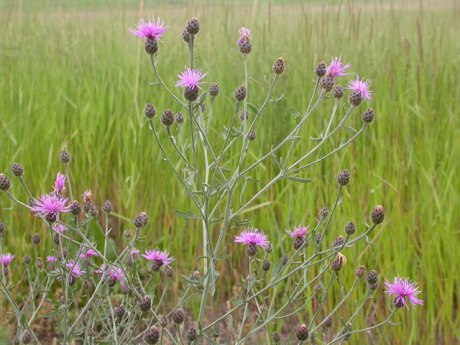
“Star Thistle”

See the lovely fields of purple flowers, rippling in the wind. Taste the delicate flavors, the floral back-notes in the honey from these “local” fields.

The real name for this heralded bloom is spotted knapweed, and it’s no local. Conservationists call it an invasive species, originally from Eastern Europe. Once it gets its roots into your soils, it never lets go. Nobody talks about eradication; they only talk about “management.” There was spotted knapweed on our property before I bought it, decades ago, so I shouldn’t complain. Only recently, though, have I learned about its evil and pernicious ways.

In a riff on Irish luck, Rick and I used to joke that it weren’t for spotted knapweed, we’d have no weeds at all. Little did we know we had that backwards. Sure, we have poor glacial soils, but the more potent force of our limited landscape is spotted knapweed. You see, not only is it a vigorous invasive, but it has the admirably devious survival mechanism of poisoning the soils around it so little else will grow. It is an expert in plant hegemony.

So that would explain our spindly vegetable garden! We have acres of knapweed.

Knapweed has a multifold program of engagement. First, it is a vigorous competitor. It sports a thick absorbent taproot that quickly captures and stores any available water (leaving its neighbors thirsty.) It is a rampant reproducer, colonizing both via ample seed production and from runners from its rhizome root system. If you try to remove it, and leave any part of the rhizome in the soil, it will sprout and flourish, like the cursed broom in Fantasia. Knapweed avoids predation by being the most bitter plant in the field. (Even goats avoid it; though I understand that sheep will eat it.) Back in California we used goats to clear poison oak from the hillsides, but even the goats are too picky to mess with the spotted knapweed. If that weren’t enough, knapweed generates its own phytotoxins, literally poisoning the soil around it. The mechanism of its catechin toxins aren’t well understood, but they prevent germination of competing seeds and poison the root zone. When a knapweed root comes in contact with the root tips of another plant, it sends a cascade of chemical messages to its victim, triggering apoptosis, or programmed cell death, from the roots, on up.

Presumably, back in Eastern Europe, spotted knapweed needed these strategies to survive. Plants from there have immunities that can withstand its chemical onslaught. Here, though, our native plants and crops have few defenses. It’s a problem from coast to coast—but especially so in the dry rangelands of the west.

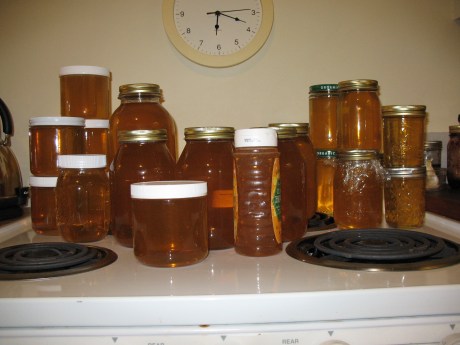
But the bees love it. It’s one of the few flowering plants that continues to bloom and provide nectar in the dog-days of August. I have beekeeper friends who react with open hostility when folks discuss ways to eradicate knapweed. The honey produced from knapweed blooms is so delicious that “Star Thistle” is treated as a premium appellation product, like Locust Honey, or Tupelo.

I’m a beekeeper, but I’m also a gardener. Would a rose, by any other name, smell as sweet? A pest is a pest is a pest is a… (my apologies to Gertrude Stein.)

Star Thistle, my ass.

spotted knapweed 1

A.V. Walters–

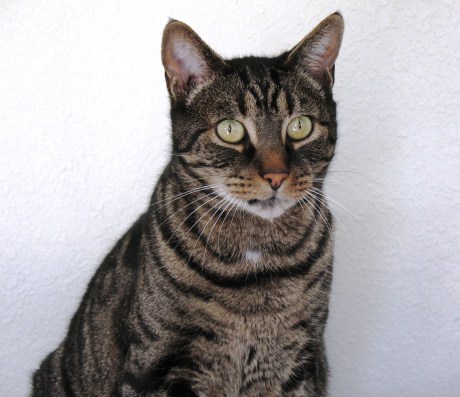
bob

Who, me?

And thank you for many years of a great temperament and good company. You will be missed.

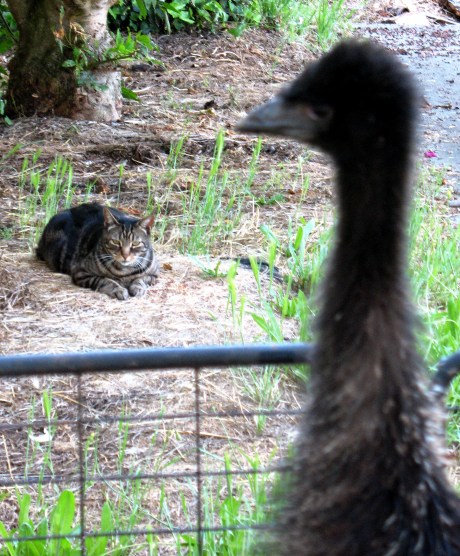
bob emu

Bob, from a safe distance.


They’re Here!

A.V. Walters–

I don’t celebrate Earth Day. Don’t get me wrong, it’s a nice idea. But it annoys me no end when folks known for driving down the driveway to the mailbox “celebrate” Earth Day by buying “green” products they don’t need.

Perhaps it’s a meaningful reminder to people inclined to forget that the planet sits on the edge of the abyss.

Instead, we do our damnest, everyday, to live lightly on the planet. We’re not perfect. Our Spring tribute to the Earth usually involves planting trees. Many, many trees.

This year we backed off. It wasn’t that last year’s 203 tree extravaganza nearly killed us. That was last year. Annual memory lapse is normal. This year, though, we switched to pricey nursery trees. That puts a damper on how many we can plant.

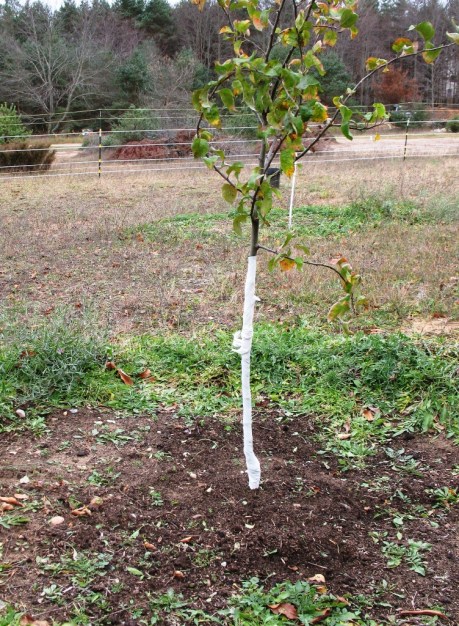
When you pay the big bucks for pedigreed trees, you want to be sure you give them the very best opportunity to survive. We dig deep holes. No matter that the little bare-root sprig is less than a foot tall, our paltry soils must be amended deeply. We sprung for high end organic compost this year—horse manure may be fine for conservation trees, but only the best for these babies. That adds another $6.00 per tree. And, of course we’ll have to cage them, to protect them from the deer, the bunnies, and any other herbivore threats; add rabbit proof welded wire fencing, and a full day to manufacture their cages. We’ll have to extend water down to this newly planted area. There’s plenty of rain this time of year, but by August, I don’t want to have to carry water in buckets.

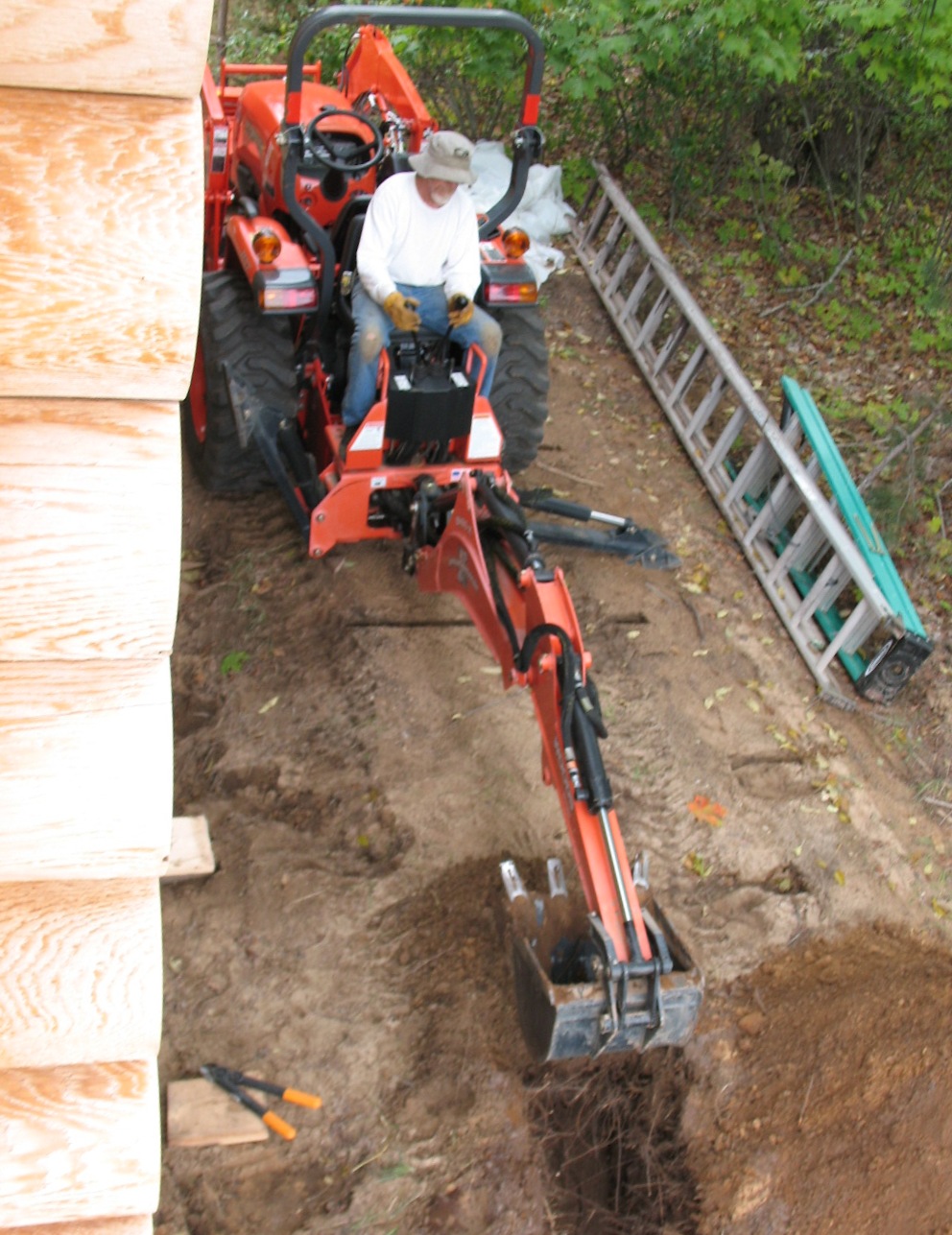
Needless to say, once the trees arrive, we drop all other activities. Some holes have to be dug by hand. Most though can be done with the backhoe. (You see, we are very serious about these trees.) I figure it’ll take about a week. Then, sore and weary, we’ll return to our regular overloaded lives knowing that we’ve done what we can to make the planet more green.

See you in about a week.

Authors + Card tables + Books =

A.V. Walters

Traverse City Authors

You’ve been there—a book fair, or an author-signing event. The author sits, with a forced smile, trying to engage. Normal people, who otherwise might manage a smile or a nod, drop their eyes and rush by. They’re too polite to intend to reject, but the result is the same. They avoid eye contact.

We love books. They entertain and inform. They take us to places, internal and external, that we otherwise would never experience. They make us think. Storytelling is probably the true oldest profession. It may be the real difference between man and the other animals. Forget tools—animals use tools.

But writing is very much an internal process. There’s not much to see. It is, for everyone except the author, pretty boring. And authors are often shy, living in the world from their side of the keyboard. It makes for a marketing conundrum. As the author, how do you sell books? As consumers, we want action—writing, by itself, isn’t dynamic.

The standard formula, the book fair, is death on cold toast. Uncomfortable for both the author and the consumer, it is Authors + Card Tables + Books = Boring. It’s like one of those sad little small town zoos, where the animals are housed in small, concrete cages. At best, you’re tempted to tap on the glass to elicit some response, or throw popcorn, even when the signs admonish you not to feed the animals. At worst, you scurry by, shoulders hunched, eyes averted.

I’ve joined an Author’s Group. We discussed at great length the challenge of the “author’s event.” We swapped horror stories of our collective experiences, trapped behind stacks of books in the entry of some otherwise kindly bookseller. We vowed not to repeat the equation.

Traverse City Authors announces its Celebration of Story. On June 14, at the Little Fleet, we’re holding a story slam benefit for Front Street Writers (a local nonprofit program for young writers.) After all, at its essence, what we do is tell stories. Come see the Authors, in their natural habitat, surrounded by good food and drink (because authors aren’t stupid), and yes, of course, books.

https://www.facebook.com/TraverseCityAuthors/?notif_t=page_fan&notif_id=1493079806456302


A.V. Walters

They’re hounding me to renew the registration of my hives. In theory, it’s a good idea. If beekeepers register their bees–how many hives and their location–farmers will know to alert them when they plan to spray. That way, I can close up the hives when they are most at risk. They’re emailing me to tell me that if I don’t renew, my listing will be dropped. So, why do I resist?

First, registration hasn’t done anything for me. Doesn’t that sound selfish? In fact, I reached out to my neighboring farmer on my own–we formed an understanding, and now he gives me 24 hour notice of any chemical spraying or application. My idiot neighbors to the west apparently are uninformed about the registry–and they spray, willy-nilly, without notice. Their property looks like the lunar landscape–nothing grows there, not even the things that they plant. The crop registry didn’t help me with my notification success, nor with the failure.

I suppose my resistance is rooted in principle. I don’t want to participate, or be complicit, with the powers that are killing the bees. Late last year the registry unveiled a “new look,” complete with corporate sponsorship. The primary sponsor? Bayer. Wow.

For those who don’t know, Bayer is the primary player in the neonicitinoids game. Neonicitinoids (or “neonics”) are a class of insecticides that science shows are a primary killer of our honeybees. Of course, the industry denies it, in the time-honored tradition of corporate denial (think DDT, Big Tobacco, Big Oil and Climate Change, or, soon at a theater near you, Fukushima!) The usual game plan is to float a disinformation campaign and to deny as long as possible, only to quietly acquiesce to the underlying science AFTER using influence to secure liability protection.) I don’t want my participation in such a program to provide “cover” to corporate malfeasance.

Bayer sponsoring a Bee Registry is like General Mills giving out free wildflower seeds to help the bees. (Oops, that’s a real thing, too!) Is it cynical greenwashing or brilliant PR? I can’t tell, and I don’t want anything to do with it. Am I tilting at windmillls? Should I cowtow and collaborate? I cannot tell anymore.


The Myth of Snow Removal

A.V. Walters

img_2349

For the traditionalist…

There is no such thing. When it is time for it to go, snow will go on its own. Until then, all we can do is push it around—out of our way. We should really call it snow relocation. “Snow Removal” is a big ticket item on many northern, rural budgets. For many, the face of government is one’s local township clerk, and the guy who drives the snow plow. For public road maintenance, the standard snow plow is the way to go.

Snow management for the homeowner, or small business, poses important questions. First and foremost is the basic question of egress and access—unless you manage snowfall, you simply cannot get from here, to there. Immediately behind egress and access is the question of safety. At what point does the danger of a slip-and-fall land on the shoulders of the pedestrian? What is the responsibility of a business for access safety? When in doubt, wear spikes. It’s an inexpensive measure of safety. (Just remember to remove them at the door.)

The farther north you go, the higher the level of social tolerance for snow inconvenience. We know how to drive and schlep in snow. Snow management falls into one of three categories—pushing it aside (plowing and shoveling), scattering (snow blowers) or compaction—the old fashioned method of just traveling on top of the damn stuff—making for layers and layers of slippery, which are the seasonal measure of geologic sedimentation. Snow-blowers and their ability to disperse the mess make modern snow management easier. You never have to have a place to store the season’s bounty. The biggest issues in determining your snow management method are amount, effort and space. How much are you willing to sweat for access, and where the hell will you put the stuff?

When I was a kid, snow was shoveled by hand. That’s what kids were for. Driveways were relatively short. (I’m sure you’ve driven by a lovely old farmhouse and sighed at how close it was to traffic. Roads have widened over the years, and old houses were built sensibly closer to the thoroughfare.) Mechanization has freed us from those old, utilitarian limitations. Now, it is not unusual to see the McMansion on the hill, with its thousand-foot driveway. Woe to them, should petroleum become scarce.

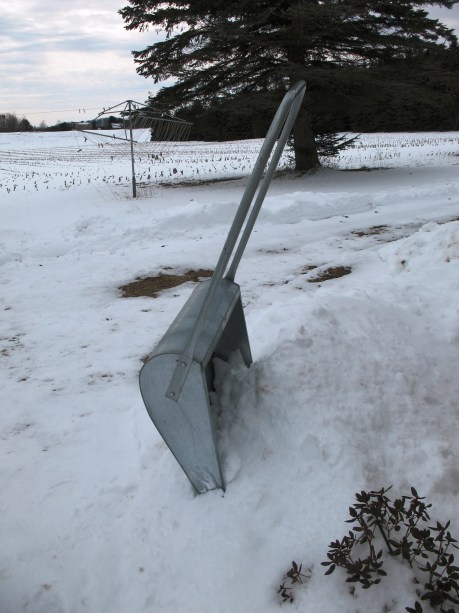
We have our own range of snow equipment. The snow-blower on the tractor can clear a five-foot swath in a heartbeat. We have a hand-push blower, which we almost never use, favoring the flexibility of the traditional snow scoop or the northern version (the yooper-scooper), which makes it easier to move the snow some distance. In the North, snow removal is the aging test of whether it’s time to move into town. At that point, either you move, family helps out, you pay for snow removal, or you rely on the kindness of strangers. Since my father passed, my brother-in-law has dutifully kept my mum’s driveway clear. Rick and I are young yet, and are nowhere near those kinds of considerations. But…

img_2347

The Yooper-scooper–available only in the far north, wherever premium snow implements are sold.

I never had children. I wonder if Rick’s California kids understand the mores of familial obligations in the North.


Winter Wonderland

A.V. Waltersimg_2343

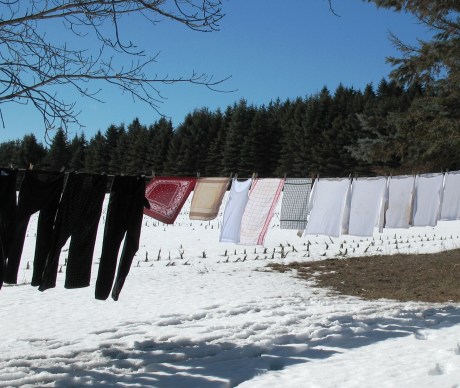
It seemed like a no-brainer to me. We’ve been cooped up with winter for months, so the idea of fresh line-dried laundry was like a breath of fresh air. We’re having one of those wonderful February breaks with sunshine and temps in the 40s and 50s. Ah, sunshine!

Of course, it is a little odd to have to wear winter boots out to the clothesline. While I was out hanging laundry, a number of my neighbors drove by on their own busy Saturday mornings. Their reactions made me wonder. I could see them do the double-take when they spied me. Three of them slowed their cars to a crawl and stared in wonder at what I was doing. In the background, I could hear snowmobiles. The moment was rich with contrast.

I suppose they think I’m the crazy one. I wonder. At these temperatures, by tomorrow the snow may be gone.

Did I mention that it was sunny?

img_2339

Notice Anything New?

Can you see it? It’s transformational! It changes everything.

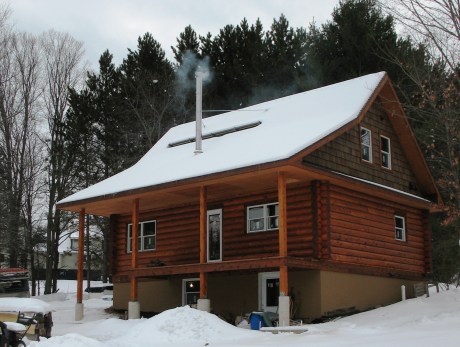
This isn’t smoke and mirrors. (Well, maybe smoke.)

I’ll give you a hint. It’s about heat.

img_2342


Be Prepared

A.V. Walters

girl-guide-pin

When I was just a kid, ten or eleven, “they” started a Girl Guide troop in my village. I was elated. The Boy Scouts—the male version of our Canadian youth organization—did all kinds of cool stuff. They hiked. They went camping. They learned sailing and essential survival skills. I wanted in.

But, Girl Guides was a major disappointment. We met regularly, paid our dues and stood around in formation. There was a lot of discussion about earning badges—and we all eagerly researched the requirements in our Guidebooks. There were no nature hikes, no tips on identifying wildlife, no talks on campfire safety (and, needless to say, no campfires.) Oddly enough, there were tips for the application of cosmetics. And, they emphasized the gentle arts of knitting, crochet, sewing, and swapping patterns. If I’d wanted that, I could’ve simply signed up for Home Ec, at school.

Just once, we had a promising project. We made camp stoves out of coffee cans, which were to be used with beeswax candles as fuel. Of course, when we’d finished with the tinsnips and wax, some of us decided to light the damn things. Our Girl Guide leader had a total fit. You’d have thought we were trying to burn down the building! “Who brought those matches?!!!”

I was a problem child. So, naturally, I complained. The organizers, a trio of women from our village, told me to be patient, that they were just getting started. But, I was bored. To amuse myself, I did handstands against the walls. My concerns (and restlessness) stirred up the other girls, inspiring them to look beyond handicrafts and sock-puppets in their expectations. We started practicing gymnastic moves when the meetings were slow or disorganized. Our leaders didn’t approve of gymnastics. (Admittedly, it’s difficult to keep your Girl Guide uniform neat and tidy while practicing gymnastics.) Consequently, I earned demerits, and was soon regarded as a disciplinary problem.

Meanwhile, the Boy Scouts continued their outings to neat locations, like the local Provincial Parks, and did nature hikes. Could we do that? The response was a “hike,” but not in a park. It was through our village, and down the local highway—marching. Marching In formation. We did about six miles. The other girls groaned. This wasn’t anyone’s idea of fun. Essentially, the entire troop was being punished because of my entreaties. I considered quitting.

Before giving up, I started asking the girls from next town over what they did in their Girl Guide meetings. Needless to say, their troop was far more active and interesting than ours. And, their dues were only a dime a week, while ours were a quarter. Of course, I pressed further, asking other girls, even farther afield what they paid in dues. Always, the answer was the same—a dime.

Finally, I brought it up at one of our meetings, pointing out that other troops paid a lot less and got more out of Girl Guides. Our leaders seemed a bit unnerved at my public questioning. They weakly explained that the excess was used to purchase their uniforms and to cover “incidental” costs. They were volunteers, after all! I retorted that we had to pay for our own uniforms—and we were just kids. I had done the math, and pointed out that uniforms for the three leaders could have been fully paid in three to six months—but that the imposed surcharge had gone on for nearly a year. (Obviously a young girl, like myself, had no appreciation of the cost of a used coffee can.) I knew it wasn’t like we were talking big money, but it was the principle of the thing.

At the end of the meeting, I was unceremoniously kicked out of Girl Guides. Gone. I should have, but I sure didn’t see that coming. I guess I wasn’t cut out to be a Girl Guide. Our motto was, after all, “Be Prepared.”

Needless to say, it was no real loss; it wasn’t much fun, anyway.


A couple of years ago, I joined Facebook. As an indie author, I was told that social media was an important part of our “branding.” So, I put my blog feed through Facebook and accumulated a wide variety of “friends.” Though I enjoyed it, my Facebook page never did much of anything from a marketing perspective.

In 2015 and 2016 my Facebook activities widened to include political expressions. I wrote on issues of food and agricultural policies, climate change and the upcoming elections. I joined groups and made even more “friends.” My topics of discussion included resistance politics, protests and, of course, the elections.

Occasionally, I was trolled, challenged on my positions. Some politicians and political organizations were using paid trolls in their programs of disinformation. In my posts, I was always civil and thorough. If you challenged me, you’d best have your facts straight, because I was ready with mine. I’d research the trolls and, in pretty short order, could tell who was a legitimate person, and who was there just to make trouble. Real people had real friends, and they had longtime Facebook accounts, populated by photos and comments and, well, lives. I attracted the trouble-makers.

One day, recently, I tried to log-in to my Facebook account and was greeted with this:

“HELP US IDENTIFY YOU-

We’re working hard to make sure everyone

on Facebook can be their authentic selves.

We don’t allow accounts that:

  • Pretend to be someone else
  • Don’t represent a real person

From time to time, we check to make sure

it’s really you with a few short questions

before you log into Facebook. It won’t take long

and it helps keep Facebook safe for everyone.”

What? I’ve been booted off Facebook?!

The successive security screens informed me that, in order to regain access to Facebook, I’d have to upload a copy of a government-issued, photo ID. Some troll (or trolls) had fingered me! Of course I’m a real person. My posts were always thoughtful, cogent and informative. While I’m shocked that the exotic Facebook Algorithms couldn’t recognize my obvious humanity, I’m equally appalled that it is so easy to silence the voice of someone with whom you might simply disagree. I have a “liberal’s” extreme distaste for Big Brother tactics and I’ll be damned if I’ll provide ID in exchange for access to cat videos, photos of restaurant food and trolls. Make the damned trolls show their ID. For no clearly articulated reason, I’ve been kicked off Facebook.

They talk about Facebook withdrawal. Admittedly, I spent too much time on the site. It’s a major mind-suck. And, like any junkie, I’d talked about cutting back, or quitting, altogether. (“I can quit anytime I want. I’ve done it a million times.”) Hell, a recent study even suggested that low doses of LSD can eliminate Facebook Addiction! But I didn’t see this coming, either. I’m out—cold turkey. I’ve completely disappeared from Facebook. It’s as though I’d never existed. Gone. And, there is no way to communicate with the minions of Facebook to question why I vanished, or to explore other options.

There’s a recurring theme, here. I guess that in my own way, I’m a born troublemaker.

So, I’m recovering my personal time and enjoying it. In any event, the lesson is clear: Be Prepared.


img_2250

Honey, Cooking, and The Science Behind The Sweet

A.V. Walters

Honey is a foodstuff of almost mythical proportions. It is one of a handful of foods that, left in its original form, never spoils. Honey has been known to last literally thousands of years—and still be edible and sweet. Honey will crystalize—a condition that may put off the uninformed consumer—but crystalized honey is still good. If it offends, you can simply warm it gently and it will resume its liquid amber loveliness.

Honey has three characteristics that, acting together, serve as its natural preservative. Despite being a liquid, honey has a very low water content of only 14 to 18 %. Bees will not “cap” honey in the comb until it has reached this low moisture threshold. Most bacteria cannot survive in such a low-moisture environment. Honey is also highly acidic, with a pH between 3.0 and 4.5. That acidity will kill off the few remaining things that might want to grow there. And, as we all know, honey is sweet. That natural sweetness also discourages bacterial growth. Archeologists have found sealed honey in ancient Egyptian tombs that was still preserved and unspoiled. Add to these three basic characteristics are the enzymes in honey that come from the bees’ stomachs. These enzymes combine with nectar sugars to produce gluconic acid and hydrogen peroxide—natural components of honey. Blended together all these characteristics make a super-food that keeps, nearly indefinitely.

Herbalists and healers of ancient times understood these qualities in honey. It was widely used to treat wounds, for skin ointments and to prevent infections. To retain its natural preservative qualities though, stored honey must be sealed. Because honey is hygroscopic (naturally low in water) it will absorb liquid from the air and eventually spoil if left uncovered. Though honey is naturally pure, it can contain trace amounts of bacteria, and while this is not a problem for healthy children and adults, raw honey is not recommended for infants or people with compromised immune systems.

What about cooked honey? Cooking honey poses two questions: Does cooking undermine honey’s otherwise beneficial qualities? And, is it actually toxic? Purists and practitioners of natural or ayurvedic medicine will tell you that cooked honey is poisonous, and should never be eaten. There’s a smidgeon of science that supports that position, technically, but most feel that’s a little extreme. At the end of the day, this is something you’ll have to decide for yourself. Honey is essentially a natural, supersaturated sugar solution. Added into that are enzymes, courtesy of our friends, the bees. Many of the purported health benefits of honey are connected to those enzymes. But, when you heat honey, the enzymes begin to break down, beginning at about 118 degrees, Fahrenheit. Over-heating may result in losing most of the beneficial properties, making honey just another sweetener. (A good reason to gently heat your crystalized honey. You can warm it in a bath of warm tap water or in a double-boiler, at very low heat, to protect its enzymes.) In cooking, you can preserve honey’s integrity by adjusting how and when you heat it. Whenever possible, wait and add the honey until later in the cooking process (this is especially true when sweetening sauces or glazes.) Or, you can also “dilute” any heated honey mixture with a larger quantity of unheated ingredients. Check your recipes to see if there might be ways to limit exposure to high temperatures. Needless to say, honey is always at its best when used in recipes that are never heated, like salad dressings, toppings, dips or icings.

But, is it toxic? When honey is heated, its fructose, in combination with its natural acidity, degrades and begins to form hydroxymethylfurfural (HMF), which is mildly toxic. The hotter it gets, the more HMF forms. The solution is dilution. Diluting the honey with other ingredients, (prior to heating) lowers the acid level of the honey, helping to prevent HMF formation. Even then, the actual HMF toxicity levels that result from normal cooking are very low. Our evolved human gut is fully capable of digesting cooked honey products, with no observable adverse affects. If you are a purist—don’t heat your honey. Otherwise, take reasonable efforts to preserve the maximum beneficial effects by keeping honey temperatures as low as practical. You can cook and bake with confidence, knowing that you are not putting yourself at risk.

There is one group that should never consume heated honey. That is your BEES! Bee guts and intestinal systems are relatively simple and cannot safely digest HMFs. Ingesting even a small amount of honey that has been heated can result in bees developing gut ulcerations. Many beekeepers use heat to separate wax from honey—and feed the resulting honey back to the bees. Don’t do it! Only give bees cold-processed, unadulterated, honey. Even adding water to honey, for bee feeding, must be done carefully because once water is added, the honey mixture is subject to bacterial spoilage, and fermentation. (Think mead!) If you use watered-down honey for bee feeding, make sure that it remains fresh. Remove any unconsumed honey blends within a day or so, replace with a fresh mixture, and periodically clean containers.

The very characteristics that give honey its extended shelf life can require some adjustments when cooking or baking with it. The most obvious is that honey is a liquid, so when substituted for sugar, you must adjust the balance of dry and wet ingredients to retain the desired texture. Every cup of honey used as sweetener contains about three extra tablespoons of liquid. So, you must reduce the other liquids in your recipe, increase the dry ingredients, or a combination of both. (The approach you take will depend on the recipe.)

It is often assumed that you can do a “cup for cup” substitution of honey for a recipe’s sweetener. Not so. In addition to increased moisture content, honey is sweeter than sugar when measured cup for cup. Depending upon the bees food source, and the seasonal time of production, honey can be anywhere from 1.25 to 1.5 times as sweet as sugar. You’ll have to substitute accordingly, and remember to taste as you go. Honey has a lower glycemic index rating than sugar (55 compared to sugar’s 61) so it’s a healthier option, with a slower impact on blood sugar. It’s easier to standardize baking with lighter honeys—the darker honeys come laden with their own native flavors. They can add depth and character to your baked goods, but darker honeys are a shifting exercise in taste exploration. Since the sugars in honey brown faster than regular sugar, you might have to lower your baking temperature by 25 degrees and cook your baked goods a little longer. Even if all your adjustments are correct, remember that baked goods made with honey are moister than sugar baking. If you’re looking for a drier finish—carefully bake longer, at a lower temperature.

Finally, honey’s natural acidity can play havoc with the leavening in baked goods. Most leavening agents (baking soda/baking powder) are “base” ingredients. The higher acidity in honey can act to neutralize your leavening agent—leaving an unadjusted recipe as heavy as a brick! You will need more leavening to achieve a proper rise, usually an additional 1/8 to 1/4 teaspoonful per cup of honey sweetening. There is no need to adjust if you’re using yeast. Yeast usually does well in the more acidic environment of honey. Add the honey to the bread dough mix, itself, to avoid interference with yeast performance. Do not “proof” your yeast in a honey mixture.

Honey as a food product has been with us for thousands of years. Whether you revere it for its mystical healing properties, or enjoy it as a healthy sweetener, it’s helpful to know how it behaves in cooking and baking. Following these tips, along with a little experimentation, will yield light and tasty results.

IMG_2289


Food Fight

A.V. Walters

It has come to the attention of Big Ag that the fastest growing sector of agriculture is organics. 2016 saw well over four million acres under organic cultivation. The total organic slice of the American food pie was over 35 billion dollars. You cannot boast that kind of success without attracting attention.

Big Ag wants in, in a big way. Organic produce and products are, after all, significantly more expensive than “conventional,” chemically infused crops. It’s a “value added” product, without the trouble of adding value. In fact, these are high-end consumers who’ll pay more, but want less. Less chemicals, less guilt, and less health impacts from fertilizers and pesticides. Of course, there are a lot of pesky regulations related to organic certification. But American Business knows it way around regulations.

Recently the industry group coordinating with government regulators, the National Organic Standards Board (NOSB), held its annual meeting. Not surprisingly, over the past decade the elected leadership of the group has been shifting towards large-scale, corporate producers, squeezing family farmers out of the mix. Organic products are regulated by the USDA, the agency in charge of enforcing our National Organic Program (NOP.) In decades past, nobody much cared about the definitional details of organic agriculture. The industry was the backwater of hippy back-to-the-earth folks. Conventional agriculture only cared that the program made production and certification expensive and burdensome—so it wouldn’t compete with their monoculture view of farming. In it’s early years, organic farmers debated earnestly just what “organic” meant.

It’s not merely the absence of pesticides that defines the heart of “organic.” It’s about creating a food and commodities system that is sustainable, humane and healthy for both consumers and for the planet. During the 1980s, those same hippy farmers debated long and hard about what practices could be included under the organic umbrella, and what methods did not measure up to “sustainable.” The old organic mantra, “Feed the soil, not the plant,” spoke to a holistic approach to farming, and to the planet, in stark contrast to modern, industrial and extractive farming methods. Organic farming promoted crop rotation, natural soil enhancement, composting, non-chemical pest management, antibiotic and cage free animal husbandry and regenerating the environment through gentle agricultural practices. By any definition, organic farming should build soil and animal health—leaving us with a more diverse and stronger ecosystem. It is a moral and philosophical rejection of the chemically saturated monoculture and confined livestock systems that dominate American food production.

Things went well, until organic became synonymous with money. The results of this year’s meeting illustrate where we’re headed. In the early days, when easing the burden for “transitional” farmers was important, some non-organic or synthetic practices were permitted, provisionally—to be “sunsetted” out of organic production within 5 years unless, by a margin of two thirds majority, the NOSB voted to reauthorize them. This year the Board voted that any 5 year exemption is automatically “rolled over,” unless the NOSB votes it down—creating a slippery slope of standards erosion.

One of the big debates this year was whether hydroponic growing systems could be classified as organic. Really? How could a “farming” system that grows produce entirely without soil (often completely indoors), fed exclusively on a mix of liquid fertilizers and nutrients, wholly outside of any natural system be considered organic? What happened to “feed the soil?” What happened to organic farming acting in concert with nature to make the planet healthier? The Board couldn’t agree on the hydroponic issue, and has kicked it over to the next meeting, when there will be an even larger majority of corporate board members on the Board. Can you see where this leads?

Just as troublesome is the failure of the USDA to enforce the standards of the National Organic Program. Large scale producers regularly break the rules, with no penalty from the government agency charged with protecting consumers. Small scale organic farmers are thus doubly burdened—with the high cost of certification, and then forced to compete in the marketplace by corporate farms that advertise organic, but don’t play by the rules. The little guys end up subsidizing the cheats. In the long run, failure to police the standards will only undermine the organic message—the cheats will kill the golden goose. Consumers, small scale organic farmers and the planet will pay the price.

I don’t have a solution. I recommend that you support your local organic farmer through farmers’ markets, cooperatives or CSAs, that you start your own garden, keep bees or even chickens. I think we need to get involved, not just in the politics of food production but in some hands-on action, to protect our health and the health of our soils, our water and our planet.


Ousted by Facebook

A.V. Walters

Some of my readers follow me through Facebook. My Facebook persona is a far more political animal than my WordPress presentation. I am, however, true to character. Even in the throes of a political rant, I am never foul or rude. I suppose I am pushy, since I often urge people to exercise their rights to free speech, or to seek redress with the government for infringements of our rights.

Today I have been blocked from my Facebook page. I suppose the keys to my relief are in my own hands. Facebook insists that I need merely upload a picture of government issued picture ID, in order to resume my Facebook privileges. Who is this, Big Brother? I’ll be damned (oops, slipping into profanity over this one) if I’ll tow the line on this, without some good explanation for why I should be treated differently than other Facebook members. What do they want, a tattoo on my arm? Is this someone’s attempt to silence me? Has there been some complaint? If so, say so. I’ve been trolled before, and if that’s the source, I can deal with that. But without some rationale or explanation, I won’t provide my personal identification information beyond that required of regular members. If you’ve followed me on Facebook, it’s possible that I won’t ever be able to post again. In fact, this post through WordPress may be silenced, too.


And So It Starts…

A.V. Walters–

This past weekend, in nearby Traverse City, a local off-duty police officer showed up to an anti-racist rally, in a pick-up truck decorated with what is commonly called the Confederate flag. He pulled into a no-parking zone, stepped out of his vehicle and proceeded to down a beer (openly, in a public place) while heckling the protesters.

Naturally, complaints were filed and the Police Department initiated an investigation. It wasn’t his first flag incident. The officer, an eighteen-year member of the force, resigned. The investigation continues. I read the story and did some of my own research.


Last night, as I came out of the grocery store, I passed a large man standing next to his pick-up truck, also adorned with a “Confederate” flag. A man was engaged in a quiet conversation with him; I caught the drift.

“It’s a symbol of racial hatred,” the smaller man was saying.

“No it’s not!” The flag-bearer puffed out his chest and then loudly proclaimed, “It’s about my heritage.” Shoppers averted their eyes and scurried off to their vehicles.

I put my groceries in the car and returned to join in the discussion, “I agree with this gentleman,” I said calmly, nodding in the man’s direction, “It is about racial hatred.”

“No,” the flag-bearer bellowed, “It’s about my proud heritage.”

“Then you’ve got the wrong flag.” I responded. The other man confronting him turned to me and mouthed the words, “Thank you.”

The “son-of-the-south” turned to me in a way that was only slightly menacing. “No, this is the right flag, alright. My ancestors died for this flag.” I wondered if I was going to get myself assaulted, for this.

“No, I don’t think so.” I answered.

“You calling me a liar?” (Often the refuge of a man short on facts.)

“I think that you are misinformed. Did any of your ancestors fight under Robert E. Lee?”

He looked a little stunned. “I doubt that, we’re from Texas.”

“Then you’ve got the wrong flag. That flag,” I said, pointing at his truck, “Was never the flag of the Confederacy.”

“Huh? Well, sure it was. It’s the Confederate flag.” A few people stopped to listen.

“No it’s not. That flag was the battle flag—sort of the regimental colors—for troops fighting under Robert E. Lee. It wasn’t the flag of the Confederacy. There were a number of different flags adopted by the Confederacy during the war, but that flag wasn’t one of them.”

He looked confused. “But… my people died for that flag.”

“I’m not questioning your heritage, but you’ve got your flags wrong. The flag you’re displaying didn’t become popular until the 1950s, when racists started to use it to oppose the Civil Rights movement and the Brown vs. Board of Education case that integrated the schools. That flag,” and again I pointed, “Was never the flag of the Confederacy and was used specifically to show racial hatred and intolerance.”

“Well, I don’t know anything about those other flags.” Now, he wouldn’t even look at me.

“I can’t help you, there. But, the one you’re flying is a symbol of racial hate and intolerance, not the flag of the Confederacy.” Some of the people around us were nodding, almost imperceptibly.

The other gentleman in the conversation added, “That’s what I was trying to tell him.”

The flag-bearer wouldn’t look at any of us. He turned and stalked away. The small crowd began to disperse without a word. My co-conspirator and I looked at each other, and nodded, before going our separate ways.


And that is the danger of having a bigoted bully as President. It emboldens ignorance and hatred. It normalizes bad behavior in ways that make violence and social unrest more and more likely. If we want to live in a civilized society, the rest of us need to step up and stop it, nip it in the bud, whenever we see it. This is going to be an exhausting presidential term.


Signs of the Times

A.V. Walters

It’s almost over, thank god. I can hardly wait for the end of this election season. My inbox is overflowing with solicitations for money, for support, or just for the opportunity to wallow in righteous indignation.

I admit it, I’m a wonk. I research the various races and candidates on the ballot. I spend the time on the internet checking the records and policies of all the candidates. It isn’t a straight party ticket for me; I don’t vote tribal. My choices will be on principle and on the issues. I don’t reward bad behavior.

Though it’s no substitute for research, I confess I enjoy the rough and tumble world of yard-signs. We’re relatively new to the community and nothing is as revealing as what folks post on their front lawns. I chuckle when the lawn signs advocate for inconsistent candidates—is it marital schism, ignorance or some more primal form of loyalty dictating those screaming confessionals?

For the first time in my life I have posted a yard sign. It’s for a minor local position. I like this woman, I like her policies and she’s the wife of the family that owns the local hardware. I get a lot of my local information from the characters who hang out at the hardware. Like many candidates in the area, she boasts roots in the area that go back generations. I see that as a warning to uppity folks, like me, who’d consider a run for office on principle. Around here, who “your people are” matters a lot more than your positions. Local is tribe, too. As a newbie, if I ran for office, I wouldn’t stand a chance.

This has been a particularly hard fought election year. The local paper reports that there’s been a serious spate of yard-sign shenanigans. People are stealing yard-signs. People are posting yard signs in yards, other than their own. I’m not sure which is more offensive, silencing free speech or trying to pawn off support where there is none. I see it all as a form of dastardly contagion, direct from the top down. It’s been an ugly contest season, in which the two-party system has failed us. The major candidates at the top of the ticket have failed to behave, failed to follow the conventional rules of decorum.

Call me old fashioned, but I like civil discourse, honesty and issues-based debate. It goes to my deep belief in deliberation through the marketplace of ideas. It ought not be about personalities, but about weighing the value of the candidates’ ideas and records. Indeed, it’s clear that both of the Presidential contenders have done their utmost to conceal just who they are from the voters. This is not a good way to start a relationship.

This kerfuffle of a contest has brought out the brute in everyone. Further down the food chain, that same childish ugliness plays out, stealing signs and undermining democracy. What’s missing in all this is that on the morning of November 9th, we’re going to have to get up, get back to business, and figure out a way to move forward in the world—or are we doomed to this new fashion of obstruction for its own sake?

house-sept-16-2

Taking the Sting Out of It–

A.V. Walters–

IMG_2306

We keep bees. People respond to that with raised eyebrows—and usually some positive acknowledgement. The raised eyebrows are about the dark side of beekeeping. Most people think of beekeeping in terms of being stung.

Yes, we get stung from time to time. It comes with the territory. Usually, when it happens, you can point to some mistake you made—you moved too quickly, you inadvertently crushed some bees while stacking hive boxes, you didn’t use smoke (or enough smoke, or too much smoke) when performing an invasive activity. There are rules and rhythms that protect you from being stung. Bees only sting when provoked, and often give plenty of warning.

I react to stings, so I take every precaution. I only handle the bees when wearing “the suit.” I listen to the tone of the bees during hive work—you can hear it if their level of alarm amps up. Rick and I agree that it isn’t worth it to work on agitated bees. It’s not good for them, and we’re not happy to be stung out of our own stupidity. We can always close up a hive, and come back to it on another, better day. We plan ahead of time what it is we hope to accomplish, in a hive, and endeavor to do it in the least disruptive way. The hive is their home. They have every right to defend it.

Bees demonstrate stages of annoyance. First, you should take note if the bees are looking at you. I laughed when I first heard that—except that it’s true. Usually, when you work in a hive, the bees go about their business and ignore you. But, if they’re lined up, looking at you, it’s a warning. (It’s funny looking, the first time you notice it—as though they were spectators at a circus and you’re the main attraction!) Then, if they raise their back ends—you’ve crossed another warning threshold. Listen closely to the tone of the bee’s constant hum. In an irritated hive the background hum raises in volume and pitch. Time for more smoke, or to close it up. Guard bees may “thunk” you, that is, fly right into your chest or face—to make impact, but not sting. Again, we’re talking serious, threat-level warnings here. Bees do not want to sting. A stinging bee is a dead bee—they lose their stinger and innards in the process, so it’s a KIA hero’s defense. Move slowly and deliberately. Try not to breath on the bees (certainly don’t blow on them.) Do not wave your arms in a swatting defense. It only makes things worse.

Timing is everything. Happy bees are less likely to rise to alarm. What makes for happy bees? Good weather, ample food and available water. We try not to open the hives in bad weather—the bees are stuck inside and as crabby as school kids denied recess. We do our bee work midday, so most of the bees are out in the fields. And we make our disruptions as short and productive as possible.

There are three physical levels of reaction to stings. A normal reaction includes the initial pain of the sting, some level of swelling and discomfort at the point of sting, usually resolving overnight. The worst reaction is life-threatening anaphylactic shock. If you respond to stings this way, you probably shouldn’t be keeping bees. I don’t have that problem, but I have an Epipen, just in case. I fall into the middle category, what’s called a “large, local reaction.” After the initial sting, the site swells well beyond the actual sting—often a painful raised welt up to eight inches across, that is painful, itchy and lasts up to a week. It makes me a little sick, too. I have to keep taking antihistamines until the swelling starts to abate. Things can get ugly if I am multiply stung.

There’s some good advice about how to handle a sting. First, get away from the hive. A stinging bee releases an alarm pheromone that attaches to the site of the sting. Other bees may zero in on it, and continue in a defensive attack. Rick and I work as a team, but if one of us is stung, the other closes up the hive for the day. Second—waste no time removing the stinger. Even unattached to the bee, the stinger continues to pump venom. Use a dull bladed object to scrape across the site of the sting. Do not use tweezers, as squeezing the whole assembly can result in injecting more venom. After the stinger is removed, you can gently squeeze the sting site to eject any venom still near the surface of the wound. Ice it, as soon as you can. Take an antihistamine—Benadryl or similar, to stave off any excess reaction. I use an herbal antihistamine called Hista Block, that doesn’t make me so drowsy. Depending upon the level of swelling (and discomfort) you can also take an analgesic. Some sources suggest using a topical spray, but others warn of possible cross-reactivity at the wound site, so I don’t. Most importantly, take these steps as quickly as you can. Time is critical in warding off the body’s defense to the venom—our defenses are the biggest problem. Depending upon your level of reaction, you may consider medical intervention if you have multiple stings. Afterwards, make sure you launder the clothing in which you were stung because the pheromone on your clothes can inspire later hostile actions by the bees. (Nobody told them not to respond to the outdated alarm.)

This is how I cope with the sting potential when keeping bees. I have beekeeping friends who do not react as I do, who handle their bees without suiting up, without even wearing gloves or a veil. I envy them. One friend actually welcomes beestings, because he claims they alleviate the arthritis in his hands!

Work smart and bee prepared. That’s my motto.

Of course none of this helped over the weekend when I was rescuing some tiger lilies from a construction site. Really, it wasn’t theft; they’d been bulldozed and would have died but for our valiant efforts to rescue them. Unfortunately for me, the bulldozer had disturbed a nest of Yellow Jackets.

Yellow Jackets are a whole different story, than bees. They are just rude! They sting, without warning—and a single yellow jacket can sting repeatedly! (Which it did, as I ran a quarter of a mile down the road, to escape it.)

Days later, I’m just recovering. The good news is that we got the tiger lilies planted, so there’s some reward for my experience.


A Matter of Scale—

A.V. Walters—

IMG_2311

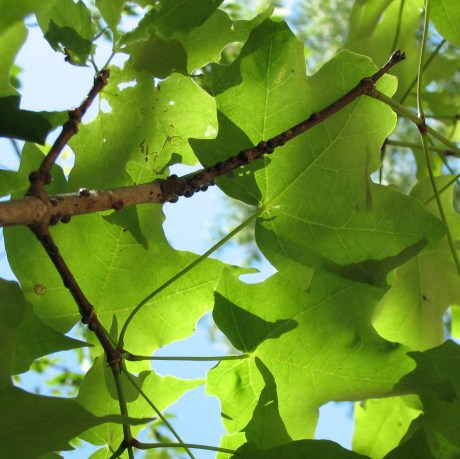
Beautiful? Yes. But look closely at the bumps on the twigs.

Rick and I have returned to our Sundays “day off,” in which we spend Sunday afternoons cutting wood up in the woods. We are still clearing trails and cleaning up after the wild Storm of 2015. I’m sure that the trees down, from just that storm, will heat our Michigan winters for several years to come. This doesn’t even touch the backlog of deadfall accumulating from the dying ash and beech trees. We’ll have work, and heat, for the rest of our lives.

Last Sunday I noticed that the forest was sticky. All over, the understory plants are glazed with a tinge of sap—not unheard of in spring, but a little unusual, given how dry it has been. After a light snow year, April and May had precious little rain for us. The forest is crispy-dry. We didn’t get any of our usual spring morel mushrooms. Here, and up in the U.P., there have been fire warnings. (In May!) We watched the Canadian wildfire in Fort McMurray in horror.

This is not really unusual—when California has an El Nino season, Michigan’s weather is mild and dry. Finally, this week the dry spell broke and we’ve seen lovely storms to accompany the greening of our forests.

So what’s up with sticky? Yesterday, a friend, brow furrowed with concern, pointed out the scale on the maple tree next to our house. Yuck. His trees have it, too. Scale is an insect infestation. Maples always have some measure of scale, but the outer branches of our tree were lined with the limpet-like outer shells of these tiny sap-sucking vultures. It appears that we are having a major infestation of scale. The scale is responsible for the sugar-coated forest.

We live in Michigan. Bugs, in all shapes and forms, are a way of life here. Still, bugs of any kind, in great numbers, are unnerving. After our friend left, I stood in the soft rain, running my hands down every branch I could reach, squishing all those thousands of little scale bugs. Rick just shook his head.

“What are you going to do, molest every tree in the forest?”

Well, no. But the two maples next to my house—those I can help. It’s worrisome. Is this, yet another forest calamity in our future? Naturally this called for a research trip to the internet.

The likely problem is the dry spring. Maple trees under stress produce a thinner, more sugary sap. It’s a stress reaction, to ensure the energy needed leafing out in spring. The scale bugs, in turn, thrive on the sweeter mixture, ironically putting the trees under more stress. So, as long as the dry cycle is not repeated too much over the years, the scale is a cyclical problem that will solve itself.

There are measures I can take. I could have “power washed” the trees, before the leaves came out. I could use poisons (not likely!), sprays or root saturation with systemics. I could use a dormant spray in the very early spring—a perfectly acceptable organic measure—like we’ll be using on the orchard trees when they’re bigger. But, Rick is right. I cannot treat the entire forest. I need to relax here, and wait patiently for the ladybugs. Scale is a favorite of ladybugs and birds.

In the meantime, the rains will wash the forest clean of “sticky.” And, at the same time, they will feed the trees, making them stronger and better equipped to deal with the pests. I’ll step back and let the problem solve itself. Sometimes there is a danger of looking too closely.


Wascally Wabbits!

A.V. Walters–

IMG_2307

Cages and Wraps

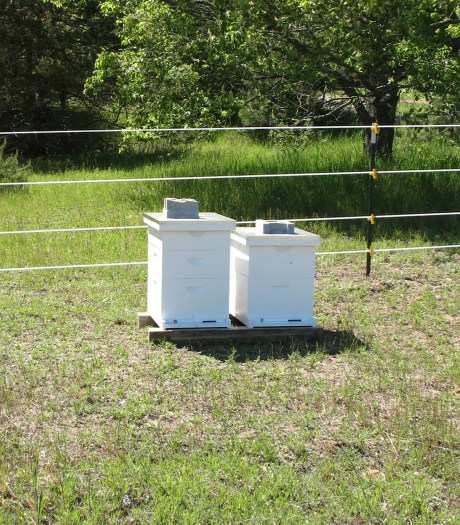
Late April and early May were a whirlwind of activity. We ordered over 200 trees, anticipating the participation of 40 volunteers in this spring’s tree planting extravaganza. The trees arrived. The volunteers did not. There were good reasons for standing us up, but that still left us on our own with a lot of bare root trees.

With bare root plants, you have, at best, two weeks to get them into the ground. You can “heel them in” to buy additional time. Heeling in is essentially storing them in dirt—either by digging a trench, or mounding. Still it’s planting and uprooting them again—more work for us and more trauma to the tender roots. So, we rolled up our sleeves, and planted.

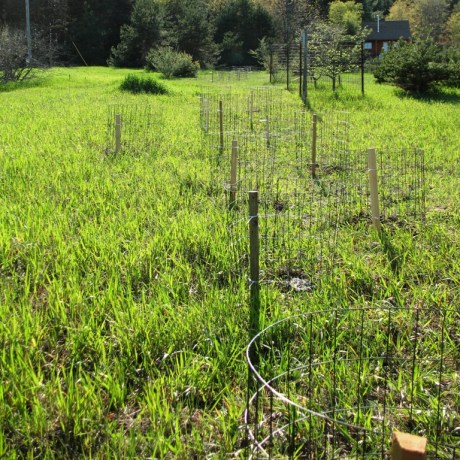
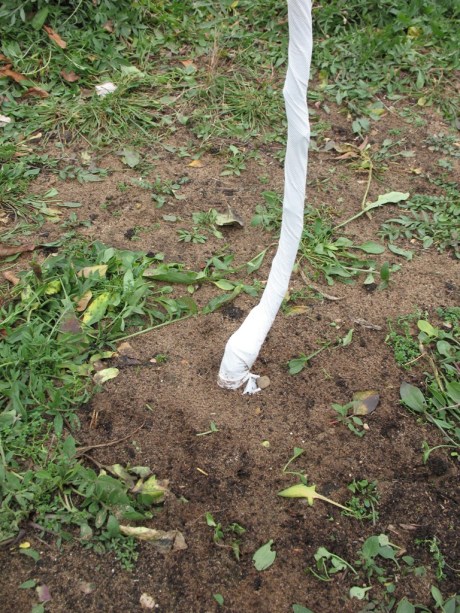
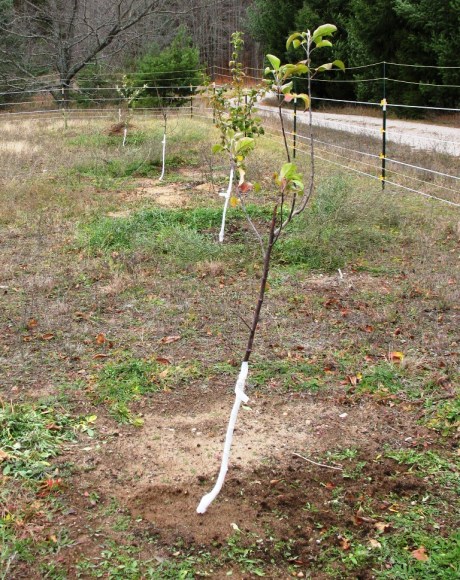
No sooner were the trees in, than we began to lose them to deer and rabbits. So began the next great surge—the making and installation of the tree cages. In all, over a very short period, we made and installed almost one hundred and fifty cages. By the time we finished, and feeling invincible, I was almost beginning to think that rabbits could be cute. Then, we (mostly Rick) re-fenced the garden/orchard area with rabbit-proof fencing. You’d think that there would be an opportunity then, to breathe and rest. Ha! Just when you thought it was safe to go back into the water…

Below the house, we’ve planted a hedge of berry and blooming plants. Well, eventually it will be a hedge; currently it is a widely spaced and hopeful collection of spindly plants. Its purpose is to provide a visual break and to host a wide variety of blooming plants that will be good for the bees. As a side note, there are a number of berry plants that will provide treats for us, too. There are blueberries, high-bush cranberries, service berries and elderberries, mixed in with lilacs, redbuds, red osier, and lavender. In a few years it will be really beautiful. Because the berry plants are particularly tasty (and because I have an emotional and aesthetic stake in this hedge), they were among the first to be caged. Finally, after weeks of work, we could relax.

Well, I actually went into town for groceries, and bought some new work shoes. Rick was working on plumbing, so I walked up to the house to show him my fancy new footwear. On the way up the path, I saw it. A baby bunny. Cute, eh?

Not so much. The baby rabbits are very small. They fit nicely between the wires of our new tree cages. Once in, they are protected from predators, and can munch, at their leisure on our berry plants. From my vantage on the path I could clearly see a baby bunny giving my brand new blueberry bush a serious pruning. I rushed it, waving my arms, screaming. It ran. And stopped, thirty feet from the new hedge… waiting. Quickly, I surveyed the damage. One blueberry, neatly pruned to half its original size. One baby bunny, stalking. And, across the field, half a dozen baby bunnies, frolicking.

Rick came to the door of the house, alerted by my cursing. I held out the severed blueberry branches and he understood immediately. We pulled out a roll of chicken wire and began cutting cage-wraps, glancing nervously over our shoulders to the hedge. I should have stood guard, because in the twenty minutes it took to cut the wire wraps, three more blueberry plants were pruned to within an inch of their lives! Thank God for new shoes!

IMG_2308

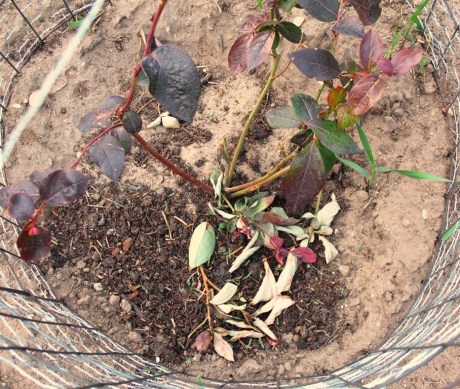
Blueberry, it’s branches trimmed!

Now, all of the berry and bloom hedge plants have double cages. I’m also going to string deterrent wires across the tops, to discourage any deer, who might reach down into the shorter cages for a nibble. It’s the Fort Knox of landscaping. Maybe now we can relax a bit. Except that it’s time to put in the garden.

Bunnies? Maybe they’ll be cute again, someday.


It’s Working—

A.V. Walters—

I asked my landlady for the contact information for the farmer who leases the fields surrounding us. She reacted badly to the request—assuming, for some bizarre reason, that I would say something to him that would jeopardize her long-standing arrangement. She refused to give me his number, but told me where I could find him, half way across the county.

I had no such ulterior motives. I keep bees. He sprays pesticides. Though I have registered my bees with Fieldwatch, many farmers are not aware of it. I merely wanted him to give me a heads up when he plans to spray.

Before I could get contact information, the farmer showed up to prep the soil for corn. My landlady shot out to talk to him, like a bat out of hell, before I could get there. She was waving her arms and pointing at our property, jabbering. I walked out calmly to introduce myself. As soon as I was within earshot, the landlady lowered her voice, finally shutting up as I approached.

“Hi, I’m Alta. My husband and I have the parcel across the street.”

“Hi, I’m Dennis.” He reached out of the tractor cab and shook my hand. I handed him a slip of paper with my contact information.

“Are you putting in seed today?”

“No, just prep. The corn’ll go in tomorrow.”

“Good. If we know beforehand, we can close up the bees and avoid any pesticide issues. I’d appreciate if whenever you spray, or seed, you could give us a call, the night before.”

“Sure, I work with Julius the same way. You know Julius?”

I’ve never met Julius, but all the beekeepers in the area at least know of him. He’s a beekeeping institution and has mentored most everyone who keep bees in this county. “Don’t know him, but I’ve heard a lot about him. Good things.”

“Yeah. He’s a great guy.” He scratched his head. “I get the spray, but why do you need to know when I put in seed?”

“Most seeds, especially corn, are pre-treated with insecticides. Just the dust from those seeds can kill bees.”

“Yeah? I never knew. I’ll have to talk to Julius about that one. You new to bees?”

“It’s our second year—but we lost all our hives over the winter. We just installed our new bees this week.”

He nodded. “Julius lost a bunch, too. What do you think happened?” During this exchange, my landlady just stood slackjawed. I guess it wasn’t what she expected.

I shrugged. “It was a tough year. Bee losses generally for 2015 were forty-four per cent. I know one of our hives had varoa mites. But we also lost our strongest hive. You know, the warm winter is almost tougher on the bees than a cold one. And of course, we’re all struggling with pesticide issues. It’s tough to keep bees home.” I paused, “It’s a critical issue—bees are responsible for a lot of our food production.”

“Well, don’t you worry. Just like me an’ Julius, we can work together.” He smiled. “I like to eat, too.”

So, of course, I left a pint of honey on the seat of his truck. This is how it’s supposed to work.


The Scent of Bees

A.V. Walters

IMG_2302

I’ve wanted to keep bees since my age was in the single digits. My grandfather kept bees. And turkeys. And rabbits. We never knew how many hives he had, because he was forever loading them up into the back of his old Suburban, and carting them around to “someone who needed them.” I didn’t understand why someone might need bees.

He was a quiet man of many talents. He was not a big feature in our lives, because there had been a divorce. For their own reasons, neither my grandmother, nor my grandfather’s second wife, were eager to see a relationship between Grandpa and his grandchildren. The visits were few and far between. But he was interesting and different. He made things with his hands. He was, literally, always trying to build a better mousetrap. He didn’t talk much, but when he did, what he said was solid. Or funny. Sometimes, darkly funny. He thought it was funny to pick up hitchhikers when his Suburban was full of bees.

So, bees have always been in the back of my mind. But, there were always too many reasons why I couldn’t keep bees. In my urban years, my partner was adamantly against it. In Two Rock, my landlord was allergic to stings. (You don’t waste a good landlord, like that.) So the move to Michigan was my chance to finally become a beekeeper. I say “become,” because it takes some time to really be a beekeeper. There’s a lot to learn, especially now, when the bees are in so much trouble.

I’ve joined a beekeeping group. Many of us are “newbees” but in the group there’s a generous wealth of talent and experience—and the rest we make up for with enthusiasm. Our founder is a dynamic young man, willing to share his decade or so of experience.

When spring rolled around, our group put together an order of bees from a supplier down in Holland. It’s a three and a half hour drive to Holland, but our fearless leader, Matt, said he’d do the pick up. There was only one wrinkle, Matt’s wife was expecting their second child—if the baby came early, Matt needed a back-up driver. I volunteered. How hard could it be? Others in the group looked dubious. They teased me, advising me to drive with the air-conditioner on full—to chill-out the bees.

Of course, by volunteering, I somehow guaranteed an early delivery date (for the baby, not the bees.) The day before the scheduled pick-up I emailed Matt—to ask how his wife was doing. “Funny you should ask,” he responded. They were just checking in to the hospital. I was now on-the-hook.

I told my mother, who was horrified at the idea of sharing a ride with hundreds of thousands of bees.

I told my sister, who told me not to pick up any hitchhikers.

I told Rick, who devised a system of bed-sheets and boards—to put over the bees to keep them away from me in the car.

I’m not put off by a long drive. The morning of the trip, though, we lost our spring weather. On the way down, I experienced every kind of weather, driving rain, sleet, buffeting winds and hail. Finally, in Holland, I missed my turn. I didn’t worry; I could just double back—or so I thought. Holland was having its Spring Tulip Festival. Many streets were closed and the town was a maze of festival detours. It’s a pretty little town, and many of its streets are lined with tulips. Lots of tulips. The tourists were there, en masse, dressed for a spring festival despite near freezing temperatures and occasional snow squalls. And, predictably, traffic sucked.

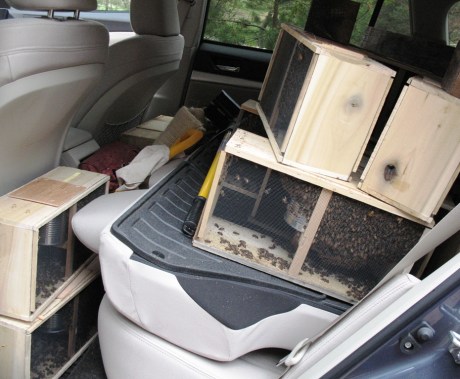
Finally, I arrived at my destination. The bee pick-up was held in the bee-master’s garage. The car area was filled with bee “packages” and the adjacent shop area displayed many bee accessories—wooden-ware, bee tools and such. Bees are sold as three-pound packages, in shoe-box sized wood and screened boxes, each containing approximately 10,000 bees and a queen. They also come as “nucs”—mini-hives with five frames containing all the components of a working hive, bees; a laying queen, brood, drones, honey and “bee-bread” (the mixture of honey and pollen fed to the larvae.) I was there to pick up about forty packages.

The garage was not only filled with boxes of bees, it was awash with loose bees, and beekeepers. Beekeepers are an odd lot. The beekeepers assembled for the pick-up and bee related shopping were oblivious to the loose bees, drifting in and around the garage. Regular folk would flee.

The bee vendors loaded the car for me, concerned that I wouldn’t leave adequate space between the packages. “Bees need air, you know.” The bee-master was concerned that the car wasn’t big enough for the Club’s order. I was concerned that he’d want to put bees in the passenger seat, right next to me.

IMG_2303

Bees, in every nook and cranny.

Finally, after many adjustments, and one sting (not me), the loading was complete. Loose bees hovered in and around my open vehicle. The bee-master saw me unfolding Rick’s driver-protection-sheet, and shot out of the garage.

“Whoa, what’s that for?”

“To cover the bees while I’m driving.”

“No way. There’s too many bees—too much heat. You cannot cover them at all.”

“But it’s freezing out…”

“Good thing, too,” he replied. “I’d keep the AC on full, just in case.”

(FYI—when the temperature drops, the bees settle down and hunker together, to stay warm)

And so it was. I swallowed hard for a long drive with loose bees. I layered up my clothes and drove home with about 400,000 bees in the car, through the snow and sleet, and with the air-conditioning on full. The bees didn’t give me any trouble at all. I wondered what my grandfather would think of that! The bees had to spend the night, in the car. I worried, since it really was cold, but I needn’t have been concerned. In the morning the car was warm, and the windows were steamed up, all generated by the bees.

There was something else, too. Most beekeepers are familiar with the smells of their hives. On a warm day in the bee yard, the hives are redolent with the aroma of honey and the fragrance of beeswax. It’s a clean, sweet smell that I equate with beekeeping. But, that’s not really the smell of bees. In a small car with, 400,000 bees, you get to smell the bees. It took me awhile to figure it out—notes of the musky smell of barn and fresh cut hay, with a hint of tobacco leaf. That’s the smell of bees. I wonder if my grandfather, tooling about in his Suburban full of hives, ever caught the scent of bees.

IMG_2306

And, finally home in their hives.


What’s Eating You?

A.V. Walters–

IMG_2304

Spindly cages over even more invisible tree whips!

Just as you can identify a critter by its tracks, you can tell who is eating your trees and foliage by what is left behind. This is critical information to the hopeful planter of baby trees. If you don’t know who is doing the munching, how will you know how to stop them?

Last year, we lost some of the seedlings early—like within a week of planting. At the same time, a deer jumped our garden/orchard fence and ravaged the baby fruit trees. Though they survived, I was devastated. I could clearly follow the deer tracks to each and every tree victim—and then on out and over the fence. Bastards! We solved that problem by making the fence higher—but I missed a learning opportunity in garden sleuthing. And, I blamed the deer for other losses outside the garden.

I was wrong.

You see, when a deer grazes on your seedlings, they bite and run. They leave a ragged edge. Other critters have other distinctive habits. The modus operandi of the dreaded cottontail is to use those sharp rodent teeth, leaving a clean, angled cut—almost as though pruned with a shear. Bunnies are an under-recognized threat.

Porcupines also dine on seedlings and branches. I’ve been impressed with what I thought was deer damage on the wild bramble canes, only to learn that raspberry and blackberry canes are among the porcupines’ favorite spring and summer foods. And in the winter, they’ll also gnaw on tree bark at the base of a tree, eating the nutrient rich cambium layer, girdling and often killing the tree. Indeed, starved for salts, they’ll gnaw on plywood siding, or the tires on your car! (Salt from road clearing gets imbedded in the rubber tires.) Just this week we saw gnaw marks on our rubber garden hose! (And on our neighbor’s garden shed.)

Yesterday, I saw a huge porcupine, swaying in the wind in the top of a maple tree. They love the leaf buds—before they unfurl and get too tannin. It was a very windy day and, looking up I saw that porcupine hanging on for dear life—just to eat those tender new bits. Never before had I contemplated the risk of being thunked by a falling porcupine. Ouch.

But my chief opponent of the moment is those bunnies. When we plant trees in the forest, I don’t worry about the rabbits. It’s too hilly and woodsy. The bunnies are out front, by the house, in the grassy open areas. That’s where we’re putting the hazelnut and mixed berry hedges. No sooner did we start the planting than the rabid rabbits were right after them.

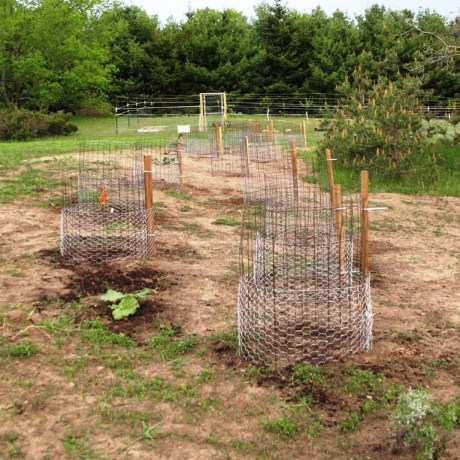
This is no surprise. Tomorrow we will be changing the fence around the vegetable garden (before we plant) because last summer the bunnies made short work of our garden. With the tree seedlings, we had to quickly change gears and immediately put up welded-wire tree cages around each seedling. The cages are made from cut fencing material, formed into circles by bending over the wire tabs from the cuts. With a more than a hundred seedlings at risk, that’s a lot of work!

The natural world notices. We finished the planting (and most of the cages) yesterday. We came out this morning to a parade of deer prints—a veritable square dance of deer, checking out the new additions to the neighborhood. Thank God those seedlings were safely in their cages.


161 Trees…

A.V. Walters–

And counting.

Dear readers, I will return. But there are still bare-root trees to plant, and until they’re all in the ground, these aching bones will not be blogging. The oaks and tulip poplars are in, the hazelnuts (almost, just five to go) The service berry, black elderberry, and redbuds are almost in (I’m saving just a handful for the end, when I’ll put in a mixed berry hedge. Most of the trees were selected to make the bees happy. Right now, getting them all planted, will make me happy. Another day, maybe two. Then I have to make cages for them to keep them safe from the bunnies and deer. And then we pray for rain.


Musings on Planting Trees–

A.V. Walters–

IMG-3

And that doesn’t even include the trees we bought from Benzie County!

Professional “re-foresters” can plant hundreds, even thousand of trees each day. Depending upon the terrain, they use dagger-like tools, either hand or foot powered, and can put in acres of trees in short order.

I am not one of them. I am too fussy. Each tree gets an actual hole, not just a slash with the roots jammed in. Each tree gets a shovel-full or two of compost, which must be blended into the natural soils, so water doesn’t “perch,” causing root rot. I layer in the roots, so they’ll have a stable start. This year, I’m loading up a little on the compost. They’re predicting a hot, dry summer and the compost helps to hold moisture in the root zone. I cheat a little, and soak the roots in Terra Sorb (or work a pinch of it into the hole), also to give them the moisture advantage. If no rain is predicted, they get a starter sip of water, (though spring soils are pretty moist.) Sometimes, we give trees a cage, to protect it from deer or rabbits during its infancy. There’s only so much you can do.

Professional tree-planters work on a scale that allows for a relatively high failure rate. From my perspective, there seems to be little point to doing all that work if the trees don’t survive. Sure, there are losses from natural forces, deer, bugs, and the like. This past year we lost two baby trees when other trees fell on them. There’s nothing you can do to protect from natural hazards. The best you can do is to give them the best start possible. Do I sound like a parent? I’m pleased to report that we have a good survival rate for last season’s seedlings.

In the forest, you need to look for a good spot–a hole in the canopy for light, not too close to existing trees, not near an obvious deer path, not in the “fall-line ” of any existing afflicted trees, and hopefully sheltered from strong winds. Of course, you’re carrying a bunch of seedlings in one bucket (with some water) and another bucket of compost and a spade. I spend a good bit of time, wandering in the woods, finding those good spots. I couldn’t be happier, even with the load–what a lovely way to spend time.

We don’t celebrate Earth Day. We spend a couple of weeks each year, planting. So far this season, I’ve put in 98 trees (including 3 orchard trees.) I’m over the half-way mark. I hurt like hell, but things are moving right along.


Ah, Spring

A.V. Walters

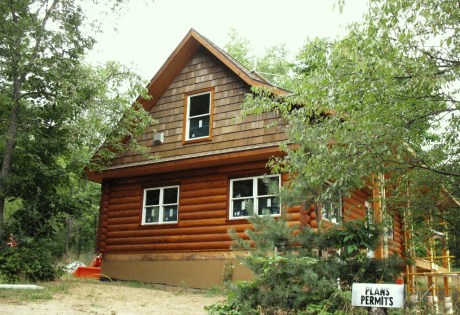
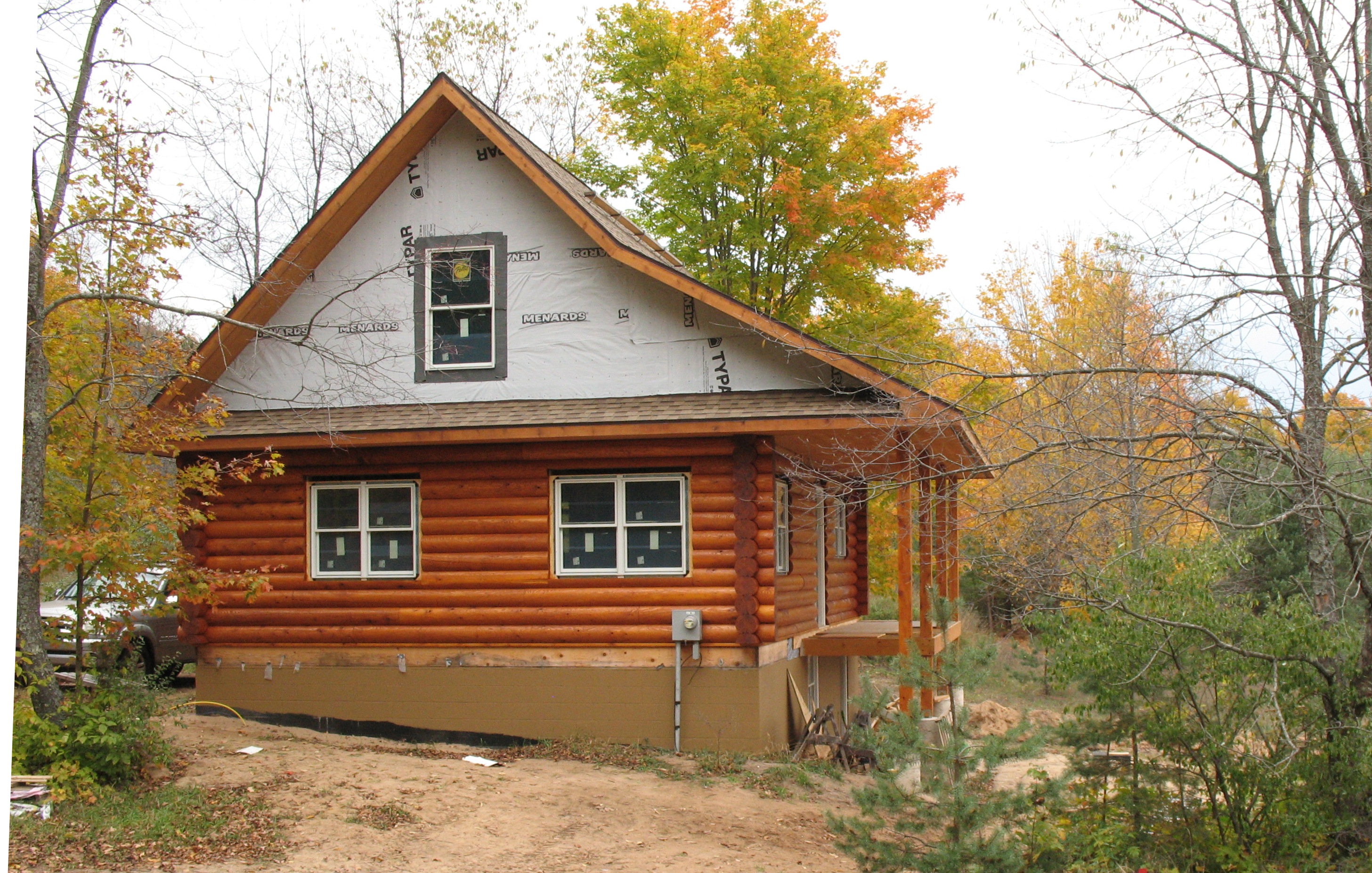
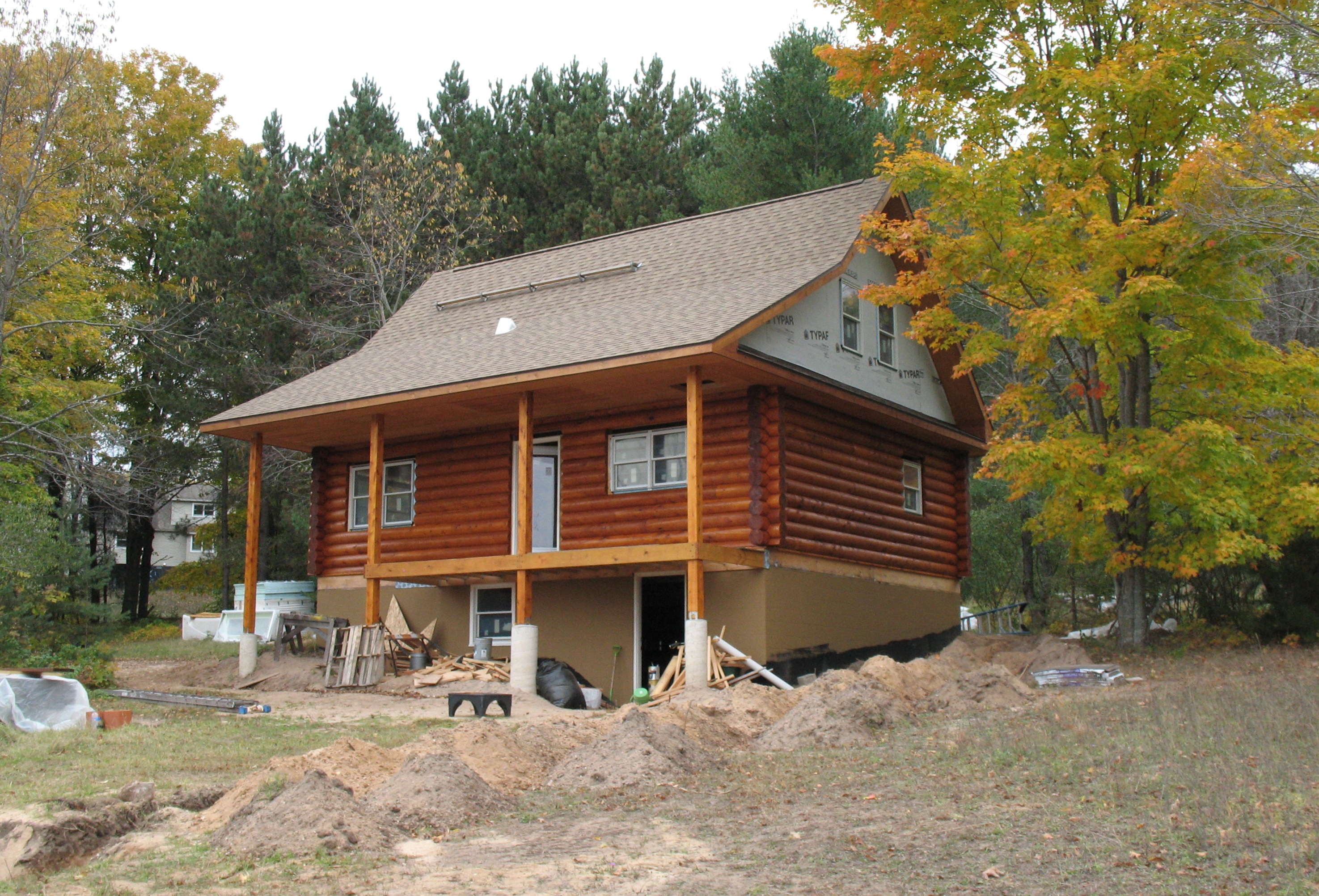
In our minds, our little house—our work in progress—is picturesque. All winter, we could hardly wait for spring to get back to work on it, in earnest. I’ve been asked to send photos of our progress. Then, earlier this month, the snow finally melted. It was like waking up after a bad drunk.

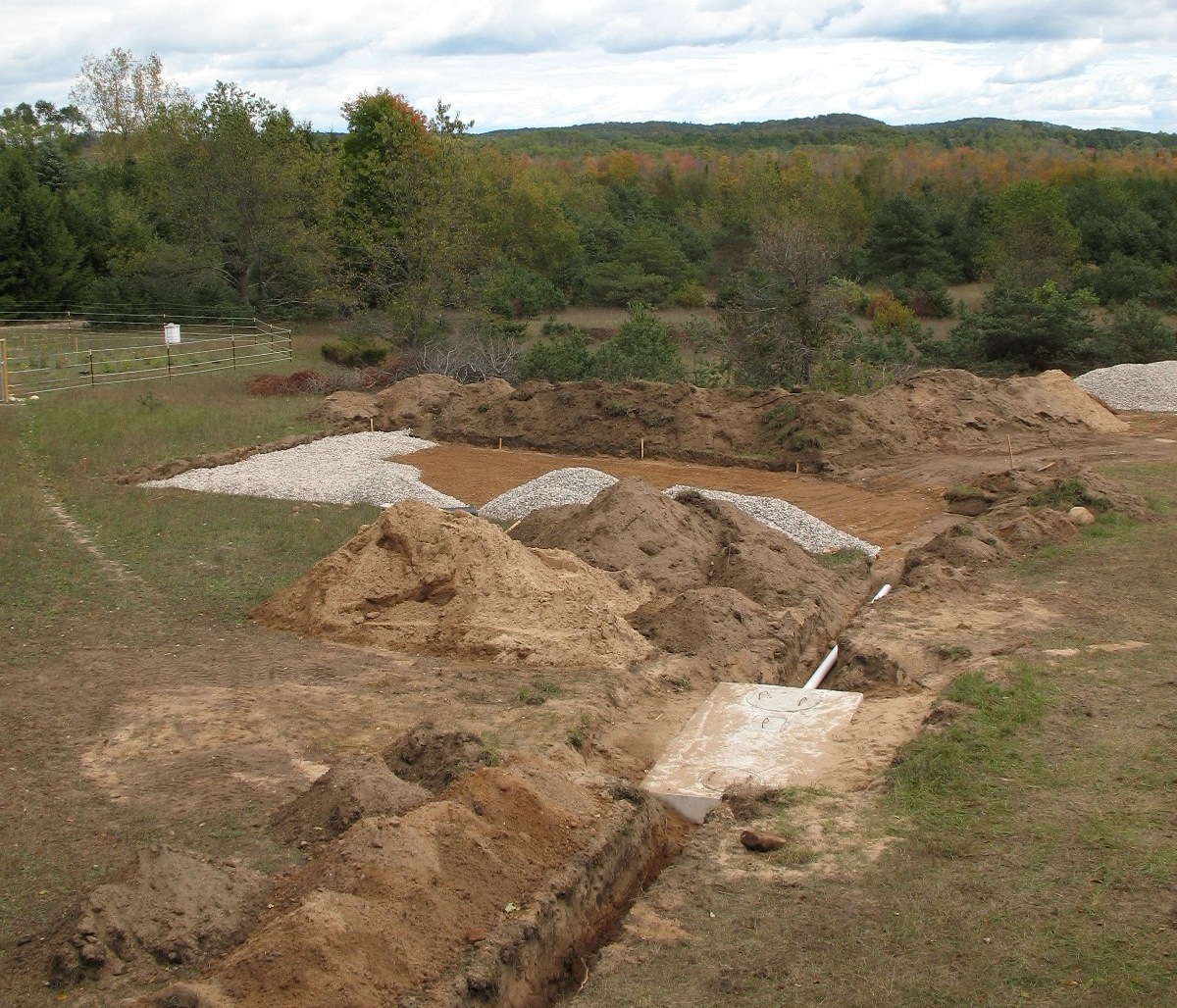
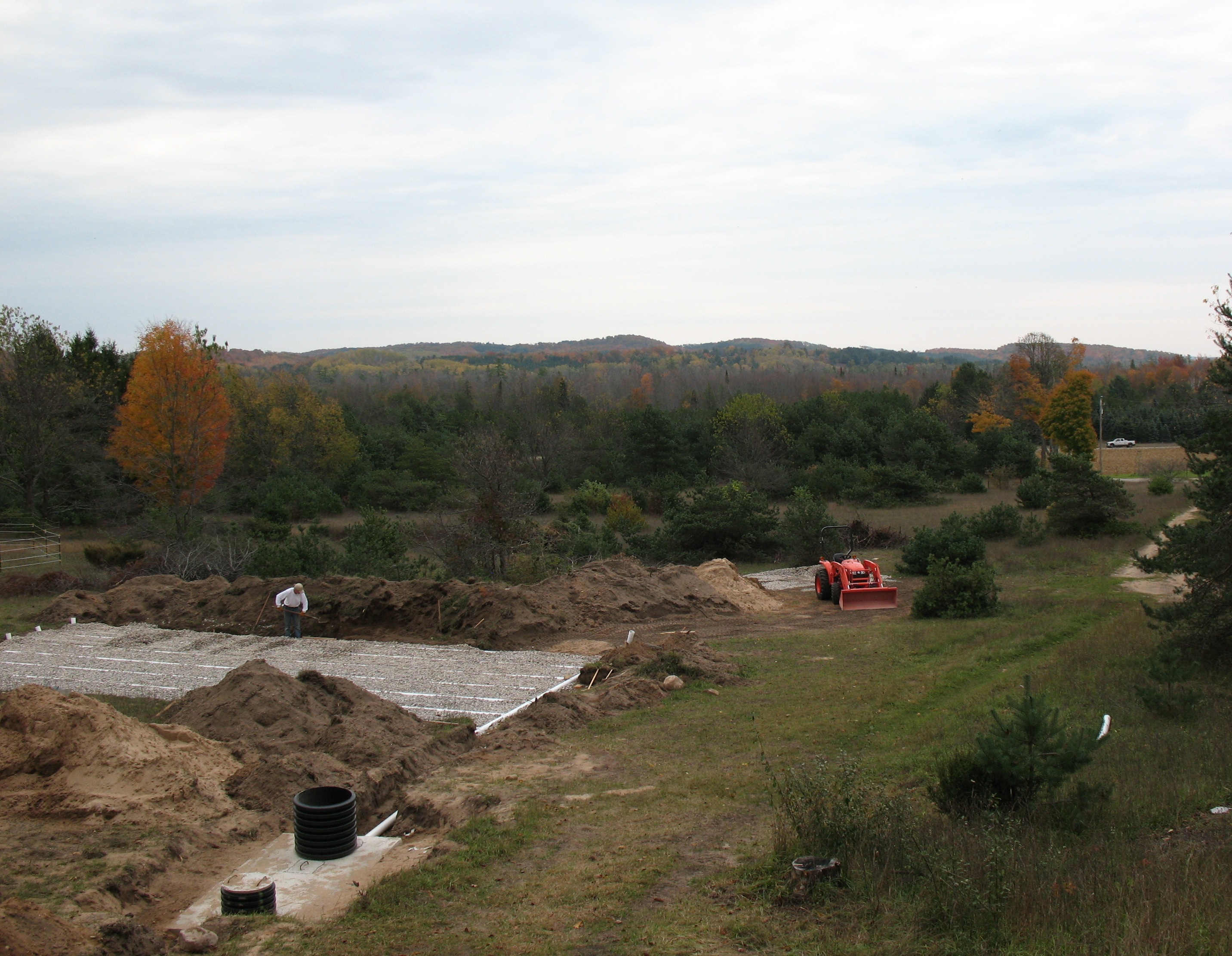
Construction is a messy thing. Just before the snow, we finished up the septic system, and sealed the log exterior. Somehow, in my minds eye, things under that snow were peachy. Spring has been an awakening.

Installing your own septic system is like buying new underwear. You’re happy to have it, maybe even proud of it. But it isn’t something you show off. It is, in fact, an ugly scar on the scenery. It was time to do some reconstructive landscaping. With any luck, after an enormous amount of work, you won’t be able to tell that we dug there at all.

We added this to our annual spring planting schedule. We take a fervent approach to diversity, adding dozens, if not hundreds of new trees and plants, every year, to fill in what climate change takes. I don’t mean that lightly. The forest is suffering. We are losing our ash trees to the Emerald Ash Borer, and the beech trees to Beech Bark Disease. Last summer’s “freak” wind-storm took out over 35 trees. Changes in the environment are accelerating. We have to hustle just to keep pace. We select our plants emphasizing climate tolerance, and, hopefully, outguessing the next blight. At least diversity should serve us there.

So, every year we purchase baby trees of many varieties to diversify the forest. This year, in trees, we will plant white oaks, hemlock, tulip poplars, witch hazel, dogwood, and redbud. We’re also planting shrubs and bushes for soil conservation and wildlife habitat (a hazelnut windrow and a mixed berry hedge.) To the forest trees, we add 100 hazelnuts, red osier, elderberry, serviceberry, blueberry and high bush cranberry. And then, to fix the scar over the new septic we have clover, native knapweed and various wildflower mixes. Needless to say, we are not putting in a lawn.

So far, the 27 white oaks are in, and we’ve prepped and seeded the front with a mix of clover and over 3,500 square feet of wildflower mix for the bees. I’m trying to keep them closer to home with a delicious variety of safe blooms that haven’t seen pesticides. (I can’t account for what the neighbors, or local farmers, plant.) Rick says the bees will go wherever they want, but I’m like the frantic parent, putting in a swimming pool so the teenagers will stay home. (Rick says that just means you have to feed their ill-mannered friends, too.) That’s not lost on me because I know we may lose many of the new wildflowers to the deer and the bunnies. Bambi and Thumper are no longer cute to me.

By this time next month, we’ll have used all of the 45 tons of composted manure that we purchased last year. Rick can hardly believe it. He thought I was crazy.

I’m exhausted and we still have 158 plants and trees to go. Until the front area heals, there’s no point in pictures, it’s just sorry looking. The next few weeks will be all about planting. The first waves, fruit trees and oaks, are in. Next week the big shipment will arrive. And after that, we should be frost free enough to put in the garden. Ah, Spring.


IMG_2295

Sandhill Cranes, Yesterday

No Reservations Needed–

A.V. Walters–

Back in my California days, I always wanted to go see the Sandhill Crane migration. There was an area outside of Modesto where the cranes would come and settle for a while each year during their migratory cycle. A couple of friends were also interested—but we never made it happen. One of the three would always have a conflict—and the other two never got it together to do it anyways, or we’d miss out on the limited reservations for crane viewing. Back there, you had to do Sandhill Cranes by appointment.

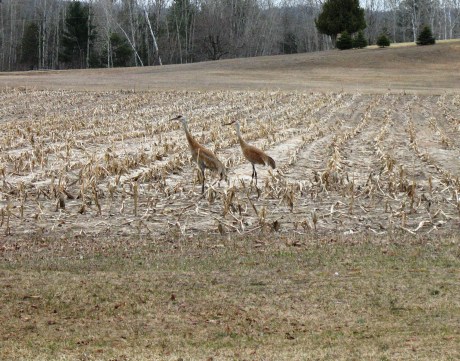
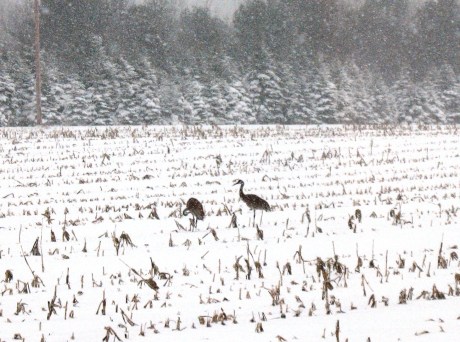
The cranes are beautiful. They’re a little odd, with a strange whooping type call. I know this because, now, thousands of miles away, the cranes are our neighbors. They live nearby in the cedar swamp between here and the town of Cedar. We can hear their weird yodeling call during the long light of summer evenings. In the late autumn, or early spring, sometimes they’ll fly over to the cornfield adjacent our little apartment, to glean corn bits from the field.

It’s funny how something you failed to pursue in one part of life, actually comes to your doorstep later. We don’t get a whole migrating flock. It seems that our cranes stick around for the winter. Maybe they do a short trip south—but if they do, it’s pretty abbreviated, because we see them so frequently here. I think I prefer just a couple of neighbor cranes to some overwhelming migratory flock. It’s certainly more intimate—and doesn’t require a reservation.

Snow Cranes

Sandhill Cranes, Today

Friction Fit

A.V. Walters

IMG_2293

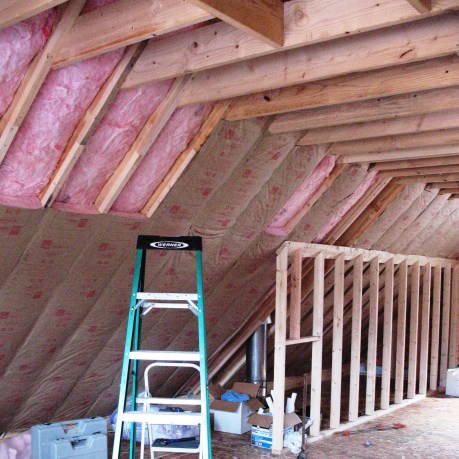
I’m sorry that I haven’t been posting. I have been busy with everyone’s favorite task in home building. I’m insulating.

For good reason, Michigan takes insulation seriously. Back in California I remember building inspectors glancing at insulation, with a nod and a wink. Not so here. Normally, we have winters that warrant a rigorous inspection. Without insulation, we’d spend a fortune (and a lot of natural resources) to keep the place habitable in the winter.

Because there’s little you can do to insulate log walls, the remaining areas get extra scrutiny. In part because the default—fiberglass–is such a miserable job, we considered all of our options. Rigid, closed-cell board, which is not itchy at all, was time consuming and expensive. We secured bids on foam spray installation. They were outrageous—especially because of the manual labor to install the cold-roof baffles, before the spray. Ultimately we opted for the tried and true, the fiberglass, do-it-yourself option.

We have to meet R 49 in the roof and ceilings. When you include the cold-roof baffles, there’s not enough depth between the rafters to get R49’s worth of insulation. So, we found a company that made sturdy R5 baffles AND we firred-out the rafters with 2X2s for extra depth. Then we used high-density fiberglass batts. Of course, they don’t make such things in the depths we needed, so we opted for three layers of R-15 batts to get to the R-value we needed. It has been an amazing amount of work, most of it overhead, unpleasant and itchy (on a ladder, in protective layers and mask.) With three layers, it means dozens of times up and down the ladder to fill each bay. The first two layers are “friction fit,” that is, they are held up by their sheer orneriness. The last, faced, layer is stapled.

IMG_2292

It’s nearly finished. Some of it has to wait—to accommodate wiring and plumbing first. I don’t mind the break, though it might be hard to go back to it. Our little house will certainly be cozy when this is all done. I’m curious to see how it will fare in summer—whether the cold-roof baffles and ridge vent will really keep the roof (and thus the upstairs) cool. In that department, we are blessed that the house falls in the shade of the hill in the afternoons and that should help us keep comfortable, too. It’s important, because we’ve opted not to air-condition.

I’m happy to be nearly finished. It turns out that the only part of this task that is not friction fit, is me.


Minding Our Bees and Qs

A.V. Walters

IMG_2287

Ah, The Sweet Smell of… Failure?! How can that bee?

We’ve just spent the better part of the weekend processing honey.  The house smells sweet and clean from honey and beeswax. Unexpectedly, we have a lot of honey. This is honey that was left in the hives so the bees would have something to eat over the winter. The problem is that the bees didn’t make it. We checked the hives a couple of weeks ago and confirmed our worst suspicions; all the hives were dead.

They must have died pretty early in the winter, because they left ample stores of honey. At least they didn’t starve. There’s nothing wrong with the honey, so, once we’d cleaned up the hives, and done our limited forensics, we collected up the laden frames for processing. We had very productive bees. Our mild winter appears to be melting into an early spring, and we wanted the hives empty before we have a bunch of grumpy, hungry bears roaming around.

The late season honey is very different from our first harvest. The honey from early in the season is light, with a floral aroma. The late season honey is thick and more strongly flavored—made with the robust pollen of Black-eyed Susans and Goldenrod. I can’t decide which I like better.

IMG_2289

We’re not quite finished processing, but it looks like we’ll end up with just shy of seventy pounds of honey. Add that to the thirty-five pounds we harvested last fall, fifteen pounds from the Pinta hive, and… well, it’s a lot of honey. Today we had to run out to buy another dozen quart canning jars. (Folks at the local grocery wonder out loud what you’re canning in March. It’s early, even for maple syrup.) The new quart jars, along with every jar and container in the house brings this batch to about 27 quarts. It makes for a bittersweet failure. We’d rather have the bees.

We’ve checked with the experts and the most likely explanation is that our bees succumbed to varoa mites (or to the viruses that the mites carry.) There was some evidence of mite activity in the two smaller hives. Our aggressive hive, Santa Maria, was not so clear a case. It could have been the weather. This winter’s warm/cold oscillations were very hard on local bees. We’re not the only ones who have had losses. Even experienced beekeepers are cursing this winter. It seemed mild, except (quite abruptly) when it wasn’t.

We have cleaned up the hive boxes, and set them ready for spring–we have new bees on order. I’ve also ordered a well-recommended book on natural beekeeping–and I attended a day-long class on advanced beekeeping techniques. I feel almost ready to try again. We’ll monitor mite levels closely. We’ll do mid-season splits (dividing colonies in half, and “forcing” new queens.) Splitting not only increases the number of hives, it also interrupts the varoa breeding cycles. And, we’ll investigate and experiment with natural methods of hive treatment.

IMG_2290

Bees’ combs are amazing structures.

Overall, we can’t complain. The retail value of the honey we harvested has covered our initial investments in bees and equipment. It makes good sense to try again. We plan to start with three hives, and split to six, mid-summer. At the end of the season we can assess the hives’ strengths, and either go into the winter with six, or recombine some for larger, stronger hives for next winter. Unfortunately, the new normal in beekeeping is to expect thirty percent losses–and that’s when you do everything right.

We’ll have to be a lot better about minding our bees.


Dreams, Anxieties and Outcomes

A.V. Walters

b3

Ready to go!

When I was very little, my father dreamed of owning a sailboat. Saddled with five small children, it wasn’t a dream that was on his horizon, but a man can dream. He had the big blue book of sailing, Piloting, Seamanship and Small Boat Handling. It lived on the shelf in the living room, and he’d take it down from time to time and study it—while bringing my mum up to speed on the tips and best practices he’d learned. The closest we got to boating was an 18 foot, molded mahogany canoe. It was big enough to hold the whole family for day excursions, though in rough water the waves came dangerously close to the gunnels. Five little tow-heads with guarded, wide eyes scrutinized those lapping waves.

I understand the lure of the long-term dream. I’m approaching a number of mine—living in the country, building a home, and keeping bees. I have to keep pinching myself. In my mind’s eye, I also always wanted play a musical instrument. I cannot sing (or so say those around me) but I love music and throughout my life I wanted “in” on that secret language.

That’s how I think my father felt about sailing. His grandfather had worked the lake boats. He grew up on stories about the big lakes. When he retired, it was time. He didn’t need a fancy boat or a fast boat. He wanted something stable; after all, he was a beginner in his sixties. He settled on a MacGregor—a bit of a tub, with an oddly avid following. To pinch his pennies, he searched for one that needed work. (Sound familiar?) It was not seaworthy when he got it. He spent a couple of years upgrading, and, being a woodworker, he added a lot of nice little touches one wouldn’t expect on a beginner boat. As completion approached, he pulled out the big blue book and he and my mom drilled on small boat handling. As a landlubber, she was cautiously enthusiastic. Her father had been an expert boat pilot, both in the Coast Guard and during his 1920s exploits as a rumrunner in Detroit.

b1

We have finished the banjo restoration. I say “we” because a project this cool attracts volunteers. Rick could not resist, and it became our joint endeavor. Really, how hard could it be? It took many internet consultations. Rick re-machined some of the damaged parts. There are You Tube videos on how to stretch a calfskin banjo head. (Of course, beyond the general, no two of them agree on how it’s done.) We picked a natural calfskin (not white) because it’s most likely what would have been put on the banjo when it was first made, back in 1928. We were a little intimidated by the mounting process. Basically, you learn what you can—and then you throw caution to the wind and let common sense guide you. Then you have to set the tailpiece and the bridge, so that you can install the strings. Suddenly, it’s a banjo! It’s not rocket science, but I’m grateful that there were extra hands in the crunch. It’s beautiful, fully restored to its authentic 1920s glory. It has a rich, warm resonant tone—with just the right amount of steel-string twanginess. I am smitten.

b2

My father only sailed for a couple of seasons. He loved his boat. He had a vast book knowledge of how to maneuver it on the water. But he hadn’t counted on seasickness. Both of them. Even if you think you know the ropes, it’s hard to master sailing if the Captain and the crew (of one) are both incapacitated, hurling over the sides of the boat. In the calmest of conditions they could handle the motion, but of course, the calmest of conditions don’t include wind. Wind is a necessity in sailboat operation. They floundered. It became a bit of a joke in the Harbor—these two eager, elderly sailors, flailing at the task. More than once they ran aground, because neither of them could see beyond their nausea to steer to safety. My nephew (who apparently takes after my grandfather and can sail like a pro) tried to help. In the end, all he could do was to watch, laughing. I understand their predicament because I, too, am plagued with motion sickness.

My father did well on the sale of the boat. After all, it was in mint condition with many, many, lovely little upgrades.

Now it’s time to walk my talk on the banjo. I’m a little nervous. The instrument itself is so awesome that I feel like a fraud, holding it. It’s unnerving, to get that close to your dreams. All I need now is a pitch pipe, so I can start up with the proper tuning.


Arts and Crafts

A.V. Walters

IMG_2274

When I refurbish a piece of furniture, I have a couple of rules. This is not to say that my way is universal, or that I pretend to be some fancy, high-end professional restorer. But, I do try to maintain the integrity of the piece. My rules, in short, try to restore the piece to its original condition, respecting the aesthetic of the time; when possible (in keeping with the first rule) try to reveal the beauty of the wood (or other materials); and maintain, or return the piece to its original functionality. It’s not enough to be cool-looking and old; I want it to be useful, too.

There are exceptions—just as our aesthetics are shaped by our experiences, sometimes we make substitutions. What we modern people admire about classical Greek sculptures—the revealing beauty of the white marble—is not what the Greeks had in mind. Originally, those marble statues were painted! Accustomed to the elegant monochrome, my eye is offended whenever I see a “fully restored” Greek figure. To my eye, with paint, they look garish and cheap.

My favorite era of antiques is Arts and Crafts—sometimes known as Mission. This artistic movement was a backlash against the frippery and soulless excess of industrialization. At its best, the lines were clean and simple, harkening back to a time of craftsmanship and honest labor. (At its worst it can be chunky and monolithic, crude for crude’s sake.) The philosophy behind Arts & Crafts reflected the relationship between the materials and the craftsman, showing each to its best potential. Of course, once popular, its designs were copied and manufactured, en masse, by American factories. Savvy manufacturers, like the Stickley brothers, created a design cult and a “buy in” mentality for their lines of cottage-style furnishings. The success of the movement’s philosophy, and marketing, soon made it another passing fad. By the start of The Great War, the style was already fading. Its American heyday was between 1905 and 1915.

I like the furniture of that era, featuring rich woods, quarter-sawn oak or aged natural cherry. Like many antiques, there’s additional caché for a piece when it has its original finish. Sometimes, that’s an original “fumed” finish—and I laugh. What we see today in those fumed finishes, often dry feeling and nearly black in color, looks nothing like it did when it came from the factory. They were ammonia based “lusters”—added after the standard wood finish, a process that created an iridescent color—almost a glow, in pastel tones. But, the factories knew that the fuming was ephemeral. It didn’t last. In fact, the fuming actually degraded the wood. So current antique emphasis on an “original fumed finish” puts a premium on what was really a failed experiment from the start. It’s not unlike the Greek statues—completely different in their own time. I’ll sand and refinish a fumed surface—regardless of the premium (breaking my own first rule.) I once sold a chair to an appellate judge who wanted a blond mission rocking chair, specifically so that he could experiment with fumed finishes. Now, that’s a purist. I pale by comparison.

Recently I found a lovely little “sewing rocker” on craigslist. From the picture, it had nice lines, but was nearly black. I figured I could refinish it, so long as it was solid and the joints tight. At thirty-five bucks, it was worth the effort, especially since I need a small chair for the downstairs bedroom. In person, it was just as dark, but it didn’t have the dry feeling of a fumed finish that I’d expected. I bought it. Once home, we found a faded label—Otsego Chair Company. A quick trip to the internet told us that Otsego was a Michigan company that closed in 1915. So our little rocker is at least one hundred years old.

With winter slowing us down outdoors, this is a nice time for indoor projects. I’m still waiting for the rest of my banjo parts, so I pulled out the little chair. I wondered about the nonstandard color—near black. I decided to start with a thorough scrubbing with Murphy’s Oil Soap. What a shock. This piece was never fumed; it was just filthy!

Underneath all that grime was a lovely little chair with a slightly weathered, rich patina. I didn’t remove the original finish, but, in the interest of my second rule, I did cheat a bit and enhance it with a layer of penetrating stain. The oak is quarter-sawn and highly figured. That means that the wood was cut for structural stability—and to enhance the variation in the wood’s grain. Before adding stain—I hit the “rays” with a lighter, golden-oak stain, another cheat. That way, they resist the overall, darker stain, and emphasize the contrast in the natural oak grain. I think it came out nicely. A coat of beeswax polish and it will be ready to put back into service.


The Sum of Its Parts

A.V. Walters–

blog pic

We tend to be do-it-yourselfers. Both Rick and I come from families where you fixed it, before you replaced it. Sometimes, if whatever “it” was, was not within your field of expertise, you paid somebody to fix it. Sometimes, cost or convenience inspired you to do it yourself. There’s a little bit of a mantra to it, even if “it” is intimidating, “Well, how hard could it be, really?”

All the way to building a house.

That history, combined with an appreciation of older things, has led us, separately and together, to a good bit of investigative repair and reinvention. My home is filled with rescue-antiques. Rick is the mother of invention when it comes to building and repairing challenges. We have accumulated no small measure of experience in woodworking, refinishing, building, tool maintenance and repair, mechanical and electronics repair (mostly Rick), art restoration and the mending and making of things in fabrics (mostly me.) We have projects upon projects. Which brings us to the Paramount question.

In the midst of my mid-life upheaval, I decided I needed an intellectual challenge (because writing novels wasn’t enough?) I wanted to learn to play an instrument, and in so doing, to immerse myself in a participatory way, in the language that is music. I had to choose which instrument would be appropriate for a (then) solo, middle-aged woman. It had to be something I could play alone, and maybe with others. I envisioned myself playing and practicing on a big porch with a view. My first choice, violin, wasn’t a good fit—as a previous car accident had left me with neck issues. I thought about the sax—but even the idea of relearning the breathing for a wind instrument, left me winded. So, I decided on the banjo, mostly because I could not think of any banjo music that sounded sad. I picked up a cheapie banjo on craigslist and began learning and plinking. I have a long way to go.

But, as things work out, once you open the door in a particular area, opportunities step in. When my brother learned that I had an interest in the banjo, it turned out he had a contact for an old banjo with history. He sent it my way.

It is a Paramount, tenor banjo from the mid-twenties. It’s beat up and beautiful. For a number of years it’s been sitting, disassembled (thanks to a “well intentioned” friend) in its case. I’m coming very close to having that lovely long front porch, overlooking the valley, so I thought it was time to get the Paramount in shape. Rick, as is his way, raised an eyebrow.

The banjo needs a lot of work. First and foremost, it needs to be completely disassembled and cleaned. Then, a new “head”—the stretched skin that gives the banjo its distinctive sound. The choice was whether to use a synthetic head material, or the traditional calfskin head that was used when the Paramount was first manufactured. We also need to replace the tuning pegs—which raised the question,again, of new versus old. The Paramounts had ingenious Page, geared pegs, new back in the day, and no longer manufactured.

In the past, everyone had said that I need an expert to help with this banjo renovation. So, I asked around and received several referrals to a local guy, who was reputed to be both better, and less expensive, than the “ship it off to Lansing” guys used by local music stores. I called and made an appointment. First, he gave me his tour of successes—a line-up of string instruments, hanging awaiting pick up by his other customers. They were lovely—so we got to the Paramount. His eyes widened when he saw the disassembled banjo. A Paramount is an impressively machined instrument, sturdy and buttressed with all manor of hardware. The expert marveled that the parts were mostly there—you could see that he was positively itching to get to the task. He knew that I had contacted him mostly for assistance with the installation of the new head—but soon his enthusiasm overflowed to the rehabilitation of the wood and the nickel-plate parts. He pointed out the accumulated finger grime on the mother-of-pearl inlayed finger board. I hadn’t noticed how bad it was. He insisted that the entire instrument be disassembled, lovingly cleaned, then reassembled, before a new head could be stretched. He was adamant that only vintage parts should be used—and of course, a calfskin head. He explained the intricacy of the stretching of a banjo head, a process not unlike stretching the canvas for an oil painting. His enthusiasm was contagious, and I was completely on board. As he described the work necessary to restore the banjo to its former glory, the dollars were mounting. He looked up at me, but I didn’t blink. I’m a pushover for any argument favoring an antique’s original integrity. I was sucked in by his description of the painstaking task. With the vintage parts and laborious restoration, my “free” banjo was fast approaching a thousand dollar rehab.

“That grimy fret board,” I asked, “what would you use to clean it?” I expected to be drawn further into the secret and arcane world of instrument restoration.

“Oh, Windex will do it.” He said offhandedly.

My heart skipped a beat. “Windex?” I’ve done enough antique restoration to know that you minimize “wet” treatments, especially near inlay or marquetry. He noticed my alarm.

“Why, what would you use?”

“As mild a cleaner as possible. Probably Murphy’s Oil Soap, with very little water, a damp cloth to wipe it clear and then dry it immediately with a soft terry.”

He nodded, “Yeah, that’d work, too.”

But he’d now handed me the tail-end of the thread that would soon unravel the spell he’d woven.

“And the nickel-plated parts?” I asked.

“Ammonia soak—you know the Windex, and then, where needed, a little steel wool.” My eyes widened and he followed up, “Don’t worry, that steel wool wouldn’t hurt for the tough spots. Why, what would you use?”

“I like Never-Dull. It doesn’t scratch and can clean most any metal finish.”

“Never heard of that.” He pulled out a polishing compound he sometimes uses.

I had to press further. “What about the areas on the neck, and the other wood surfaces, where the finish is worn?”

He looked at me seriously. “There’s a temptation to refinish that—but it’d be a mistake. As long as the wood integrity isn’t threatened, you keep the value of a vintage instrument by maintaining the original finish. You can do that with a little Pledge.”

The bubble didn’t just burst, it imploded.

Pledge?”

“Yeah, you know, or any polish and wax finish.” I had visions of 60s era homemaking commercials and gingham aprons. I needed an exit strategy.

“This is adding up. We really just need help with the calfskin head—the cleaning part is grunt work that we can really do ourselves.” His face fell. It wasn’t just that the fish had slipped the hook—you could tell that he had really wanted to get his hands on the banjo. There’s genuine satisfaction in the restoration of a beautiful old item. He nodded. And helped me repack the banjo parts back into the case. He was really a nice and genuine fellow. He was, after all, the person most recommended in the area.

I took the banjo home and told Rick the tale.

So, really, how hard could it be?

We went online, researched and ordered the replacement tuning machines, and the calfskin replacement head material. We even broke down and bought an original Paramount wrench to stretch the new head. (They look kind of look an old skate key.) There are You Tube videos that show the many phases of banjo restoration, including stretching a calfskin head.

Rick helped disassemble the rest of the banjo, and I started the painstaking cleaning process, starting with the inlaid fret board, using the materials of my choice. The expert was absolutely right (in part)—cleaned up, it is beautiful. The nickel plated, metal parts have been gently restored to their former gleaming glory. We have some wood repair still to do, but I’ve ordered all the replacement parts and look forward to the challenge of finishing the job.


Follow the Money–

A.V. Walters–

IMG_2269

That’s my rule of thumb, whenever there is a whiff of scandal. I remember California’s Energy Crisis—the one that ushered in billions in debt as the state struggled to meet energy needs. Why the sudden scarcity of electricity? I believed then, that the crisis was manipulated. California couldn’t get any traction with FERC—the federal agency charged with regulating the energy exchanges. After all, George W. was the new Sheriff in town, and California didn’t vote for him. Years later, litigation in Washington State revealed the graft and market manipulation that gave us the “crisis.” By then, George W.’s friend, Enron was already gone, and California spent the next decade digging out from the debt of that fraud. Follow the Money.

What if there doesn’t seem to be any money? Then, look to who benefits.

And that brings us to Flint. We are told that the poisoning of 100,000 Flint residents was the unfortunate result of managerial ineptitude. Clearly, at least that is true. But, we need to look a little harder. Following the money doesn’t help, because the very fact that the parties in question were already under Michigan’s draconian and, unconstitutional, Emergency Manager Act, means that the lack of money had already been established. However, we’ve seen enough of the results of Michigan’s Emergency Managers to know that the appointment of a Manager, combined with the stripping of democratic representation, generally means that the troubled, usually minority, community in question, has something, some asset, that the Governor’s cronies want.

It’s too early to know whether the Flint crisis was steeped in some other, darker motivation. But there are early, and troubling, indications that saving money for Flint wasn’t the primary objective. Follow the money—look to who gains. As always, governmental transparency is essential to maintaining the integrity and trust of the citizens. Recently, the State of Michigan dropped to last place in the fifty states, in its score for government ethics. We have a long way to go to rebuilding citizen trust, so I suggest the Governor step forward with ALL the relevant records.

Governor Snyder did release two year’s worth of “relevant” emails on the issue. Unfortunately, those records were not complete, were heavily redacted and did not go back nearly far enough. When someone makes the effort to hide their actions—they are hiding their motives. Then, we need to look even harder at the facts. Let’s face it, it is unlikely that the citizens of Flint voted for this administration—they are not his constituency.

I don’t have the answers. I only have a healthy sense of curiosity and a deep sense of outrage at what has happened to the citizens of Flint, and especially to the children, whose futures have been diminished. To say the least, I have questions.

Emails released by Detroit Water and Sewerage Department (DWSD) reveal that Flint was offered a very sweet deal for continuing with Detroit water. The price offered was lower than any savings offered by switching to the new Karegnondi Water Authority pipeline, both in the short and long term. Why then, the rush to change Flint’s water supply?

This is not Michigan’s first Emergency Manager water crisis. Long before Flint, the City of Detroit (and DWSD) were placed under the Governor’s Emergency Manager’s powers. Go back a couple of years, to the days when, under the Emergency Manager, DWSD was cutting off water service to delinquent homeowners—while carrying delinquent corporations with far more egregious non-payment histories. It was an international embarrassment. DWSD was caught failing to accurately credit payments made and returning individual customer’s checks—because payments had to be in cash. In short, under the Emergency Manager’s powers, DWSD was making customer payments and accounting more difficult and then, based on the very problems they were creating, suggesting that the only solution was to split up and privatize Detroit’s water assets. Nestle, everyone’s favorite purveyor of necessities, was discussed as the “obvious” choice for privatizing Detroit’s significant water assets. You know, the same company that denies that water is a human right, and advocates that municipal water supplies be turned over to for-profit corporations. What connections did the Governor or the Emergency Manager have with Nestle, or any other private water interests? (Besides the fact that Deb Muchmore, the wife of the Governor’s then-Chief of Staff, is a Nestle spokesperson.)

I question whether the seeds of the Flint crisis don’t start with the Emergency Manager’s efforts, in Detroit, to ‘starve the beast’ of DWSD. After all, the long-term viability of DWSD was enhanced by Flint’s water supply contracts. Only a full release of all documents will tell. Why the rush to a new water source if DWSD was offering a good deal? Why sign on to a new, as yet un-built, pipeline, if it wasn’t the best economic deal? Who was paying for the new pipeline? Whose interests, other than the City of Flint, were to be served by the new pipeline? (It’s been suggested that the pipeline was also to serve Eastern Michigan’s fracking industry.) Is there any truth to this? Even if the new, Karegnondi Water Authority pipeline was a viable water solution for Flint, why the rush to use the Flint River in the interim, especially since it had previously been determined to be unsafe? Experts had warned that the Flint River was badly contaminated. Experts also advised that the Flint River water was corrosive and would damage the city’s water infrastructure unless properly treated. Why wasn’t this done? Surely, minor savings couldn’t justify trashing the existing water system, and risking the release of toxic lead into the city’s drinking water. Whose interests were served by starving DWSD? I have questions, and the citizens of Michigan and the City of Flint deserve answers.

We have a right to know. Those in charge—all the way to the Governor’s office—have to account for what has been done. It needs to go on their permanent record. The legacy of this Governor’s administration, and its appointments, is a generation of poisoned children. If this is mere negligence, those responsible must be identified and removed from any decision-making authority or power. There may be cause to seek criminal prosecutions for decisions that were, at best, reckless. I’m not so sure they were even well-meaning. But answers to these questions may reveal something even more hideous.

If there’s any connection between the crony-capitalist friends of this administration and the results in Flint, we owe it to the children to leave no stone unturned in our investigation. If reckless decisions were made, in order to provide profit opportunities for friends of the administration, then these actions go well beyond negligence. We need to determine whether there was a criminal conspiracy to benefit private interests at the expense of public obligations. We’ll need to look to any and all documents related to Emergency Manager control of or involvement with ANY water assets in Michigan. We’ll need to look to any campaign contributions, or other “considerations,” from companies that could have benefitted.

This isn’t just a question of integrity. (Michigan’s current government is already at the bottom of that list.) It’s a question of intent. If it turns out that this imbroglio was the result of a conspiracy to funnel public assets into private coffers—then ALL conspirators are liable for the damage resulting from the furtherance of the conspiracy. In Michigan we have wondered, how will we afford to remedy this situation—care for the poisoned populace and fix the damaged infrastructure. If this was done for profit, then all those who participated in the scheme will share the culpability and liability. And if individuals knowingly participated in a scheme that poisoned Flint, they must be charged and tried. People have died because of this. This goes beyond reckless disregard, if this was done for profit, it is a crime against humanity.

Like I said, we have to follow the money. We have questions and we need the answers, for the sake of the children.


Getting Mike: Part Three

A.V. Walters

Mike sign

We are all, each of us, a bundle of talents and deficits. My sweet Rick would be the first to agree; he is continually amazed that a highly functional, over-educated adult, like me, cannot tell left from right, or measure anything with accuracy. The trick is, that for most of us, we focus on the talents we possess.

We completely fail at this when the object of our attention becomes a diagnosis, and not a person. A diagnosis can be an opportunity, or an excuse, depending upon how one wields it. In essence, a diagnosis regarding mental capacity gives us information about the nature (and maybe cause) of a deficit. It’s what we do with that information that matters.

A couple of decades ago, I worked as a coordinator for an Adult Literacy Program. We banged our heads against this very phenomenon, repeatedly. Students and tutors would blame their failures on learning disabilities diagnosed when the students were children, instead of looking for the work-around. Despite the educational failures of the past, we found that many of our students were highly motivated and, with individualized instructions, were able progress beyond everyone’s expectations. All too often, the diagnosis of a learning disability had quickly become the operative reality—an excuse for failure instead of a challenge for success.

I have mentioned in this series that my Uncle Mike was shortchanged by the educational system. He had speech impediments that, unrecognized and unaddressed, led teachers to believe that he was language impaired and uneducable. A second chance in his late teens gave him speech therapy—and language. Not that Mike doesn’t have deficits but, armed with language, he presented a whole new package. Mike moved away before I was an adult, so I didn’t have much opportunity to get to know the “new” Mike, the one who could talk, until many years later.

Mike is highly literate. (His keen vision and ability to quickly read signs from a distance were a godsend while traveling with him, across the country.) He reads newspapers and follows current events. He is just as opinionated and informed as the rest of the family—which is saying a lot. He is funny and, in particular, gets situational humor. He has a great memory. But, because his speech is not perfect, many expect him to exhibit lower levels of performance. Mike hides behind these low expectations and, even if it means that he’s misjudged, never puts himself in a position where he will disappoint. Surely, sometimes he fails to “connect the dots,” but I never know if it’s capacity, or training. Mike has spent a lifetime fulfilling his diagnoses.

Not that there aren’t deficits. He has great difficulty measuring the motivations of others. Perhaps an early life without language meant that he could hide behind my grandmother’s skirts, and let her do the coping for him. This is especially true when, all too often, in his human interactions he was the victim of bullying and abuse. He doesn’t get arithmetic at all—and is at a total loss with budgeting and money. Beyond that, I’ve decided to judge Mike’s skills by first-hand experience, rather than by maligned expectations.

A decade ago Mike and I worked together to set him up in his first apartment. He was thrilled with it, with its humble furnishings and independence. We bought him a modular desk, (IKEA style) that required assembly. I took the lead—never pausing to read the directions. Mike and I chatted as I worked. About half way through, Mike expressed his reservations, “Alta, I don’t think that will work.” I was tempted to press on, but Mike got up off the couch and showed me that part of my assembly was backwards! (Did I mention that spatial skills are not my strong suit?) We both laughed so hard, we cried, and then finished the project, together.

Similarly, as we approached the end of our travels, I took a back road shortcut, up a steep hill in Hancock. It’s a winding road—I know it well and I took it at a good clip. We were nearly to the top when Mike cautiously inquired, “Is this a one-way street?” It was, and he was right to question what would have been reckless in two-way traffic. Mike gets it. We have to do a better job of “getting” Mike.

The point is, Mike has a far greater understanding about what goes on around him than we give him credit for. His homecoming can be a new beginning, for all of us. We can plan for successes, instead of failures, while providing safe opportunities for success. There are many wonderful possibilities here. Mike is a little intimidated by his return to real winters—but once his health is recovered, I think he will enjoy snow and season. Already, he is recounting childhood memories of winter in a favorable light.

There are decided advantages to small town living. My hometown, Copper Harbor, has about one hundred, year-round residents. Already, I am impressed with the welcome. Family members and friends are pulling together to outfit Mike with clothing and necessities for winter living. All of us are making plans for fun and community engagement as soon as Mike is on his feet. This is a seasonal town, if he wants, there are opportunities for work in the summer. My sister told the owners of a local resort that Mike was coming, and when we rolled into town, he was welcomed home, on their marquis! It brought tears to my eyes, and a ready smile to Mike’s face. Finally, we know that he is safe and loved. Finally, Mike has come home.


Getting Mike: Part Two–

A.V. Walters–

IMG_2266

It was the Christmas storm, in New Mexico, that triggered our actions. That, and the fact we finally got Mike to give us an address.

Squalor is such an ugly word. So is elder-abuse. I try not to be judgmental. I know that every person has their own reasons for what they do, and that it doesn’t help if I overlay my own perspective. I think the facts should speak for themselves. You’re free to draw your own conclusions.

I had coordinated with Adult Protective Services before my arrival in New Mexico. I wanted to document conditions—and I wanted company out to the site—just in case. APS was concerned, too—they wanted me to coordinate with local law enforcement for “civil standby,” which would cover police presence, not only for the initial status check, but for the time it took to pack Mike’s belongings, and go. The county sheriff’s department had jurisdiction, but they reached out for additional back-up from the local police department that had previously been to the location. We were quite the parade. Mike was living in a remote trailer out in the high desert. We, (me and my entourage of law enforcement, totaling four vehicles), met down the road, and then pulled up to the trailer, together. To my shock, the police flanked the entry, hands on holsters, while the deputy pounded on the door. She, Mike’s “friend,” answered—of course, Mike was home.

She presented as a good-looking, if overly made-up, middle-aged woman. She wore one of those “stylish” track suits. You wouldn’t look twice if you passed her on the street. She called Mike to the door. He peered out at the collected entourage—slack-jawed and stunned. His clothing hung on him, his pants held up by a belt with a long tail that spoke to the enormous weight loss since I’d last seen him. He sported a Hard Rock Café t-shirt, several sizes too large, and stained with the kind of deep grime that screams poverty. His hair was clean, but long, and matted. His feet were wrapped in pressure bandages. Even that prelude didn’t prepare me for the inside of the trailer.

Mike’s eyes found me in the crowd and he relaxed, but just a little. I handed him the kitty carrier and told him these people had to come inside to see where he lived. I instructed him to put the kitty in the carrier, so that we wouldn’t scare her off. Unfortunately, the cat was already outside—Mike went out to try to find her, but we never saw her.

We took advantage of his search for Penny, to go into the trailer where Mike had been living for ten months. I knew that he mostly lived there alone. We knew from conversations with Mike that She “lived” there, in address only—mostly she spent the nights at her boyfriend’s apartment. Mike was proud that he “held down the fort” at the trailer. Every couple of weeks, he’d be taken to the boyfriend’s house, to clean up—and to do laundry. Sometimes, if weather was really severe, he’d spend the night at the boyfriend’s.

Getting a good look, inside the trailer, brought tears to my eyes. There was NO water, NO sanitation, NO power, and NO heat. An outdoor, propane, “patio heater” stood in the center of the main room, an empty propane tank, on its side, next to it. No matter, at least today was a warm day. Plastic gallon-jugs of water circled the heater—so they wouldn’t freeze at night. I knew, from Mike, that there was a generator outside that gave light, and access to a microwave oven, when there was fuel. Too often, there wasn’t any. The only significant furnishings were two “easy” chairs, one heavily worn and shabby, and the other in reasonable condition. It was no challenge to guess where Mike had been sleeping for the last 10 months.

The trailer was filthy, covered in the reddish grit that comes from the wind-blown desert of New Mexico. It was strewn with rags, or so I thought, until She told me they were Mike’s clothes. There was a plastic trash bag with his clean laundry—he had no dresser, not even boxes for his clothing. There was a short, folding shelf unit for his personal effects—his razor, miscellaneous papers and junk he’d collected. I had to step outside for a moment, overwhelmed. We’d clearly waited too long, and though he denied it, Mike had paid the price. I went and found Mike, wandering in the field, looking for the cat. “Mike, you have to come with me, now. You cannot stay here, any longer. It’s not safe or healthy.” He dropped his head. I hated to do it—Mike believed I was dashing his dreams.

You see, Mike saw this as his opportunity for homesteading. Apparently, She owned the property. She relieved him of his Social Security money each month, and fed him the fantasy that soon, they’d own the trailer, together, outright. Then, they could see about real “improvements.” Mike had spent the previous summer clearing the mesquite and tumbleweeds from the “yard.” He showed me the tree he’d planted, that he watered diligently from those plastic jugs. He was nothing if not patient, and proud.

By law, most livestock is treated better.

I’d brought plastic trash bags, to pack. I was concerned about the possibility of gathering up pests, and bringing them to my mother’s, where Mike would be living. I was optimistic on that front—even insects couldn’t thrive in these conditions. As I headed back in, to pack, one of the officers offered me gloves—those blue, nitrile gloves they wear at crime scenes to avoid contamination. I gratefully accepted them. Mostly, I just wanted to pack Mike into the car, and escape with just him. After all, anticipating the worst, I’d brought him new clothing. But, I know that there’s a danger in that kind of uprooting; you dismiss and abandon the person’s past—good and bad. Though the officers were quietly conversing amongst themselves—appalled at the conditions, I had to be mindful that this had been Mike’s home, and that he was proud of it. I packed what I could—sorting out the clothing that was too grimy, or threadbare, deciding what was worth hauling across the country.

The officers and APS admitted that this was a clear-cut case of abuse. But, they didn’t seem in favor of prosecution. Mike certainly would be unable, or unwilling, to cooperate—he believed this woman was his friend and, in any event, he was safely leaving the state. At the time, I had no interest in going down that road—I just wanted Mike healthy, safe, and away. One of the officers mentioned that this was not her first time doing this. She was outraged at any suggestion of abuse—after all, how could it be abusive if Mike agreed to it. And, she told the officers, She lived there, too! (Yeah, right. We all knew better.) Mike and I stopped in Roswell, on our way out of town, for a haircut and to close his bank account—he had almost nothing to show for his 44 years in New Mexico.

At last, we headed home. It’s a long trip, over 1,600 miles, to the UP. Mike was quiet at first, but finally, he began to chat—about the problems with his feet, about his cat, about the burritos she’d brought him to eat, from the convenience store where her current “boyfriend” works. Other than a feral cat, lost to him now, nothing he said about his life in the desert made me feel any better. It will take some time for Mike to adjust.

My niece, Jessica, who is a saint, arranged a medical appointment for the day after we arrived home. On the trip, Mike wouldn’t undo the bandages on his feet—he said the doctor (whom he hadn’t seen in a month, because She didn’t get him to his appointments) told him that only a doctor should wrap or re-wrap them. My mother and I were in the exam room when they removed the wrappings. We didn’t know what to say. His feet were grossly swollen and crusted—skin split from the swelling. There was evidence of frost-bite—a testament to his living conditions. His feet did not look human. The doctor took one look, and sent us to Emergency.

No thanks to his “friend” in New Mexico, Mike will be okay. His feet and legs will recover, if slowly. He now has loving caretakers who will see to it he eats properly, exercises, and gets needed medical care. They tell us he came very close to losing his feet—and maybe his life. We’ll deal with the blood clots for several months, yet—with blood thinners and proper pressure wraps. I arrived, apparently, just in time.

I’m still fuming. In front of Mike, I’m careful not to criticize his “friend.” I understand Stockholm Syndrome, and how a victim can attach to his oppressor, or worse, when the victim believes it’s his friend. I take a deep breath, and think of what he’s been through. Given what we now know about his physical condition, I wonder if I made the right decision not to prosecute.

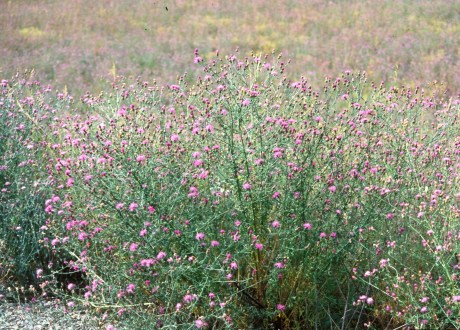


Getting Mike: Part One–

A.V. Walters–

It was inevitable that sooner or later we’d have to step up to the plate to resolve this. The only real resolution was to bring Mike home.

Mike is my uncle. He is congenitally disabled–starting with a birth condition that caused brain damage, which (very common in the day) was left untreated. He did not get the kind of early intervention and treatment mandated now, that would likely have left him far more capable. My grandmother shielded him–to protect him from the bullies that taunted and repeatedly injured him. He clearly has deficits–but sometimes it’s hard to tell what’s damage, what’s training and–well, when Mike is manipulating for his own ends. The very fact that he knows when he can gain advantage, hedging with the truth, means there’s more capacity there than is generally acknowledged.

Mike’s childhood in Michigan was pretty harsh. Bullying is widely recognized today as an insidious and twisted problem–one that damages both the victim and the perpetrator. Schools have special programs. Teacher and students alike are encouraged to step forward to set things to rights. Not so in Mike’s day. School was a veritable gauntlet of hazards. My grandmother would rail, and the administration would shrug. They made it very clear that they would have preferred that he be institutionalized early on. They made it Mike’s fault.

My grandmother refused to give up. She researched high and low and found a special program to maximize the potential for kids like Mike. She wanted him to have the satisfaction and autonomy that comes with work. Like most parents on mentally challenged children, she didn’t want him to be a burden–and worried what would happen when she and my grandfather died. She found a great program in New Mexico–run by a dynamic and wonderful young man–who saw potential in all “his kids.” And the program was wonderful. First and foremost they were the ones to identify Mike’s speech impediment. (When I was little I could never understand him–most couldn’t, and soon, Mike talked less and less.) As a late teen, Mike received intensive speech therapy. It worked. Mike could suddenly communicate–and he was funny–even theatrical. My grandparents were vindicated. Not that Mike doesn’t have deficits, but, in the absence of communication, everyone assumed that he was far less functional than he really was. Shame on the rest of us.

The relocation was a big step, but my grandparents uprooted themselves from generations of family and history in Michigan, to give Mike a chance. It was a tough move, loaded with sacrifices. Being from Michigan gives one a love of season and lakes and snow. New Mexico, especially the high Eastern Desert, takes a special kind of appreciation. Mike bloomed. The employment training offered wasn’t wonderful–hospital orderly, bus boy, laundry worker–but they were jobs, steady jobs, for kids who were never expected to have any prospects.

After a while, the program, and its continuing support fizzled. State administrations changed, budgets were cut. Finally there were really no special programs for Mike, just a handful of advocates–family and friends who’d come to know him. Still, he lived with his parents and had a regular job. My grandparents missed Michigan. Some people have only one great leap of faith in them–that leap brought them to New Mexico. There was no going back.

Mike’s biggest problem is his inability to discern the motivations of others. He’s a genial guy. Not many people will take the time to befriend a mentally disabled person. When they do, they are either saints, or, unfortunately, predators. It’s been a problem all of his life. The “friend” who got him into stereo equipment–soaked up his savings and, after he’d cashed his commission check, vanished from Mike’s life. There was a similar scenario with camera equipment. It’s a recurring theme, and so we’re leery.

When my grandparents passed, nobody knew what to do about Mike. Mike made it abundantly clear that he wanted to stay where he was. It was his community and he had a job. My parents would have taken him to Michigan, but Mike’s memories of Michigan are full of abuse and bullies. I would have taken him to Two Rock, but California was an unknown. Mike wanted to stay. We cut a deal. If Mike could stay and take care of business–work, pay bills, take care of himself, he could stay. Long distance monitoring isn’t great. My grandmother’s friend, Mary-Jo has helped. She would call and drop in on him. Mike calls my mother every week, on Sundays. There have been slips, but mostly Mike has kept up his end of the deal. Or so we thought.

A couple of years ago, Mike had a friend who suggested that they share an apartment, to save money. We were immediately suspicious. The “friend” wasn’t interested in communicating with us–more suspicions. But, Mike jumped the gun and moved anyway. We had no evidence of trouble, so we opted for a wait and watch plan. Things seemed to be fine. Mike continued to report to work. My grandmother’s friend watched like a hawk (the woman is a blessing). At one point, when Mike didn’t call, we called the local cops–for a “welfare” visit. He was fine. He was angry with us–he’d just missed a couple of calls because of problems with his phone. Still, we worried.

Last spring Mike was going in for cataract surgery. His roommate didn’t pick him up, so Mike gave the medicos Mary-Jo’s name and number. She retrieved him from the clinic. While he was there, the doctor noted a nasty infection in his leg. These have plagued him, off and on, all his life. He started up with regular treatments at a wound clinic. His legs were too bad to continue working. My mother offered to pick him up and take him to Michigan where he could have better care. Mary-Jo reported that Mike was unshaven and disheveled. We were alarmed that the roommate hadn’t followed through, and that he wasn’t taking care of himself.

Then, our mail was returned as “not at this address.” Again, we requested that the police visit. Too late. Mike was gone. For a while we lost contact, but still, we had no evidence of actual trouble. We had nothing to report and nowhere to report it to. We’d dropped the ball.
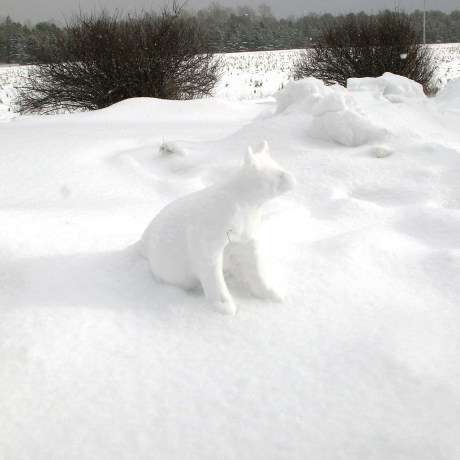

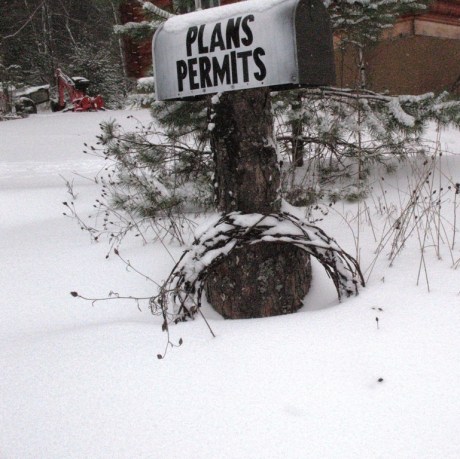
After a bit, Mike’s calls to my mother resumed. Yes, he’d been out of communication, but there were reasons. He’d moved to a place in the country–and there wasn’t great cell reception. He was clearing part of the property and planting trees. He had a kitten. He was so excited, it was hard to be angry. But, he had no address. The trailer where he was living was new, and there was no address yet. We’d have to be patient, there was so much to do. No address meant that we couldn’t send him cards and treats and care packages. These goodies had long sustained him–the occasional box of cookies, a needed winter coat, cards–with a little cash tucked in. These outreaches meant the world to Mike. How could he not give us an address? Well, the post office had to put it on the route and they’d have to install a mailbox, out on the highway. He confided that his friend was still angry that we’d called the police previously. Soon, soon, he’d have an address.

He sounded great. He sounded happier than he’d been in years. He was working outdoors, enjoying it and proud of the results of his labors. He was so thrilled that he had a kitten–all his own. We worried. He was also keeping in telephone contact with Mary-Jo, she didn’t like the situation, one bit, and she told him so. We talked about it and we decided to let the tenor of Mike’s voice be our guide. His voice was strong and he was happy.

His birthday rolled around. My mum called for his birthday. He was missing the goodies. What could she say? Well, Mike, when you give us your address and we’ll resume the packages and cards. Tough love. Over Christmas, Mike called my mother, elated that they’d put up the mail box. He gave her his new address! Before she’d send him any goodies my mother told Mike she would send him something and he’d have to send it back, a test of the new postal address. She did, and he did. So, she sent him belated birthday and Christmas packages.

Then, after Christmas, New Mexico had a storm. We read about it but we’re from Michigan. What’s the big deal about a little snow? It was a big deal. Mary-Jo called, frantic. Was Mike going to be okay? My mother gave her the address–explained that things were fine now according to Mike. Things weren’t fine. Mike likes it there, but we’ve learned that he lives in a trailer with no heat, no water, no sanitation. There’s power, but only when there’s fuel for a generator. Winter is a big deal under these conditions. Mary-Jo, determined detective that she is, advocate for this vulnerable son of her best friend–she found out just how grim. He told her he keeps warm under a thermal blanket, he and his kitty. The “roommate” doesn’t live there, she drops off groceries. He visits at her place every couple of weeks–to do laundry and have a shower. She cashes and keeps his Social Security checks.

I am on a mission. I have contacted and coordinated with Adult Protective Services. Mike’s going to have a visit.The police will escort us. If conditions are as Mary-Jo reports, Mike and his kitty are coming home to Michigan. He’s not going to like it, but he’s not getting a choice this time. I won’t post this until he is safe with me–I don’t want to jinx it this time. I just finished a two day, 1,600 mile drive to New Mexico. I thank all those who have coordinated to make Mike’s rescue possible, especially Mary-Jo. Tomorrow is the big day.

Snow Cats, Hot Cocoa and GMOs

-A.V. Walters-

IMG_2260

It’s snowing again. We’re expecting seven inches by tomorrow and then it will really feel like winter.

Yesterday we were out clearing. Snow shoveling leads to play—at least for those of us with snow history. The snow on the ground was a little too dry for a decent snowman. Though I managed a couple of good snowballs, I couldn’t get anything good going (Rick, shoveling, didn’t want to play along) so, I had to settle for making a snow cat. Yes, a snow cat—nice and fat like my favorite cat—who is unfortunately named Kilo, making a permanent joke of his girth.

On the way up to the house site, we noticed tracks—large, feline tracks. They were much too large, and the spread of the step is too long, to be a house cat. This summer, I noticed similar tracks in the sand and wondered if we had bobcats or a lynx. But tracks in sand are difficult to identify, so I let it go. Now, in snow, it is absolutely clear that we have a regular visitor who is something larger than Kilo or Bob. I followed them (the tracks, that is) in a meandering trail that ended across the way because my quarry walked up the neighbor’s driveway—which had been plowed after the tracks were made.

I’m not surprised; there are plenty of bunnies here to keep a wild cat well fed. We see their tracks, too, along with those of the mice and squirrels and their veritable freeways of tracks. I came home, determined (after a cup of hot chocolate) to identify our feline visitor. I believe it’s a bobcat. The size is right, the length of the stride, and even the meandering path. It’s unlikely we’ll ever see him, because they are nocturnal, but it’s nice to know he’s there.

IMG_2257

“And now, a word from our sponsor…”

Hot chocolate is always nice after my own meanderings in the snow. I’m going to put in a plug for Hershey’s here—as they have recently announced that they’ve nearly completed their transition to non-GMO sugar in all their products. They made their statement in a benign way, declaring that they are responding to clear customer demand. No company wants to support such a change on environmental grounds—and risk the wrath of the larger food industry. Still, I admire Hershey for making the shift. The company also has a nice website which identifies which of their products are gluten-free. That’s good for me. They’re not perfect, but for today, they can bask in their non-GMO glory.

The Hershey announcement has the Minnesota sugar-beet farmers in a tizzy. Minnesota leads all other states in sugar production—all from sugar beets, all of them GMO modified and drenched in Round-Up. Previously, Hershey bought sugar made from sugar beets. Sugar-beet spokespersons are circumspect about the Hershey announcement—hoping that it’s not a trend. Surely, Americans won’t abandon conventional, chemically saturated, agriculture. Will they?

Here’s the rub. The sugar-beet farmers and cooperatives couldn’t change gears to go back to non-GMO seeds if they wanted to. There aren’t any non-GMO seeds available. Monsanto has so flooded the market with their poisonous seed-and-Round-Up combo, that the farmers have no fallback position. This, despite the evidence that GMO yields are no better than organic, or conventional fields. (Listen up organic farmers, here’s a window of opportunity to grow conventional sugar beets for seed!)

Consumers can make a difference. It will be fun to watch conventional agriculture scramble as more and more of us vote with our dollars for healthier products that don’t contaminate our soils and water. In the meantime, I’m warming up with a hot chocolate and anticipating a few more days of heavy snows.


Perfect Hot Chocolate—one heaping teaspoon of unsweetened cocoa powder, one teaspoon honey and one cup of whole milk or, for a special treat, almond milk.


New Year’s Values

A.V. Walters–

I’m not one much for the celebration of artificial holidays. Generally, if the way in which a holiday is celebrated suggests that one should shop, I’m not interested. I make exceptions for food (especially if it’s fresh, organic and local! I think that holidays should be about great food shared with loved ones and the appropriate celebration of season.) It’s no mistake that breaking bread with others—the root of the word communion, is also the root of community. It’s probably fair to say that I’m a Grinch about Christmas.

Not that I don’t shop. (Good Lord, I’m building—sometimes it feels that all I do is shop!) But shopping, in the retail sense, has become a recreation activity in our culture. North Americans have more stuff than we can house—I know this because my day job is about self-storage, an industry that has burgeoned over the past few decades. We have too much stuff.

What we don’t do, is shop wisely. Americans shop for values in the dollar sense, not for values in the real sense. Everybody likes a bargain—but at what cost? I note that Costco (a company I like because they have decent labor policies and are responsive to members’ environmental concerns) is having a sale on Georgia Pacific paper (a company that I despise for its political culture and rampant environmental abuses.) Will other Costco consumers stop and think about the impact of each individual selection? I doubt it. I have to pause, and recognize that the very economies of scale that make Costco successful, work against local economies—and encourage the very unbridled consumerism that decouples our relationship with the planet. It’s a matter of degree. It’s about taking the time to look below the surface—on any individual purchase—as well as with any particular company. Even though limited individually, our dollars collectively, are the second most powerful political and policy tool we have at our disposal. The first is our vote.

I also know that the very economic policies supported by our corporate economy have squeezed consumers in ways that make globally-unwise shopping the average consumer’s primary option. Think about Walmart and its devastation on small town economies— the fact is that their pay is so low as to force employees onto food stamps and public programs. There is an implicit trap in the Walmart cycle—they prey on the poor. By the time a community realizes that Walmart is not a good deal—it’s too late. All of the local businesses have closed. There are no other shopping options. Behind the scenes, the profits go to the Walton family, the production jobs go offshore, and consumers are left with shoddy products that will not endure. Go ahead, buy it, and then buy it again when it breaks. Adding insult to injury, our tax dollars help to support their full-time workers who cannot live on what Walmart pays. Where’s the value in that?

Is it too much to ask North Americans to look deeper into where their dollars go? I hope not. Buy local. Buy from your farmer’s market or co-op. Support local tradespeople and service companies—before you head to the chain store with your coupons. Fix it, instead of buying a new one, and tossing the old into the trash. Research your larger purchases on the internet—and make sure that your dollars support your real values. Buy used goods, or surplus goods—you’ll save money, reduce waste and decrease our reliance on the retail culture. Make, or build, things yourself, when you can. This is the strength of the American dream. Since when did self-sufficiency become passé? Let your dollars support your ideals.

Oh yeah, and Happy New Year.


Better Late Than Never–

A.V. Walters.

IMG_2254

Yesterday’s Barbed Wire

The day before yesterday, Rick and I went for a walk in the woods. There was a wind-storm over Christmas, and we wanted to see if any more trees were down. We wore our regular shoes. There was no snow. So, we busied ourselves, with some minor trail-clearing, before yesterday’s predicted storm. (It’s nice to remove the trip hazards, while you can still see them.) At least the additional trees that fell were already dead—this is normal winter renewal.

We also wanted to check on our “widow-makers,” trees that came partially down in the wind-storm last August, but that were caught in the surrounding trees—hanging, but not stable. These are a woodsman’s worst nightmare. They are extremely dangerous to clear, as you can tell by their name. We have several snarls—where a fallen tree smashes into its neighbor, and that one into its neighbor—and so on, until four or five trees are entangled. We’ve been slowly clearing them, hoping that winter would level them for us. No such luck, so far.

IMG_2232

Widow-maker.

Unfortunately, several widow-makers block, or threaten, our trails. One of them is further complicated by being bound up in some of the ancient, barbed-wire fencing. The trees have grown, embedding the wire deep into their trunks. A big maple, split at its base, leans heavily on a smaller maple, over our main access trail, both of them wired together. It’s just a matter of time, and wind, until the smaller tree splits or collapses under the burden. (Should the bigger tree fall fast, that entrapped wire could cut through a bystander like a hot knife through butter.) We decided at least to clear the wire. Tinsnips in hand, we do what we can.

Yesterday morning we woke up to a different world. Finally, winter has arrived. It’s tough to estimate, with the drifting, but I’d guess we got a good six inches of dry, fine, powder. It’s about time.

IMG_2255

What a difference a day makes.

Though the mild season has seen great savings in heating costs and convenience, it is disconcerting not to have a real winter. This new blanket of snow sets that to rights. It will also provide needed “chill” hours to our fruit trees and down-time for the bees. Not that the bees need super-cold temperatures, but it is hard on them to have warm weather with no blossoms. Now, they can huddle and give up on the search for pollen and nectar.

Now, one would think that, being late December, we’d be ready for winter. Were we that well-oiled, seasonal machine, we’d be waiting, ready, with the snow-blower already set up on the Kubota. Yeah, right. Instead, we flailed about in the snow, disconnecting summer implements and hooking up the blower. The reward is that the blower makes short work of snow removal. Rick did the driveway, parking area and paths at the house site, and the drive at the apartment—ours and our landlady’s, in a couple of hours. Altogether it’s over a thousand feet of plowed road and path, about ten feet wide.

IMG_2256

Suiting up.

We’re settling in now, to the slower pace of winter. Things need to be more deliberate. A trip to town requires clearing the car, first. Work on the house requires warming glue or caulking materials. You have to think ahead. We don’t mind. We have the necessary tools and we like the snow. Another snowfall like this one, and we’ll break-out the snowshoes.


Home for the Holidays–

A.V. Walters.

Over the hills and through the woods…. There is something nostalgic about going home for the holidays. You can sample the traditional recipes from your past, and slip comfortably into the identity assigned to you by your family, oh-so-many-decades ago. Your siblings are there to remind you, just in case you forget, and pretend to be an adult.

This effect is doubly true in my case. Home, my mother’s house, is in the far north. It echoes with the traditions of the past–heating with wood, guaranteed power outages that have you pulling out the oil lamps, and storing the holiday excess out on the deck (or back porch)–where frigid temperatures are a certainty, and a back-up, for regular refrigeration. Even holiday meal planning comes with an asterisk (and, if the power goes, we’ll just put that ham out in the barbeque….)

My home town is a summer tourist destination; it lies on the shores of Lake Superior, in the lee of Brockway Mountain. It’s that mountain that prevents any cell phone or digital reception. During the height of the summer season you can watch the tourists, desperately waving their various high tech devices doing reception ballet–searching, in vain, for signal. We tell them, “You’ll have to drive to the top of the mountain–you can catch a signal there.” Indeed if you go up there to catch its world famous view of Lake Superior, half the people up there are making calls, or catching up on their internet connections. In the winter, they do not plow Brockway Mountain Drive, so there’s no cell service at all.

There are plans and skirmishes to bring the twenty-first century into town. It’s not a bad idea–the local volunteer fire department is still radio dispatched, because cell phones don’t work. The volunteers carry pagers. It’s argued that the absence of cell reception could cost lives–especially given that the town and its environs are renowned for extreme sports, mountain biking and black-diamond ski slopes. That brings us to the continuing tower, and anti-tower battles. The pro-tower folks have the  built in safety issues on their side. The anti-tower forces argue that cell towers have no place in the pristine forests of the far north. Rightfully, a cell tower will clash with the historic views–which have been safe from interference since the turn of the last century, when copper mining played out. I see the need–but I secretly am anti-tower–if only because I hate for things to change.

It’s Christmas. The guests have yet to arrive–my mum and I have been cooking all day. And, I guess in recognition of tradition, we are enjoying the annual internet-down quiet of the holiday. I’d post this, but Copper Harbor is comfortably settled into internet silence, to match its cellular status. Oh well, the holiday is for nostalgia, anyway. We are moments away from plenty of noise–as the siblings, their kids and grandkids will fill the house with more energy than we can muster. There will be the parade of gifts, the meeting of the boyfriend-du-jour, and the dog, snuffling around the kitchen to poach anything that drops. We’ve slipped into the 1950s, and all is well.

Fore!

A.V. Walters

IMG_2251

I admit it. I am the kind of person who laughs at my own jokes. Even if I’m the only person who laughs…

This will require some history.

My ex and I purchased the property (that Rick and I are currently developing) over twenty-five years ago. A few years later, an adjacent parcel sold—and the buyers built a house. Ours was empty, so the husband in that duo, Brian, felt free to use our front panhandle as a driving range. He’d practice his golf swing, and send his dog out to collect the golf balls. The dog tired of this, at some point and, apparently, Brian’s version of sport and fitness didn’t include walking, which left our land with a collection of unretrieved golf balls. He’s a nice guy though, and we’d communicate from time to time. He’s a hunter and we gave him permission to hunt on our (otherwise posted) land.

Years later, the couple divorced and their house was sold.

When Rick and I arrived, we started a collection of those golf balls. We’d find them in the strangest spots. Some partially buried and others, under trees, as much as a couple of hundred yards from where he’d teed up, in his front yard. We’d go for walks on our property, and come back with a pocket full of golf balls, which we tossed into one of the tree cages. We have no interest in golfing.

IMG_2253

Last year, Brian, who missed the area, bought a lovely parcel just up the road. He’s saving for when he and his new partner can build. In the meantime, he’s hunting there, and has put in a little garden. We go right by his property on one of our regular walking routes. Lately, when we head off to walk that way, we each grab a couple of golf balls, and toss them onto Brian’s driveway, or into his garden.

We have no idea whether Brian has, or ever will, notice. Or, if he’ll ever piece it together, in any way—that the golf balls he lost two decades ago are the same ones mysteriously appearing on his new property.

But, Rick and I are laughing. I guess that means that we’re well-suited. It’s enough of a joke, just between us. We’ll continue to enjoy our walks, and life’s little pleasures, as we still have a couple of dozen balls left to go.


The Reward of the NewBees–

A.V. Walters.

IMG_2242

Perhaps, a tiny basement apartment isn’t really the best place to process honey. After all, it is a sticky business.

Last week, we “harvested” the honey—which was simply removing the frames from those hives we decided could afford to share their honey with us. That’s honey “in the comb and on the frame,” though—nowhere near ready to pour into jars for the pantry.

Some people just eat comb honey—wax and all. It is certainly the most “natural” way to do it—but I have limited patience for that much wax in my teeth. And, it’s messy. There are several options for how to separate the wax from the comb. You can cut it from the hive frame, crush it and filter it—an insanely messy business. Or, you can spin it.

We picked spinning. We bought a cheapie, two-frame spinner, online. It came with no directions. (I guess we’re supposed to know what we’re doing.) We looked at the tools recommended, in the many catalogues and bee sites, and decided to improvise. Our process is based on common sense, not experience. We’re winging it here, so don’t think this is the right way, or the only way, to do it.

IMG_2245

We start with the frames. There are ten frames in each layer of a standard Langstroth hive. Many backyard beekeepers use an eight frame configuration, for lighter, more maneuverable supers (hive boxes.) It’s not a bad idea, but since we went with a mix of used and pre-fab hives, we stuck with the standard, larger ten-frame design. We removed a full hive layer (super or bee box) of honey—so ten full frames. Once you lift a full ten frames of honey, you begin to appreciate why the smaller eight frame configuration has become popular. (We’ll just have to grow muscles.)

If you harvest early in the season, you need to first separate the bees from the frames you want to remove. This is done either with a “bee escape” (it allows the bees to leave, but not come back in) placed in the hive a day before harvest, or by using a blower to remove the bees from of the frames. But, when it starts to get cold, the bees crowd lower in the hive for warmth and we took advantage of this with a late season harvest. We only had a few of workaholic bees on the honey frames, which we brushed off with a feather. (That’s not a metaphor, we used an actual feather.)

We placed the honey-laden frames in a sealed bin (so the bees couldn’t go after them) and brought it inside for processing. The honey is much easier to spin if it’s warm. We don’t keep it very warm in our home, so we had to turn up the heat to a sweltering 72 degrees. We used a sharpened putty knife to skim the top coating of wax from one side of each frame, the “capped” comb—and then placed it in the spinner. Voilà, liquid gold! Then we flipped each frame, skimmed the cap off that side, and repeated the process. We put the “skim,” (a mixture of beeswax, with some honey) into a crockpot. On moderate heat, the wax softens, and floats to the top, leaving honey below. After it cools, we pulled the hardened wax off, and poured off the remaining honey. That way, we don’t waste any honey.

IMG_2243

A two-frame spinner can only handle one side of two frames, at a time. Spun, the honey flies against the inside of the spinner and collects in the bottom as you process. It’s slow and tedious, but it smells incredible. Honey and beeswax—sweet and clean. This very tangible reward is enough to keep you going.

IMG_2239

After it was all spun, it sat over-night. (Though it wasn’t our intention, letting it sit allowed almost all the bits of wax to float to the top, making the next step easier.) We then cold-filtered the honey and put it in jars. (We used paint filters from the hardware store.) Most of our canning jars are in storage, so we’d been saving store-bought honey and peanut butter jars for months. As we filtered, we began to panic. This was much more than we’d expected—and we were nearly out of jars (oh, and lids!) Soon we were using old honey-bear squeeze bottles…and anything else we could find. We ended up with over 35 pounds of honey. (At roughly 2.85 pounds per quart, it left us scrambling.) That’s enough for us for maybe a year—and some gift jars. Not bad, from one hive, in a ‘bad’ year. (According to local beekeepers, this was a low-yield year.)

IMG_2246

Now, we need to do is figure out how to process the wax. We’re thinking, candles. And amazingly, the place is not too sticky.

IMG_2250


And, The Winner Is…

A.V. Walters-

hives

Home, sweet home.

Where is winter? We have no snow. Though the ENSO (El Nino Southern Oscillation) typically gives us a mild winter—this is the most extreme in forty years of Michigan, El Nino tracking. The temperatures are hovering in the mid 40s during the day, some days it’s warmer. If I’d known, I’d have planted chard, and maybe garlic. On warmer days, our bees are out and about, but I have no idea what they’re doing. There’s very little blooming in this odd December weather. I’ve heard that bees enjoy the occasional mid-winter jaunt—out to stretch their wings and to defecate. Like most creatures, they hate to soil the nest.

The mild season poses tough questions for us as newbee beekeepers. On one hand, the bees, so far, have not been subjected to the temperature extremes of the past few years. That must be good. On the other, they are out and about and active—potentially increasing their caloric needs. How do we balance this out? It’s like the old question, do you get wetter walking or running in the rain?

We were all ready to harvest some honey in October—but it didn’t get cold. We could see the bees out there, still gathering. So we waited and debated. We are in this, for the bees, and honey is a fringe benefit, not the primary objective. Our first inclination was to leave all the honey for the bees during the winter—perhaps to harvest a little in the spring. Our bee group looked at us like we were crazy. Not only was that a waste (in their view), they added that a hive, top-heavy with frozen honey, was a liability for winter survival. That swung us back towards a harvest. All this extra warm time has only compounded our confusion.

We have two issues: winter-wrap and harvest. In northern climates, beekeepers have a variety of bee protection measures to keep bees warm (other than carting them off to Florida.) There are simple hive-wraps, insulated hive-wraps, or baffled hive enclosures. Then, there are special feeding formulas, and the debate of the protein/carbohydrate balance suitable for winter nutrition. It’s daunting. The catalogues are full of bee pampering solutions, vitamins and herbal treatments. We shrug. Honey is bee food. We’ll leave them with their honey. After all, our goal was to keep Michigan-hardy bees. We selected our bees from Michigan over-wintered stock (not those pampered, Florida snowbirds.) We see over-pampering as part of the problem. As for the winter-housing, we do intend to wrap the hives when temperatures fall into the 20s on a regular basis. The biggest issue is to protect them from wind. Bees huddle and give off heat and moisture during the winter. The northern beekeeper must be careful not to impair circulation too much, because trapped moisture can lead to mold and mildew borne bee illnesses. Really, there are almost too many variables!

Finally, over the weekend, we did an inspection and took some honey. It was winter-warm—low 50s, so the bees were in slow-active mode. Mostly, they ignored us. At first blush, the hives looked terrible. We know that there is a normal fall die-off—but nothing prepared us for the mound of dead bees on the ground in front of each hive. Oddly, that may be good news. The location of the bee bodies (just below the entry) indicates that bees, dying in the hives, are being tossed out the front door—in a normal, housekeeping kind of way. A true hive collapse has few bodies—since the bees just fly away and die, mysteriously. Our active bees, though slowed by winter, look good. And the scouts are doing their jobs. Both Rick and I received “warning thunks” as we disrupted the hives, but no stinging.

We first investigated the two friendlier hives, Niña and Pinta. I’ve been worried about Pinta, since it was the first to slow down, back in October. We have limited experience, so we can only compare the three hives to each other. Pinta seemed listless—and had the most noticeable pile of corpses. But her guards were quick, and the bees inside were clumping in the middle—a good sign. We were disappointed that the top super (a hive box) held only some beeswax comb—no honey. Below, things looked good—plenty of honey and bees. We found the same situation with Niña, the other mild-mannered hive. We decided not to harvest honey from either of them. Maybe we are too conservative, but we’d like our bees to over-winter naturally.

Of course, the winner is Santa Maria, our beehive on steroids. Santa Maria, (our problem child of the summer) calmed down after we added an extra super to the hive. We think the aggressive behavior was just because the bees were busting out at the seams of their space. We’re lucky we caught it, and they didn’t swarm! This is the upside of an aggressive hive. They are industrious! These bees went right to work and filled that entire super with honey. We were shocked. Looking deeper, the hive had more than enough for winter—two full supers of honey! We relieved her of one whole super. (Ten frames from a standard, medium, Langstroth hive.)

This was the hive we were so anxious to trade! We’ll just have to learn to harness that energy, and keep them busy! (I remember parents saying things like that about us as kids. There may be something to it.) With this new appreciation for “busy as a bee,” we closed up the hives and carried off our bounty.

Next, we’ll deal with processing.

Note: I realize that the recycled photo, above, may give the wrong impression about the mild winter. I didn’t take pics when we harvested honey–so I used one from earlier in the summer. I didn’t think of it until later–but our trees are bare and most of the greenery is gone.

Wrapping up the Season

A.V. Walters


IMG_2235

Post bucket

We’ve had nearly an extra month of fall. Tomorrow, though, temperatures are expected to tumble down to seasonal norms. We’ve been rushing around to take advantage of the extended season and to get a jump on spring, next year.

We garden in buckets. It’s habit, from California, where it solved some of our irrigation issues. It also kept the gophers out of the vegetables. We’ve kept it up here in Michigan for some of the same reasons–water, critters, and because our soils need a lot of work. The buckets let us amend most intensely where the plants will live. Before the next season, we pull the buckets and empty the amended soil and leftover roots back into the soil. It could wait until spring, but we had the warm weather, so I did it this week. It will make it easier to spread amendment over the whole garden area in the spring, but we’ll probably stick with the buckets for a few seasons yet. It is more work–but promises better harvests until we can get the garden’s soil into better shape.

It was also time to attend to the fruit trees. They needed an end-of-season weeding, and it was time to wrap their trunks before winter. There are two main reasons for wrapping the trunks of fruit trees. It prevents sun scalding. Winter sun can warm the trunk–expanding the bark and the moist tissues below–on the sunny side. The temperature differential can split the bark, endangering the tree. By wrapping the trunk with light colored material, you reflect the sun’s heat away. The other reason to wrap is to dissuade mice and other critters who’d be inclined to nibble at the baby trees’ thin bark. Mice can easily girdle, and kill a young tree. I knew I’d arrived to the task just in time, when I saw that one of the apple tree’s lower trunk showed the early signs of nibbling! Now all of the fruit trees are wrapped and ready.

IMG_2238

A tidy wrap to protect the baby tree.

IMG_2237

Lined up in winter finery.

Along the way, I noted some successes. Before we planted the trees, located in the fenced garden area, we dug amendment in deep–very deep. In prepping their planting holes, we went down four to five feet deep and at least that far across. We wanted to give them a good start, and since our soils are poor, it was our best chance to add nutrients to the soil for the trees’ formative years. It has already paid off. Because we were attacked early by deer, the garden orchard trees had both the fence and individual tree cages for protection. In spite of having been seriously nibbled by deer, the apple, plum and pear trees have all more than doubled in size. They’ve outgrown the cages! They look more like 3rd or 4th year trees than 1st season trees. We may even see apples and pears next year.

IMG_2236

The cherry trees–grown outside the garden fence–didn’t get as much care. First, they’re all cherry trees. This is cherry tree country. One of the pioneer plants in our sandy soils is the American Black Cherry. I didn’t think that the cherries would require as much soil amendment. I only dug the amendment in to a depth of 18 to 24 inches. I also thought that cherry trees would be safe from the deer. They’re bitter! No such luck. We must have voracious deer. They munched on the cherries, too. Immediately after, we gave them cages, too. But while the others have recovered and really grown, the cherries have recovered, but stayed smaller. For future plantings, we’ll keep the deep-amendment program.

It makes me wonder if we should dig and replant the cherry trees. It’s a lot of stress on a little stick of a tree. I’m sure we’ll debate it all winter. More likely, I’ll be researching organic methods of fertilizing–not as good as a nice deep start, but we shall see. Any thoughts on that?

Opening Day Posting

A.V. Walters

IMG_2231

We’ve debated it. After all, we don’t want to appear unfriendly to our new neighbors. Ultimately, we decided that we needed to establish our boundaries. The land has been vacant for twenty-five years and others have come to see it as open land, or even as something to which they have a right. In just this past year we’ve had trespassing mushroom pickers, berry pickers, Christian campers (claiming a leasehold from our neighbor! Lord only knows who has boundary problems in that equation), road commission workers and a farmer who finds it more convenient to park his heavy equipment on our land whilst he works his own. Apparently building a house is not enough to telegraph the message that we are here.

On our back property line, new neighbors, who are diligent about posting their own property, are not mindful of ours. They took a page from the farmer, and planted and poisoned to the very edge of their land, using ours for their tractor access and turnaround. They are not farmers; they plant a large “feed plot” to attract deer. I hope they are better hunters than they are gardeners. They inspired our decision to post, but they weren’t the only reason that we broke down and bought “No Hunting, No Trespassing” signs. As any good psychologist will tell you, one needs to establish healthy boundaries.

Yesterday was a beautiful day and we took full advantage to traipse about the property, hiking, surveying and putting up new signs. The signs from twenty-five years ago are long gone. They were sturdy metal signs, but the words have long since faded, they’ve been shot at, torn down, or the trees on which they were posted have toppled. If we were going to do it, yesterday was the day. Today is Opening Day.

For those who are not rural, Opening Day is a big deal. This next couple of weeks marks the official and traditional hunting season. Of course, folks have been hunting now in the various “special seasons” for months. There’s bow season, and there are special permits for farmers protecting crops. There must also be some kind of special “youth” hunting—because the pictures of tykes and their “trophies” have been in the local paper for weeks. Still, the die-hard traditionalists wait for Opening Day. That’s the day they all head off to go to Deer Camp.

Hunting season is real. Just try getting your car fixed this week (or worse, if you needed a plumber!) Though not entirely divided by gender, for the most part, men disappear this time of year. You can still find them at the hardware store, or buying liquor at Bunting’s Market, but nowhere else. Even the schools have attendance problems.

Rick bought the signs last week, while I was gone. He bought “Michigan lingerie,” too—the ubiquitous orange vests that make you visible in the woods. When I was a kid, hunters wore cammo gear. I guess it’s lucky that someone finally did research and determined that the deer are color blind; now the hunters can stop shooting each other. In past years, we’ve stayed out of the woods in season. It was safer that way. Of course, it was cold and snowy, too. This year is an ENSO year (El Nino Southern Oscillation) which should bring rain to California and a warm, mild winter here. We’re unwilling to surrender our time in our woods, so we suit up for safety. One would think it was unnecessary on one’s own land, but then, one wouldn’t expect Christian campers, either. We’re wearing the vests.

IMG_2234

Cammo hasn’t completely gone out of hunter style, you can buy many, many deer camp accessories with the old pattern, wall paper, upholstered chairs, all-terrain vehicles, even refrigerators and freezers, come in the popular, man-cave pattern.

We wanted to be strategic about the signs. Posting the entire property would be time consuming and expensive. We concentrated our efforts on those areas of known (or suspected) incursion. The back line was easy. Our neighbors had posted numerous, bold, NO TRESPASSING signs, facing in our direction. (They’d even put hand-written additions to their signs, “no cross-country skiing, no hiking.” Sheesh!) We simply posted our orange, day-glo signs to the backs of theirs. There’s a comfortable, tit-for-tat in it, that is satisfying.

Another neighbor had joined in the no-cross-country-skiing litany. We posted there, too. We have always welcomed respectful neighborly use. What is it with this antipathy towards a sport that is so light on the land? And, from people driving ATVs and tractors, too! Go figure.

The surprise was on the Northern line. It’s low-lying, marshy with a small creek running through. We didn’t expect anything there, but it was a nice day and we were walking perimeters. Lo and behold—a neighbor on that side had set up his deer blind on the very edge of his property, facing ours! He’d amply chummed the area (his and ours) with apples. It’s a lovely spot and all—but rules are rules, and if you want to hunt on someone else’s land, you ask first. So we posted there, too. It’ll come as an unwelcome surprise, this morning, on Opening Day, when he sees our orange signs.

There was another odd thing. All around his chummed territory, there were a few apples up high, in the trees. These are not apple trees. We wondered, what possible purpose would those apples serve, up high like that? We decided to ask our friend, Fred, hunter extraordinaire. He laughed, “The hunter didn’t put them there. The thieving squirrels did.” Apparently hunters must endure boundary violations, too. The squirrels make off with the free food—decorating the area like some Christmas tableau. I guess we’re all ready now, for Opening Day.

NaNoWriMo Update

It’s only day three and already I’ve missed a day!

In my real life, we’re backfilling over the new septic field (and I thought digging it was hard), moving dirt back over it and being mindful not to damage all the underground pipes; it’s more backbreaking and exhausting than digging the hole in the first place! Yesterday, I started my NaNoWriMo assignment, and promptly fell asleep. So today, I had to double up to try to catch up. Right now my word count stands at 4,295–I’ll need to beef it up tomorrow too, to get back on track. Phew. (And I don’t get to include this in my official word count.) NaNoWriMo–It’s not for everyone. Goodnight All.

Happy Hallowe’en all. October was busy. What with work and building, (and, dead-tired exhaustion) there was barely time to blog. I’m working on it. But tomorrow starts November. What can I say? November is NaNoWriMo. It’s National Novel Writing Month. Bear with me; I’ll still blog. But the challenge is on to write nearly 1,700 words a day for thirty days. At the end (if past performance is any measure) I’ll still be 50,000 words short of a novel, but I’ll be well on my way! I am so into this, that I gave a pep-talk workshop two weeks ago, at our local library. I still have some October blogs up my sleeve, and I can always take photos. No matter what, I’ll be there again at the end of the ordeal. It’s time to finish novel number three, my Michigan novel. How about you? Anyone up for the challenge?

Past Challenges= The Emma Caites Way and The Gift of Guylaine Claire

Current Challenge= The Trial of Trudy Castor

In Time for Ladybugs

A.V. Walters

IMG_2210

Two years ago, this week, Rick and I arrived in Leelanau. We’d loaded our truck at my brother’s on a clear, crisp autumn day. Not bothering to cover the load in such stellar weather, we then drove through three hours of mixed rain and snow, all the way to Empire. When we arrived at our little cottage rental, it was full of Ladybugs.

When autumn gives you mixed weather—a clear warning of winter to come—she delivers it with a garnish of Ladybugs. On warmer days, they descend, lighting on any surface warmed by the sun. The air is full of them. They get into the house. If they’re pests, they’re cheerful pests. It’s difficult to work up any insect-phobic reaction to excessive Ladybugs.

We’re rushing to complete some of the outdoor work before the weather turns. The air is full of Ladybugs, so we know well what’s on the way.

Our work is not specifically gender determined. We each take on those tasks for which we have experience. Gender typing does ultimately play a factor—because our respective lives and experiences have formed us along such lines. Generally Rick does the heavy lifting. I have become the expert on surfaces, sanding and architectural coatings. Rick is stronger than me, and has more experience with heavy equipment. I am not afraid of heights.

Rick is just finishing up the installation of the septic tank and field. That’s grueling work—digging, moving stone and sand. It would be impossible without the Kubota, but even with, there’s plenty of shovel work to leave you worn and sore by the end of each day. It looks wonderful, neat and crisp. He does good work (even the inspector said so.) It’s funny to put so much care into something that you immediately bury (and with any luck, you’ll never see again!) But a good septic system is imperative if you want to do your part in keeping surface waters clean. All water flows somewhere, and in this region, everything ultimately flows into our Great Lakes. Proper rural sewage treatment is not rocket science—but it is too often overlooked as a source of contamination. Rick is seeing to it that we are on the “part of the solution” side of the equation.

IMG_2209

IMG_2223

Everyone likes the idea of clean water. However, whenever the state legislature, or local code authorities try to strengthen standards or enforce compliance with septic rules, the individual liberties and property rights folks go crazy. As though it were their personal right to pollute our collective drinking water.

When you think of it, sewage treatment is a sort of litmus test for civilization. If you cannot figure out how to deal with your wastes—you’ll poison yourself in your own fetid soup. Not meeting that threshold, means you don’t merit the other percs of civilization. As a culture, we should reflect further on that starting point.

I’ve just finished the exterior sealing of the log walls. First there was the inevitable prep—the critical step in any good home protection system. When paint or stain jobs fail, it’s almost always a failure in the prep process. If your prep doesn’t take twice as long as your actual application, you’re probably doing it wrong. Then, two coats of stain. This has been a stinky, messy, oil-based operation. I cringe at it, but it is necessary for the long term care of our home. I’ve painted several homes in my life, but this is my first initial staining of a raw wood exterior. Before I started, I did research.

After two days of day-end skin cleaning, with solvents and abrasives, I figured out that I could start the day with my face and hands liberally slathered with a cheap, greasy lotion—to simplify clean-up and avoid the day-end toxic ritual. I must have looked a fright. I have “paint clothes” that I’ve used repeatedly over the years. They are more paint than fabric. To this I added a neckerchief over my hair, and one around my neck (daubed in herbal bug repellant.) And then I slicked that greasy layer over the skin of my face and hands. I was unrecognizable. By the end of each day, stain speckles on my glasses made me even weirder looking—and nearly blind.

You can only apply paint or stain within a limited temperature range. Some days, it was just too cold for the materials. I really wanted to get the double coat onto the logs, so I could rest assured that the house was protected for the winter—and for winters to come. Make no mistake, winter is coming—the meaning behind the profusion of Ladybugs wasn’t lost on me. I found a good rock’n roll radio station (or, as good as it gets, in Northern Michigan) and, pumped up with oldies from my youth, powered on through.

IMG_2219-2

On logs, they recommend (especially for the first coat) that you apply the stain log-by-log, the full length of any given log, before moving on to the next log. Raw logs are so thirsty that if you don’t constantly work “from a wet edge” you’ll have forever-lap-marks on the logs. And, they told me to work from bottom to top. So that any drips can be brushed out. A stain drip on a naked log becomes a permanent feature.

I didn’t argue. Even though this method maximizes the number of ladder moves, I stuck with it. And, I grew muscled with the wrestling of the ladders. My work on the last side, the north side, was confounded by the trenches Rick had dug for the septic—further complicating the ladder dance. (And, it would be the north face—the highest side of the house!) I was chugging along in my usual rhythm until I hit the north side. Then, maneuvering my ladders around the trenches I lost my nerve.

I looked for it, high and low, but I could not get my nerve back. Maybe I was tired. Maybe stiff and sore legs wouldn’t respond as they should, and it made me feel awkward and uncomfortable on high. Maybe someone snuck kryptonite into my breakfast and suddenly, for the first time in my life, I was a mere mortal when working aloft. The farther up the ladder I went, the more cravenly rigid and jerky I became on the ladder. I was petrified. Only the sin of pride forced me back up there to finish that first coat (and then I vowed that I would not go back up until spring, or at least until the trenches were all filled.) I was firm in my fearful resolve, that is, until I saw the results of a second coat.

The first coat soaks into the wood. It looks flat and mottled. The second coat is the juicy, outer, protective coating. It intensifies and evens the pigment. It not only protects, it makes the house look great. And it goes on much faster. My second-coat practice on the east, south and west sides built up my confidence. Though some fear remained, I was able to grit my teeth and return to my usual ladder mobility. (It’s funny that I’m good on ladders and in climbing trees, because I’m an absolute clutz on the ground level.)

IMG_2218

With my last brushstroke I called out to Rick (setting pipe in the rock of the septic field) and did a victory dance in front of the house. That’s one ugly job behind me. I triumphed over fear, and got the job done. Next, I need to start insulating the roof and upstairs ceiling. I hear that if you rub copious quantities of corn starch into your skin at the beginning of each insulating day, you can escape the usual “insulator’s itch. “ It’s at least worth a try (and, it couldn’t be any worse than slathering yourself with hand lotion.)

Winter is coming. I have recovered my nerve. We have Ladybugs everywhere, and my hands have never been so soft.

IMG_2212

Waiting on Color

A.V. Walters

Color is late this year. Not just here, I’m hearing it everywhere. Back home, where normally it would be finishing up by now, most of the trees are still green. Here we’re a couple of weeks behind–and we’re only seeing the occasional branch, or isolated tree, that has bolted into spectacular. I keep telling myself I’ll blog when I can post great color shots. And then I wait.

It’s not like the weather hasn’t changed. It’s autumn here. Night time temps are dropping into the 40s. I have to harvest the last of my basil and tomatoes, before the first hard frost. I’m staining the cabin–and some days it’s too chilly to stain. Though staining is akin to paint–and should be an improvement–Rick and I have grown attached to the look of cedar logs. They must be stained, to protect from rot and UV damage. Still, we like the natural look and cringe that the work I’m doing makes the cabin look like Lincoln Logs. I’m sure I’ll get enough warm days to get the first coat on–the cooler days I use for prep. Rainy days, I work on the computer. Rick is busy putting in the septic. Those cool power tools, the Kubota and the backhoe, are seeing good use. We’ll get it in, and inspected, just in time for the weather to really turn.

Some folks plan their vacations around color. It’s a risky venture–trying to guess when nature will accommodate. Is it a failure if you head off to the boonies–and have only green to reward you? I suppose an early winter would be worse–or a dry year with only shriveled, brown leaves. Our neck of the woods has recently been voted the best color-drive in the country. I don’t know how such things are judged. (I’ll bet folks back in the Keweenaw, or at the Porcupine Mountains, will think the jig is rigged.) I only know that it will extend our tourist season–which can’t be all bad for the local economy. The wine-tasting vineyards and orchard stands will be happy.

In the meantime, we keep working. It’s a year late, but we have our winter-defendable shell in place. The doors and windows went in last week. Once we get the chimney in, we’ll actually be able to heat it, making for a cozy place to work until it’s ready for us to move in. All things in due time. Next time, color shots!

The Ugly Tree

A.V. Walters

Tom Tree

Even before I was born, my parents moved their young family to a new home on a site that had been a farmer’s field. Not one to miss a trick, the developer first scraped and stole all the native topsoil, and cut any and every tree that he could. (Then he sold the topsoil back to the new residents, at a premium, knowing that they couldn’t grow anything in the heavy clay he’d left behind.)

My parents immediately began planting trees—any tree they could get on their meager budget—knowing full well that they were planting for a future that would likely exceed their stay on the property. We had an area just northeast of the house that we called “the forest,” though it was really just a collection of hopeful, spindly saplings. The forest was visible from the kitchen window, where my mother did dishes. It was her view. There were cherished trees, (mostly hardwoods) free trees, and then “filler” trees—planted too close for the long haul and whose only task was to make the more desirable trees grow straight and tall. From time to time, we’d thin the fillers and then add more trees to the outer edges of the expanding forest of sticks.

My father liked the oaks. My mum favored the hard, red maples. Most of the fillers were soft maples, but there were some others in the mix. One was an unruly locust that my mother called the ugly tree. I thought all of us knew which tree she meant.

Beauty is in the eye of the beholder.

Decades later, my friend, Tom, emailed me a photograph he’d taken on one of his “walk-abouts.” Whenever Tom was blue, he’d disappear out into the wilds to recover his equilibrium. His photo was of a misshapen, “flag” tree in the foothills of California. He loved that tree. It had been topped and was leaning and bent by the winds. He saw its scars as a tribute to its survival. That battered tree spoke to him. I had the photo framed for his office, to serve as inspiration in tough times. Not everyone saw the beauty that Tom saw in that tree.

Tom and I had a falling out. It started as a misunderstanding—but Tom was bruised by it, and he gave me the cold-shoulder and cut off all communication. I had no idea why—I tried calling and emailing, to no avail. Later, I learned that he’d cut me off because of a rumor he’d heard—inaccurate, as it turned out; but hurt, he’d wasted no time in spreading it, and others. Then I was angry. Though I fully understood his emotional state, I was flummoxed that someone who was a true friend (and he was) wouldn’t come directly to me with his concerns. Clarity and communication would have completely avoided our pain and distance. Still, even when we cleared the inaccuracies, Tom would not apologize or acknowledge his role in the problem. He was too deeply entrenched in his hurt to see my position. Though I was angry, I thought about our falling out in the context of that tree in the picture, and figured he’d come around in time. One doesn’t walk away easily from a decades-long friendship.

We didn’t get that time. Within a year, Tom died suddenly of heart failure.

Clear, direct communication is a gift. It isn’t always easy. Sometimes, clarity is undone by our assumptions. One day, as my mother pondered the forest while doing dishes, she called out to my brother, who was mowing the lawn.

“While you’re out there, could you chop down the ugly tree?”

Chopping down a tree, even a spindly one, is a lot more fun than running a lawnmower. He got right to it. In fact, my mother was still standing at the sink when my brother came out with the axe, and in one stroke, severed one of her cherished trees. She cried out, but it was too late. She knew, in the flash of the axe blade, that she had not fully communicated. Beauty is, after all, in the eye of the beholder.

Since then, in my family, the expression “the ugly tree” is code for miscommunication. That’s all you need to say to fully explain whatever the bollix.

After Tom’s death, I spent a good bit of time looking at the picture of the Tom tree. It was Rick who pointed out that that lovely, twisted, solo tree was the lone survivor of a clear cut. I’m left to ponder the meaning of that observation.

Cursed and Blessed, Both

A.V. Walters

jack1

Oh, this project has tested us. It has been beset with delays, but I can’t complain. Each delay has brought hidden gifts. When last year we didn’t have time to put in a garden, we learned through the season that our initial garden spot was not a good place—not the best light and a bit too steep. That delay led to our current (now fenced) garden, which has great light and a gentle southern exposure, which will give us a little edge on spring. Likewise, our delays led to a reassessment on the best location for the septic system.

Some of our delays have had an even longer fuse—and, perhaps, an even better payoff.

We selected the log cabin because we thought it would go up quick. In the process, the guy selling it wanted to also push the “upgrades,” cedar logs instead of pine, the rustic railings and fancy split-log staircase. Mostly we were skeptical. Cedar, though, that seemed smart—cedar resists insect damage, much like the old growth redwood in California. Cedar fence posts last forever. So, when Bob told us that, unlike the pine, cedar logs were dimensionally stable, we listened. The railings and stairs were expensive and, well…ugly, falling into that category of over-rustic, or simply rustic for rustic’s sake. On those, we passed.

“Just how stable?” Rick pressed for answers. Rick had never built with logs, and he was concerned about shrinkage. Log home packages are often sold with adjustment jacks—big, cumbersome screw assemblies that allow you to tweak the non-log support members to keep the upper floors level (and to keep the log walls from spreading under weight.) Our pioneer forebears didn’t have such gizmos and their simple homes were notoriously caddywhompus. In response, Bob said that the shrinkage in their cedar logs was virtually “un-measurable!” Ever logical, Rick pressed further, “If the cedar logs are that stable, why do we need the complicated jack assemblies?”

We should have listened closer to Bob’s response. He said, “You don’t have to have them.”

When the kit was delivered, there were no jacks. I asked about it—and Bob told me that Rick didn’t want them. Hmmm. I shrugged. The kit installers (“stackers”—our very own Flanagin Brothers, though we didn’t know it yet) asked about the jacks—and we told them that Bob had told us that we didn’t need them with the cedar. They shrugged and said, “We’ve never done a log kit without them, but okay…”

Our cabin survived the winter, without any appreciable shrinkage. Rick built out the interior walls and the upper decking—then we wrapped and covered the whole thing until spring. The great unveiling revealed what we’d been led to expect—no real shrinkage.

When the Flanagins arrived to do the roof they mentioned the jacks (again) and we showed them our absence of shrinkage. We reiterated what the seller, Bob, had said. They shook their heads and shrugged (again). Then the roof went on.

The combined additional weight (from the roof) and exposure (now that it was unwrapped) resulted in what the Flanagins had expected all along. Accelerated shrinkage. They measured the growing gaps at the exposed ends and predicted a total of 2 to 2 ½ inches of drop. That meant that our center, load-bearing wall (and thus the upstairs floor above) would end up that much higher than the exterior walls and floors—a veritable roller coaster of an upstairs floor, and potential buckled log walls. Not only that, but the extent of this movement endangers many other building systems—doors and windows, plumbing, wiring and ducting. Until this is resolved (either fixed, or until all the shrinkage is finished) one cannot continue the construction without risking future system failures.

jack2

There is always shrinkage and warping in wood construction. We get that. We are not perfectionists. But, even before all the expected shrinkage has occurred, the end result in our kiln-dried cedar logs is not “immeasurable.” The only word that I know to describe what happened here, is fraud.

A retrofit is never as easy as doing something right the first time. It is beyond our abilities. So we’ve hired the Flanagins back again—to save us yet again. We had to wait again, for a window in their schedule, but we are blessed. This week they’ve re-supported our upper floor with temporary piers, cut out parts of the load-bearing walls, and installed the jacks. All of Rick’s interior framing will have to come out, or be cut shorter, to make way for the downward shrinkage. One step forward, two steps back.

As soon as they finish we can really get going on finishing our home. It’s been trying, but our enthusiasm for the finish hasn’t waned. The question that hangs in the air is whether we “do something about it.” We feel that we’ve been saved from a bad outcome by the Flanagins (again). Solution in hand, we’re moving forward. But, are we rewarding bad behavior? Do we need to confront Bob with his misrepresentations? I, of course, am wracking my brain for what advantage was gained, by Bob…the proverbial why of it. I am chronically that third-grade kid, jaw dropped, because people are breaking the rules. What was he thinking?

It’s not that we lack the skills to take Bob to task on this. I can certainly go there, if not for us, maybe to teach him a lesson for others. Rick shakes his head—he doesn’t believe people like that ever learn lessons, “It’s just what they do.” They’ll always push the envelope, even if just for sport. With great relief, the home project moves forward and the past is there on our shoulders. We’re wrestling with it

And, there, the solution nearly done.

And, there, the solution nearly done.

Saving the Planet, One Molecule at a Time

Today I’m re-posting an article from the Northeast Organic Farming Association on rebuilding carbon mass in soils. Though written for the layman, it’s dense reading. I apologize, but if regenerative farming is to make a difference in saving the planet, we need to be willing to expose ourselves to some complex concepts. For the gardeners among my readers, this may challenge your concepts about “what’s good for the soil.” Especially for row-crop people, this pushes our image of how farmers manage their soils and their land.

Studies are beginning to show that regenerative agriculture has the ability to sequester the excess carbon built up in our air. As gardeners and farmers, we can contribute to that process. As a planet, we must curb our appetites for fossil fuels–or we will fry in the very heat we generate. Though some throw their hands up in futility, we are learning that our soils may hold the solution to climate change–if we learn to respect our soils and stop killing them with the chemicals of “conventional farming.” It’s a two-pronged solution, cut carbon emissions and return carbon to the soils. As gardeners and farmers, we can build healthy soils and grow healthy food, at the same time we harvest the carbon in the air.

For most of the planet, it is a win-win proposition. We have healthier soils. We sequester carbon in the landscape. We slow and stop climate change, all while producing more nutritious foods for consumers. But don’t think this will be easy. It requires a complete re-thinking of the “how-to” of agriculture. The monied interests, purveyors of agricultural chemicals–pesticides and fertilizers–will be the big losers. Conventional farmers will resist change. If we’re lucky, and diligent, we’ll make change in time to avert catastrophe, and I say “we” in the most inclusive of senses. It will take all of us to make it work. Even consumers play a part, because they can vote with their dollars to buy foods that don’t kill the planet. Consider it to be shopping like your life depended on it. Finally, there is some proof that cheap food ain’t cheap.

Here’s the article. Enjoy if you can. Learn what you can.

Click to access 2015_White_Paper_web.pdf